
Business Debt Consolidation Loans Australia: When Refinancing Multiple Debts Makes Sense
Business debt consolidation loans in Australia combine multiple existing debts into a single loan with potentially lower interest rates and simplified repayments. This strategy makes sense when businesses have high-interest debt across multiple lenders, need improved cash flow, or want to reduce administrative complexity.

Quick answer
Business debt consolidation loans in Australia combine multiple existing debts into a single loan with potentially lower interest rates and simplified repayments. This strategy makes sense when businesses have high-interest debt across multiple lenders, need improved cash flow, or want to reduce administrative complexity. Most Australian lenders require an ABN, 12+ months trading history, and minimum monthly sales of $10,000 to qualify.
Key takeaways
- Debt consolidation combines multiple business debts into one loan, often at lower interest rates
- Best suited for businesses juggling high-interest loans, tax debts, or multiple repayment schedules
- Typical requirements include ABN registration, 12+ months trading, and $10,000+ monthly sales
- Interest rates vary from 6% to 25% annually depending on business profile and security offered
- Most consolidation loans can include business loans, equipment finance, tax debts, and trade creditor amounts
- Approval timeframes range from 24 hours to 2 weeks depending on lender and loan complexity
- Consider consolidation when total interest savings exceed establishment fees and switching costs
- Specialist lenders often provide faster decisions than major banks for debt consolidation scenarios
What Is Business Debt Consolidation and How Does It Work in Australia

Business debt consolidation combines multiple existing debts into a single new loan, typically at a lower interest rate with simplified repayment terms. Instead of managing several monthly payments to different lenders, businesses make one consolidated payment to their new lender.
The process works by using the new loan funds to pay out existing debts completely. This might include business loans, equipment finance, tax debts, trade creditor amounts, or short-term funding arrangements. The business then owes money to just one lender under the new consolidated loan terms.
Key benefits include
- Lower overall interest costs when the new rate beats existing rates
- Reduced administrative burden from managing multiple payments
- Improved cash flow through extended repayment terms
- Clearer financial control and budgeting
- Faster access to working capital if needed
The strategy works best for businesses with good trading performance but complex debt structures. A Sydney restaurant might consolidate equipment finance, a business loan, and supplier debts into one facility. A Perth construction firm could combine multiple vehicle loans and a working capital facility.
Choose consolidation if your business has stable revenue, multiple high-interest debts, and can qualify for better terms than your current arrangements.
When Should a Business Consolidate Debt vs Paying Off Individually
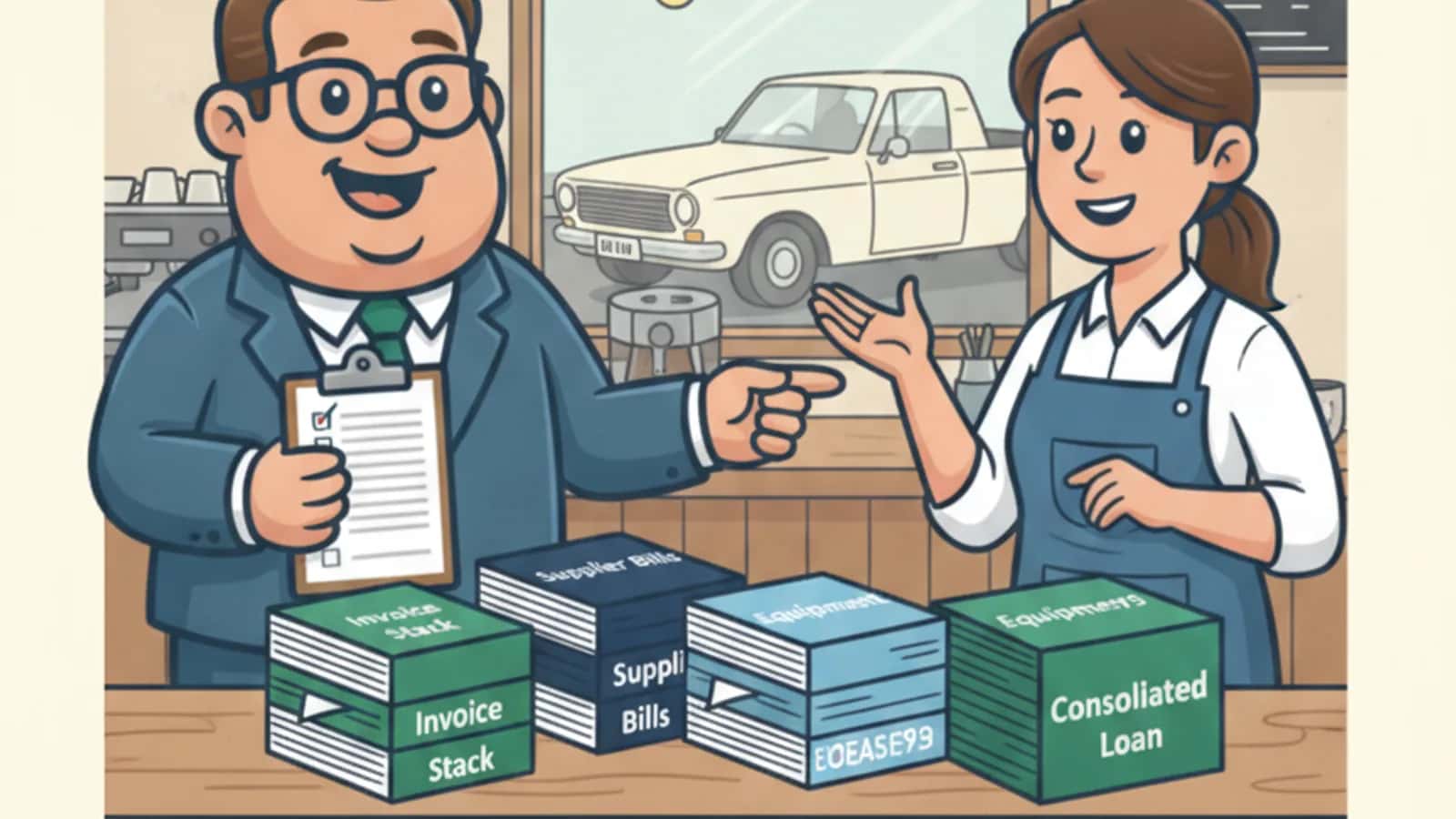
Consolidate when the total interest savings exceed switching costs and your business can secure better terms than existing arrangements. Pay off debts individually when current rates are competitive or consolidation doesn't improve your overall position.
Consolidation makes sense when
- Current debts carry interest rates above 15% annually
- You're managing 3+ separate monthly payments
- Cash flow is tight due to multiple repayment dates
- Some debts have penalty rates or default interest
- You need additional working capital alongside consolidation
Pay individually when
- Existing rates are below 10% annually
- You have sufficient cash flow for current arrangements
- Early repayment penalties exceed potential savings
- Your credit profile has deteriorated since taking original loans
- Some debts are close to being fully repaid
A Melbourne cafe paying 22% on merchant cash advances and 18% on equipment finance should consolidate. A Brisbane accounting firm with a 7% bank loan and manageable payments should stick with individual repayments.
Decision rule: Calculate total annual interest on current debts versus the proposed consolidation rate. Factor in establishment fees, legal costs, and any early repayment penalties. Consolidate only when net savings exceed 2-3% annually to account for switching effort.
For businesses struggling with multiple high-cost arrangements, our business loan refinancing guide explains when switching lenders delivers meaningful savings.
How Much Can You Save with Debt Consolidation Loans Australia
Savings depend on the interest rate difference between your current debts and the new consolidated loan, plus any fee reductions from simplified arrangements. Businesses typically save 3-8% annually on interest costs when consolidating high-rate debt.
Example savings scenarios:
A Gold Coast retail store with $150,000 in combined debts:
- Current: Equipment loan at 16% + business loan at 19% + overdraft at 21%
- Consolidated: Single loan at 12%
- Annual saving: $8,500 (before fees)
An Adelaide trade business with $80,000 total debt:
- Current: Vehicle finance at 14% + working capital at 24%
- Consolidated: Secured loan at 9%
- Annual saving: $6,800 (before fees)
Additional savings come from
- Reduced monthly account fees across multiple facilities
- Lower legal and administration costs
- Improved cash flow from extended terms
- Elimination of penalty rates on overdue amounts
Savings are minimal when current debts already carry competitive rates below 12%, or when consolidation only reduces rates by 1-2% annually.
Most businesses see meaningful savings when consolidating debts above 15% into facilities below 12%. The exact amount depends on debt size, rate differential, and term adjustments.
What Are the Interest Rates for Business Debt Consolidation in Australia
Business debt consolidation rates in Australia range from 6% to 25% annually, depending on loan security, business profile, and lender type. Secured loans against property or equipment typically offer the lowest rates, while unsecured consolidation carries higher pricing.
Rate ranges by loan type
- Secured against property: 6-12% p.a.
- Secured against business assets: 8-16% p.a.
- Unsecured consolidation: 12-25% p.a.
- Asset-backed facilities: 10-18% p.a.
Factors affecting your rate
- Business trading history and profitability
- Credit history of business and directors
- Security offered (property, equipment, or unsecured)
- Loan amount and repayment term
- Industry sector and perceived risk
- Lender type (bank, specialist, or alternative)
A profitable manufacturing business with property security might secure 8% rates. A service business seeking unsecured consolidation could pay 18-22%.
Major banks typically offer the lowest rates but require extensive documentation and perfect credit histories. Specialist lenders provide faster decisions with more flexible criteria but at higher rates.
Rate comparison tip: Always compare the comparison rate (which includes fees) rather than just the headline interest rate when evaluating consolidation options.
What Debts Can Be Consolidated in a Business Consolidation Loan
Most business consolidation loans can include business loans, equipment finance, vehicle loans, tax debts, trade creditor amounts, and short-term funding arrangements. Personal guarantees and some secured debts may have restrictions depending on the lender.
Commonly consolidated debts
- Existing business term loans
- Equipment and vehicle finance
- Business credit cards and overdrafts
- Merchant cash advances
- Invoice finance facilities
- ATO tax debts and payment plans
- Trade creditor amounts
- Working capital loans
Debts with restrictions
- Mortgages over business premises (may require separate refinancing)
- Personal loans with cross-guarantees
- Debts secured by specific assets the business wants to retain
- Court judgments or statutory demands
- Some lease arrangements that can't be terminated early
A Darwin transport company could consolidate truck loans, fuel cards, and ATO debt into one facility. A Sydney marketing agency might combine business loans, equipment finance, and trade creditor payments.
Important consideration: Some secured debts require the new lender to take over existing security arrangements or release assets before consolidation. This can complicate the process and increase legal costs.
For businesses dealing with ATO debt specifically, our guide on ATO payment plans versus business loans explains the trade-offs between consolidation and direct arrangements.
How Do I Qualify for a Business Debt Consolidation Loan Australia
To qualify for business debt consolidation in Australia, you typically need an ABN or ACN, 12+ months trading history, minimum monthly sales of $10,000, and the ability to service the new consolidated repayments from business cash flow.
Standard eligibility criteria
- Australian Business Number (ABN) or Company Number (ACN)
- Minimum 12 months in business (some lenders require 2+ years)
- Monthly sales of $10,000+ (varies by lender and loan amount)
- Satisfactory business and director credit histories
- Ability to service new repayments from trading cash flow
- Current debts must be with legitimate lenders (not family or related parties)
Documentation typically required
- Recent business bank statements (3-6 months)
- Business Activity Statements (BAS) or tax returns
- Profit and loss statements
- List of current debts with balances and terms
- Asset and liability statement
- Director identification and credit consent
Strengthening your application
- Provide 6+ months of bank statements showing consistent deposits
- Include management accounts showing profitability trends
- Offer security where possible to access better rates
- Demonstrate how consolidation improves cash flow
- Show stable or growing revenue patterns
Businesses with credit issues can still qualify through specialist lenders, though rates will be higher. Our bad credit business loans guide covers strategies for improving approval chances.
Red flags for lenders: Declining revenue, multiple recent credit defaults, insufficient cash flow to service new repayments, or debts to unlicensed lenders.
What's the Difference Between Debt Consolidation and Refinancing
Debt consolidation combines multiple existing debts into one new loan, while refinancing replaces a single existing loan with a new loan offering better terms. Both strategies can reduce costs, but consolidation addresses multiple debts simultaneously.
Debt consolidation
- Combines 2+ existing debts into one loan
- Simplifies multiple payments into a single monthly amount
- Often extends repayment terms to improve cash flow
- May include additional working capital
- Addresses complex debt structures
Refinancing
- Replaces one existing loan with a new loan
- Focuses on securing better interest rates or terms
- Usually maintains similar loan amounts and structures
- Primarily driven by rate reduction opportunities
- Simpler process with fewer moving parts
A Hobart restaurant consolidating equipment finance, a business loan, and supplier debts uses debt consolidation. The same restaurant replacing just their existing business loan with a cheaper alternative uses refinancing.
When to use each strategy
- Consolidate when managing multiple high-cost debts with different lenders
- Refinance when you have one main facility that could be improved
Both strategies can work together. A business might consolidate several smaller debts while refinancing their main facility separately.
Our business loan refinancing guide explains when switching a single lender makes financial sense.
How Long Does It Take to Get Approved for a Business Consolidation Loan
Business consolidation loan approvals typically take 2-14 days depending on lender type, loan complexity, and documentation quality. Specialist lenders often provide faster decisions than major banks, with some offering same-day conditional approvals.
Approval timeframes by lender type:
- 1
Online specialist lenders
24-48 hours for conditional approval
- 2
Non-bank lenders
3-7 business days
- 3
Major banks
7-14 business days (sometimes longer)
- 4
Brokers with panel access
2-5 business days
Factors affecting approval speed
- Number of debts being consolidated
- Security requirements and valuations needed
- Business and director credit complexity
- Documentation completeness
- Lender internal processes and workload
A straightforward unsecured consolidation with complete documentation might approve in 2-3 days. A complex secured facility requiring property valuations could take 2+ weeks.
Speeding up the process
- Provide all requested documents upfront
- Use recent bank statements (within 30 days)
- Include detailed debt schedules with current balances
- Respond quickly to lender queries
- Consider specialist lenders for faster processing
Settlement timeframes add another 3-7 days after approval, during which legal documents are prepared and existing debts are paid out.
For urgent funding needs, our fast business loans guide covers same-day funding alternatives.
What Fees Are Involved in Consolidating Business Debt
Business debt consolidation fees typically include establishment fees (1-3% of loan amount), legal costs ($500-2,000), valuation fees if security is required ($300-800), and potential early repayment penalties on existing debts.
Common consolidation fees:
Establishment fees: $500-5,000 or 1-3% of loan amount
- Covers lender processing and setup costs
- Often negotiable for larger loans
- Some lenders waive for high-quality applications
Legal costs: $500-2,000
- Document preparation and settlement
- Higher for secured loans requiring property documentation
- May include discharge fees for existing lenders
Valuation fees: $300-800 (if security required)
- Property or asset valuations
- Required for most secured facilities
- Sometimes shared between lender and borrower
Early repayment penalties: Variable
- Charged by existing lenders when loans are paid out early
- Can range from 1-6 months interest
- Factor into total consolidation cost
Ongoing fees
- Monthly service fees: $10-50
- Annual review fees: $200-500
- Additional drawdown fees if facility allows extra funds
Always request a detailed fee schedule before proceeding. The total cost should be factored against interest savings to ensure consolidation remains beneficial.
Can I Consolidate Tax Debt and Personal Guarantees in Australia
Yes, ATO tax debts can typically be included in business debt consolidation loans, but personal guarantees create complications that require careful legal consideration. Most lenders will include tax debts but may require personal guarantees to remain or be replaced with alternative security.
ATO tax debt consolidation
- GST, PAYG, and income tax debts can usually be consolidated
- Lender pays ATO directly as part of settlement
- Often more cost-effective than ATO payment plans
- Removes ATO collection pressure and potential penalties
- May require current BAS lodgments to be up-to-date
Personal guarantee considerations
- Existing personal guarantees may need to continue under new facility
- Some lenders require directors to provide fresh guarantees
- Limited recourse guarantees might be available for lower-risk businesses
- Asset-backed loans may reduce personal guarantee requirements
A Cairns construction company could consolidate $50,000 in GST debt with other business loans. However, if directors provided personal guarantees on original facilities, these obligations typically transfer to the new lender.
Strategies to limit personal exposure
- Offer business assets as primary security
- Negotiate limited guarantee amounts
- Structure loans to reduce personal liability over time
- Consider corporate trustees to limit director exposure
Important note: Consolidating tax debt doesn't eliminate compliance obligations. Businesses must maintain current lodgments and payments to avoid future ATO issues.
Our ATO debt versus business loans guide compares consolidation with direct ATO arrangements.
What Happens If My Business Can't Afford the Consolidated Loan Repayments
If your business can't afford consolidated loan repayments, contact your lender immediately to discuss hardship options, payment deferrals, or restructuring arrangements. Early communication often leads to better outcomes than defaulting on payments.
Immediate steps to take
- Contact your lender before missing payments
- Provide updated financial statements showing current position
- Propose realistic alternative payment arrangements
- Consider temporary payment reductions or deferrals
- Explore additional security to improve terms
Lender hardship options typically include
- Temporary payment deferrals (1-6 months)
- Reduced payments with extended terms
- Interest-only periods to improve cash flow
- Restructuring to match seasonal business patterns
- Additional time to sell assets or secure alternative funding
Consequences of defaulting
- Default interest rates (often 2-5% above normal rate)
- Demand notices and formal collection action
- Potential appointment of receivers or administrators
- Personal guarantee enforcement if applicable
- Negative credit reporting affecting future funding
Alternative solutions
- Inject additional capital from directors or investors
- Sell non-essential business assets
- Negotiate extended payment terms with suppliers
- Consider partial debt refinancing with another lender
- Explore government support programs if available
A Townsville retail business facing cash flow issues might negotiate seasonal payment adjustments. A Melbourne service company could propose interest-only payments during a temporary downturn.
Prevention strategy: Build payment buffers into consolidation planning and maintain open communication with lenders about business performance.
Is Debt Consolidation Bad for My Business Credit Rating
Debt consolidation itself doesn't harm your business credit rating and often improves it by reducing overall debt levels and payment complexity. However, the credit application process involves credit inquiries that may temporarily impact your score.
Positive credit impacts
- Reduces total number of active credit accounts
- Simplifies payment management, reducing missed payment risk
- May lower overall debt-to-income ratios
- Eliminates multiple monthly payment dates
- Can remove penalty rates and default listings
Temporary negative impacts
- Credit inquiries from consolidation applications (usually minor)
- Short-term increase in total credit utilization during transition
- Possible brief confusion in credit reporting during debt transfers
Long-term benefits
- Improved payment history from simplified arrangements
- Better debt management reduces future credit risks
- Lower interest costs improve business profitability
- Cleaner credit profile for future funding applications
A Newcastle transport company consolidating multiple vehicle loans typically sees credit improvements within 3-6 months as payment history stabilizes.
Protecting your credit during consolidation
- Don't apply with multiple lenders simultaneously
- Ensure existing debts are paid out completely
- Maintain payments on current debts until consolidation settles
- Monitor credit reports for accuracy during the transition
Credit repair opportunity: Consolidation can help businesses recover from credit issues by establishing consistent payment patterns with a single lender.
For businesses with existing credit challenges, our bad credit business loans guide explains how to strengthen credit profiles over time.
Which Australian Banks Offer Business Debt Consolidation Loans
Major Australian banks including Commonwealth Bank, Westpac, ANZ, and NAB offer business debt consolidation, but specialist lenders like Moula, OnDeck, and Prospa often provide faster approvals with more flexible criteria for consolidation scenarios.
Major bank consolidation options
- Commonwealth Bank: Business loans up to $3M with property security
- Westpac: Secured and unsecured business lending for consolidation
- ANZ: Business finance packages including debt consolidation
- NAB: Equipment and business loans suitable for consolidation
Specialist lenders
- Moula: Unsecured consolidation up to $500K with fast decisions
- OnDeck: Term loans for debt consolidation with flexible criteria
- Prospa: Business loans including consolidation scenarios
- Scottish Pacific: Asset-backed lending for larger consolidations
Non-bank lenders
- Regional banks (Bank of Queensland, Bendigo Bank)
- Credit unions and building societies
- Private lending specialists
- Equipment finance companies
Choosing the right lender
- Banks offer lowest rates but require extensive documentation
- Specialists provide faster decisions and flexible criteria
- Non-banks balance competitive rates with reasonable requirements
- Brokers can access multiple lender panels simultaneously
A established Perth accounting firm might suit major bank rates. A growing Gold Coast restaurant could benefit from specialist lender speed and flexibility.
Application strategy: Consider your timeline, documentation readiness, and credit profile when selecting lenders. Our best business lenders guide compares major options.
What Are the Common Mistakes Businesses Make with Debt Consolidation
The most common mistakes include not calculating total costs properly, consolidating low-rate debt unnecessarily, extending terms too far, and failing to address underlying cash flow issues that created the debt problems originally.
Financial calculation errors
- Focusing only on monthly payment reductions, not total cost
- Ignoring establishment fees and early repayment penalties
- Consolidating low-rate debt with high-rate debt unnecessarily
- Not comparing total interest over full loan terms
Structural mistakes
- Extending repayment terms too far, increasing total interest
- Converting secured debt to unsecured at higher rates
- Consolidating debt without addressing underlying business issues
- Taking additional funds beyond debt consolidation needs
Process errors
- Applying with multiple lenders simultaneously
- Not maintaining existing payments during consolidation process
- Failing to confirm all debts are paid out completely
- Not updating direct debits and payment arrangements
Strategic oversights
- Using consolidation as a band-aid for deeper business problems
- Not negotiating with existing lenders before consolidating
- Consolidating debt close to natural expiry dates
- Failing to build payment buffers into new arrangements
Example mistake: A Canberra consulting firm consolidated a 6% bank loan with 18% merchant cash advances, raising their average rate unnecessarily. They should have refinanced the high-rate debt separately.
Best practices
- Calculate total costs including all fees and charges
- Only consolidate debt carrying rates above your new facility rate
- Address underlying business performance issues simultaneously
- Maintain some unused credit capacity for future needs
Prevention: Work with experienced brokers or advisors who can model different consolidation scenarios and highlight potential pitfalls before proceeding.
Next steps
Business debt consolidation loans in Australia offer a practical solution for businesses juggling multiple high-interest debts, complex payment schedules, or cash flow constraints. The strategy works best when businesses can secure lower interest rates than their current arrangements while simplifying their financial management. For more comparisons and application guidance, browse our business loan guides.
Success depends on careful cost analysis, realistic serviceability assessment, and addressing any underlying business performance issues that contributed to the debt situation. Businesses should compare total costs including fees, not just monthly payment reductions, and ensure consolidation genuinely improves their financial position.
The Australian market offers consolidation options from major banks through to specialist lenders, each with different strengths in terms of rates, speed, and flexibility. Businesses with strong trading records and security can access competitive bank rates, while those needing faster decisions or having credit challenges might benefit from specialist lenders.
Next steps for businesses considering consolidation:
- Calculate current debt costs including all interest rates and fees across existing facilities
- Assess consolidation benefits by comparing total costs over full loan terms, not just monthly payments
- Gather documentation including recent bank statements, profit and loss statements, and current debt schedules
- Check eligibility with multiple lender types to understand available options and rates
- Consider timing to avoid unnecessary early repayment penalties on existing debts
For businesses ready to explore consolidation options, Funding Fred's 2 min check provides fast access to specialist finance partners across Australia. Our platform connects SMEs with lenders offering flexible criteria and fast decisions - no hard credit check to start, and no obligation to proceed.
Check Eligibility Now to see which consolidation options suit your business circumstances and discover how much you could save by refinancing multiple debts into a single, more manageable arrangement.
Further reading
Frequently asked questions
What Is Business Debt Consolidation and How Does It Work in Australia?
Business debt consolidation combines multiple existing debts into a single new loan, typically at a lower interest rate with simplified repayment terms. Instead of managing several monthly payments to different lenders, businesses make one consolidated payment to their new lender.
When Should a Business Consolidate Debt vs Paying Off Individually?
Consolidate when the total interest savings exceed switching costs and your business can secure better terms than existing arrangements. Pay off debts individually when current rates are competitive or consolidation doesn't improve your overall position.
How Much Can You Save with Debt Consolidation Loans Australia?
Savings depend on the interest rate difference between your current debts and the new consolidated loan, plus any fee reductions from simplified arrangements. Businesses typically save 3-8% annually on interest costs when consolidating high-rate debt.
What Are the Interest Rates for Business Debt Consolidation in Australia?
Business debt consolidation rates in Australia range from 6% to 25% annually, depending on loan security, business profile, and lender type. Secured loans against property or equipment typically offer the lowest rates, while unsecured consolidation carries higher pricing.
What Debts Can Be Consolidated in a Business Consolidation Loan?
Most business consolidation loans can include business loans, equipment finance, vehicle loans, tax debts, trade creditor amounts, and short-term funding arrangements. Personal guarantees and some secured debts may have restrictions depending on the lender.
How Do I Qualify for a Business Debt Consolidation Loan Australia?
To qualify for business debt consolidation in Australia, you typically need an ABN or ACN, 12+ months trading history, minimum monthly sales of $10,000, and the ability to service the new consolidated repayments from business cash flow.
Written by
The Funding Fred Editorial Team creates plain-English guides to help business owners understand funding options, eligibility, and application readiness before they compare finance options.
Sources
- Debtconsolidation [2] Debt Finance - https://moula.com.au/debt-finance [3] Debt Consolidation - https://www.money.com.au/business-loans/debt-consolidation [4] Debt Consolidation Loan - https://www.yard.com.au/loans/debt-consolidation-loan [5] Debt Consolidation - https://elev8financegroup.com.au/services/debt-consolidation [6] Business Debt Consolidation Loans - https://www.finder.com.au/business-loans/business-debt-consolidation-loans
- business.gov.au finance
- ASIC small business guidance