ATO Debt Payment Plan vs Business Loan: How Australian SMEs Should Decide
Australian SMEs facing tax debt now face a critical choice: ATO payment plans have become significantly more expensive since July 2025 when the General Interest Charge (GIC) became non-deductible, while business loans may offer cheaper alternatives for larger debts.

Quick answer
Australian SMEs facing tax debt now face a critical choice: ATO payment plans have become significantly more expensive since July 2025 when the General Interest Charge (GIC) became non-deductible, while business loans may offer cheaper alternatives for larger debts. The right choice depends on your debt size, cash flow, and ability to secure external funding at competitive rates.
Key takeaways
- ATO payment plan interest is no longer tax-deductible from July 2025, increasing the real cost by 25-30% for most businesses
- GIC rates compound daily at around 13-15%, making the true cost higher than the headline rate suggests
- Business loans can be cheaper for debts over $20,000, especially if you qualify for rates below 12%
- Small debts under $10,000 may still favour ATO payment plans due to simplicity and potential interest-free periods
- Establishing an ATO payment plan first can improve your business loan eligibility by showing tax compliance
- The ATO is pursuing $35 billion in unpaid SME tax debt with tighter collection practices in 2026
What Exactly Is an ATO Debt Payment Plan
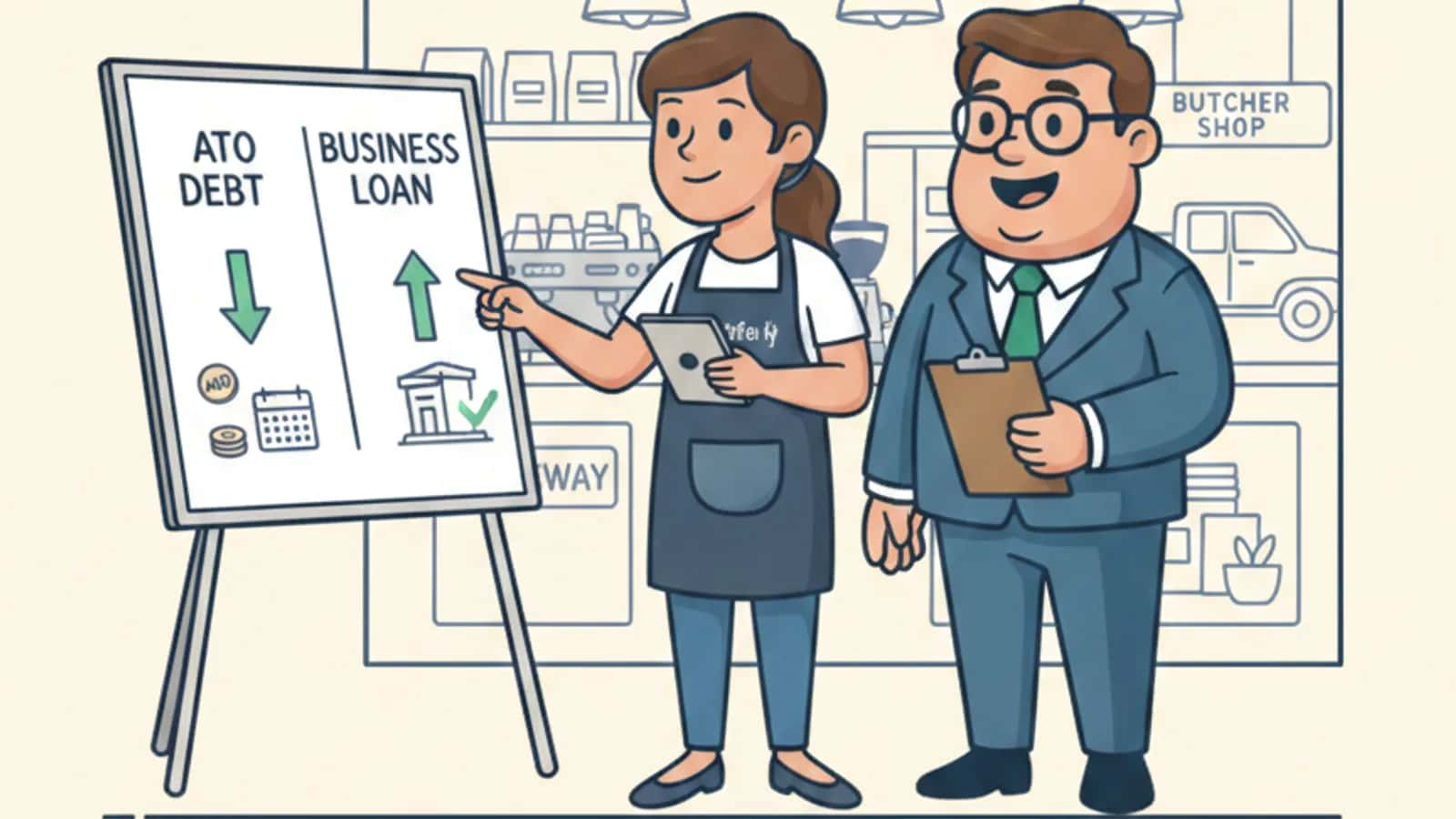
An ATO payment plan lets you pay outstanding tax debts in instalments rather than as a lump sum. The ATO calls these "payment arrangements" and they cover income tax, GST, PAYG withholding, and superannuation guarantee charge debts.
You can request payment plans for most tax debts, with arrangements typically lasting 3-12 months for smaller amounts. The ATO charges General Interest Charge (GIC) on the outstanding balance, which compounds daily. Since July 2025, this interest is no longer tax-deductible, making payment plans significantly more expensive than before.
Key features of ATO payment plans
- Available for most tax debt types except certain penalties
- Interest charges apply from the original due date
- Requires all lodgements to be up to date
- Can be arranged online for debts under certain thresholds
- May include interest-free periods for genuine hardship cases
The ATO has tightened its collection practices in 2026, with $35 billion in unpaid SME tax debt under active pursuit. This means payment plans are harder to negotiate and come with stricter compliance requirements.
How ATO Payment Plan Costs Compare to Business Loan Rates
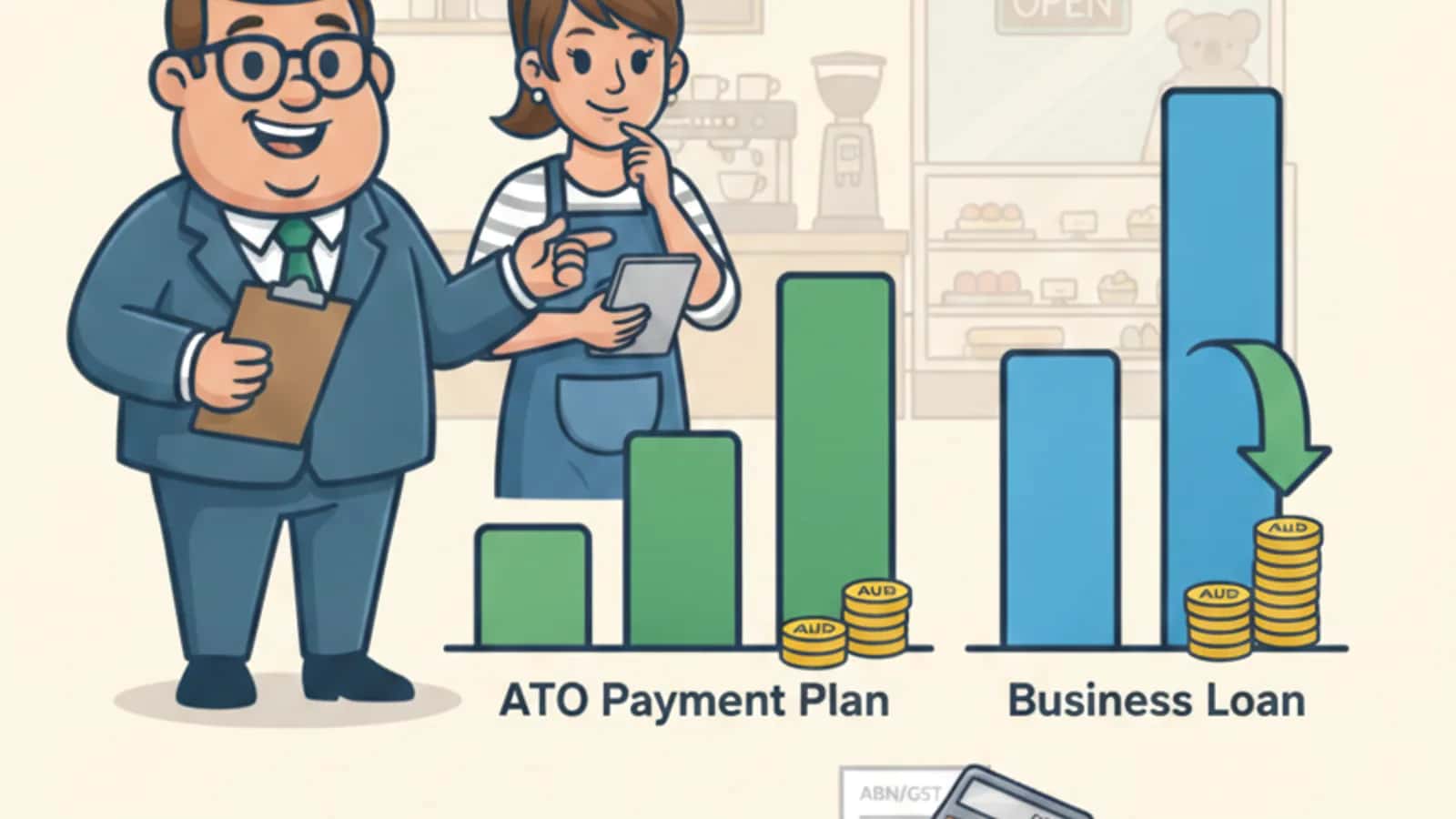
The true cost of ATO debt has jumped dramatically since the July 2025 changes. GIC rates currently sit around 13-15% annually, but the daily compounding means the effective rate is higher. More importantly, this interest is no longer deductible, increasing the after-tax cost by 25-30% for most businesses.
ATO Payment Plan Costs (2026)
- GIC rate: ~13-15% (varies quarterly)
- Daily compounding increases effective rate
- No tax deductibility since July 2025
- Additional penalties may apply for late lodgements
Business Loan Alternatives
- Unsecured business loans: 8-18% depending on credit profile
- Tax debt specific loans: 10-16% from specialist lenders
- Interest remains tax-deductible as a business expense
- Fixed monthly payments with clear end dates
A Melbourne cafe owner with $50,000 in GST debt would pay approximately $6,500 in non-deductible interest over 12 months on an ATO payment plan. The same debt cleared with a 12% business loan would cost around $3,200 in deductible interest — a saving of over $4,000 after tax.
For businesses comparing options, the business loan terms and rates can vary significantly between lenders, making comparison essential.
Which Option Is Cheaper for Your Small Business
The cheaper option depends on your debt size, loan eligibility, and tax position. Business loans now win for most debts over $20,000, while ATO payment plans may still suit smaller amounts or businesses that can't access competitive external funding.
Which is right for you?
Choose an ATO payment plan when
- Debt is under $10,000 and you can pay within 6 months
- You qualify for hardship provisions with interest-free periods
- Your credit profile would only qualify for high-rate business loans (above 18%)
- You need immediate breathing space while arranging other funding
Choose a business loan when
- Debt exceeds $20,000 or will take more than 12 months to clear
- You can access rates below 15% (most established SMEs)
- You want predictable monthly payments with a fixed end date
- You're paying company tax rates (making interest deductibility valuable)
The breakeven calculation: For a $30,000 debt over 18 months, an ATO payment plan costs approximately $7,200 in non-deductible interest. A business loan at 14% costs around $3,200 in deductible interest. After tax, the business loan saves roughly $4,500.
Many advisors now recommend securing a business loan first, then using it to clear ATO debt immediately. This stops the daily compounding and converts expensive non-deductible interest into cheaper deductible payments.
What Happens If You Can't Pay Your ATO Debt on Time
Failing to pay ATO debt on time triggers immediate consequences that worsen quickly. The ATO has strengthened its collection powers in 2026 and actively pursues the $35 billion owed by Australian SMEs.
Immediate consequences
- GIC starts accruing from the original due date
- Failure to lodge penalties if returns are overdue
- Loss of good standing with the ATO
- Potential for director penalty notices (for companies)
Escalating enforcement actions
- Garnishee notices on bank accounts and debtors
- Asset seizure and sale
- Wind-up proceedings for companies
- Bankruptcy proceedings for individuals
- Superannuation director penalties that pierce the corporate veil
The ATO's collection approach has become more aggressive since 2025. They're issuing garnishee notices faster and pursuing director penalties more frequently. A Sydney construction company recently had its bank accounts frozen within 30 days of missing a BAS payment, forcing an emergency asset sale.
Your options before enforcement
- Request a payment plan immediately (don't wait)
- Engage a registered tax agent to negotiate
- Consider voluntary administration if the business is insolvent
- Explore business loans to clear debt before enforcement begins
Acting early is crucial. The ATO is more willing to negotiate before formal collection action begins, but becomes inflexible once enforcement starts.
Pros and Cons of Using a Business Loan to Clear Tax Debt
Using a business loan to clear ATO debt has become increasingly attractive since the July 2025 changes, but it's not suitable for every business situation.
Pros of business loans for tax debt
- Lower total cost: Interest rates often below ATO's GIC rate
- Tax deductible interest: Maintains deductibility unlike ATO payment plans
- Stops compounding: Clears ATO debt immediately, stopping daily GIC accrual
- Predictable payments: Fixed monthly amounts with clear end dates
- Improves ATO relationship: Shows commitment to clearing debt quickly
- Prevents enforcement: Eliminates risk of garnishee notices and asset seizure
Cons of business loans for tax debt
- Credit requirements: Need acceptable credit score and trading history
- Application time: May take 1-2 weeks vs immediate ATO payment plan
- Personal guarantees: Often required for unsecured business loans
- Higher monthly payments: Shorter terms mean larger monthly commitments
- Opportunity cost: Uses borrowing capacity that could fund growth
A Perth plumbing business used a $40,000 business loan to clear GST debt, saving $8,000 in interest costs over 24 months compared to an ATO payment plan. However, the higher monthly payments ($1,950 vs $1,400) required tighter cash flow management.
For businesses with strong cash flow, improving loan approval chances often starts with demonstrating tax compliance and having current ATO payment arrangements in place.
ATO Payment Plan Eligibility for Small Businesses
The ATO has tightened payment plan eligibility since 2025, making approval less automatic than before. You must meet specific criteria and maintain ongoing compliance to keep your arrangement active.
Basic eligibility requirements
- All tax returns and activity statements must be lodged
- Current on ongoing tax obligations (new BAS, PAYG instalments)
- Debt must be genuine tax liability (not penalties that could be remitted)
- Realistic payment proposal based on cash flow capacity
- No history of multiple failed payment arrangements
Enhanced requirements for larger debts
- Debts over $25,000 require detailed cash flow statements
- May need independent financial advice or insolvency assessment
- Security or guarantees for arrangements over $100,000
- Regular review meetings and progress reporting
Common reasons for rejection
- Outstanding lodgements (even if no tax owing)
- Unrealistic payment proposals
- History of breaking previous arrangements
- Evidence of phoenix activity or asset stripping
- Inability to maintain current obligations
The ATO now uses data matching to verify payment capacity. A Gold Coast restaurant's payment plan was cancelled when ATO systems detected credit card transactions suggesting higher turnover than declared.
How Long Can You Extend an ATO Payment Arrangement
ATO payment arrangements typically last 3-12 months for most SME debts, but extensions are possible in genuine hardship situations. The ATO has become stricter about arrangement duration since 2025, preferring shorter terms that clear debt faster.
Standard arrangement terms
- Debts under $10,000: Up to 6 months
- Debts $10,000-$50,000: 6-12 months
- Debts over $50,000: Case-by-case assessment, usually 12-24 months maximum
- Very large debts: May require security or independent review
Extension criteria
- Demonstrated compliance with current arrangement
- Genuine change in circumstances (not just cash flow preference)
- Updated financial statements showing capacity
- Continued lodgement compliance
- No better alternatives available
Limits on extensions
- Maximum 24 months for most business debts
- Each extension requires formal application and approval
- Interest continues accruing throughout extended period
- ATO may require additional security for long arrangements
A Brisbane logistics company successfully extended their 12-month arrangement by another 6 months after demonstrating COVID-related revenue loss, but had to provide monthly cash flow reports and agree to quarterly reviews.
Credit Rating Impact: Business Loans vs ATO Payment Plans
Both options can affect your credit rating, but in different ways and timeframes. Understanding these impacts helps you make decisions that protect your business's future borrowing capacity.
ATO payment plans and credit impact
- Payment plans themselves don't appear on credit files
- Missed payments or arrangement failures can trigger defaults
- Enforcement actions (garnishees, court judgments) create lasting negative marks
- Good compliance can actually improve your ATO relationship for future dealings
Business loans and credit impact
- Loan applications create credit inquiries (soft or hard depending on lender)
- Successful repayment builds positive credit history
- Missed payments create immediate negative marks
- Higher debt-to-income ratios may limit future borrowing
The key difference: ATO debt problems tend to escalate quickly into serious credit damage, while business loan issues usually provide more warning and workout options.
Many specialist business lenders now view active ATO payment plans positively, seeing them as evidence of tax compliance rather than financial distress. However, this requires the arrangement to be current and well-maintained.
Best practice: If you're considering both options, apply for business loan pre-approval first. This gives you negotiating power with the ATO and a clear backup plan if payment arrangements fail.
What Penalties You Face If You Default on an ATO Payment Plan
Defaulting on an ATO payment arrangement triggers immediate consequences and removes your protection from enforcement action. The ATO has become less forgiving of arrangement failures since tightening collection practices in 2025.
Immediate consequences of default
- Entire debt becomes immediately due and payable
- Loss of protection from garnishee notices and asset seizure
- Additional failure-to-comply penalties may apply
- Future payment plan applications face higher scrutiny
- Director penalty notices for company debts become enforceable
Escalating enforcement timeline
- Week 1-2: Demand notices and final warnings
- Week 3-4: Garnishee notices on bank accounts and major debtors
- Month 2-3: Asset seizure and sale procedures begin
- Month 3-6: Wind-up or bankruptcy proceedings commence
Financial penalties
- GIC continues on full outstanding balance
- Court costs and legal fees added to debt
- Asset seizure costs charged to debtor
- Potential director penalty equal to unpaid super guarantee charges
An Adelaide manufacturing business defaulted on a $60,000 payment plan by missing two consecutive payments. The ATO issued garnishee notices within 10 days, freezing $45,000 in operating accounts and forcing immediate loan applications under severe time pressure.
Your options after default
- Request immediate reinstatement (usually requires substantial payment)
- Negotiate new arrangement with security or guarantees
- Voluntary administration to prevent asset seizure
- Emergency business loan to clear debt before enforcement
Prevention strategy: If you see payment difficulties coming, contact the ATO before missing payments. They're more likely to modify arrangements than reinstate failed ones.
Different Debt Strategies for Startups vs Established Businesses
Startups and established businesses face different constraints when choosing between ATO payment plans and business loans. Your business age, credit history, and cash flow patterns should drive your strategy.
Startup considerations (under 2 years trading)
- Limited credit history makes business loan approval harder
- Cash flow often irregular, making fixed loan payments risky
- May qualify for ATO hardship provisions more easily
- Personal guarantees on business loans carry higher risk
- Lower tax rates may reduce deductibility benefits
Established business advantages
- Stronger credit profiles improve loan terms and rates
- Predictable cash flow supports loan repayment capacity
- Higher tax rates maximize deductibility benefits
- Existing banking relationships facilitate faster approvals
- More assets available for security if required
Recommended strategies by business stage:
| Business Stage | Recommended Approach | Key Considerations |
|---|---|---|
| Startup (0-12 months) | ATO payment plan first, then seek funding | Focus on cash flow preservation |
| Growing (1-3 years) | Compare both options based on rates | Startup-specific loan options may be available |
| Established (3+ years) | Business loan usually cheaper | Strong credit profile improves terms |
| Mature/declining | Case-by-case assessment | May need specialist restructuring advice |
A 6-month-old Gold Coast cafe chose an ATO payment plan for $15,000 in PAYG debt, while an established Melbourne restaurant with similar debt used a business loan. The startup preserved cash flow during volatile early months, while the established business saved $2,400 in interest costs.
Special consideration for startups: Even if you choose an ATO payment plan initially, establishing business credit early helps with future funding needs. Consider small business credit cards or micro-business loans to build credit history.
How to Apply for an ATO Payment Plan Online
The ATO's online payment plan system has been streamlined for 2026, but approval isn't automatic. Understanding the process and requirements improves your chances of quick approval.
Online application eligibility
- Individual debts under $100,000
- All lodgements current
- No existing payment arrangements
- Arrangement term under 12 months
- Australian bank account for direct debit
Step-by-step application process:
- Log into ATO online services through myGov or ATO app
- Select "Payment plans"from the account menu
- Choose the debt you want to include in the arrangement
- Propose payment terms based on your cash flow capacity
- Provide bank details for direct debit setup
- Submit supporting documents if requested (cash flow statements, hardship evidence)
- Receive decision usually within 1-2 business days
Required information
- Realistic payment amount and frequency
- Reason for payment difficulty
- Expected improvement timeline
- Current financial position summary
Common application mistakes
- Proposing unrealistic payment amounts
- Applying with outstanding lodgements
- Insufficient explanation of payment capacity
- Not accounting for ongoing tax obligations
If your online application is rejected: You can call the ATO's payment plan hotline for manual review. Complex cases or larger debts usually require phone negotiation anyway.
What Types of Businesses Should Avoid Business Loans for Tax Debt
While business loans often provide better value than ATO payment plans, certain business types and situations make external borrowing inappropriate or impossible.
Businesses that should avoid business loans for tax debt:
Seasonal or cyclical businesses with irregular income may struggle with fixed monthly loan payments. A Cairns tourism operator chose an ATO payment plan over a business loan because their revenue drops 70% during wet season, making consistent loan repayments impossible.
Businesses with existing high debt levels may not qualify for additional borrowing or may worsen their financial position. The additional debt service could push marginal businesses into insolvency.
Companies facing insolvency
should avoid taking on more debt. Directors have legal obligations to prevent insolvent trading, and new borrowing while insolvent can create personal liability.
Startups without proven cash flow
often can't access competitive business loan rates. A 4-month-old Sydney consultancy was quoted 22% for an unsecured business loan, making the ATO payment plan cheaper despite non-deductible interest.
Businesses in declining industries
may find loan approval difficult and should preserve borrowing capacity for operational needs rather than tax debt.
Sole traders near retirement
may prefer ATO payment plans to avoid personal guarantees on business loans that could affect personal assets.
Alternative strategies for these businesses
- Negotiate extended ATO payment terms with hardship provisions
- Seek industry-specific grants or support programs
- Consider asset sales to raise funds without borrowing
- Explore invoice factoring or merchant cash advances for irregular income businesses
- Investigate government-backed loan schemes with more flexible criteria
Red flag warning: If you're considering a business loan primarily because you can't afford ATO payments, this may indicate deeper solvency issues requiring professional advice rather than more borrowing.
Next steps
The choice between ATO debt payment plans and business loans has shifted dramatically since July 2025. With ATO interest no longer tax-deductible and GIC rates remaining high, business loans now offer better value for most SME tax debts over $20,000. For more comparisons and application guidance, browse our business loan guides.
However, the right choice depends on your specific situation. Startups and businesses with irregular cash flow may still benefit from ATO payment plans, while established businesses with good credit profiles should seriously consider business loan alternatives.
The key is acting quickly. Whether you choose an ATO payment plan or business loan, delaying action only increases costs and reduces options. The ATO's tighter collection practices in 2026 mean enforcement action comes faster than before.
Your next steps:
- Calculate the true after-tax cost of both options for your specific debt
- Check your eligibility for competitive business loan rates
- Apply for ATO payment plan if you need immediate breathing space
- Consider using a business loan to clear ATO debt and convert to deductible interest
Need fast business funding to clear ATO debt? Check Eligibility Now with our 2-minute assessment. No hard credit check to start, and our specialist partners can often provide same-week funding for established businesses. Business Funding. Made Simple.
Further reading
Frequently asked questions
What Exactly Is an ATO Debt Payment Plan?
An ATO payment plan lets you pay outstanding tax debts in instalments rather than as a lump sum. The ATO calls these "payment arrangements" and they cover income tax, GST, PAYG withholding, and superannuation guarantee charge debts.
How ATO Payment Plan Costs Compare to Business Loan Rates?
The true cost of ATO debt has jumped dramatically since the July 2025 changes. GIC rates currently sit around 13-15% annually, but the daily compounding means the effective rate is higher. More importantly, this interest is no longer deductible, increasing the after-tax cost by 25-30% for most businesses.
Which Option Is Cheaper for Your Small Business?
The cheaper option depends on your debt size, loan eligibility, and tax position. Business loans now win for most debts over $20,000, while ATO payment plans may still suit smaller amounts or businesses that can't access competitive external funding.
What Happens If You Can't Pay Your ATO Debt on Time?
Failing to pay ATO debt on time triggers immediate consequences that worsen quickly. The ATO has strengthened its collection powers in 2026 and actively pursues the $35 billion owed by Australian SMEs.
How Long Can You Extend an ATO Payment Arrangement?
ATO payment arrangements typically last 3-12 months for most SME debts, but extensions are possible in genuine hardship situations. The ATO has become stricter about arrangement duration since 2025, preferring shorter terms that clear debt faster.
What Penalties You Face If You Default on an ATO Payment Plan?
Defaulting on an ATO payment arrangement triggers immediate consequences and removes your protection from enforcement action. The ATO has become less forgiving of arrangement failures since tightening collection practices in 2025.
Written by
The Funding Fred Editorial Team creates plain-English guides to help business owners understand funding options, eligibility, and application readiness before they compare finance options.
Sources
- Smes Ato Tax Debt 2025 - [2] Ato Debt Business Loans - https://www.velociticapital.com.au/blog/ato-debt-business-loans/ [3] The Ato Is Chasing 35 Billion In Unpaid Taxes From Smes Are You Prepared - https://www.pherrus.com.au/the-ato-is-chasing-35-billion-in-unpaid-taxes-from-smes-are-you-prepared/ [4] Tax Debt Loans Vs Ato Payment Plan - https://smallbusinessloansaustralia.com/tax-debt-loans-vs-ato-payment-plan/ [5] Small Businesses Avoid Ato Payment Plans - https://awfconsulting.com.au/small-businesses-avoid-ato-payment-plans/ [6] Ato Debt Funding Options - https://www.finstead.com.au/blog/ato-debt-funding-options [7] Ato Tax Debt Why Acting Early Matters For Small Businesses - https://financefinancefinance.com.au/ato-tax-debt-why-acting-early-matters-for-small-businesses/ [8] Ato Payment Plans In 2025 What Small Businesses Must Know Before Applying - https://blackwattletax.com.au/tax/ato-payment-plans-in-2025-what-small-businesses-must-know-before-applying/ [9] Borrowing To Pay Tax Debt What Small Businesses Need To Know - https://www.woodwardfinance.com.au/borrowing-to-pay-tax-debt-what-small-businesses-need-to-know/
- business.gov.au finance
- ASIC small business guidance