Cafe and Restaurant Business Loans Australia: Funding Fit-Outs
Australian cafes and restaurants can access business loans from $5,000 to $1 million for fit-outs, with specialist lenders offering 24-hour approvals and unsecured options up to $150,000. Interest rates start from 6.49% per annum, with most lenders requiring just 6 months trading history and $6,000 monthly revenue.

Quick answer
Australian cafes and restaurants can access business loans from $5,000 to $1 million for fit-outs, with specialist lenders offering 24-hour approvals and unsecured options up to $150,000. Interest rates start from 6.49% per annum, with most lenders requiring just 6 months trading history and $6,000 monthly revenue.
Key takeaways
- Cafe fit-out costs typically range from $60,000 to $200,000, with commercial espresso machines alone costing $18,000 to $35,000
- Unsecured business loans cover fit-outs under $150,000 without property security requirements
- Specialist lenders approve applications within 24 hours using just 6 months of bank statements
- Interest rates for hospitality loans start from 6.49% per annum with flexible terms from 12 to 60 months
- Traditional banks require extensive paperwork and perfect credit, while alternative lenders focus on actual trading performance
- Equipment finance and fit-out loans serve different purposes but can be combined for complete venue setup
- Government grants exist but have strict criteria and long wait times compared to commercial lending
- Bad credit doesn't automatically disqualify applications if the business shows strong revenue patterns
How Much Does a Typical Cafe Fit-Out Cost in Australia
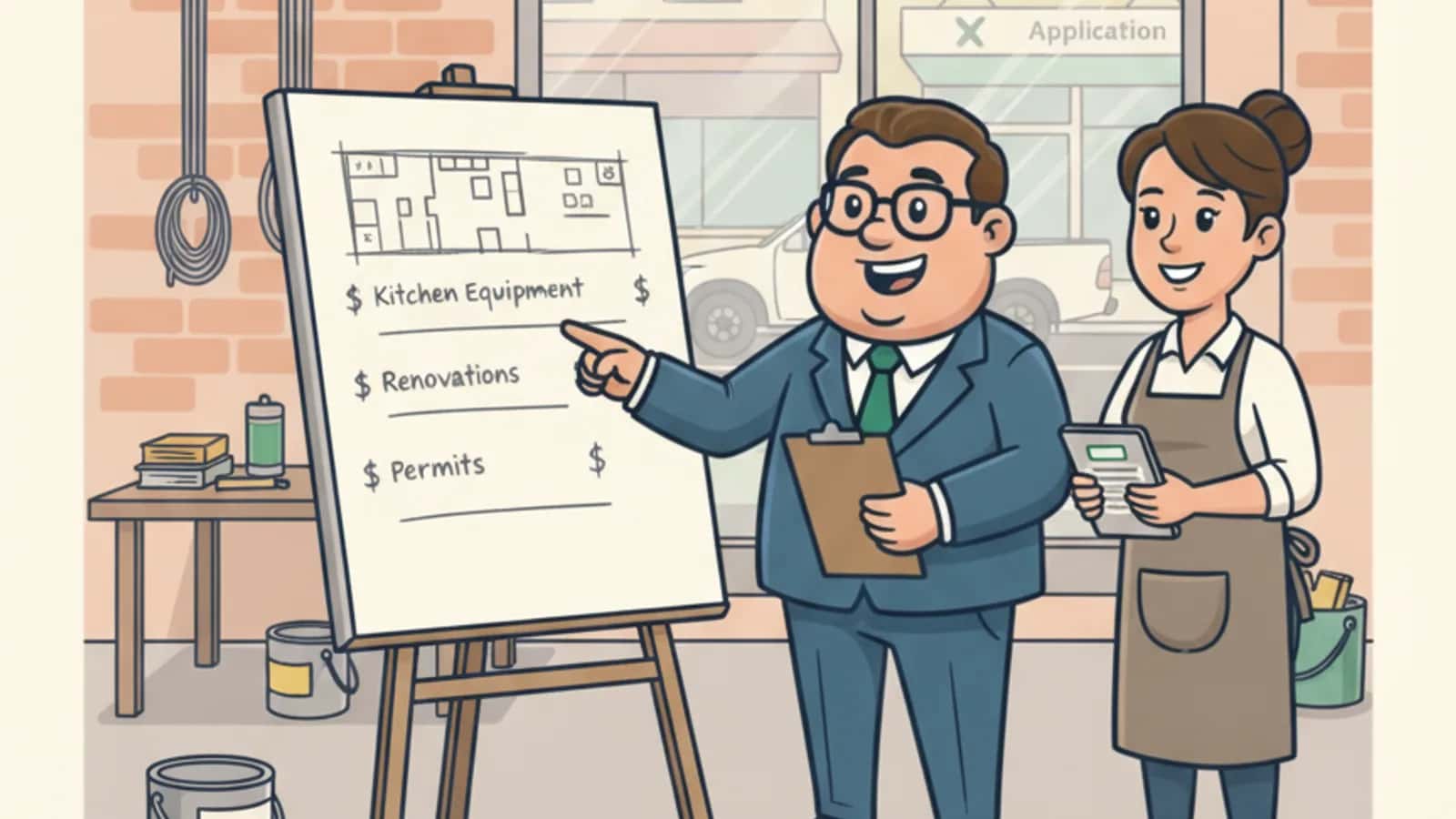
Cafe fit-out expenses in Australia range from $60,000 to $200,000 for most venues, with costs varying significantly based on size, location, and design complexity. The single most expensive item is typically the commercial espresso machine, which costs between $18,000 and $35,000, plus commercial grinders adding another $3,000 to $8,000 each.
Breakdown of typical fit-out costs
- Kitchen equipment: $30,000 - $80,000 (including ovens, refrigeration, prep equipment)
- Coffee equipment: $25,000 - $45,000 (espresso machine, grinders, brewing equipment)
- Interior construction: $20,000 - $60,000 (flooring, walls, ceiling work)
- Electrical and plumbing: $8,000 - $25,000 (new connections, safety compliance)
- Furniture and fixtures: $10,000 - $30,000 (seating, tables, lighting)
- Signage and branding: $3,000 - $15,000 (external and internal signage)
Location dramatically affects costs. Sydney and Melbourne venues often hit the upper end of these ranges, while regional locations typically cost 20-30% less. The key mistake many operators make is underestimating compliance costs — commercial kitchen ventilation systems alone can cost $15,000 to $25,000.
Choose a higher budget if: You're in a premium location, need extensive structural work, or want custom-designed elements. Choose the lower end if: You're taking over a former food venue with existing infrastructure.
What Banks Offer the Best Small Business Loans for Restaurants

Traditional banks like ANZ offer business loans with terms up to 30 years and flexible repayment options, but their approval process is slow and requires extensive documentation. Specialist lenders consistently outperform major banks for hospitality businesses because they understand the industry's cash flow patterns and seasonal variations.
Traditional Banks vs Specialist Lenders:
| Traditional Banks | Specialist Lenders |
|---|---|
| 4-8 week approval times | 24-48 hour decisions |
| Extensive paperwork required | 6 months bank statements |
| Perfect credit history demanded | Focus on trading performance |
| Generic loan products | Industry-specific solutions |
| Rigid criteria | Flexible assessment |
Top specialist lenders for cafe and restaurant business loans
- Prospa: Offers $5,000 to $500,000 with fixed terms up to 5 years and funding within 24 hours
- FundingCheck: Provides same-day funding for cash flow needs with flexible 3-24 month terms
- Evolve500: Specializes in fit-out finance with progress payments and upfront approvals
The major banks still have a place for established businesses seeking large amounts over $500,000 or those wanting the longest possible terms. But for most cafe and restaurant fit-outs under $300,000, specialist lenders deliver faster decisions and better understand your business model.
Can I Get a Loan with Bad Credit for My Cafe Startup
Yes, but lenders focus more on your business trading history than personal credit for established venues. Most specialist lenders require an Equifax credit score above 550 for directors, but strong business performance can offset lower personal scores. The key is demonstrating consistent revenue rather than perfect credit history.
Minimum requirements for bad credit applications
- 6 months continuous trading
- Monthly revenue of at least $6,000
- No recent defaults or bankruptcies
- Clear explanation of credit issues
Startups with bad credit face tougher criteria because there's no business trading history to offset personal credit concerns. However, some options exist:
Secured loans: Using residential or commercial property as security can unlock funding even with poor credit, especially for amounts over $150,000. The property reduces lender risk, making them more willing to overlook credit issues.
Director guarantees: Personal guarantees from multiple directors can strengthen applications where one director has credit problems.
Higher deposits: Some equipment finance providers accept larger upfront payments (30-40%) to reduce their exposure with bad credit applicants.
Choose this path if: Your business shows strong revenue growth and you can explain the credit issues. Avoid if: The credit problems are recent or ongoing — focus on improving your score first.
For comprehensive guidance on bad credit business lending, see our detailed strategies for businesses with credit challenges.
Differences Between Equipment Finance and Business Fit-Out Loans
Equipment finance secures the loan against specific items like espresso machines or ovens, while fit-out loans are typically unsecured and cover the entire venue transformation. Equipment finance usually offers lower rates because the lender can repossess the equipment if payments stop, but fit-out loans provide more flexibility on how funds are used.
Equipment Finance
- Secured against purchased items
- Lower interest rates (typically 1-2% less)
- Faster approval for standard equipment
- Equipment acts as security
- Limited to equipment purchases only
Fit-Out Loans
- Unsecured (no specific security required)
- Higher rates but more flexibility
- Covers construction, design, and equipment
- Can fund soft costs like permits and design fees
- Progress payments available for staged work
When to use equipment finance: For major single purchases like commercial ovens, espresso machines, or refrigeration systems where you want the lowest possible rate and don't mind the equipment being security.
When to use fit-out loans: For complete venue transformations covering construction, electrical work, plumbing, equipment, and design elements where you need maximum flexibility.
Many operators combine both approaches — using equipment finance for major items and an unsecured fit-out loan for construction and smaller equipment. This strategy can reduce overall borrowing costs while maintaining flexibility.
Average Interest Rates for Hospitality Business Loans in Australia
Interest rates for hospitality business loans start from 6.49% per annum, with comparison rates from 6.98% per annum for the most competitive offers. Actual rates depend on loan amount, term length, security offered, and business credit profile, with most operators paying between 8% and 15% annually.
Rate ranges by loan type
- Secured business loans: 6.49% - 12% per annum
- Unsecured business loans: 9% - 18% per annum
- Equipment finance: 7% - 14% per annum
- Merchant cash advances: 15% - 35% per annum (factor rates)
Factors affecting your rate
- Trading history: 2+ years typically qualifies for better rates
- Revenue stability: Consistent monthly income reduces rates
- Credit score: Above 700 unlocks premium pricing
- Loan security: Property security can reduce rates by 2-4%
- Loan amount: Larger loans often get better rates
The current market shows rates have increased from 2022 lows due to Reserve Bank rate rises, but specialist lenders remain competitive compared to major banks. For context on how broader market conditions affect business lending, see our analysis of Australia's current business loan market.
Rate shopping tip: Compare the comparison rate, not just the advertised rate. The comparison rate includes fees and gives a true cost picture.
What Documents Do I Need to Apply for a Restaurant Business Loan
Most specialist lenders require just 6 months of business bank statements and basic business details for loans up to $150,000, making the process much simpler than traditional banks. The streamlined approach focuses on actual trading performance rather than extensive paperwork.
Essential documents for all applications
- 6 months business bank statements
- Business registration certificate (ABN/ACN)
- Director identification (license or passport)
- GST returns (if registered)
Additional documents for larger loans ($150,000+)
- 2 years financial statements
- Accountant-prepared profit and loss
- Business activity statements (BAS)
- Lease agreement or property ownership documents
- Equipment quotes or fit-out estimates
Traditional banks typically demand
- 3 years audited financials
- Detailed business plans
- Personal financial statements
- Tax returns for all directors
- Extensive cash flow projections
The document burden varies significantly between lenders. Specialist hospitality lenders understand that restaurants and cafes operate on tight margins and focus on bank statement analysis rather than formal accounting documents.
Time-saving tip: Gather 12 months of bank statements even if only 6 are required. Some lenders offer better rates with longer trading history evidence.
For a complete preparation checklist, review our business loan approval requirements guide.
How Long Does It Take to Get Approved for a Cafe Fit-Out Loan
Specialist lenders can approve cafe fit-out loans within 24 hours for amounts up to $150,000, with funds available within 48-72 hours of approval. Traditional banks typically take 4-8 weeks for the same decision, making specialist lenders the clear choice when speed matters.
Typical approval timeframes:
| Lender Type | Application to Decision | Decision to Funding |
|---|---|---|
| Specialist lenders | 24-48 hours | 24-48 hours |
| Online platforms | 2-5 business days | 1-3 business days |
| Traditional banks | 2-8 weeks | 1-2 weeks |
| Government programs | 6-12 weeks | 2-4 weeks |
Factors affecting approval speed
- Complete documentation: Missing bank statements add 2-3 days
- Loan amount: Applications over $250,000 need additional review
- Credit complexity: Multiple directors or credit issues slow decisions
- Security requirements: Property valuations add 1-2 weeks
Fast-track strategies
- Apply Monday-Wednesday for fastest processing
- Ensure bank statements show consistent deposits
- Have equipment quotes ready before applying
- Use lenders with automated assessment systems
The speed advantage of specialist lenders becomes crucial when equipment fails or lease deadlines approach. Traditional bank delays can cost thousands in lost revenue during busy periods.
Are There Government Grants for Hospitality Businesses
Government grants exist for hospitality businesses but have strict eligibility criteria, long application processes, and limited funding pools compared to commercial loans. Most grants focus on specific outcomes like energy efficiency, accessibility improvements, or regional development rather than general fit-outs.
Current federal grant programs
- Small Business Energy Incentive: Up to $20,000 for energy-efficient equipment
- Accelerating Commercialisation: For innovative hospitality technology
- Export Market Development Grants: For businesses expanding internationally
State-based programs vary significantly
- NSW: Small Business Support grants for regional venues
- VIC: Back to Business grants for COVID recovery
- QLD: Works for Queensland grants for job creation
- WA: Regional Economic Development grants
Grant limitations
- Highly competitive application processes
- Specific spending requirements (can't fund general fit-outs)
- Long approval times (6-12 weeks minimum)
- Extensive reporting requirements
- Limited funding amounts (typically under $50,000)
When grants make sense: You're implementing specific technology, improving accessibility, or operating in targeted regional areas. When to skip grants: You need funding quickly or want flexibility in how money is spent.
Most successful hospitality operators use commercial loans for immediate fit-out needs and apply for grants as bonus funding for specific improvements. The certainty and speed of commercial lending beats the uncertainty of grant applications when revenue is at stake.
For broader government support options, see our guide to Australian government-backed business loans and grants.
What Are the Most Common Mistakes When Applying for Restaurant Loans
The biggest mistake is applying to traditional banks first instead of specialist hospitality lenders, leading to unnecessary delays and rejections based on rigid criteria that don't suit restaurant cash flows. Most operators waste 4-6 weeks with banks before discovering faster alternatives.
Top application mistakes:
1. Underestimating total costs: Budgeting $80,000 for a fit-out that actually costs $120,000. Include 15-20% contingency for unexpected issues like structural problems or compliance requirements.
2. Poor timing: Applying during peak trading periods when you can't respond quickly to lender requests. Apply during quieter months when you have time to manage the process.
3. Incomplete bank statements: Missing pages or statements from multiple accounts. Lenders need complete records to assess cash flow patterns.
4. Mixing personal and business expenses: Using business accounts for personal transactions confuses lenders and suggests poor financial management.
5. No backup plan: Applying to one lender at a time instead of comparing multiple options simultaneously.
6. Ignoring credit reports: Not checking business and personal credit reports before applying. Surprises during assessment cause delays and rejections.
Prevention strategies
- Get realistic quotes from multiple contractors before applying
- Clean up bank statement presentation 2-3 months before applying
- Check credit reports for all directors
- Apply to 2-3 lenders simultaneously for comparison
Red flag for lenders: Inconsistent revenue patterns without clear explanations. Seasonal businesses should highlight their cycles and show multi-year patterns to demonstrate stability.
Which Loan Types Work Best for Small vs Large Cafe Fit-Outs
For fit-outs under $150,000, unsecured business loans offer the fastest approval and most flexibility, while larger projects over $200,000 benefit from secured loans using property as security to access higher limits and lower rates. The $150,000 threshold is where most lenders shift their assessment criteria and security requirements.
Small fit-outs ($30,000 - $150,000)
- Best option: Unsecured business loans
- Approval time: 24-48 hours
- Interest rates: 9-15% per annum
- Security required: None
- Ideal for: Equipment upgrades, minor renovations, single-room fit-outs
Large fit-outs ($150,000 - $500,000)
- Best option: Secured business loans or commercial fit-out finance
- Approval time: 1-2 weeks (including valuation)
- Interest rates: 7-12% per annum
- Security required: Property or substantial business assets
- Ideal for: Complete venue transformations, new venue setup
Equipment-heavy fit-outs
- Best option: Combination of equipment finance + unsecured loan
- Strategy: Finance major equipment separately at lower rates, use unsecured funding for construction and soft costs
- Benefit: Optimizes overall borrowing costs
Startup vs established business considerations:
| Business Age | Under $150k | Over $150k |
|---|---|---|
| 6-12 months trading | Unsecured loans only | Limited options, consider equipment finance |
| 1-2 years trading | Unsecured or small secured | Secured loans available |
| 2+ years trading | All options available | Best rates and terms |
Decision rule: Choose unsecured if speed and flexibility matter more than rate. Choose secured if you want the lowest possible cost and can wait for property valuations.
Can I Use a Business Loan to Buy Kitchen Equipment
Yes, general business loans can fund kitchen equipment purchases, but dedicated equipment finance often provides better rates and terms for major items like commercial ovens, refrigeration systems, and espresso machines. The choice depends on whether you're buying equipment as part of a broader fit-out or as standalone purchases.
Business loan advantages
- Flexibility to change equipment specifications
- Can fund installation and training costs
- No equipment inspection requirements
- Faster approval for established businesses
Equipment finance advantages
- Lower interest rates (typically 1-3% less)
- Equipment acts as security, reducing lender risk
- Longer repayment terms available
- Specialized lenders understand equipment values
Best equipment for dedicated finance
- Commercial espresso machines ($18,000 - $35,000)
- Commercial ovens and ranges ($15,000 - $50,000)
- Walk-in refrigeration systems ($20,000 - $40,000)
- Complete POS and kitchen display systems ($8,000 - $25,000)
When to use general business loans
- Buying multiple small items under $10,000 each
- Equipment is part of larger fit-out project
- Need maximum flexibility on specifications
- Want to avoid equipment inspections
Hybrid approach: Many operators use equipment finance for their most expensive items (espresso machine, main oven) and include smaller equipment in their general fit-out loan. This optimizes borrowing costs while maintaining flexibility.
Avoid this mistake: Trying to finance used equipment through traditional equipment finance. Many lenders only finance new equipment or require extensive inspections for used items.
What Credit Score Do I Need for a Restaurant Business Loan
Most specialist lenders require an Equifax credit score above 550 for business directors, but scores above 700 unlock the best rates and terms. Unlike personal loans, business lenders focus more on trading history and cash flow than perfect credit scores, especially for established venues.
Credit score impact on loan terms:
| Credit Score Range | Likely Outcome | Interest Rate Impact |
|---|---|---|
| 750+ (Excellent) | Best rates and terms | Premium pricing |
| 650-749 (Good) | Standard approval | Market rates |
| 550-649 (Fair) | Higher rates, possible approval | 2-4% rate premium |
| Below 550 (Poor) | Likely rejection or secured loans only | Significant premium or decline |
Business vs personal credit considerations
- Business credit: Based on company payment history, age, and industry
- Personal credit: Directors' personal credit history and scores
- Combined assessment: Most lenders check both and use the lower score
Improving approval chances with fair credit
- Provide 12+ months of bank statements showing consistent revenue
- Offer larger deposits or partial security
- Include strong business references from suppliers
- Explain credit issues with supporting documentation
Industry-specific factors: Hospitality businesses often get more lenient credit assessment because lenders understand the industry's cash flow patterns and seasonal variations. A restaurant showing $50,000 monthly revenue might get approved with a 580 credit score where other industries wouldn't.
Credit repair timeline: Improving credit scores takes 3-6 months of consistent payments. If you need funding urgently, focus on lenders who emphasize trading performance over credit scores.
For detailed credit improvement strategies, see our guide on strengthening business loan applications with poor credit.
Alternative Funding Options If Banks Reject My Cafe Loan
If traditional banks reject your application, merchant cash advances, revenue-based financing, and peer-to-peer lending offer viable alternatives, though typically at higher costs than conventional loans. These options focus on daily sales performance rather than credit scores or extensive documentation.
Merchant Cash Advances (MCA)
- How it works: Lender purchases future credit card sales at a discount
- Amounts: $5,000 - $500,000 based on monthly card transactions
- Repayment: Daily percentage of card sales (typically 10-20%)
- Speed: 24-48 hour approval and funding
- Cost: Factor rates of 1.1 to 1.5 (equivalent to 15-35% annually)
Revenue-Based Financing
- Structure: Repayments fluctuate with monthly revenue
- Benefits: Lower payments during slow periods
- Typical terms: 6-24 months with 2-10% of revenue
- Best for: Seasonal businesses with variable income
Alternative lender options
- Online platforms: Faster decisions, higher rates
- Peer-to-peer lending: Competitive rates for strong businesses
- Industry-specific lenders: Understand hospitality cash flows
- Asset-based lending: Uses inventory and equipment as security
Funding Fred advantage: Our 2-minute eligibility check connects you with specialist partners who focus on trading performance rather than traditional bank criteria. No hard credit check to start, and you can compare multiple options without impacting your credit score.
When alternatives make sense
- Need funding within 48 hours
- Banks rejected due to credit issues
- Seasonal business with variable income
- Want to avoid personal guarantees
Cost comparison strategy: Calculate the total cost over the full term, not just monthly payments. A 6-month MCA at 1.3 factor rate might cost more than a 2-year business loan at 15% annually.
Check Eligibility Now with our specialist partners who understand hospitality businesses and offer flexible criteria based on actual trading performance.
Next steps
Getting the right funding for your cafe or restaurant fit-out doesn't have to mean months of paperwork and uncertainty with traditional banks. Specialist lenders now offer 24-hour approvals, flexible criteria based on trading performance, and loan amounts from $5,000 to $1 million specifically designed for hospitality businesses.
The key is matching your funding needs to the right loan type. For fit-outs under $150,000, unsecured business loans provide speed and flexibility. Larger projects benefit from secured loans or specialized fit-out finance. Equipment-heavy fit-outs often work best with a combination approach using dedicated equipment finance for major items.
Start by getting realistic quotes for your complete project, including a 15-20% contingency for unexpected costs. Check your credit score and gather 6-12 months of business bank statements. Then compare options from multiple lenders simultaneously rather than applying to one at a time.
Ready to explore your options? Check Eligibility Now through our 2-minute assessment. No hard check to start, no obligation to proceed, and you'll get matched with specialist partners who understand hospitality businesses and focus on your actual trading performance rather than just credit scores.
Your fit-out funding is available — it's just a matter of finding the right lender who understands your business.
Further reading
Frequently asked questions
How Much Does a Typical Cafe Fit-Out Cost in Australia?
Cafe fit-out expenses in Australia range from $60,000 to $200,000 for most venues, with costs varying significantly based on size, location, and design complexity. The single most expensive item is typically the commercial espresso machine, which costs between $18,000 and $35,000, plus commercial grinders adding another $3,000 to $8,000 each.
What Banks Offer the Best Small Business Loans for Restaurants?
Traditional banks like ANZ offer business loans with terms up to 30 years and flexible repayment options, but their approval process is slow and requires extensive documentation. Specialist lenders consistently outperform major banks for hospitality businesses because they understand the industry's cash flow patterns and seasonal variations.
Can I Get a Loan with Bad Credit for My Cafe Startup?
Yes, but lenders focus more on your business trading history than personal credit for established venues. Most specialist lenders require an Equifax credit score above 550 for directors, but strong business performance can offset lower personal scores. The key is demonstrating consistent revenue rather than perfect credit history.
What Documents Do I Need to Apply for a Restaurant Business Loan?
Most specialist lenders require just 6 months of business bank statements and basic business details for loans up to $150,000, making the process much simpler than traditional banks. The streamlined approach focuses on actual trading performance rather than extensive paperwork.
How Long Does It Take to Get Approved for a Cafe Fit-Out Loan?
Specialist lenders can approve cafe fit-out loans within 24 hours for amounts up to $150,000, with funds available within 48-72 hours of approval. Traditional banks typically take 4-8 weeks for the same decision, making specialist lenders the clear choice when speed matters.
Are There Government Grants for Hospitality Businesses?
Government grants exist for hospitality businesses but have strict eligibility criteria, long application processes, and limited funding pools compared to commercial loans. Most grants focus on specific outcomes like energy efficiency, accessibility improvements, or regional development rather than general fit-outs.
Written by
The Funding Fred Editorial Team creates plain-English guides to help business owners understand funding options, eligibility, and application readiness before they compare finance options.
Sources
- Business Loans Restaurants [2] Cafe Business Loan Australia - https://www.overdraftme.com.au/blog/cafe-business-loan-australia [3] Hospitality - https://www.yourfinanceguide.com.au/business-loans/hospitality [4] Fit Out - https://evolve500.com.au/fit-out/ [5] Business Loan - https://www.anz.com.au/business/loans-finance/business-loan/ [6] Restaurant Business Loans - https://www.prospa.com/restaurant-business-loans [7] Fit Out Loans - https://www.yourlendingfriend.com.au/business-loans/fit-out-loans
- business.gov.au finance
- ASIC small business guidance