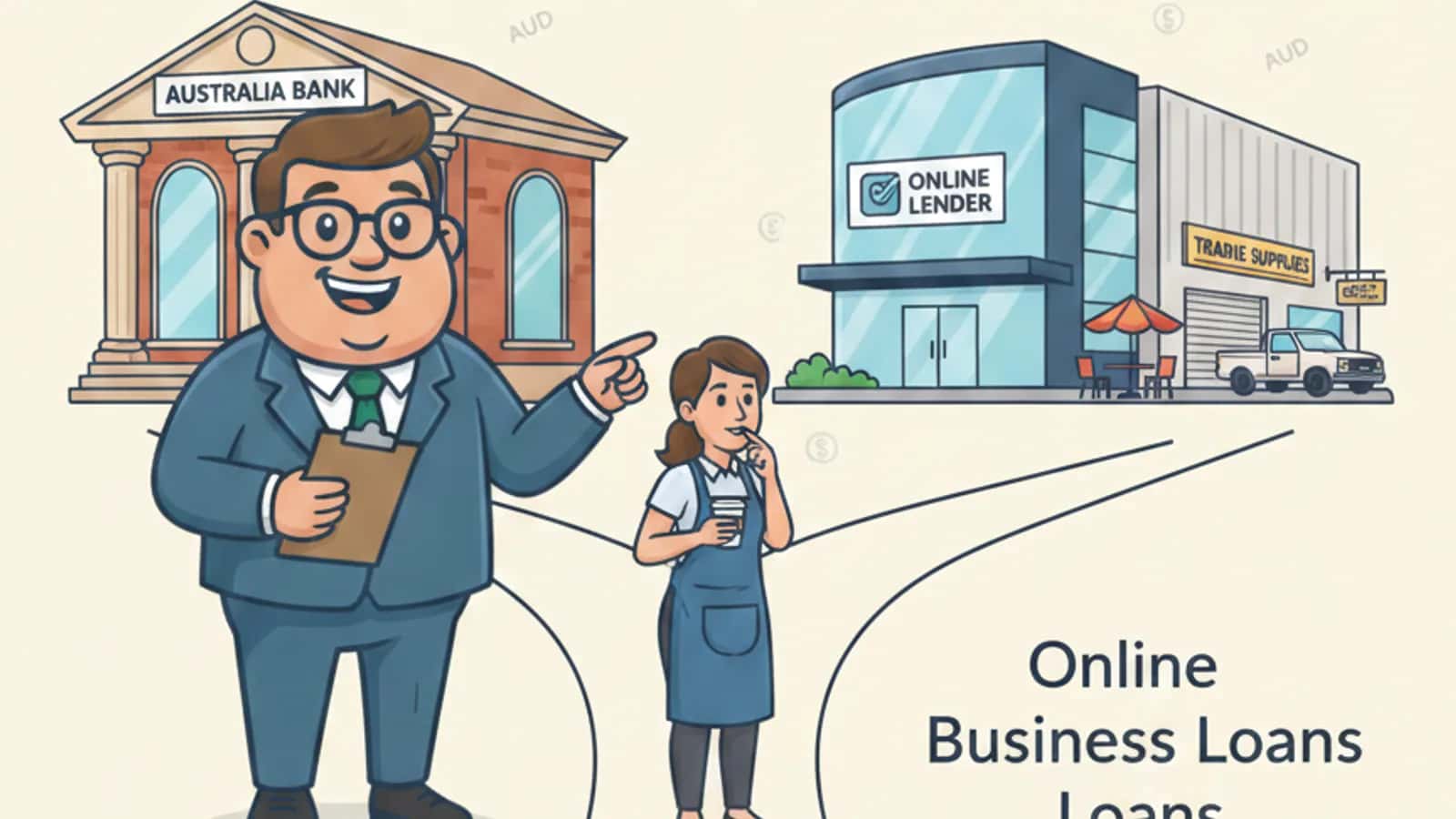
How to Improve Your Chances of Business Loan Approval in Australia
To improve your chances of business loan approval in Australia, focus on five things before you apply: clean up your credit file, demonstrate consistent cash flow, organise your financial records, borrow an amount that matches your revenue, and choose a lender whose criteria actually fits your business.

Quick answer
To improve your chances of business loan approval in Australia, focus on five things before you apply: clean up your credit file, demonstrate consistent cash flow, organise your financial records, borrow an amount that matches your revenue, and choose a lender whose criteria actually fits your business. Major banks approve only 25–35% of business loan applications under $1 million, so lender selection matters as much as preparation.
Key takeaways
- Major Australian banks reject the majority of small business loan applications, especially for unsecured lending
- Non-bank and fintech lenders often have higher approval rates and can fund within 24–72 hours
- A credit score above 600 improves your options, but specialist lenders assess all credit types
- Consistent cash flow is the single strongest signal lenders look for
- The average small business loan request in Australia is $167,272 — aligning your ask to your revenue improves approval odds
- Incomplete documentation is one of the most common reasons applications are declined
- The SME Loan Guarantee Scheme has supported nearly 109,000 loans worth around $16.5 billion, offering a backstop for businesses that struggle with traditional credit
- A 2-minute eligibility check with no hard credit search is enough to start comparing options through platforms like Funding Fred
What Credit Score Do You Need to Get a Business Loan in Australia

Most traditional lenders want to see a personal credit score of at least 600–650 before they'll seriously consider your application. Non-bank and specialist lenders are more flexible — some will work with scores below 500 if your cash flow and trading history are strong.
In Australia, credit scores are issued by bureaus including Equifax, Experian, and illion. Scores typically range from 0 to 1,200 (Equifax) or 0 to 1,000 (Experian). Here's a rough guide to what different score bands mean for your borrowing options:
| Score Range | What It Signals | Likely Lender Options |
|---|---|---|
| 700+ | Low risk | Major banks, credit unions, most non-bank lenders |
| 600–699 | Moderate risk | Non-bank lenders, fintech platforms |
| 500–599 | Higher risk | Specialist lenders, secured options |
| Below 500 | Significant risk | Merchant cash advance, revenue-based lending |
Before applying anywhere, pull your own credit report — it's free once a year from each bureau and counts as a soft inquiry that won't affect your score.
Can You Get a Business Loan With Bad Credit
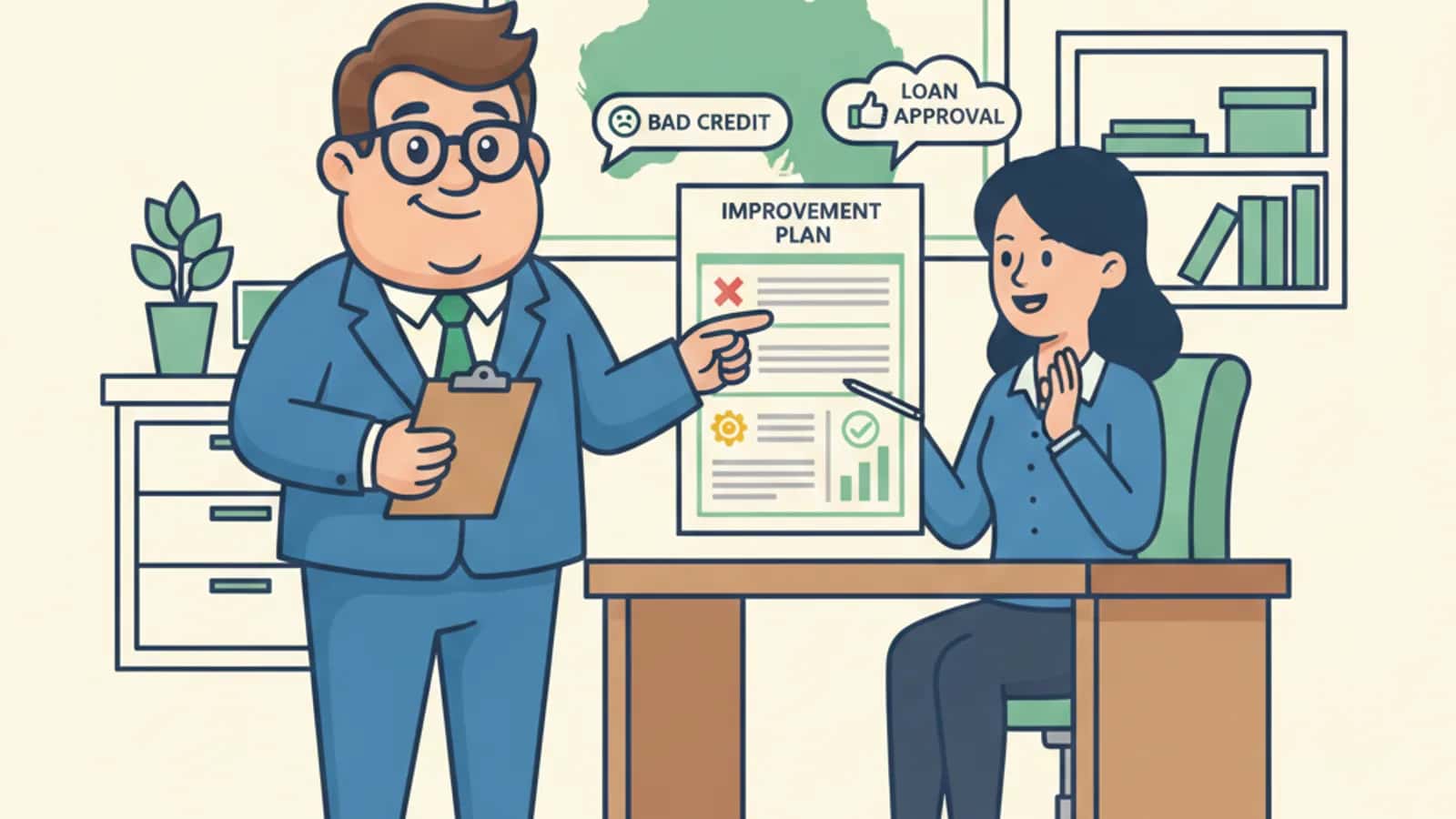
Yes, bad credit doesn't automatically disqualify you from business funding in Australia. Specialist lenders and fintech platforms assess your application differently from the major banks — they weight recent revenue, bank statement patterns, and trading history more heavily than a credit score number. Use those strengths when comparing selected business loans in Australia.
Options worth exploring if your credit is imperfect:
- Merchant Cash Advance (MCA):
- Repayments are tied to your daily card turnover, so approval is based on sales volume rather than credit score
- Secured loans:
- Offering an asset as security (equipment, property) reduces lender risk and improves approval odds
- Revenue-based lending:
- Lenders look at 3–6 months of bank statements to assess serviceability
- Low doc loans:
- Some lenders offer low documentation options for businesses with strong cash flow but limited formal financials
Platforms like Funding Fred connect Australian SMEs with selected finance partners who consider all credit types — so a less-than-perfect credit file isn't the end of the road. No hard check to start, and the 2 min check gives you a clear picture of where you stand.
What Documents Do You Need to Apply for a Business Loan
Incomplete or inadequate documentation is one of the most common reasons Australian lenders decline applications. Getting your paperwork in order before you apply is one of the simplest ways to improve your chances.
For major banks, expect to provide
- Last 2 years of business tax returns
- Last 2 years of personal tax returns (for directors)
- Profit and loss statements (current year to date)
- Balance sheet
- 6–12 months of business bank statements
- ATO BAS statements (last 4 quarters)
- Business plan with financial projections (for larger loans)
- Details of existing debts and liabilities
For non-bank and fintech lenders, the list is shorter
- Last 3–6 months of business bank statements
- ABN and proof of trading
- Basic business details (turnover, trading age, industry)
The gap in documentation requirements is significant. A hospitality venue in Brisbane or a trade business in Perth that can't produce two years of audited financials may be knocked back by a bank but approved by a specialist lender within 48 hours.
What Financial Records Should You Prepare Before Applying
Strong financial records do two things: they prove your business can repay the loan, and they show the lender you run a well-managed operation. Both matter.
The records that carry the most weight with lenders:
Bank statements
are the most scrutinised document. Lenders look for consistent deposits, manageable outgoings, no dishonoured payments, and a positive average daily balance. Three to six months of clean statements can offset a mediocre credit score.
BAS statements
confirm your reported revenue matches your actual GST turnover. Discrepancies between your BAS and bank statements raise red flags.
Profit and loss statements
show whether the business is actually making money after expenses. A business turning over $500,000 but netting $20,000 will struggle to service a large loan.
Debt schedule: List every existing obligation — equipment finance, credit cards, ATO payment plans, other loans. Lenders calculate your debt-to-income ratio, and undisclosed debts discovered during assessment can kill an application.
For a deeper breakdown of what lenders assess, the business loans guide on Funding Fred covers eligibility criteria across different lender types.
How Much Money Can You Borrow for Your Small Business
The amount you can borrow depends on your revenue, trading history, and the type of loan. The average small business loan request in Australia sits around $167,272, but lenders typically use a revenue multiplier to set maximum loan amounts.
A common rule of thumb: unsecured lenders will approve up to 10–20% of your annual turnover. So a business with $500,000 in annual revenue might qualify for $50,000–$100,000 unsecured. Secured loans can go higher.
Borrowing range by lender type
- Major banks: $10,000 to $5 million+ (secured, with full documentation)
- Non-bank lenders: $5,000 to $500,000 (unsecured, faster approval)
- Fintech platforms: $5,000 to $7.5 million depending on the platform and product
Asking for too much relative to your revenue is a fast way to get declined. Align your loan request to what your cash flow can genuinely service — a monthly repayment should not exceed 10–15% of your average monthly revenue as a starting guide.
What Are the Typical Interest Rates for Business Loans Right Now
Business loan interest rates in Australia vary widely by lender type, loan size, security offered, and business risk profile. Interest rates on business lending have been relatively flat over the past 12 months in line with a stable cash rate, but businesses are still paying significantly higher rates than they were a few years ago.
Rough rate ranges in 2026:
| Lender Type | Approximate Rate Range |
|---|---|
| Major banks (secured) | 7%–12% p.a. |
| Non-bank lenders (unsecured) | 12%–25% p.a. |
| Fintech / short-term lenders | 15%–40%+ p.a. (factor rates may apply) |
| Merchant Cash Advance | Cost expressed as a factor rate (e.g., 1.2–1.5x) |
Higher rates from non-bank lenders reflect faster access, less documentation, and more flexible criteria — not necessarily worse value. A business that needs $80,000 in three days to secure a contract is better served by a 20% p.a. unsecured loan than a 9% bank loan that takes six weeks to approve.
Always compare the total cost of the loan, not just the headline rate. Ask for the comparison rate and any establishment or monthly fees.
How Long Does the Business Loan Approval Process Usually Take
Approval timelines vary dramatically depending on who you apply with. Traditional banks can take 2–8 weeks to assess a business loan application. Non-bank and fintech lenders often approve and fund within 24–72 hours.
Typical timelines:
- 1
Major banks
2–8 weeks (sometimes longer for complex applications)
- 2
Non-bank lenders
2–5 business days
- 3
Fintech / online lenders
24–72 hours from application to funding
- 4
Merchant Cash Advance
Same day or next business day in some cases
A cafe owner in Melbourne who applied on a Tuesday afternoon and needed stock for a weekend event can't wait six weeks. That's exactly the gap platforms like Funding Fred are built to fill — applied Tuesday arvo, funded by Thursday is a realistic outcome through specialist finance partners.
Delays on the applicant's side are also common. Having all documents ready before you apply is the single fastest way to speed up your own approval timeline.
Which Australian Lenders Are Easiest to Get a Business Loan From
Non-bank lenders and fintech platforms have higher approval rates and more flexible criteria than the major banks. Major banks approve only 25–35% of business loan applications under $1 million, with even lower rates for unsecured lending. Non-bank lenders and fintech companies generally approve a higher proportion of applications, particularly for businesses with shorter trading histories or imperfect credit.
The practical comparison:
| Factor | Traditional Banks | Specialist Lenders via Funding Fred |
|---|---|---|
| Approval rate | 25–35% for loans under $1M | Higher, flexible criteria |
| Time to decision | 2–8 weeks | 24–72 hours |
| Documentation | Extensive | Streamlined |
| Credit requirements | Strict | All credit types considered |
| Loan range | Varies | $5,000–$7.5 million |
| Hard credit check to start | Yes | No hard check to start |
Approval rate
- Traditional Banks
- 25–35% for loans under $1M
- Specialist Lenders via Funding Fred
- Higher, flexible criteria
Time to decision
- Traditional Banks
- 2–8 weeks
- Specialist Lenders via Funding Fred
- 24–72 hours
Documentation
- Traditional Banks
- Extensive
- Specialist Lenders via Funding Fred
- Streamlined
Credit requirements
- Traditional Banks
- Strict
- Specialist Lenders via Funding Fred
- All credit types considered
Loan range
- Traditional Banks
- Varies
- Specialist Lenders via Funding Fred
- $5,000–$7.5 million
Hard credit check to start
- Traditional Banks
- Yes
- Specialist Lenders via Funding Fred
- No hard check to start
For Australian SMEs in hospitality, construction, retail, trades, or professional services, the specialist lender route through a matching platform often produces faster outcomes with less friction. Smart Matching means your application goes to the partners most likely to approve your specific profile — not a blanket submission to every lender on the market.
Are There Different Loan Options for Startups vs Established Businesses
Yes, and the distinction matters. Startups (under 12 months trading) face significantly tighter options than established businesses, because lenders have no trading history to assess.
For startups
- Government-backed options: The SME Loan Guarantee Scheme has supported nearly 109,000 loans worth around $16.5 billion, providing a backstop for businesses that struggle with traditional credit
- Personal loans used for business purposes
- Business credit cards
- Equipment finance (the asset secures the loan)
- Some non-bank lenders will consider businesses from 6 months trading
For established businesses (12+ months trading)
- Full range of unsecured and secured business loans
- Merchant Cash Advance based on card turnover
- Invoice finance and trade finance
- Revenue-based lending
Most specialist lenders require a minimum of 6–12 months of trading history and a minimum monthly turnover (often $5,000–$10,000). If the business is past that threshold, the options open up considerably.
Explore the full range of business funding options for Australian businesses to see what fits your trading stage.
What Alternative Funding Sources Exist If You Can't Get a Traditional Bank Loan
If a traditional bank has said no, there are several practical alternatives. Fintech lenders, merchant cash advances, invoice finance, and government-backed schemes all serve businesses that fall outside standard bank criteria.
Alternatives worth considering
- Unsecured business loans from non-bank lenders: Faster, more flexible, based on cash flow rather than assets
- Merchant Cash Advance: A lump sum repaid as a percentage of daily card sales — no fixed repayment schedule
- Invoice finance: Unlock cash tied up in unpaid invoices, useful for B2B businesses with 30–90 day payment terms
- Equipment finance: The equipment itself secures the loan, removing the need for other collateral
- Government grants and programs: Check business.gov.au for current grant rounds relevant to your industry and state
- Peer-to-peer lending: Less common in Australia but available through some platforms
The Australian business loan guides on Funding Fred cover each of these in more detail, including which product suits which business type.
How to Make Your Business Loan Application Look More Attractive to Lenders
Lenders are assessing one thing: the probability that you'll repay. Every element of a strong application is evidence of that probability.
Practical steps to strengthen your application:
- Clean up your bank account behaviour. Avoid overdrafts, dishonoured payments, and large unexplained withdrawals in the 3–6 months before applying.
- Reduce existing debt where possible. Pay down credit cards and close unused facilities to improve your debt-to-income ratio.
- Separate personal and business finances. A dedicated business bank account makes your revenue and expenses easier to assess.
- Be specific about loan purpose. Lenders respond better to "purchase a $45,000 commercial oven to expand catering capacity" than "working capital." Clarity signals planning. Around 32% of small business loans in Australia are for vehicle financing and 28% for day-to-day capital — knowing your category helps you frame the application correctly.
- Match your loan amount to your revenue. Requesting an amount your cash flow can demonstrably service removes the lender's biggest concern.
- Apply through a matching platform. Rather than applying to multiple lenders individually (which triggers multiple hard credit checks), a platform like Funding Fred runs a 2 min check with no hard inquiry to start, then matches you with the specialist partners most likely to approve your profile.
For a detailed breakdown of costs and eligibility across lender types, see this guide to business loans, costs, and eligibility.
What Mistakes Do Small Business Owners Make When Applying for Loans
The most common mistakes are avoidable. Knowing them in advance puts you ahead of most applicants.
Top mistakes to avoid
- Applying to the wrong lender. A startup with 8 months of trading history applying to a major bank for an unsecured loan is almost certainly wasting time.
- Incomplete documentation. Missing BAS statements or bank statements are the fastest path to a declined application.
- Not knowing your credit score. Surprises during assessment slow everything down. Check your personal and business credit reports before you apply.
- Borrowing more than the business can service. Lenders will decline applications where the repayment exceeds a reasonable proportion of monthly cash flow.
- Multiple hard credit inquiries in a short period. Each hard check leaves a mark on your credit file. Too many in a short window signals financial stress to lenders.
- Undisclosed liabilities. ATO payment plans, director loans, and personal guarantees on other debts all affect serviceability calculations. Disclose them upfront.
- No clear loan purpose. "I need money for the business" is not a purpose. Specific, credible use of funds builds lender confidence.
Next steps
Improving your chances of business loan approval in Australia comes down to preparation, positioning, and choosing the right lender for your actual situation. Clean bank statements, organised financial records, a realistic loan amount, and a clear purpose for the funds all signal to lenders that you're a low-risk borrower.
But preparation alone isn't enough if you're applying to the wrong lender. Major banks decline the majority of small business applications. Specialist non-bank lenders and fintech platforms exist precisely for the businesses banks turn away — and they make decisions in hours, not weeks.
Actionable next steps:
- Pull your personal and business credit reports and address any errors
- Gather 3–6 months of bank statements and your last two BAS statements
- Calculate the loan amount your monthly cash flow can genuinely service
- Define your loan purpose clearly and specifically
- Run a 2 min check through Funding Fred — no hard check to start, no obligation to proceed — to see which specialist partners match your profile
Business Funding. Made Simple. That's the point. Don't spend six weeks chasing a bank that's unlikely to say yes when a Fast Decision from a specialist partner could have you funded by Thursday.
Further reading
Frequently asked questions
What Credit Score Do You Need to Get a Business Loan in Australia?
Most traditional lenders want to see a personal credit score of at least 600–650 before they'll seriously consider your application. Non-bank and specialist lenders are more flexible — some will work with scores below 500 if your cash flow and trading history are strong.
Can You Get a Business Loan With Bad Credit?
Yes, bad credit doesn't automatically disqualify you from business funding in Australia. Specialist lenders and fintech platforms assess your application differently from the major banks — they weight recent revenue, bank statement patterns, and trading history more heavily than a credit score number. Use those strengths when comparing selected business loans in Australia.
What Documents Do You Need to Apply for a Business Loan?
Incomplete or inadequate documentation is one of the most common reasons Australian lenders decline applications. Getting your paperwork in order before you apply is one of the simplest ways to improve your chances.
What Financial Records Should You Prepare Before Applying?
Strong financial records do two things: they prove your business can repay the loan, and they show the lender you run a well-managed operation. Both matter.
How Much Money Can You Borrow for Your Small Business?
The amount you can borrow depends on your revenue, trading history, and the type of loan. The average small business loan request in Australia sits around $167,272, but lenders typically use a revenue multiplier to set maximum loan amounts.
What Are the Typical Interest Rates for Business Loans Right Now?
Business loan interest rates in Australia vary widely by lender type, loan size, security offered, and business risk profile. Interest rates on business lending have been relatively flat over the past 12 months in line with a stable cash rate, but businesses are still paying significantly higher rates than they were a few years ago.
Written by
The Funding Fred Editorial Team creates plain-English guides to help business owners understand funding options, eligibility, and application readiness before they compare finance options.