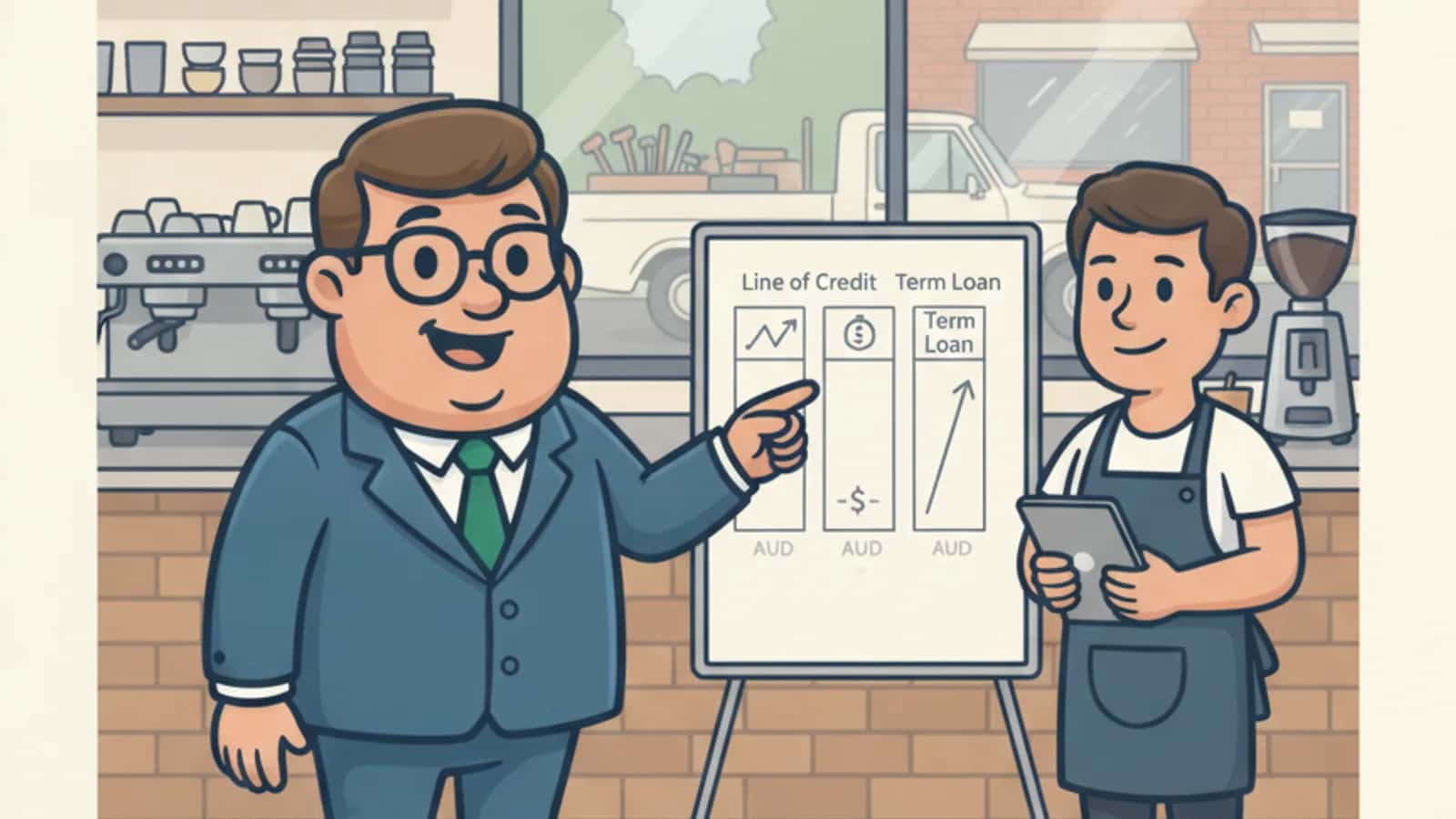
Bad Credit Business Loans Australia: What Lenders Look For and How to Strengthen Your Application
Getting a business loan with bad credit in Australia is possible — but the path looks different from a standard bank application. Specialist and non-bank lenders assess your current business performance (revenue, cash flow, bank conduct) alongside your credit history, not instead of it.

Quick answer
Getting a business loan with bad credit in Australia is possible — but the path looks different from a standard bank application. Specialist and non-bank lenders assess your current business performance (revenue, cash flow, bank conduct) alongside your credit history, not instead of it. A personal credit score around 530 or above may qualify you, though better scores unlock better rates. The key is knowing what lenders actually weigh, and fixing what you can before you apply.
Key takeaways
- A personal credit score of around 530 may qualify for a bad credit business loan; 680+ gets significantly better terms
- Non-bank and specialist lenders look at revenue consistency, bank account conduct, and trading history — not just your credit score
- Interest rates for bad credit business loans in Australia typically range from 15% to 35%
- Offering security (property, equipment) can improve approval odds and reduce your rate
- There are four distinct lender paths depending on the type and age of your credit issues
- Bad credit marks generally affect eligibility for two to five years, depending on the type of listing
- Government-backed programs like the SME Recovery Loan Scheme have existed; current support options vary by state
- The biggest application mistakes are applying to the wrong lender type and submitting incomplete financials
- A 2-minute eligibility check with no hard credit search is the lowest-risk first step for most business owners
What Does "Bad Credit" Actually Mean for a Business Loan Application?
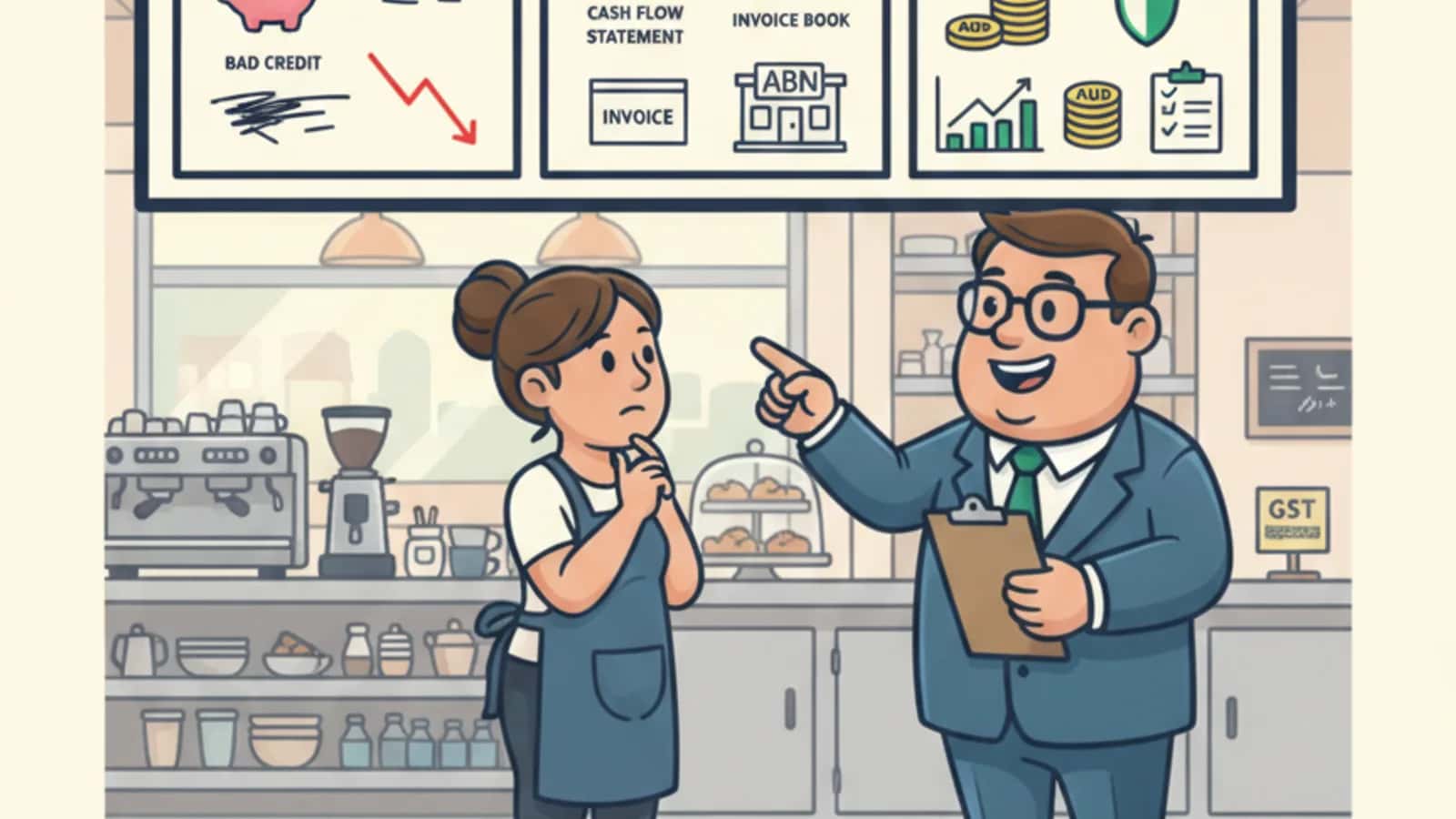
Bad credit isn't a single thing — it's a spectrum. For Australian business loan applications, "bad credit" typically refers to one or more of the following on your personal or business credit file:
- Defaults (paid or unpaid)
- Court judgements
- ATO debt (with or without a payment plan)
- Bankruptcy or Part IX debt agreement (discharged or current)
- Multiple recent credit enquiries
- Consistent late payments without formal defaults
Lenders treat these differently. A paid default from three years ago is far less concerning than an unpaid default from six months ago. A business owner with an ATO payment plan in place is in a different category from one with unresolved ATO debt and no arrangement. Understanding where your situation sits helps you target the right lender — and avoid wasting hard credit enquiries on applications that won't succeed.
What Credit Score Do You Need for a Business Loan With Bad Credit?

A personal credit score of at least 530 may qualify you for a bad credit business loan in Australia, but a score of 680 or above opens up significantly better rates and terms. Business credit scores are also assessed, particularly for businesses trading more than 12 months.
In practice, many specialist lenders don't use a hard score cut-off. Instead, they look at the reason behind the score. A score of 550 caused by a single paid default two years ago reads very differently from a 550 caused by multiple active defaults and current arrears.
Score ranges as a rough guide:
| Credit Score (Equifax) | Likely Outcome |
|---|---|
| 700+ | Access to mainstream and competitive rates |
| 580–699 | Most non-bank lenders; some restrictions on amount |
| 530–579 | Specialist bad credit lenders; higher rates likely |
| Below 530 | Secured lending or asset-backed options; limited unsecured access |
Can you get a business loan with a 500 credit score in Australia? It's difficult but not impossible. Secured loans backed by property or equipment are more accessible at this level. Some specialist lenders will also consider discharged bankruptcy cases, though terms will be short-term and rates higher. It is worth reviewing the broader range of business funding options in Australia before applying.
How Much Higher Are Interest Rates for Businesses With Poor Credit?
Interest rates for bad credit business loans in Australia typically range from 15% to 35% annually, compared to 7–12% for standard business loans. The exact rate depends on your trading history, the age and type of credit issues, loan term, and whether you offer security.
A few factors that move your rate down even with bad credit:
- Longer trading history
- (2+ years shows stability)
- Consistent monthly revenue
- (lenders want to see serviceability)
- Offering an asset as security
- (property or equipment reduces lender risk)
- ATO debt on an active payment plan
- (shows you're managing the issue)
For a plain-language breakdown of how rates are structured, see our guide to Australian business loan terms explained.
Alternative Lenders for Small Businesses With Bad Credit
Traditional banks — the big four included — use automated credit scoring that typically disqualifies applicants with defaults, judgements, or ATO debt. Non-bank and specialist lenders use a different model.
Here's how the lender landscape breaks down for bad credit applicants:
Four main lender paths:
- 1
Specialist ATO-compliance lenders
for businesses with active ATO debt on a formal payment plan
- 2
Mainstream low-doc lenders
suitable if your defaults are paid and more than two years old
- 3
Secured short-term specialists
for current arrears or recent defaults, backed by an asset
- 4
Asset-backed rebuild lenders
for discharged bankruptcy or hardship arrangements
Approximately 40% of approved business loans at some specialist lenders go to businesses with credit scores below 650. That's not a guarantee — but it confirms the market exists.
Do online lenders have different credit requirements than traditional banks?
Yes. Online and fintech lenders typically use open banking data, revenue analysis, and bank statement review rather than relying solely on credit bureau scores. This means consistent cash flow and clean bank conduct can outweigh historical credit issues. For a direct comparison of how broker platforms and direct lenders approach this differently, see business loan broker vs direct lender in Australia.
Which Australian Banks Are Most Forgiving of Bad Credit?
Major Australian banks — ANZ, Commonwealth, NAB, Westpac — generally require a clean credit history for standard business lending. Westpac acknowledges that bad credit business loans exist and points applicants toward specialist lenders rather than their own products. None of the big four are realistically accessible for applicants with current defaults or ATO debt.
Better options for bad credit applicants
- Non-bank lenders (Prospa, Moula, Lumi, Bizcap)
- Specialist credit-impaired lenders (Switchboard Finance, OverdraftMe)
- Finance broker platforms that match you to the right lender based on your actual profile
The honest answer: if you have bad credit, the major banks aren't your fastest or most likely path. Specialist partners with flexible criteria are where approvals actually happen. Platforms like Funding Fred connect Australian SMEs with a panel of specialist finance partners — no hard credit check to start.
What Documents Do You Need to Prove Your Business Is Viable?
Lenders assessing bad credit business loan applications in Australia focus heavily on current business performance. The documents that matter most:
Core documents
- 3–6 months of business bank statements (the single most important item)
- BAS statements (last 2–4 quarters)
- Proof of ABN registration and trading age
- Business revenue summary (turnover for the last 12 months)
- ATO portal screenshot showing no unresolved debt (or payment plan confirmation)
Supporting documents that strengthen your case
- Outstanding invoices or contracts (shows forward revenue)
- Lease agreement (proves established premises)
- Asset list if applying for secured lending
Clean bank statements matter more than you might expect. Lenders look at: average monthly deposits, whether you regularly go into overdraft, dishonoured payments, and gambling transactions. A messy bank account can override a reasonable credit score.
Are Secured Loans Easier to Get With Bad Credit?
Yes — offering security significantly improves approval odds for bad credit applicants. A chattel mortgage on a work vehicle, for example, can be approved even when unsecured lending isn't available. Property security opens up even more options.
Secured vs unsecured for bad credit applicants:
| Factor | Secured Loan | Unsecured Loan |
|---|---|---|
| Approval odds (bad credit) | Higher | Lower |
| Interest rate | Lower | Higher |
| Loan amount potential | Higher | Typically capped |
| Risk to applicant | Asset at risk | No asset at risk |
| Processing time | Slower (valuation required) | Faster |
Choose secured if you have an asset and need a larger amount or better rate. Choose unsecured if speed is the priority and the loan amount is under $250k.
How Can You Improve Your Business Credit Score Quickly?
Improving your credit score takes time, but some actions have faster impact than others. For Australian business owners preparing a loan application:
Actions with near-term impact (1–6 months)
- Pay any outstanding defaults — a paid default is treated more favourably than an unpaid one
- Set up a formal ATO payment plan if you have tax debt — this shifts you from "unresolved" to "managed"
- Clean up your bank account conduct — no dishonours, reduce overdraft reliance for 90 days
- Reduce credit enquiries — don't apply to multiple lenders at once; use a broker platform that does a soft check first
Longer-term actions (6–12 months)
- Pay all bills on time, consistently
- Separate personal and business finances if you haven't already
- Build a track record of consistent monthly revenue
For a broader view of what moves the needle on approval, see how to improve your business loan approval chances in Australia.
How Long Does a Bad Credit History Impact Loan Eligibility?
In Australia, most negative credit listings remain on your file for a set period:
- Defaults:
- 5 years from the date of listing
- Court judgements:
- 5 years
- Bankruptcy:
- 5 years from discharge (or 2 years from end of bankruptcy, whichever is later)
- Serious credit infringements:
- 7 years
- Credit enquiries:
- 5 years (but impact fades after 12–18 months)
The practical impact on loan eligibility fades before the listing disappears. A default that's 3 years old and paid is much less of a barrier than one that's 6 months old and unpaid. Specialist lenders often apply a "two-year rule" — defaults paid more than two years ago may qualify for mainstream low-doc products.
What Types of Businesses Struggle Most to Get Loans?
Some business types face structural challenges regardless of credit score:
- Startups with less than 6 months trading
- no revenue history to assess (see our guide to business loans for startups in Australia)
- Seasonal businesses
- with inconsistent monthly revenue
- Sole traders
- with mixed personal/business finances
- Hospitality and retail
- perceived as higher risk sectors
- Businesses with ATO debt and no payment plan
- lenders see unmanaged tax debt as a red flag
If you're a sole trader or micro-business, the funding path is different but not closed — see business loans for Australian sole traders and micro-businesses.
What Are the Biggest Mistakes Small Businesses Make When Applying for Loans?
The most common errors that lead to rejection — or worse, wasted hard credit enquiries:
- 1
Applying to the wrong lender type
a major bank application with a 550 credit score and an unpaid default is almost certain to fail
- 2
Submitting incomplete bank statements
gaps or missing months trigger automatic delays
- 3
Not disclosing ATO debt upfront
lenders find it anyway; hiding it destroys trust
- 4
Applying to multiple lenders simultaneously
each hard enquiry drops your score further
- 5
Applying right after a default listing
waiting 6–12 months and paying the default first changes the outcome
- 6
Overestimating how much you need
a smaller, more serviceable loan amount is easier to approve
Government Programs for Small Businesses With Credit Challenges
The Australian federal and state governments have run several programs to support small business access to finance. Historically, the SME Recovery Loan Scheme (administered through the AASB and participating lenders) provided government-backed guarantees that made lenders more willing to approve credit-impaired businesses.
As of 2026, the active landscape includes:
- Australian Business Growth Fund
- equity investment for established SMEs (not a loan product)
- State-based small business grants
- vary by state; check your state government's business portal
- ATO payment plans
- not a loan, but formalising ATO debt removes a major barrier to other lending
Government programs change frequently. For current eligibility, check business.gov.au directly. These programs rarely replace private lending but can complement it — particularly for businesses rebuilding after hardship.
Next steps
Bad credit doesn't disqualify an Australian business from funding — but it does change the path. The key is understanding what lenders in this space actually assess: current revenue, bank account conduct, trading age, and the type and age of your credit issues. Fix what you can before applying. Target the right lender category for your specific situation. And avoid scattering hard credit enquiries across lenders who were never going to say yes. For more comparisons and application guidance, browse our business loan guides.
Actionable next steps:
- Pull your credit report (Equifax, Illion, or Experian) and identify exactly what's on it
- Pay any outstanding defaults if possible, and formalise any ATO debt into a payment plan
- Clean up 90 days of bank statements — no dishonours, reduce overdraft use
- Use a soft-check eligibility platform to see what's available without damaging your score
- Match your application to the right lender type based on your credit profile
Business Funding. Made Simple. Funding Fred runs a 2-minute eligibility check — no hard credit search, no obligation — and matches Australian SMEs with specialist finance partners who work with all credit types. Whether you're a tradie in Perth, a café owner in Melbourne, or a retailer in Adelaide, the check takes two minutes and costs nothing to start.
Check Eligibility Now — No hard check to start.
Further reading
Frequently asked questions
What Does "Bad Credit" Actually Mean for a Business Loan Application?
Bad credit isn't a single thing — it's a spectrum. For Australian business loan applications, "bad credit" typically refers to one or more of the following on your personal or business credit file:
What Credit Score Do You Need for a Business Loan With Bad Credit?
A personal credit score of at least 530 may qualify you for a bad credit business loan in Australia, but a score of 680 or above opens up significantly better rates and terms. Business credit scores are also assessed, particularly for businesses trading more than 12 months.
How Much Higher Are Interest Rates for Businesses With Poor Credit?
Interest rates for bad credit business loans in Australia typically range from 15% to 35% annually, compared to 7–12% for standard business loans. The exact rate depends on your trading history, the age and type of credit issues, loan term, and whether you offer security.
Which Australian Banks Are Most Forgiving of Bad Credit?
Major Australian banks — ANZ, Commonwealth, NAB, Westpac — generally require a clean credit history for standard business lending. Westpac acknowledges that bad credit business loans exist and points applicants toward specialist lenders rather than their own products. None of the big four are realistically accessible for applicants with current defaults or ATO debt.
What Documents Do You Need to Prove Your Business Is Viable?
Lenders assessing bad credit business loan applications in Australia focus heavily on current business performance. The documents that matter most:
Are Secured Loans Easier to Get With Bad Credit?
Yes — offering security significantly improves approval odds for bad credit applicants. A chattel mortgage on a work vehicle, for example, can be approved even when unsecured lending isn't available. Property security opens up even more options.
Written by
The Funding Fred Editorial Team creates plain-English guides to help business owners understand funding options, eligibility, and application readiness before they compare finance options.