
Business Loan Broker vs Direct Lender in Australia: Which Route Is More Likely to Save You Money?
For most Australian small businesses, using a broker tends to produce better loan terms and higher approval odds — but it's not always the cheapest path once you factor in commissions. Going direct to a lender is faster if you already know which product suits you and your credit profile is strong.
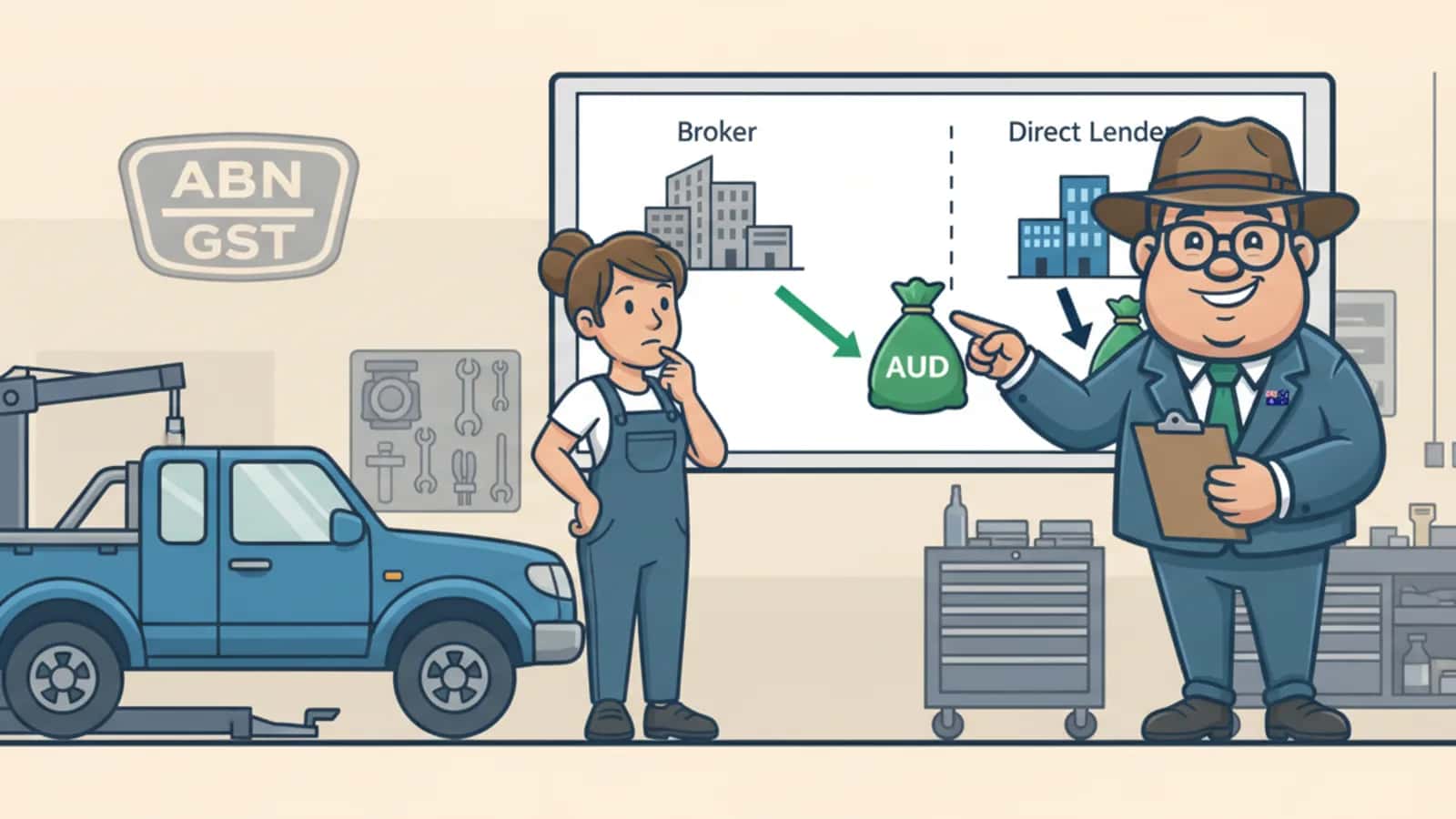
Quick answer
For most Australian small businesses, using a broker tends to produce better loan terms and higher approval odds — but it's not always the cheapest path once you factor in commissions. Going direct to a lender is faster if you already know which product suits you and your credit profile is strong. The right choice depends on your time, your credit history, and how complex your funding need is.
Key takeaways
- Brokers access a panel of lenders and can negotiate competing offers, which often results in lower rates than a single direct application
- Direct lenders cut out the intermediary, which can mean lower upfront costs — but fewer options to compare
- Broker approval rates can reach around 85%, compared to 60–65% when applying directly to lenders
- Broker commissions in Australia typically range from 1% to 3% of the loan amount, paid by the lender or added to your loan cost
- Time to funding varies: direct fintechs can approve in 24–48 hours; broker-matched loans may take 2–5 business days depending on lender fit
- A poor credit score doesn't automatically disqualify you — brokers can match you with lenders who assess actual business performance
- Platforms like Funding Fred run a 2-minute eligibility check with no hard credit search, giving you fast options without the paperwork
- Rejected applications from one lender don't have to be the end — alternative funding sources exist for most business types
What Exactly Does a Business Loan Broker Do in Australia?

A business loan broker acts as a matchmaker between your business and a panel of lenders. Instead of you applying to one bank and hoping for the best, a broker assesses your situation, then shops your application across multiple lenders to find the best fit.
In Australia, brokers typically:
- Assess your business financials, trading history, and funding purpose
- Match you with lenders whose criteria align with your profile
- Submit your application and manage lender communication
- Negotiate terms on your behalf
The practical difference: A direct lender (a bank or fintech) has one set of products and one credit policy. If you don't fit, you're rejected. A broker has access to dozens of lenders with different appetites — some favour hospitality, others construction, others e-commerce. That breadth matters when you're not a textbook borrower.
Brokers in Australia must hold an Australian Credit Licence (ACL) or operate as a credit representative under a licensee. That's a meaningful consumer protection — it means they're legally required to act in your interest.
How Much Cheaper Are Loans Through Brokers Compared to Direct Banks?

Brokers don't automatically get you a cheaper loan — but they often do, because they create competition among lenders. When multiple lenders know they're competing for your business, rates tend to tighten.
The honest answer: it depends on your profile and the broker's panel.
- Strong credit, simple loan:
- A direct application to a major bank or established fintech may match or beat a brokered rate, with no commission involved
- Average credit, complex situation:
- A broker's ability to match you with a specialist lender often produces meaningfully better rates than what the big four would offer — if they approve you at all
- Niche industry or unusual loan structure:
- Brokers consistently outperform direct applications here, because they know which lenders have appetite for specific sectors
The key variable is whether the broker's commission is absorbed by the lender (common in Australia) or passed to you. Always ask upfront.
For a practical overview of what business loans actually cost in Australia, see the business loans cost and eligibility guide on Funding Fred.
What Fees Do Business Loan Brokers Typically Charge?
Brokers in Australia earn money in two main ways: lender-paid commissions and borrower-paid fees. Understanding the difference saves you from a nasty surprise.
Lender-paid commissions: The lender pays the broker a trail or upfront commission, typically 1%–3% of the loan amount. You don't pay this directly, but it's baked into the lender's cost structure — so it may indirectly affect your rate.
Borrower-paid fees: Some brokers charge you directly — a flat fee or percentage for their service. This is more common for complex commercial loans above $500k.
What to ask before you commit
- Is your commission paid by the lender or by me?
- What's the total cost of the loan, including all fees?
- Are you recommending this lender because it's the best fit, or because the commission is higher?
That last question matters. Australian credit law requires brokers to act in your best interest, but asking directly keeps everyone honest.
Pros and Cons of Using a Loan Broker Versus Going Direct
The business loan broker vs direct lender question in Australia doesn't have a universal answer. Here's a straight comparison:
| Factor | Broker | Direct Lender |
|---|---|---|
| Lender access | Wide panel, multiple options | Single lender only |
| Approval odds | Higher (estimated ~85%) | Lower (60–65% direct) |
| Speed | 2–5 business days (varies) | 24–48 hrs (fintechs), weeks (banks) |
| Cost | May include commission | No broker fee, but limited comparison |
| Credit flexibility | Can match all credit types | Strict internal policy |
| Transparency | Broker is intermediary | Direct relationship with lender |
| Guidance | Expert advice on structure | Self-directed |
| Best for | Complex needs, average credit | Strong profile, known product |
Choose a broker if: Your credit isn't perfect, your industry is niche, or you want someone to do the legwork across multiple lenders.
Go direct if: You have a strong credit file, you know exactly which product you need, and you want to avoid any possibility of commission costs.
How Long Does It Take to Get a Business Loan Through a Broker Versus a Direct Application?
Speed is one of the biggest practical differences. Direct fintechs are the fastest — some approve and fund within 24 hours. Major banks are the slowest, often taking 2–6 weeks.
Brokers sit in the middle, but they compress the search phase significantly:
- Without a broker:
- You research lenders, apply to one, wait for a decision, get rejected, then start again. That cycle can take weeks.
- With a broker:
- One application goes to multiple lenders simultaneously. You get competing offers in days, not weeks.
Realistic timelines in 2026
- Direct fintech (e.g., unsecured business loan): 24–48 hours approval, same-day or next-day funding
- Broker-matched fintech loan: 2–3 business days
- Broker-matched bank loan: 5–10 business days
- Direct major bank application: 2–6 weeks
For businesses that need capital fast — a hospitality venue restocking before a busy weekend, a tradie covering a supplier invoice — the broker-matched fintech route often hits the sweet spot of speed and competitive rate.
Platforms like Funding Fred run a 2-minute eligibility check with no hard credit search, so you can see your options without the wait.
What Credit Score Do I Need to Qualify for a Business Loan in Australia?
There's no universal minimum credit score for Australian business loans — different lenders set different thresholds, and many specialist lenders weight business performance more heavily than personal credit history.
General benchmarks (estimates based on lender criteria patterns)
- Major banks: Typically prefer a personal credit score above 650–700 and a clean credit file
- Non-bank lenders and fintechs: Often approve from 500+ if revenue and trading history are solid
- Merchant cash advances: May approve with lower scores, since repayment is tied to card turnover rather than fixed instalments
What lenders actually look at
- Monthly revenue (most want to see $10k–$15k+ per month)
- Trading age (6–12 months minimum for most non-bank lenders)
- Outstanding defaults or judgements
- Industry type and seasonal patterns
The broker advantage here: A broker knows which lenders on their panel are comfortable with lower credit scores or recent defaults. Going direct to a bank with a 580 credit score is likely a wasted application. A broker routes you to lenders who actually want your business.
Funding Fred's platform is built for all credit types — the eligibility check assesses your actual business performance, not just a number.
Are Business Loan Brokers Worth It for Small Startups?
For startups under 12 months old, brokers are worth considering — but options are genuinely limited regardless of route. Most lenders (direct or brokered) require at least 6 months of trading history.
Where brokers add value for startups
- Identifying the small pool of lenders who do fund early-stage businesses
- Structuring the application to highlight strengths (revenue growth, pre-sales, contracts)
- Avoiding wasted applications that hurt your credit file
Where brokers can't help: If your business has no revenue and no trading history, neither a broker nor a direct lender is likely to approve a traditional business loan. In that case, look at government-backed startup grants, equity funding, or personal loans used for business purposes.
Common Mistakes Australian Businesses Make When Choosing Loan Options
These mistakes cost businesses time, money, and sometimes their credit score.
- Applying to the wrong lender first. Going straight to your existing bank because it's familiar. Your bank knows your personal account, not your business performance. A specialist lender may be a far better fit.
- Ignoring the comparison rate. The headline interest rate looks great. The comparison rate (which includes fees) tells the real story. Always compare on comparison rate.
- Multiple direct applications in a short period. Each hard credit inquiry can lower your score. Brokers submit one application across multiple lenders, protecting your credit file.
- Not reading the broker's fee disclosure. Australian law requires brokers to provide a Credit Guide. Read it. Know what they earn and from whom.
- Choosing speed over fit. Taking the first approval because you're in a rush, then discovering the repayment structure doesn't match your cash flow. A 2-day wait for a better-structured loan is usually worth it.
- Assuming rejection means no options. One lender's rejection is not the market's verdict. See the section below on what to do after a rejection.
What Happens If My Business Loan Application Gets Rejected?
A rejection from one lender — or even two — doesn't close the door. It just means that lender's criteria didn't match your profile at that moment.
Immediate steps after a rejection:
- Ask the lender for the specific reason. You're entitled to know.
- Check whether a hard credit inquiry was made (if so, avoid more direct applications immediately).
- Address the issue if possible: reduce existing debt, fix a credit file error, or wait until your trading history is longer.
- Use a broker to approach lenders with different criteria — particularly those who assess revenue over credit score.
Alternative funding sources if traditional loans aren't available
- Merchant cash advance: Repayment tied to card sales, so approval is based on turnover, not credit score
- Invoice financing: Borrow against unpaid invoices — useful for B2B businesses with slow-paying clients
- Equipment finance: Asset-secured, so credit requirements are often lower
- Government grants and programs: Business.gov.au lists state and federal programs for eligible businesses
- Revenue-based financing: Repayments flex with monthly revenue
Funding Fred's platform covers unsecured loans and merchant cash advances from $5k to $7.5m — and the eligibility check won't affect your credit score.
Can I Negotiate Better Rates With a Broker or a Direct Lender?
Brokers have more negotiation leverage because they create competition among lenders. When a lender knows your application is also going to three of their competitors, they have a reason to sharpen their rate.
Going direct gives you a single offer with limited room to move — unless you come in with a competing offer from another lender, which requires you to do the broker's job yourself.
Practical negotiation tips
- Always ask for the establishment fee to be waived or reduced — it's often negotiable
- If you have a strong revenue history, use it as leverage
- Ask whether a shorter loan term reduces the rate (it often does)
- Get at least two competing offers before accepting anything
Which Type of Loan Broker Is Best for Tech Startups and Niche Industries?
For tech startups or businesses in niche industries, a specialist broker who knows your sector is significantly more valuable than a generalist.
Why sector knowledge matters: A fintech startup with subscription revenue and no physical assets looks strange to a traditional lender. A broker who regularly places fintech loans knows which lenders understand ARR (annual recurring revenue) as a repayment metric and which ones will just see "no assets" and decline.
What to look for in a specialist broker
- A lender panel that includes non-bank and alternative lenders
- Experience placing loans in your specific industry
- Willingness to explain which lenders they're approaching and why
For most Australian SMEs — hospitality, trades, retail, e-commerce, professional services — a platform like Funding Fred connects you with selected Australian finance partners who specialise in exactly these business types.
Next steps
The business loan broker vs direct lender question in Australia comes down to three things: your credit profile, how much time you have, and how complex your funding need is.
Go direct if
you have a clean credit file, a clear product in mind, and want the fastest possible path to funding. Direct fintechs can fund in 24 hours with minimal paperwork.
Use a broker if
your credit isn't perfect, your industry is niche, or you want someone to run the comparison for you across a panel of lenders. The higher approval odds and competitive rate pressure from multiple lenders usually outweigh the commission cost.
For most Australian SMEs in 2026,
the broker route — especially through a platform that combines smart matching with fast eligibility checks — delivers better outcomes than walking into a bank branch and hoping for the best.
Actionable next steps:
- Run a 2-minute eligibility check on Funding Fred — no hard credit search, no obligation
- Compare at least two offers before accepting any loan
- Read the comparison rate, not just the headline rate
- Ask your broker exactly what they earn and from whom
- If rejected, ask why, then explore alternative funding sources before reapplying
Business Funding. Made Simple. Check Eligibility Now — it takes two minutes and won't affect your credit score.
Further reading
Frequently asked questions
What Exactly Does a Business Loan Broker Do in Australia?
A business loan broker acts as a matchmaker between your business and a panel of lenders. Instead of you applying to one bank and hoping for the best, a broker assesses your situation, then shops your application across multiple lenders to find the best fit.
How Much Cheaper Are Loans Through Brokers Compared to Direct Banks?
Brokers don't automatically get you a cheaper loan — but they often do, because they create competition among lenders. When multiple lenders know they're competing for your business, rates tend to tighten.
What Fees Do Business Loan Brokers Typically Charge?
Brokers in Australia earn money in two main ways: lender-paid commissions and borrower-paid fees. Understanding the difference saves you from a nasty surprise.
How Long Does It Take to Get a Business Loan Through a Broker Versus a Direct Application?
Speed is one of the biggest practical differences. Direct fintechs are the fastest — some approve and fund within 24 hours. Major banks are the slowest, often taking 2–6 weeks.
What Credit Score Do I Need to Qualify for a Business Loan in Australia?
There's no universal minimum credit score for Australian business loans — different lenders set different thresholds, and many specialist lenders weight business performance more heavily than personal credit history.
Are Business Loan Brokers Worth It for Small Startups?
For startups under 12 months old, brokers are worth considering — but options are genuinely limited regardless of route. Most lenders (direct or brokered) require at least 6 months of trading history.
Written by
The Funding Fred Editorial Team creates plain-English guides to help business owners understand funding options, eligibility, and application readiness before they compare finance options.
Sources
- Business Loan Brokers [2] Direct Lender Vs Mortgage Broker - https://directlender.com/learn/direct-lender-vs-mortgage-broker [3] Sba Loan Broker Vs Direct Lender - https://gosbaloans.com/guide/sba-loan-broker-vs-direct-lender/ [4] Direct Lender Vs Broker - https://www.crestmontcapital.com/blog/direct-lender-vs-broker [5] Business Loan Broker Vs Direct Lender - https://gosbaloans.com/guide/business-loan-broker-vs-direct-lender/ [6] Commercial Loan Broker Complete Guide - https://www.crestmontcapital.com/blog/commercial-loan-broker-complete-guide
- business.gov.au finance
- ASIC small business guidance