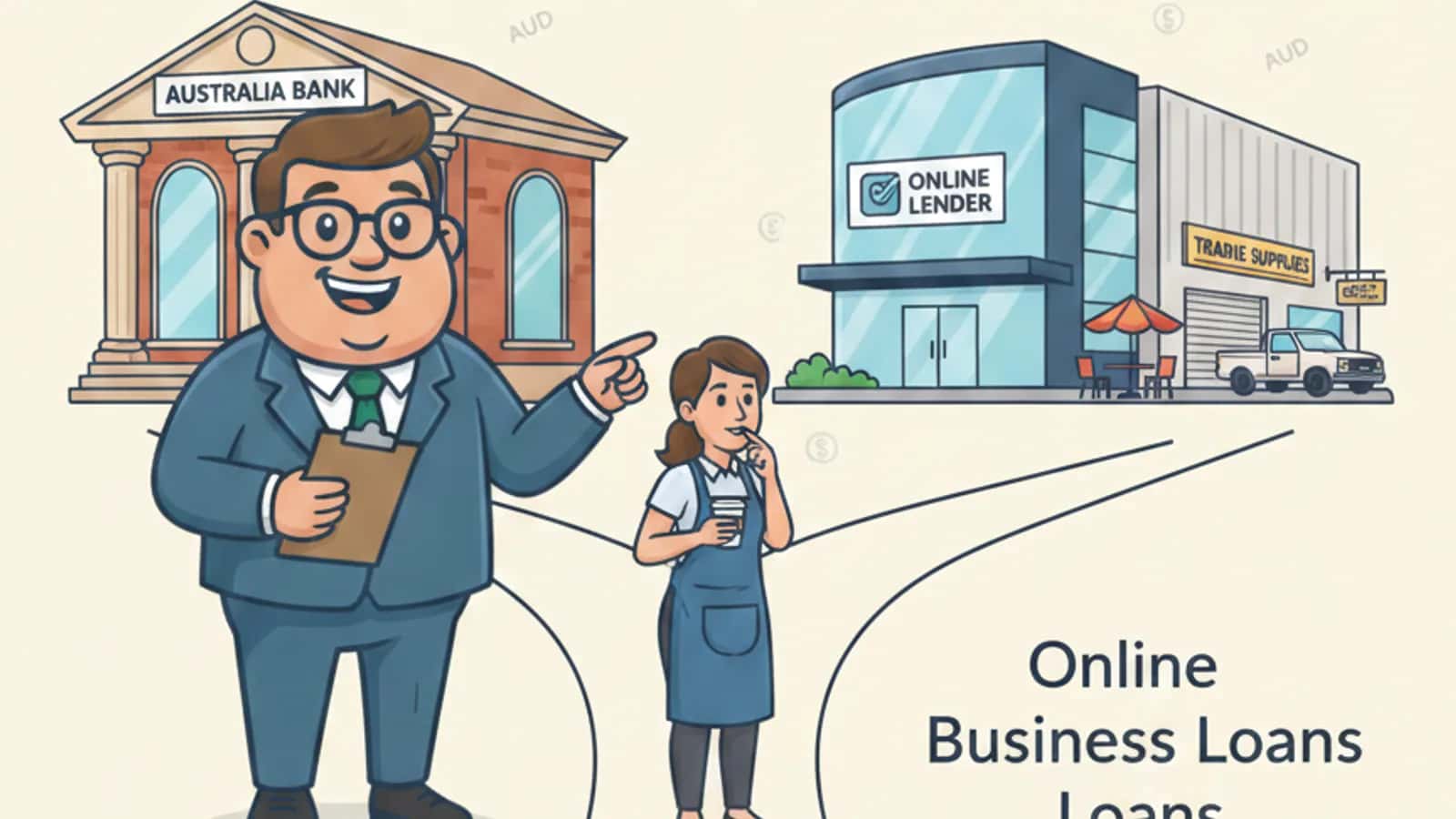
Business Line of Credit vs Overdraft vs Term Loan: Which Works Best in Australia?
Business lines of credit offer flexible access to funds with interest only on amounts used, overdrafts provide automatic cash flow protection linked to your transaction account, and term loans deliver lump-sum funding with fixed repayments.
Quick answer
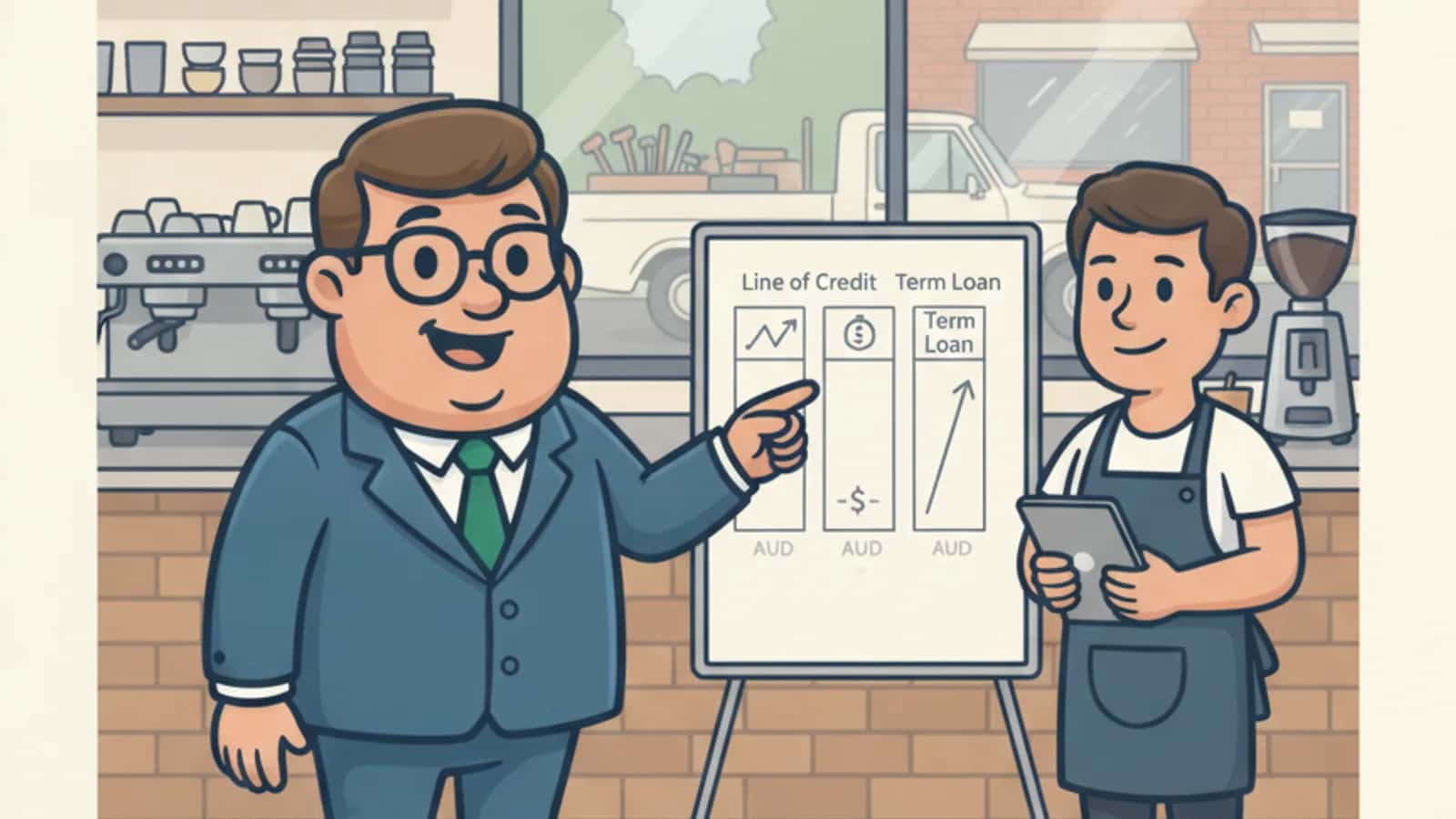
Business lines of credit offer flexible access to funds with interest only on amounts used, overdrafts provide automatic cash flow protection linked to your transaction account, and term loans deliver lump-sum funding with fixed repayments. Lines of credit suit ongoing working capital needs, overdrafts handle short-term cash flow gaps, and term loans work best for major purchases or expansion projects.
Key takeaways
- Business lines of credit charge interest rates from 13-22% annually, only on funds actually used
- Overdrafts cost 14-25% per year but provide automatic access when your account goes negative
- Term loans range from 12-22% with fixed monthly repayments over set periods
- Lines of credit and overdrafts offer revolving credit; term loans provide one-time lump sums
- Non-bank lenders may approve lines of credit with just 6 months trading history
- Overdrafts link directly to your transaction account; lines of credit operate separately
- Term loans suit equipment purchases; revolving facilities handle cash flow management
- Fast Decision options exist outside traditional banks for all three loan types
What Exactly Is a Business Line of Credit and How Does It Work in Australia

A business line of credit operates as a standalone account that gives you access to funds up to an approved limit, with interest charged only on the amount you actually draw down. Unlike a term loan that provides a lump sum upfront, you can withdraw and repay funds as needed throughout the facility's term.
The key difference from an overdraft is structural. Your line of credit exists as a separate account from your everyday business banking, requiring manual draws when you need funds. This gives you more control over when and how much you borrow, but means no automatic access when your transaction account runs low.
How it works in practice
- Apply for a credit limit (typically $5,000 to $500,000 for SMEs)
- Once approved, draw funds via online banking or phone
- Pay interest only on amounts used, not the full limit
- Make minimum monthly payments or pay down the balance faster
- Reuse the facility as you repay (revolving credit)
Choose a line of credit if you need flexible access to working capital for inventory purchases, seasonal cash flow gaps, or opportunity-based spending where timing matters more than having a lump sum ready.
How Much Interest Do Banks Charge for Overdraft Facilities
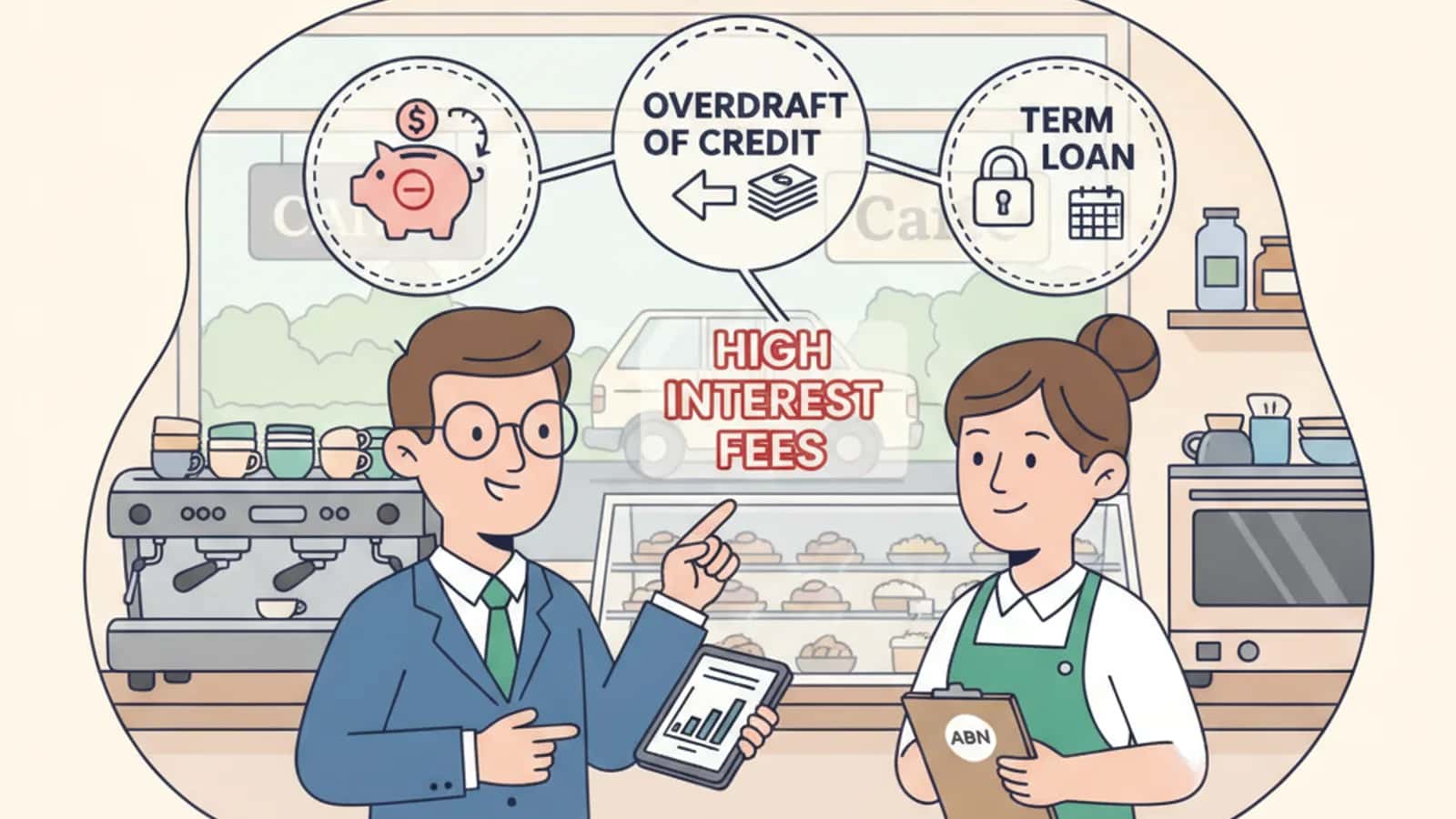
Business overdraft rates in Australia typically range from 14% to 25% per annum, with most major banks charging toward the higher end of this spectrum. The total cost depends heavily on how often you use the facility and how quickly you clear negative balances.
Traditional banks often bundle overdrafts with monthly account fees, establishment costs, and line fees that can add $50-200 per month regardless of usage. This makes overdrafts expensive for businesses that rarely dip into negative territory but need the safety net.
Typical overdraft pricing structure
- Interest rate: 14-25% per annum on negative balances
- Monthly line fee: $20-80 for having the facility available
- Establishment fee: $200-500 upfront
- Annual review fee: $150-300
Consider alternatives if your overdraft usage is predictable or if you're paying high monthly fees for occasional use.
Which Loan Type Is Cheapest for Startups with Less Than 2 Years Trading
Term loans typically offer the lowest interest rates (12-22% annually) but are hardest for new businesses to qualify for through traditional banks. Most major banks require 2+ years of financial statements, making term loans largely inaccessible for genuine startups.
Business lines of credit from specialist lenders can be more accessible and cost-effective for startups. Some non-bank providers approve facilities with just 6 months of trading history and minimum monthly revenue of $6,000. While rates are higher (13-22%), you only pay interest on funds used.
Startup financing reality check
- Traditional bank term loans: Lowest rates but strict 2+ year requirements
- Non-bank lines of credit: Higher rates but accessible with 6+ months trading
- Overdrafts: Most expensive but sometimes bundled with business accounts
- Alternative options: Merchant cash advances or revenue-based financing may suit very new businesses
For a Melbourne cafe with 8 months trading history and $15,000 monthly revenue, a $30,000 line of credit at 18% used strategically will cost less than an overdraft at 22% used regularly, even though the overdraft has a lower headline rate.
Choose based on accessibility first, then optimize costs once you have more trading history to leverage.
Can I Get a Business Line of Credit with Bad Credit Score
Yes, but your options shift from traditional banks to specialist lenders who assess business performance alongside personal credit history. Many bad credit business loan providers focus more on revenue consistency, trading history, and industry type than pure credit scores.
Non-bank lenders may approve lines of credit for businesses with credit scores below 600 if other factors are strong. They typically want to see consistent monthly revenue, at least 6-12 months of trading, and positive cash flow trends rather than perfect credit files.
What lenders look for beyond credit scores
- Monthly revenue consistency (usually $6,000+ minimum)
- Trading history (6+ months for specialist lenders)
- Industry stability (some sectors are preferred)
- Bank statement patterns showing regular deposits
- Existing business relationships and references
Expect different terms
- Higher interest rates (18-25% vs 13-18% for good credit)
- Lower initial credit limits ($10,000-50,000 vs higher amounts)
- More frequent reviews (quarterly vs annually)
- Additional security or guarantees may be required
A Perth plumbing business with a 580 credit score but $25,000 monthly revenue and 18 months trading history has better approval chances than a startup with perfect credit but inconsistent income.
Focus on demonstrating business stability rather than waiting for credit repair if you need funding now.
Pros and Cons of Term Loans Compared to Overdrafts for Australian SMEs
Term loans provide predictable repayment structures and often lower interest rates, while overdrafts offer automatic cash flow protection but at higher costs and with less control over usage.
Term Loan Advantages
- Lower interest rates (12-22% vs 14-25% for overdrafts)
- Fixed repayment schedule helps with budgeting and planning
- Lump sum funding suits major purchases or expansion projects
- Longer repayment terms (1-7 years vs revolving facilities)
- No temptation to overuse since funds are provided upfront
Term Loan Disadvantages
- Rigid repayment structure doesn't flex with cash flow variations
- Interest on full amount from day one, regardless of immediate need
- Harder qualification requirements, especially for newer businesses
- No ongoing access once funds are used
Overdraft Advantages
- Automatic access when your account goes negative
- Interest only on negative balances and only when used
- Flexible repayment as cash flow allows
- Integrated with daily banking for seamless cash flow management
Overdraft Disadvantages
- Higher interest rates and additional monthly fees
- Easy to overuse since access is automatic
- Less suitable for planned expenses or major purchases
- Credit limit reviews can reduce availability without warning
Choose term loans for equipment purchases, expansion projects, or debt consolidation where you know exactly how much you need. Choose overdrafts for unpredictable cash flow protection or seasonal businesses with irregular income patterns.
How Quickly Can I Access Funds with Each Type of Business Financing
Overdrafts provide the fastest access since funds are available automatically when your account balance drops below zero. Lines of credit require manual draws but can be accessed within minutes via online banking once approved. Term loans involve the longest process since lenders disburse lump sums after final documentation.
Speed comparison:
- 1
Overdraft
Instant access once facility is active
- 2
Line of credit
Same-day access via online banking or phone
- 3
Term loan
1-3 business days for fund transfer after approval
Approval timeframes differ significantly: Traditional banks often take 2-6 weeks for any facility due to credit committees and extensive documentation requirements. Specialist lenders can approve lines of credit within 24-48 hours using automated assessment systems.
Real-world timeline example: A Brisbane restaurant needing $40,000 for kitchen equipment could wait 4-8 weeks for a bank term loan, get a line of credit approved in 2 days from a specialist lender, or activate an overdraft immediately if already approved.
The trade-off is usually speed vs cost. Faster approval often means higher rates, while cheaper funding requires longer wait times and more documentation.
For urgent funding needs, consider Fast Decision specialist partners who can provide preliminary approval within hours rather than weeks.
What Are the Typical Approval Times for Business Lines of Credit in Australia
Specialist non-bank lenders typically approve business lines of credit within 24-48 hours, while traditional banks require 2-6 weeks due to more extensive credit assessment processes.
Fast-track approval process (specialist lenders)
- Initial assessment: 2-minute online eligibility check
- Documentation review: Same day if documents are ready
- Credit decision: 24-48 hours for most applications
- Fund access: Immediate once facility is activated
Traditional bank timeline
- Application lodgement: 1-2 weeks to gather required documents
- Credit assessment: 2-3 weeks for committee review
- Final approval: Additional 1-2 weeks for documentation
- Total timeline: 4-7 weeks on average
What affects approval speed
- Document readiness: Recent financial statements, tax returns, bank statements
- Business complexity: Simple trading businesses approve faster than complex structures
- Credit history: Clean credit files process quicker than those requiring manual review
- Loan amount: Smaller facilities ($5,000-50,000) often have faster automated approval
A Gold Coast retail store with 12 months trading history and $20,000 monthly revenue can get a $25,000 line of credit approved in 2 days through specialist lenders, compared to 6+ weeks through major banks.
Which Loan Type Is Best for Seasonal Businesses with Irregular Cash Flow
Business lines of credit and overdrafts work best for seasonal businesses because you only pay interest when you actually need funds, and repayment flexibility matches irregular income patterns. Term loans with fixed monthly payments can create cash flow stress during slow periods.
Why revolving credit suits seasonal businesses
- Draw funds during slow months to cover fixed costs like rent and wages
- Repay quickly during peak seasons to minimize interest costs
- No wasted interest on funds you don't need year-round
- Flexible repayment timing aligns with revenue cycles
Seasonal business examples
- Ski lodge in the Snowy Mountains: Draw $50,000 during summer months, repay from winter revenue
- Adelaide festival supplier: Access funds in January-March for inventory, repay after festival season
- Cairns tourism operator: Bridge the gap during wet season, repay from dry season bookings
Cost comparison for seasonal use: A $40,000 term loan at 15% costs $6,000 annually in interest regardless of seasonal needs. A $40,000 line of credit at 18% used for 6 months costs $3,600, saving $2,400 despite the higher rate.
Which is right for you?
Choose lines of credit if
- Your revenue varies by more than 40% seasonally
- You can predict when you'll need funds
- You have discipline to repay quickly during good months
Choose overdrafts if
- Cash flow timing is unpredictable
- You need automatic protection during slow periods
- Your seasonal variations are moderate (less than 30%)
Avoid term loans for seasonal businesses unless you're funding permanent assets like equipment that will generate revenue across multiple seasons.
Common Mistakes Small Business Owners Make When Choosing Between Credit Lines and Term Loans
The biggest mistake is choosing based on interest rates alone rather than matching the loan structure to actual cash flow needs. Many business owners select term loans for their lower headline rates, then struggle with fixed repayments during slow periods.
- 1
Rate shopping without considering usage patterns
A Sydney construction company chose a 14% term loan over an 18% line of credit to "save money." But they needed funds sporadically for materials, meaning they paid interest on $60,000 year-round instead of just when projects required cash advances.
- 2
Underestimating the value of flexibility
Fixed repayments look manageable during good months but can strain cash flow when revenue dips. A line of credit's higher rate often costs less than the penalties and stress of missing term loan payments.
- 3
Not considering growth plans
Term loans provide one-time funding, while lines of credit grow with your business. A Melbourne marketing agency that took a $30,000 term loan had to reapply six months later when they won a major client requiring upfront costs.
- 4
Ignoring qualification requirements
Chasing the cheapest rates through major banks often leads to rejection and wasted time. Newer businesses should focus on accessible options first, then refinance to better rates once they have stronger financials.
- 5
Mixing working capital and asset purchases
Using revolving credit for equipment purchases means paying interest indefinitely. Use term loans for assets that generate ongoing revenue, and lines of credit for temporary cash flow needs.
Better decision framework
- Predictable, one-time need: Term loan
- Ongoing, variable cash flow support: Line of credit
- Automatic protection for account fluctuations: Overdraft
- Major asset purchase: Term loan with matching repayment period
Match the loan structure to your actual business patterns, not just the cheapest rate on paper.
Alternative Financing Options If You Don't Qualify for Traditional Bank Products
Specialist finance partners offer merchant cash advances, revenue-based financing, and alternative lending criteria when traditional banks decline applications. These options often focus on business performance rather than perfect credit files or lengthy trading histories.
Non-bank alternatives include
- Merchant cash advances: Funding based on card sales history, repaid from future transactions
- Revenue-based financing: Flexible repayments tied to monthly revenue percentages
- Asset-based lending: Using equipment, inventory, or receivables as security
- Peer-to-peer business lending: Direct funding from private investors
- Invoice financing: Advance funds against outstanding customer invoices
When to consider alternatives
- Credit score below 600 with traditional lenders
- Less than 12 months trading history
- Seasonal or irregular revenue patterns
- Industry sectors banks consider high-risk
- Need funding faster than bank timelines allow
Alternative approval criteria: Instead of focusing on credit scores and financial statements, specialist lenders may assess:
- Monthly card sales volume and consistency
- Industry experience and business model viability
- Customer base diversity and contract strength
- Asset values for security purposes
- Revenue trends and growth potential
A Darwin food truck with 8 months trading but strong daily card sales might qualify for merchant cash advance funding when banks require 2+ years of financials.
Cost vs accessibility trade-off: Alternative financing typically costs more (20-40% annually) but provides access when traditional options aren't available. The key is using these facilities strategically for growth or bridging to better financing terms.
Check Eligibility Now with specialist partners who consider actual business performance alongside traditional credit metrics. No hard check to start means exploring options won't impact your credit file.
How Much Documentation Do I Need for Each Type of Business Loan
Traditional banks require extensive documentation for all loan types, while specialist lenders streamline requirements particularly for smaller facilities. The documentation burden often determines approval speed more than the loan type itself.
Traditional bank requirements (all loan types)
- 2+ years of financial statements (prepared by accountant)
- 2+ years of tax returns (business and personal)
- 6+ months of business bank statements
- Personal asset and liability statements
- Business plan and cash flow projections
- Security documentation if required
- Directors' guarantees and identification
Specialist lender requirements (streamlined)
- 3-6 months of bank statements (primary assessment tool)
- Recent BAS statements or basic financials
- Business registration and ABN verification
- Director identification and basic credit check
- Simple application form (often online)
Documentation by loan type:
| Loan Type | Traditional Banks | Specialist Lenders |
|---|---|---|
| Term Loans | Full documentation package | Simplified for amounts under $100k |
| Lines of Credit | Same as term loans | Bank statements focus |
| Overdrafts | Full package plus account history | Often bundled with banking relationship |
Real-world example: An Adelaide plumbing business applying for a $40,000 line of credit needed 47 pages of documents for Commonwealth Bank but just 6 months of bank statements and a 2-page application for a specialist lender.
Documentation tips
- Keep bank statements clean: Regular deposits and business-like transactions
- Maintain separate business accounts: Personal and business mixing complicates assessment
- Organize tax compliance: Current BAS and tax lodgements speed approval
- Prepare brief business summary: One page explaining what you do and why you need funding
Time-saving approach: Start with specialist lenders who focus on business performance rather than extensive paperwork. You can always approach banks later if you need larger amounts or better rates.
The 2-minute eligibility check identifies suitable options before you spend time gathering documents that may not be required.
What Happens If I Can't Repay a Business Line of Credit or Overdraft
Default consequences vary by lender type and facility structure, but generally involve penalty interest rates, facility suspension, and potential legal action for recovery. The key difference is that revolving facilities can be suspended immediately, cutting off access to funds when you might need them most.
Immediate consequences
- Penalty interest rates: Additional 2-5% above standard rates
- Facility suspension: No further draws until account is brought current
- Default notices: Formal demand letters and credit file reporting
- Fee escalation: Late payment fees and administration charges
Escalation process:
- 7-14 days: Courtesy contact and payment arrangement discussions
- 30 days: Formal default notice and penalty rate activation
- 60 days: Credit file default listing (affects future borrowing)
- 90+ days: Legal action, debt collection, or liquidation proceedings
Revolving credit complications: Unlike term loans with fixed payment schedules, lines of credit and overdrafts can be called in at any time after default. This means losing access to working capital exactly when cash flow problems are worst.
Industry-specific impacts
- Retail businesses: Lost access during peak seasons can force closure
- Construction companies: Project delays if materials funding is cut
- Service businesses: Payroll difficulties if overdraft protection disappears
Proactive strategies
- Communicate early: Contact lenders before missing payments
- Request payment holidays: Many lenders offer temporary relief
- Negotiate restructuring: Convert to term loan with fixed payments
- Seek alternative funding: Bridge finance while resolving issues
Legal protections: Australian consumer credit laws provide some protections, but business lending has fewer safeguards. Directors' guarantees mean personal assets may be at risk for business debts.
Recovery focus: Specialist lenders often prefer workout arrangements over legal action, especially if the business model remains viable. Traditional banks may be less flexible due to rigid credit policies.
The best protection is maintaining open communication and having backup funding sources before problems escalate.
Next steps
Choosing between a business line of credit vs overdraft vs term loan in Australia depends on matching the loan structure to your actual cash flow needs rather than simply chasing the lowest interest rate. Term loans work best for major purchases with their lower rates and lump-sum funding, while lines of credit and overdrafts provide flexible access to working capital when you need it. For more comparisons and application guidance, browse our business loan guides.
For most Australian SMEs, the speed and accessibility of specialist lenders outweigh the slightly higher costs compared to traditional bank processes. A line of credit approved in 48 hours often delivers better business outcomes than a cheaper bank loan that takes two months to process.
The key is understanding your business patterns. Seasonal businesses benefit from revolving credit that matches irregular cash flows. Growing companies need facilities that expand with their success. Established businesses making major investments should consider term loans for their predictable structure and lower costs.
Ready to explore your options? Check Eligibility Now with our panel of specialist finance partners. The 2-minute assessment covers all three loan types with no hard credit check to start, helping you find the right fit for your business needs without affecting your credit file.
Further reading
Frequently asked questions
What Exactly Is a Business Line of Credit and How Does It Work in Australia?
A business line of credit operates as a standalone account that gives you access to funds up to an approved limit, with interest charged only on the amount you actually draw down. Unlike a term loan that provides a lump sum upfront, you can withdraw and repay funds as needed throughout the facility's term.
How Much Interest Do Banks Charge for Overdraft Facilities?
Business overdraft rates in Australia typically range from 14% to 25% per annum, with most major banks charging toward the higher end of this spectrum. The total cost depends heavily on how often you use the facility and how quickly you clear negative balances.
Which Loan Type Is Cheapest for Startups with Less Than 2 Years Trading?
Term loans typically offer the lowest interest rates (12-22% annually) but are hardest for new businesses to qualify for through traditional banks. Most major banks require 2+ years of financial statements, making term loans largely inaccessible for genuine startups.
Can I Get a Business Line of Credit with Bad Credit Score?
Yes, but your options shift from traditional banks to specialist lenders who assess business performance alongside personal credit history. Many bad credit business loan providers focus more on revenue consistency, trading history, and industry type than pure credit scores.
How Quickly Can I Access Funds with Each Type of Business Financing?
Overdrafts provide the fastest access since funds are available automatically when your account balance drops below zero. Lines of credit require manual draws but can be accessed within minutes via online banking once approved. Term loans involve the longest process since lenders disburse lump sums after final documentation.
What Are the Typical Approval Times for Business Lines of Credit in Australia?
Specialist non-bank lenders typically approve business lines of credit within 24-48 hours, while traditional banks require 2-6 weeks due to more extensive credit assessment processes.
Written by
The Funding Fred Editorial Team creates plain-English guides to help business owners understand funding options, eligibility, and application readiness before they compare finance options.