
Cash Flow Business Loans: Fast UK Funding for Working Capital Gaps
Cash flow business loans are unsecured funding solutions designed to bridge temporary gaps in your working capital, typically ranging from £40,000 to £120,000 for UK SMEs.

Quick answer
Cash flow business loans are unsecured funding solutions designed to bridge temporary gaps in your working capital, typically ranging from £40,000 to £120,000 for UK SMEs. Unlike traditional bank loans that require extensive paperwork and perfect credit, these loans use Open Banking technology to assess your business's cash flow patterns and provide Fast Decision approvals within hours, not weeks.
Key takeaways
- Cash flow loans focus on your business revenue patterns, not just credit scores
- Approval decisions happen in hours using Smart Tech and Open Banking data
- No personal guarantees or asset security required with Unsecured Loans
- Flexible repayment terms that match your cash flow cycles
- Available for All Credit Types through Wide partner panel of specialist lenders
- Quick 2 min check process with No hard check to start
- Ideal for businesses needing £40,000-£120,000 for working capital
- Better suited than traditional banks for time-sensitive funding needs
- Merchant Cash Advance alternatives available for card-heavy businesses
What Exactly Is a Cash Flow Business Loan
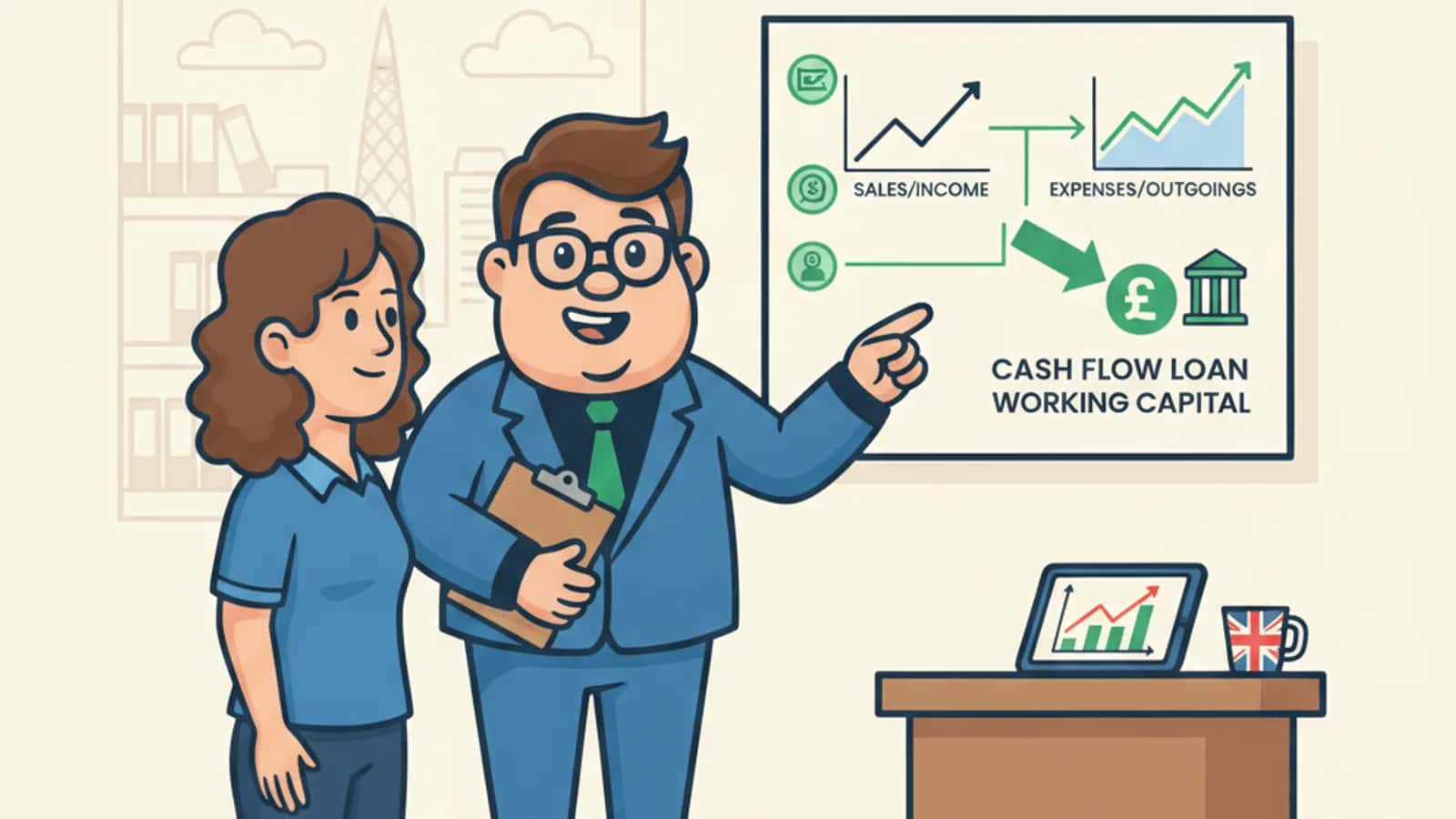
A cash flow business loan is an unsecured funding product that uses your business's revenue patterns and banking data to determine eligibility and loan terms. Instead of requiring collateral or personal guarantees, lenders assess your cash flow history through Open Banking connections to predict your ability to repay.
These loans work by analyzing your business bank account transactions over the past 6-12 months. The lender's Smart Tech algorithms identify revenue trends, seasonal patterns, and cash flow stability to calculate how much you can afford to borrow and repay.
Key features of cash flow loans
- No security required - your assets stay protected
- Revenue-based assessment - income matters more than credit history
- Flexible repayment - terms adjust to your cash flow cycles
- Quick decisions - automated underwriting speeds up approval
- Working capital focus - designed for operational expenses, not equipment purchases
Choose cash flow loans if you need working capital quickly, have consistent revenue but imperfect credit, or want to avoid risking personal assets. Avoid them if you need long-term financing or have very irregular income patterns.
How Does Cash Flow Lending Work in the UK?
Cash flow lending is the broader category these loans sit in: any business borrowing where the lender's decision rests on the money moving through your accounts rather than on assets or property. In the UK that covers unsecured term loans, revolving credit facilities, merchant cash advances and, at the edges, invoice finance — all priced off how predictable your income looks.
UK cash flow lenders typically connect to your business current account through Open Banking, or ask for 6-12 months of bank statements, and underwrite from what they see: average monthly revenue, the gap between your best and worst months, existing repayments, and how often the account dips near zero.
What UK cash flow lending usually looks like
- Amounts - commonly around 1-2 months of revenue for a first facility
- Terms - a few months to around 5 years depending on the product
- Speed - decisions in hours to a few days once bank data is shared
- Security - usually unsecured, though many lenders ask for a personal guarantee
- Repayments - fixed monthly, or revenue-linked on merchant cash advances
The practical difference from asset-based borrowing: a strong trading account can get funded even without property or equipment to pledge, but thin or erratic cash flow will cap what any lender in this category offers, whatever your credit score says.
How Do Cash Flow Business Loans Differ from Traditional Bank Loans
Cash flow business loans operate on fundamentally different principles than traditional bank lending. Banks focus heavily on credit scores, collateral, and lengthy application processes, while cash flow lenders prioritize your business's actual revenue performance.
Traditional Banks vs Cash Flow Lenders:
| Traditional Banks | Cash Flow Lenders |
|---|---|
| 6-12 week approval process | 24-48 hour decisions |
| Extensive paperwork required | Minimal documentation |
| Perfect credit scores preferred | All Credit Types accepted |
| Collateral or personal guarantees | Unsecured Loans available |
| Fixed criteria application | Flexible Criteria assessment |
| Manual underwriting | Smart Tech automated decisions |
The application experience differs dramatically. Traditional banks require business plans, financial projections, and multiple meetings. Cash flow lenders use Open Banking to access your real transaction data, making decisions based on actual performance rather than paperwork.
How Much Can Small Businesses Get with Cash Flow Business Loans
Small businesses can typically access between £40,000 and £120,000 through cash flow business loans, with the exact amount determined by your monthly revenue and cash flow patterns. Most lenders offer funding equivalent to 2-6 months of your average monthly turnover.
The calculation works like this: if your business generates £25,000 monthly revenue consistently, you might qualify for £50,000-£150,000 depending on your cash flow stability and existing commitments.
Factors affecting loan amounts
- Monthly revenue consistency - steady income increases borrowing power
- Cash flow patterns - seasonal businesses may get lower multiples
- Existing debt obligations - current repayments reduce available capacity
- Business age - established businesses typically qualify for higher amounts
- Industry type - some sectors have higher risk profiles
Decision rule: Choose cash flow loans for amounts under £150,000 where speed matters more than cost. For larger amounts or longer terms, consider traditional business loans despite the slower process.
The Wide partner panel approach means different lenders within the network may offer varying amounts for the same business, maximizing your chances of securing adequate funding.
What Credit Score Do You Need for Cash Flow Business Loans
Cash flow business loans typically accept credit scores from 400 upwards, with many lenders focusing more on your business revenue than personal credit history. While traditional banks usually require scores above 650, cash flow lenders use Flexible Criteria that consider multiple factors beyond credit ratings.
Most cash flow lenders use a tiered approach:
- Scores 600+
- access to best rates and highest loan amounts
- Scores 450-599
- standard approval with slightly higher rates
- Scores 400-449
- possible approval with revenue verification required
- Below 400
- case-by-case assessment focusing on business performance
The key difference is that cash flow lenders weight your business bank account data heavily in their decisions. Strong, consistent revenue can offset poor personal credit scores.
Important factors beyond credit scores
- Monthly business revenue consistency
- Length of time in business (usually 6+ months minimum)
- Cash flow patterns and seasonality
- Outstanding CCJs or bankruptcy history
- Current debt-to-income ratios
Which Lenders Offer the Best Cash Flow Business Loans Right Now
The best cash flow business loan providers in 2026 combine competitive rates with Fast Decision processes and Flexible Criteria. Rather than working with single lenders, platforms with Wide partner panel access give you better odds of approval and competitive terms.
Top characteristics of leading cash flow lenders
- Multi-lender platforms - compare multiple offers simultaneously
- Open Banking integration - automated data analysis speeds decisions
- Transparent pricing - clear APR rates without hidden fees
- Flexible repayment options - daily, weekly, or monthly payments available
- Industry specialization - some focus on specific business types
Lender types to consider
- Alternative finance platforms - offer access to multiple funding partners
- Specialist business lenders - focus exclusively on SME lending
- Fintech providers - use advanced algorithms for faster decisions
- Peer-to-peer networks - connect businesses directly with investors
The 2 min check process should give you indicative terms before any hard credit searches, protecting your credit score while you compare options.
Are Cash Flow Business Loans Good for Startups with Inconsistent Revenue
Cash flow business loans work best for startups with at least 6-12 months of trading history and some revenue consistency. Pure startups with no trading history typically struggle with cash flow loan approval, as lenders need transaction data to assess repayment capacity.
Startup suitability depends on
- Trading period - minimum 6 months bank account history usually required
- Revenue trends - growing or stable income preferred over declining patterns
- Cash flow predictability - seasonal businesses need clear seasonal patterns
- Business model - recurring revenue models (subscriptions, contracts) perform better
Better startup alternatives
- Merchant Cash Advance - works for card transaction-heavy businesses
- Invoice financing - if you have outstanding invoices from creditworthy customers
- Asset-based lending - if you have equipment or inventory as security
- Government startup schemes - various grants and low-interest options available
Decision rule: Choose cash flow loans if you've been trading 6+ months with monthly revenue above £15,000. Consider Merchant Cash Advance if you process significant card payments but have inconsistent monthly patterns.
Can You Get Cash Flow Business Loans with Bad Credit
Yes, you can secure cash flow business loans with bad credit, as these lenders focus primarily on your business revenue and cash flow patterns rather than personal credit scores. Many cash flow lenders specifically cater to All Credit Types, including businesses declined by traditional banks.
Bad credit approval factors
- Strong business revenue - consistent monthly income above £10,000-£15,000
- Positive cash flow trends - growing or stable business performance
- Time since credit issues - problems over 12 months old carry less weight
- Business bank account health - no recent bounced payments or overdraft issues
- Debt-to-income ratio - existing commitments must leave room for new payments
What counts as "bad credit" for cash flow lenders
- Credit scores between 400-550
- Recent missed payments on personal credit
- CCJs under £5,000 and over 6 months old
- Previous business loan defaults (case-by-case basis)
- IVAs or debt management plans
Improved approval strategies
- Use Open Banking connections to showcase strong business performance
- Apply through Wide partner panel platforms for multiple lender options
- Start with the No hard check to start eligibility process
- Consider Merchant Cash Advance if traditional cash flow loans decline you
How Quickly Can You Get Approved for Cash Flow Business Loans
Cash flow business loans typically provide Fast Decision approvals within 24-48 hours, with funds available 1-3 business days after acceptance. This speed advantage makes them ideal for time-sensitive opportunities or urgent working capital needs.
Typical timeline breakdown
- Application submission - 10-15 minutes online
- Open Banking data review - automated within 2-4 hours
- Initial decision - same day or next business day
- Final underwriting - 24-48 hours for complex cases
- Funds transfer - 1-3 business days after acceptance
Factors affecting speed
- Complete application - missing information slows the process
- Open Banking connectivity - manual bank statements add 1-2 days
- Business complexity - multiple entities or unusual structures need manual review
- Loan amount - larger loans may require additional verification
- Lender workload - applications submitted Monday-Wednesday process faster
Speed optimization tips
- Use the 2 min check process first to confirm basic eligibility
- Connect Open Banking during application for instant data sharing
- Have recent bank statements ready as backup
- Apply early in the week for fastest processing
- Respond quickly to any lender questions or requests
What Are the Typical Interest Rates for Cash Flow Business Loans
Cash flow business loan rates typically range from 8% to 35% APR, depending on your business strength, credit profile, and loan terms. These rates are generally higher than traditional bank loans but reflect the speed, flexibility, and reduced security requirements.
Rate factors that affect pricing
- Credit score - better scores unlock lower rates
- Business revenue - higher turnover reduces lender risk
- Time in business - established businesses get better terms
- Loan amount - larger loans often have better rates
- Repayment term - shorter terms typically cost more annually
- Industry risk - some sectors face higher rates
Typical rate ranges by profile
- Strong credit (650+), established business - 8-15% APR
- Fair credit (550-649), good revenue - 15-25% APR
- Poor credit (400-549), consistent income - 25-35% APR
- High-risk businesses or short terms - 35%+ APR
Cost comparison considerations
- Speed premium - you pay more for fast access to capital
- No security discount - unsecured loans cost more than secured alternatives
- Flexibility value - flexible repayment terms justify higher rates
- Opportunity cost - missing business opportunities often costs more than loan interest
Decision rule: Accept higher rates if the funding enables revenue growth exceeding the interest cost. For non-urgent needs, traditional bank loans offer lower rates despite slower processing.
What Types of Businesses Are Cash Flow Business Loans Best For
Cash flow business loans work best for established service businesses, retailers, and hospitality companies with consistent revenue streams and predictable cash flow patterns. These businesses benefit from the speed and flexibility while having the revenue stability lenders require.
Ideal business types
- Restaurants and cafes - consistent daily revenue, seasonal predictability
- Retail stores - regular sales patterns, inventory funding needs
- Professional services - accountants, solicitors, consultants with steady client bases
- E-commerce businesses - trackable online sales, growth funding requirements
- Healthcare practices - dental, veterinary, physiotherapy with appointment-based income
- Construction services - established contractors with regular project work
Business characteristics that work well
- Monthly revenue above £15,000 consistently
- Trading history of 6+ months minimum
- Predictable cash flow cycles
- Growth opportunities requiring quick capital injection
- Seasonal businesses with clear patterns
Less suitable business types
- Pure startups - insufficient trading history for assessment
- Highly seasonal businesses - unpredictable cash flow creates risk
- Project-based businesses - irregular income makes repayment difficult
- Declining businesses - lenders prefer stable or growing revenue
- Cash-heavy businesses - limited bank transaction visibility
Alternative options for unsuitable businesses
- Merchant Cash Advance - better for businesses with high card transaction volumes
- Invoice financing - ideal for B2B businesses with outstanding invoices
- Asset-based lending - works when you have valuable equipment or inventory
Are Cash Flow Business Loans Better Than Merchant Cash Advances
Cash flow business loans and Merchant Cash Advances serve different business needs, with cash flow loans offering lower costs and fixed terms, while MCAs provide more flexibility for businesses with variable revenue patterns.
Cash Flow Loans vs Merchant Cash Advances:
| Cash Flow Loans | Merchant Cash Advances |
|---|---|
| Fixed monthly payments | Percentage of daily card sales |
| Lower APR rates (8-35%) | Higher factor rates (1.1-1.5x) |
| Predictable repayment schedule | Flexible daily collections |
| Better for consistent revenue | Ideal for seasonal businesses |
| Longer approval process | Very fast approval |
Which is right for you?
Choose cash flow loans if
- Your revenue is consistent month-to-month
- You want predictable repayment amounts
- Cost is more important than maximum flexibility
- You process less than 50% of sales through card payments
- You need longer repayment terms
Choose Merchant Cash Advance if
- Your revenue varies significantly by season
- Most sales come through card payments
- You need maximum repayment flexibility
- Speed is more critical than cost
- You struggle with fixed monthly commitments
What Happens If Your Business Can't Repay a Cash Flow Loan
If your business struggles to repay a cash flow loan, most lenders offer restructuring options before pursuing collection activities. The key is communicating early with your lender when you anticipate repayment difficulties, as proactive communication typically leads to better outcomes.
Typical lender response process:
- 1
Early intervention
contact when payments are 7-14 days late
- 2
Payment plan negotiation
reduced payments or temporary payment holidays
- 3
Loan restructuring
extended terms or modified payment schedules
- 4
Formal demand
legal notices if informal arrangements fail
- 5
Collection activities
debt recovery agencies or legal action
Available support options
- Payment holidays - temporary suspension of payments (1-3 months)
- Reduced payments - lower monthly amounts for agreed periods
- Term extensions - spreading remaining balance over longer period
- Settlement agreements - paying reduced lump sum to close the debt
Protective factors with Unsecured Loans
- No personal assets at immediate risk
- No personal guarantees to enforce
- Focus on business assets and future revenue
- More negotiation flexibility than secured lending
Proactive steps when struggling
- Contact your lender immediately when problems arise
- Provide updated cash flow forecasts showing recovery plans
- Propose realistic alternative payment arrangements
- Consider business turnaround advice from professional advisors
- Explore additional revenue streams or cost reductions
Decision rule: Address repayment issues early and honestly. Lenders prefer cooperative borrowers and often provide reasonable workout arrangements for temporary difficulties.
Biggest Mistakes Businesses Make with Cash Flow Business Loans
The most common mistake businesses make with cash flow business loans is using the funding for non-revenue-generating expenses instead of working capital that drives business growth. This creates a debt burden without improving the business's ability to repay the loan.
Top mistakes to avoid:
Using funds for wrong purposes
- Paying off existing debts without improving cash flow
- Covering personal expenses or drawings
- Purchasing non-essential equipment or office improvements
- Building cash reserves instead of investing in growth
Poor timing decisions
- Borrowing during seasonal low periods without clear recovery plans
- Taking loans when business is already declining
- Applying for amounts beyond realistic repayment capacity
- Rushing into first offer without comparing alternatives
Application errors
- Providing incomplete or inaccurate financial information
- Failing to use Open Banking connections for better rates
- Not using Wide partner panel platforms to compare options
- Skipping the No hard check to start eligibility process
Repayment planning failures
- Not modeling repayments against seasonal cash flow patterns
- Ignoring existing debt commitments when calculating capacity
- Assuming revenue will automatically increase to cover payments
- Not maintaining cash flow cushions for unexpected expenses
Better practices
- Use funds for inventory, marketing, or staff that directly generate revenue
- Model repayments against conservative revenue forecasts
- Check Eligibility Now through multiple lenders before committing
- Maintain 2-3 months of payment reserves for unexpected downturns
- Plan specific revenue activities that justify the borrowing cost
Next steps for cash flow business loans
Cash flow business loans offer UK SMEs a powerful alternative to traditional bank lending, combining speed, flexibility, and accessibility for businesses needing working capital quickly. With approval decisions in 24-48 hours and funding amounts from £40,000-£120,000, these loans serve businesses that traditional banks often decline or delay. For more comparisons and application guidance, browse our business loan guides.
The key advantages - No hard check to start, Flexible Criteria, and All Credit Types acceptance - make cash flow loans particularly valuable for established businesses with consistent revenue but imperfect credit histories. The Smart Tech approach using Open Banking data creates fairer assessments based on actual business performance rather than just credit scores.
Success with cash flow business loans depends on using the funding for revenue-generating activities, realistic repayment planning, and choosing the right loan structure for your business type. Service businesses, retailers, and hospitality companies typically see the best results, while startups and highly seasonal businesses may need alternative funding approaches.
Next steps:
- Check Eligibility Now using the 2 min check process to see indicative terms
- Compare options through Wide partner panel platforms for best rates
- Prepare your application with recent bank statements and business documentation
- Model repayments against conservative cash flow forecasts before committing
- Apply strategically early in the week for fastest processing times
The combination of speed, flexibility, and accessibility makes cash flow business loans an essential funding tool for growing UK businesses that need capital quickly without the delays and restrictions of traditional banking.
Further reading
Frequently asked questions
What Exactly Is a Cash Flow Business Loan?
A cash flow business loan is an unsecured funding product that uses your business's revenue patterns and banking data to determine eligibility and loan terms. Instead of requiring collateral or personal guarantees, lenders assess your cash flow history through Open Banking connections to predict your ability to repay.
How Does Cash Flow Lending Work in the UK?
Cash flow lending is the broader category these loans sit in: any business borrowing where the lender's decision rests on the money moving through your accounts rather than on assets or property. In the UK that covers unsecured term loans, revolving credit facilities, merchant cash advances and, at the edges, invoice finance — all priced off how predictable your income looks.
How Do Cash Flow Business Loans Differ from Traditional Bank Loans?
Cash flow business loans operate on fundamentally different principles than traditional bank lending. Banks focus heavily on credit scores, collateral, and lengthy application processes, while cash flow lenders prioritize your business's actual revenue performance.
How Much Can Small Businesses Get with Cash Flow Business Loans?
Small businesses can typically access between £40,000 and £120,000 through cash flow business loans, with the exact amount determined by your monthly revenue and cash flow patterns. Most lenders offer funding equivalent to 2-6 months of your average monthly turnover.
What Credit Score Do You Need for Cash Flow Business Loans?
Cash flow business loans typically accept credit scores from 400 upwards, with many lenders focusing more on your business revenue than personal credit history. While traditional banks usually require scores above 650, cash flow lenders use Flexible Criteria that consider multiple factors beyond credit ratings.
Which Lenders Offer the Best Cash Flow Business Loans Right Now?
The best cash flow business loan providers in 2026 combine competitive rates with Fast Decision processes and Flexible Criteria. Rather than working with single lenders, platforms with Wide partner panel access give you better odds of approval and competitive terms.
Written by
The Funding Fred Editorial Team creates plain-English guides to help business owners understand funding options, eligibility, and application readiness before they compare finance options.
Reviewed by
UK business finance content reviewer
Robert reads our UK business finance guides before they go live, checking each one is accurate, easy to follow, and reflects how lending actually works today — not how a brochure says it should. He's listed on the FCA Register, approved as an SMF3 (AR) Executive Director at Switcha Limited, and connected to Lucky Growth Partners Ltd through its appointed representative relationship, so the regulated detail gets a properly qualified second read.