
Light Refurbishment vs Heavy Refurbishment Bridging Finance: Complete UK Guide 2026
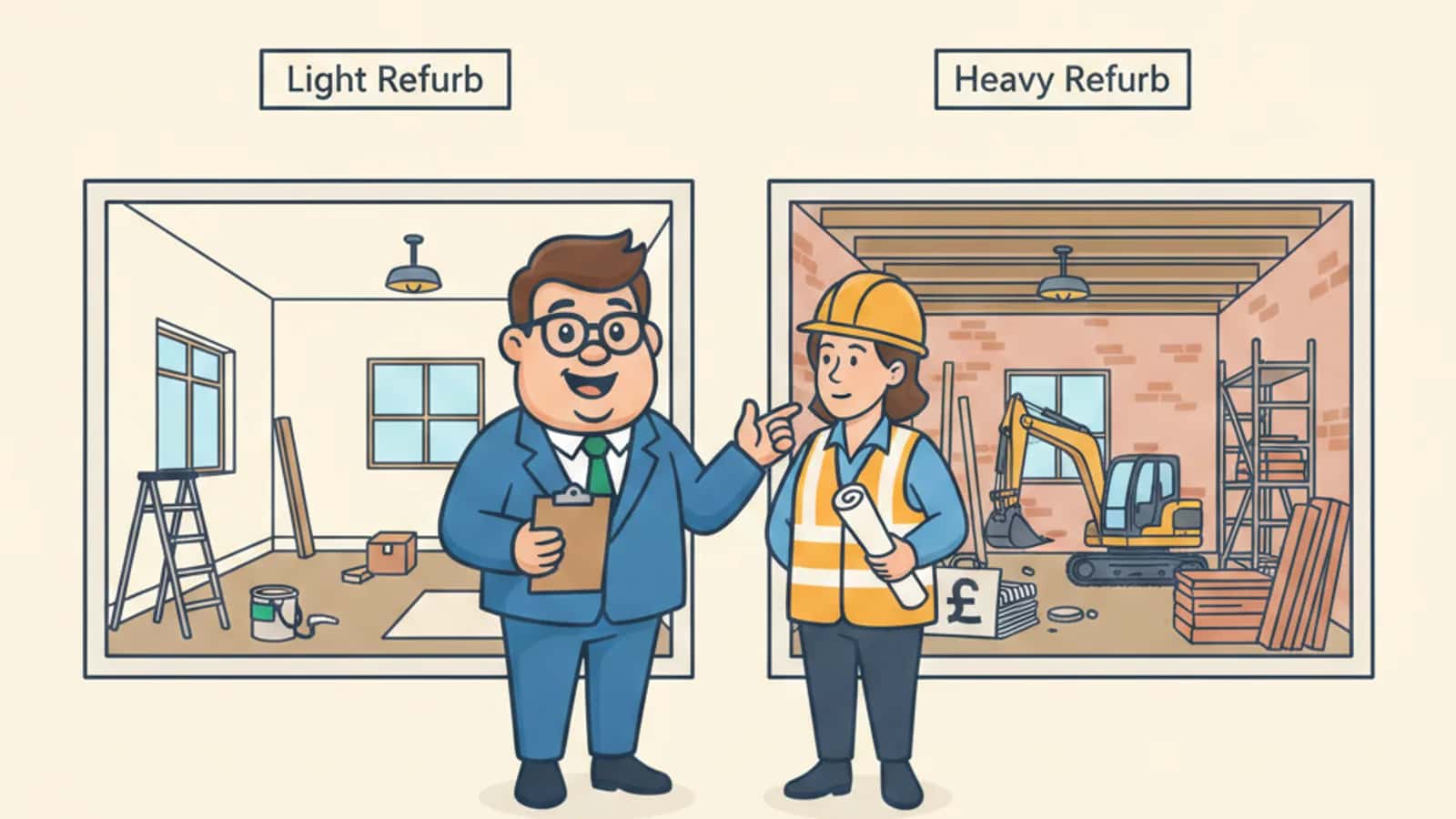
Property investors lose deals every day because they choose the wrong refurbishment finance. Light refurbishment bridging loans fund cosmetic improvements like new kitchens and bathrooms without structural changes, while heavy refurbishment finance covers major works including extensions and structural modifications.
Quick answer
Property investors lose deals every day because they choose the wrong refurbishment finance. Light refurbishment bridging loans fund cosmetic improvements like new kitchens and bathrooms without structural changes, while heavy refurbishment finance covers major works including extensions and structural modifications. The key difference affects everything from interest rates to funding speed—light refurbishment loans start from 0.49% monthly and release funds upfront, while heavy refurbishment financing begins at 0.65% monthly with staged drawdowns.
Key takeaways
- Light refurbishment covers cosmetic improvements without planning permission, while heavy refurbishment involves structural changes requiring approvals
- Light refurbishment loans offer faster funding with upfront release, typically completing within 7-14 days
- Heavy refurbishment projects require staged funding drawdowns and monitoring surveyors for works over £150,000
- Interest rates differ significantly: light refurbishment from 0.49% monthly, heavy refurbishment from 0.65% monthly
- Light refurbishment allows up to 75% LTV on purchase price, heavy refurbishment up to 70% of Gross Development Value
- Wrong classification can delay funding by weeks and increase costs substantially
- Most lenders require 25-30% deposit for heavy refurbishment projects versus 25% for light refurbishment
- Commercial properties qualify for both types but face stricter criteria and higher rates
Property investors lose deals every day because they choose the wrong refurbishment finance. Light refurbishment bridging loans fund cosmetic improvements like new kitchens and bathrooms without structural changes, while heavy refurbishment finance covers major works including extensions and structural modifications. The key difference affects everything from interest rates to funding speed—light refurbishment loans start from 0.49% monthly and release funds upfront, while heavy refurbishment financing begins at 0.65% monthly with staged drawdowns.
What Exactly Counts as Light Refurbishment in Bridging Loans

Light refurbishment includes cosmetic improvements that don't require planning permission or building regulations approval. These projects focus on updating existing features rather than changing the property's structure or layout.
Qualifying Light Refurbishment Works
- New kitchen installation (same layout)
- Bathroom replacement (existing footprint)
- Interior redecoration and painting
- Flooring replacement (carpet, laminate, tiles)
- Window replacement (like-for-like)
- Boiler replacement and heating upgrades
- Minor electrical work (rewiring, new sockets)
- Garden landscaping and external painting
The £150,000 threshold often determines funding approach. Works under this amount typically don't require monitoring surveyors, making the process faster and cheaper. Lenders classify projects based on complexity, not just cost—a £200,000 kitchen and bathroom upgrade remains light refurbishment if no structural changes occur.
Choose light refurbishment classification if your project involves updating existing features without changing room layouts or requiring council approvals.
What Renovations Disqualify a Project from Light Refurbishment Status

Any work requiring planning permission or building regulations approval automatically classifies as heavy refurbishment. Structural changes, layout modifications, and additions to the property trigger this classification regardless of cost.
Heavy Refurbishment Triggers
- Single or double-story extensions
- Loft conversions and basement conversions
- Knocking through walls (load-bearing or non-load-bearing)
- Creating new doorways or windows
- Changing property use (residential to HMO)
- Major electrical rewiring requiring building control
- New bathroom installations in different locations
- Garage conversions to living space
Planning Permission Requirements: Projects exceeding permitted development rights need planning approval. This includes extensions over certain sizes, changes to front elevations, or any work in conservation areas. Even small extensions can trigger heavy refurbishment classification if they require formal approvals.
Building Regulations Triggers: Structural alterations, new electrical circuits, plumbing changes, and insulation upgrades often need building control approval. Lenders classify these as heavy refurbishment because they require professional oversight and staged inspections.
Avoid light refurbishment applications if your project involves any structural changes, new room creation, or council approvals—misclassification delays funding and increases costs.
How Much More Expensive is Heavy Refurbishment Compared to Light Refurbishment
Heavy refurbishment bridging finance costs significantly more due to higher interest rates, mandatory monitoring fees, and staged funding requirements. The total cost difference often reaches 30-50% more than light refurbishment loans.
Interest Rate Comparison
- Light refurbishment: 0.49% monthly (5.88% annually)
- Heavy refurbishment: 0.65% monthly (7.8% annually)
- Difference: 0.16% monthly or approximately £1,600 extra per £1 million borrowed annually
Additional Heavy Refurbishment Costs
- Monitoring surveyor fees: £2,000-£5,000 per project
- Architect and planning fees: £3,000-£15,000
- Building control fees: £500-£2,000
- Extended loan terms increase total interest
- Stage payment administration fees
Funding Structure Impact: Light refurbishment provides the full budget upfront, allowing bulk purchasing and contractor discounts. Heavy refurbishment's staged drawdowns prevent these savings and may require bridging gaps between payments.
Choose light refurbishment whenever possible to minimize finance costs, but don't compromise on necessary structural work to avoid heavy refurbishment classification.
Can I Get Bridging Finance if My Property Needs Major Structural Changes
Yes, heavy refurbishment bridging finance specifically covers major structural changes including extensions, conversions, and complete renovations. Specialist lenders understand construction projects and provide staged funding to match work progress.
Structural Work Coverage
- Complete property renovations and rebuilds
- Multi-story extensions and conversions
- Change of use projects (residential to commercial)
- Listed building restorations
- Properties requiring underpinning or structural repairs
- Fire damage or flood damage restoration
Funding Approach: Lenders advance funds in stages tied to construction milestones. Typical drawdown schedule includes foundation completion, first fix, second fix, and practical completion. This protects both lender and borrower by ensuring work progresses before releasing additional funds.
Specialist Requirements: Heavy refurbishment lenders require detailed project plans, contractor qualifications, and realistic timescales. They assess the end value (GDV) rather than current condition, funding up to 70% of projected completion value.
Professional Team Needed
- Qualified architect for planning applications
- Structural engineer for load calculations
- Approved building contractor with insurance
- Project manager for complex builds
- Monitoring surveyor (lender-appointed)
Structural changes require heavy refurbishment finance—attempting to minimize this through light refurbishment applications wastes time and can jeopardize time-sensitive opportunities.
How Quickly Can I Get Funding for a Light Refurbishment Project
Light refurbishment bridging loans typically complete within 7-14 days because they avoid the complex approvals and surveys required for structural work. The streamlined process and upfront funding release make them ideal for time-sensitive opportunities.
Fast Decision Timeline:
- 1
Initial eligibility check
2 minutes (No hard check to start)
- 2
Full application review
24-48 hours
- 3
Property valuation
2-3 days
- 4
Legal work
5-7 days
- 5
Funds release
7-14 days total
Speed Advantages: Light refurbishment avoids planning permission delays, building regulations approval, and detailed structural surveys. Lenders can assess cosmetic improvement projects quickly because the risks are lower and more predictable.
Documentation Requirements
- Property purchase details or current ownership
- Refurbishment budget and contractor quotes
- Project timeline (typically 3-6 months)
- Exit strategy (sale or refinance)
- Basic financial information
Same-Day Decisions: Experienced bridging lenders with specialist partners can provide indicative terms within hours for straightforward light refurbishment projects. This speed advantage helps secure auction purchases or chain-break solutions.
Potential delays: Incomplete documentation, complex property titles, or unclear project scope can extend timelines even for light refurbishment.
For urgent opportunities requiring cosmetic improvements, light refurbishment bridging finance offers the fastest path to funding—often completing before heavy refurbishment applications even receive initial approval.
Are Interest Rates Different for Light Versus Heavy Refurbishment Loans
Yes, light refurbishment loans offer significantly lower interest rates because they present less risk to lenders. The rate difference reflects the complexity, duration, and uncertainty associated with each project type.
Current Rate Ranges (2026)
- Light refurbishment: 0.49%-0.75% monthly
- Heavy refurbishment: 0.65%-1.2% monthly
- Typical difference: 0.15%-0.45% monthly
Risk Factors Affecting Rates: Light refurbishment projects have predictable timescales, lower costs, and minimal regulatory requirements. Heavy refurbishment involves construction risks, planning delays, and cost overruns that lenders price into higher rates.
Rate Calculation Factors
- Loan-to-value ratio (lower LTV = better rates)
- Borrower experience in property development
- Project complexity and timeline
- Exit strategy certainty
- Property type and location
Additional Rate Considerations
- Arrangement fees: 1-2% of loan amount
- Exit fees: Usually none for bridging loans
- Early repayment: Often no penalties
- Rate reviews: Some lenders offer rate reductions for quick completion
Negotiation Opportunities: Experienced property investors with strong track records can negotiate better rates, especially for multiple projects or larger loan amounts. Using a specialist broker often secures better terms than direct applications.
Always compare total cost of borrowing, not just headline rates—arrangement fees and loan terms significantly impact the final cost.
What Do Lenders Consider Cosmetic Versus Structural Improvements
Lenders classify improvements based on whether they affect the property's structure, require professional approvals, or change the building's fundamental characteristics. This classification determines funding type, rates, and approval processes.
Cosmetic Improvements (Light Refurbishment)
- Painting, decorating, and wallpaper
- Kitchen replacement (same layout and services)
- Bathroom updates (existing footprint)
- Flooring changes (carpet, laminate, tiles)
- Window replacement (like-for-like sizes)
- Garden improvements and landscaping
- Minor electrical work (additional sockets, lighting)
Structural Improvements (Heavy Refurbishment)
- Wall removal or addition (load-bearing or partition)
- Room layout changes and new doorways
- Extensions, conservatories, and outbuildings
- Loft conversions and basement development
- Major rewiring requiring building control
- Plumbing rerouting for new bathroom locations
- Roof replacement or major structural repairs
Grey Area Projects: Some improvements sit between categories. Replacing a boiler in the same location counts as cosmetic, but relocating it to a different room becomes structural. Installing new windows in existing openings is cosmetic, but enlarging openings requires structural classification.
Professional Requirements Test: If the work requires an architect, structural engineer, or building control approval, lenders classify it as structural regardless of cost or complexity.
When in doubt, discuss project details with potential lenders before applying—correct classification from the start avoids delays and ensures appropriate funding structure.
How Much Deposit Do I Need for a Heavy Refurbishment Bridging Loan
Heavy refurbishment bridging loans typically require 25-30% deposit, calculated against the property's Gross Development Value (GDV) rather than purchase price. This means you need less cash upfront compared to traditional mortgages, but the calculation method differs significantly.
Typical Deposit Requirements
- Heavy refurbishment: 25-30% of GDV
- Light refurbishment: 25% of purchase price
- Commercial refurbishment: 30-40% of GDV
- First-time developers: 30-35% of GDV
GDV Calculation Example: Property purchase: £300,000 Refurbishment budget: £100,000 Projected end value (GDV): £500,000 Maximum loan: £350,000 (70% of GDV) Required deposit: £50,000 (total project cost £400,000 minus £350,000 loan)
Additional Cash Requirements
- Arrangement fees: 1-2% of loan amount
- Legal costs: £2,000-£5,000
- Survey and monitoring fees: £3,000-£7,000
- Contingency fund: 10-20% of refurbishment budget
- Interest payments during construction
Deposit Sources: Lenders accept deposits from savings, property sales, business profits, or gifted funds (with proper documentation). Some accept other property equity as security, reducing cash requirements.
Reduced Deposit Options: Experienced developers with strong track records might secure 75% GDV financing, reducing deposit requirements. Joint ventures with other investors can also spread deposit requirements.
Budget for 30-35% of total project costs as your contribution when planning heavy refurbishment projects—this covers deposit, fees, and contingencies safely.
What Mistakes Do Property Investors Make When Choosing Refurbishment Finance
The biggest mistake is misclassifying project scope to access cheaper light refurbishment rates, leading to funding rejection and costly delays. Investors also underestimate total project costs and choose inappropriate loan structures for their experience level.
Classification Errors
- Applying for light refurbishment when structural work is planned
- Underestimating planning permission requirements
- Ignoring building regulations triggers
- Assuming small extensions qualify as light refurbishment
Financial Planning Mistakes
- Insufficient contingency budgets (should be 15-20%)
- Underestimating professional fees and approvals
- Ignoring interest costs during extended timelines
- Poor exit strategy planning
Lender Selection Errors
- Choosing cheapest rates without considering service quality
- Using inexperienced lenders for complex projects
- Failing to verify lender's track record with similar projects
- Not using specialist brokers for complex cases
Timeline Mistakes
- Unrealistic project completion estimates
- Failing to account for planning delays
- Not securing contractors before funding
- Inadequate project management resources
Documentation Problems
- Incomplete contractor quotes and specifications
- Unclear project scope and timeline
- Insufficient evidence of property development experience
- Poor quality property valuations
Experience-Related Errors: First-time developers often choose complex projects requiring heavy refurbishment without understanding the additional complexity, costs, and risks involved.
Risk mitigation: Use experienced brokers who understand both light and heavy refurbishment requirements—they prevent costly classification errors and match projects with appropriate lenders.
Start with light refurbishment projects to build experience and lender relationships before attempting complex structural work requiring heavy refurbishment finance.
Is Bridging Finance Good for First-Time Property Renovators
Bridging finance can work for first-time renovators, but light refurbishment projects offer better success rates and learning opportunities than complex heavy refurbishment developments. New investors should start with cosmetic improvements to build experience and lender confidence.
Advantages for Beginners
- Fast access to opportunities others can't finance quickly
- No lengthy mortgage approval processes
- Flexible exit strategies (sale or refinance)
- Ability to purchase and improve simultaneously
- Learning opportunity with manageable risk
First-Timer Challenges
- Higher interest rates increase pressure for quick completion
- Limited experience estimating costs and timelines
- Difficulty securing best rates without track record
- Risk of project overruns with expensive short-term finance
- Complex legal and regulatory requirements
Recommended First Projects
- Light refurbishment of residential properties
- Cosmetic improvements with clear market demand
- Properties in familiar areas with known values
- Projects under £150,000 to avoid monitoring requirements
- 3-6 month timelines for manageable risk
Success Factors
- Conservative cost estimates with 20% contingency
- Experienced contractors with proper insurance
- Clear exit strategy before starting
- Sufficient cash reserves for unexpected costs
- Professional advice from experienced brokers
Alternative Options: New investors might consider development finance for larger projects or traditional mortgages with renovation loans for less time-sensitive improvements.
Start with light refurbishment bridging loans to gain experience—successful completion builds credibility for future heavy refurbishment projects with better terms.
What Types of Properties Work Best for Light Refurbishment
Properties requiring cosmetic updates in good structural condition offer the best opportunities for light refurbishment bridging finance. Focus on homes with dated interiors but sound bones in areas with strong rental or resale demand.
Ideal Property Characteristics
- 1980s-2000s homes with original kitchens and bathrooms
- Properties with good structural condition but poor presentation
- Homes with functional layouts needing cosmetic updates
- Properties in established residential areas
- Clear title with no unusual legal complications
Property Types That Work Well
- Victorian terraces needing modernization
- 1960s-1980s semi-detached houses
- Purpose-built flats requiring updating
- Bungalows with cosmetic improvement potential
- Small residential investment properties
Market Considerations: Choose areas with strong rental demand or active sales markets. Properties in commuter towns, near good schools, or in gentrifying areas often provide the best returns from light refurbishment investment.
Avoid These Property Types
- Listed buildings (require specialist approvals)
- Properties with known structural issues
- Homes in declining areas with weak demand
- Properties requiring planning permission for improvements
- Commercial properties (different lending criteria)
Due Diligence Requirements
- Professional structural survey before purchase
- Local market analysis for end values
- Planning history check for any restrictions
- Building regulations compliance verification
Profit Margins: Light refurbishment typically adds 15-25% value when executed properly. Focus on improvements that buyers and tenants value most: modern kitchens, updated bathrooms, and good decorative condition.
Target properties where £20,000-£50,000 of cosmetic improvements can add £40,000-£80,000 in value—this provides sufficient margin to cover finance costs and profit.
How Long Does a Typical Light Refurbishment Bridging Loan Take to Complete
Most light refurbishment projects complete within 3-6 months, allowing borrowers to exit through sale or refinance before interest costs become prohibitive. The predictable timeline makes light refurbishment ideal for bridging finance structures.
Typical Project Timeline:
- 1
Planning and contractor selection
2-4 weeks
- 2
Kitchen and bathroom installation
4-6 weeks
- 3
Decoration and finishing
2-3 weeks
- 4
Snagging and final touches
1-2 weeks
- 5
Total project duration
3-4 months average
Factors Affecting Timeline
- Contractor availability and reliability
- Material delivery and supply chain issues
- Property size and scope of improvements
- Seasonal factors (winter weather delays)
- Quality of project management
Exit Strategy Timing
- Refinance applications: Start at 75% completion
- Sale preparation: Begin marketing at 90% completion
- Rental preparation: Start tenant search early
- Valuation scheduling: Book for near completion
Loan Term Considerations: Most lenders offer 12-24 month terms for light refurbishment, providing comfortable buffer beyond expected completion. Early repayment typically incurs no penalties, encouraging quick turnaround.
Timeline Risks
- Contractor delays or poor workmanship
- Material shortages or price increases
- Unexpected issues discovered during work
- Market changes affecting exit strategy
- Refinancing delays or valuation issues
Acceleration Strategies
- Pre-order materials before completion
- Use experienced contractors with availability
- Overlap trades where possible
- Maintain regular site supervision
- Prepare exit strategy documentation early
Plan for 4-6 months total duration including exit, but secure 12-month bridging terms to provide comfortable buffer for unexpected delays or market timing.
Can Commercial Properties Qualify for Refurbishment Bridging Finance
Yes, commercial properties qualify for both light and heavy refurbishment bridging finance, but face stricter lending criteria, higher rates, and more complex approval processes than residential projects. Lenders focus heavily on end-use viability and borrower experience.
Commercial Light Refurbishment
- Office space cosmetic improvements
- Retail unit modernization (same use class)
- Warehouse and industrial unit updates
- Restaurant and hospitality refurbishment
- Medical and professional service improvements
Commercial Heavy Refurbishment
- Change of use projects (office to residential)
- Structural modifications and extensions
- Complete building renovations
- Listed commercial building restoration
- Mixed-use development projects
Lending Criteria Differences
- Higher deposit requirements: 30-40% typical
- Stricter borrower experience requirements
- Detailed business plans for end use
- Professional quantity surveyor reports
- Enhanced due diligence on planning compliance
Rate Premiums: Commercial refurbishment typically costs 0.1-0.3% monthly more than residential equivalent. Lenders price in additional complexity, longer void periods, and market volatility.
Specialist Requirements
- Commercial property experience essential
- Professional team including architects and planning consultants
- Detailed feasibility studies and market analysis
- Clear exit strategy with realistic timescales
- Substantial cash reserves for contingencies
Popular Commercial Projects: Converting offices to residential (permitted development), updating retail units for modern tenants, and improving industrial properties for higher rents offer good opportunities.
Commercial refurbishment requires significant experience and capital—consider residential projects first to build track record and lender relationships before attempting commercial developments.
Next steps
Understanding the difference between light refurbishment vs heavy refurbishment bridging finance can save thousands in costs and weeks in delays. Light refurbishment offers faster funding, lower rates, and simpler processes for cosmetic improvements, while heavy refurbishment provides the structured funding needed for complex structural projects. For more short-term property funding guidance, browse our bridging loan guides.
The key is accurate project classification from the start. Cosmetic improvements like new kitchens and bathrooms qualify for light refurbishment with rates from 0.49% monthly and quick funding. Structural changes, extensions, or work requiring planning permission need heavy refurbishment finance with higher rates but appropriate funding structures.
For time-sensitive opportunities, light refurbishment bridging finance provides the speed advantage needed to secure deals others can't finance quickly. Heavy refurbishment projects require more planning but offer access to larger value-add opportunities when structured correctly.
Ready to secure refurbishment finance for your next project? Check Eligibility Now with our 2-minute assessment. No hard credit check, no obligation—just fast access to specialist partners who understand property refurbishment finance.
Further reading
Frequently asked questions
What Exactly Counts as Light Refurbishment in Bridging Loans?
Light refurbishment includes cosmetic improvements that don't require planning permission or building regulations approval. These projects focus on updating existing features rather than changing the property's structure or layout.
What Renovations Disqualify a Project from Light Refurbishment Status?
Any work requiring planning permission or building regulations approval automatically classifies as heavy refurbishment. Structural changes, layout modifications, and additions to the property trigger this classification regardless of cost.
How Much More Expensive is Heavy Refurbishment Compared to Light Refurbishment?
Heavy refurbishment bridging finance costs significantly more due to higher interest rates, mandatory monitoring fees, and staged funding requirements. The total cost difference often reaches 30-50% more than light refurbishment loans.
Can I Get Bridging Finance if My Property Needs Major Structural Changes?
Yes, heavy refurbishment bridging finance specifically covers major structural changes including extensions, conversions, and complete renovations. Specialist lenders understand construction projects and provide staged funding to match work progress.
How Quickly Can I Get Funding for a Light Refurbishment Project?
Light refurbishment bridging loans typically complete within 7-14 days because they avoid the complex approvals and surveys required for structural work. The streamlined process and upfront funding release make them ideal for time-sensitive opportunities.
Are Interest Rates Different for Light Versus Heavy Refurbishment Loans?
Yes, light refurbishment loans offer significantly lower interest rates because they present less risk to lenders. The rate difference reflects the complexity, duration, and uncertainty associated with each project type.
Written by
The Funding Fred Editorial Team creates plain-English guides to help business owners understand funding options, eligibility, and application readiness before they compare finance options.
Reviewed by
UK business finance content reviewer
Robert reads our UK business finance guides before they go live, checking each one is accurate, easy to follow, and reflects how lending actually works today — not how a brochure says it should. He's listed on the FCA Register, approved as an SMF3 (AR) Executive Director at Switcha Limited, and connected to Lucky Growth Partners Ltd through its appointed representative relationship, so the regulated detail gets a properly qualified second read.
Sources
- Refurbishment Bridging Finance Guide [2] Guide - https://rateiq.co.uk/guide?slug=refurbishment-bridging-guide& [3] Refurbishment Finance - https://mallardbridging.co.uk/articles/refurbishment-finance/ [4] Understanding Refurbishment - https://www.archangelpf.co.uk/knowledge-hub/understanding-refurbishment [5] Heavy Refurbishment Finance Guide - https://commercialmortgagesbroker.co.uk/knowledge-hub/heavy-refurbishment-finance-guide
- British Business Bank finance options
- GOV.UK business finance support