Equipment and Cash Flow Options: A Complete Guide for Business Owners
Equipment loans, finance leases, operating leases and sale-leasebacks affect ownership, cash flow, collateral and tax treatment differently. Compare total repayment, deposit, useful life and end-of-term options, and confirm tax treatment with a qualified adviser.
Quick answer
Equipment loans, finance leases, operating leases and sale-leasebacks affect ownership, cash flow, collateral and tax treatment differently. Compare total repayment, deposit, useful life and end-of-term options, and confirm tax treatment with a qualified adviser.
Key takeaways
- Match the finance term to the equipment's useful life and expected revenue
- Compare deposit, monthly payment, fees and end-of-term ownership
- Leasing can reduce upfront cost, while a loan may lead to ownership after repayment
- Sale-leaseback releases cash from owned equipment but creates an ongoing payment obligation
- Section 179 and depreciation rules change, so verify current IRS limits and eligibility
Seventy percent of businesses that acquire new equipment through financing report improved cash flow within six months, yet many owners still struggle to understand their equipment and cash flow options. Equipment financing provides businesses with multiple pathways to acquire necessary assets while preserving working capital — from traditional loans and leases to innovative sale-leaseback arrangements and flexible payment structures.
Key Takeaways
- Equipment financing preserves working capital while enabling businesses to acquire necessary assets for growth and operations
- Leasing typically offers lower monthly payments but higher total costs, while buying builds equity and provides tax benefits
- Credit scores of 650+ improve approval odds, but asset-based lending options exist for businesses with lower scores
- Startups can access equipment financing through SBA programs, alternative lenders, and equipment-secured loans
- Flexible payment structures include seasonal plans, deferred payments, and customized schedules aligned with revenue cycles
- Sale-leaseback arrangements convert owned equipment into immediate working capital while maintaining operational use
- Tax benefits through Section 179 deductions can significantly reduce the effective cost of equipment purchases
- Industry-specific programs offer tailored solutions for construction, manufacturing, healthcare, and other sectors
What Is Equipment Financing and How Does It Work
Equipment financing is a secured loan or lease arrangement where the equipment itself serves as collateral, allowing businesses to acquire necessary assets without depleting cash reserves. The equipment secures the loan, which typically results in lower interest rates and more flexible qualification requirements compared to unsecured business loans.
The process works through several financing structures:
Equipment Loans: Traditional financing where you borrow money to purchase equipment outright. You own the asset immediately and can claim depreciation and tax benefits. Monthly payments include principal and interest over terms typically ranging from 2-7 years.
Equipment Leases: You rent the equipment for a specified period, making monthly payments for usage rights. At lease end, you can return the equipment, purchase it at fair market value, or upgrade to newer models.
Sale-Leaseback Arrangements: Companies sell existing owned equipment to a financing entity and lease it back for continued use. This structure converts equipment equity into immediate working capital while maintaining operational capabilities.
Asset-Based Lending: Businesses secure loans based on the value of tangible assets including equipment, accounts receivable, and inventory. This approach works well for asset-rich companies seeking liquidity without relying solely on cash flow metrics.
Choose equipment loans if you want immediate ownership and maximum tax benefits. Select leasing if you prefer lower monthly payments and regular equipment upgrades. Consider sale-leaseback if you need immediate cash flow from existing equipment assets.
Leasing vs Buying Equipment: Which Is Cheaper
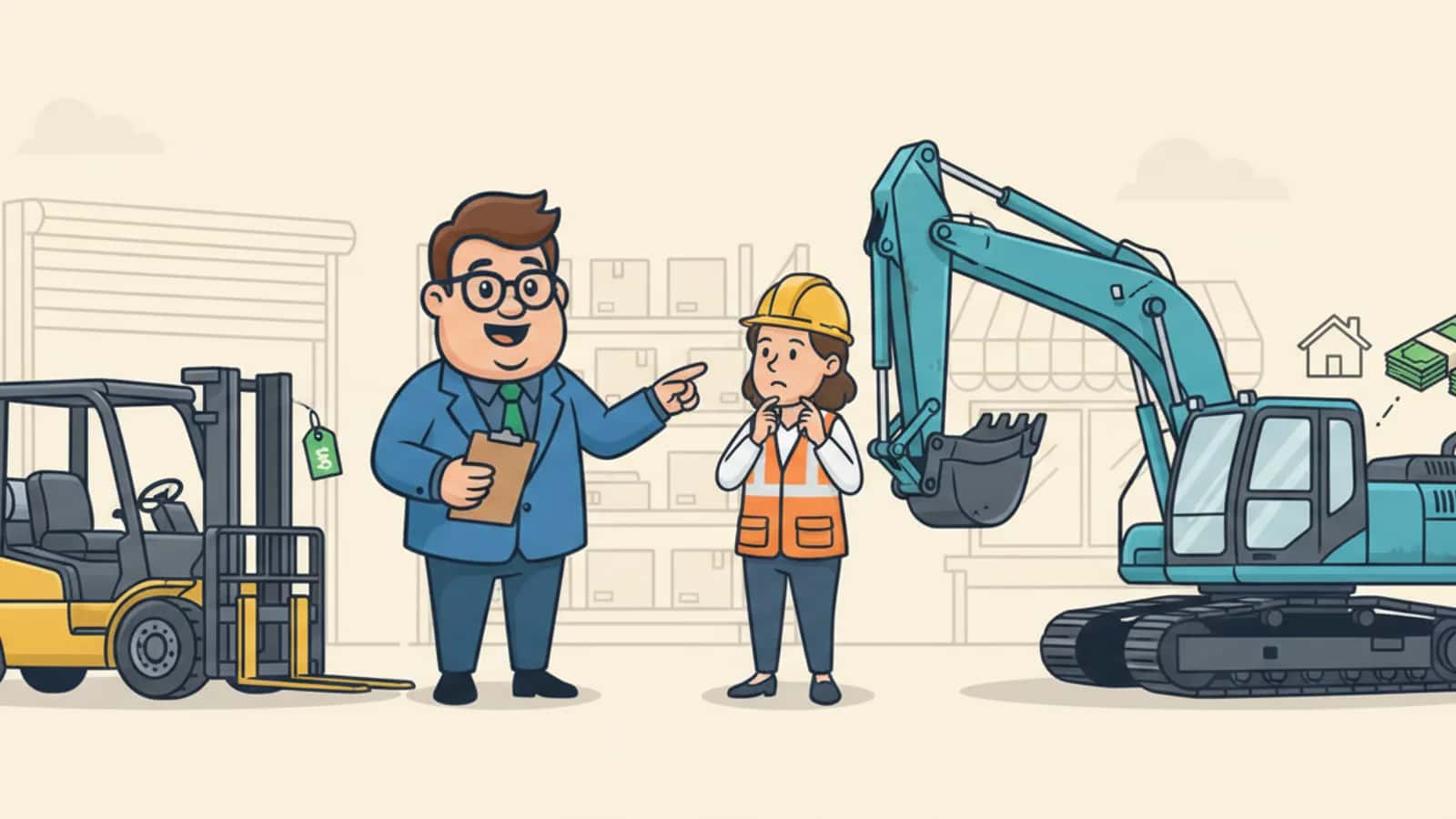
Leasing typically offers lower monthly payments but higher total costs over time, while buying builds equity and provides greater tax advantages through depreciation deductions. The cheaper option depends on your cash flow needs, tax situation, and equipment usage patterns.
Leasing Advantages
- Lower monthly payments preserve working capital
- No large down payment required
- Maintenance and warranty often included
- Easy equipment upgrades at lease end
- Payments may be fully tax-deductible as operating expenses
Buying Advantages
- Build equity in business assets
- No mileage or usage restrictions
- Claim depreciation and Section 179 deductions
- Lower total cost of ownership
- Freedom to modify or sell equipment
Financial institutions offer customized payment schedules including monthly, quarterly, semi-annual, or annual payments to align with company cash flow patterns. This flexibility helps businesses choose structures that match their revenue cycles.
Choose leasing if you need to preserve cash flow, want included maintenance, or regularly upgrade equipment. Choose buying if you want to build equity, claim maximum tax benefits, or use equipment beyond typical lease terms.
How Much Does Commercial Equipment Financing Typically Cost
Commercial equipment financing costs range from 3% to 30% annually depending on creditworthiness, equipment type, and financing structure. Traditional bank equipment loans typically cost 6-12% for qualified borrowers, while alternative lenders may charge 15-30% for higher-risk applications.
Cost Factors
- Credit Score: 720+ scores qualify for prime rates (6-10%)
- Equipment Type: New equipment gets better rates than used
- Loan Amount: Larger loans often receive better pricing
- Term Length: Shorter terms typically offer lower rates
- Down Payment: 10-20% down can reduce rates significantly
Typical Rate Ranges
- Bank Equipment Loans: 6-12% APR
- SBA Equipment Loans: 5-11% APR
- Equipment Leases: 8-20% effective rate
- Alternative Lenders: 15-30% APR
Additional Costs
- Origination fees: 1-5% of loan amount
- Documentation fees: $500-2,500
- UCC filing fees: $50-200
- Equipment appraisal: $500-2,000
Lenders now offer 100% financing options covering the entire purchase price of equipment, helping businesses conserve working capital while acquiring necessary assets. Some programs include soft costs like installation, delivery, and training expenses.
Compare total cost of ownership including interest, fees, and tax implications. Factor in cash flow benefits and revenue generation potential when evaluating financing costs versus cash purchases.
What Credit Score Do You Need for Equipment Loans
Most equipment lenders require a minimum credit score of 600-650, though prime rates typically require scores of 700 or higher. Equipment financing is generally more accessible than unsecured business loans because the equipment serves as collateral, reducing lender risk.
Credit Score Requirements
- Excellent (750+): Best rates and terms available
- Good (700-749): Competitive rates with standard terms
- Fair (650-699): Higher rates but good availability
- Poor (600-649): Limited options, higher rates, larger down payments
- Below 600: Asset-based lending or alternative financing required
Alternative Qualification Methods: When credit scores fall short, lenders evaluate:
- Business revenue and cash flow strength
- Time in business (typically 2+ years preferred)
- Equipment value and marketability
- Industry stability and experience
- Personal and business asset strength
Asset-based lending allows businesses to secure loans based on tangible asset values including equipment, accounts receivable, and inventory rather than relying solely on credit scores. This approach works particularly well for asset-rich companies with credit challenges.
Improving Approval Odds
- Provide detailed equipment specifications and quotes
- Show strong business bank account history
- Offer larger down payments (15-25%)
- Include business and personal financial statements
- Demonstrate equipment's revenue-generating potential
For those seeking business loans with flexible criteria, consider platforms that match based on revenue and trading history rather than credit scores alone.
Can Startups Get Equipment Financing with No Revenue
Startups with no revenue can access equipment financing through SBA microloans, equipment-secured loans, and alternative lenders willing to evaluate personal credit and business plans. However, options are limited and typically require strong personal guarantees and larger down payments.
Startup Equipment Financing Options:
SBA Microloans: Up to $50,000 for equipment purchases with more flexible requirements than traditional loans. These programs focus on business viability rather than extensive revenue history.
Equipment-Secured Loans: The equipment itself serves as primary collateral, making revenue less critical. Lenders evaluate equipment value, marketability, and borrower's ability to operate the equipment profitably.
Personal Credit-Based Financing: Strong personal credit (720+) can qualify startups for equipment financing based on personal guarantees and creditworthiness.
Vendor Financing: Equipment manufacturers and dealers often provide financing programs for their products, sometimes with promotional rates for new businesses.
Requirements for Startups
- Personal credit score of 650+ (preferably 700+)
- Detailed business plan showing equipment usage
- Personal guarantee from business owners
- Down payment of 20-30%
- Industry experience or relevant background
- Sufficient personal assets or collateral
Some lenders offer rapid approval processes with 24-hour decisions for equipment financing up to $500,000, enabling startups to respond quickly to operational needs.
Choose SBA microloans for smaller equipment needs with patient capital. Select equipment-secured loans for higher-value assets where the equipment justifies the financing. Consider vendor financing for promotional rates and simplified approval processes.
What Types of Equipment Can You Finance for Your Business
Most business equipment can be financed including machinery, vehicles, technology, medical equipment, and specialized industry tools. Lenders typically finance equipment worth $10,000 or more with useful lives of at least two years and strong resale value.
Commonly Financed Equipment:
Construction Equipment
- Excavators, bulldozers, cranes
- Concrete mixers, compressors
- Trucks, trailers, specialized vehicles
Manufacturing Equipment
- Production machinery, assembly lines
- Quality control and testing equipment
- Material handling systems
Technology and Office Equipment
- Computer systems, servers, software
- Point-of-sale systems, security equipment
- Telecommunications and networking gear
Medical and Healthcare Equipment
- Diagnostic imaging equipment
- Surgical instruments, patient monitoring
- Laboratory and testing equipment
Restaurant and Food Service Equipment
- Commercial kitchen appliances
- Refrigeration systems, prep equipment
- POS systems, dining furniture
Transportation Equipment
- Commercial vehicles, delivery trucks
- Forklifts, warehouse equipment
- Fleet vehicles, specialized transport
Financial institutions provide tailored equipment financing services for loans and leases up to $100 million, designed to meet specific needs of middle-market and large-cap businesses. Industry-specific financing programs address unique equipment needs across agriculture, construction, healthcare, manufacturing, and technology sectors.
Equipment Financing Restrictions
- Equipment must have useful life exceeding loan term
- Minimum values typically $10,000-25,000
- Strong resale market preferred
- Cannot be easily moved or concealed
- Must be essential to business operations
Most lenders require equipment appraisals for high-value items and may inspect equipment before funding.
Pros and Cons of Equipment Loans for Small Businesses
Equipment loans offer small businesses immediate ownership, tax benefits, and preserved cash flow, but also create debt obligations and potential cash flow strain during economic downturns. The decision depends on equipment necessity, financial stability, and growth projections.
Advantages of Equipment Loans:
Immediate Ownership: You own the equipment from day one, building business assets and equity rather than paying for usage rights.
Tax Benefits: Claim depreciation deductions and potentially full Section 179 deductions, significantly reducing taxable income.
Cash Flow Preservation: Avoid large cash outlays while maintaining working capital for operations and growth opportunities.
Predictable Payments: Fixed monthly payments enable accurate budgeting and financial planning over the loan term.
No Usage Restrictions: Unlike leases, you can modify, relocate, or operate equipment without limitations or excess usage fees.
Disadvantages of Equipment Loans:
Debt Obligation: Creates long-term debt that must be repaid regardless of business performance or equipment utilization.
Depreciation Risk: Equipment values may decline faster than loan balances, creating negative equity positions.
Maintenance Responsibility: You bear all maintenance, repair, and insurance costs throughout the equipment's life.
Technology Obsolescence: Owned equipment may become outdated before loan maturity, reducing competitive advantages.
Cash Flow Impact: Monthly payments continue during slow periods, potentially straining cash flow during economic downturns.
Qualification Requirements: Credit checks, financial documentation, and approval processes can delay equipment acquisition.
Lenders offer diverse financing structures including equipment loans, leases, sale-leasebacks, and asset-based financing to accommodate different business needs and cash flow considerations.
Choose equipment loans when you need long-term equipment use, want maximum tax benefits, and have stable cash flow to support payments. Avoid when equipment needs are temporary or technology changes rapidly.
What Happens If You Can't Make Equipment Loan Payments
If you can't make equipment loan payments, lenders typically offer workout options including payment deferrals, loan modifications, or refinancing before pursuing equipment repossession. The specific process depends on your loan agreement, payment history, and communication with the lender.
Initial Steps When Payments Become Difficult:
Contact Your Lender Immediately: Proactive communication often leads to more favorable workout arrangements than waiting for default notices.
Document Financial Hardship: Prepare financial statements, cash flow projections, and explanations of temporary versus permanent difficulties.
Request Payment Modifications: Lenders may offer temporary payment reductions, deferrals, or term extensions to help businesses through difficult periods.
Workout Options Available:
Payment Deferrals: Temporary suspension of payments for 30-180 days, with missed payments added to loan balance or term end.
Loan Modifications: Permanent changes to payment amounts, interest rates, or terms to make payments more manageable.
Refinancing: Replace existing loan with new terms, potentially lower payments, or extended repayment periods.
Partial Payments: Temporary acceptance of reduced payments while working toward full payment restoration.
Default and Repossession Process:
If workout arrangements fail, lenders may:
- Accelerate the full loan balance due immediately
- Repossess equipment after proper legal notice
- Sell equipment at auction or through dealers
- Pursue deficiency balances if sale proceeds don't cover loan balance
- Report defaults to credit bureaus, damaging business and personal credit
Lenders increasingly offer deferred payment options, allowing businesses to acquire equipment and delay initial payments for up to six months while generating revenue.
Protecting Your Business
- Maintain detailed records of all communications
- Understand your state's equipment repossession laws
- Consider selling equipment voluntarily to minimize deficiency
- Explore alternative financing to cure defaults
- Consult with business attorneys for complex situations
Early communication and honest financial disclosure typically produce better outcomes than avoiding lender contact.
Alternative Ways to Fund Business Equipment Purchases
Beyond traditional equipment loans, businesses can fund equipment purchases through cash flow loans, lines of credit, SBA programs, vendor financing, and equipment leasing arrangements. Each option offers different advantages for preserving working capital and managing cash flow.
Cash Flow-Based Financing: Revenue-based loans evaluate business cash flow rather than equipment value, offering more flexibility for equipment purchases. These loans typically fund faster but may carry higher rates than equipment-secured financing.
Business Lines of Credit: Revolving credit lines provide flexibility to purchase equipment as needed while only paying interest on amounts used. This works well for businesses with varying equipment needs or seasonal purchasing patterns.
SBA Equipment Financing Programs: SBA 504 loans provide long-term, fixed-rate financing for equipment purchases with down payments as low as 10%. These programs offer below-market rates but require more documentation and longer approval times.
Vendor and Dealer Financing: Equipment manufacturers and dealers often provide competitive financing programs, sometimes with promotional rates or deferred payment options for their products.
Sale-Leaseback Arrangements: Companies increasingly utilize sale-leaseback agreements to convert owned equipment into immediate working capital by selling equipment to financing entities and leasing it back for continued operational use.
Asset-Based Credit Facilities: Asset-based lending allows businesses to secure credit based on accounts receivable, inventory, and equipment values, providing ongoing access to working capital.
Equipment Rental and Rent-to-Own: Short-term rentals can bridge immediate needs while evaluating long-term requirements. Some rental agreements include purchase options.
Business Credit Cards: For smaller equipment purchases, business credit cards offer immediate funding with potential rewards, though interest rates are typically higher than term loans.
For businesses exploring comprehensive funding options, platforms offering US business funding can help identify the most suitable financing structures based on revenue, industry, and equipment needs.
How Long Does Equipment Financing Approval Usually Take
Equipment financing approval typically takes 1-5 business days for straightforward applications, though complex deals or larger amounts may require 1-2 weeks. Online lenders and streamlined programs can provide same-day approvals, while traditional banks generally need 3-7 business days.
Approval Timeline Factors:
Application Completeness: Complete applications with all required documentation process faster than those requiring additional information.
Loan Amount: Smaller loans (under $100,000) typically approve faster than larger amounts requiring more extensive underwriting.
Credit Profile: Strong credit and financials enable faster decisions, while marginal applications require additional review time.
Equipment Type: Standard equipment with established values processes faster than specialized or custom equipment requiring appraisals.
Lender Type: Online and alternative lenders often provide faster decisions than traditional banks with more extensive approval processes.
Typical Approval Timeframes:
- 1
Online Lenders
Same day to 2 business days
- 2
Alternative Lenders
1-3 business days
- 3
Traditional Banks
3-7 business days
- 4
SBA Programs
2-4 weeks
- 5
Large Equipment Loans
1-3 weeks
Rapid approval processes now offer app-only financing up to $500,000 with 24-hour approvals, enabling businesses to respond quickly to operational needs.
Expediting Approval Process
- Prepare complete financial documentation upfront
- Obtain equipment quotes and specifications in advance
- Maintain strong business banking relationships
- Use online applications when possible
- Respond quickly to lender information requests
Post-Approval Funding: Once approved, funding typically occurs within 1-3 business days after equipment delivery verification and final documentation completion.
Choose online lenders for speed when rates are competitive. Select traditional banks for larger amounts or when existing banking relationships provide advantages.
Tax Benefits of Equipment Financing
Equipment financing provides significant tax advantages including Section 179 deductions allowing immediate expensing of equipment purchases, bonus depreciation for additional first-year deductions, and regular depreciation schedules that reduce taxable income over equipment life.
Section 179 deduction: Qualifying businesses may elect to expense eligible equipment, subject to the tax year's limits, phase-outs and taxable-income rules. Check the current IRS guidance rather than relying on an older dollar cap.
Qualifying Equipment Requirements
- Used for business purposes more than 50% of the time
- Purchased or financed (not leased) during the tax year
- Tangible personal property including machinery, vehicles, and technology
- Placed in service during the tax year
Bonus depreciation: Eligibility and the deductible percentage depend on the placed-in-service date and current federal law. State treatment can differ, so confirm the position with a tax adviser.
Regular Depreciation Schedules: Equipment not fully expensed under Section 179 can be depreciated over IRS-determined useful lives, typically 3-7 years for most business equipment.
Tax treatment: The borrower, asset, ownership structure and agreement terms determine whether Section 179, bonus depreciation, regular depreciation or lease deductions may apply. Tax savings should not be assumed before professional review.
Leasing vs. Buying Tax Implications
- Equipment Loans: Claim depreciation, Section 179, and interest deductions
- Equipment Leases: Deduct lease payments as operating expenses
- Sale-Leaseback: Generate immediate cash while maintaining tax-deductible lease payments
Tax Planning Considerations
- Coordinate equipment purchases with tax year planning
- Consider income levels and tax bracket implications
- Evaluate multi-year tax strategies for large purchases
- Consult tax professionals for complex equipment acquisitions
The combination of immediate tax deductions and preserved cash flow often makes equipment financing more attractive than cash purchases from a tax perspective.
Equipment Financing for Specific Industries
Different industries have unique equipment needs and financing requirements, leading lenders to develop specialized programs for construction, manufacturing, healthcare, agriculture, and technology sectors. These industry-specific solutions address sector challenges, equipment types, and cash flow patterns.
Construction Equipment Financing: Construction companies need heavy equipment with high values and strong resale markets. Lenders offer seasonal payment plans aligning with project-based revenue cycles and weather-related work patterns.
Typical Construction Equipment
- Excavators, bulldozers, cranes
- Concrete equipment, paving machinery
- Commercial vehicles, trailers
Manufacturing Equipment Financing: Manufacturing businesses require production machinery, assembly lines, and quality control equipment. Financing often includes installation, training, and soft costs associated with equipment implementation.
Healthcare Equipment Financing: Medical practices and healthcare facilities need specialized diagnostic, treatment, and monitoring equipment. Programs often accommodate longer useful lives and technology upgrade requirements.
Agricultural Equipment Financing: Farm equipment financing aligns payment schedules with seasonal revenue patterns, harvest cycles, and commodity price fluctuations. Many programs offer deferred payments during off-seasons.
Technology Equipment Financing: IT and technology equipment financing addresses rapid obsolescence concerns through shorter terms, upgrade options, and refresh programs for computers, servers, and software.
Industry-Specific Program Features:
Seasonal Payment Plans: Financing programs include seasonal payment plans aligning payment schedules with business revenue cycles, particularly beneficial for industries with fluctuating income streams.
Flexible Payment Schedules: Customized payment schedules including monthly, quarterly, semi-annual, or annual payments align with company cash flow patterns.
Comprehensive Coverage: Financing solutions expand to cover soft costs associated with equipment acquisition including installation, delivery, and training expenses.
Large-Scale Solutions: Financial institutions provide tailored equipment financing services offering loans and leases up to $100 million for middle-market and large-cap businesses.
For businesses seeking industry-specific guidance, exploring business loan options can help identify lenders familiar with sector requirements and equipment types.
Choose industry-specific lenders when equipment needs are highly specialized or when standard financing terms don't match your business's cash flow patterns.
Next steps for equipment and cash flow options
Equipment and cash flow options provide businesses with flexible pathways to acquire necessary assets while preserving working capital for operations and growth. The key is matching financing structures to your specific cash flow patterns, tax situation, and equipment needs.
Traditional equipment loans work best when you want immediate ownership and maximum tax benefits through Section 179 deductions. Leasing preserves cash flow with lower monthly payments but results in higher total costs. Sale-leaseback arrangements convert existing equipment equity into immediate working capital while maintaining operational use.
For businesses with credit challenges, asset-based lending evaluates equipment value and business assets rather than relying solely on credit scores. Startups can access financing through SBA programs, equipment-secured loans, and vendor financing despite limited revenue history.
Approval and funding time depends on the asset, amount, valuation, supplier, borrower profile and documentation. Ask each provider to separate an initial decision from final approval and disbursement.
Ready to explore your equipment financing options? Consider platforms that offer fast eligibility checks with no hard credit pulls, helping you understand realistic options across multiple lenders before committing to applications. Smart matching based on revenue, trading history, and sector fit can identify the most suitable equipment and cash flow options for your business needs.
Further reading
Frequently asked questions
What Is Equipment Financing and How Does It Work?
Equipment financing is a secured loan or lease arrangement where the equipment itself serves as collateral, allowing businesses to acquire necessary assets without depleting cash reserves. The equipment secures the loan, which typically results in lower interest rates and more flexible qualification requirements compared to unsecured business loans.
How Much Does Commercial Equipment Financing Typically Cost?
Commercial equipment financing costs range from 3% to 30% annually depending on creditworthiness, equipment type, and financing structure. Traditional bank equipment loans typically cost 6-12% for qualified borrowers, while alternative lenders may charge 15-30% for higher-risk applications.
What Credit Score Do You Need for Equipment Loans?
Most equipment lenders require a minimum credit score of 600-650, though prime rates typically require scores of 700 or higher. Equipment financing is generally more accessible than unsecured business loans because the equipment serves as collateral, reducing lender risk.
Can Startups Get Equipment Financing with No Revenue?
Startups with no revenue can access equipment financing through SBA microloans, equipment-secured loans, and alternative lenders willing to evaluate personal credit and business plans. However, options are limited and typically require strong personal guarantees and larger down payments.
What Types of Equipment Can You Finance for Your Business?
Most business equipment can be financed including machinery, vehicles, technology, medical equipment, and specialized industry tools. Lenders typically finance equipment worth $10,000 or more with useful lives of at least two years and strong resale value.
What Happens If You Can't Make Equipment Loan Payments?
If you can't make equipment loan payments, lenders typically offer workout options including payment deferrals, loan modifications, or refinancing before pursuing equipment repossession. The specific process depends on your loan agreement, payment history, and communication with the lender.
Written by
The Funding Fred Editorial Team creates plain-English guides to help business owners understand funding options, eligibility, and application readiness before they compare finance options.
Sources
- Flexible Financing [2] Equipment Leaseback For Cash Flow - https://libertycapitalgroup.com/equipment-leaseback-for-cash-flow/ [3] Strategic Financing When Use Asset Based Lending Cash Flow Loans Or Both - https://www.mhccna.com/en-ca/business-insights/articles/strategic-financing-when-use-asset-based-lending-cash-flow-loans-or-both [4] Equipment Financing Leasing - https://www.firstcitizens.com/commercial/solutions/credit-financing/equipment-financing-leasing [5] Equipment Financing - https://fullhornfinance.com/equipment-financing/ [6] Equipment Finance - https://www.axosbank.com/commercial/lending/equipment-finance [7] Industrial Equipment Financing - https://equipcash.com/industrial-equipment-financing/ [8] Equipment Finance - https://www.agwestfc.com/financing/equipment-finance
- U.S. Small Business Administration loans
- U.S. Treasury small business programs
- IRS Publication 946: How To Depreciate Property