Business Credit Scores: What Small Business Owners Need to Know in 2026
Business credit scores use different scales and inputs depending on the bureau. Lenders may review PAYDEX, Experian Intelliscore Plus, FICO SBSS, personal credit and cash flow together, so no single score guarantees approval or a particular rate.
Quick answer
Business credit scores use different scales and inputs depending on the bureau. Lenders may review PAYDEX, Experian Intelliscore Plus, FICO SBSS, personal credit and cash flow together, so no single score guarantees approval or a particular rate.
Key takeaways
- PAYDEX, Experian Intelliscore Plus and FICO SBSS use different score ranges and models
- Lenders may combine business scores with owner credit, revenue, debt and payment history
- Paying suppliers on time and correcting reporting errors can strengthen a business credit profile
- A strong score can support an application but does not guarantee approval or pricing
- Check which bureau and score model a lender uses before interpreting a number
What Is a Business Credit Score and How Does It Differ From Personal Credit
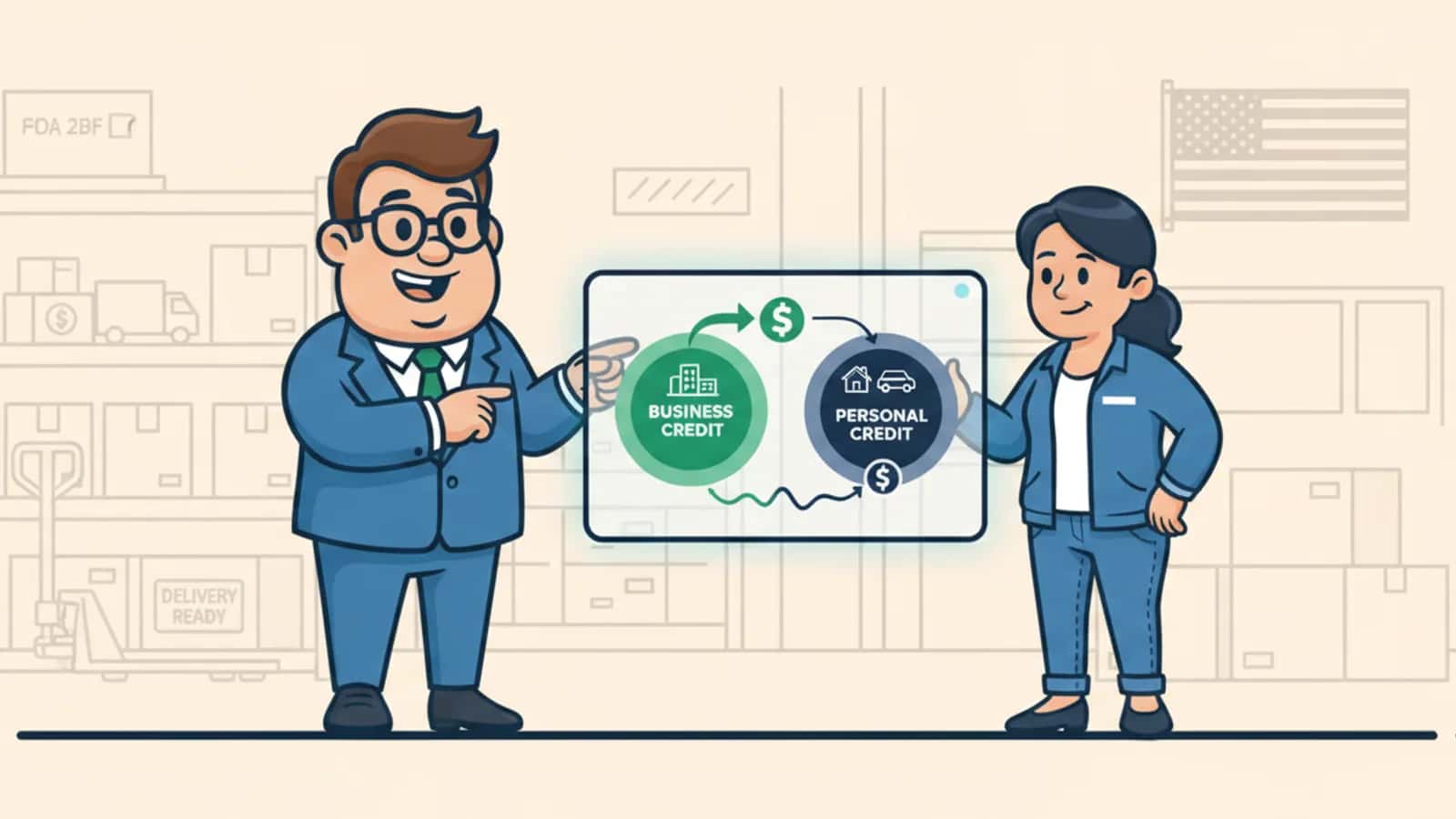
A business credit score measures your company's creditworthiness based on how it pays bills, manages debt, and handles financial obligations. Unlike personal credit scores that track individual financial behavior, business credit scores evaluate company-specific payment patterns and financial stability.
The key differences matter for loan applications and business growth:
Separate Reporting Systems: Business credit bureaus track company payment history independently from personal credit reports. Your business can have excellent credit while your personal score remains average, or vice versa.
Different Scoring Ranges: Personal credit typically uses 300-850 scales, while business credit employs various ranges depending on the bureau. FICO's Small Business Scoring Service runs 0-300, while PAYDEX and Intelliscore Plus use 1-100 scales.
Payment History Focus: Business scores heavily weight trade payments to suppliers and vendors, not just traditional loan payments. Paying net-30 invoices on time builds business credit even without formal loans.
Public Information Impact: Business credit reports include public records like liens, judgments, and UCC filings that don't appear on personal reports. These factors can significantly impact business creditworthiness.
Choose business credit monitoring if you're seeking business loans or planning expansion that requires vendor financing.
How Banks and Lenders Calculate Business Credit Scores
Business credit calculations prioritize payment behavior and financial stability over income ratios used in personal scoring. Each bureau weighs factors differently, but payment history dominates all models.
Payment History (35-40% of score): On-time payments to suppliers, vendors, and creditors carry the most weight. Late payments, especially those over 30 days, significantly damage scores across all bureaus.
Credit Utilization (20-25% of score): How much available credit your business uses affects scores similarly to personal credit. Keeping utilization below 30% of available limits helps maintain higher scores.
Length of Credit History (15-20% of score): Established trade relationships and longer account histories improve scores. Bureaus favor businesses with consistent payment patterns over multiple years.
Company Demographics (10-15% of score): Time in business, industry type, and company size influence scores. Established businesses in stable industries typically score higher than startups in volatile sectors.
Public Records (5-10% of score): Bankruptcies, liens, judgments, and UCC filings negatively impact scores. These remain on reports for 7-10 years depending on the record type.
Credit Mix (5-10% of score): Diverse credit types including trade lines, business credit cards, and loans demonstrate credit management experience.
Common mistake: Many business owners focus only on loan payments while ignoring supplier payment timing, missing the largest scoring factor.
Which Business Credit Bureau Should You Track
Monitor all three major bureaus since lenders often check different reports, but prioritize based on your industry and funding needs. Each bureau serves different lender segments and uses distinct scoring models.
Dun & Bradstreet (D&B) PAYDEX Score
- Range: 1-100 (80+ indicates on-time payments)
- Best for: Traditional bank loans and large corporate contracts
- Strength: Most recognized by established lenders and Fortune 500 companies
- Weakness: Slower to reflect recent payment improvements
Experian Intelliscore Plus
- Range: 1-100 (76-100 indicates low risk)
- Best for: SBA loans and equipment financing
- Strength: Incorporates personal credit factors for small businesses
- Weakness: Less trade payment data than D&B
Equifax Business Credit Risk Score
- Range: 101-992 (800+ considered excellent)
- Best for: Alternative lenders and online financing platforms
- Strength: Updates quickly with new payment data
- Weakness: Less industry recognition than D&B
FICO Small Business Scoring Service (SBSS)
- Range: 0-300 (165+ considered good, 211+ excellent)
- Best for: SBA loans (though requirements changed in 2026)
- Strength: Widely used by traditional banks
- Note: SBA no longer mandates SBSS prescreening as of March 2026, but many lenders still use it
Track D&B PAYDEX if you're pursuing traditional bank financing. Monitor Experian for SBA loan applications. Check all three before major funding decisions.
What's Considered a Good Business Credit Score
Good business credit scores vary by bureau, but generally fall in the upper 20-30% of each scoring range. These thresholds determine loan approval odds and interest rate tiers.
PAYDEX Score Ranges (Dun & Bradstreet)
- Excellent: 90-100 (early payments)
- Good: 80-89 (on-time payments)
- Fair: 70-79 (slightly late payments)
- Poor: Below 70 (consistently late payments)
Intelliscore Plus Ranges (Experian)
- Low Risk: 76-100
- Medium-Low Risk: 51-75
- Medium Risk: 26-50
- High Risk: 1-25
FICO SBSS Ranges
- Excellent: 211-300
- Good: 165-210
- Fair: 120-164
- Poor: 0-119
Equifax Business Risk Score
- Excellent: 800-992
- Good: 700-799
- Fair: 600-699
- Poor: 101-599
Most lenders require minimum scores of 80 (PAYDEX), 75 (Intelliscore), or 165 (FICO SBSS) for competitive loan terms. Scores below these thresholds typically result in higher interest rates or alternative financing requirements.
Industry context matters: Construction and retail businesses often need higher scores due to seasonal cash flow patterns, while professional services may qualify with slightly lower scores.
How Business Credit Scores Impact Loan Approval and Interest Rates
Business credit scores directly influence loan approval odds, interest rates, and loan terms, often more significantly than personal credit for established businesses. Higher scores unlock better financing options and lower costs.
Interest Rate Impact by Score Range:
Loan Amount and Terms
- Excellent credit: Access to $500K+ loans with 5-7 year terms
- Good credit: $100K-500K loans with 3-5 year terms
- Fair credit: $50K-100K loans with 1-3 year terms
- Poor credit: Under $50K, typically 6-18 month terms
Collateral Requirements: Higher scores reduce collateral demands. Businesses with excellent credit often qualify for unsecured loans, while poor credit typically requires asset-backed financing or personal guarantees.
Speed of Approval: Good business credit accelerates approval processes. Banks pre-approve businesses with strong credit profiles, while poor credit triggers manual underwriting that adds weeks to decisions.
For immediate funding needs, consider platforms that use flexible criteria beyond just credit scores, including revenue and trading history.
How to Improve Your Business Credit Score Quickly
Business credit scores can improve faster than personal credit because commercial payment cycles are shorter and trade reporting happens monthly. Focus on payment timing and credit utilization for quickest results.
Immediate Actions (30-60 days):
- Pay all bills early or on-time: Even one early payment can boost PAYDEX scores above 80. Set up automatic payments 2-3 days before due dates.
- Reduce credit utilization below 30%: Pay down business credit card balances and lines of credit. Utilization above 50% significantly hurts scores across all bureaus.
- Establish new trade lines: Open accounts with suppliers who report to credit bureaus. Office supply companies, telecommunications providers, and fuel cards often report positive payment history.
Medium-term improvements (3-6 months):
- Diversify credit types: Add equipment financing, business credit cards, or small loans to demonstrate credit management across different products.
- Correct reporting errors: Dispute inaccurate late payments or incorrect account information with each bureau. Business credit disputes often resolve faster than personal credit corrections.
- Increase credit limits: Request higher limits on existing accounts to lower utilization ratios, but don't increase spending.
Long-term strategies (6-12 months):
- Build vendor relationships: Negotiate net-30 terms with suppliers and ensure they report payments to credit bureaus.
- Maintain consistent payment patterns: Avoid seasonal payment delays that can create negative reporting cycles.
Common mistake: Paying bills exactly on due dates instead of early. PAYDEX scores reward early payments with higher scores, while on-time payments only maintain current levels.
Common Business Credit Score Mistakes to Avoid
Small business owners often damage their credit scores through preventable mistakes that seem minor but create lasting negative impacts. Understanding these pitfalls helps maintain strong credit profiles.
Payment Timing Errors
- Paying net-30 invoices on day 30 instead of early (misses PAYDEX score boosts)
- Using personal credit cards for business expenses (mixes credit profiles)
- Ignoring small vendor bills that still report to credit bureaus
Credit Utilization Mistakes
- Maxing out business credit cards during busy seasons
- Closing old business credit accounts (reduces available credit)
- Opening multiple new accounts simultaneously (appears risky to bureaus)
Documentation and Setup Errors
- Using SSN instead of EIN for business accounts (prevents separate credit building)
- Inconsistent business name usage across accounts and applications
- Failing to update business information with credit bureaus after address or ownership changes
Industry-Specific Mistakes
- Construction businesses not managing seasonal payment gaps
- Retail businesses carrying high inventory financing during peak seasons
- Service businesses mixing client payment delays with supplier payment timing
Monitoring and Response Failures
- Not checking business credit reports regularly (missing errors or fraud)
- Ignoring credit bureau notifications about account changes
- Failing to dispute inaccurate information promptly
Entity Structure Mistakes
- Operating as sole proprietorship instead of LLC or corporation (limits credit building)
- Mixing personal and business finances even with proper entity structure
- Not maintaining proper corporate formalities that support credit separation
Prevention strategy: Set up automated early payments for all recurring business expenses and review credit reports quarterly to catch issues before they compound.
Building Credit for Startups and New Businesses
New businesses can establish credit profiles within 90 days by following specific steps that don't require existing credit history. The key is creating reportable payment relationships before applying for traditional financing.
First 30 Days - Foundation Building:
- Obtain EIN and business bank account: Separate business identity from personal finances immediately
- Register with D&B, Experian, and Equifax: Create business credit files before any negative information appears
- Establish business phone and address: Consistent NAP (Name, Address, Phone) information across all applications
- 1
Days 30-90 - Initial Trade Lines
- Net-30 vendor accounts: Start with office suppliers (Staples, Office Depot), telecommunications (Verizon Business), and fuel cards (Shell, BP)
- Business credit cards: Apply for starter business cards that don't require established credit history
- Small equipment financing: Consider equipment loans for necessary business assets
- 2
Days 90-180 - Credit Expansion
- Additional trade lines: Add 3-5 more vendor relationships that report to credit bureaus
- Business line of credit: Apply for small revolving credit facilities
- Industry-specific financing: Pursue sector-relevant financing (delivery vehicles, restaurant equipment, professional tools)
Startup Credit Building Challenges
- Limited payment history makes traditional approval difficult
- Personal credit guarantees often required initially
- Higher interest rates until business credit establishes independently
Revenue-Based Alternatives: Startups with consistent revenue but limited credit history can access working capital through revenue-based qualification that focuses on sales patterns rather than credit scores.
Timeline expectation: Most startups achieve fair business credit (70+ PAYDEX) within 6 months of consistent payment behavior.
Business Credit Differences by Entity Type
Business structure significantly affects credit building capacity and lender perception. LLCs and corporations build stronger independent credit profiles than sole proprietorships or partnerships.
Sole Proprietorship Credit Limitations
- Credit tied directly to owner's SSN and personal credit
- Limited ability to build separate business credit identity
- Lenders often treat applications as personal credit decisions
- Liability extends to personal assets for business debts
LLC Credit Advantages
- Separate legal entity enables independent credit building
- Limited liability protection for owners
- Can establish credit using EIN instead of SSN
- Banks view LLCs as more stable than sole proprietorships
Corporation Credit Benefits
- Strongest separation between business and personal credit
- Most favorable lender perception for larger loans
- Ability to build credit independent of owner changes
- Access to corporate credit programs and higher limits
Partnership Credit Considerations
- Credit building possible but requires all partners' cooperation
- Personal guarantees typically required from multiple parties
- More complex credit applications and approval processes
- Liability shared among partners affects risk assessment
Credit Building Timeline by Entity:
Sole Proprietorship
- Time to Establish Credit
- 6-12 months
- Typical First-Year Limits
- $5K-25K
- Personal Guarantee Required
- Always
LLC
- Time to Establish Credit
- 3-6 months
- Typical First-Year Limits
- $10K-50K
- Personal Guarantee Required
- Initially
Corporation
- Time to Establish Credit
- 3-6 months
- Typical First-Year Limits
- $25K-100K
- Personal Guarantee Required
- Initially
Partnership
- Time to Establish Credit
- 6-9 months
- Typical First-Year Limits
- $10K-75K
- Personal Guarantee Required
- From all partners
Recommendation: Form LLC or corporation before seeking business credit, even if operating as sole proprietorship currently. The entity structure change typically pays for itself through better credit terms within the first year.
How to Check Your Business Credit Score for Free
Business credit monitoring requires more effort than personal credit checking because free access is limited and each bureau offers different information. However, several legitimate free options exist for basic monitoring.
Free Credit Report Sources:
Dun & Bradstreet
- Free CreditSignal account provides basic PAYDEX score and payment trends
- Limited to quarterly updates and basic information
- Full D&B reports require paid subscription ($149+ annually)
Experian Business
- Free business credit report with Intelliscore Plus once annually
- Basic monitoring alerts available at no cost
- Paid plans ($39-99 monthly) offer detailed reporting and monitoring
Equifax Business
- Free credit report available by mail request
- Online access requires paid subscription
- Basic business information verification available free online
Nav.com
- Free platform providing scores from multiple bureaus
- Requires business verification but no payment
- Includes basic monitoring and credit building recommendations
Credit.com Business
- Free business credit scores and monitoring
- Educational resources and improvement recommendations
- Premium features available for detailed reporting
Checking Process:
- Gather business information: EIN, legal business name, business address, phone number
- Verify identity through business bank account or utility bills
- Create accounts with each bureau or monitoring service
- Set up alerts for score changes and new account openings
Monitoring Schedule
- Check scores monthly during credit building phases
- Review full reports quarterly for accuracy
- Monitor continuously before major financing applications
Warning: Avoid services requiring upfront payment for "free" reports. Legitimate free services may offer paid upgrades but don't require payment for basic access.
Financing Options When Your Business Has Bad Credit
Poor business credit doesn't eliminate financing options, but it shifts focus toward alternative lenders and revenue-based qualification methods. Several funding sources prioritize cash flow over credit scores.
Revenue-Based Financing
- Qualification based on monthly sales rather than credit scores
- Typical requirements: $10K+ monthly revenue, 6+ months in business
- Higher costs but faster approval (24-48 hours)
- Repayment tied to daily sales percentages
Asset-Based Lending
- Equipment financing using purchased assets as collateral
- Invoice factoring converts receivables to immediate cash
- Inventory financing for retail and wholesale businesses
- Real estate equity loans for property-owning businesses
Alternative Online Lenders
- Focus on bank statements and cash flow analysis
- Higher interest rates (15-40% APR) but flexible approval criteria
- Shorter terms (3-24 months) with daily or weekly payments
- Faster funding than traditional banks (1-5 business days)
Merchant Cash Advances
- Immediate funding based on credit card processing history
- No fixed payment schedule (tied to daily sales)
- Higher costs but accessible for businesses with poor credit
- Best for short-term cash flow gaps, not long-term financing
SBA Microloans
- Designed for businesses that don't qualify for traditional SBA loans
- Lower credit requirements and smaller loan amounts ($500-$50K)
- Longer approval process but better terms than alternative lenders
- Often include business counseling and support services
Peer-to-Peer Business Lending
- Individual investors fund business loans through online platforms
- More flexible credit requirements than banks
- Competitive rates for businesses with strong revenue despite poor credit
- Transparent pricing and terms
For businesses needing immediate working capital despite credit challenges, platforms offering Fast Eligibility checks can identify realistic options without hard credit pulls that further damage scores.
Next steps for business credit scores
Business credit scores serve as the foundation for accessing competitive financing and building strong vendor relationships. Unlike personal credit, business scores can be built quickly through strategic vendor relationships and consistent payment timing, often showing improvement within 90 days of focused effort. For more comparisons and application guidance, browse our business loan guides.
The key to success lies in understanding that each credit bureau uses different scoring models and serves different lender segments. Monitor all three major bureaus, but prioritize based on your financing goals and industry requirements. Remember that payment history dominates all scoring models, making early or on-time payments the most impactful improvement strategy.
For businesses with poor credit or limited credit history, alternative financing options provide immediate access to working capital while credit profiles develop. Revenue-based qualification and asset-backed lending can bridge financing gaps during credit building phases.
Ready to explore your financing options? Check Eligibility Now with no hard credit pull to understand what you might qualify for across our network of US funding partners. Our Smart Matching process considers revenue, trading history, and sector fit alongside credit scores to identify realistic options for your business.
Further reading
Frequently asked questions
What Is a Business Credit Score and How Does It Differ From Personal Credit?
A business credit score measures your company's creditworthiness based on how it pays bills, manages debt, and handles financial obligations. Unlike personal credit scores that track individual financial behavior, business credit scores evaluate company-specific payment patterns and financial stability.
How Banks and Lenders Calculate Business Credit Scores?
Business credit calculations prioritize payment behavior and financial stability over income ratios used in personal scoring. Each bureau weighs factors differently, but payment history dominates all models.
Which Business Credit Bureau Should You Track?
Monitor all three major bureaus since lenders often check different reports, but prioritize based on your industry and funding needs. Each bureau serves different lender segments and uses distinct scoring models.
What's Considered a Good Business Credit Score?
Good business credit scores vary by bureau, but generally fall in the upper 20-30% of each scoring range. These thresholds determine loan approval odds and interest rate tiers.
How Business Credit Scores Impact Loan Approval and Interest Rates?
Business credit scores directly influence loan approval odds, interest rates, and loan terms, often more significantly than personal credit for established businesses. Higher scores unlock better financing options and lower costs.
How to Improve Your Business Credit Score Quickly?
Business credit scores can improve faster than personal credit because commercial payment cycles are shorter and trade reporting happens monthly. Focus on payment timing and credit utilization for quickest results.
Written by
The Funding Fred Editorial Team creates plain-English guides to help business owners understand funding options, eligibility, and application readiness before they compare finance options.
Sources
- Business Credit Scores [2] Business Credit Tiers - https://www.business.org/finance/loans/business-credit-tiers/ [3] What Is A Good Business Credit Score - https://www.crestmontcapital.com/blog/what-is-a-good-business-credit-score [4] Business Credit Score - https://startupowl.com/fund/business-credit-score [5] Business Credit Scores - https://clearvaluelending.com/resources/business-credit-scores [6] Business Credit Score - https://smartasset.com/financial-advisor/business-credit-score [8] What Is A Good Business Credit Score - https://www.capitalone.com/learn-grow/business-resources/what-is-a-good-business-credit-score/ [9] How To Build Business Credit - https://www.business.com/articles/how-to-build-business-credit/ [10] What Is A Good Business Credit Score - https://www.nav.com/business-credit/what-is-a-good-business-credit-score/
- U.S. Small Business Administration loans
- U.S. Treasury small business programs