Trucking Business Loans: Fuel Volatility, Equipment Payments and Working Capital
Trucking companies use equipment finance and working-capital products for vehicle purchases, repairs, fuel, insurance and payment gaps. Compare collateral, repayment frequency, total cost and whether payments remain affordable when freight demand or fuel prices change.

Quick answer
Trucking companies use equipment finance and working-capital products for vehicle purchases, repairs, fuel, insurance and payment gaps. Compare collateral, repayment frequency, total cost and whether payments remain affordable when freight demand or fuel prices change.
Key takeaways
- Equipment finance and working-capital loans solve different trucking needs
- Match repayment frequency to freight-payment timing and seasonal cash flow
- Truck age, mileage, condition and resale value affect equipment underwriting
- Include fuel, insurance, maintenance and downtime in the affordability test
- Avoid unsupported industry-wide rates or approval percentages; compare actual offers
Diesel prices jumped 15% in June 2026 alone, forcing trucking companies to scramble for working capital while equipment costs rose 7% year-over-year. Trucking business loans for fuel volatility, equipment payments and working capital have become essential tools for operators managing cash flow gaps between fuel spikes and customer payments.
What Is a Trucking Business Loan Used For
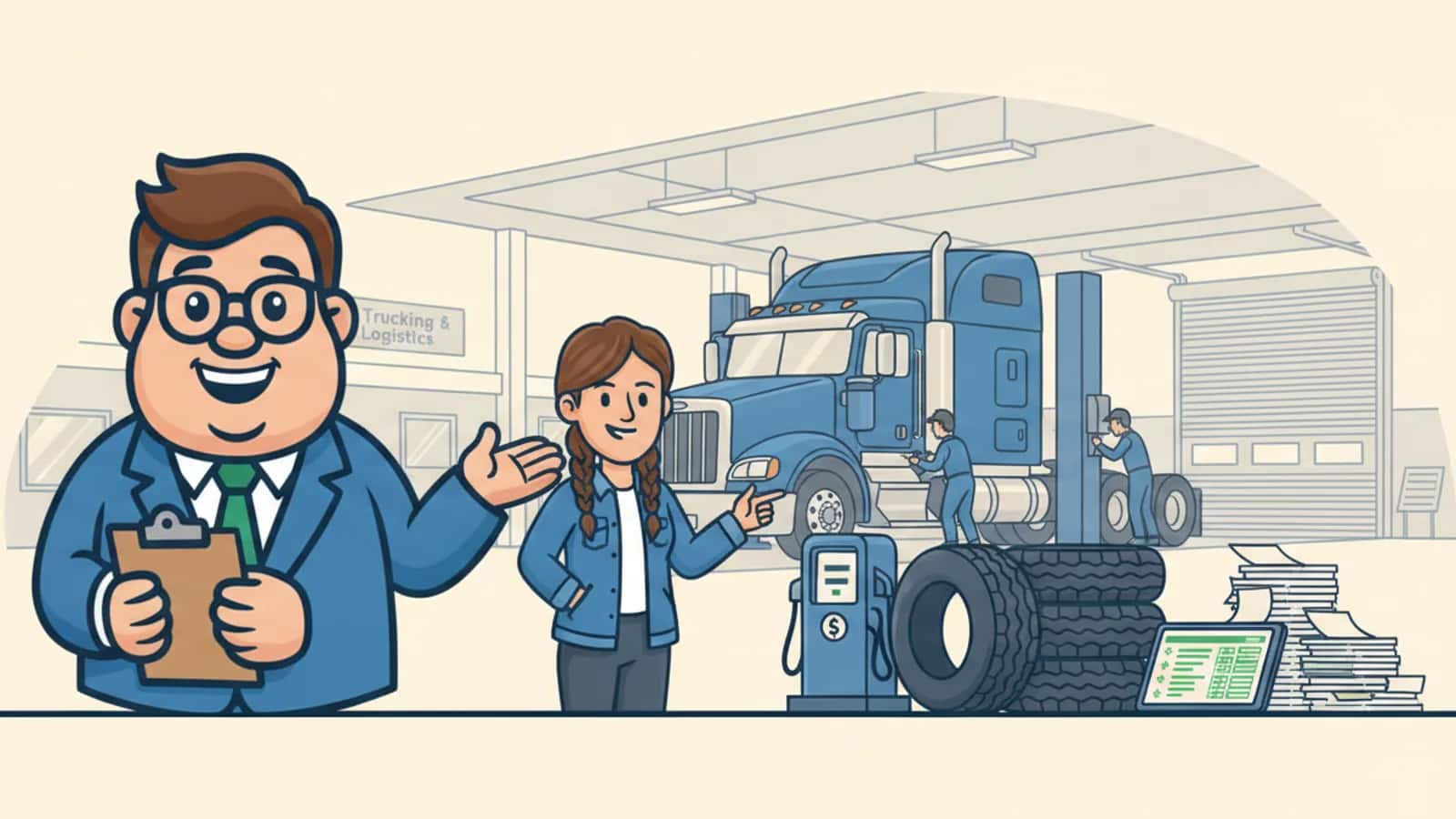
Trucking business loans cover three primary expense categories: immediate operational costs, equipment purchases, and cash flow management. Most operators use these funds for fuel expenses, truck payments, insurance, maintenance, and payroll during slow collection periods.
Operational Expenses
- Fuel purchases and fuel card payments
- Insurance premiums and deductibles
- Maintenance and repair costs
- Driver wages and benefits
- Permits and licensing fees
Equipment and Growth
- Down payments on trucks and trailers
- Technology upgrades (GPS, ELD systems)
- Shop equipment and tools
- Facility expansion or lease deposits
Cash Flow Management
- Bridge financing between invoice and payment
- Seasonal demand fluctuations
- Emergency repairs or breakdowns
- Tax payments and quarterly obligations
Choose working capital loans for operational expenses under $250,000. Equipment loans work better for purchases over $50,000 with collateral value. Revenue-based financing suits companies with consistent monthly income but limited collateral.
For broader business funding strategies, see our complete guide to business loan qualification.
How Fuel Price Fluctuations Affect Trucking Loans

Fuel-price volatility affects working-capital needs and repayment capacity. Model several fuel-cost scenarios and confirm that the proposed payment remains affordable before borrowing.
Immediate Cash Flow Impact: Fuel represents 25-30% of operating costs for most trucking companies. A $0.50 per gallon increase costs an owner-operator roughly $1,000 extra monthly. Fleet operators face proportionally larger impacts across multiple vehicles.
Loan Demand Patterns
- Working capital requests increase 40-60% during fuel spikes
- Equipment loan deferrals rise as cash goes to fuel costs
- Bridge financing becomes critical for contract operators with fixed rates
Lender Response: Banks tighten qualification criteria when fuel volatility increases default risk. Alternative lenders often maintain approval rates but adjust pricing. Revenue-based lenders may require fuel surcharge clauses in customer contracts.
Smart operators maintain fuel hedging strategies or negotiate fuel surcharge clauses with customers. This reduces loan dependency during price spikes and improves qualification for equipment financing.
Equipment Financing Options for Trucking Companies
Equipment loans for trucking companies typically finance trucks, trailers, technology systems, and shop equipment with loan amounts from $25,000 to $5 million. The equipment serves as collateral, often requiring 10-20% down payment with terms extending 3-7 years.
Truck and Trailer Financing
- New vehicles: 90-100% financing available
- Used vehicles: 80-90% financing typical
- Terms: 3-7 years depending on equipment age
- Rates: 8-15% for qualified borrowers
Technology and Equipment
- GPS and fleet management systems
- Electronic logging devices (ELD)
- Shop equipment and tools
- Trailer modifications and accessories
SBA-backed and conventional equipment finance: Eligible trucking businesses may use SBA 7(a), bank or specialist equipment products for vehicles and related assets. Programme limits and rates depend on the product and lender; there is no separate SBA trucking-equipment programme with a universal rate.
Lease vs Purchase Decision: Choose financing if you plan to keep equipment over 5 years or need equity buildup. Leasing works better for technology that becomes obsolete quickly or when preserving working capital is critical.
Equipment age affects approval rates significantly. Vehicles over 10 years old typically require alternative lenders with higher rates but more flexible criteria.
For equipment and expansion strategies, review our business growth funding guide.
Working Capital Requirements for Trucking Operations
Trucking companies need 30-90 days of operating expenses in working capital to handle fuel spikes, seasonal fluctuations, and payment delays. A typical owner-operator requires $15,000-$30,000 in reserve capital, while small fleets need $50,000-$200,000 depending on vehicle count.
Calculation Method: Monthly operating expenses × 2-3 months = minimum working capital need. Include fuel, insurance, loan payments, maintenance reserves, and driver wages in the calculation.
Working Capital Sources
- Business lines of credit: $10,000-$500,000
- Revenue-based financing: Based on monthly income
- Invoice factoring: Immediate cash for outstanding invoices
- Merchant cash advances: Fast funding with daily repayment
Seasonal Considerations: Holiday shipping increases revenue but requires upfront fuel and labor costs. Construction and agriculture create regional demand patterns. Plan working capital needs around these cycles.
Industry Benchmark: Successful trucking companies maintain working capital equal to 60-90 days of expenses. Companies below 30 days face higher default risk during fuel price spikes or economic downturns.
Fast Eligibility Check: Revenue-led matching helps identify realistic working capital options based on monthly income and trading history. No hard credit pull required to understand qualification ranges.
Consider SBA working capital programs for longer terms and lower rates if you meet eligibility requirements.
Trucking Loans vs Traditional Bank Loans Comparison
Traditional banks offer lower rates but require extensive documentation and longer approval times. Alternative lenders provide faster funding with flexible criteria but at higher costs. The choice depends on urgency, qualification strength, and loan purpose.
| Factor | Bank or SBA-backed | Alternative or specialist |
|---|---|---|
| Underwriting | Full financial and credit review | May place more weight on revenue and asset |
| Timing | Often longer | Can be quicker, subject to verification |
| Pricing | Often lower for strong applicants | Often higher or more complex |
| Security | Asset and guaranties may be required | Asset, revenue and guaranties vary |
| Best fit | Established operators with complete records | Cases outside conventional bank policy |
Which is right for you?
Choose Traditional Banks When
- You have strong credit (680+ score)
- Time allows for 60+ day approval process
- Loan amount exceeds $500,000
- You need the lowest possible interest rate
Choose Alternative Lenders When
- You need funding within 1-2 weeks
- Credit score is below 650
- Revenue is strong but documentation is limited
- Traditional banks have declined your application
Major banks like Bank of America and Wells Fargo expanded trucking loan programs in 2026, but approval criteria remain strict. Alternative lenders often provide better matches for companies with revenue strength but credit challenges.
How to Qualify for Trucking Business Loans
Trucking loan qualification centers on revenue stability, credit history, and industry experience. Lenders want to see consistent monthly income, reasonable debt-to-income ratios, and proof of trucking industry knowledge through licenses and operating history.
Basic Qualification Criteria
- Business operating 6+ months with revenue proof
- Personal credit score 550+ (varies by lender)
- Valid commercial driver's license and operating authority
- Business bank account with 3+ months of statements
- Debt-to-income ratio below 40-50%
Revenue Requirements
- Owner-operators: $10,000+ monthly gross revenue
- Small fleets: $25,000+ monthly gross revenue
- Working capital loans: 3-6 months revenue history
- Equipment loans: 12+ months operating history preferred
Documentation Checklist
- Bank statements (3-6 months)
- Tax returns (1-2 years for larger loans)
- Profit and loss statements
- Commercial insurance certificates
- DOT and operating authority documents
Industry-Specific Factors: Lenders evaluate safety ratings, insurance claims history, and customer concentration. Companies with single-customer dependency face tighter qualification criteria.
Fast Eligibility Process: Revenue-led matching identifies qualification ranges without hard credit pulls. Business verification through Secretary of State lookup confirms legitimacy for both borrower and lender.
Improvement Strategies: Maintain separate business banking for 6+ months before applying. Keep debt service below 25% of gross revenue. Document recurring customer relationships and contracts where available.
Review our business loan approval checklist for comprehensive preparation guidance.
Interest Rates and Terms for Trucking Financing
Trucking-finance pricing depends on the product, base rates, borrower credit, revenue, time in business, vehicle and repayment structure. Compare current lender quotes using APR or equivalent total repayment rather than relying on a generic industry range.
Rate Ranges by Loan Type
- SBA-backed loans: Programme rules and lender underwriting apply
- Bank term loans: Often suit established operators with strong records
- Equipment finance: Pricing depends heavily on vehicle and borrower risk
- Lines of credit: Variable pricing and draw terms require close comparison
- Revenue-based products and cash advances: Compare factor cost and payment frequency carefully
Term Length Options
- Working capital: 6-24 months typical
- Equipment loans: 3-7 years depending on asset age
- SBA loans: Up to 10 years for equipment
- Lines of credit: 12-24 month draw periods
Rate Factors: Credit score impact ranges from 2-8% rate difference. Time in business affects qualification more than rate for established operators. Revenue stability and customer diversification influence pricing significantly.
Current Market Conditions: Default rates decreased 10% in Q2 2026, improving lender confidence. However, fuel volatility and equipment cost increases create ongoing qualification challenges for marginal borrowers.
Rate Shopping Strategy: Compare total cost including fees, not just interest rates. Factor rates (common in alternative lending) translate to higher APRs than advertised. Get multiple quotes within 14 days to minimize credit impact.
Negotiation Opportunities: Established relationships, strong cash flow, and equipment collateral create rate negotiation leverage. Consider shorter terms for lower rates if cash flow supports higher payments.
Managing Cash Flow During Fuel Price Volatility
Fuel price volatility requires proactive cash flow management combining working capital reserves, customer contract adjustments, and strategic financing. The 15% June 2026 diesel price spike demonstrated how quickly operational costs can outpace revenue adjustments.
Immediate Response Strategies
- Activate existing credit lines before cash shortages develop
- Negotiate fuel surcharge clauses with customers
- Consider fuel cards with extended payment terms
- Factor outstanding invoices for immediate cash
Reserve Capital Planning: Maintain 60-90 days operating expenses in accessible credit. Calculate fuel cost increases at $0.25, $0.50, and $1.00 per gallon scenarios. Plan credit line usage to avoid maxing out available funds.
Customer Contract Management: Build fuel adjustment mechanisms into new contracts. Negotiate payment terms that align with your cash flow cycles. Diversify customer base to reduce single-customer payment risk.
Financing Tools for Volatility
- Revolving credit lines: Draw as needed, pay interest only on used amounts
- Invoice factoring: Convert receivables to immediate cash
- Fuel advance programs: Some lenders offer fuel-specific working capital
- Revenue-based financing: Payments adjust with income fluctuations
30% of trucking companies plan electric or hybrid vehicle investments to reduce fuel volatility exposure. While this requires significant upfront capital, it provides long-term cost stability.
Monitoring and Adjustment: Track fuel cost percentage of revenue weekly. Adjust customer rates quarterly or implement automatic fuel surcharges. Review credit utilization monthly to maintain borrowing capacity for emergencies.
What Happens If You Can't Make Truck Loan Payments
Missing truck loan payments triggers a series of escalating consequences from late fees to equipment repossession. The timeline and options depend on loan type, lender policies, and how quickly you communicate with the lender about payment difficulties.
Initial Consequences (0-30 days late)
- Late fees typically 4-6% of payment amount
- Credit reporting begins after 30 days late
- Lender outreach for payment arrangements
- Potential interest rate increases on variable loans
Escalation Phase (30-90 days late)
- Formal default notice and demand letters
- Credit score impact intensifies
- Acceleration clauses may trigger full balance due
- Legal collection activity begins
Repossession Process (90+ days late): Equipment-secured loans face repossession risk after 90-120 days. Commercial vehicles can be repossessed from business locations, customer sites, or driver homes. Repossession doesn't eliminate debt if sale proceeds don't cover the balance.
Proactive Solutions: Contact lenders immediately when payment problems develop. Many offer modification options including payment deferrals, term extensions, or temporary interest-only payments.
Workout Options
- Payment deferrals: Skip 1-3 payments, add to loan end
- Loan modifications: Extend terms to reduce payments
- Refinancing: Replace existing loan with new terms
- Voluntary surrender: Return equipment to avoid repossession costs
Industry Support: The American Trucking Associations reported 10% lower default rates in Q2 2026, suggesting improved industry financial stability. This creates more lender flexibility for workout arrangements.
Asset Protection: Separate business entities can protect personal assets from business loan defaults. However, personal guarantees (common in trucking loans) eliminate this protection.
Consider loan refinancing options when payment problems develop but credit remains acceptable.
Best Lenders for Trucking Business Loans
Trucking loan lenders range from traditional banks with low rates but strict criteria to alternative lenders offering fast approval with flexible qualification. The best choice depends on your credit strength, urgency, and loan purpose.
Traditional Bank Options
- Bank of America: Expanded trucking programs in 2026 with $50,000-$5,000,000 loans
- Wells Fargo: Specialized equipment financing and working capital options
- Regional banks: Often more flexible than national banks for local operators
- Credit unions: Member-focused with competitive rates for qualified borrowers
SBA Lenders: The SBA's May 2026 trucking equipment program offers up to $500,000 for fuel-efficient vehicles. Approved SBA lenders include major banks and specialized commercial lenders with 10-year terms available.
Alternative Lenders: Fintech companies introduced trucking-specific products in 2026 with faster approval and flexible criteria. These lenders focus on revenue strength over credit scores but charge higher rates.
Specialized Trucking Lenders
- Equipment financing companies with trucking expertise
- Factors offering combined factoring and lending services
- Fuel card companies with integrated financing options
- Lease companies with purchase options
Selection Criteria: Match lender type to your qualification strength and timeline needs. Strong credit and time allow for bank shopping. Urgent needs or credit challenges require alternative lenders.
Application Strategy: Use fast eligibility checks to identify realistic options before formal applications. Apply to 2-3 lenders within 14 days to minimize credit impact. Prepare documentation packages for efficient processing.
Smart Matching Process: Revenue-led matching connects trucking companies with appropriate US funding partners based on monthly income, trading history, and sector fit. Business verification through Secretary of State lookup confirms legitimacy.
Owner-Operator Specific Loan Options
Owner-operators face unique financing challenges with single-vehicle operations, variable income, and limited collateral. Specialized loan products address these needs with flexible qualification criteria and payment structures aligned to trucking cash flows.
Owner-Operator Loan Features
- Lower minimum loan amounts ($10,000-$50,000)
- Revenue-based qualification over asset requirements
- Seasonal payment adjustments for agricultural or construction hauling
- Combined equipment and working capital packages
Qualification Differences: Banks typically require 2+ years operating history for owner-operators. Alternative lenders often approve operators with 6+ months revenue history and valid operating authority.
Income Documentation
- Truck lease settlement statements
- 1099s from brokers and customers
- Bank deposits showing revenue patterns
- Fuel card statements demonstrating activity levels
Equipment Financing Considerations: Owner-operators often need higher loan-to-value ratios due to limited down payment capacity. Used truck financing requires careful age and mileage evaluation for approval.
Working Capital Structures
- Daily or weekly repayment options matching load payment cycles
- Revenue percentage repayments that adjust with income fluctuations
- Seasonal payment schedules for specialized hauling
Insurance and Compliance: Owner-operators must maintain commercial insurance and DOT compliance independently. Lenders verify coverage and may require additional protections.
Growth Planning: Successful owner-operators often transition to small fleet operations. Establish banking relationships and credit history to support future expansion financing needs.
Collateral Requirements for Trucking Loans
Trucking loan collateral requirements vary significantly between secured equipment loans and unsecured working capital options. Equipment loans typically use the financed vehicle as collateral, while working capital loans may rely on revenue streams, accounts receivable, or blanket business assets.
Equipment Loan Collateral
- Financed truck or trailer serves as primary collateral
- Loan-to-value ratios: 80-90% for used equipment, 90-100% for new
- Equipment age limits: Most lenders cap at 10-15 years
- Additional collateral may be required for older equipment
Working Capital Collateral Options
- Unsecured loans: Based on revenue and credit strength alone
- Accounts receivable: Outstanding invoices secure the loan
- Blanket liens: General business assets including equipment and inventory
- Personal guarantees: Owner's personal assets back the business loan
UCC Liens and Business Assets: Alternative lenders often file UCC liens against business assets rather than requiring specific collateral. This provides security while maintaining operational flexibility.
Revenue-Based Security: Some lenders secure loans against future revenue streams rather than physical assets. Daily or weekly payments come directly from business bank accounts, reducing traditional collateral needs.
Personal Guarantee Considerations: Most trucking loans under $500,000 require personal guarantees from business owners. This makes personal credit scores and assets relevant even for business loans.
Collateral Valuation: Lenders use NADA, KBB Commercial, or independent appraisals for truck values. High-mileage or specialized equipment may require professional appraisals for accurate valuation.
Release Conditions: Equipment loans typically release collateral liens upon full payment. Working capital loans with business asset security may maintain liens until all credit facilities are closed.
For detailed information about UCC liens and personal guarantees, see our comprehensive guide to business lending security.
Next steps
Trucking business loans for fuel volatility, equipment payments and working capital have become essential tools for managing the industry's unique financial challenges in 2026. With diesel prices jumping 15% in a single month and equipment costs rising 7% annually, operators need flexible financing solutions that match their cash flow patterns and risk profiles. For more comparisons and application guidance, browse our business loan guides.
The key to successful trucking financing lies in matching loan types to specific needs. Working capital loans address fuel volatility and seasonal fluctuations. Equipment financing supports growth and fleet expansion. Revenue-based options provide flexibility for operators with strong income but limited collateral.
Smart operators establish credit relationships during stable periods rather than waiting for emergencies. Fast eligibility checks help identify realistic options across multiple lender types without impacting credit scores. Revenue-led matching connects trucking companies with appropriate US funding partners based on actual qualification criteria.
Whether you're an owner-operator managing fuel cost spikes or a fleet operator planning equipment purchases, understanding your financing options creates competitive advantages. The trucking industry's improved financial stability in 2026 provides more lender flexibility and better terms for qualified borrowers.
Ready to explore your trucking financing options? Check eligibility now with no hard credit pull to understand what you might qualify for across our curated panel of US funding partners.
Further reading
Frequently asked questions
What Is a Trucking Business Loan Used For?
Trucking business loans cover three primary expense categories: immediate operational costs, equipment purchases, and cash flow management. Most operators use these funds for fuel expenses, truck payments, insurance, maintenance, and payroll during slow collection periods.
How Fuel Price Fluctuations Affect Trucking Loans?
Fuel-price volatility affects working-capital needs and repayment capacity. Model several fuel-cost scenarios and confirm that the proposed payment remains affordable before borrowing.
How to Qualify for Trucking Business Loans?
Trucking loan qualification centers on revenue stability, credit history, and industry experience. Lenders want to see consistent monthly income, reasonable debt-to-income ratios, and proof of trucking industry knowledge through licenses and operating history.
What Happens If You Can't Make Truck Loan Payments?
Missing truck loan payments triggers a series of escalating consequences from late fees to equipment repossession. The timeline and options depend on loan type, lender policies, and how quickly you communicate with the lender about payment difficulties.
Written by
The Funding Fred Editorial Team creates plain-English guides to help business owners understand funding options, eligibility, and application readiness before they compare finance options.