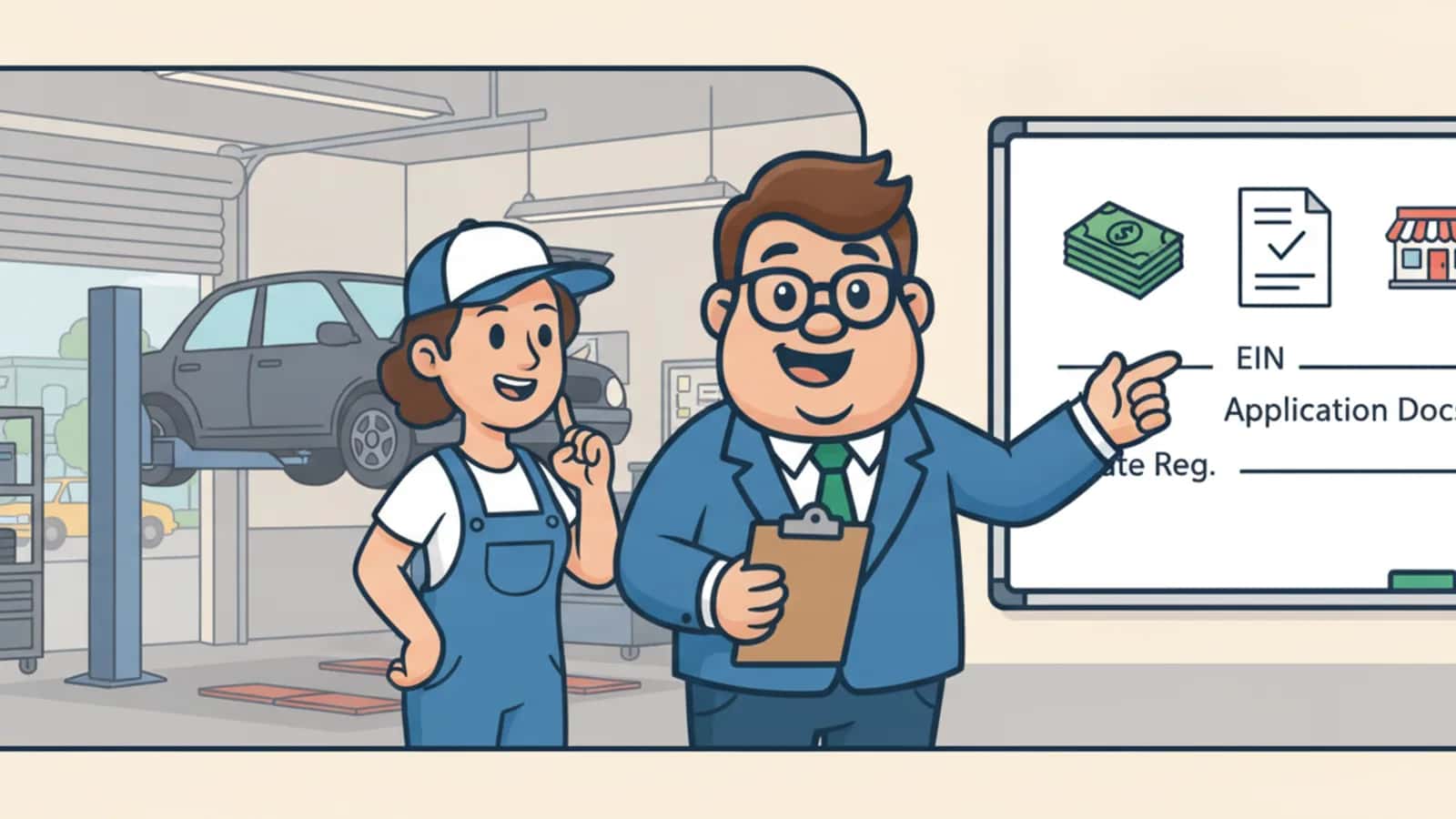
SBA 7(a) Loans Explained: Eligibility Requirements and Application Guide
The SBA 7(a) program supports eligible business purposes through approved lenders. The maximum loan amount is $5 million; eligibility, collateral, pricing and terms depend on the use of funds, business profile and lender underwriting.

Quick answer
The SBA 7(a) program supports eligible business purposes through approved lenders. The maximum loan amount is $5 million; eligibility, collateral, pricing and terms depend on the use of funds, business profile and lender underwriting.
Key takeaways
- The maximum SBA 7(a) loan amount is $5 million
- New citizenship requirements effective March 2026 require all business owners with 20%+ equity to be US citizens or permanent residents
- Minimum credit scores typically range from 680-700, though some lenders accept 640+ with strong financials
- Businesses must operate for profit, meet SBA size standards, and demonstrate ability to repay
- Application timelines range from 60-90 days for most approvals
- Down payments vary from 10-15% depending on loan amount and use
- Startups can qualify but need significant owner investment and industry experience
The SBA 7(a) program supports eligible business purposes through approved lenders. The maximum loan amount is $5 million; eligibility, collateral, pricing and terms depend on the use of funds, business profile and lender underwriting.
What Exactly Is an SBA 7(a) Loan and How Do I Qualify

An SBA 7(a) loan is a government-backed financing program where the Small Business Administration guarantees 50-90% of the loan amount, reducing lender risk and enabling more favorable terms for borrowers. The program covers working capital, equipment purchases, real estate, and business acquisitions.
Core eligibility requirements include
- Business size: Must meet SBA size standards (typically under 500 employees for most industries)
- For-profit operation: Non-profits and passive investment companies don't qualify
- Owner equity: At least 10% owner investment in the business
- Use of funds: Must be for legitimate business purposes
- Repayment ability: Demonstrated cash flow to service debt
New 2026 citizenship requirements now mandate that all owners with 20% or more equity must be US citizens or lawful permanent residents. This represents the most significant eligibility change in recent years.
Choose SBA 7(a) loans if you need long-term financing at competitive rates and can wait 60-90 days for approval. For faster access to working capital, consider alternative business funding options that can provide decisions within days.
How Much Money Can I Actually Borrow With a 7(a) Loan

The maximum 7(a) loan amount is $5 million. The amount a business can actually borrow depends on eligible use of funds, cash flow, collateral where applicable, existing debt and lender underwriting.
Loan amount guidelines
- Smaller loans: Some 7(a) delivery methods use streamlined forms or delegated lender processing
- Larger loans: Expect full financial underwriting, source-and-use documentation and collateral analysis
- All sizes: The lender must document repayment ability and compliance with current SBA rules
Most lenders use a debt service coverage ratio of 1.15-1.25x, meaning your business should generate $115-$125 in cash flow for every $100 in annual debt payments. A manufacturing company with $500,000 annual cash flow might qualify for roughly $2-2.5 million, assuming other debts don't exceed capacity.
Common mistake: Applying for the maximum amount you qualify for rather than what you actually need. Larger loans require more collateral and personal guarantees.
What Credit Score Do I Need to Get Approved
Most SBA 7(a) lenders require personal credit scores of 680-700 or higher, though some accept scores as low as 640 with strong business financials and collateral. The SBA doesn't set minimum credit requirements, but individual lenders maintain their own standards.
Credit score ranges and approval likelihood
- 720+: Strong approval chances with competitive rates
- 680-719: Good approval odds, may need additional documentation
- 640-679: Possible approval with strong cash flow and collateral
- Below 640: Very limited lender options, consider improving credit first
Business credit also matters. Lenders review Dun & Bradstreet, Experian Business, and Equifax Business reports. A business credit score below 75 may trigger additional scrutiny.
Decision rule: If your personal credit is below 680, focus on improving it for 6-12 months before applying, or explore faster business funding alternatives that emphasize revenue over credit scores.
Are 7(a) Loans Better Than Traditional Bank Loans
SBA 7(a) loans offer longer repayment terms and lower down payments than conventional bank loans, but traditional financing can be faster and require less documentation for well-qualified borrowers.
| Feature | SBA 7(a) Loans | Traditional Bank Loans |
|---|---|---|
| Approval Time | 60-90 days | 30-45 days |
| Down Payment | 10-15% | 20-30% |
| Repayment Terms | Up to 25 years | 5-10 years typical |
| Interest Rates | Prime + 2.75-6.5% | Prime + 1-4% |
| Documentation | Extensive | Moderate |
| Collateral Requirements | Flexible | Strict |
Choose SBA 7(a) loans if you need longer repayment terms, have limited collateral, or don't qualify for conventional financing. Traditional bank loans work better for established businesses with strong credit that need funds quickly.
For immediate working capital needs, consider platforms that offer fast eligibility checks without hard credit pulls to understand your options across multiple funding sources.
What Kinds of Businesses Can't Get a 7(a) Loan
The SBA excludes specific business types and activities from 7(a) loan eligibility, regardless of size or creditworthiness. These restrictions are non-negotiable and apply to all lenders.
Prohibited business types
- Financial businesses: Banks, investment companies, lending institutions
- Passive activities: Real estate investment, speculation
- Adult entertainment: Strip clubs, adult bookstores, massage parlors
- Gambling: Casinos, racetracks, lottery operations
- Multi-level marketing: Pyramid schemes, chain letters
- Political organizations: Lobbying, political campaigns
Restricted industries with limited eligibility
- Restaurants and bars: Must derive less than 33% of revenue from alcohol sales
- Hotels and motels: No restrictions on legitimate lodging businesses
- Gas stations: Eligible if not primarily convenience stores
- Franchises: Must be on SBA's approved franchise list
Common edge case: Mixed-use businesses where prohibited activities represent a small portion of revenue may still qualify. A restaurant that also hosts private parties with gambling would be excluded, but one that simply serves alcohol with meals remains eligible.
How Long Does the SBA 7(a) Loan Application Process Take
SBA 7(a) loan approvals typically take 60-90 days from complete application submission to funding, though simple deals under $500,000 may close in 45 days. The timeline includes both lender underwriting and SBA review phases.
Typical timeline breakdown:
- 1
Application preparation
1-2 weeks
- 2
Lender review
2-3 weeks
- 3
SBA approval
3-4 weeks
- 4
Closing and funding
1-2 weeks
Factors that speed up approval
- Complete documentation submitted upfront
- Strong credit and cash flow
- Experienced SBA lender
- Loan amounts under $500,000 (SBA Express program)
Common delays
- Missing financial statements or tax returns
- Unclear use of funds documentation
- Environmental assessments for real estate
- Franchise approval verification
Decision rule: If you need funding within 30 days, SBA 7(a) loans won't meet your timeline. Consider faster business funding options that can provide decisions within 24-48 hours.
What Are Common Reasons Small Businesses Get Rejected
SBA 7(a) loan rejections most commonly result from insufficient cash flow to support debt payments, inadequate owner investment, or incomplete documentation. Understanding these factors helps avoid wasted time and application fees.
Top rejection reasons:
- 1
Insufficient debt service coverage
Cash flow below 1.15x debt payments
- 2
Inadequate owner investment
Less than 10% equity injection
- 3
Poor credit history
Personal or business credit issues
- 4
Unclear use of funds
Vague or inappropriate fund usage
- 5
Incomplete documentation
Missing tax returns, financial statements
- 6
Industry concerns
Declining sector or oversaturated market
Red flags that trigger extra scrutiny
- Recent bankruptcy or tax liens
- Inconsistent financial reporting
- High owner compensation relative to business size
- Excessive existing debt
- Seasonal businesses without adequate cash reserves
Common mistake: Applying with multiple lenders simultaneously. This creates confusion and may result in multiple credit inquiries. Work with one experienced SBA lender at a time.
What's the Difference Between 7(a) and 504 Loan Programs
SBA 7(a) loans provide flexible financing for various business needs, while 504 loans specifically fund real estate and equipment purchases with lower down payments but stricter use requirements.
Key differences:
| Feature | 7(a) Loans | 504 Loans |
|---|---|---|
| Use of Funds | Working capital, equipment, real estate, acquisitions | Real estate and equipment only |
| Maximum Amount | $5 million | $5.5 million |
| Down Payment | 10-15% | 10% |
| Structure | Single loan from one lender | Two loans: bank + CDC |
| Interest Rate | Variable or fixed | Fixed rate on SBA portion |
| Approval Time | 60-90 days | 90-120 days |
Which is right for you?
Choose 7(a) loans if you need
- Working capital or inventory financing
- Flexibility in fund usage
- Faster approval timeline
- Single lender relationship
Choose 504 loans if you're
- Purchasing real estate or major equipment
- Seeking the lowest possible down payment
- Comfortable with a more complex structure
How Much Down Payment Do I Need for a 7(a) Loan
SBA 7(a) loans typically require 10-15% down payment, significantly lower than conventional commercial loans that often demand 20-30%. The exact amount depends on loan size, collateral, and intended use of funds.
Down payment requirements
- Loans under $500,000: 10% minimum
- Loans $500,000 - $5 million: 10-15% typical
- Loans over $5 million: 15% or more
- Acquisition financing: 15-25% depending on business value
What counts as down payment
- Cash injection into the business
- Owner-contributed equipment or real estate
- Seller financing (limited amount)
- Standby debt from owners
What doesn't count
- Borrowed funds from other sources
- Sweat equity or labor contributions
- Future earnings or projections
- Gift funds from non-family members
Edge case: Existing businesses purchasing equipment may use trade-in value toward the down payment requirement, but lenders require professional appraisals for items over $25,000.
Can Startups or New Businesses Get 7(a) Loans
Startups can qualify for SBA 7(a) loans, but they face stricter requirements including substantial owner investment, relevant industry experience, and detailed business plans. New businesses without operating history represent higher risk and receive extra scrutiny.
Startup-specific requirements
- Owner investment: Typically 25-30% of total project cost
- Industry experience: 2-3 years in the same field
- Business plan: Detailed financial projections and market analysis
- Collateral: Personal assets may be required
- Personal guarantee: Usually 100% from owners with 20%+ equity
Startup-friendly loan types
- SBA Microloans: Up to $50,000 for very small businesses
- Community Advantage: Focus on underserved markets
- Express loans: Faster approval for smaller amounts
Common startup mistakes
- Underestimating working capital needs
- Unrealistic financial projections
- Insufficient market research
- Lack of management experience documentation
Decision rule: If you're a startup needing funds within 60 days, consider alternative funding sources that emphasize revenue potential over operating history.
What Documents Do I Need to Apply for a 7(a) Loan
SBA 7(a) loan applications require extensive documentation covering personal finances, business operations, and use of funds. Gathering complete paperwork upfront prevents delays and demonstrates preparedness to lenders.
Required personal documents
- Personal tax returns (3 years)
- Personal financial statement (SBA Form 413)
- Resume and business experience summary
- Credit authorization forms
Required business documents
- Business tax returns (3 years, if available)
- Financial statements (3 years)
- Business plan with financial projections
- Articles of incorporation and operating agreements
- Business licenses and permits
Use of funds documentation
- Purchase agreements or contracts
- Equipment quotes and specifications
- Real estate appraisals or purchase contracts
- Working capital justification
Additional requirements for specific situations
- Franchises: Franchise disclosure documents and agreements
- Acquisitions: Seller's financial statements and purchase agreement
- Construction: Detailed project plans and contractor bids
- Refinancing: Current loan statements and payoff letters
Organization tip: Create a document checklist and gather everything before starting the application. Missing items cause the most common delays in SBA loan processing.
Next steps for sba 7 a loans explained eligibility
SBA 7(a) loans can provide up to $5 million for eligible purposes, but approval and timing depend on the lender, documentation, underwriting and any required SBA review. Confirm current ownership and eligibility rules with an SBA-approved lender before applying. For more comparisons and application guidance, browse our business loan guides.
For businesses that meet the eligibility criteria and can wait for approval, 7(a) loans provide excellent long-term financing with lower down payments than conventional alternatives. However, companies needing immediate working capital should explore faster options first.
Before committing to the lengthy SBA process, consider getting a fast eligibility check to understand what funding options might be available across different programs and timelines. This no-obligation approach helps determine whether SBA financing aligns with your immediate needs or if alternative funding sources might better serve your business goals.
Further reading
Frequently asked questions
What Exactly Is an SBA 7(a) Loan and How Do I Qualify?
An SBA 7(a) loan is a government-backed financing program where the Small Business Administration guarantees 50-90% of the loan amount, reducing lender risk and enabling more favorable terms for borrowers. The program covers working capital, equipment purchases, real estate, and business acquisitions.
How Much Money Can I Actually Borrow With a 7(a) Loan?
The maximum 7(a) loan amount is $5 million. The amount a business can actually borrow depends on eligible use of funds, cash flow, collateral where applicable, existing debt and lender underwriting.
What Credit Score Do I Need to Get Approved?
Most SBA 7(a) lenders require personal credit scores of 680-700 or higher, though some accept scores as low as 640 with strong business financials and collateral. The SBA doesn't set minimum credit requirements, but individual lenders maintain their own standards.
Are 7(a) Loans Better Than Traditional Bank Loans?
SBA 7(a) loans offer longer repayment terms and lower down payments than conventional bank loans, but traditional financing can be faster and require less documentation for well-qualified borrowers.
What Kinds of Businesses Can't Get a 7(a) Loan?
The SBA excludes specific business types and activities from 7(a) loan eligibility, regardless of size or creditworthiness. These restrictions are non-negotiable and apply to all lenders.
How Long Does the SBA 7(a) Loan Application Process Take?
SBA 7(a) loan approvals typically take 60-90 days from complete application submission to funding, though simple deals under $500,000 may close in 45 days. The timeline includes both lender underwriting and SBA review phases.
Written by
The Funding Fred Editorial Team creates plain-English guides to help business owners understand funding options, eligibility, and application readiness before they compare finance options.