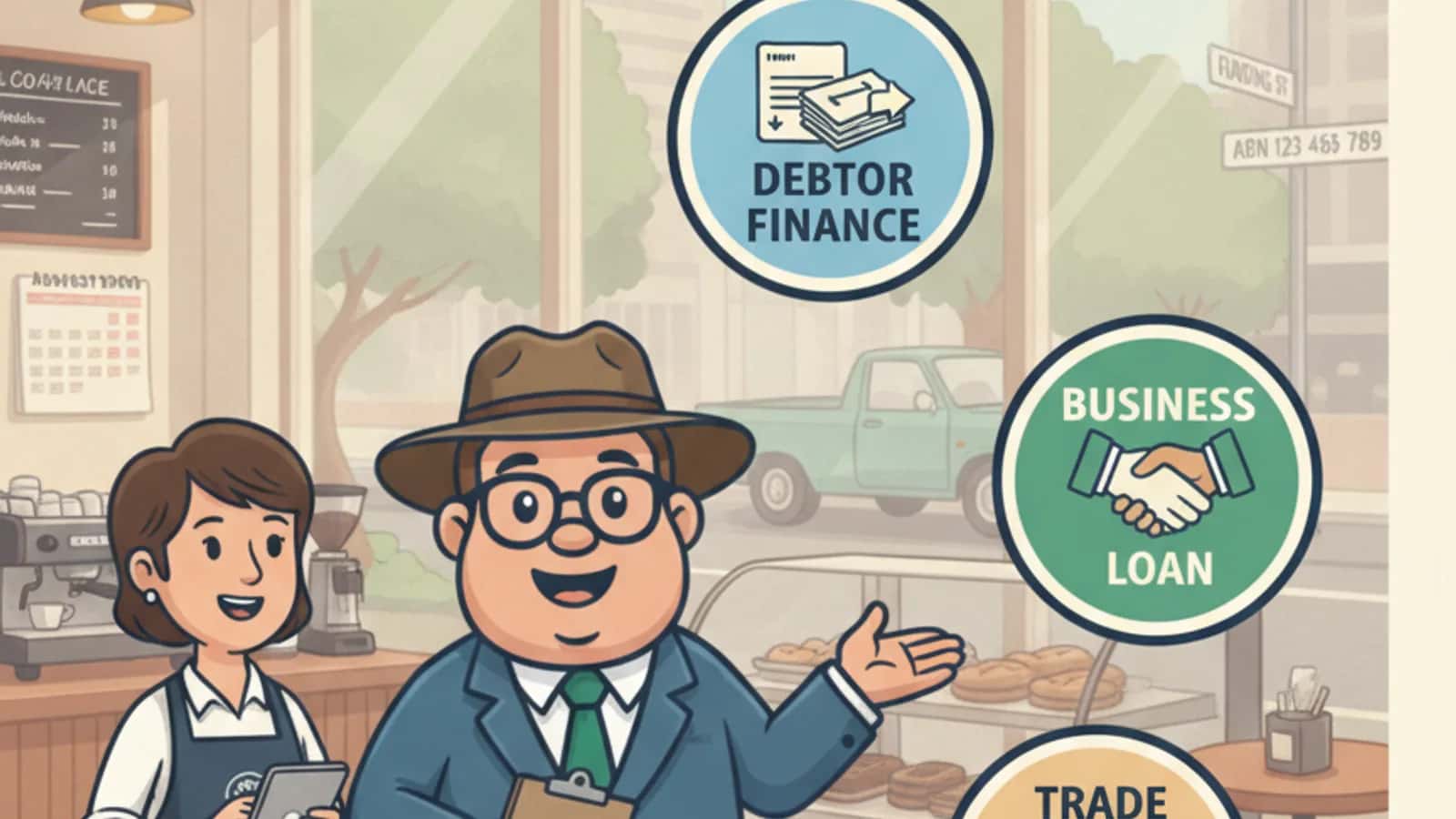
The Boom in Unsecured and Non-Traditional Security Business Lending for Australian SMEs
The boom in unsecured and non-traditional security business lending for Australian SMEs is real, measurable, and accelerating. A record 47% of Australian small businesses now prefer non-bank lenders over the major banks, driven by faster decisions, flexible criteria, and a funding process that actually fits how businesses operate.

Quick answer
The boom in unsecured and non-traditional security business lending for Australian SMEs is real, measurable, and accelerating. A record 47% of Australian small businesses now prefer non-bank lenders over the major banks, driven by faster decisions, flexible criteria, and a funding process that actually fits how businesses operate. If you've been knocked back by a bank or simply don't want to wait six weeks for an answer, the alternative lending market has grown substantially to meet that demand.
Key takeaways
- Major Australian banks approve only 25–35% of business loan applications under $1 million, with unsecured facilities facing even tighter scrutiny
- Non-bank and fintech lenders now process digital applications within 24–72 hours, with roughly 80% of borrowers funded within one week
- Unsecured business loans in Australia typically range from $5,000 to $500,000, with terms from 3 months to 5 years
- Interest rates on unsecured SME loans currently sit between 9.5% and 18% per annum for most borrowers, though short-term products can carry effective annual rates above 50%
- To qualify with most non-bank lenders, businesses generally need at least 12 months of trading history and around $12,000 in monthly revenue
- Unsecured loans require no property, equipment, or asset as security — decisions are based on business cash flow and performance
- One in five SMEs reports difficulty accessing finance on suitable terms from traditional lenders
- Despite strong growth, unsecured loans still represent less than 5% of total small business lending in Australia — meaning most SMEs haven't tapped this market yet
What Exactly Is Unsecured Business Lending?

Unsecured business lending means borrowing money without putting up property, equipment, or other assets as security. The lender assesses your application based on business performance — revenue, cash flow, trading history — rather than what you own.
For Australian SMEs, this is a significant shift from the traditional bank model. With a conventional secured loan, the bank wants a first mortgage over commercial or residential property before they'll consider your application. With an unsecured loan, the funding decision is based on how your business is actually performing.
What unsecured loans are typically used for
- Working capital and day-to-day cash flow gaps
- Inventory purchases ahead of a busy season
- Marketing and growth campaigns
- Equipment or fit-out costs (where equipment finance isn't suitable)
- Bridging gaps between invoices and supplier payments
"Funding decisions are based on business performance and cash flow, not personal guarantees."
Loan amounts generally run from $5,000 up to $500,000 for most unsecured products, with terms from 3 months to 5 years. Some specialist lenders go higher — platforms like Funding Fred connect businesses to partners offering up to $7.5 million depending on revenue and trading profile.
How Do Non-Traditional Lenders Differ From Banks in Australia?

Non-traditional lenders — fintechs, specialist finance companies, and lending platforms — make decisions faster, use different data, and apply more flexible criteria than the major banks. That's the short answer.
The longer version is that the big four banks were built for a different era. Their credit models favour businesses with long trading histories, strong property collateral, and clean credit files. That's fine if you're a well-established business with real estate equity. It's a problem if you're a three-year-old café in Brisbane with strong revenue but no property to pledge.
Here's how the two approaches compare:
| Factor | Traditional Banks | Non-Traditional Lenders |
|---|---|---|
| Decision time | 4–8 weeks | 24–72 hours |
| Collateral required | Usually yes (property preferred) | No — cash flow assessed |
| Credit file | Near-perfect required | All credit types considered |
| Documentation | Extensive (tax returns, financials, business plans) | Streamlined (bank statements, ID) |
| Approval rate (under $1M) | 25–35% | Significantly higher |
| Flexibility | Rigid product structures | Tailored to business type |
| Relationship required | Often yes | No — apply online |
For a deeper look at how these two worlds compare, see this breakdown of commercial banker vs online business lender options for Australian SMEs.
Why Are Small Businesses Choosing Alternative Lending Platforms?
Speed and access. Those two factors explain most of the shift. A record 47% of Australian SMEs now prefer non-bank lending, and the reasons are consistent: the bank process is slow, the criteria are strict, and one in five SMEs reports difficulty getting finance on suitable terms through traditional channels.
The boom in unsecured and non-traditional security business lending for Australian SMEs isn't just a fintech marketing story. It reflects a genuine gap in the market that the major banks have left open.
The most common reasons SMEs switch to alternative lenders
- Time pressure: A business opportunity doesn't wait six weeks. A café owner in Melbourne who needs to replace a broken refrigeration unit needs funding this week, not next quarter.
- No property to pledge: Many SME owners — particularly in hospitality, retail, and professional services — don't have commercial real estate to use as security.
- Credit history: A past credit event doesn't automatically disqualify you with a specialist lender. They look at current business performance instead.
- Simpler process: Two minutes to check eligibility, a handful of bank statements, and a decision within a day. That's a fundamentally different experience.
Platforms like Funding Fred run a 2 min check with no hard credit search to start — so business owners can see where they stand without any impact on their credit file and no obligation to proceed.
What Are the Typical Interest Rates for SME Business Loans Right Now?
For unsecured business loans in Australia in 2026, most borrowers are looking at interest rates between 9.5% and 18% per annum. Short-term products — particularly merchant cash advances or very short-term working capital loans — can carry effective annual rates above 50% when fees are factored in.
The RBA's cash rate movements directly influence these figures. With the cash rate sitting at 4.35% as of May 2026 following three increases this year, lenders have adjusted their pricing accordingly. That said, specialist lenders are still competing aggressively on speed and flexibility, which keeps rates from climbing as steeply as they might otherwise.
What affects your rate
- Trading history (longer = lower risk = better rate)
- Monthly revenue and consistency
- Industry sector (some sectors carry higher risk premiums)
- Loan term (shorter terms often carry higher effective rates)
- Credit profile of the business and directors
For a full breakdown of how rates and fees work, the guide to comparing business loan rates and fees for Australian businesses is worth reading before you apply.
Choose a shorter term if: you need to minimise total interest paid and your cash flow can handle higher repayments. Choose a longer term if: you need lower weekly repayments and your revenue is seasonal or variable.
What Are the Risks of Taking an Unsecured Business Loan?
Unsecured business loans are genuinely useful — but they're not without risk. The main ones are higher interest costs compared to secured lending, shorter repayment terms that can strain cash flow, and the potential for a personal guarantee clause that many borrowers overlook.
Key risks to understand before signing
- Higher rates: Because the lender takes on more risk without collateral, they price that risk into the rate. Unsecured loans cost more than secured ones.
- Personal guarantee: Many unsecured business loans still include a personal guarantee from the director(s). This means your personal assets could be at risk if the business defaults — even without formal collateral.
- Short repayment windows: Some products have terms as short as 3 months. Make sure repayments fit your actual cash flow before committing.
- Debt cycle risk: Taking a short-term loan to cover another short-term loan is a warning sign. Use unsecured funding for revenue-generating purposes where possible.
- Fee structures: Origination fees, early repayment fees, and monthly account fees can add up. Read the full cost of the loan, not just the headline rate.
For a practical look at what to watch for, the Australian business loan approval checklist covers what lenders assess and what to prepare.
Can I Get a Business Loan With Bad Credit History?
Yes — specialist non-bank lenders consider all credit types, including businesses with past credit events or imperfect personal credit files. This is one of the clearest differences between the major banks and the alternative lending market.
Traditional banks use credit scores as a primary filter. A default, a missed payment, or a period of financial difficulty can effectively end the conversation before it starts. Non-traditional lenders look at current business performance: what's coming into your bank account, how consistent your revenue is, and how long you've been trading.
That said, bad credit does affect your options:
- You may face a higher interest rate to reflect the additional risk
- Loan amounts may be capped lower than for a clean-credit applicant
- Some lenders will still decline if the credit history is very recent or severe
For practical strategies on improving your position, see business loans for bad credit in Australia and bad credit business loans — what lenders look for.
What Documents Do I Need to Qualify for an Unsecured Business Loan?
Most non-bank lenders keep documentation requirements lean. The typical minimum is 3–6 months of business bank statements, proof of identity (driver's licence or passport), and an ABN.
Standard documents most lenders ask for
- 3–6 months of business bank statements
- ABN and ACN (if applicable)
- Photo ID for directors/guarantors
- Basic business details (trading name, industry, time in business)
Sometimes also requested
- BAS statements (last 1–2 quarters)
- Most recent tax return or profit and loss statement
- Details of existing debts or facilities
The minimum eligibility threshold for most non-bank lenders is 12 months of trading and around $12,000 per month in revenue. Some lenders will consider businesses with shorter trading histories — particularly if revenue is strong and consistent.
To qualify for larger amounts or better rates, having clean, well-organised financials helps. The guide to using your business balance sheet to strengthen loan applications is a useful starting point.
How Quickly Can I Get Funding From a Non-Traditional Lender?
This is where alternative lending genuinely outperforms the banks. Fintech and specialist lenders process digital applications within 24–72 hours, and approximately 80% of borrowers receive funding within one week of applying.
In practice, many businesses funded through platforms like Funding Fred receive money in their account within 1–3 business days of approval. The "applied Tuesday arvo, funded by Thursday" experience is common — not exceptional.
Typical timeline with a non-bank lender:
- Complete a 2 min eligibility check (no hard credit search)
- Submit bank statements and ID (usually same day)
- Receive a decision within 24–48 hours
- Accept the offer and sign digitally
- Funds transferred — often same day or next business day
Compare that to the bank process: initial meeting, document collection, credit assessment, credit committee review, formal approval, and settlement. Six to eight weeks is not unusual.
Which Industries Are Benefiting Most From Alternative Lending?
The boom in unsecured and non-traditional security business lending for Australian SMEs is particularly visible in sectors that have strong revenue but limited fixed assets — exactly the profile that banks struggle to lend to.
Industries seeing the strongest uptake
- Hospitality: Cafés, restaurants, and bars in Sydney, Melbourne, and Brisbane use short-term unsecured loans for equipment replacement, fit-out upgrades, and seasonal cash flow gaps.
- Construction and trades: Builders and tradies in Perth and Adelaide use working capital loans to cover materials and labour costs before progress payments arrive.
- Retail and e-commerce: Inventory finance ahead of peak seasons (Christmas, EOFY) is a common use case for Gold Coast and national online retailers.
- Professional services: Accounting firms, marketing agencies, and consultancies use unsecured loans to fund growth without tying up assets.
- Healthcare: Allied health practices and medical centres use non-bank lending for equipment and fit-out without waiting for bank approval.
For automotive businesses specifically, there's a detailed breakdown at best business loan alternatives for car dealers and automotive SMEs in Australia.
What Are the Most Common Mistakes Small Businesses Make When Applying for Loans?
The biggest mistake is applying to the wrong lender for the wrong product — then getting a rejection that affects your credit file before you've had a chance to find a better fit.
Other common mistakes
- Not knowing your numbers: Lenders will ask for revenue, monthly turnover, and existing debt. Know these before you apply.
- Applying for too much: Borrowing more than your cash flow can service is the fastest route to repayment stress.
- Ignoring the comparison rate: The headline rate doesn't tell the full story. Factor in fees and the effective annual rate.
- Not reading the personal guarantee clause: Many borrowers don't realise they've signed a personal guarantee until there's a problem.
- Applying to multiple lenders simultaneously: Each hard credit inquiry can lower your score. Use a platform that runs a soft check first.
- Underestimating documentation requirements: Even streamlined lenders need accurate bank statements. Messy or incomplete records slow everything down.
For a full checklist of what lenders assess, see how to improve your chances of business loan approval in Australia.
What Happens if I Can't Repay an Unsecured Business Loan?
If repayments are missed on an unsecured business loan, the lender will typically follow a structured recovery process — starting with contact and hardship options, and escalating if no resolution is reached.
Because there's no formal collateral, the lender's main recourse is:
- Reporting the default to credit bureaus (affecting both business and personal credit)
- Enforcing a personal guarantee (if one was signed)
- Pursuing the debt through legal channels
The absence of property security doesn't mean the lender has no options — it means the process looks different. A personal guarantee effectively converts an "unsecured" loan into a personal liability.
If you're struggling with repayments
- Contact the lender early — most have hardship provisions
- Ask about restructuring the repayment schedule
- Seek independent financial advice before the situation escalates
- Check whether the Australian Financial Complaints Authority (AFCA) applies to your lender
Are Online Lending Platforms Safe for Australian Businesses?
Reputable online lending platforms operating in Australia are regulated and safe to use. The key is knowing what to look for before you share financial information or sign anything.
What to check before using any platform
- Is the lender or platform holding an Australian Credit Licence (ACL)?
- Are they a member of AFCA (the external dispute resolution scheme)?
- Is the eligibility check a soft inquiry (no credit impact) or a hard inquiry?
- Are the fees and rates disclosed clearly before you commit?
Platforms that match businesses to a panel of selected Australian finance partners — rather than acting as a direct lender — add another layer of choice. You see multiple offers and can compare before deciding. No obligation to proceed.
Conclusion: What to Do Next
The boom in unsecured and non-traditional security business lending for Australian SMEs is creating real options for businesses that the major banks have historically underserved. Faster decisions, flexible criteria, and a process built around actual business performance — not property equity — have changed what's possible for SMEs across every sector and every state.
The market is growing, but most SMEs still haven't explored it. Unsecured loans represent less than 5% of total small business lending in Australia — which means the majority of business owners are either unaware of their options or still defaulting to a bank process that doesn't work for them.
Actionable next steps:
- 1
Check your eligibility now
a 2 min check with no hard credit search tells you where you stand without any impact on your credit file.
- 2
Know your numbers
monthly revenue, trading history, and existing debts before you start.
- 3
Compare before you commit
use a platform that shows you multiple offers from specialist partners so you can choose the right fit.
- 4
Read the full cost
compare rates, fees, and the effective annual rate, not just the headline figure.
- 5
Start with no obligation
a soft eligibility check costs nothing and gives you real information fast.
Business Funding. Made Simple. That's what the alternative lending market offers — and it's worth finding out if it works for your business.
Further reading
Frequently asked questions
What Exactly Is Unsecured Business Lending?
Unsecured business lending means borrowing money without putting up property, equipment, or other assets as security. The lender assesses your application based on business performance — revenue, cash flow, trading history — rather than what you own.
How Do Non-Traditional Lenders Differ From Banks in Australia?
Non-traditional lenders — fintechs, specialist finance companies, and lending platforms — make decisions faster, use different data, and apply more flexible criteria than the major banks. That's the short answer.
Why Are Small Businesses Choosing Alternative Lending Platforms?
Speed and access. Those two factors explain most of the shift. A record 47% of Australian SMEs now prefer non-bank lending, and the reasons are consistent: the bank process is slow, the criteria are strict, and one in five SMEs reports difficulty getting finance on suitable terms through traditional channels.
What Are the Typical Interest Rates for SME Business Loans Right Now?
For unsecured business loans in Australia in 2026, most borrowers are looking at interest rates between 9.5% and 18% per annum. Short-term products — particularly merchant cash advances or very short-term working capital loans — can carry effective annual rates above 50% when fees are factored in.
What Are the Risks of Taking an Unsecured Business Loan?
Unsecured business loans are genuinely useful — but they're not without risk. The main ones are higher interest costs compared to secured lending, shorter repayment terms that can strain cash flow, and the potential for a personal guarantee clause that many borrowers overlook.
Can I Get a Business Loan With Bad Credit History?
Yes — specialist non-bank lenders consider all credit types, including businesses with past credit events or imperfect personal credit files. This is one of the clearest differences between the major banks and the alternative lending market.
Written by
The Funding Fred Editorial Team creates plain-English guides to help business owners understand funding options, eligibility, and application readiness before they compare finance options.