Business Credit Card APR Explained: Purchase Rates, Fees and Total Cost
Business credit card APR is the annual interest rate applied to any balance you carry past your payment due date. Purchase APR covers everyday spending, but cards also carry separate, and usually higher, rates for cash advances and penalty situations.

Quick answer
Business credit card APR is the annual interest rate applied to any balance you carry past your payment due date. Purchase APR covers everyday spending, but cards also carry separate, and usually higher, rates for cash advances and penalty situations. Most UK business cards sit somewhere between 20% and 35% representative APR, though the rate you actually receive depends on your business credit profile and the provider. Pay in full each month and the APR becomes largely irrelevant; carry a balance and it becomes the single biggest cost on the card.
Key takeaways
- Purchase APR is the rate applied to standard card spending when you don't clear your balance in full, it's separate from cash advance APR, which is almost always higher
- UK business credit cards typically show a representative APR, but the rate you're offered may differ based on your business credit profile
- Paying in full by the statement due date means you pay zero interest, up to 56 days interest-free is available on some cards
- Annual fees, foreign transaction fees, late payment charges, and cash advance fees all add to the total cost beyond the headline APR
- A "good" APR for a business card is broadly 15%,20% for strong credit profiles, based on current market benchmarks
- Introductory 0% purchase periods exist on some business cards but typically last 3-12 months before reverting to the standard rate
- Rewards and cashback can offset costs, but only if you're not carrying a balance at the same time
- Funding Fred's eligibility check is a 2-minute, no hard credit search process, separate from any card provider's full application
What Does APR Mean on a Business Credit Card?
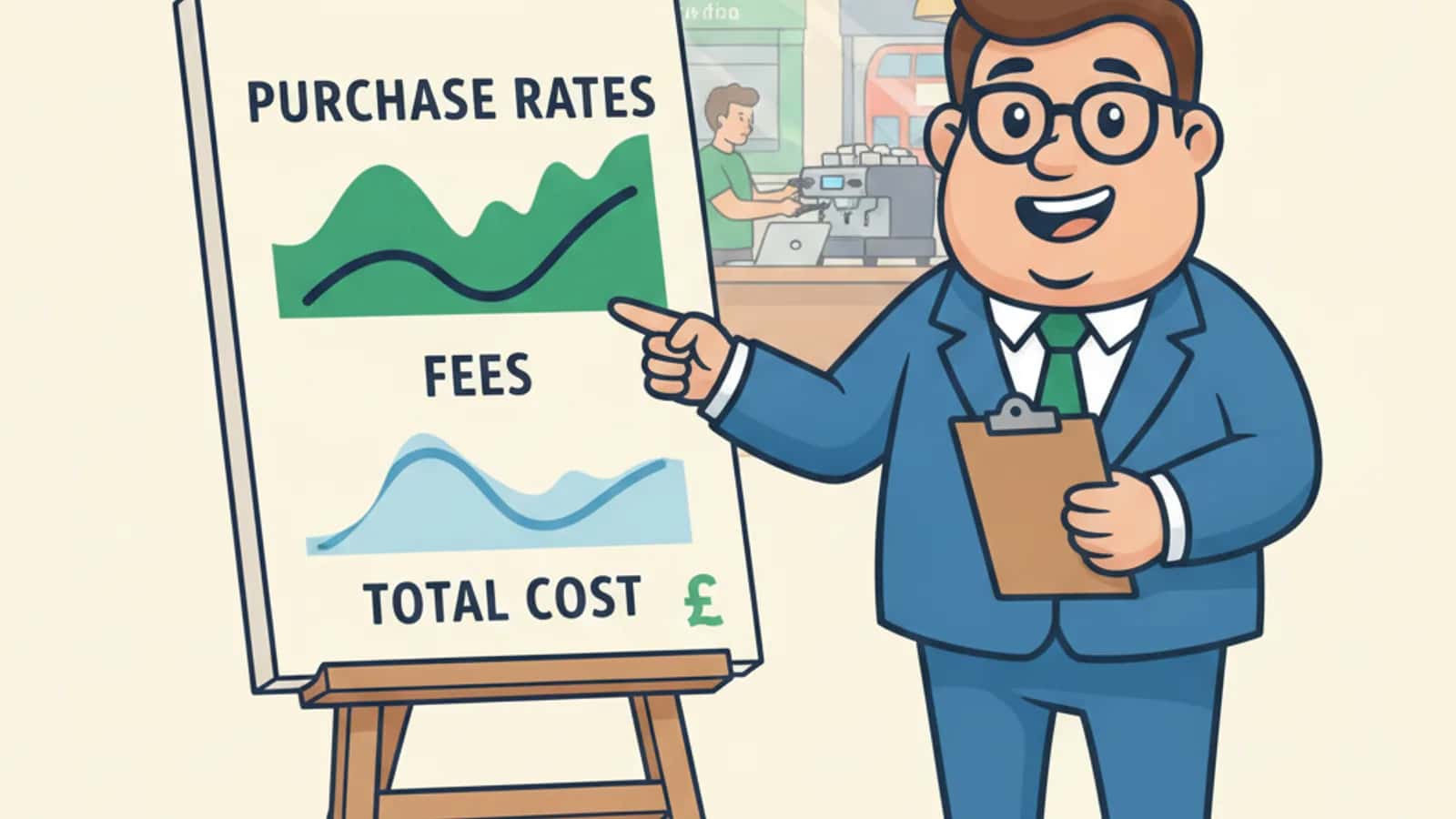
APR stands for Annual Percentage Rate. On a business credit card, it represents the yearly cost of borrowing when you carry a balance beyond your payment due date. The APR may incorporate both the interest rate and certain mandatory fees within the disclosed figure, depending on how the provider structures it.
For most UK business cards, the APR you see advertised is a representative APR, the rate that at least 51% of accepted applicants receive. Your actual rate could be higher or lower based on your business credit profile and trading history.
Three APR types appear on most business card agreements:
- Purchase APR
- , applied to everyday card spending when you don't pay in full
- Cash advance APR
- , applied to ATM withdrawals and cash-equivalent transactions, almost always higher than purchase APR
- Penalty APR
- , triggered by serious payment failures; can reach 29.99% or more with major issuers
Understanding the difference matters because many businesses assume the headline rate applies to everything. It doesn't.
How Is Business Credit Card APR Calculated?
Providers convert the annual APR into a daily or monthly rate and apply it to your outstanding balance. The daily rate is simply the APR divided by 365. That daily rate is then multiplied by your average daily balance over the billing period.
Example (estimate, for illustration only):
If your purchase APR is 24% and you carry a £5,000 balance for 30 days:
- Daily rate: 24% / 365 = 0.0658% per day
- Monthly interest: £5,000 x 0.0658% x 30 = approximately £98.63
Carry that balance for a full year and you'd pay roughly £1,200 in interest alone, before any fees.
Interest is typically calculated from the transaction date if you carry a balance, not from the statement date. That's why clearing your balance in full each month is the most effective way to avoid interest entirely.
Purchase APR vs Cash Advance APR: What's the Difference?
Purchase APR is the standard rate applied to goods and services you buy on the card. Cash advance APR is a separate, higher rate applied when you withdraw cash, transfer funds to a bank account, or make cash-equivalent transactions.
The key distinctions:
| Feature | Purchase APR | Cash Advance APR |
|---|---|---|
| Typical rate (UK market) | 20%,35% representative | Often 30%,40%+ |
| Interest-free period | Yes, if paid in full | No, interest starts immediately |
| Transaction fee | None | Usually 2%,3% of the amount |
| Applies to | Everyday purchases | ATM withdrawals, bank transfers |
Cash advances on business cards are expensive from the moment the transaction posts. There's no grace period, and the fee on top of the higher rate makes them one of the costliest ways to access short-term funds. If your business needs working capital quickly, a cash flow business loan or a card with a higher purchase limit is usually a better route.
What's a Good APR for a Business Credit Card?
For businesses with strong credit profiles, a competitive purchase APR sits between 15% and 20%. Businesses with average credit should expect offers in the 20%,28% range. Anything above 30% is high, and penalty APRs can reach 29.99% even on mainstream cards.
For context, US Federal Reserve data from January 2026 showed the average APR across all credit card accounts at 20.97%, with accounts actively accruing interest averaging 22.30%. UK rates follow a similar pattern, though exact figures vary by provider and base rate environment.
How to benchmark your offer
- Below 20% representative APR: strong deal for a business card with rewards
- 20%,25%: broadly market-rate for most SME applicants
- Above 28%: worth comparing alternatives before accepting
- 0% introductory period: valuable if you have a specific short-term spend planned
The APR matters most if you're likely to carry a balance. If you pay in full every month and use the card for cashback on ad spend or supplier payments, the rate is secondary to the limit and rewards structure. Read business credit card limits: the key points for the key considerations.
How Much Interest Will You Actually Pay on a Business Card Balance?
The total interest cost depends on three things: the APR, the balance you carry, and how long you carry it. Even a "mid-range" APR becomes expensive fast when balances run into the thousands.
Estimated interest on a £10,000 balance (illustrative only):
| APR | Monthly interest (approx.) | Annual interest (approx.) |
|---|---|---|
| 20% | £167 | £2,000 |
| 25% | £208 | £2,500 |
| 30% | £250 | £3,000 |
These figures assume a flat balance with no repayments, real costs will vary. But the point stands: carrying a five-figure balance on a business card for several months is materially more expensive than a short-term unsecured business loan at a fixed rate.
If you're regularly carrying balances rather than clearing them, it's worth comparing the total cost against other funding options. See average business loan interest rates in the UK for a side-by-side view.
How Does Introductory APR Work on Business Cards?
Some business cards offer a 0% introductory purchase APR for a fixed period, typically 3 to 12 months, before reverting to the standard rate. During the intro period, no interest accrues on purchases, making it a genuine way to spread a large upfront cost interest-free.
What to watch
- The 0% rate applies to purchases, not usually to cash advances
- Missing a minimum payment during the intro period can cancel the 0% offer immediately
- Any balance remaining at the end of the intro period rolls onto the standard purchase APR
- The standard rate after the intro period can be higher than a non-intro card
Introductory APR works well for planned spend, kitting out a team, covering a large supplier invoice, or funding a stock order ahead of a busy period. It doesn't work well as a long-term funding strategy.
What Fees Do Business Credit Cards Charge Besides APR?
APR is not the only cost. Most business cards carry a range of additional charges that affect the total cost of holding and using the card.
Common fees to check
- Annual fee, ranges from £0 to £250+ depending on the card tier and rewards structure
- Late payment fee, typically £12,£25 per missed or short payment
- Foreign transaction fee, usually 2.99% on non-sterling purchases; some cards waive this
- Cash advance fee, commonly 2%,3% of the transaction amount, with a minimum charge
- Returned payment fee, charged if a direct debit bounces
- Additional cardholder fee, some providers charge per employee card; others include them free
The annual fee question is worth thinking through carefully. A card with a £150 annual fee but 1.5% cashback on all spend breaks even at roughly £10,000 of annual card spend, above that, you're ahead. Below it, a no-fee card is cheaper even at a slightly higher APR.
For a broader look at how fees stack up across different finance products, the invoice financing costs guide covers a useful comparison.
Are Business Credit Card Rewards Worth the Higher APR?
Rewards are worth it only if you clear your balance in full every month. If you carry a balance, the interest cost will almost always outweigh any cashback or points earned.
The maths are unforgiving:
A card earning 1% cashback on £5,000 of monthly spend generates £50 in rewards. The same card at 25% APR on a £5,000 carried balance costs roughly £104 in interest that month. The rewards don't come close to covering the interest.
Where rewards genuinely add value
- Agencies and e-commerce brands running high ad spend through the card and paying it off monthly
- Businesses with predictable, high-volume supplier payments
- Teams using employee cards where spend is controlled and cleared centrally
The key is treating the card as a payment tool with a cashback benefit, not as a revolving credit facility. Business credit cards with cashback and rewards are genuinely useful, but only when the balance clears.
What Happens If You Don't Pay Your Business Credit Card in Full?
If you don't clear the full statement balance by the due date, interest accrues on the remaining amount from the transaction date. You also lose the interest-free period on new purchases in the next billing cycle on many cards, meaning new spending starts accruing interest immediately rather than after the statement date.
Persistent underpayment leads to:
- Compounding interest that grows the balance faster than minimum payments reduce it
- Late payment fees if you miss the minimum payment entirely
- Potential penalty APR being applied, pushing the rate to 29.99% or higher
- Negative marks on your business credit file, which affects future borrowing
Paying only the minimum each month is particularly costly. On a £5,000 balance at 25% APR with a 1% minimum payment, it can take years to clear the balance and cost thousands in interest.
For businesses regularly struggling to clear their card balance, the issue is often a cash flow timing problem rather than a spending one. A business overdraft vs line of credit comparison may point to a better-structured solution.
Can You Negotiate APR on a Business Credit Card?
Yes, but it's less common with business cards than personal ones, and success depends heavily on your payment history and relationship with the provider. Providers are more likely to consider a rate reduction if you've held the card for at least 12 months, paid consistently on time, and your business credit profile has improved since you applied.
Steps worth taking:
- Check your business credit score before calling, know where you stand
- Call the provider's business card team directly, not the general helpline
- Reference your payment history and any competing offers you've received
- Ask specifically for a rate review, not just a general query
If the provider won't move, the more effective option is often to apply for a new card with a better rate and transfer the balance, though balance transfer fees and eligibility checks apply.
How to Lower Your Business Credit Card APR
The most direct route to a lower APR is improving your business credit profile and then either requesting a review or switching to a card that reflects your current risk level.
Practical steps
- Pay every statement on time, in full where possible, consistent payment history is the biggest factor
- Reduce your credit utilisation ratio, using less than 30% of your available limit signals lower risk
- Correct any errors on your business credit file with the main credit reference agencies
- Avoid multiple card applications in a short window, each hard search affects your profile
- Consider a balance transfer to a card with a lower introductory or standard rate
Businesses that have been stuck on a high-limit, high-rate card for years often find that a fresh application through a panel like Funding Fred surfaces better terms than their existing provider is willing to offer.
Does Business Card APR Affect Your Personal Credit Score?
For limited companies, business credit card activity is generally reported to business credit reference agencies rather than personal ones, so the APR and balance on a company card typically don't appear on the director's personal credit file.
However, there are important exceptions:
- If you gave a personal guarantee when applying, the provider may report to personal credit agencies or pursue you personally for unpaid balances
- Sole traders don't have a separate legal entity, so business card activity may appear on personal credit files
- Some smaller providers report to both business and personal bureaus regardless of structure
If avoiding a personal guarantee matters to your business, that's worth checking explicitly before applying. Some providers on the Funding Fred panel offer cards without requiring one.
Next steps
Business credit card APR explained in plain terms: it's the annual cost of borrowing when you don't clear your balance. Purchase APR, cash advance APR, penalty APR, annual fees, and foreign transaction charges all contribute to the real cost of holding a card. For businesses that pay in full each month, the APR is largely background noise, the limit, rewards structure, and spend controls matter more. For businesses carrying balances, the rate is the dominant cost and deserves serious comparison before you commit. You can explore this further in what to know about comparing business credit cards.
The UK market in 2026 offers a wide range of business card options, from no-fee entry-level cards to high-limit products with cashback and virtual cards for the whole team. The right card depends on how you actually use it.
Next steps
- Run a 2-minute eligibility check at Funding Fred, No hard check to start, no obligation
- Compare limits from £1k to £250k+ across leading card providers. For more detail, see our guide to business credit cards in the UK.
- Check whether a card with Up to 56 Days Interest-Free fits your payment cycle
- If you're carrying existing card debt, review whether a business loan at a fixed rate would cost less overall
Business Credit Cards. Without the Fuss. Fast Decision, real limits, and Spend Controls that actually work.
Frequently asked questions
What Does APR Mean on a Business Credit Card?
APR stands for Annual Percentage Rate. On a business credit card, it represents the yearly cost of borrowing when you carry a balance beyond your payment due date. The APR may incorporate both the interest rate and certain mandatory fees within the disclosed figure, depending on how the provider structures it.
How Is Business Credit Card APR Calculated?
Providers convert the annual APR into a daily or monthly rate and apply it to your outstanding balance. The daily rate is simply the APR divided by 365. That daily rate is then multiplied by your average daily balance over the billing period.
Purchase APR vs Cash Advance APR: What's the Difference?
Purchase APR is the standard rate applied to goods and services you buy on the card. Cash advance APR is a separate, higher rate applied when you withdraw cash, transfer funds to a bank account, or make cash-equivalent transactions.
What's a Good APR for a Business Credit Card?
For businesses with strong credit profiles, a competitive purchase APR sits between 15% and 20%. Businesses with average credit should expect offers in the 20%,28% range. Anything above 30% is high, and penalty APRs can reach 29.99% even on mainstream cards.
How Much Interest Will You Actually Pay on a Business Card Balance?
The total interest cost depends on three things: the APR, the balance you carry, and how long you carry it. Even a "mid-range" APR becomes expensive fast when balances run into the thousands.
How Does Introductory APR Work on Business Cards?
Some business cards offer a 0% introductory purchase APR for a fixed period, typically 3 to 12 months, before reverting to the standard rate. During the intro period, no interest accrues on purchases, making it a genuine way to spread a large upfront cost interest-free.
Written by
The Funding Fred Editorial Team creates plain-English guides to help business owners understand funding options, eligibility, and application readiness before they compare finance options.
Reviewed by
UK business finance content reviewer
Robert reads our UK business finance guides before they go live, checking each one is accurate, easy to follow, and reflects how lending actually works today — not how a brochure says it should. He's listed on the FCA Register, approved as an SMF3 (AR) Executive Director at Switcha Limited, and connected to Lucky Growth Partners Ltd through its appointed representative relationship, so the regulated detail gets a properly qualified second read.