Bad Credit Business Loans in the US: What's Realistic and What's Predatory
Bad credit business loans in the US split into two distinct categories: realistic options with disclosed rates typically between 8-35% APR, and predatory schemes with effective costs often exceeding 100% annually. Legitimate lenders include SBA microloan providers, CDFIs, and regulated online platforms that clearly state total costs upfront.
Quick answer
Bad credit business loans in the US split into two distinct categories: realistic options with disclosed rates typically between 8-35% APR, and predatory schemes with effective costs often exceeding 100% annually. Legitimate lenders include SBA microloan providers, CDFIs, and regulated online platforms that clearly state total costs upfront. Predatory operations, primarily merchant cash advances, disguise triple-digit rates as "factor rates" and use daily payment structures that trap businesses in debt cycles.
Key takeaways
- Personal credit scores below 620 or business scores under 50 typically qualify as "bad credit" for business lending purposes
- Realistic bad credit options include SBA microloans (8%+ APR), CDFI loans (6-20% APR), and regulated online lenders (18-35% APR)
- Merchant cash advances represent the primary predatory threat, with effective rates often exceeding 100% annually
- Red flags include daily payment structures, no clear APR disclosure, and pressure to renew before payoff
- Traditional banks approve less than 50% of applications from high-risk borrowers, pushing many toward alternative lenders
- Revenue-based financing and invoice factoring offer middle-ground options for businesses with consistent cash flow
- State regulators have secured over $1 billion in settlements against predatory MCA operations since 2025
What Credit Score Do You Need to Get a Business Loan
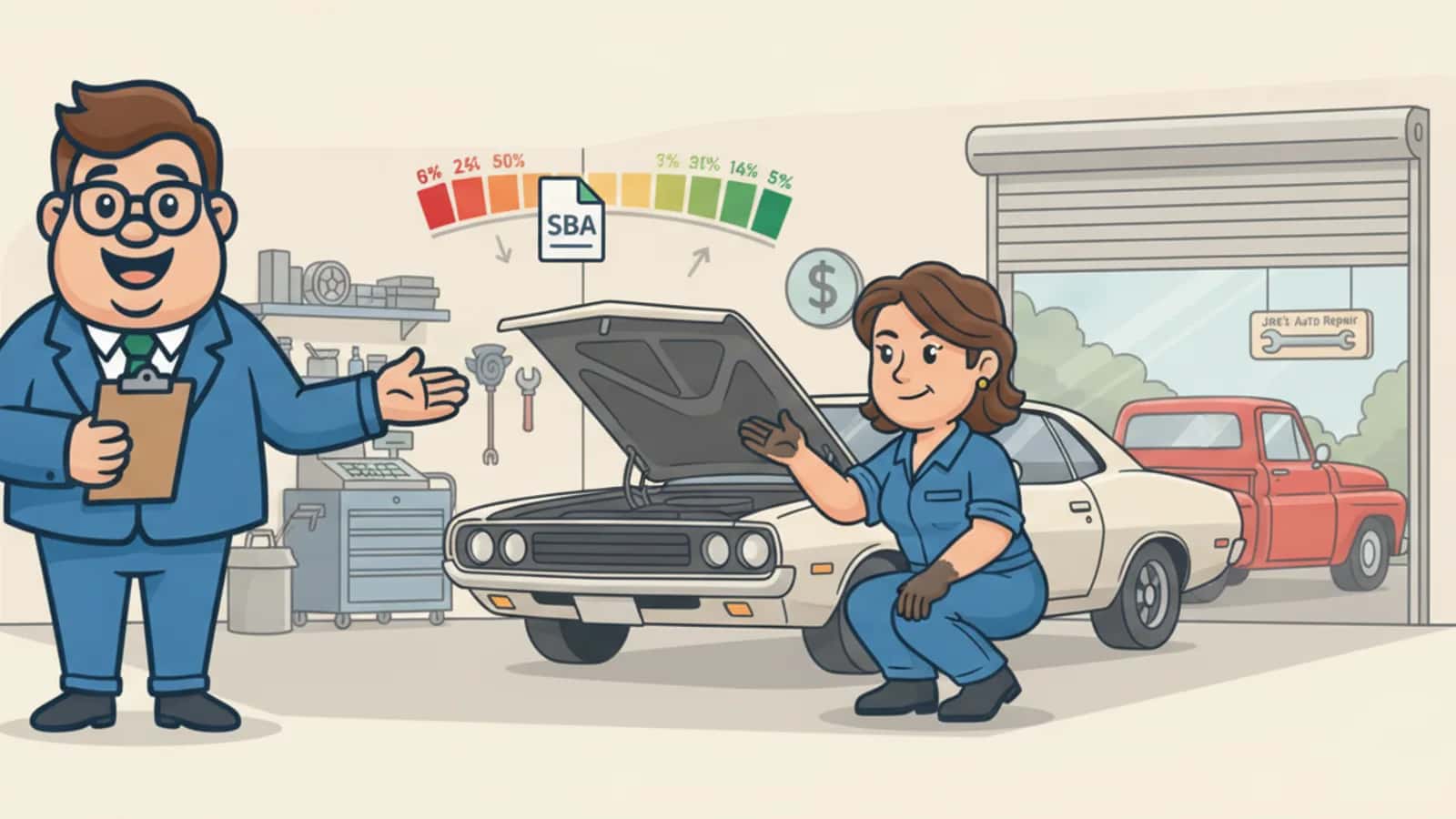
Traditional banks typically require personal FICO scores of at least 680-700 and business credit scores above 80 for standard approval. Federal Reserve data shows that firms with medium or high credit risk face approval rates under 50%, compared to 70-80% for low-risk borrowers.
"Bad credit" in business lending generally means personal scores below 620 or business scores under 50. This threshold pushes borrowers into the alternative lending market where approval criteria vary significantly.
Credit Score Ranges for Business Lending
- Excellent (720+): Prime bank rates, multiple options
- Good (680-719): Standard bank approval likely
- Fair (620-679): Limited bank options, consider SBA programs
- Poor (580-619): Alternative lenders, higher costs
- Very Poor (Below 580): Specialized programs, collateral often required
The distinction matters because banks use these ranges to set risk-based pricing. A score of 650 might qualify for bank consideration, while 550 typically means exploring SBA microloans or CDFI programs.
Choose traditional banks if your personal score exceeds 680 and you have two years of profitable operations. Consider alternative lenders or SBA programs if your credit falls below this threshold but your business shows consistent revenue.
How Do Bad Credit Business Loans Actually Work
Bad credit business loans compensate for higher default risk through elevated interest rates, shorter terms, and additional collateral or guarantee requirements. Legitimate lenders still follow standard loan structures with clear repayment schedules and disclosed costs.
Most bad credit business loans fall into these categories:
Term Loans: Fixed monthly payments over 1-5 years, with rates typically 15-35% APR. The lender advances a lump sum, and you repay principal plus interest on a set schedule.
Lines of Credit: Revolving access to funds up to an approved limit. You pay interest only on amounts drawn, with rates usually 2-5 percentage points higher than term loans.
Revenue-Based Financing: Repayment tied to a percentage of monthly sales, typically 2-10% of gross revenue until a predetermined amount is reached. This structure provides flexibility during slow periods.
Equipment Financing: The purchased equipment serves as collateral, often enabling approval despite poor credit. Rates run 8-25% depending on equipment type and borrower risk.
The key difference from predatory products is transparency. Legitimate bad credit loans provide clear APR disclosures, fixed payment amounts, and specific payoff dates. You know exactly what you owe and when.
Common mistake: Assuming all alternative lenders are predatory. Many regulated online platforms serve bad credit borrowers with reasonable terms, just at higher costs than prime lending.
Can You Get a Business Loan with a 500 Credit Score
Yes, but options narrow significantly to specialized programs and secured financing. SBA microloans, CDFI lenders, and some equipment financing programs will consider applications with personal scores around 500, though approval depends heavily on business performance and collateral.
Realistic Options with 500 Credit Score
- SBA Microloans: Up to $50,000 through nonprofit intermediaries, minimum rates around 8%
- CDFI Programs: Community development lenders often accept scores as low as 550
- Equipment Financing: Collateral reduces lender risk, enabling approval despite poor credit
- Invoice Factoring: Based on customer creditworthiness, not business owner credit
- Secured Business Credit Cards: Require cash deposits but help rebuild credit
Expect extensive documentation requirements and potentially personal guarantees or collateral. Many lenders in this range want to see 12-24 months of bank statements and proof of consistent revenue.
What Won't Work
- Traditional bank loans
- Most SBA 7(a) programs
- Unsecured lines of credit above $25,000
Success factors include demonstrating business stability through consistent deposits, maintaining business banking relationships, and providing detailed cash flow projections. Consider working with a CDFI that specializes in your industry or geographic area.
What's the Difference Between Legitimate and Predatory Business Lenders
Legitimate lenders provide clear cost disclosures, reasonable repayment terms, and operate under banking regulations. Predatory lenders obscure true costs, create debt traps through renewal cycles, and often structure products to avoid lending laws.
<table style="width: 100%; border-collapse: collapse; margin: 20px 0;"> <tr style="background-color: #f5f5f5;"> <th style="border: 1px solid #ddd; padding: 12px; text-align: left;">Legitimate Lenders</th> <th style="border: 1px solid #ddd; padding: 12px; text-align: left;">Predatory Lenders</th> </tr> <tr> <td style="border: 1px solid #ddd; padding: 12px;">Clear APR disclosure upfront</td> <td style="border: 1px solid #ddd; padding: 12px;">Factor rates or daily fees instead of APR</td> </tr> <tr> <td style="border: 1px solid #ddd; padding: 12px;">Fixed payment schedules</td> <td style="border: 1px solid #ddd; padding: 12px;">Daily or weekly automatic debits</td> </tr> <tr> <td style="border: 1px solid #ddd; padding: 12px;">Regulated by banking authorities</td> <td style="border: 1px solid #ddd; padding: 12px;">Structured as "purchases" to avoid regulation</td> </tr> <tr> <td style="border: 1px solid #ddd; padding: 12px;">Reasonable time to review terms</td> <td style="border: 1px solid #ddd; padding: 12px;">Pressure to sign immediately</td> </tr> <tr> <td style="border: 1px solid #ddd; padding: 12px;">Early payoff reduces total cost</td> <td style="border: 1px solid #ddd; padding: 12px;">Full fees charged regardless of payoff timing</td> </tr> </table>
The New York Attorney General's 2025 settlement against Yellowstone Capital illustrates predatory practices: the company disguised high-interest loans as merchant cash advances, charged effective rates exceeding 100% annually, and used aggressive collection tactics including confessions of judgment.
Verification Steps:
- Check lender licensing with your state's banking department
- Confirm APR disclosure in loan documents
- Verify payment terms match verbal representations
- Research company complaints with Better Business Bureau
Choose lenders that provide written APR calculations and allow reasonable review time. Avoid any lender that pressures immediate signing or refuses to explain total costs in simple terms.
How Much Higher Are Interest Rates on Bad Credit Business Loans
Bad credit business loans typically cost 2-4 times more than prime bank financing. While traditional bank loans range from 6-12% APR, legitimate bad credit options generally fall between 15-35% APR, with some specialized programs reaching 50% for very high-risk borrowers.
Rate Comparison by Lender Type
- Traditional Banks: 6-12% APR (requires good credit)
- SBA 7(a) Loans: 11-18% APR (includes guarantee fees)
- SBA Microloans: 8-13% APR (varies by intermediary)
- CDFI Lenders: 6-20% APR (mission-driven pricing)
- Online Term Loans: 15-35% APR (risk-based pricing)
- Revenue-Based Financing: 18-60% APR equivalent
- Equipment Financing: 8-25% APR (secured by equipment)
The rate spread reflects default risk. Federal Reserve data shows small businesses with poor credit default at rates 3-5 times higher than prime borrowers, justifying higher pricing for legitimate lenders.
Factor in that bad credit loans often have shorter terms, increasing monthly payments but sometimes reducing total interest paid. A 3-year bad credit loan might cost less overall than a 7-year bank loan despite higher rates.
Common mistake: Focusing only on monthly payment instead of total cost. Some predatory lenders offer lower payments by extending terms or adding fees that increase the total amount owed.
What Are the Red Flags of Predatory Lending Practices
Predatory lenders use specific tactics to obscure costs and trap borrowers in debt cycles. The most dangerous red flag is daily payment structures combined with factor rates instead of APR disclosures.
Major Warning Signs
- Factor rates (e.g., "1.3 factor") instead of APR percentages
- Daily or weekly payments that continue regardless of revenue
- No early payoff benefit - full fees charged even with quick repayment
- Automatic renewals or pressure to take new advances before payoff
- Confession of judgment clauses waiving court defense rights
- Blanket liens on all business assets for small advances
Documentation Red Flags
- Contracts calling the transaction a "purchase" rather than a loan
- Missing or unclear total repayment amounts
- Payment schedules that don't add up to stated terms
- Verbal promises not reflected in written agreements
The merchant cash advance industry represents the primary predatory threat. These products typically involve daily ACH debits of 10-20% of bank deposits, with effective annual rates often exceeding 100%. California's financial regulator issued a 2025 advisory specifically warning businesses about MCA arrangements that misrepresent costs or collection practices.
Pressure Tactics
- "Limited time" funding offers requiring same-day decisions
- Unsolicited calls claiming pre-approval
- Requests for online banking credentials during application
- Promises of "no credit check" with guaranteed approval
Legitimate lenders provide time to review documents and encourage borrowers to consult advisors. Any lender pressuring immediate signing without document review should be avoided.
If you encounter these practices, file complaints with your state attorney general and the Federal Trade Commission. Multiple states are actively investigating predatory commercial lending practices.
Alternative Funding Options When You Have Bad Credit
Several alternative funding sources serve bad credit borrowers without predatory terms. These options focus on business performance rather than personal credit scores, though they may involve trade-offs in cost or structure.
Invoice Factoring and Accounts Receivable Financing: Factors purchase your outstanding invoices at a discount, typically 1-5% per month. Your customers' credit matters more than yours, making this viable even with poor personal credit. Advance rates range from 70-90% of invoice value.
Equipment Financing: The equipment serves as collateral, reducing lender risk and enabling approval despite bad credit. Rates typically range 8-25% APR depending on equipment type and age. New equipment generally qualifies for better terms than used.
Revenue-Based Financing: Repayment tied to a percentage of monthly sales provides flexibility during slow periods. Costs typically range 18-60% APR equivalent, but payments adjust with revenue fluctuations. Best for businesses with seasonal or variable income.
Community Development Financial Institutions (CDFIs): Mission-driven lenders serving underserved markets often accept credit scores as low as 550. Programs like Accion Opportunity Fund offer term loans from $5,000-$250,000 with starting rates around 6-20% APR.
Microfinance Programs: Kiva Microfunds provides 0% interest loans up to $15,000 through crowdfunding. The application process takes several weeks, and funding depends on community support, but there are no interest charges.
Business Credit Cards: Secured business cards require cash deposits but help rebuild credit while providing working capital access. Some issuers approve applications with scores as low as 500 with adequate deposits.
Choose invoice factoring if you have creditworthy B2B customers with 30-90 day payment terms. Consider equipment financing for necessary purchases where the equipment value justifies the loan amount. Explore CDFI options if you operate in an underserved community or industry.
Are Business Loans Easier to Get Than Personal Loans with Bad Credit
Business loans can be easier to obtain than personal loans for bad credit borrowers because lenders consider business cash flow and assets alongside personal credit. However, most business lenders still require personal guarantees, making the personal credit score relevant to approval decisions.
Business Loan Advantages
- Revenue and business assets provide additional repayment sources
- Collateral options (equipment, inventory, receivables) reduce lender risk
- SBA programs specifically designed for higher-risk small businesses
- Industry-specific lenders understand seasonal or cyclical cash flows
Personal Loan Limitations
- Approval based primarily on personal credit score and income
- Limited collateral options for secured lending
- Higher default rates lead to more restrictive underwriting
- Debt-to-income ratios often exclude business income
Federal Reserve data shows that 45% of nonemployer businesses denied funding were turned down specifically because of low credit scores, but businesses with employees and established operations have higher approval rates even with poor personal credit.
Key Differences
- Business loans typically require 1-2 years of operating history
- Personal guarantees make business owners personally liable
- Business loans offer higher amounts ($25,000-$500,000 vs $5,000-$50,000)
- Documentation requirements are more extensive for business loans
The trade-off is complexity. Business loan applications require financial statements, tax returns, and business documentation that personal loans don't need. However, the additional underwriting criteria can work in favor of borrowers with strong business performance despite poor personal credit.
Consider business loans if your company generates consistent revenue and you can document positive cash flow. Personal loans might be simpler for smaller amounts under $25,000 where business documentation requirements become burdensome.
What Documents Do You Need for Bad Credit Business Loan Applications
Bad credit business loan applications require more extensive documentation than prime lending to compensate for credit risk. Lenders want detailed proof of business stability and cash flow to justify approval despite poor credit scores.
Core Documentation Requirements
- Business tax returns (2-3 years) showing revenue trends
- Personal tax returns (2 years) including Schedule C if applicable
- Bank statements (3-12 months) demonstrating deposit patterns
- Financial statements (profit & loss, balance sheet) prepared or reviewed
- Business licenses and registration documents
- Articles of incorporation or operating agreements
Additional Bad Credit Requirements
- Cash flow projections showing ability to service debt
- Customer concentration analysis if dependent on few clients
- Accounts receivable aging to verify collection patterns
- Equipment lists or inventory valuations for collateral
- Personal financial statements including assets and liabilities
- Explanation letters addressing credit issues and remediation steps
Many bad credit lenders want to see 12-24 months of business bank statements to verify consistent deposits. They're looking for stable or growing revenue patterns that indicate ability to repay despite past credit problems.
Documentation Tips
- Organize documents chronologically and clearly label each item
- Provide explanations for any gaps or unusual transactions
- Include contracts or purchase orders showing future revenue
- Prepare a brief business overview highlighting strengths
Common Mistakes
- Submitting incomplete bank statements with missing months
- Providing personal documents when business entities are separate
- Failing to explain credit issues or business challenges
- Mixing business and personal transactions in documentation
Some lenders offer streamlined applications for smaller amounts (under $50,000) requiring only bank statements and basic business information. However, most bad credit programs require comprehensive documentation to justify approval.
Start gathering documents before applying to avoid delays. Many applications stall because borrowers underestimate documentation requirements or can't locate required records quickly.
Should You Use a Business Loan Broker if You Have Bad Credit
Business loan brokers can help bad credit borrowers navigate complex alternative lending markets, but they add costs and potential risks. Brokers typically charge 1-6% of loan amounts and may steer clients toward higher-commission products rather than best-fit options.
Broker Advantages
- Access to multiple lenders through single application
- Knowledge of which lenders accept specific credit profiles
- Help with documentation and application preparation
- Negotiation assistance with terms and conditions
Broker Disadvantages
- Commission fees reduce net funding received
- Potential conflicts of interest favoring higher-commission lenders
- Less direct communication with actual funding sources
- Additional party in already complex transaction
When Brokers Make Sense
- Complex deals requiring specialized lenders
- Time constraints preventing extensive lender research
- Multiple application rejections from direct approaches
- Unusual business models or industries
Red Flags with Brokers
- Upfront fees before loan approval
- Guarantees of approval regardless of credit
- Pressure to accept first offer without comparison
- Reluctance to explain lender selection process
Many legitimate lenders work directly with borrowers and offer fast eligibility checks without hard credit pulls. This allows you to understand potential options before committing to broker fees.
Alternative Approaches
- Online lending platforms that aggregate multiple offers
- CDFI networks serving your geographic area or industry
- SBA resource partner organizations providing free guidance
- Industry associations with preferred lender relationships
If you choose a broker, verify their licensing with state authorities and request references from recent clients. Understand exactly how they're compensated and whether they receive higher commissions from certain lenders.
The key question is whether broker expertise justifies the additional cost. For straightforward bad credit scenarios, direct lender relationships often provide better terms and clearer communication.
What Happens If You Can't Pay Back a Bad Credit Business Loan
Defaulting on a bad credit business loan triggers collection processes that vary significantly between legitimate lenders and predatory operations. Traditional lenders typically work with borrowers on modifications, while predatory lenders may use aggressive tactics including asset seizure and personal liability enforcement.
Legitimate Lender Response:
- Grace period (5-15 days) for late payments with minimal fees
- Workout discussions to modify payment terms or schedules
- Formal default notice after 30-90 days of non-payment
- Collection agency referral or legal action as last resort
Predatory Lender Tactics
- Immediate daily debit attempts regardless of account balance
- Asset seizure through UCC liens or equipment repossession
- Confession of judgment enforcement bypassing court proceedings
- Personal asset pursuit through unlimited personal guarantees
SBA-backed loans offer additional protections through workout procedures and potential debt forgiveness programs. The SBA requires lenders to consider modifications before pursuing guarantees, providing borrowers more time to resolve payment issues.
Personal Guarantee Implications: Most business loans include personal guarantees making business owners personally liable for unpaid balances. This means lenders can pursue personal assets including homes, vehicles, and bank accounts after exhausting business assets.
Damage Control Steps:
- Contact lender immediately when payment problems arise
- Document financial hardship with updated cash flow projections
- Propose realistic modification terms based on current capacity
- Consider professional help from attorneys or credit counselors
- Explore refinancing options with other lenders if possible
Credit Impact: Business loan defaults appear on both business and personal credit reports when personal guarantees are involved. The damage typically lasts 7 years and significantly impacts future borrowing capacity.
Bankruptcy Considerations: Business bankruptcy may discharge loan obligations but doesn't eliminate personal guarantee liability. Personal bankruptcy might be necessary to resolve personal guarantee claims, but this has severe long-term consequences.
The key is early communication with lenders when problems develop. Most legitimate lenders prefer workout arrangements to costly collection procedures, but they need advance notice to consider alternatives.
How Long Does It Take to Rebuild Credit While Running a Business
Rebuilding business and personal credit typically takes 12-24 months of consistent positive payment history, though significant improvement can begin within 6 months. The timeline depends on the severity of past credit problems and the consistency of new positive reporting.
Credit Rebuilding Timeline
- 0-6 months: Establish new positive payment history
- 6-12 months: Credit scores begin improving with consistent payments
- 12-18 months: Significant score increases possible (50-100 points)
- 18-24 months: Access to better lending terms and lower rates
- 24+ months: Approach to prime credit eligibility
Accelerated Rebuilding Strategies
- Business credit cards with monthly reporting to business bureaus
- Trade credit accounts with suppliers reporting payment history
- Small installment loans specifically for credit building
- Secured credit products requiring deposits but guaranteeing approval
Business Credit Building: Business credit scores rebuild faster than personal scores because they're based on shorter payment histories and fewer data points. Consistent payment of business credit cards and trade accounts can improve business scores within 6-12 months.
Personal Credit Repair: Personal credit improvement takes longer because negative items remain on reports for 7 years. However, their impact diminishes over time, especially when offset by new positive payment history.
Key Factors Affecting Timeline
- Severity of past delinquencies (30-day late vs bankruptcy)
- Number of negative items on credit reports
- Consistency of new positive payment history
- Credit utilization ratios on revolving accounts
- Mix of credit types (revolving, installment, trade)
Common Mistakes
- Closing old accounts that provide positive payment history
- Applying for too much new credit too quickly
- Ignoring business credit development while focusing only on personal
- Failing to monitor credit reports for errors or improvements
Building better business credit requires establishing separate business entities, obtaining federal tax ID numbers, and maintaining clear separation between business and personal finances.
Monitoring Progress: Check business credit reports quarterly through Dun & Bradstreet, Experian Business, and Equifax Business. Personal credit monitoring through free services helps track score improvements and identify errors requiring dispute.
The investment in credit rebuilding pays long-term dividends through access to lower-cost financing and better business terms. Most business owners see meaningful improvement within 12 months of consistent effort.
Next steps
Bad credit business loans in the US divide clearly between realistic funding options and predatory schemes designed to trap borrowers. Legitimate lenders serving bad credit borrowers include SBA microloan intermediaries, CDFIs, and regulated online platforms that provide clear APR disclosures and reasonable repayment terms. These options typically cost 15-35% APR but offer transparent pricing and genuine paths to business growth. For more comparisons and application guidance, browse our business loan guides.
Predatory lenders, primarily merchant cash advance companies, disguise effective rates exceeding 100% annually through factor rate pricing and daily payment structures. Recent regulatory actions, including over $1 billion in settlements against predatory MCA operations, demonstrate the scope of abusive practices targeting desperate business owners.
The key to navigating bad credit business financing is understanding your realistic options and recognizing predatory red flags. Focus on lenders that provide APR disclosures, allow reasonable document review time, and structure repayment terms around your business's actual cash flow capacity.
Next Steps:
- Check your business and personal credit scores to understand your current position
- Gather comprehensive financial documentation before applying anywhere
- Research CDFI and SBA microloan programs in your area
- Compare multiple legitimate offers before making decisions
- Consider working with a platform that matches you with appropriate lenders based on your specific situation
Remember that bad credit is often temporary, but predatory loan consequences can last years. Choose carefully, and prioritize lenders that view your success as essential to their own.
Further reading
Frequently asked questions
What Credit Score Do You Need to Get a Business Loan?
Traditional banks typically require personal FICO scores of at least 680-700 and business credit scores above 80 for standard approval. Federal Reserve data shows that firms with medium or high credit risk face approval rates under 50%, compared to 70-80% for low-risk borrowers.
How Do Bad Credit Business Loans Actually Work?
Bad credit business loans compensate for higher default risk through elevated interest rates, shorter terms, and additional collateral or guarantee requirements. Legitimate lenders still follow standard loan structures with clear repayment schedules and disclosed costs.
Can You Get a Business Loan with a 500 Credit Score?
Yes, but options narrow significantly to specialized programs and secured financing. SBA microloans, CDFI lenders, and some equipment financing programs will consider applications with personal scores around 500, though approval depends heavily on business performance and collateral.
What's the Difference Between Legitimate and Predatory Business Lenders?
Legitimate lenders provide clear cost disclosures, reasonable repayment terms, and operate under banking regulations. Predatory lenders obscure true costs, create debt traps through renewal cycles, and often structure products to avoid lending laws.
How Much Higher Are Interest Rates on Bad Credit Business Loans?
Bad credit business loans typically cost 2-4 times more than prime bank financing. While traditional bank loans range from 6-12% APR, legitimate bad credit options generally fall between 15-35% APR, with some specialized programs reaching 50% for very high-risk borrowers.
What Are the Red Flags of Predatory Lending Practices?
Predatory lenders use specific tactics to obscure costs and trap borrowers in debt cycles. The most dangerous red flag is daily payment structures combined with factor rates instead of APR disclosures.
Written by
The Funding Fred Editorial Team creates plain-English guides to help business owners understand funding options, eligibility, and application readiness before they compare finance options.
Sources
- Survey
- Main Street Report Q2 2025
- 2025 March Consumer Community Context
- Small Business Credit Statistics
- 2025 Survey Of Business Resource Organizations
- 2025 Small Business Credit Survey Key Insights
- 2025 Report On Employer Firms
- 2024 Small Business Credit Survey
- Small Business Credit Condition Trends 2015 2025
- 2025 Report On Employer Firms
- Q2 2025 Main Street Report
- Small Business Credit Survey The 2025 Southeast Insights
- 2025 Small Business Data Chartbooks
- 2025 Main Street Metrics
- Q1 2025 Index
- Business Loans For Bad Credit
- Best Bad Credit Business Loans
- Bad Credit Business Funding Guide 2026
- Bad Credit Business Loans
- Best
- Loans
- Bad Credit
- Business Loans For Bad Credit
- Best Startup Business Loans With Bad Credit
- Best Bad Credit Business Loans
- No Doc Loans
- Get Business Loan With Bad Credit
- Best Bad Credit Business Loans
- Bad Credit Business Loans
- Best Business Loans For Bad Credit
- Shark Tank Tariffs Loans Cash Advance
- Ny Attorney General Secures 1 Billion Judgment For Illegal Loans Misrepresented As Merchant Cash Advances
- Attorney General James Announces 1 Billion Settlement Predatory Lender
- Enforcement Actions
- Attorney General James Sues Sham Arbitration Service Created Help Predatory
- Nyag Brings 1 4 Billion Lawsuit Against Merchant Cash Advance Lenders
- Sba Small Business Debt Lmandp5
- Cash Flow Crisis Why Small Businesses Are Struggling This Year
- Advisory To Small Businesses Speak Up About Merchant Cash Advances
- Feds Crack Down Lenders Targeting Small Businesses High Interest Loans N1236167
- Best Merchant Cash Advances
- Tariffs Mcas Small Business 2026
- Is Your Mca Agreement Enforceable
- Fast Funding Without Merchant Cash Advance
- Merchant Cash Advance