UCC Liens and Personal Guarantees in US Small Business Lending: What Business Owners Need to Know
UCC liens give lenders legal claims on business assets like equipment and inventory, while personal guarantees make business owners personally responsible for loan repayment. Most small business loans require both, creating dual layers of security for lenders but significant risk exposure for borrowers.

Quick answer
UCC liens give lenders legal claims on business assets like equipment and inventory, while personal guarantees make business owners personally responsible for loan repayment. Most small business loans require both, creating dual layers of security for lenders but significant risk exposure for borrowers.
Key takeaways
- UCC liens allow lenders to claim business assets if you default, and these filings appear on business credit reports for up to five years
- Personal guarantees make you personally liable for business debt, meaning lenders can pursue your personal assets if the business can't pay
- SBA loans require unlimited personal guarantees from any owner with 20% or more equity in the business
- Blanket UCC liens cover all business assets and can limit your ability to get additional financing from other lenders
- Limited personal guarantees cap your liability to a specific dollar amount, while unlimited guarantees expose you to the full debt
- Alternative lenders may offer unsecured options without UCC liens, but personal guarantees are still standard practice
- Defaulting on a loan with a personal guarantee can damage both your business and personal credit scores
What Exactly Is a UCC Lien and How Does It Work
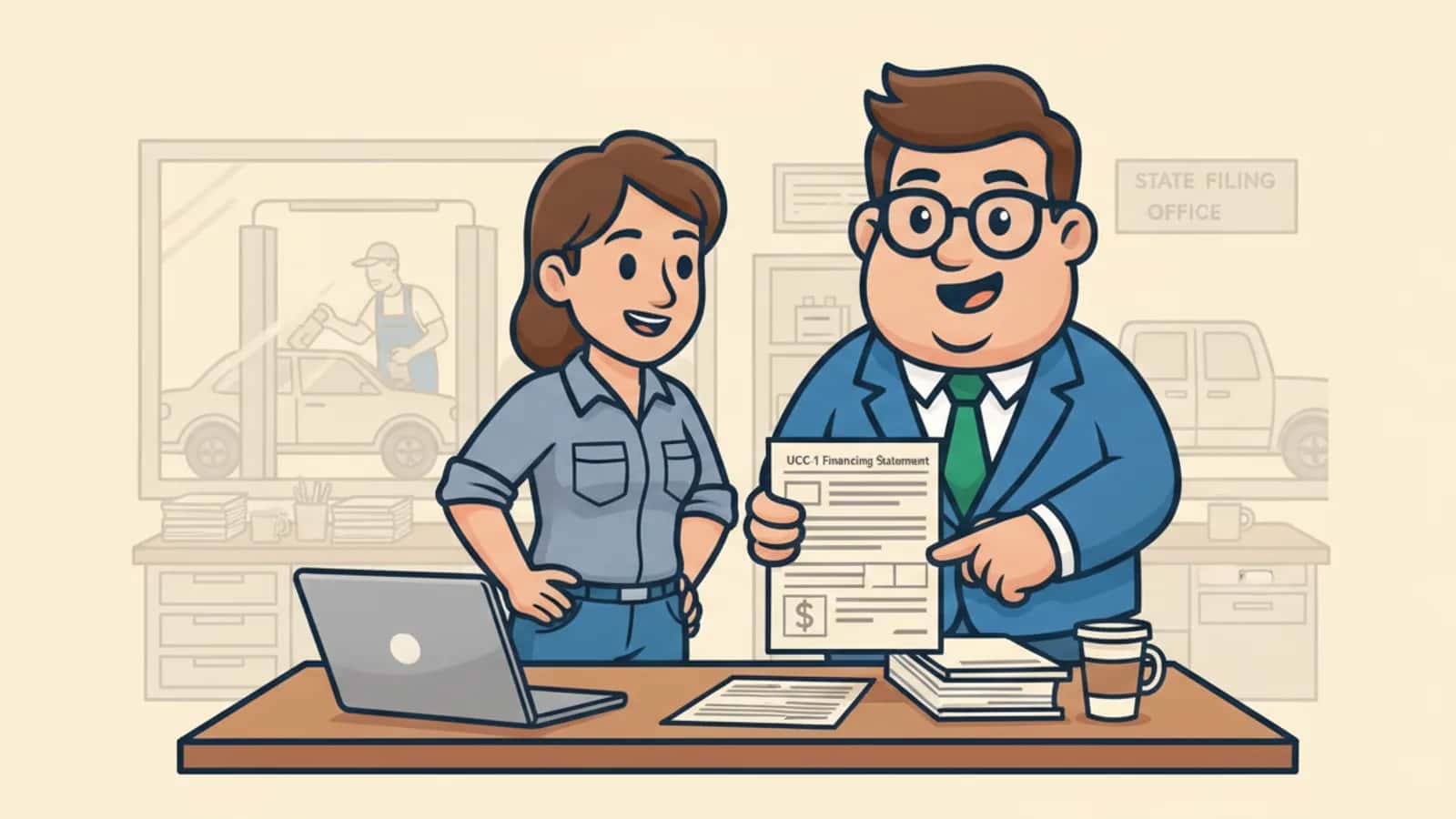
A UCC lien is a legal claim that lenders file against your business assets to secure loan repayment. The lien gives the lender the right to seize and sell those assets if you default on the loan. UCC stands for Uniform Commercial Code, which governs these secured transactions across all US states.
When you take out a secured business loan, the lender files a UCC-1 financing statement with your state's Secretary of State office. This public filing creates a legal security interest in specific business assets or, in many cases, all of your business property through what's called a blanket lien.
How UCC liens work in practice
- Filing process: Lenders complete a UCC-1 form listing your business name, address, and the collateral securing the loan
- Public record: The filing becomes part of public records, visible to other lenders and creditors
- Priority system: Earlier filings typically get priority over later ones if multiple lenders have claims on the same assets
- Enforcement: If you default, the lender can repossess and sell the collateral to recover their money
Lenders increasingly use blanket UCC liens that cover all business assets rather than specific items. This approach gives them maximum security but can complicate your ability to get additional financing since other lenders see that your assets are already pledged.
Choose a UCC lien arrangement if you need lower interest rates and can accept the asset risk. Avoid it if you plan to seek multiple funding sources quickly or if the collateral value far exceeds the loan amount.
How Much Personal Risk Do You Take On With a Business Loan Personal Guarantee
Personal guarantees make you individually responsible for repaying business debt if your company can't pay. The risk level depends on whether you sign an unlimited or limited guarantee, but both expose your personal assets to potential seizure.
Unlimited personal guarantees hold you liable for the entire debt amount plus interest, fees, and collection costs. Most traditional bank loans and SBA loans require unlimited guarantees from owners with significant equity stakes.
Limited personal guarantees cap your liability at a specific dollar amount or percentage of the loan. For example, you might guarantee $50,000 of a $200,000 loan, limiting your personal exposure even if the business defaults on the full amount.
Assets at risk under personal guarantees
- Primary residence (in some states)
- Personal bank accounts and investments
- Vehicles and recreational property
- Future income through wage garnishment
- Business ownership interests in other companies
The actual risk varies by state law. Some states protect primary residences from business debt collection, while others allow lenders to pursue homestead property. Community property states may also expose your spouse's assets even if they didn't sign the guarantee.
Common mistake: Assuming that incorporating your business protects personal assets. Personal guarantees pierce the corporate veil, making business debts your individual responsibility regardless of business structure.
Can a Personal Guarantee Affect Your Credit Score
Personal guarantees can impact your credit score in multiple ways, both during the application process and if problems arise later. The guarantee itself doesn't appear on your personal credit report, but the underlying debt and any defaults will.
During loan approval, lenders typically run a hard credit check on guarantors, which can temporarily lower your credit score by a few points. They're evaluating your personal creditworthiness since you're backing the business debt with your individual assets.
If the business defaults, the lender can report the delinquency and any charged-off debt to personal credit bureaus. This creates a significant negative impact that can drop your credit score by 100 points or more, similar to defaulting on a personal loan.
Ongoing credit implications
- The guaranteed debt may appear on personal credit reports as a contingent liability
- High business debt levels can affect your debt-to-income ratio for personal loans
- Late payments on guaranteed business loans typically get reported to personal credit bureaus
- Collection actions and judgments become part of your personal credit history
Protecting your credit score: Set up automatic payments for guaranteed business loans and monitor both business and personal credit reports regularly. Consider negotiating limited guarantees when possible to cap your exposure.
Many business owners don't realize that business loan problems can destroy their personal credit for years. The impact extends beyond the immediate loan to affect future mortgage applications, personal credit cards, and even employment opportunities.
Which Types of Small Business Loans Typically Require Personal Guarantees
Most small business loans require personal guarantees, but the requirements vary significantly by lender type and loan program. Traditional banks and SBA loans almost always require guarantees, while some alternative lenders offer more flexible terms.
SBA loans
have strict guarantee requirements. Any individual owning 20% or more of the business must provide an unlimited personal guarantee. Lenders can also require guarantees from smaller owners if they determine it's necessary for loan approval.
Bank term loans and lines of credit
typically require personal guarantees from all owners with significant equity stakes. Banks view small businesses as higher risk and use guarantees to ensure repayment even if the business fails.
Equipment financing
often requires guarantees even though the equipment serves as collateral. Lenders want additional security since equipment values can decline rapidly, especially for specialized machinery.
Loan types by guarantee requirements
- Always require guarantees: SBA 7(a) loans, bank term loans, most equipment financing
- Usually require guarantees: Business lines of credit, commercial real estate loans, franchise financing
- Sometimes require guarantees: Revenue-based financing, merchant cash advances, invoice factoring
- Rarely require guarantees: Some online lenders for very short-term loans, asset-based lending secured by accounts receivable
Working capital solutions like merchant cash advances may not require traditional personal guarantees but often include personal liability clauses that create similar exposure. Read all agreements carefully since guarantee language can appear in various forms.
For business loan options that match your risk tolerance, consider using platforms that compare guarantee requirements across multiple lenders before committing to any single option.
What's the Difference Between Secured and Unsecured Business Loans
Secured business loans require collateral (often backed by UCC liens), while unsecured loans rely primarily on creditworthiness and cash flow. Both types usually require personal guarantees, but the collateral requirements create different risk profiles for borrowers.
Secured loans give lenders claims on specific business assets through UCC filings. If you default, they can seize and sell the collateral to recover their money. This additional security typically results in lower interest rates and higher loan amounts.
Unsecured loans don't require specific collateral but still carry significant risk through personal guarantees. Lenders rely on your credit score, business cash flow, and personal assets backing the guarantee rather than pledged business property.
Key differences in practice:
| Secured Loans | Unsecured Loans |
|---|---|
| UCC liens on business assets | No specific collateral required |
| Lower interest rates (typically 6-12%) | Higher rates (often 10-25%+) |
| Longer repayment terms available | Shorter terms common |
| Higher loan amounts possible | Lower loan limits |
| Asset seizure risk if you default | Personal guarantee enforcement only |
Collateral requirements for secured loans often include equipment, inventory, accounts receivable, or real estate. The lender files UCC liens against these assets, creating public records that other lenders will see.
Choose secured financing if you need larger amounts, longer terms, or lower rates and can accept the asset seizure risk. Choose unsecured options if you want to keep business assets unencumbered for future financing or if you lack sufficient collateral.
Many business owners assume unsecured loans are safer, but personal guarantees can make them equally risky to your individual finances. The main difference is whether business assets are also at risk.
How Do UCC Liens Impact Your Ability to Get Future Financing
UCC liens create significant obstacles for obtaining additional financing because they show other lenders that your business assets are already pledged as collateral. Future lenders must either accept subordinate positions or require different collateral, often limiting your borrowing options.
Lender due diligence always includes UCC searches to identify existing liens on potential borrowers' assets. These searches reveal what collateral is already pledged and help lenders assess their recovery prospects if you default.
Blanket UCC liens create the most problems for future financing since they typically cover all business assets. When everything is already pledged to one lender, new lenders have limited security options and may decline applications or demand higher rates.
Impact on different financing types
- Equipment loans: Difficult if equipment is covered by existing blanket liens
- Inventory financing: Nearly impossible if inventory is already pledged
- Accounts receivable financing: Blocked when receivables are included in existing liens
- Real estate loans: May still be possible using property not covered by existing liens
Strategies for maintaining financing flexibility
- Negotiate specific collateral rather than blanket liens when possible
- Request lien releases on paid-down portions of revolving credit facilities
- Structure loans with step-down collateral requirements as balances decrease
- Consider subordination agreements that allow new lenders to share collateral positions
Common oversight: Many business owners don't realize that signing loan documents with blanket UCC language can block future financing for years. Always review collateral descriptions carefully and negotiate limitations when possible.
The best approach is planning your financing needs in advance rather than discovering UCC complications when you urgently need additional capital.
What Happens if Your Business Defaults on a Loan With a Personal Guarantee
Defaulting on a loan with a personal guarantee triggers collection actions against both business and personal assets. Lenders typically pursue business assets first through UCC lien enforcement, then move to personal guarantee collection if business assets don't cover the debt.
Business asset seizure happens quickly after default. Lenders can repossess equipment, inventory, and other collateral covered by UCC liens. They'll sell these assets and apply proceeds to the outstanding debt balance.
Personal guarantee enforcement begins when business assets don't satisfy the full debt. Lenders can sue you personally, obtain judgments, and pursue collection through wage garnishment, bank account levies, and asset seizure.
Timeline of default consequences:
- 1
30-60 days
Late payment fees and penalty interest rates apply
- 2
60-90 days
Lender demands full payment and may accelerate the loan
- 3
90+ days
Asset seizure begins, personal guarantee collection starts
- 4
6+ months
Lawsuits, judgments, and aggressive collection actions
- 5
Long-term
Credit damage, potential bankruptcy consideration
Collection methods vary by state but can include:
- Wage garnishment (typically 25% of disposable income)
- Bank account freezes and levies
- Liens on real estate and personal property
- Seizure and sale of non-exempt assets
- Interception of tax refunds
Protecting yourself during default: Communicate with lenders early when problems arise. Many will negotiate payment plans or loan modifications rather than pursue expensive collection actions. Ignoring the situation typically leads to more aggressive enforcement.
State law variations affect collection procedures and asset exemptions. Some states protect primary residences, retirement accounts, and basic personal property from business debt collection, while others offer minimal protection.
Are There Business Loan Options That Don't Require Personal Guarantees
Very few legitimate business loan options completely eliminate personal guarantees, but some alternative financing structures reduce or modify guarantee requirements. Most lenders view personal guarantees as essential risk management for small business lending.
Asset-based lending secured by accounts receivable or inventory may not require traditional personal guarantees since the collateral provides sufficient security. However, these arrangements often include personal liability for fraud or misrepresentation.
Revenue-based financing sometimes avoids personal guarantees by taking a percentage of future sales rather than requiring fixed monthly payments. The repayment structure aligns with business performance, reducing the need for personal backing.
Equipment financing with strong collateral occasionally allows guarantee waivers when the equipment value significantly exceeds the loan amount and maintains stable resale value.
Limited guarantee alternatives
- Corporate guarantees: Other business entities guarantee the loan instead of individuals
- Cross-collateralization: Multiple business assets secure the debt without personal backing
- Cash-secured loans: Certificates of deposit or cash accounts serve as collateral
- SBA microloans: Some programs under $50,000 have reduced guarantee requirements
Why guarantees remain standard: Small businesses have high failure rates, limited assets, and unpredictable cash flows. Personal guarantees ensure that owners have "skin in the game" and provide lenders with additional recovery options.
Red flags to avoid: Lenders advertising "no personal guarantee" loans often have extremely high interest rates, short terms, or hidden fees that make them unsuitable for most businesses. Always calculate total costs before proceeding.
For business funding options that match your guarantee preferences, compare multiple lenders' requirements rather than accepting the first offer that claims to avoid personal liability.
What Assets Can Be Seized Under a UCC Lien
UCC liens can cover virtually any business personal property, from equipment and inventory to accounts receivable and intellectual property. The scope depends on how the lien is written, with blanket liens providing the broadest coverage.
Typical UCC lien collateral includes
- Equipment: Machinery, computers, vehicles, furniture, and tools
- Inventory: Raw materials, work-in-progress, and finished goods
- Accounts receivable: Money owed by customers for delivered goods or services
- Cash and deposits: Business bank accounts and certificates of deposit
- Intellectual property: Patents, trademarks, copyrights, and licensing agreements
- Investment securities: Stocks, bonds, and ownership interests in other companies
Blanket liens
use broad language like "all assets" or "all personal property" to cover everything the business owns now or acquires later. This approach gives lenders maximum security but can include assets you didn't expect to pledge.
Assets typically excluded
from UCC liens include real estate (covered by mortgages instead), personal assets of owners (unless personally guaranteed), and certain exempt property like tools of trade in some states.
Seizure process
requires lenders to follow state law procedures, which usually include:
- 1
Default notification
Written notice of default and intent to seize assets
- 2
Reasonable notice
Advance warning of sale dates and procedures
- 3
Commercial reasonableness
Assets must be sold in a commercially reasonable manner
- 4
Surplus or deficiency
Borrowers receive surplus proceeds or owe remaining deficiencies
Protection strategies: Review UCC lien language carefully before signing and negotiate exclusions for critical assets when possible. Some lenders will exclude essential equipment needed for ongoing operations.
Common surprise: Many business owners don't realize that UCC liens can include assets acquired after the loan closes. Future inventory purchases and new equipment may automatically become collateral under existing liens.
How Long Does a UCC Lien Stay on Your Business Records
UCC liens remain on public records for five years from the filing date unless the lender files a continuation statement or termination statement. These filings appear on business credit reports and in Secretary of State databases throughout their effective period.
Standard five-year term
applies to most UCC filings. After five years, the lien automatically lapses unless the lender files a UCC-3 continuation statement within six months before expiration. Continuation statements extend the lien for another five years.
Early termination
occurs when you pay off the loan and the lender files a UCC-3 termination statement. This removes the lien from public records and clears your business credit report. Lenders are legally required to file terminations within 30 days of loan payoff in most states.
Impact on business credit
continues throughout the lien's life. Credit reporting agencies include UCC filings in business credit reports, and other lenders review these records when evaluating new loan applications.
Timeline considerations
- Active loan period: UCC lien appears on all business credit reports and Secretary of State searches
- After payoff: Lien should disappear within 30-60 days if lender files proper termination
- If not terminated: Lien remains visible for full five-year term even after loan payoff
- Continuation filings: Can extend visibility indefinitely if lender maintains the filing
Monitoring your records: Check business credit reports regularly to ensure paid-off liens are properly terminated. Zombie liens that remain after loan payoff can block future financing unnecessarily.
Enforcement rights end when loans are paid off, but the public filing may remain visible until properly terminated. This creates confusion for future lenders who see active liens on satisfied debts.
Getting liens removed: If lenders fail to file termination statements after payoff, you can demand compliance or file corrections with credit bureaus. Most states impose penalties on lenders who don't terminate liens promptly.
Common Mistakes Small Business Owners Make With Personal Guarantees
Business owners frequently underestimate personal guarantee risks and fail to negotiate better terms when possible. The most damaging mistake is treating guarantees as standard paperwork rather than serious legal commitments that can destroy personal finances.
Signing without reading tops the list of guarantee mistakes. Many owners focus on loan amounts and interest rates while ignoring guarantee language that determines their personal liability exposure.
Assuming incorporation protects personal assets creates false security. Personal guarantees pierce corporate protection, making business debts your individual responsibility regardless of LLC or corporation status.
Not negotiating guarantee terms when you have leverage costs money and increases risk. Strong businesses can often negotiate limited guarantees, carve-outs for specific assets, or step-down provisions that reduce liability over time.
Critical mistakes to avoid
- Unlimited guarantees when limited ones are possible: Always ask for liability caps
- Guaranteeing more debt than necessary: Some lenders accept partial guarantees
- Ignoring spousal liability: Community property states may expose spouse's assets
- Failing to get releases: Don't leave guarantees active after selling businesses or reducing ownership
- Multiple guarantees on same debt: Avoid guaranteeing both primary loans and refinanced versions
Joint and several liability means that if multiple owners guarantee a loan, each is responsible for the entire debt. Lenders can collect the full amount from any guarantor, leaving that person to seek contribution from others.
Guarantee language variations create different risk levels. "Payment guarantees" make you liable immediately when the business defaults, while "collection guarantees" require lenders to pursue business assets first.
Exit planning oversight: Many owners sell businesses or reduce ownership stakes without obtaining guarantee releases. You can remain liable for business debts years after leaving the company unless lenders formally release your guarantees.
When You Should Absolutely Avoid Signing a Personal Guarantee
Certain situations make personal guarantees extremely dangerous and should trigger serious reconsideration of loan terms or lenders. The risk-reward calculation changes dramatically when personal assets far exceed potential business benefits or when guarantee terms are particularly aggressive.
Avoid guarantees when personal assets significantly exceed the loan amount and you have alternative financing options. Risking a $500,000 home to guarantee a $50,000 business loan rarely makes financial sense.
Declining business performance makes guarantees especially risky. If your business is already struggling with cash flow or profitability, adding personal liability can accelerate both business and personal financial destruction.
Unclear business partnerships create guarantee complications when multiple owners have different risk tolerances or financial situations. Joint and several liability means each guarantor can be held responsible for the entire debt.
Situations requiring extreme caution
- Startup businesses with unproven models: High failure rates make personal guarantees extremely risky
- Seasonal businesses with irregular cash flow: Guarantee enforcement can happen during slow periods
- Industries facing disruption: Technology changes can make businesses obsolete quickly
- Family businesses with personal/business asset mixing: Guarantees can complicate already complex financial relationships
Alternative strategies
include seeking revenue-based financing, equipment loans with strong collateral, or investors rather than debt financing. Sometimes growing more slowly with less risk is better than rapid expansion with personal guarantee exposure.
Spouse and family considerations
matter significantly in community property states where guarantees can expose family assets even if only one spouse signs. The guarantee decision affects everyone in the household.
Professional advice is essential
when guarantee amounts exceed your net worth or when you don't fully understand the legal implications. Attorney review can identify dangerous language and suggest modifications.
Trust your instincts: If a lender pressures you to sign guarantee documents quickly or refuses to explain terms clearly, consider it a red flag. Legitimate lenders understand that guarantees are serious commitments requiring careful consideration.
Next steps
Understanding UCC liens and personal guarantees in US small business lending requires careful attention to both immediate financing needs and long-term risk management. These security mechanisms give lenders powerful collection tools but expose business owners to significant personal liability that extends far beyond their business investments.
The key to smart borrowing lies in recognizing that most legitimate business loans will require personal guarantees, then negotiating the best possible terms within that reality. Limited guarantees, specific collateral rather than blanket liens, and step-down provisions can significantly reduce your risk exposure while still providing lenders with adequate security.
Before signing any loan documents, evaluate whether the business opportunity justifies the personal risk. Consider your total net worth, family financial security, and alternative financing options. Sometimes slower growth with less risk creates better long-term outcomes than aggressive expansion backed by unlimited personal guarantees.
When you're ready to explore business financing options, start with a fast eligibility check that compares guarantee requirements across multiple lenders. Understanding your options before committing helps ensure you get the best terms available for your specific situation.
Remember that loan documents are negotiable, especially when your business shows strong performance and growth potential. Don't accept the first offer without exploring alternatives or requesting modifications that better protect your personal assets while meeting legitimate lender security needs.
Further reading
Frequently asked questions
What Exactly Is a UCC Lien and How Does It Work?
A UCC lien is a legal claim that lenders file against your business assets to secure loan repayment. The lien gives the lender the right to seize and sell those assets if you default on the loan. UCC stands for Uniform Commercial Code, which governs these secured transactions across all US states.
How Much Personal Risk Do You Take On With a Business Loan Personal Guarantee?
Personal guarantees make you individually responsible for repaying business debt if your company can't pay. The risk level depends on whether you sign an unlimited or limited guarantee, but both expose your personal assets to potential seizure.
Can a Personal Guarantee Affect Your Credit Score?
Personal guarantees can impact your credit score in multiple ways, both during the application process and if problems arise later. The guarantee itself doesn't appear on your personal credit report, but the underlying debt and any defaults will.
Which Types of Small Business Loans Typically Require Personal Guarantees?
Most small business loans require personal guarantees, but the requirements vary significantly by lender type and loan program. Traditional banks and SBA loans almost always require guarantees, while some alternative lenders offer more flexible terms.
What's the Difference Between Secured and Unsecured Business Loans?
Secured business loans require collateral (often backed by UCC liens), while unsecured loans rely primarily on creditworthiness and cash flow. Both types usually require personal guarantees, but the collateral requirements create different risk profiles for borrowers.
How Do UCC Liens Impact Your Ability to Get Future Financing?
UCC liens create significant obstacles for obtaining additional financing because they show other lenders that your business assets are already pledged as collateral. Future lenders must either accept subordinate positions or require different collateral, often limiting your borrowing options.
Written by
The Funding Fred Editorial Team creates plain-English guides to help business owners understand funding options, eligibility, and application readiness before they compare finance options.
Sources
- What Is A Ucc Filing [2] Personalguarantees - https://publishedguides.ncua.gov/examiner/Content/ExaminersGuide/Loans/Commercial%26MBL/PersonalGuarantees.htm [3] Are Sba Loans Personally Guaranteed - https://www.nerdwallet.com/business/loans/learn/are-sba-loans-personally-guaranteed [4] Ucc Search Before Lending - https://www.uccguide.com/ucc-search-before-lending [5] Personal Guarantee Business Loan - https://www.nerdwallet.com/business/loans/learn/personal-guarantee-business-loan [6] Sba Loan Collateral - https://www.nerdwallet.com/business/loans/learn/sba-loan-collateral [7] How To Secure A Business Loan What Lenders Require - https://legalclarity.org/how-to-secure-a-business-loan-what-lenders-require/ [8] Business Loan No Collateral - https://clearvaluelending.com/answers/business-loan-no-collateral [9] Article 9 - https://www.uccguide.com/article-9
- U.S. Small Business Administration loans
- U.S. Treasury small business programs