Short-Term vs Long-Term Business Loans: Cost and Cash-Flow Fit
Short-term business loans typically cost 18-60% APR over 3-18 months with daily or weekly payments, while long-term loans range 7-18% APR over 2-10 years with monthly payments. Short-term loans fit immediate cash-flow gaps like inventory purchases or bridging receivables, but their higher rates and frequent payments can strain liquidity.
Quick answer
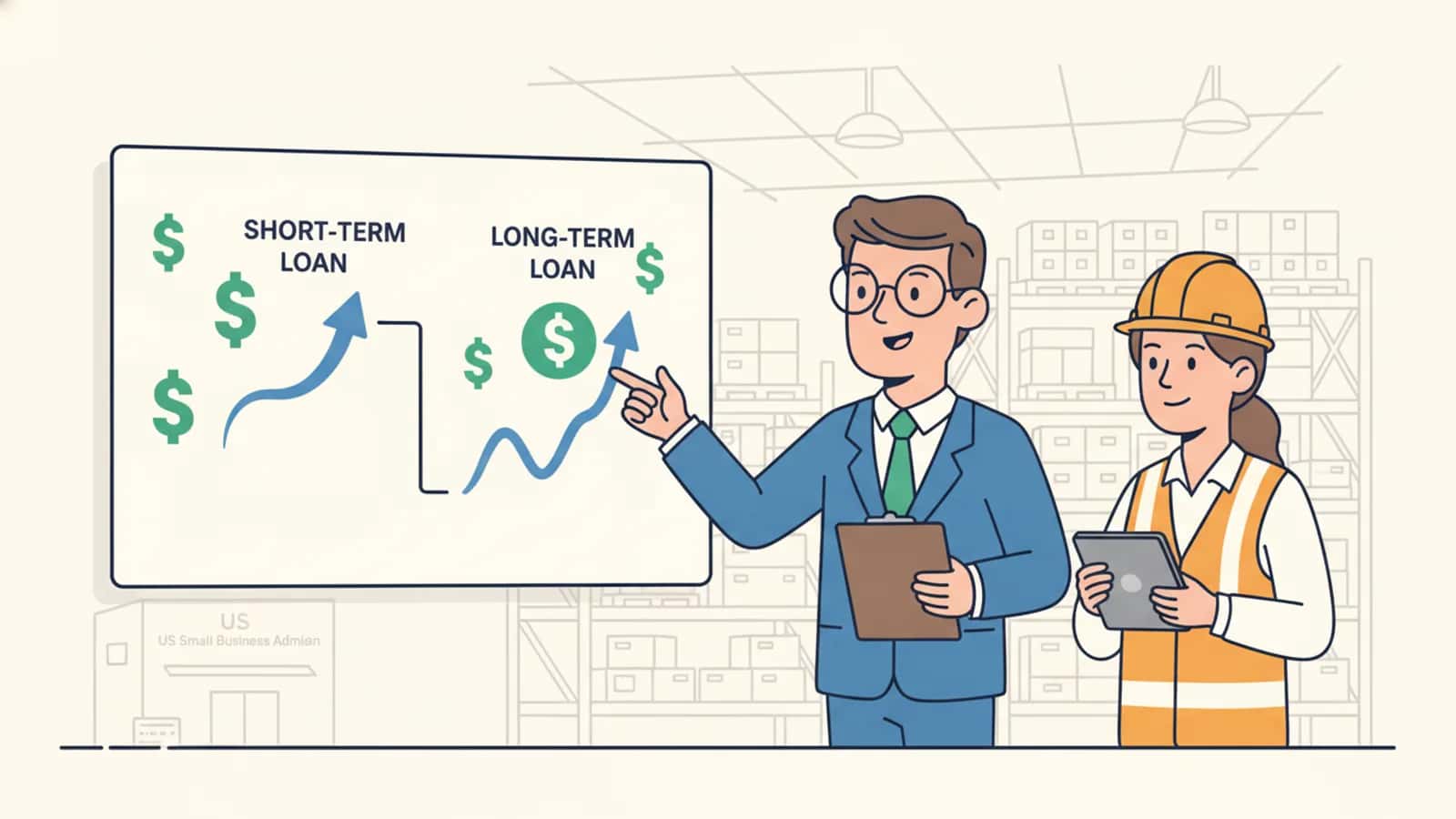
Short-term business loans typically cost 18-60% APR over 3-18 months with daily or weekly payments, while long-term loans range 7-18% APR over 2-10 years with monthly payments. Short-term loans fit immediate cash-flow gaps like inventory purchases or bridging receivables, but their higher rates and frequent payments can strain liquidity. Long-term loans cost less monthly and suit equipment purchases or expansion, though they require stronger credit and longer approval times.
Key takeaways
- Short-term loans fund in 24-72 hours but cost significantly more, often 18-60% APR versus 7-18% for long-term options
- Payment frequency matters more than total interest - daily payments can crush cash flow even on smaller loan amounts
- Choose short-term only when payback aligns with near-term receivables or seasonal revenue spikes
- Long-term loans require stronger financials but offer lower monthly payments and predictable cash flow impact
- SBA loans remain among the most cost-effective long-term options at 9.75-14.75% APR with government backing
- Revenue-based financing is blurring traditional loan categories by tying payments to actual business performance
- Bank underwriting has tightened for borrowers under 680 FICO or $50,000 monthly revenue, pushing more businesses toward higher-cost alternatives
What's the Difference Between Short-Term and Long-Term Business Loans
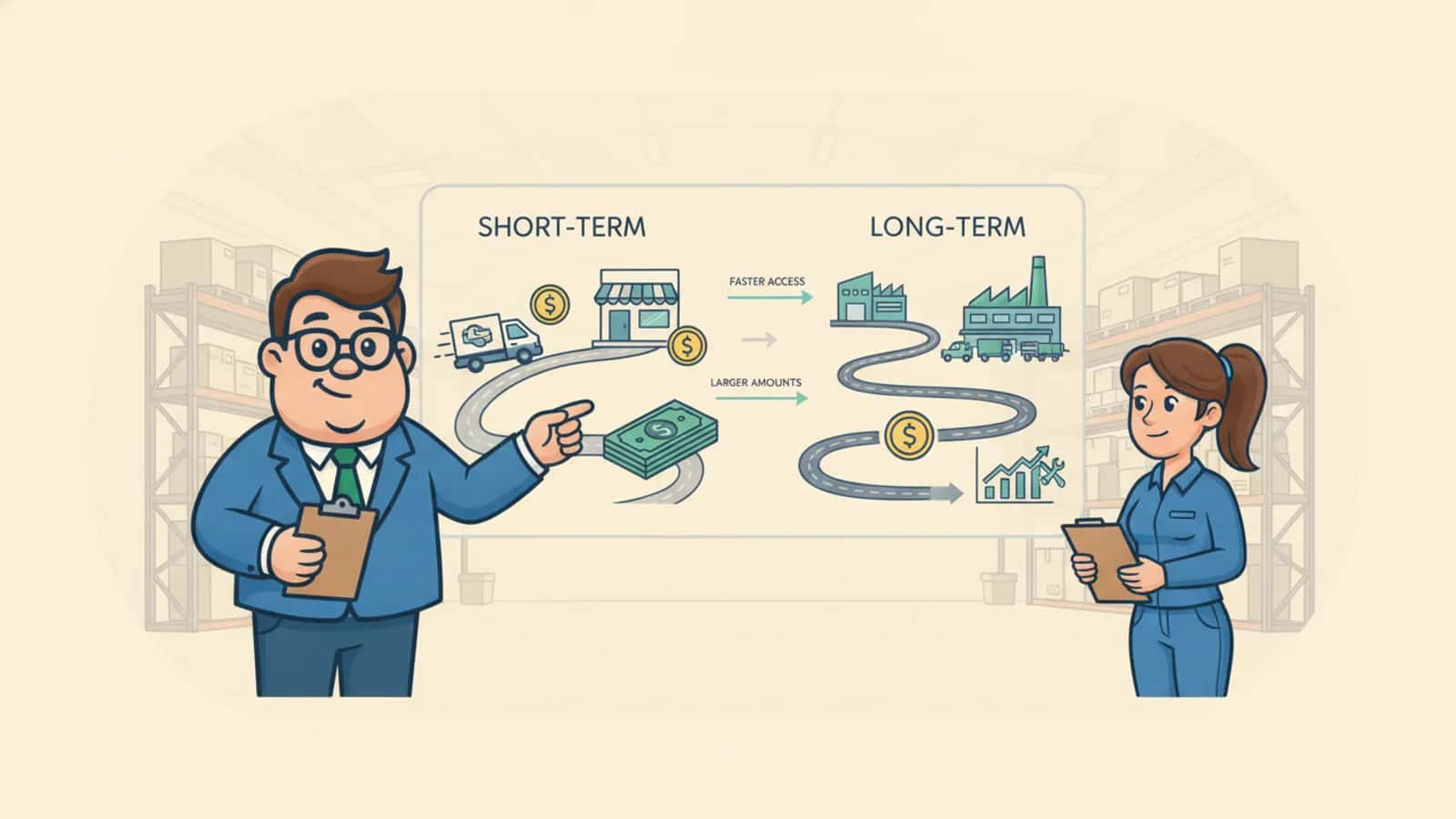
Short-term business loans are designed for immediate funding needs with repayment periods of 3-18 months, while long-term loans extend 2-10+ years for larger investments. The fundamental difference lies in speed versus cost - short-term loans fund within 24-72 hours but carry much higher interest rates and more frequent payment schedules.
Short-term loans typically range from $10,000 to $500,000 and focus on working capital needs like inventory purchases, payroll gaps, or bridging receivables delays. They often require daily or weekly payments that align with cash flow cycles but can create significant payment pressure.
Long-term loans generally offer $50,000 to $5 million for equipment purchases, real estate, major renovations, or business acquisitions. These loans require more extensive underwriting, including detailed financial statements, business plans, and collateral evaluation, but provide predictable monthly payments that are easier to budget around.
Key structural differences
- Approval timeline: Short-term loans decide in hours or days; long-term loans take weeks
- Documentation: Short-term requires basic bank statements; long-term needs full financial packages
- Collateral: Short-term often uses UCC liens on business assets; long-term may require real estate or equipment pledges
- Payment structure: Short-term uses daily/weekly debits; long-term uses monthly payments
The choice between short-term vs long-term business loans for cost and cash-flow fit depends entirely on your funding timeline and ability to handle payment frequency.
How Interest Rates Compare Between Short-Term and Long-Term Loans
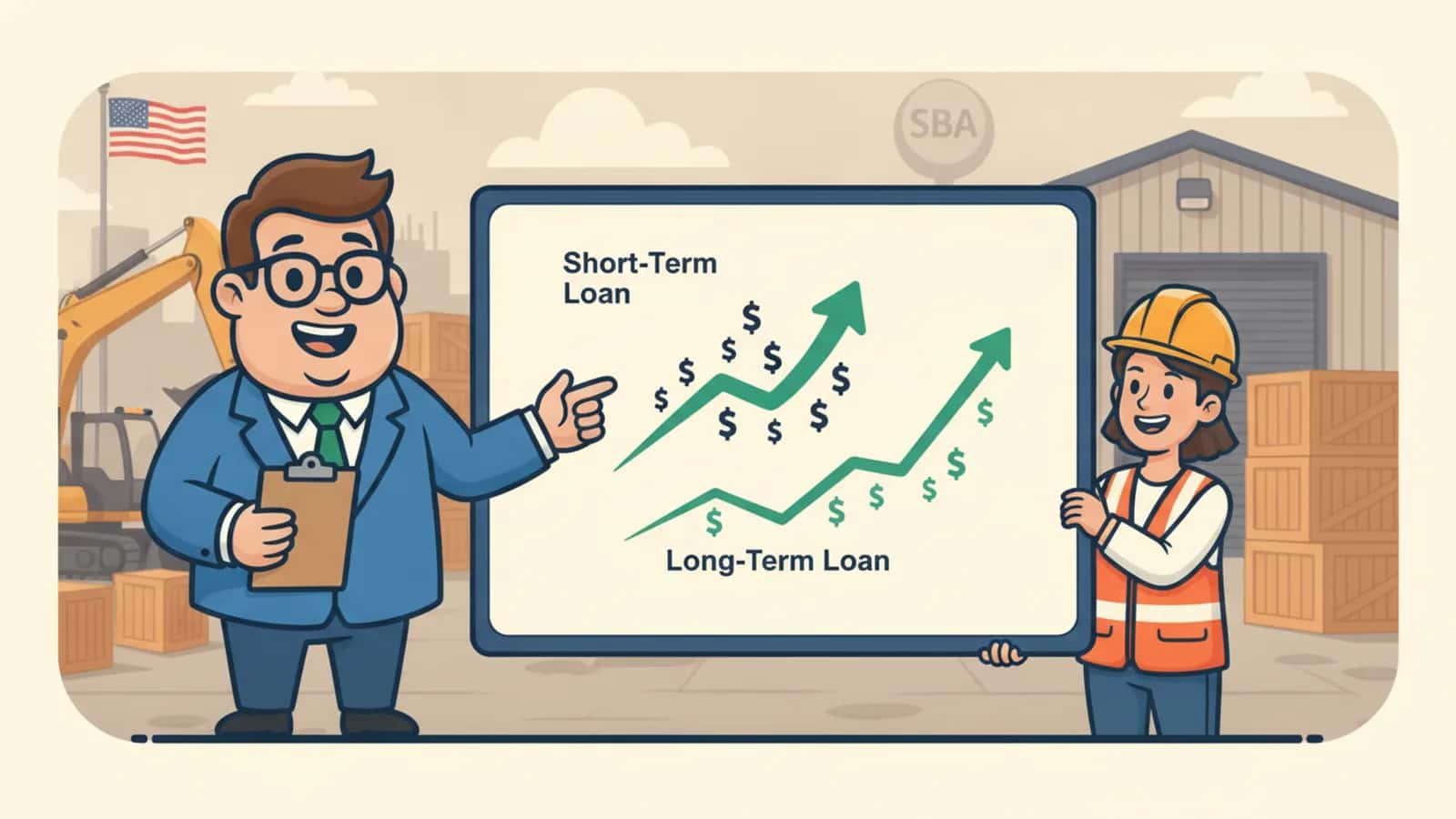
Short-term business loans carry substantially higher interest rates, typically ranging from 18-60% APR, while long-term loans generally fall between 7-18% APR as of 2026. This rate difference reflects the higher risk and operational costs of fast, minimally-underwritten lending.
Bank term loans over 3-10 years often price between 8.5-14% APR for qualified borrowers with strong credit and established revenue. SBA loans, which represent some of the most favorable long-term financing, currently range from approximately 9.75-14.75% APR with government backing.
Alternative short-term lenders commonly charge 22-35% APR for "clean" borrower profiles, with rates climbing to 60% or higher for businesses with credit challenges or limited operating history. These rates reflect the speed and convenience of approval but create significant carrying costs.
Bank Term Loans
- Typical APR Range
- 8.5-14%
- Term Length
- 3-10 years
- Best For
- Equipment, expansion
SBA Loans
- Typical APR Range
- 9.75-14.75%
- Term Length
- 5-25 years
- Best For
- Real estate, major investments
Alternative Term Loans
- Typical APR Range
- 18-60%
- Term Length
- 6-60 months
- Best For
- Working capital, fast funding
Short-Term Loans
- Typical APR Range
- 18-80%+
- Term Length
- 3-18 months
- Best For
- Immediate cash flow gaps
The rate gap exists because short-term lenders accept higher default risk in exchange for faster decisions and lighter documentation requirements. However, businesses often underestimate how quickly high rates compound over time, making long-term options significantly more cost-effective when approval timelines allow.
Which Loan Type Is Better for Cash Flow Management
Long-term loans generally provide better cash flow management through lower monthly payments and predictable payment schedules, while short-term loans can severely strain liquidity despite solving immediate funding needs. The payment frequency often matters more than the total interest amount when evaluating cash-flow fit.
Short-term loans typically require daily or weekly automatic debits that can range from $500 to $5,000+ per payment depending on loan size. This creates constant pressure on operating cash flow and requires very predictable revenue streams to avoid payment failures.
Long-term loans spread payments across years with fixed monthly amounts, making them easier to budget around and less likely to conflict with seasonal revenue fluctuations. A $100,000 long-term loan at 12% APR over 5 years costs approximately $2,224 monthly, compared to a short-term loan that might require $1,500-2,500 weekly.
Cash flow considerations for each option
- Short-term loans: Best when you have confirmed receivables or seasonal revenue spikes that will cover frequent payments
- Long-term loans: Better for businesses with steady monthly cash flow that can absorb consistent payment obligations
- Payment timing: Short-term payments often align with daily sales cycles; long-term payments need monthly budgeting discipline
Choose short-term only when the underlying cash flow cycle is short and predictable, such as inventory that turns quickly or contracts with defined payment schedules. For ongoing operations or growth investments, long-term loans provide more manageable cash flow impact.
Typical Repayment Periods for Short-Term vs Long-Term Business Loans
Short-term business loans typically run 3-18 months, with some extending to 24 months, while long-term loans range from 2-10 years for standard term loans and up to 25 years for SBA real estate financing. The repayment period directly affects both monthly payment amounts and total interest costs.
Most short-term lenders structure repayment around business cash flow cycles, offering daily or weekly payment options that total 12-52 payments over the loan term. This frequent payment schedule requires businesses to have consistent daily revenue streams.
Long-term loans use traditional monthly payment schedules over much longer periods:
- Standard bank term loans:
- 2-7 years typical
- SBA 7(a) loans:
- Up to 10 years for working capital, 25 years for real estate
- Equipment financing:
- 3-10 years depending on asset useful life
- Commercial real estate loans:
- 10-25 years with potential balloon payments
Repayment structure examples
- $50,000 short-term loan (12 months): Approximately $1,200 weekly payments
- $50,000 long-term loan (5 years): Approximately $1,100 monthly payments
- $200,000 SBA loan (10 years): Approximately $2,300 monthly payments
The longer repayment period of long-term loans reduces payment pressure but increases total interest paid over the loan life. However, this trade-off often improves cash flow management and business stability.
Total Cost Comparison: Short-Term vs Long-Term Business Loans
The total cost difference between short-term vs long-term business loans for cost and cash-flow fit can be dramatic, even though short-term loans involve less total interest due to their brief duration. A $100,000 short-term loan at 30% APR over 12 months costs approximately $16,616 in interest, while a long-term loan at 12% APR over 5 years costs $33,439 in total interest.
However, the monthly cash flow impact tells a different story. The short-term loan requires approximately $9,718 monthly payments, while the long-term loan needs only $2,224 monthly - a difference that can determine business survival during cash flow challenges.
Real-world cost comparison for $100,000:
Short-term option (12 months, 30% APR)
- Monthly payment: $9,718
- Total interest: $16,616
- Cash flow impact: High stress, requires $2,400+ weekly revenue
Long-term option (5 years, 12% APR)
- Monthly payment: $2,224
- Total interest: $33,439
- Cash flow impact: Manageable for most established businesses
The key insight is that short-term loans cost less in absolute dollars but create much higher payment pressure. Many businesses that choose short-term loans for their lower total cost end up refinancing or stacking additional loans because the payment schedule proves unsustainable.
Hidden cost factors
- Origination fees: Short-term loans often charge 2-5% upfront
- Factor rates: Some short-term products use factor rates (1.1-1.5x) instead of APR, obscuring true costs
- Renewal costs: Short-term borrowers often need multiple loan cycles, compounding total costs
For our term loan vs line of credit comparison, lines of credit can provide a middle ground for businesses needing flexible access to capital without committing to high-cost short-term loans.
When to Choose Short-Term Instead of Long-Term Loans
Choose short-term business loans when you need immediate funding for specific, revenue-generating activities with quick payback periods, such as inventory purchases before peak seasons or bridging receivables gaps from large customer orders. Short-term loans work best when the funded activity generates cash flow within the loan term.
Ideal scenarios for short-term loans
- Seasonal inventory: Purchasing holiday merchandise with confirmed sales projections
- Contract fulfillment: Covering materials and labor costs for signed projects
- Receivables bridge: Funding operations while waiting for large customer payments
- Emergency repairs: Fixing critical equipment that directly impacts revenue generation
- Marketing campaigns: Funding advertising with measurable, short-term ROI
Short-term loans become problematic when used for ongoing operational expenses, long-term investments, or speculative growth activities without confirmed revenue streams. The high payment frequency requires predictable cash inflows that match the repayment schedule.
When long-term loans make more sense
- Equipment purchases with multi-year useful life
- Business expansion or renovation projects
- Debt consolidation to improve cash flow
- Working capital for steady, growing businesses
- Real estate purchases or major facility improvements
The decision often comes down to cash flow predictability. If you can confidently project daily or weekly revenue that covers loan payments, short-term loans provide fast access to capital. If your revenue is monthly or seasonal, long-term loans offer more manageable payment structures.
For businesses considering SBA 7(a) vs online business loans, the SBA route typically offers better long-term value despite longer approval times.
Can You Switch from Short-Term to Long-Term Loans
Yes, you can refinance from short-term to long-term business loans, and many businesses use this strategy to reduce payment pressure and improve cash flow management. However, refinancing requires qualifying for the long-term loan while managing existing short-term payment obligations.
The refinancing process typically involves applying for a long-term loan large enough to pay off the existing short-term debt plus any additional capital needs. This strategy works best when your business has improved its financial position since taking the original short-term loan.
Refinancing requirements
- Improved credit profile: Higher business credit scores and payment history
- Stronger financials: Increased revenue and profitability since the short-term loan
- Debt service coverage: Ability to demonstrate cash flow supports new payment structure
- Time in business: Many long-term lenders require 2+ years operating history
Benefits of refinancing to long-term
- Lower monthly payments improve cash flow
- Reduced interest rates decrease total borrowing costs
- Predictable payment schedules simplify budgeting
- Potential access to larger loan amounts for growth
Potential challenges
- Prepayment penalties on existing short-term loans
- More extensive underwriting requirements
- Longer approval timelines while managing current payments
- Personal guarantee requirements for long-term loans
Many businesses successfully use short-term loans as bridge financing while preparing for long-term funding. This approach requires careful timing but can provide immediate capital access followed by more sustainable payment structures.
Our guide on refinancing business loans provides detailed strategies for transitioning between loan types effectively.
Hidden Fees in Short-Term Business Loans
Short-term business loans often carry significant hidden fees that can add 5-15% to the total borrowing cost, including origination fees, factor rates, daily fee structures, and prepayment penalties that aren't always clearly disclosed upfront. Understanding these fees is crucial for accurate cost comparison.
Common hidden fees in short-term loans
- Origination fees: 2-6% of loan amount, often deducted from funding
- Factor rates: Presented as 1.1-1.5x multipliers instead of APR, obscuring true interest costs
- Daily fees: Fixed daily charges that continue regardless of principal balance
- ACH fees: $5-25 per automatic payment, adding up quickly with daily payments
- Late payment penalties: 5-10% of missed payment amount
- Prepayment penalties: Fees for paying off loans early, sometimes the full remaining interest
Factor rate confusion: Many short-term lenders quote factor rates (like 1.25x) instead of APR. A $50,000 loan with a 1.25 factor rate means you repay $62,500 total. Over 12 months, this equals approximately 45% APR, but lenders may not clearly state this equivalent rate.
Fee disclosure problems
- Important fees buried in lengthy agreements
- APR calculations that exclude certain fees
- Automatic renewal clauses with additional fees
- Processing fees for routine account maintenance
Questions to ask before signing
- What is the true APR including all fees?
- Are there penalties for early repayment?
- What happens if an automatic payment fails?
- Are there any recurring fees beyond interest?
Always request a complete fee schedule and calculate the total cost of borrowing including all charges. Many businesses discover that advertised rates represent only a portion of actual borrowing costs.
Which Businesses Need Short-Term vs Long-Term Loans
Businesses with seasonal revenue cycles, project-based income, or immediate cash flow gaps typically benefit from short-term loans, while companies making equipment purchases, expanding operations, or needing predictable payment structures should consider long-term financing. Industry type and cash flow patterns determine the best fit.
Industries that often need short-term loans
- Retail: Seasonal inventory purchases before peak selling periods
- Construction: Materials and labor costs for specific contracted projects
- Restaurants: Equipment repairs or marketing campaigns with quick ROI
- E-commerce: Inventory purchases based on confirmed demand or seasonal trends
- Professional services: Bridging receivables gaps from large client projects
Industries better suited for long-term loans
- Manufacturing: Equipment purchases with multi-year depreciation schedules
- Healthcare practices: Facility build-outs and expensive medical equipment
- Transportation: Vehicle purchases and fleet expansion
- Real estate: Property purchases and major renovation projects
- Franchises: Initial investment and multi-location expansion
Business characteristics favoring short-term loans
- Daily or weekly revenue streams
- Predictable seasonal patterns
- Project-based cash flow
- Immediate funding needs (under 72 hours)
- Lower loan amounts (under $250,000)
Business characteristics favoring long-term loans
- Steady monthly revenue
- Established operating history (2+ years)
- Strong credit profiles
- Larger funding needs ($100,000+)
- Multi-year investment payback periods
The 2026 lending landscape shows that non-bank funders have become the primary capital source for loans under $250,000, particularly for working capital and short-term needs, while banks focus on larger, longer-term relationships.
For specific industry guidance, see our specialized guides for restaurant business loans and trucking business loans.
What Happens If You Can't Pay Back a Short-Term Loan on Time
Missing payments on short-term business loans triggers immediate consequences including daily late fees, accelerated payment demands, and potential asset seizure under UCC liens, with less flexibility for workout arrangements compared to long-term loans. The frequent payment schedule means problems escalate quickly.
Immediate consequences of missed payments
- Late fees: Typically 5-10% of the missed payment amount
- Increased payment frequency: Some lenders switch to daily debits after missed payments
- Account freezes: Automatic debits may continue even if they overdraw accounts
- Default acceleration: Entire loan balance may become due immediately
- Credit reporting: Negative marks appear on business and personal credit reports
Asset and collateral risks: Most short-term loans include UCC liens on business assets, inventory, and accounts receivable. Unlike long-term loans with specific collateral, these blanket liens can affect all business property and make it difficult to secure additional financing.
Limited workout options: Short-term lenders typically offer fewer modification options compared to banks. The high-volume, automated nature of these loans means less personalized attention to payment difficulties.
Strategies if facing payment problems
- Contact lender immediately: Early communication may prevent default acceleration
- Document cash flow issues: Provide specific timeline for resolution
- Request payment modification: Some lenders offer temporary payment reductions
- Consider refinancing: Long-term loans can provide payment relief if you qualify
- Prioritize secured debts: Focus on loans with UCC liens or personal guarantees
Prevention strategies
- Maintain cash reserves equal to 2-3 months of loan payments
- Monitor daily cash flow closely with short-term loans
- Have backup funding sources arranged before problems arise
- Consider payment timing when structuring loan terms
The compressed timeline of short-term loans leaves little room for financial recovery, making cash flow management and backup planning essential for successful repayment.
Qualification Requirements: Short-Term vs Long-Term Loans
Short-term business loans typically require minimal documentation - often just 3-6 months of bank statements and basic business information - while long-term loans demand comprehensive financial packages including tax returns, financial statements, business plans, and collateral documentation. Credit requirements also differ significantly between the two options.
Short-term loan qualification (typical minimums)
- 6+ months in business
- $10,000+ monthly revenue
- 500+ personal credit score
- Business bank account with recent activity
- Basic business registration verification
Long-term loan qualification (typical requirements)
- 2+ years in business
- $50,000+ annual revenue
- 680+ personal credit score
- Detailed financial statements
- Business tax returns (2-3 years)
- Collateral documentation
- Business plan for loan purpose
The 2026 lending environment shows banks tightening underwriting standards, particularly for borrowers under 680 FICO scores or $50,000 monthly revenue, pushing more businesses toward higher-cost short-term alternatives.
Documentation comparison:
| Requirement | Short-Term Loans | Long-Term Loans |
|---|---|---|
| Bank Statements | 3-6 months | 12+ months |
| Tax Returns | Often not required | 2-3 years required |
| Financial Statements | Basic P&L acceptable | Audited or reviewed statements |
| Business Plan | Not typically required | Required for most loans |
| Collateral Appraisal | UCC lien filing only | Professional appraisals required |
Credit score impact: Short-term lenders often accept lower credit scores but compensate with higher interest rates. Long-term lenders typically require stronger credit profiles but offer significantly better pricing for qualified borrowers.
For businesses that don't meet traditional bank requirements, our business loan qualification guide provides strategies for improving eligibility over time.
How Loan Term Length Affects Monthly Payments
Loan term length has an inverse relationship with monthly payment amounts - longer terms create lower monthly payments but higher total interest costs, while shorter terms increase monthly payments but reduce total borrowing costs. This relationship is crucial for matching short-term vs long-term business loans to cost and cash-flow fit.
Payment calculation examples for $100,000 loan at 12% APR
- 1 year term: $8,885 monthly payment, $6,620 total interest
- 3 year term: $3,321 monthly payment, $19,556 total interest
- 5 year term: $2,224 monthly payment, $33,440 total interest
- 10 year term: $1,434 monthly payment, $72,080 total interest
The dramatic difference in monthly payments explains why businesses often choose longer terms despite higher total costs. A $6,661 difference in monthly payments (1-year vs 10-year) can determine whether a business can handle the debt service.
Cash flow considerations by term length
- Short terms (1-3 years): High monthly payments require strong, consistent cash flow
- Medium terms (3-7 years): Balanced approach for established businesses with steady revenue
- Long terms (7+ years): Lower payments but significant total interest costs over time
Industry-specific term preferences
- High-margin businesses: Can often handle shorter terms for interest savings
- Seasonal businesses: Prefer longer terms to smooth payment impact during slow periods
- Growth-stage companies: Often need longer terms to preserve cash flow for operations
- Mature businesses: May choose shorter terms to minimize total borrowing costs
Strategic term selection: Choose the shortest term your cash flow can comfortably handle while maintaining operating reserves. Many businesses benefit from slightly longer terms than the minimum they can afford, providing cushion for unexpected expenses or revenue fluctuations.
The payment structure difference between short-term daily payments and long-term monthly payments often matters more than the term length itself for cash flow management.
Next steps
The choice between short-term vs long-term business loans for cost and cash-flow fit depends on your specific funding timeline, payment capacity, and underlying business needs. Short-term loans provide immediate capital access but require careful cash flow management due to high rates and frequent payments. Long-term loans offer more sustainable payment structures and lower costs for businesses that can meet stricter qualification requirements and longer approval timelines.
Most successful businesses use short-term loans only for immediate, revenue-generating activities with predictable payback periods, while relying on long-term financing for equipment, expansion, and other multi-year investments. The key is matching loan structure to your actual cash flow patterns rather than simply choosing the lowest advertised rate.
Ready to explore your funding options? Funding Fred's platform provides a fast eligibility check across multiple US funding partners without hard credit pulls or upfront financials. Our revenue-led matching process helps you understand what you might qualify for across $10k to $5m, whether you need short-term working capital or long-term growth financing.
Check Eligibility Now - No obligation to proceed, and our business verification process ensures you're connected with legitimate funding partners that match your industry and revenue profile.
Frequently asked questions
What's the Difference Between Short-Term and Long-Term Business Loans?
Short-term business loans are designed for immediate funding needs with repayment periods of 3-18 months, while long-term loans extend 2-10+ years for larger investments. The fundamental difference lies in speed versus cost - short-term loans fund within 24-72 hours but carry much higher interest rates and more frequent payment schedules.
How Interest Rates Compare Between Short-Term and Long-Term Loans?
Short-term business loans carry substantially higher interest rates, typically ranging from 18-60% APR, while long-term loans generally fall between 7-18% APR as of 2026. This rate difference reflects the higher risk and operational costs of fast, minimally-underwritten lending.
Which Loan Type Is Better for Cash Flow Management?
Long-term loans generally provide better cash flow management through lower monthly payments and predictable payment schedules, while short-term loans can severely strain liquidity despite solving immediate funding needs. The payment frequency often matters more than the total interest amount when evaluating cash-flow fit.
When to Choose Short-Term Instead of Long-Term Loans?
Choose short-term business loans when you need immediate funding for specific, revenue-generating activities with quick payback periods, such as inventory purchases before peak seasons or bridging receivables gaps from large customer orders. Short-term loans work best when the funded activity generates cash flow within the loan term.
Can You Switch from Short-Term to Long-Term Loans?
Yes, you can refinance from short-term to long-term business loans, and many businesses use this strategy to reduce payment pressure and improve cash flow management. However, refinancing requires qualifying for the long-term loan while managing existing short-term payment obligations.
Which Businesses Need Short-Term vs Long-Term Loans?
Businesses with seasonal revenue cycles, project-based income, or immediate cash flow gaps typically benefit from short-term loans, while companies making equipment purchases, expanding operations, or needing predictable payment structures should consider long-term financing. Industry type and cash flow patterns determine the best fit.
Written by
The Funding Fred Editorial Team creates plain-English guides to help business owners understand funding options, eligibility, and application readiness before they compare finance options.
Reviewed by
Business finance content reviewer
Robert reads our business finance guides before they go live, checking each one is accurate, easy to follow, and reflects how lending actually works today — not how a brochure says it should. He's listed on the UK's FCA Register, approved as an SMF3 (AR) Executive Director at Switcha Limited, and connected to Lucky Growth Partners Ltd through its appointed representative relationship, so each guide gets a properly qualified second read.