Business Loan Interest Rates UK: What Lenders Charge and What Moves Your Rate
Business loan interest rates UK-wide sit above the Bank of England's base rate, which has been held at 3.75% since September 2026. The OECD's latest country note puts the weighted average rate on all new UK SME loans at 7.51% for Q1 2026, though your actual quote depends on credit profile, security, loan term and lender type.

Quick answer
Business loan interest rates UK-wide sit above the Bank of England's base rate, which has been held at 3.75% since September 2026. The OECD's latest country note puts the weighted average rate on all new UK SME loans at 7.51% for Q1 2026, though your actual quote depends on credit profile, security, loan term and lender type. There is no single "average business loan interest rate" that applies to every applicant, pricing is personal, not published.
Key takeaways
- Bank Rate has stayed at 3.75% for six consecutive Monetary Policy Committee meetings, the lowest level since February 2023.
- The OECD reports a weighted average rate of 7.51% on new UK SME loans across fixed and floating products in Q1 2026, a useful benchmark, not a quote.
- Lenders price loans as Bank Rate plus a margin that reflects your risk, sector, trading history and whether the loan is secured.
- APR, flat rates and factor rates are calculated differently, so always convert to APR before comparing offers.
- Arrangement fees, early repayment charges and broker fees can add meaningfully to the headline rate.
- Secured loans and government-backed schemes may reduce risk for the lender, but that does not guarantee you a lower rate.
- A clean Open Banking trading picture and realistic repayment plan usually do more for your rate than chasing a specific lender.
- Missing a payment can trigger default fees, a higher rate on some products, or a formal review of your facility.
What are typical business loan interest rates UK right now?

There is no fixed "typical" business loan interest rate because pricing depends on the borrower, not just the market. What's verifiable is the backdrop: Bank Rate is 3.75%, held there since the Bank of England's Monetary Policy Committee voted 6-3 to hold in September 2026, with three members preferring a rise to 4.0%. The OECD separately reports that the weighted average rate on all new UK SME loans was 7.51% in Q1 2026.
Those two numbers tell a story: lenders are not pricing anywhere near the base rate alone. They add a margin that reflects:
- How risky your sector looks right now (hospitality and construction are priced differently to dental or logistics).
- Whether the loan is secured against assets or unsecured.
- Your trading history and current cash flow, not just your personal credit score.
- The loan term and size.
Decision rule: if a quote comes in well below the OECD's 7.51% SME average, check whether it's secured, short-term, or has fees stacked elsewhere. If it's well above, ask the lender to explain the risk factors driving the margin, a fair lender will.
For a longer-running breakdown of how these figures shift over time, see our average business loan interest rates tracker.
How do banks decide what interest rate to charge on a business loan?
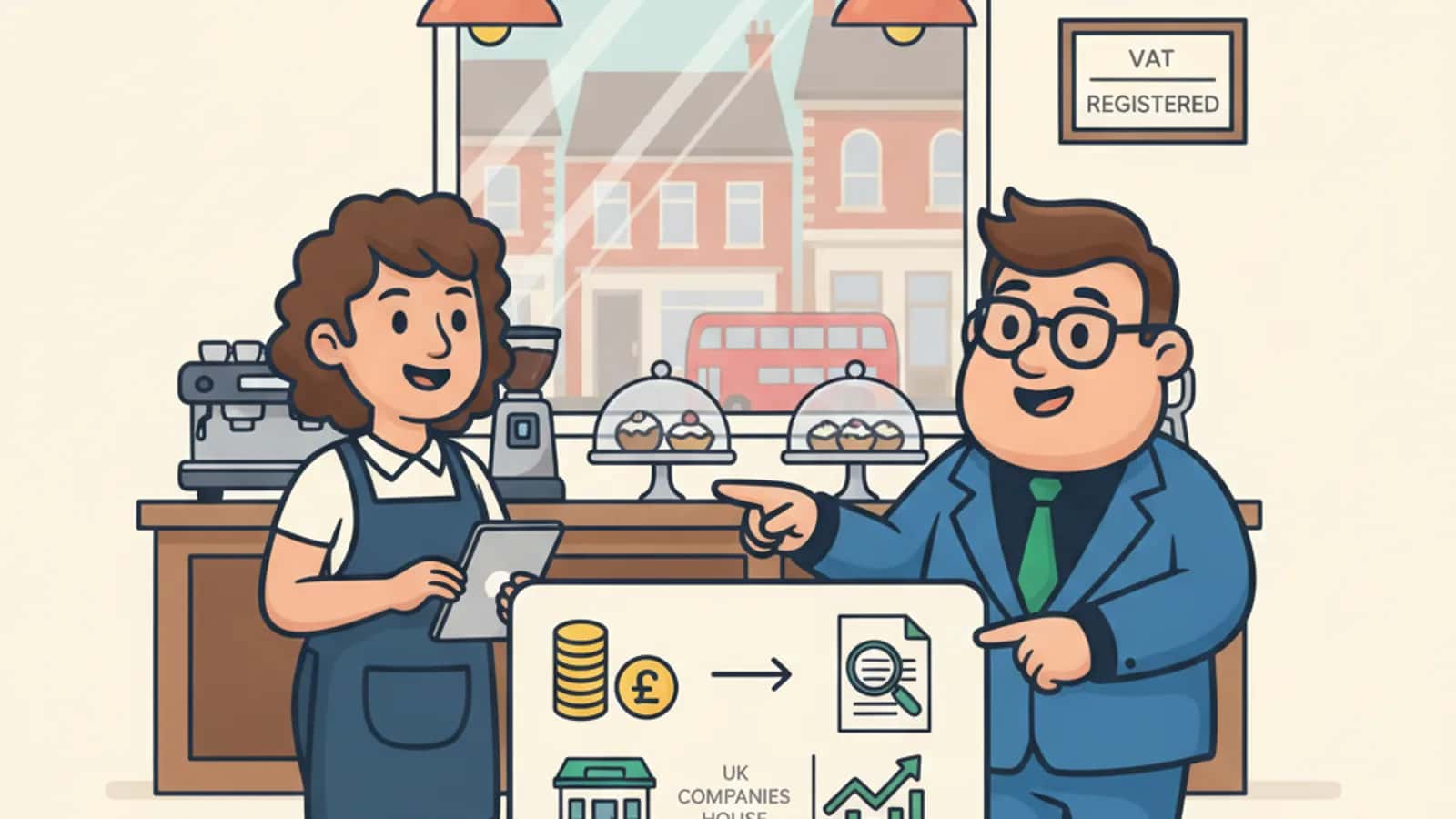
Banks and alternative lenders build your rate from two layers: the cost of their own funding (linked to Bank Rate) and a risk margin specific to your application. The higher the perceived risk, the wider that margin.
Lenders typically assess:
- Trading performance
- , turnover, margins, seasonality, and whether revenue is growing or shrinking.
- Credit history
- , both business and, for many SMEs, the director's personal credit file.
- Security offered
- , a charge over property or assets can change the risk calculation.
- Loan purpose and term
- , working capital bridges are priced differently to five-year expansion loans.
- Sector risk
- , some industries carry higher default rates industry-wide, regardless of your own numbers.
What credit score do I need for a good business loan rate?
There is no single credit score threshold published by lenders or regulators for "a good rate", each lender sets its own criteria and weighs credit score against trading performance differently. Businesses with a strong, consistent trading history sometimes secure competitive pricing even with an imperfect personal credit file, because many alternative lenders weight current cash flow and Open Banking data more heavily than a historic credit score. If your bank has already said no on credit grounds alone, that doesn't mean every lender will reach the same conclusion, see our guide on business loan eligibility criteria for what different lender types actually check.
Do startups get charged more for business loans?
Startups and newer companies typically face wider risk margins because lenders have less trading history to assess, not because of a published "startup surcharge." Lenders cannot yet see two or three years of consistent revenue, so they lean more heavily on director credit history, forecasts, and sometimes a personal guarantee. This doesn't mean funding is unavailable, it means the application needs to work harder to prove affordability. Read our breakdown of personal guarantees on business loans if a lender has asked for one as a condition of approval.
Fixed vs variable rate business loans: what's the difference?
A fixed-rate business loan keeps the same interest rate for the full term, so your repayment never moves regardless of what the Bank of England does. A variable-rate loan moves with a reference rate, usually Bank Rate plus a margin, so your repayment can rise or fall at review points.
| Feature | Fixed rate | Variable rate |
|---|---|---|
| Repayment certainty | Repayment stays the same every month | Repayment can change if Bank Rate moves |
| Best suited to | Businesses that want predictable budgeting | Businesses comfortable with some repayment flexibility |
| Risk if rates rise | None, you're locked in | Repayments could increase |
| Risk if rates fall | You keep paying the original rate | You may benefit from a lower repayment |
| Common products | Term loans, some unsecured facilities | Overdrafts, some revolving credit lines |
Choose fixed if you need certainty for cash flow planning over a multi-year term. Choose variable if your facility is short-term and you want to benefit from any future rate softening.
How much does the Bank of England base rate affect my business loan?
Bank Rate directly affects variable-rate business loans and indirectly influences the pricing of new fixed-rate offers. With Bank Rate held at 3.75% for six consecutive MPC meetings, existing variable-rate borrowers have seen stable, not falling, repayments, while new fixed-rate quotes continue to reflect lenders' expectations about where rates are heading next. Commentary following the September 2026 decision noted that inflation pressure linked to energy costs limits the Bank's room to cut further in the near term, and some analysts flag a growing chance of a rise to 4.0% before year end. If your loan tracks Bank Rate plus a margin, the next scheduled MPC decision on 5 November 2026 is the date to watch.
APR vs flat rates vs factor rates: how do they differ?
APR (Annual Percentage Rate) reflects the true annual cost of borrowing, including most fees, calculated on the reducing balance. A flat rate is calculated on the original loan amount for the whole term, which makes it look lower than the equivalent APR. A factor rate (common with merchant cash advances) isn't a percentage rate at all, it's a multiplier applied to the amount advanced.
Illustrative example only, not a quoted rate:
Say a lender offers a flat rate of 1% per month on a £40,000 loan over 24 months. The total interest charged stays fixed on the original £40,000 throughout, even as the balance reduces. Converted to an APR-style reducing-balance basis, that flat rate translates to a noticeably higher effective APR, because you're paying interest on money you've already repaid. This is exactly why comparing two "1% a month" offers side by side can be misleading, always ask for the APR equivalent before you commit.
Factor rates work differently again. A factor of 1.2 on a £20,000 advance means you repay £24,000 in total, usually collected as a percentage of daily card sales rather than fixed monthly instalments. There's no interest "rate" to compare like-for-like with a term loan, you're comparing total cost of capital instead.
For a side-by-side method of comparing these structures properly, see how to compare business loans.
What fees should I expect on top of the interest rate?
The headline interest rate rarely tells the whole story, most business loans carry additional fees that affect the real cost of borrowing. Common ones include:
- Arrangement fees
- , charged for setting up the facility, usually deducted from the amount advanced or added to the balance.
- Early repayment charges
- , some lenders charge for clearing the loan ahead of schedule; others don't, so always ask.
- Broker fees
- , if you use an intermediary, check whether they charge you directly or are paid by the lender.
- Late payment or default fees
- , triggered if a scheduled repayment is missed.
Can I negotiate my business loan interest rate?
Some negotiation room exists, particularly with alternative lenders comparing multiple offers, but banks with fixed underwriting criteria often have less flexibility on the headline rate itself. You're more likely to influence the outcome by improving what you bring to the table, stronger management accounts, a shorter term, added security, or evidence of consistent trading, than by simply asking for a discount. If one lender declines or quotes a high margin, getting a second view from a different lender type is usually more productive than negotiating with the first.
Do secured loans and government-backed schemes cost less?
Secured loans can reduce a lender's risk, which sometimes supports a more competitive margin, but security alone doesn't guarantee a lower rate, affordability and trading performance still matter. Government-backed schemes, such as those facilitated through the British Business Bank, work by sharing lender risk through a guarantee; this can widen the pool of businesses a lender is willing to fund, but the British Business Bank does not set or cap the interest rate itself, participating lenders price each facility individually based on their own criteria. Always check the specific lender's terms rather than assuming a government-backed label means cheaper borrowing.
How can I get the lowest possible interest rate on a business loan?
The fastest route to a competitive rate is giving lenders a clear, accurate picture of your trading position before they have to guess. Lenders price risk conservatively when information is thin, so a tidy application usually earns a tighter margin.
Application-readiness checklist
- At least 3-6 months of recent business bank statements, ready to share via Open Banking or upload.
- Management accounts or latest filed accounts from Companies House.
- A clear statement of loan purpose and realistic repayment plan.
- Up-to-date HMRC filings (VAT, PAYE) with no outstanding arrears.
- A short explanation of any past credit issues, with evidence trading has since stabilised.
- Confirmation of any existing debt or security already in place.
Beyond paperwork, three things consistently move the needle: shortening the term where affordability allows, offering security only where it genuinely improves your position, and comparing more than one lender type rather than accepting the first offer. Businesses weighing up secured, unsecured, and cash-advance structures side by side often find the cheapest overall option isn't the one with the lowest headline rate, see our business loan repayment examples for worked comparisons across structures.
For businesses that want speed without the usual bank paperwork, Funding Fred runs a soft-search eligibility check that uses Open Banking to assess current trading rather than relying solely on a historic credit score.
Traditional Banks vs Lenders via Funding Fred
| Traditional Banks | Lenders via Funding Fred |
|---|---|
| Slow, paperwork-heavy decisions | Fast decision using a 2 min check |
| Strict, rigid credit criteria | Flexible criteria, all credit types considered |
| One lender, one answer | Compare selected finance partners across a wide partner panel |
Slow, paperwork-heavy decisions
- Lenders via Funding Fred
- Fast decision using a 2 min check
Strict, rigid credit criteria
- Lenders via Funding Fred
- Flexible criteria, all credit types considered
One lender, one answer
- Lenders via Funding Fred
- Compare selected finance partners across a wide partner panel
No hard check to start. No obligation to proceed. Funding Fred does not charge you for using the service.
Are business loan rates higher or lower than personal loans?
Business loan rates and personal loan rates aren't directly comparable because lenders assess them on entirely different criteria, personal loans are priced mainly on individual credit score and income, while business loans weigh trading performance, sector risk, and company credit alongside the director's personal profile. It's a common assumption that business borrowing is automatically cheaper, but that's not guaranteed; a strong personal credit history with stable income can sometimes outprice a newer business with thin trading history. The more useful comparison is structure: unsecured business loans typically price higher than secured facilities, much like secured versus unsecured personal lending. For a deeper look at how unsecured pricing works, see unsecured business loans.
Why did my business loan rate go up?
A business loan rate usually rises because the facility is variable and tracks a base rate that has moved, because a fixed-rate term ended and rolled onto a new quote, or because the lender reviewed your account and reassessed risk. If you're on a tracker-style product, any MPC decision to raise Bank Rate, something analysts flag as a real possibility given recent inflation pressure, would feed through at your next review point. If your rate changed outside of a scheduled review, check your agreement for clauses allowing the lender to reprice based on changed circumstances, such as missed payments or a declining credit profile.
How long does a business loan interest rate lock last?
A rate lock, where one exists, only lasts for the period stated in your loan offer, commonly until drawdown or for a fixed window while you complete paperwork, and terms vary significantly by lender, so always check the offer letter rather than assuming a standard period applies. Once funds are drawn on a fixed-rate product, the rate is typically locked for the agreed term; variable products have no lock at all, since they're designed to move with the reference rate.
What happens to my rate if I miss a payment?
Missing a payment can trigger a default fee, late payment charges, and in some agreements a higher penalty rate applied to the overdue amount or the full balance. Persistent missed payments may also lead the lender to review or withdraw the facility entirely, and it will likely affect your business credit file, making future borrowing more expensive. If you're struggling to meet a repayment, contacting the lender before the payment is missed, rather than after, generally gives you more options, including a temporary repayment adjustment.
Next steps for business loan interest rates
Business loan interest rates in the UK are shaped by Bank Rate, lender risk margins, loan structure and your own trading evidence, not by a single published number you can shop against. Bank Rate sitting at 3.75% since September 2026, against an OECD-reported SME average of 7.51%, shows just how much margin sits on top of the base rate once risk is priced in. The practical takeaway: focus less on finding a magic rate and more on presenting a lender with a clear, current picture of your business.
Before applying anywhere, pull together recent bank statements, check your Companies House filings are current, and be honest about any past credit issues so lenders can price risk fairly rather than conservatively. If a bank has already turned you down or you simply don't have weeks to wait, Funding Fred's business loans service runs a 2 min check using Open Banking, with no hard check to start and no obligation to proceed. Compare selected finance partners from a wide panel built for current trading performance, not just a historic credit file, Check Eligibility Now.
Explore more pricing and eligibility guidance in the business loans hub.
Frequently asked questions
What are typical business loan interest rates UK right now?
There is no fixed "typical" business loan interest rate because pricing depends on the borrower, not just the market. What's verifiable is the backdrop: Bank Rate is 3.75%, held there since the Bank of England's Monetary Policy Committee voted 6-3 to hold in September 2026, with three members preferring a rise to 4.0%. The OECD separately reports that the weighted average rate on all new UK SME loans was 7.51% in Q1 2026.
How do banks decide what interest rate to charge on a business loan?
Banks and alternative lenders build your rate from two layers: the cost of their own funding (linked to Bank Rate) and a risk margin specific to your application. The higher the perceived risk, the wider that margin.
Fixed vs variable rate business loans: what's the difference?
A fixed-rate business loan keeps the same interest rate for the full term, so your repayment never moves regardless of what the Bank of England does. A variable-rate loan moves with a reference rate, usually Bank Rate plus a margin, so your repayment can rise or fall at review points.
APR vs flat rates vs factor rates: how do they differ?
APR (Annual Percentage Rate) reflects the true annual cost of borrowing, including most fees, calculated on the reducing balance. A flat rate is calculated on the original loan amount for the whole term, which makes it look lower than the equivalent APR. A factor rate (common with merchant cash advances) isn't a percentage rate at all, it's a multiplier applied to the amount advanced.
What fees should I expect on top of the interest rate?
The headline interest rate rarely tells the whole story, most business loans carry additional fees that affect the real cost of borrowing. Common ones include:
Do secured loans and government-backed schemes cost less?
Secured loans can reduce a lender's risk, which sometimes supports a more competitive margin, but security alone doesn't guarantee a lower rate, affordability and trading performance still matter. Government-backed schemes, such as those facilitated through the British Business Bank, work by sharing lender risk through a guarantee; this can widen the pool of businesses a lender is willing to fund, but the British Business Bank does not set or cap the interest rate itself, participating lenders price each facility individually based on their own criteria. Always check the specific lender's terms rather than assuming a government-backed label means cheaper borrowing.
Written by
The Funding Fred Editorial Team creates plain-English guides to help business owners understand funding options, eligibility, and application readiness before they compare finance options.
Reviewed by
UK business finance content reviewer
Robert reads our UK business finance guides before they go live, checking each one is accurate, easy to follow, and reflects how lending actually works today — not how a brochure says it should. He's listed on the FCA Register, approved as an SMF3 (AR) Executive Director at Switcha Limited, and connected to Lucky Growth Partners Ltd through its appointed representative relationship, so the regulated detail gets a properly qualified second read.
Sources
- September 2026
- The Interest Rate Bank Rate
- Monetary Policy Summary And Minutes September 2026
- Ecd2fdb8 En
- C6jdv1nm8gknt
- Bank Of England Holds Interest Rates Inflation
- Bank Rate Maintained At 3 75 September 2026 Monetary Policy Summary And Minutes
- Uk Interest Rates Fall 2026 160348987
- Interest Rate
- Base Rate Held Again Bank Of England