Business Loans

How Do Business Loans Work: A Complete Guide for UK Business Owners

Business loans provide capital to companies through a structured process: application, credit assessment, approval, fund disbursement, and scheduled repayment with interest.

Published 17 min read
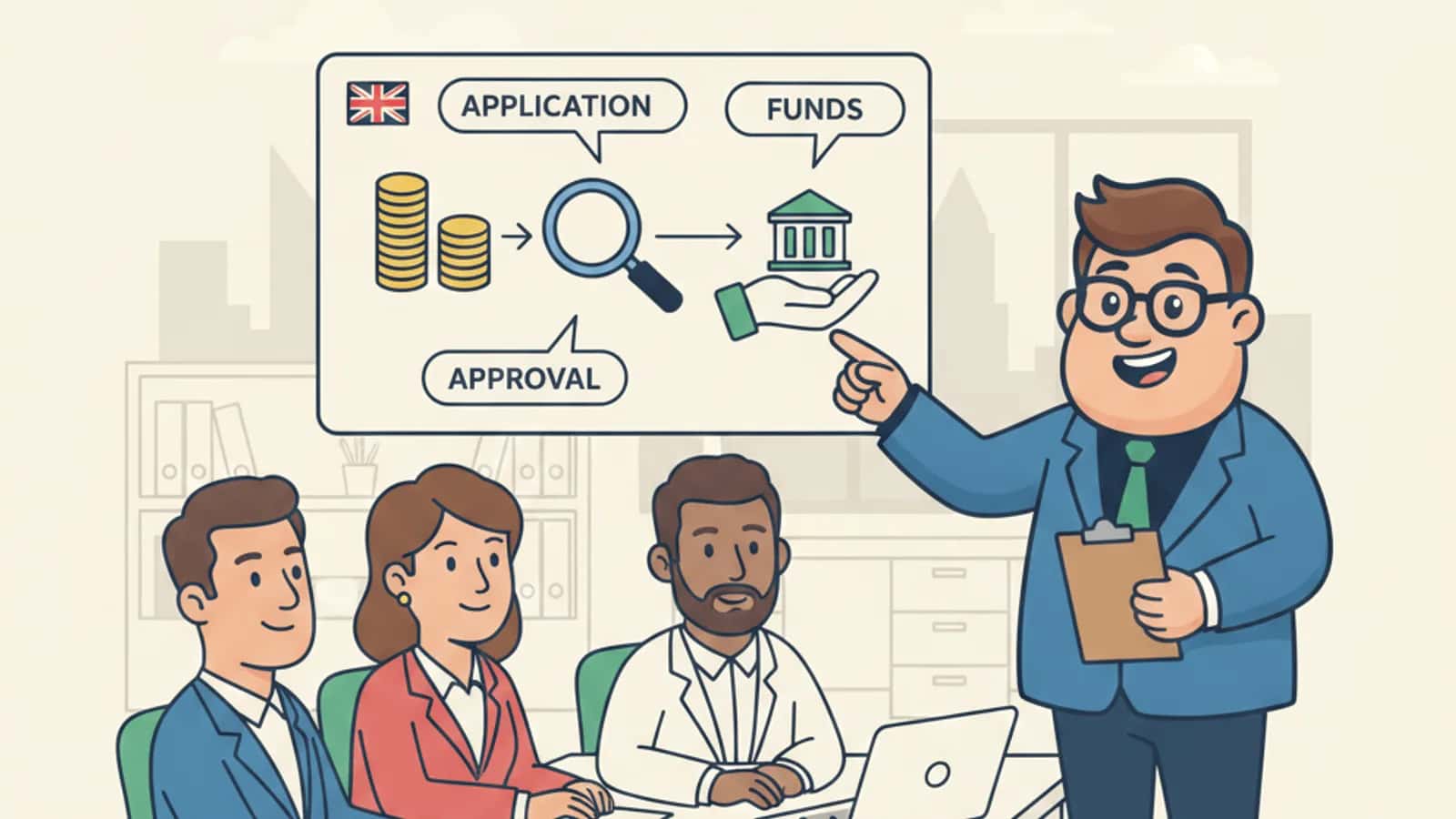
Fred helping a UK business owner compare Business Loans Work: A Complete Guide for UK Business Owners

Quick answer

Business loans provide capital to companies through a structured process: application, credit assessment, approval, fund disbursement, and scheduled repayment with interest. UK businesses can access loans from traditional banks, online lenders, or alternative finance platforms, with amounts typically ranging from £5,000 to £500,000 depending on company size, creditworthiness, and lender criteria.

Key takeaways

  • Business loans follow a standard process: apply, get assessed, receive funds, then repay with interest over agreed terms
  • UK businesses can borrow from £5,000 to £500,000+, with most SMEs accessing £10,000-£150,000
  • Traditional banks require extensive paperwork and perfect credit, while modern lenders offer Flexible Criteria and Fast Decision processes
  • Interest rates range from 6% to 50% annually, depending on loan type, risk assessment, and lender
  • Credit scores of 650+ improve approval chances, but All Credit Types can find suitable funding options
  • Unsecured Loans protect personal assets, while secured loans offer lower rates but require collateral
  • Online platforms use Smart Tech and Open Banking for 2 min checks with No hard check to start
  • Documentation typically includes bank statements, tax returns, and business plans
  • Alternative options like Merchant Cash Advance suit businesses with fluctuating revenue

What Exactly Is a Business Loan and How Do I Qualify

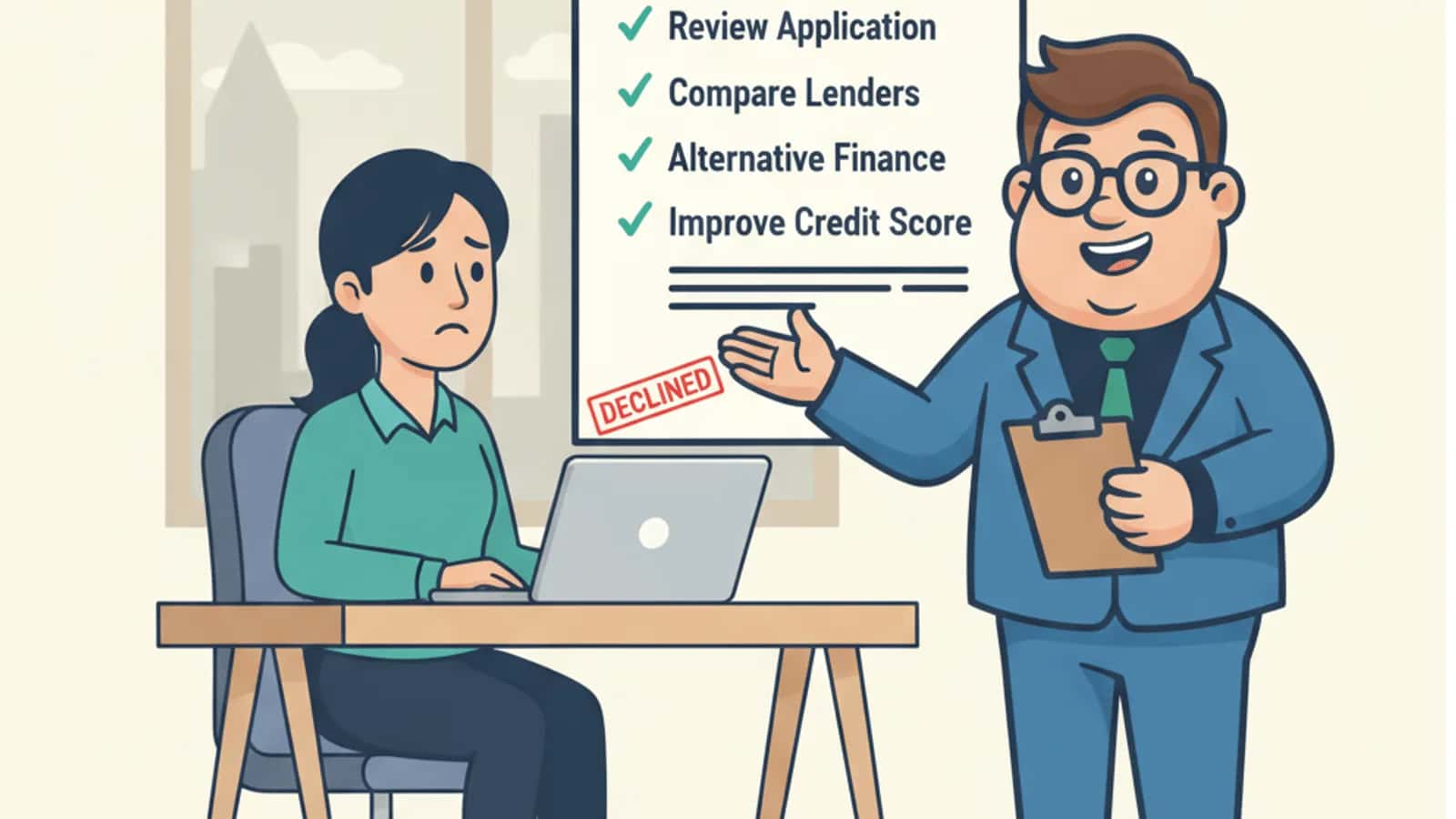
Fred explaining Business Loan and How Do I Qualify to a UK business owner

A business loan is borrowed capital that companies repay over time with interest, designed to fund operations, expansion, equipment, or cash flow needs. Qualification depends on your business's financial health, credit history, trading period, and ability to demonstrate repayment capacity.

Basic qualification criteria include

  • Trading history: Most lenders want 6-24 months of business operations
  • Annual turnover: Typically £50,000+ for traditional loans, though some lenders accept lower amounts
  • Credit score: Personal and business credit histories are assessed
  • Cash flow: Demonstrated ability to service debt payments
  • Business structure: Limited companies, partnerships, or sole traders can apply

The loan process works in five stages:

  1. 1

    Application

    Submit basic business and financial information

  2. 2

    Assessment

    Lender reviews creditworthiness and risk factors

  3. 3

    Approval

    Decision made based on predetermined criteria

  4. 4

    Disbursement

    Funds transferred to your business account

  5. 5

    Repayment

    Regular payments over agreed term with interest

Choose traditional banks if you have perfect credit and time for lengthy processes. Choose modern lenders if you need speed, have imperfect credit, or want to protect personal assets with Unsecured Loans.

How Much Can Small Businesses Typically Borrow

UK small businesses can typically borrow between £10,000 and £150,000, though amounts range from £5,000 to £500,000+ depending on business size, revenue, and lender type. Most SMEs access funding in the £25,000-£100,000 range for working capital and growth initiatives.

Borrowing limits by business type

  • Startups: £5,000-£25,000 (limited trading history)
  • Established SMEs: £25,000-£150,000 (2+ years trading)
  • Larger businesses: £150,000-£500,000+ (strong financials required)

Factors affecting loan amounts

  • Annual revenue: Lenders typically offer 10-30% of annual turnover
  • Cash flow strength: Higher monthly profits support larger borrowing
  • Credit quality: Better scores unlock higher limits
  • Collateral availability: Secured loans enable larger amounts
  • Loan purpose: Equipment finance often allows higher borrowing than working capital

Revenue-to-loan ratios:

How Much Can Small Businesses Typically Borrow comparison table
£50,000-£100,000
£10000–£25000
£100,000-£250,000
£25000–£60000
£250,000-£500,000
£50000–£120000
£500,000+
£100000–£300000

Choose amounts you can comfortably repay from monthly cash flow. A good rule: ensure loan payments don't exceed 15-20% of monthly revenue.

Traditional Banks vs Online Lenders: Key Differences

Traditional banks offer lower rates but require extensive paperwork, perfect credit, and lengthy approval processes, while online lenders provide Fast Decision options, Flexible Criteria, and streamlined applications using Smart Tech and Open Banking.

Traditional Banks

  • Interest rates: 6-15% for prime borrowers
  • Application time: 4-12 weeks processing
  • Credit requirements: Excellent personal and business credit essential
  • Documentation: Extensive financial records, business plans, projections
  • Collateral: Often required for competitive rates
  • Approval rates: Lower due to strict criteria

Online Lenders

  • Interest rates: 8-35% depending on risk profile
  • Application time: 24-48 hours for decisions
  • Credit requirements: All Credit Types considered
  • Documentation: Minimal paperwork, Open Banking integration
  • Collateral: Unsecured Loans available
  • Approval rates: Higher with Flexible Criteria

Key advantages comparison:

Traditional Banks vs Online Lenders: Key Differences comparison table
FactorTraditional BanksOnline Lenders
SpeedSlow (weeks)Fast (24-48 hours)
Credit flexibilityStrict requirementsAll credit types
PaperworkExtensiveMinimal
Personal guaranteesUsually requiredOften optional
Asset protectionLimited optionsUnsecured Loans available

Choose traditional banks if you have excellent credit and time for lengthy processes. Choose online lenders if you need quick funding, have imperfect credit, or want to avoid risking personal assets.

How Much Interest Do Business Loans Usually Charge

UK business loan interest rates typically range from 6% to 50% annually, with most established businesses paying 8-25% depending on loan type, credit quality, and lender. Traditional banks offer the lowest rates for prime borrowers, while alternative lenders charge higher rates for increased flexibility and speed.

Rate ranges by loan type

  • Bank term loans: 6-15% (excellent credit required)
  • Online term loans: 10-35% (flexible criteria)
  • Asset-based lending: 8-20% (secured against equipment/property)
  • Invoice financing: 15-30% (based on outstanding invoices)
  • Merchant Cash Advance: 20-50% (revenue-based repayment)

Factors affecting interest rates

  • Credit score: Higher scores secure better rates
  • Trading history: Longer track records reduce risk premiums
  • Loan amount: Larger loans often get preferential pricing
  • Loan term: Shorter terms typically offer lower rates
  • Security: Collateral reduces lender risk and rates
  • Industry: Some sectors considered higher risk

Rate comparison by credit quality:

How Much Interest Do Business Loans Usually Charge comparison table
Excellent (750+)
8–15%
Good (650-749)
12–25%
Fair (550-649)
18–35%
Poor (below 550)
25–50%

Remember that online lenders' higher rates often reflect their speed, flexibility, and willingness to work with All Credit Types. Factor in the cost of delayed funding when comparing options.

What Credit Score Do I Need to Get Approved

Most UK lenders prefer personal credit scores of 650+ for business loan approval, though online lenders with Flexible Criteria can work with scores as low as 400-500. Your business credit score, trading history, and cash flow also significantly impact approval chances.

Credit score requirements by lender type

  • Traditional banks: 700+ personal score, strong business credit essential
  • Online lenders: 550+ acceptable, All Credit Types considered
  • Alternative finance: 400+ possible with strong cash flow
  • Specialist bad credit lenders: No minimum score requirements

What lenders actually assess:

  1. 1

    Personal credit score

    Your individual credit history and score

  2. 2

    Business credit rating

    Company's payment history with suppliers and creditors

  3. 3

    Credit utilization

    How much existing credit you're using

  4. 4

    Payment history

    Track record of meeting financial obligations

  5. 5

    Outstanding debts

    Existing loan commitments and repayment capacity

Improving approval chances with lower scores

  • Provide strong cash flow evidence: Bank statements showing consistent revenue
  • Offer additional security: Collateral or personal guarantees
  • Apply for smaller amounts: Reduce lender risk exposure
  • Choose specialist lenders: Focus on providers offering Flexible Criteria
  • Use Open Banking: Let lenders see real-time financial data

Score improvement strategies

  • Pay existing debts on time consistently
  • Reduce credit utilization below 30%
  • Register your business address on electoral roll
  • Establish trade credit relationships
  • Monitor and dispute credit report errors

Choose traditional banks if you have excellent credit. Choose online lenders with Flexible Criteria if your score is below 650 but you have strong business fundamentals.

Are Business Loans Good for Startups or Just Established Companies

Business loans work for both startups and established companies, but requirements differ significantly. Established businesses with 2+ years trading history access better rates and higher amounts, while startups face stricter criteria but can still secure funding through specialist lenders and alternative products.

Startup loan options

  • Start-up loans: Government-backed schemes for new businesses
  • Asset finance: Equipment loans secured against purchased items
  • Invoice finance: For businesses with immediate customer invoices
  • Merchant Cash Advance: Revenue-based funding for businesses with card sales
  • Director loans: Personal loans used for business purposes

Established business advantages

  • Proven track record: Trading history demonstrates viability
  • Financial statements: Audited accounts provide lender confidence
  • Higher borrowing limits: Access to larger loan amounts
  • Better rates: Lower risk profile secures competitive pricing
  • More options: Wider range of lenders and products available

Startup funding requirements

  • Business plan: Detailed projections and market analysis
  • Personal guarantees: Directors typically guarantee repayment
  • Industry experience: Relevant background in the business sector
  • Initial investment: Some personal capital contribution expected
  • Market research: Evidence of customer demand and viability

Which is right for you?

Choose startup-friendly options if

  • You have less than 2 years trading history
  • You need equipment or asset-based financing
  • You have strong personal credit despite new business
  • You can demonstrate market demand and viability

Choose established business products if

  • You have 2+ years of trading history
  • You need larger funding amounts
  • You want the most competitive rates available
  • You have audited financial statements

Common Mistakes When Applying for Business Loans

The biggest mistakes include applying for the wrong loan type, providing incomplete financial information, and not shopping around with multiple lenders. Many businesses also underestimate the importance of timing and fail to prepare proper documentation before starting applications.

Critical application mistakes:

  1. 1

    Choosing wrong loan amounts

    Borrowing too little for needs or too much for repayment capacity

  2. 2

    Poor timing

    Applying when cash flow is weakest or during seasonal downturns

  3. 3

    Incomplete applications

    Missing documents cause delays and rejections

  4. 4

    Not comparing options

    Accepting first offer without exploring alternatives

  5. 5

    Ignoring terms beyond rate

    Focusing only on interest rate, not fees or flexibility

Documentation errors

  • Outdated financial statements: Using old accounts instead of recent figures
  • Inconsistent information: Conflicting data across application forms
  • Missing bank statements: Incomplete picture of cash flow patterns
  • Poor presentation: Disorganized or unclear financial information
  • No business plan: Failing to explain loan purpose and repayment strategy

Strategic mistakes

  • Applying to wrong lenders: Traditional banks when you need Flexible Criteria
  • Multiple hard credit checks: Damaging credit score with numerous applications
  • Unrealistic projections: Overly optimistic cash flow forecasts
  • Ignoring personal credit: Not checking and improving credit scores first
  • No backup plan: Single lender approach without alternatives

Avoid these by

  • Research thoroughly: Understand different lender requirements and products
  • Prepare documentation: Gather all required papers before applying
  • Use soft credit checks: Check Eligibility Now with No hard check to start
  • Compare multiple options: Use platforms with Wide partner panel access
  • Time applications well: Apply when financials look strongest

Choose lenders offering 2 min check options to avoid damaging your credit while exploring options.

Can I Get a Business Loan with Bad Credit

Yes, you can get business loans with bad credit through specialist lenders offering Flexible Criteria, though expect higher interest rates and potentially lower borrowing limits. Focus on lenders who assess overall business health rather than just credit scores.

Bad credit loan options

  • Asset-based lending: Secured against business equipment or property
  • Invoice financing: Based on outstanding customer invoices
  • Merchant Cash Advance: Repaid through card sales revenue
  • Revenue-based loans: Tied to business turnover rather than credit
  • Guarantor loans: Third-party guarantee supports application

What "bad credit" means to lenders

  • Personal credit scores: Below 550-600 range
  • Business credit issues: Late payments to suppliers or creditors
  • County Court Judgments: Outstanding or recently satisfied CCJs
  • Bankruptcy history: Previous personal or business insolvency
  • High debt levels: Existing borrowing close to limits

Improving approval chances

  • Strong cash flow: Demonstrate consistent revenue and profitability
  • Collateral offering: Security reduces lender risk significantly
  • Larger deposits: Higher upfront payments for asset finance
  • Shorter terms: Reduce lender exposure with quicker repayment
  • Specialist lenders: Choose providers focusing on All Credit Types

Rate expectations with bad credit:

Can I Get a Business Loan with Bad Credit comparison table
Poor personal credit
25–40%
Recent CCJs
30–45%
Bankruptcy history
35–50%
Strong business, poor personal
20–35%

Alternative strategies

  • Build business credit: Establish trade accounts and payment history
  • Joint applications: Include partners or directors with better credit
  • Gradual borrowing: Start small and build lending relationship
  • Credit repair: Address personal credit issues before applying

Choose specialist lenders with Flexible Criteria rather than traditional banks. Focus on demonstrating business strength beyond credit scores.

How Long Does It Take to Get Funding After Applying

Modern online lenders typically provide funding within 24-48 hours of approval, while traditional banks require 4-12 weeks for processing. The timeline depends on loan complexity, documentation completeness, and lender efficiency.

Funding timelines by lender type:

  1. 1

    Online lenders

    24-48 hours after approval

  2. 2

    Alternative finance platforms

    1-5 business days

  3. 3

    Traditional banks

    4-12 weeks full process

  4. 4

    Asset finance

    1-2 weeks (equipment verification needed)

  5. 5

    Invoice finance

    Same day to 48 hours

Process breakdown:

Fast Decision lenders (24-48 hours):

  1. 1

    Application

    10-15 minutes online

  2. 2

    Initial assessment

    2-4 hours automated review

  3. 3

    Documentation

    Same day upload via portal

  4. 4

    Final approval

    4-24 hours human review

  5. 5

    Funding

    Same day or next business day

Traditional banks (4-12 weeks):

  1. 1

    Application

    1-2 hours initial meeting

  2. 2

    Documentation gathering

    1-2 weeks

  3. 3

    Credit assessment

    2-4 weeks

  4. 4

    Committee approval

    1-2 weeks

  5. 5

    Legal documentation

    1-2 weeks

  6. 6

    Funding

    3-5 days after signing

Factors affecting speed

  • Documentation readiness: Complete applications process faster
  • Loan complexity: Simple term loans approve quicker than complex structures
  • Credit quality: Strong profiles need less manual review
  • Loan amount: Smaller amounts often have streamlined approval
  • Lender technology: Smart Tech and Open Banking accelerate decisions

Speeding up the process

  • Prepare documents early: Bank statements, tax returns, business plans ready
  • Use Open Banking: Allow real-time account verification
  • Choose appropriate lenders: Match your profile to lender criteria
  • Respond quickly: Fast responses to lender queries maintain momentum
  • Consider pre-approval: Some lenders offer conditional approval upfront

Choose online lenders with Smart Tech for urgent funding needs. Use traditional banks only when you have time for lengthy processes.

What Documentation Do I Need to Apply

Most lenders require 3-6 months of bank statements, recent tax returns or accounts, and basic business information, though requirements vary significantly between traditional banks and modern online lenders using Open Banking technology.

Essential documents for all lenders

  • Bank statements: 3-6 months business account history
  • Tax returns or accounts: Most recent filed returns
  • Business registration: Companies House documents or partnership agreements
  • ID verification: Passport or driving license for directors
  • Proof of address: Recent utility bills or council tax statements

Traditional bank additional requirements

  • Detailed business plan: Market analysis, projections, strategy
  • Management accounts: Monthly financial statements
  • Cash flow forecasts: 12-24 month projections
  • Security documentation: Property deeds or asset valuations
  • Personal financial statements: Director's personal assets and liabilities
  • Audited accounts: For larger loan amounts

Online lender streamlined approach

  • Open Banking connection: Real-time account access
  • Basic business information: Trading history, sector, turnover
  • Simple application form: Online questionnaire
  • Automated verification: Technology handles most checks
  • Minimal manual documents: Reduced paperwork requirements

Documentation by loan type:

What Documentation Do I Need to Apply comparison table
Loan TypeKey DocumentsProcessing Time
Unsecured business loanBank statements, tax returns, ID24-48 hours
Asset financeEquipment quotes, bank statements2-5 days
Invoice financeInvoice copies, debtor aging1-3 days
Property-backed loanValuations, legal documents2-4 weeks

Preparation tips

  • Organize digitally: Scan documents in advance
  • Ensure consistency: Match information across all documents
  • Update regularly: Use most recent available statements
  • Check accuracy: Verify all details before submission
  • Use secure sharing: Upload via encrypted lender portals

Common documentation mistakes

  • Outdated information: Using old accounts or statements
  • Poor quality scans: Illegible or incomplete document images
  • Missing signatures: Unsigned forms or agreements
  • Inconsistent data: Conflicting information across documents

Choose lenders offering Open Banking and Smart Tech to minimize documentation requirements while maintaining security.

What Happens If I Can't Repay My Business Loan

If you can't repay your business loan, contact your lender immediately to discuss options like payment holidays, restructuring, or refinancing. Early communication often leads to workable solutions, while ignoring the problem can result in default proceedings and potential business closure.

Immediate steps when facing repayment difficulties:

  1. 1

    Contact lender quickly

    Explain situation before missing payments

  2. 2

    Provide updated financials

    Show current cash flow and projections

  3. 3

    Propose solutions

    Payment holidays, reduced payments, or term extensions

  4. 4

    Seek professional advice

    Accountants or business advisors can help

  5. 5

    Explore refinancing

    Alternative lenders might offer better terms

Lender response options

  • Payment holidays: Temporary suspension of payments (1-6 months)
  • Reduced payments: Lower monthly amounts with extended terms
  • Interest-only periods: Temporary capital payment suspension
  • Loan restructuring: Modified terms to match cash flow
  • Refinancing assistance: Help finding alternative funding

Consequences of default:

Secured loans

  • Asset seizure: Lenders can repossess collateral
  • Forced sale: Assets sold to recover debt
  • Shortfall liability: Remaining debt after asset sale

Unsecured Loans

  • Credit damage: Negative impact on credit scores
  • Legal action: County court judgments possible
  • Personal guarantees: Directors may face personal liability
  • Business closure: Severe cases may force insolvency

Protective strategies

  • Choose Unsecured Loans: Protect business assets from seizure
  • Maintain cash reserves: Keep emergency funds for difficult periods
  • Monitor cash flow: Regular financial reviews identify problems early
  • Diversify revenue: Reduce dependence on single income sources
  • Professional advice: Regular accountant reviews prevent crises

Recovery options

  • Business recovery loans: Specialist funding for struggling businesses
  • Invoice financing: Unlock cash from outstanding invoices
  • Asset refinancing: Release equity from existing business assets
  • Merchant Cash Advance: Revenue-based repayment matches cash flow fluctuations

Choose Unsecured Loans to protect business assets and maintain flexibility during difficult trading periods.

Alternative Funding Options Besides Traditional Loans

Beyond traditional loans, UK businesses can access invoice finance, asset-based lending, Merchant Cash Advance, crowdfunding, and government grants, each suited to different business needs and circumstances.

Revenue-based alternatives

  • Merchant Cash Advance: Repayment through card sales percentages
  • Invoice financing: Advance against outstanding customer invoices
  • Revenue-based loans: Payments fluctuate with business turnover
  • Factoring: Sell invoices to finance companies for immediate cash

Asset-based options

  • Equipment finance: Loans secured against machinery or vehicles
  • Property refinancing: Release equity from business premises
  • Stock financing: Borrowing against inventory value
  • Hire purchase: Spread equipment costs over time

Equity and investment

  • Business angels: Private investors providing capital and expertise
  • Venture capital: Larger investments for high-growth businesses
  • Crowdfunding: Public investment through online platforms
  • Peer-to-peer lending: Direct borrowing from individual investors

Government support

  • Start-up loans: Government-backed funding for new businesses
  • Innovation grants: Funding for research and development
  • Regional grants: Location-specific business support
  • Sector-specific schemes: Industry-targeted funding programs

Comparison of alternatives:

Alternative Funding Options Besides Traditional Loans comparison table

Merchant Cash Advance

Speed
24-48 hours
Cost
20-50% factor rate
Requirements
Card sales history
Best For
Retail, hospitality

Invoice finance

Speed
1-3 days
Cost
1-3% monthly
Requirements
Outstanding invoices
Best For
B2B businesses

Asset finance

Speed
1-2 weeks
Cost
5-15% APR
Requirements
Equipment to secure
Best For
Manufacturing, transport

Crowdfunding

Speed
4-12 weeks
Cost
5-8% platform fees
Requirements
Strong business story
Best For
Consumer products

Choosing the right alternative

  • Match funding to cash flow: Choose repayment structures that fit revenue patterns
  • Consider speed requirements: Some options provide faster access than others
  • Evaluate total costs: Look beyond interest rates to fees and charges
  • Assess flexibility needs: Some options offer more adaptable terms
  • Review eligibility criteria: Match your business profile to funding requirements

When to choose alternatives

  • Seasonal businesses: Revenue-based options match fluctuating income
  • Asset-heavy businesses: Equipment finance offers competitive rates
  • B2B companies: Invoice finance unlocks cash from payment delays
  • Growth businesses: Equity investment provides larger amounts without debt

Choose alternatives that match your business model and cash flow patterns rather than forcing traditional loan structures.

Do Business Loans Require Collateral

Business loans can be either secured (requiring collateral) or unsecured (no collateral needed), with Unsecured Loans becoming increasingly popular among UK SMEs who want to protect personal and business assets while accessing funding.

Secured vs unsecured loan differences:

Secured loans require collateral

  • Business assets: Equipment, machinery, vehicles, stock
  • Property: Business premises or commercial real estate
  • Personal assets: Director's homes or personal investments
  • Cash deposits: Funds held as security against the loan
  • Invoice books: Outstanding customer debts as security

Unsecured Loans protect assets

  • No collateral required: Business and personal assets remain protected
  • Personal guarantee alternatives: Some lenders offer options without personal liability
  • Faster processing: No asset valuations or legal charges needed
  • Greater flexibility: Easier to refinance or change terms
  • Business protection: Assets available for operations, not tied up as security

Collateral impact on loan terms:

Do Business Loans Require Collateral comparison table
Secured
6–20%
Unsecured
8–35%
Asset finance
5–15%
Personal guarantee
10–25%

When collateral is typically required

  • Large loan amounts: £150,000+ often need security
  • Poor credit history: Collateral reduces lender risk
  • New businesses: Limited trading history increases security requirements
  • High-risk sectors: Some industries face stricter security demands
  • Traditional banks: Conservative lenders prefer secured lending

Benefits of choosing Unsecured Loans

  • Asset protection: Keep business assets free for operations
  • Faster decisions: No valuations or legal processes required
  • Operational flexibility: Assets remain available for business use
  • Reduced personal risk: Directors' homes and investments protected
  • Easier exit: Simpler to repay early or refinance

Collateral alternatives

  • Strong cash flow: Consistent revenue can replace security requirements
  • Business guarantees: Company assets without specific charges
  • Invoice security: Outstanding debts provide comfort without fixed assets
  • Revenue sharing: Merchant Cash Advance uses future sales as implicit security

Choose Unsecured Loans to maintain business flexibility and protect assets, especially for amounts under £150,000 where unsecured options are widely available.

Conclusion

Understanding how business loans work empowers UK business owners to make informed funding decisions that support growth while protecting their interests. The lending landscape has evolved significantly, with modern alternatives offering speed, flexibility, and asset protection that traditional banks often can't match.

The key is matching your business needs to the right funding solution. If you have excellent credit and time for lengthy processes, traditional banks offer competitive rates. However, if you need Fast Decision making, Flexible Criteria, or want to protect assets with Unsecured Loans, online lenders provide compelling alternatives.

Remember that the cheapest rate isn't always the best deal if it comes with inflexible terms or requires risking valuable assets. Consider the total cost of funding, including your time, risk exposure, and operational impact.

Ready to explore your options? Check Eligibility Now with No hard check to start. Modern platforms offer 2 min checks using Open Banking technology, giving you access to a Wide partner panel of lenders without impacting your credit score.

The right funding partner will understand your business needs, offer transparent terms, and provide the speed and flexibility that growing businesses require in 2026's competitive marketplace.

Written by

Funding Fred Editorial Team

The Funding Fred Editorial Team creates plain-English guides to help business owners understand funding options, eligibility, and application readiness before they compare finance options.

Reviewed by

Robert Daly

UK business finance content reviewer

Robert reads our UK business finance guides before they go live, checking each one is accurate, easy to follow, and reflects how lending actually works today — not how a brochure says it should. He's listed on the FCA Register, approved as an SMF3 (AR) Executive Director at Switcha Limited, and connected to Lucky Growth Partners Ltd through its appointed representative relationship, so the regulated detail gets a properly qualified second read.

Sources

Funding Fred is a trading name of Lucky Growth Partners Ltd, company number NI725486. Lucky Growth Partners Ltd, FRN 1053350, is an Appointed Representative of Switcha Limited, FRN 828963, which is authorised and regulated by the Financial Conduct Authority as a credit broker, not a lender. Switcha Limited is Lucky Growth Partners Ltd’s principal for regulated credit broking activity.

Funding Fred acts as an introducer and intermediary. We do not lend money, make credit decisions, provide regulated financial advice, or guarantee approval. We may introduce you to authorised credit brokers, lenders and selected business service providers based on the information you provide. Finance is subject to status, affordability and lender/provider criteria. We do not charge customers directly for our service, but we may receive a commission or referral fee from a broker, lender or provider if you proceed. You are under no obligation to proceed with any introduction or offer.

You can check these details on the FCA Financial Services Register.

© 2026 Funding Fred · Operated by Lucky Growth Partners Ltd. We act as an introducer only. Guides are for general information and are not financial advice.Privacy PolicyICO: ZB966973