Can a New Company Get a Business Loan? Your Complete Guide to Startup Funding in 2026
Yes, new companies can get business loans, but approval depends on your personal credit score, business plan strength, and collateral availability. Most traditional banks require 18-24 months of trading history, while alternative lenders like Funding Fred offer Unsecured Loans to startups with flexible criteria and Fast Decision processes.

Quick answer
Yes, new companies can get business loans, but approval depends on your personal credit score, business plan strength, and collateral availability. Most traditional banks require 18-24 months of trading history, while alternative lenders like Funding Fred offer Unsecured Loans to startups with flexible criteria and Fast Decision processes. Your personal credit score becomes the primary factor when business credit history doesn't exist.
Key takeaways
- New companies can access business loans through alternative lenders even without trading history
- Personal credit scores of 650+ significantly improve approval chances for startup loans
- Traditional banks typically require 18-24 months of business revenue before considering applications
- Alternative funding like Merchant Cash Advance and unsecured loans offer faster approval for new businesses
- Required documents include business plans, personal financial statements, and bank statements
- Loan amounts for new businesses typically range from £10,000 to £120,000 depending on the lender
- Interest rates for new companies are generally higher, ranging from 8% to 35% annually
- Revenue-based funding and equipment finance are often easier to secure than traditional term loans
- Open Banking technology now enables 2 min check processes for faster eligibility assessment
How Hard Is It to Get a Business Loan as a New Company?
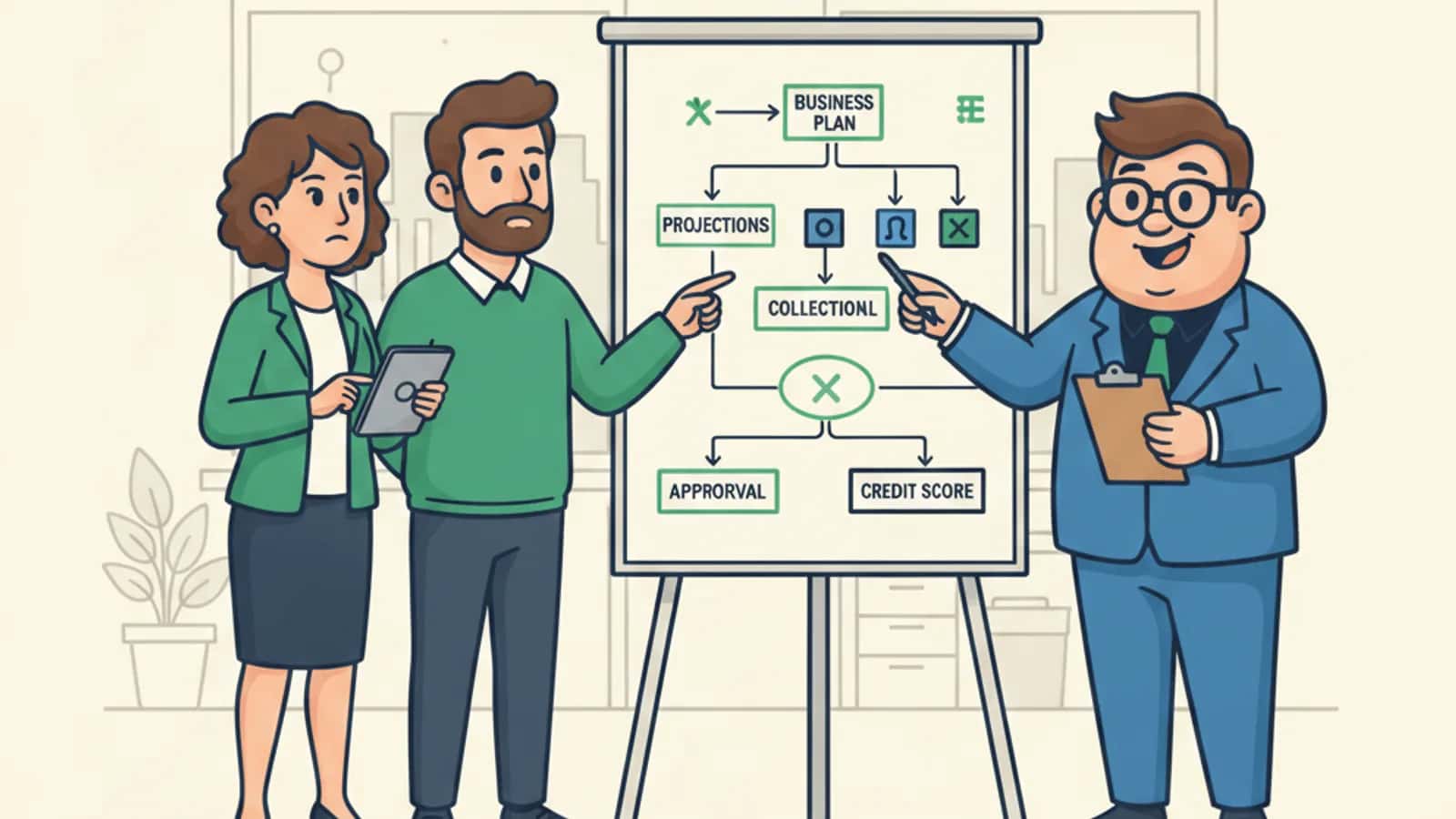
Getting a business loan as a new company is challenging but not impossible. Traditional banks reject approximately 80% of new business loan applications, primarily because startups lack trading history and established cash flow patterns.
Traditional Banks vs Modern Lenders:
Traditional Banks
- Require 18-24 months of trading history
- Demand extensive paperwork and financial projections
- Focus heavily on business credit scores that don't exist for new companies
- Take 4-8 weeks for approval decisions
- Often require personal guarantees and collateral
Alternative Lenders (like Funding Fred)
- Accept applications from day-one businesses
- Use Smart Tech and Open Banking for faster assessment
- Focus on personal credit and business potential
- Provide Fast Decision within 24-48 hours
- Offer Flexible Criteria for All Credit Types
Choose alternative lenders if you need funding within weeks rather than months, have limited business history, or want to avoid risking personal assets through unsecured options.
The key difference lies in risk assessment methods. Traditional banks rely on historical financial data, while modern lenders use technology-driven approaches that evaluate real-time banking data and future business potential.
What Credit Score Do You Need for a Startup Business Loan?
Most lenders require a personal credit score of 650 or higher for startup business loans, though some alternative lenders accept scores as low as 550 with additional conditions. Your personal credit becomes the primary evaluation factor when business credit history doesn't exist.
Credit Score Requirements by Lender Type
- Traditional Banks: 700+ personal credit score
- Alternative Lenders: 650+ for best rates, 550+ with higher interest
- Peer-to-Peer Platforms: 600+ typically required
- Equipment Finance: 580+ often acceptable with asset security
Funding Fred accepts All Credit Types through its Wide Partner Panel, matching your credit profile with appropriate lenders rather than applying blanket rejections.
Check Eligibility Now with No Hard Check to Start — this protects your credit score during the initial assessment phase while determining which lenders match your profile.
What Types of Business Loans Are Best for Brand New Businesses?
Unsecured business loans, equipment finance, and Merchant Cash Advance options work best for new companies because they don't require extensive trading history or business assets as collateral.
Best Loan Types for New Businesses:
Unsecured Business Loans
- No collateral required
- Based on personal credit and business plan
- Amounts from £10,000 to £120,000
- Faster approval than secured loans
Equipment Finance
- Equipment serves as collateral
- Easier approval for asset-backed lending
- Preserves cash flow for operations
- Often available to very new businesses
Merchant Cash Advance
- Based on projected card sales
- Quick access to working capital
- Repayment tied to daily sales
- Ideal for retail and hospitality startups
Revenue-Based Financing
- Repayment as percentage of monthly revenue
- Flexible during slow periods
- Good for seasonal businesses
- Less stringent qualification requirements
Avoid traditional term loans initially — these typically require 2+ years of financial statements and established cash flow patterns that new companies cannot provide.
Choose equipment finance if you need machinery or technology for operations. Choose unsecured loans if you need flexible working capital without risking specific assets.
How Much Money Can a First-Time Business Typically Borrow?
First-time businesses typically qualify for £10,000 to £50,000 through traditional lenders, while alternative lenders may approve up to £120,000 based on business potential and personal financial strength.
Borrowing Limits by Business Type:
£15,000 - £75,000
Service-Based Businesses
£25,000 - £100,000
Retail/E-commerce
£30,000 - £120,000
Restaurants/Hospitality
£10,000 - £60,000
Professional Services
Factors Affecting Loan Amounts
- Personal credit score and income history
- Industry experience and qualifications
- Business plan quality and market research
- Available collateral or personal guarantees
- Projected revenue and cash flow
Funding Fred's approach: Uses Open Banking technology to assess real financial capacity rather than relying solely on stated income, often enabling higher approval amounts than traditional application methods.
Start with smaller amounts for your first business loan. Successfully repaying a £25,000 loan builds business credit for larger future borrowing needs.
What Documents Do You Need to Apply for a Startup Loan?
New businesses need a comprehensive business plan, personal financial statements, bank statements, and legal formation documents to apply for startup loans. The exact requirements vary significantly between traditional banks and alternative lenders.
Essential Documents for All Lenders
- Business Plan: Market analysis, financial projections, management team details
- Personal Bank Statements: Last 3-6 months showing financial stability
- Credit Reports: Personal credit history and scores
- Business Formation Documents: Articles of incorporation, operating agreements
- Personal Financial Statement: Assets, liabilities, net worth calculation
Additional Documents for Traditional Banks
- Detailed financial projections for 3-5 years
- Industry experience documentation
- Collateral valuations and legal descriptions
- Personal tax returns for 2-3 years
- Professional references and character letters
Streamlined Requirements for Alternative Lenders:
Modern lenders like Funding Fred use Smart Tech and Open Banking to reduce paperwork requirements. The 2 min check process accesses real-time banking data, eliminating the need for extensive manual documentation.
Are There Business Loans for Companies with No Revenue Yet?
Yes, pre-revenue companies can access business loans through alternative lenders, equipment finance, and specialized startup loan programs, though options are more limited and typically require strong personal credit and detailed business plans.
Pre-Revenue Funding Options:
Equipment Finance
- Equipment serves as loan collateral
- Available before generating revenue
- Preserves cash for operational expenses
- Often easier approval than unsecured loans
Personal Guarantees with Business Purpose
- Loan based on personal creditworthiness
- Funds designated for business use
- Higher approval rates for pre-revenue companies
- Personal assets may be at risk
Invoice Finance (Future Receivables)
- Based on confirmed future contracts
- Requires signed customer agreements
- Good for B2B service companies
- Repayment from specific invoices
Funding Fred's Flexible Criteria includes assessment of business potential rather than requiring existing revenue streams. The evaluation considers market opportunity, management experience, and financial projections.
Choose equipment finance if your business model requires significant machinery or technology investments. Choose personal guarantee loans if you have strong personal credit and want to maintain business asset protection.
What's the Difference Between SBA Loans and Traditional Bank Loans?
SBA loans are government-backed programs designed to help small businesses access funding with lower interest rates and longer repayment terms, while traditional bank loans rely entirely on the bank's risk assessment and typically have stricter qualification requirements.
SBA Loans vs Traditional Bank Loans:
| Feature | SBA Loans | Traditional Bank Loans |
|---|---|---|
| Government Backing | 70-85% guaranteed by SBA | No government guarantee |
| Interest Rates | Generally 2-3% lower | Market rates based on risk |
| Down Payment | As low as 10% | Often 20-30% required |
| Qualification | More flexible criteria | Stricter requirements |
| Processing Time | 30-90 days | 2-8 weeks |
| Use Restrictions | Specific business purposes | More flexible use |
SBA Loan Advantages
- Lower interest rates save money long-term
- Longer repayment terms improve cash flow
- Less collateral required in many cases
- Government backing reduces lender risk
Traditional Bank Loan Advantages
- Faster approval and funding
- Fewer restrictions on fund usage
- No government compliance requirements
- Relationship building with local banks
Choose SBA loans if you can wait longer for approval and want the lowest possible interest rates. Choose traditional bank loans if you need funding quickly and have strong credit profiles.
Note for UK businesses: While SBA loans are US-specific, similar government-backed schemes exist in the UK through the British Business Bank and various regional development programs.
Can You Get a Business Loan with Bad Personal Credit?
Yes, businesses can secure loans with bad personal credit through specialized lenders, secured loan options, and alternative funding methods, though interest rates will be higher and loan amounts typically smaller.
Bad Credit Business Loan Options:
Secured Business Loans
- Collateral reduces lender risk
- Property, equipment, or inventory as security
- Lower interest rates than unsecured options
- Higher approval rates despite poor credit
Merchant Cash Advance
- Based on future credit card sales
- Credit score less important than sales volume
- Quick approval and funding
- Higher cost but accessible option
Equipment Finance with Bad Credit
- Equipment serves as loan collateral
- Easier approval than unsecured loans
- Preserves other business assets
- Often available with 550+ credit scores
Revenue-Based Financing
- Repayment tied to business performance
- Less emphasis on personal credit history
- Flexible during revenue fluctuations
- Good option for established cash flow
Funding Fred accepts All Credit Types through its Wide Partner Panel, matching poor credit applicants with appropriate lenders rather than automatic rejections.
Improve approval chances with bad credit
- Provide detailed business plans and projections
- Offer larger down payments when possible
- Include co-signers with better credit
- Start with smaller loan amounts to build history
How Long Does It Take to Get Approved for a Business Loan?
Business loan approval times range from 24 hours for alternative lenders to 4-8 weeks for traditional banks, with the timeline depending on loan type, documentation completeness, and lender processes.
Approval Timelines by Lender Type:
Alternative Lenders (like Funding Fred)
- Initial decision: 24-48 hours
- Final approval: 3-7 days
- Funding: 1-3 days after approval
- Fast Decision process with Smart Tech
Traditional Banks
- Initial review: 1-2 weeks
- Underwriting: 2-4 weeks
- Final approval: 4-8 weeks total
- Additional time for complex applications
Specialized Loan Types:
- 1
Equipment Finance
3-10 days
- 2
Merchant Cash Advance
1-3 days
- 3
SBA Loans
30-90 days
- 4
Invoice Finance
2-7 days
Factors Affecting Speed
- Complete documentation submission
- Business complexity and loan amount
- Credit verification requirements
- Collateral evaluation needs
- Lender's current application volume
Speed up the process
- Use Open Banking for instant financial verification
- Submit all documents digitally and completely
- Respond quickly to lender requests
- Choose pre-approved loan amounts when available
Funding Fred's 2 min check provides immediate eligibility assessment, allowing you to know approval likelihood before formal application submission.
What Are the Most Common Reasons New Businesses Get Denied for Loans?
New businesses most commonly get denied for insufficient credit history, weak business plans, inadequate cash flow projections, and lack of collateral or personal guarantees.
Top Denial Reasons for New Businesses:
Insufficient Credit History
- No established business credit profile
- Limited personal credit history
- Recent credit problems or bankruptcies
- High debt-to-income ratios
Weak Business Documentation
- Unrealistic financial projections
- Incomplete or poorly written business plans
- Lack of industry experience documentation
- Missing legal formation documents
Cash Flow Concerns
- Inadequate projected revenue
- Seasonal business without planning
- High fixed costs relative to projected income
- No emergency fund or backup plans
Collateral and Guarantee Issues
- Insufficient personal assets for guarantees
- Unwillingness to provide personal guarantees
- Overvalued or illiquid collateral offerings
- Existing liens on proposed collateral
Industry-Specific Risks
- High-risk business categories
- Regulatory compliance concerns
- Market saturation in business location
- Unproven business models
Avoid these mistakes
- Don't inflate revenue projections beyond industry standards
- Include realistic timelines for business growth
- Provide complete documentation from the start
- Research lender preferences before applying
Choose lenders with Flexible Criteria that understand startup challenges rather than applying traditional lending standards to new businesses.
Alternative Funding Options If You Can't Get a Traditional Business Loan
If traditional business loans aren't available, new companies can access funding through merchant cash advances, invoice factoring, crowdfunding, angel investors, and revenue-based financing options.
Alternative Funding Methods:
Merchant Cash Advance
- Quick access to working capital
- Repayment through daily card sales
- No fixed monthly payments
- Higher cost but immediate availability
Invoice Factoring
- Sell future invoices for immediate cash
- Good for B2B businesses with confirmed sales
- Maintains customer relationships
- Typically 80-90% of invoice value
Crowdfunding Platforms
- Raise capital from multiple small investors
- Build customer base while funding
- No debt obligations or interest payments
- Requires strong marketing and presentation
Angel Investors and Venture Capital
- Equity investment rather than debt
- Access to business expertise and networks
- No repayment obligations
- Give up ownership percentage
Revenue-Based Financing
- Repayment as percentage of monthly sales
- Flexible during slow business periods
- No equity dilution
- Aligned with business performance
Equipment Leasing
- Access equipment without large upfront costs
- Preserve cash for operations
- Often easier approval than loans
- Upgrade options as business grows
Funding Fred's Wide Partner Panel includes alternative funding sources beyond traditional loans, matching your specific business needs with appropriate funding types.
Choose revenue-based financing if you have predictable monthly sales. Choose equipment leasing if you need machinery but want to preserve cash flow.
What Interest Rates Can a New Business Expect?
New businesses typically face interest rates between 8% and 35% annually, depending on credit scores, loan types, and lender categories, with alternative lenders generally charging higher rates than traditional banks.
Interest Rate Ranges by Loan Type:
Traditional Bank Loans
- Excellent credit (750+): 8-12% APR
- Good credit (650-749): 12-18% APR
- Fair credit (600-649): 18-25% APR
Alternative Lender Rates
- Unsecured Business Loans: 15-35% APR
- Equipment Finance: 10-25% APR
- Merchant Cash Advance: 20-50% factor rate
- Invoice Factoring: 2-5% per month
Factors Affecting Interest Rates
- Personal and business credit scores
- Loan amount and repayment term
- Industry risk assessment
- Collateral and guarantee provisions
- Current market interest rate environment
Rate Comparison: Traditional vs Alternative:
Lower your interest rates
- Improve personal credit scores before applying
- Offer collateral or personal guarantees
- Choose shorter repayment terms when cash flow allows
- Build relationships with lenders over time
Funding Fred's approach: Uses competitive bidding among its Wide Partner Panel to secure the best available rates for your credit profile rather than offering single-rate options.
Consider total cost, not just interest rates. A 25% APR loan available immediately may cost less than waiting months to qualify for a 15% traditional bank loan if you're losing business opportunities.
Next steps for can a new company get a business loan
Can a new company get a business loan? Absolutely, but success depends on choosing the right lender type and preparing strong applications. While traditional banks typically require 18-24 months of trading history, alternative lenders like Funding Fred offer Flexible Criteria and Fast Decision processes for new businesses. For more comparisons and application guidance, browse our business loan guides.
Focus on building strong personal credit, creating detailed business plans, and understanding which loan types match your specific situation. Unsecured Loans work well for working capital needs, while equipment finance provides easier approval for asset purchases.
Take action now
- Check Eligibility Now with No Hard Check to Start
- Prepare essential documents including business plans and financial statements
- Compare multiple lender options through platforms with Wide Partner Panel access
- Consider alternative funding if traditional loans aren't immediately available
The key to securing startup funding lies in matching your business needs with appropriate lenders rather than applying traditional lending criteria to new business situations. Modern Smart Tech and Open Banking solutions make the process faster and more accessible than ever before.
Start your funding search today — the right business loan can accelerate your company's growth and success in 2026's competitive market.
Further reading
Frequently asked questions
How Hard Is It to Get a Business Loan as a New Company?
Getting a business loan as a new company is challenging but not impossible. Traditional banks reject approximately 80% of new business loan applications, primarily because startups lack trading history and established cash flow patterns.
What Credit Score Do You Need for a Startup Business Loan?
Most lenders require a personal credit score of 650 or higher for startup business loans, though some alternative lenders accept scores as low as 550 with additional conditions. Your personal credit becomes the primary evaluation factor when business credit history doesn't exist.
What Types of Business Loans Are Best for Brand New Businesses?
Unsecured business loans, equipment finance, and Merchant Cash Advance options work best for new companies because they don't require extensive trading history or business assets as collateral.
How Much Money Can a First-Time Business Typically Borrow?
First-time businesses typically qualify for £10,000 to £50,000 through traditional lenders, while alternative lenders may approve up to £120,000 based on business potential and personal financial strength.
What Documents Do You Need to Apply for a Startup Loan?
New businesses need a comprehensive business plan, personal financial statements, bank statements, and legal formation documents to apply for startup loans. The exact requirements vary significantly between traditional banks and alternative lenders.
Are There Business Loans for Companies with No Revenue Yet?
Yes, pre-revenue companies can access business loans through alternative lenders, equipment finance, and specialized startup loan programs, though options are more limited and typically require strong personal credit and detailed business plans.
Written by
The Funding Fred Editorial Team creates plain-English guides to help business owners understand funding options, eligibility, and application readiness before they compare finance options.
Reviewed by
UK business finance content reviewer
Robert reads our UK business finance guides before they go live, checking each one is accurate, easy to follow, and reflects how lending actually works today — not how a brochure says it should. He's listed on the FCA Register, approved as an SMF3 (AR) Executive Director at Switcha Limited, and connected to Lucky Growth Partners Ltd through its appointed representative relationship, so the regulated detail gets a properly qualified second read.