
Electric Vehicle Fleet Finance UK: Funding Vans, Chargers and Transition Costs
UK businesses face a £15,000-£50,000 upfront investment per electric van, plus charging infrastructure costs, to meet the 2030 diesel ban deadline.

Quick answer
UK businesses face a £15,000-£50,000 upfront investment per electric van, plus charging infrastructure costs, to meet the 2030 diesel ban deadline. Electric vehicle fleet finance UK funding for vans, chargers and transition costs is available through specialist lenders offering hire purchase, finance lease, and asset finance options from 0% deposit with decisions in 48 hours.
Key takeaways
- Government Plug-in Van Grant covers up to £6,000 per large electric van, reducing purchase costs by up to 35%
- Workplace Charging Scheme provides 75% funding for charging infrastructure, capped at £350 per socket for up to 40 sockets
- Electric vans qualify for 0% Vehicle Excise Duty and lower Benefit-in-Kind tax rates
- Asset finance options include hire purchase and finance lease with flexible deposits from 0% available
- Total cost of ownership for electric vans can be 20% lower than diesel equivalents over five years
- Fast decision asset finance matches urgent fleet replacement needs with 2-minute eligibility checks
- Charging infrastructure requires 7kW-22kW AC chargers for overnight fleet charging
- Break-even point typically occurs between 3-5 years depending on mileage and fuel savings
- Phased transition starting with predictable route vehicles maximizes cost efficiency
- Specialist lenders understand commercial vehicle requirements better than high street banks
UK businesses face a £15,000-£50,000 upfront investment per electric van, plus charging infrastructure costs, to meet the 2030 diesel ban deadline. Electric vehicle fleet finance UK funding for vans, chargers and transition costs is available through specialist lenders offering hire purchase, finance lease, and asset finance options from 0% deposit with decisions in 48 hours.
What Funding is Available for Electric Vans in the UK
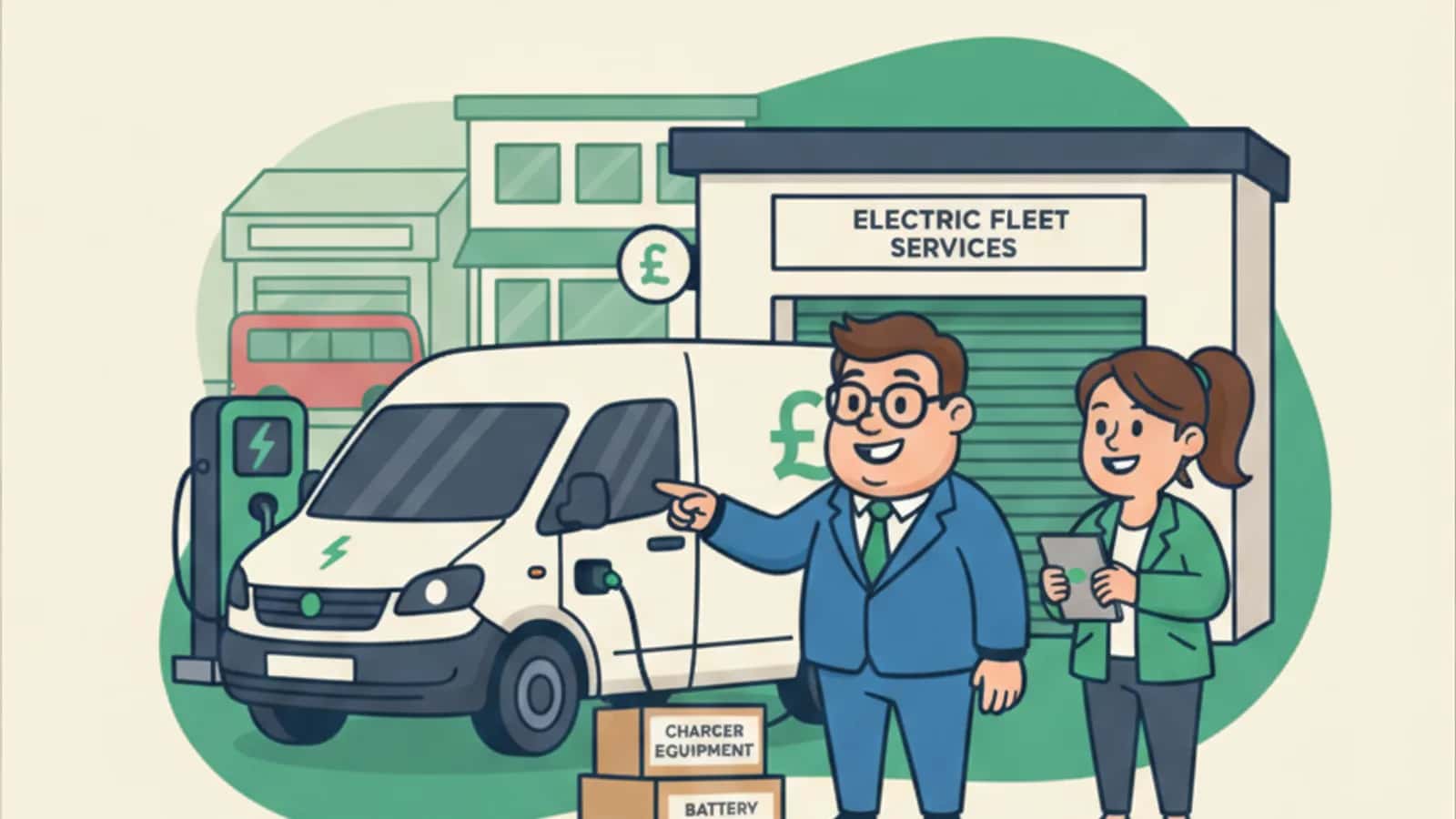
UK businesses can access multiple funding streams for electric van purchases, combining government grants with commercial finance options. The Plug-in Van Grant provides up to £6,000 for large vans and £3,000 for small vans, covering up to 35% of the purchase price. This grant applies automatically at the point of sale through approved dealers.
Government Grant Eligibility
- Small vans (under 2.5 tonnes): Up to £3,000 grant
- Large vans (2.5-4.25 tonnes): Up to £6,000 grant
- Vehicle must be on the approved eligible vehicle list
- Grant applies to new vehicles only, not used electric vans
Commercial Finance Options: Asset finance provides the primary funding route for the remaining purchase cost. Specialist asset finance lenders offer hire purchase and finance lease options specifically for commercial vehicles. These lenders understand fleet replacement cycles and can structure payments around cash flow patterns.
Quick Decision Process: Unlike traditional bank loans, asset finance decisions happen in 48-72 hours. A 2-minute eligibility check compares options across specialist partners without hard credit searches. This speed matters when replacing broken-down vehicles or expanding fleets for new contracts.
Deposit Flexibility: Electric van finance often requires lower deposits than traditional vehicles due to government incentives. Some lenders offer 0% deposit options, though 10-20% deposits typically secure better rates. The key advantage is matching deposit requirements to available cash flow rather than forcing large upfront payments.
Government Grants for EV Fleet Charging Infrastructure
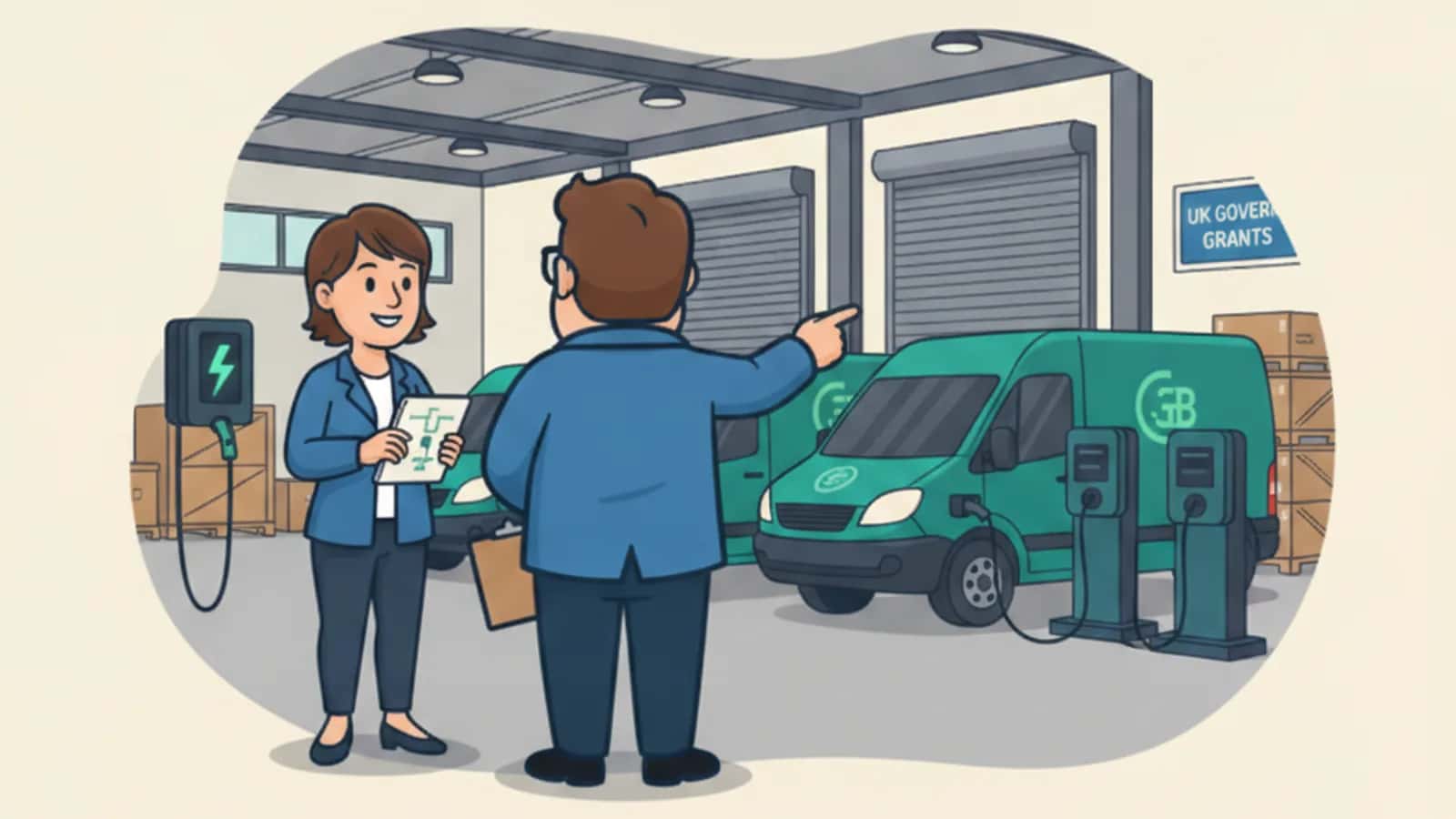
The Workplace Charging Scheme covers up to 75% of charging infrastructure costs for businesses installing EV charge points. This grant provides up to £350 per socket for a maximum of 40 sockets per applicant. The scheme runs until March 2025, making immediate applications essential for fleet operators.
Eligible Charging Infrastructure
- 7kW and 22kW AC charging units
- Smart charging systems with load management
- Installation costs including electrical work and groundworks
- Network connectivity and payment systems for multi-user sites
Application Requirements: Businesses must own or have permission to install charging equipment at the workplace location. The charging points must be available to employees and fleet vehicles, not exclusively for public use. Applications require quotes from approved installers and electrical surveys.
Additional Infrastructure Funding: Local authorities often provide additional grants for businesses installing public-accessible charging points. The On-street Residential Chargepoint Scheme supports businesses working with councils to install chargers in residential areas where fleet vehicles park overnight.
Choose workplace charging grants if your fleet returns to a fixed depot location daily. Avoid if your vehicles operate from multiple locations without consistent overnight parking, as the infrastructure investment won't deliver value.
Best Finance Options for Buying Electric Vans
Hire purchase and finance lease dominate electric van funding, each serving different business needs and tax strategies. Hire purchase suits businesses wanting eventual ownership, while finance lease works for companies prioritizing cash flow and tax efficiency.
Hire Purchase for Electric Vans
- Ownership transfers at contract end for £1 final payment
- Capital allowances available on the full purchase price
- Fixed monthly payments with no mileage restrictions
- Deposit from 0-30% depending on credit profile and lender
Finance Lease Benefits
- Lower monthly payments compared to hire purchase
- VAT benefits for VAT-registered businesses
- No balloon payment or residual value risk
- Option to upgrade to newer models at contract end
Asset Finance vs Bank Loans: Asset finance differs from business loans because the vehicle secures the funding. This security allows higher borrowing amounts and faster decisions. Banks often require additional security and longer application processes for equivalent amounts.
Specialist Lender Advantages: Commercial vehicle finance specialists understand seasonal cash flow patterns in logistics, construction, and delivery sectors. They structure payments around quarterly or seasonal income patterns rather than requiring fixed monthly amounts regardless of business cycles.
Lease vs Buy for Electric Vehicle Fleets
The lease vs buy decision for electric vehicle fleets depends on tax strategy, cash flow requirements, and technology refresh cycles. Electric vehicle technology evolves rapidly, making lease options attractive for businesses wanting regular upgrades without residual value risk.
Buy Through Hire Purchase
- Full capital allowances in year one for tax relief
- No mileage restrictions or wear-and-tear charges
- Flexibility to modify vehicles for specific business needs
- Residual value risk if technology advances rapidly
Finance Lease Advantages
- Payments typically 20-30% lower than hire purchase
- No residual value exposure when technology changes
- Easier to budget with fixed monthly costs
- Option to return, purchase, or upgrade at contract end
Operating Lease Considerations: Operating leases keep vehicles off the balance sheet but offer less tax relief. They work best for businesses with strong cash flow wanting maximum flexibility. However, early termination charges can be substantial if business needs change.
Technology Refresh Strategy: Electric van technology improves significantly every 2-3 years in range, charging speed, and efficiency. Lease agreements allow upgrading to newer models without selling older vehicles in a rapidly changing market.
Choose hire purchase if you plan to keep vehicles for 7+ years and want maximum tax relief. Choose finance lease if you prefer predictable costs and want to upgrade vehicles every 3-5 years as technology advances.
How to Calculate Total Cost of Ownership for Electric Vans
Total cost of ownership for electric vans includes purchase price, financing costs, fuel, maintenance, insurance, and residual value over the ownership period. Electric vans typically show 20% lower TCO than diesel equivalents over five years despite higher purchase prices.
TCO Calculation Components:
Purchase and Finance Costs
- Vehicle price minus government grants
- Interest or lease charges over contract term
- Deposit impact on cash flow and opportunity cost
Operating Costs
- Electricity costs: £0.15-0.30 per kWh depending on tariff
- Maintenance: 40-50% lower than diesel due to fewer moving parts
- Insurance: Similar to diesel vans, sometimes 5-10% higher
- Vehicle Excise Duty: £0 for electric vs £290+ for diesel
Infrastructure Costs
- Charging equipment: £800-2,500 per charging point
- Installation costs: £500-1,500 depending on electrical work required
- Ongoing electricity supply and maintenance
Example TCO Comparison (5-year period):
| Cost Component | Electric Van | Diesel Van |
|---|---|---|
| Purchase Price (after grants) | £35,000 | £28,000 |
| Fuel/Energy (50,000 miles) | £4,500 | £12,500 |
| Maintenance | £2,000 | £4,000 |
| VED | £0 | £1,450 |
| Total 5-Year Cost | £41,500 | £45,950 |
This example assumes 10,000 miles annually, commercial energy tariffs, and typical maintenance patterns. Actual costs vary significantly based on usage patterns and local energy prices.
How Much Does it Cost to Charge a Fleet of Electric Vehicles
Fleet charging costs depend on energy tariffs, charging infrastructure, and usage patterns. Commercial electricity rates range from £0.15-0.30 per kWh, making energy costs £3-6 per 100 miles for typical electric vans.
Commercial Energy Tariffs
- Standard business rates: £0.20-0.25 per kWh
- Off-peak overnight rates: £0.10-0.15 per kWh
- Time-of-use tariffs with demand management: £0.08-0.22 per kWh varying by time
Charging Infrastructure Operating Costs
- Network connectivity: £10-25 per charging point monthly
- Maintenance contracts: £100-200 per charger annually
- Software and payment systems: £5-15 per transaction for public access
Fleet Charging Strategies: Overnight depot charging offers the lowest costs using off-peak electricity rates. Smart charging systems automatically schedule charging during cheapest periods and manage electrical load across multiple vehicles.
Public Charging Costs: Rapid charging on public networks costs £0.35-0.65 per kWh, making it 2-3 times more expensive than depot charging. Plan routes to minimize public charging dependency for cost control.
Energy Tariff Optimization: Negotiate dedicated EV tariffs with energy suppliers for fleets charging more than 50MWh annually. These tariffs often include demand management incentives and lower unit rates for consistent usage patterns.
Tax Benefits of Switching to Electric Fleet Vehicles
Electric vans deliver significant tax advantages through Vehicle Excise Duty exemption, enhanced capital allowances, and lower Benefit-in-Kind rates. These tax benefits often justify the higher purchase prices for business users.
Vehicle Excise Duty Savings: Electric vans pay £0 VED compared to £290+ annually for diesel vans depending on CO2 emissions. Over a five-year period, this saves £1,450+ per vehicle before considering inflation increases in VED rates.
Capital Allowances: Electric vans qualify for 100% first-year allowances, allowing businesses to claim the full purchase price against taxable profits in year one. This provides immediate tax relief worth 19-25% of the purchase price depending on corporation tax rates.
Benefit-in-Kind Tax: Company van drivers pay lower BIK tax on electric vans. Electric vans have 0% BIK rate compared to diesel vans charged at van benefit rates. This saves employees £688-1,028 annually depending on tax brackets.
VAT Recovery: VAT-registered businesses recover VAT on electric van purchases and charging costs. Finance lease agreements often provide better VAT cash flow as VAT is recovered monthly rather than requiring upfront payment on purchases.
Enhanced Allowances Strategy: Combine electric van purchases with other qualifying green technology investments to maximize tax relief. Solar panels and battery storage systems for charging infrastructure also qualify for enhanced allowances.
Charger Specifications for Commercial Fleets
Commercial fleet charging requires 7kW-22kW AC chargers for overnight depot charging, with 50kW+ DC rapid chargers for route optimization and emergency top-ups. Charger specifications must match fleet size, daily mileage, and operational patterns.
Depot Charging Infrastructure
- 7kW AC chargers: 8-hour charging for 30-40 mile range
- 22kW AC chargers: 2-3 hour charging for full battery (three-phase power required)
- Load management systems to prevent electrical capacity overload
- Smart scheduling to utilize off-peak electricity rates
Rapid Charging Requirements
- 50kW DC chargers: 30-minute charging for 80% battery capacity
- 150kW+ ultra-rapid charging for long-distance operations
- CCS Combo 2 connectors for compatibility with most commercial EVs
- Payment systems for driver access and cost allocation
Electrical Infrastructure: Calculate total electrical load based on simultaneous charging requirements. A 10-van fleet typically needs 70-220kW electrical capacity depending on charger specifications and charging patterns. Three-phase electrical supply is essential for 22kW+ charging speeds.
Future-Proofing Considerations: Install electrical infrastructure capable of supporting higher-power chargers as technology advances. Conduit and electrical capacity should exceed current requirements by 50-100% to accommodate fleet expansion and faster charging technology.
Choose 7kW chargers if vehicles return with 50%+ battery remaining and charge overnight. Choose 22kW chargers if vehicles need full charging in 2-4 hours or operate multiple shifts daily.
How Long Does it Take to Break Even on Electric Van Investment
Break-even on electric van investment typically occurs between 3-5 years depending on annual mileage, fuel costs, and financing terms. High-mileage fleets with consistent routes achieve break-even faster due to greater fuel savings.
Break-Even Calculation Factors
- Annual mileage: Higher mileage increases fuel savings
- Fuel cost differential: £0.08-0.12 per mile savings vs diesel
- Purchase price premium: £7,000-15,000 after government grants
- Financing costs: Interest rates and deposit requirements
Mileage Break-Even Thresholds
- 15,000+ miles annually: 3-4 year break-even typical
- 10,000-15,000 miles annually: 4-5 year break-even
- Under 10,000 miles annually: 5+ years, may not achieve break-even
Accelerated Break-Even Strategies: Maximize government grants and tax relief to reduce effective purchase costs. Combine Plug-in Van Grant with 100% first-year allowances and workplace charging grants to minimize net investment.
Route Optimization Impact: Predictable routes with known charging points reduce range anxiety and public charging costs. Urban delivery routes with stop-start driving patterns favor electric vans due to regenerative braking efficiency.
Maintenance Savings: Electric vans require 40-50% less maintenance than diesel equivalents, contributing £400-800 annually to break-even calculations. Factor reduced servicing, no oil changes, and lower brake wear into ROI calculations.
Common Mistakes Businesses Make When Transitioning to EV Fleets
The biggest mistake in EV fleet transition is replacing the entire fleet simultaneously without testing operational fit. Start with 2-3 vehicles on predictable routes to understand charging patterns, range requirements, and driver adaptation before full transition.
Infrastructure Planning Errors: Installing insufficient charging capacity forces vehicles to queue for charging or rely on expensive public networks. Calculate peak charging demand based on daily return patterns, not just fleet size. A 10-van fleet may need 15+ charging points if vehicles return at different times.
Range Anxiety Overcompensation: Buying electric vans with excessive range for actual operational needs increases purchase costs unnecessarily. Analyze actual daily mileage data rather than maximum possible routes. Most commercial operations use 60-70% of assumed daily range.
Financing Structure Mistakes: Choosing finance options based solely on monthly payment amounts ignores total cost and tax implications. Finance lease may have lower payments but hire purchase offers better tax relief and eventual ownership benefits for long-term fleet operators.
Driver Training Neglect: Insufficient driver training on efficient EV operation reduces range by 15-25% and increases charging costs. Invest in professional EV training covering regenerative braking, route planning, and charging etiquette.
Energy Tariff Oversight: Continuing with standard business electricity tariffs instead of negotiating EV-specific rates increases charging costs by 30-50%. Dedicated EV tariffs with time-of-use pricing and demand management can halve energy costs.
Avoid the mistake of assuming electric vans work identically to diesel vehicles. Plan for longer "refueling" times, different maintenance schedules, and driver adaptation periods.
Small Business EV Fleet Transition Grants
Small businesses can combine multiple grant streams to fund EV fleet transition, including government vehicle grants, charging infrastructure support, and local authority schemes. The key is layering different funding sources to minimize net investment costs.
Available Grant Combinations
- Plug-in Van Grant: Up to £6,000 per vehicle
- Workplace Charging Scheme: 75% of charging infrastructure costs
- Local authority grants: Varies by region, typically £1,000-5,000 additional support
- Clean Air Zone compliance grants: Available in Birmingham, London, and other CAZ areas
Small Business Specific Support: The Energy Saving Trust provides free advice and grant application support for small businesses transitioning to electric fleets. They offer route analysis, TCO calculations, and funding strategy development at no cost.
Regional Grant Variations: Scotland, Wales, and Northern Ireland offer additional EV transition support beyond UK-wide schemes. Check with local enterprise agencies and councils for region-specific grants and interest-free loan schemes.
Application Timing Strategy: Apply for workplace charging grants before ordering vehicles to ensure infrastructure is ready for delivery. Grant processing takes 4-8 weeks, and installation requires additional time for electrical work and approvals.
Eligibility Requirements: Most small business grants require vehicles to be used primarily for business purposes, not personal use. Maintain detailed mileage logs and usage records to demonstrate compliance with grant conditions.
EV Fleet Financing vs Traditional Vehicle Interest Rates
Electric vehicle fleet financing often attracts preferential interest rates from specialist lenders promoting green technology adoption. Rates typically run 0.5-1.5% lower than equivalent diesel vehicle finance, reflecting government incentives and lender ESG commitments.
Current Rate Comparisons (2026)
- Electric van hire purchase: 4.9-7.9% APR
- Diesel van hire purchase: 5.9-8.9% APR
- Electric van finance lease: 3.9-6.9% effective rate
- Diesel van finance lease: 4.9-7.9% effective rate
Green Finance Incentives: Major lenders including Barclays, HSBC, and specialist asset finance providers offer green vehicle discounts of 0.5-1% on standard rates. These incentives reflect corporate sustainability commitments and regulatory encouragement of green lending.
Risk Assessment Differences: Electric vehicles often secure better rates due to lower depreciation risk and government policy support. Lenders view electric commercial vehicles as lower risk investments given the 2030 diesel ban and ongoing government support.
Deposit Impact on Rates: Higher deposits (20-30%) can secure additional rate reductions of 0.5-1% on both electric and diesel vehicle finance. However, electric vehicle finance often offers competitive rates even with minimal deposits due to government grant support.
Specialist Lender Advantages: Commercial vehicle finance specialists understand fleet replacement cycles and offer more flexible terms than high street banks. They're more likely to offer preferential EV rates and understand the operational differences between electric and diesel fleets.
Next steps
Electric vehicle fleet finance UK funding for vans, chargers and transition costs combines government grants with specialist asset finance to make EV adoption financially viable for businesses of all sizes. The Plug-in Van Grant reduces purchase costs by up to £6,000 per vehicle, while workplace charging grants cover 75% of infrastructure costs. For more equipment funding comparisons and practical guidance, browse our asset finance guides.
Asset finance provides the flexibility businesses need for urgent fleet replacement or expansion. With decisions in 48 hours and deposits from 0%, specialist lenders understand commercial vehicle requirements better than traditional banks. The combination of lower operating costs, tax benefits, and preferential finance rates typically delivers break-even within 3-5 years for most fleet operations.
The key to successful EV fleet transition is starting with a phased approach on predictable routes, securing appropriate charging infrastructure, and choosing finance options that match your tax strategy and cash flow requirements. Government support continues through 2030, but early adoption maximizes available grants and establishes operational experience before the diesel ban deadline.
Ready to explore electric vehicle fleet finance options? Check eligibility now with a 2-minute assessment that compares hire purchase, finance lease, and asset finance options across specialist partners. No hard credit check required, and you'll receive funding options within 24 hours.
Further reading
Frequently asked questions
What Funding is Available for Electric Vans in the UK?
UK businesses can access multiple funding streams for electric van purchases, combining government grants with commercial finance options. The Plug-in Van Grant provides up to £6,000 for large vans and £3,000 for small vans, covering up to 35% of the purchase price. This grant applies automatically at the point of sale through approved dealers.
How to Calculate Total Cost of Ownership for Electric Vans?
Total cost of ownership for electric vans includes purchase price, financing costs, fuel, maintenance, insurance, and residual value over the ownership period. Electric vans typically show 20% lower TCO than diesel equivalents over five years despite higher purchase prices.
How Much Does it Cost to Charge a Fleet of Electric Vehicles?
Fleet charging costs depend on energy tariffs, charging infrastructure, and usage patterns. Commercial electricity rates range from £0.15-0.30 per kWh, making energy costs £3-6 per 100 miles for typical electric vans.
How Long Does it Take to Break Even on Electric Van Investment?
Break-even on electric van investment typically occurs between 3-5 years depending on annual mileage, fuel costs, and financing terms. High-mileage fleets with consistent routes achieve break-even faster due to greater fuel savings.
Written by
The Funding Fred Editorial Team creates plain-English guides to help business owners understand funding options, eligibility, and application readiness before they compare finance options.
Reviewed by
UK business finance content reviewer
Robert reads our UK business finance guides before they go live, checking each one is accurate, easy to follow, and reflects how lending actually works today — not how a brochure says it should. He's listed on the FCA Register, approved as an SMF3 (AR) Executive Director at Switcha Limited, and connected to Lucky Growth Partners Ltd through its appointed representative relationship, so the regulated detail gets a properly qualified second read.
Sources
- Plug In Car Van Grants - [2] Government Grants For Low Emission Vehicles - https://www.gov.uk/government/collections/government-grants-for-low-emission-vehicles [3] Vehicle Tax Rate Tables - https://www.gov.uk/vehicle-tax-rate-tables [4] Green Asset Finance - https://www.barclays.co.uk/business-banking/sectors/green-business/green-asset-finance/ [5] Electric Vehicles For Businesses - https://energysavingtrust.org.uk/advice/electric-vehicles-for-businesses/ [9] Energy Advice Businesses - https://www.ofgem.gov.uk/energy-advice-businesses [10] Imi Launches Ev Training Programme - https://tide.theimi.org.uk/industry-latest/news/imi-launches-ev-training-programme
- British Business Bank finance options
- Bank of England Bank Rate