
Commercial Vehicle Finance vs Asset Finance: Key Differences for UK Van and Fleet Buyers
Commercial vehicle finance is a specific type of asset finance designed for vans, trucks, and fleet vehicles. The broader asset finance category also covers plant, machinery, and equipment.
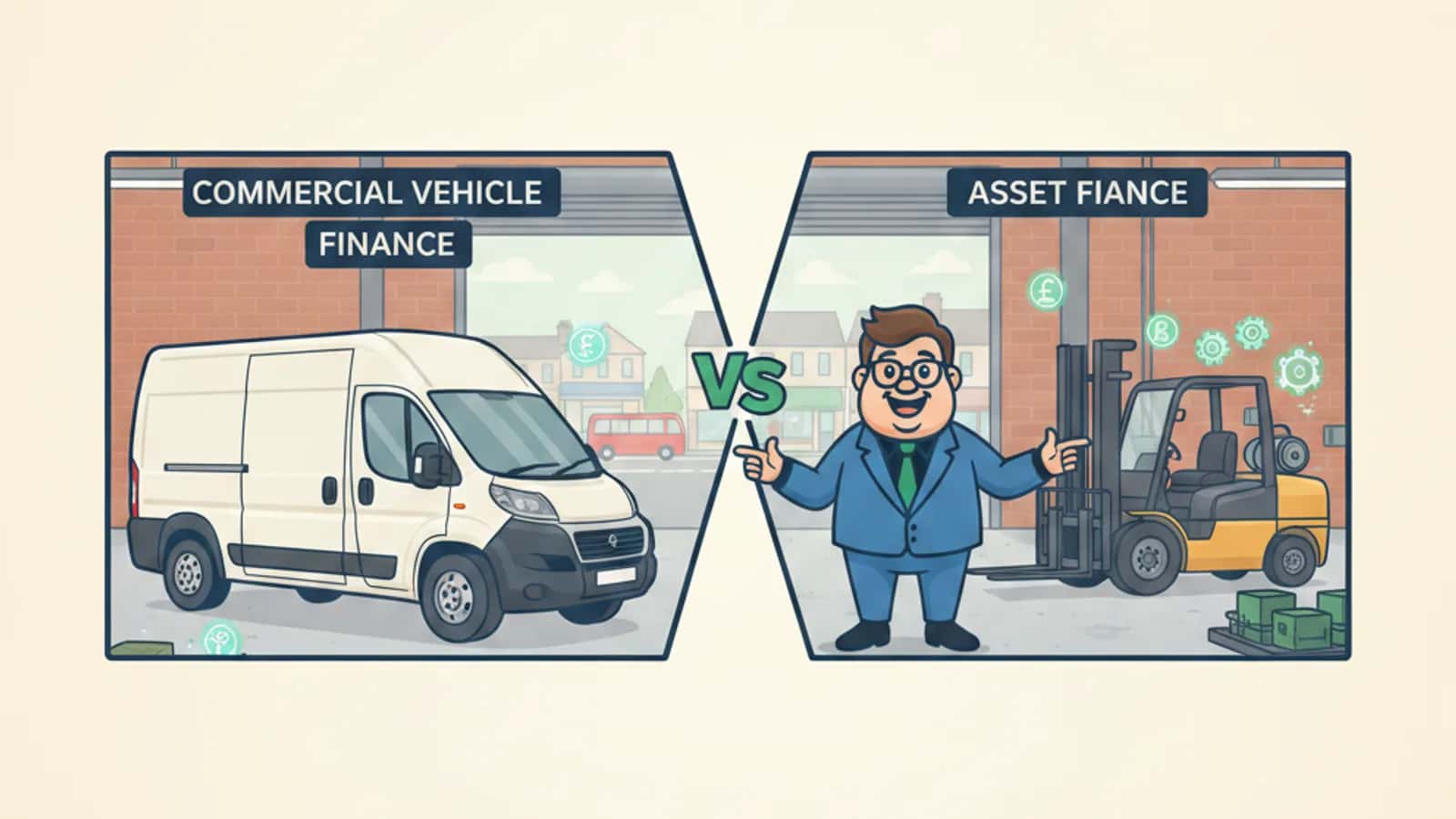
Quick answer
Commercial vehicle finance is a specific type of asset finance designed for vans, trucks, and fleet vehicles. The broader asset finance category also covers plant, machinery, and equipment. Both use the same core products — hire purchase, finance lease, and contract hire — but differ in how lenders assess risk, structure deposits, handle tax treatment, and record the asset on your balance sheet. Choosing the right one depends on whether you want ownership, how you want to manage tax, and how quickly you need the vehicle on the road.
Key takeaways
- Commercial vehicle finance is a subset of asset finance — not a separate product category. The same lenders often fund both, but with different risk models for vehicles versus plant.
- Hire purchase gives you ownership at the end of the term; finance lease does not. That distinction drives the balance sheet and tax treatment.
- The UK asset finance market funds over £35 billion annually to businesses of all sizes, but commercial vehicle new business dipped 3% in early 2025 — meaning lenders are competing harder for quality deals.
- Deposits can start from 0% on some hire purchase agreements, depending on the lender and your business profile.
- Bad credit doesn't automatically disqualify you — specialist lenders assess the asset value and business trading history, not just credit score.
- Tax treatment differs by product: hire purchase lets you claim capital allowances; finance lease lets you deduct rental payments as operating expenses.
- Finance terms typically run 12–60 months for commercial vehicles in the UK.
- Maintenance can be bundled into contract hire packages but is usually separate on hire purchase and finance lease.
- New and used vans are both financeable — used vehicles just need a clear valuation and sometimes a higher deposit.
- A two-minute eligibility check with no hard credit search is now the standard starting point for specialist asset finance platforms.
What Exactly Is Commercial Vehicle Finance and How Is It Different from Regular Asset Finance
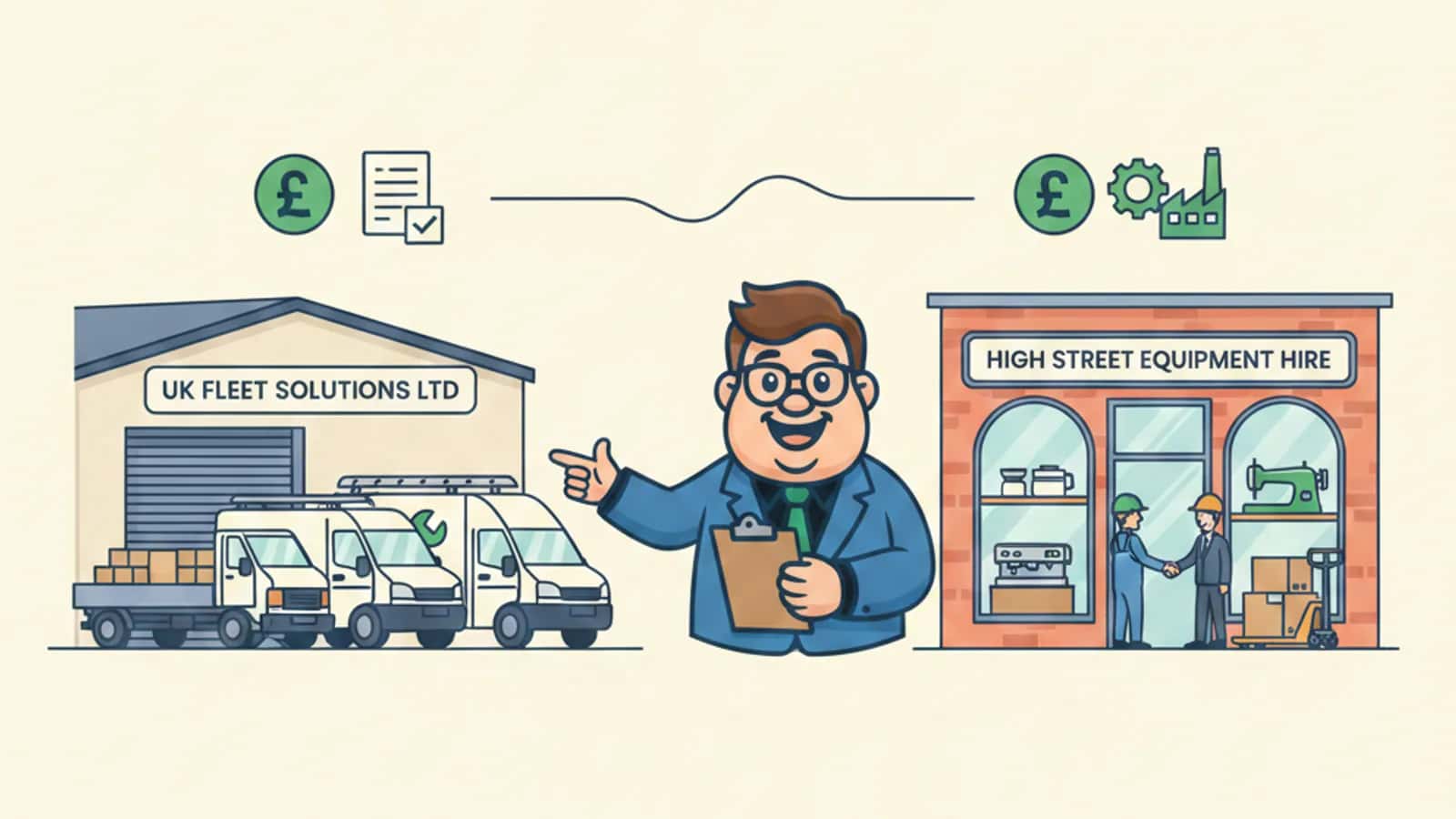
Commercial vehicle finance is asset finance applied specifically to road-going business vehicles — vans, HGVs, minibuses, refrigerated trucks, and fleet cars. Regular asset finance covers the same products but extends to plant, machinery, construction equipment, CNC machines, and any other business-critical asset.
The products are identical: hire purchase, finance lease, and operating lease. What changes is how lenders price the deal. Commercial vehicles have well-established residual values, active secondary markets, and predictable depreciation curves. That makes them lower-risk collateral than, say, a bespoke piece of manufacturing equipment. So lenders often move faster and offer more flexible deposits on vehicles than on specialist plant.
The practical difference for buyers
- Vehicle-specialist lenders understand DVLA registration, fleet management, and road transport regulations — they speak your language.
- Asset finance for plant and machinery may require a specialist valuation; commercial vehicles rarely do below £150k.
- Both sit under the same FCA-regulated framework in the UK, so consumer protections and disclosure rules apply equally.
For a broader overview of how asset finance works across all categories, see Asset Finance for UK Businesses.
Which Option Is Cheaper: Commercial Vehicle Finance vs Asset Finance Products for Small Businesses
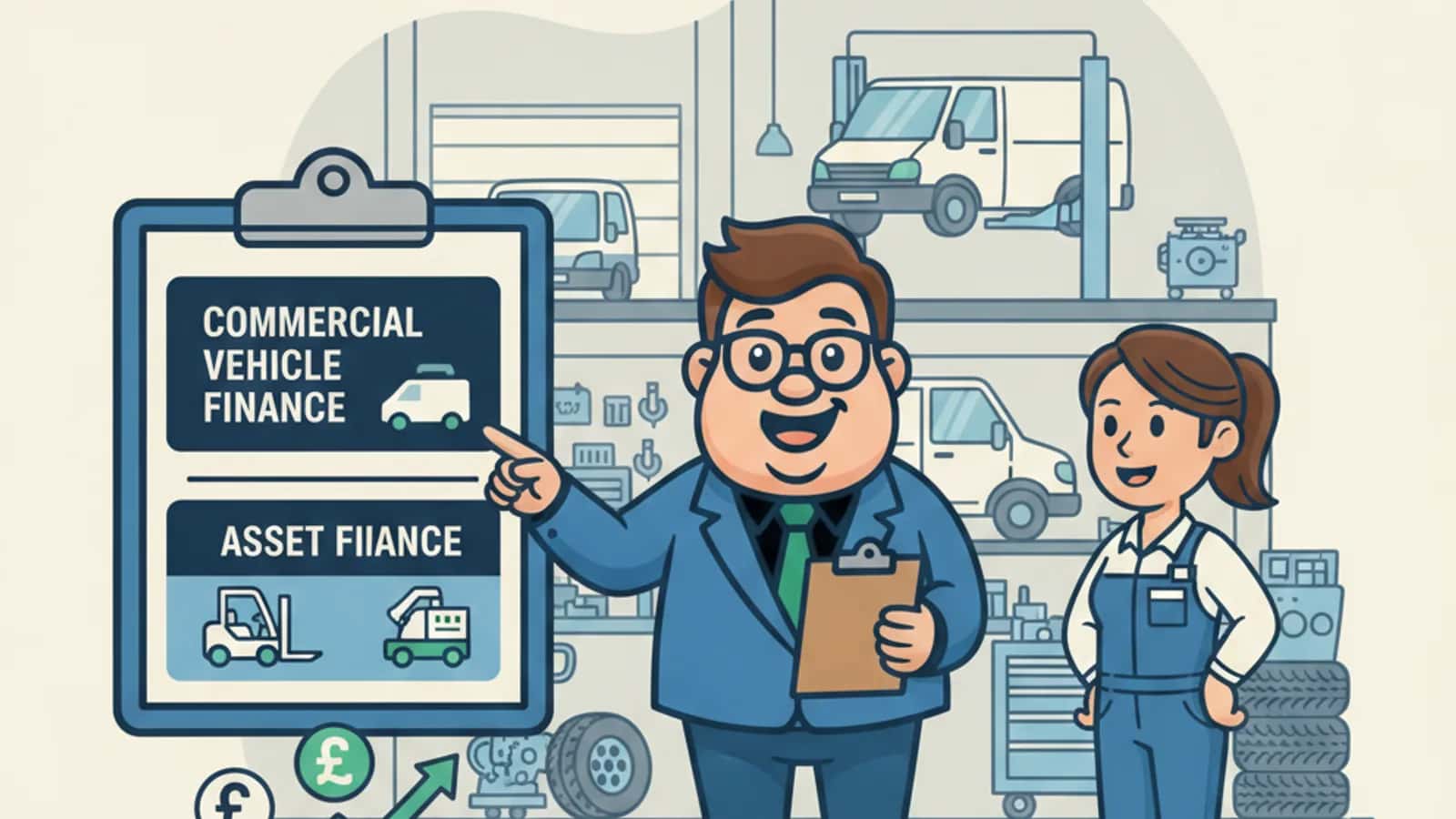
There's no single cheapest option — it depends on whether you want to own the vehicle, how you treat tax, and what your cash flow looks like month to month.
Hire purchase typically has a higher monthly payment but builds equity. At the end of the term, the van is yours. Finance lease usually has lower monthly payments because you're not paying toward ownership — but you hand the vehicle back (or arrange a sale on the lender's behalf) at the end.
Hire Purchase
- Monthly Cost
- Higher
- Ownership
- Yes (after final payment)
- Best For
- Long-term asset retention
Finance Lease
- Monthly Cost
- Lower
- Ownership
- No
- Best For
- Regular fleet refresh cycles
Contract Hire
- Monthly Cost
- Lowest (often)
- Ownership
- No
- Best For
- Fixed-cost fleet management
Operating Lease
- Monthly Cost
- Low–mid
- Ownership
- No
- Best For
- Short-term or seasonal use
Which is right for you?
Choose hire purchase if
you run vehicles hard, keep them beyond five years, or want to claim capital allowances upfront.
Choose finance lease if
you want lower monthly outgoings, prefer off-balance-sheet treatment (under certain accounting standards), or plan to upgrade regularly.
For context on how interest rates affect total cost, the average business loan interest rates guide is worth reviewing before you commit to a term.
Pros and Cons of Hire Purchase Versus Lease for Commercial Vehicles
Hire purchase
Pros
- You own the asset outright after the final payment
- Eligible for Annual Investment Allowance (AIA) — potentially 100% first-year tax deduction
- No mileage restrictions
- Asset appears on your balance sheet, which can strengthen borrowing capacity
Cons
- Higher monthly payments than lease options
- You carry the depreciation risk
- Asset is on your balance sheet (relevant if you're managing debt covenants)
Finance lease
Pros
- Lower monthly payments
- Lender carries residual value risk
- Payments are fully deductible as operating expenses
- Easier to upgrade vehicles at end of term
Cons
- No ownership at the end
- You may owe a balloon payment or need to arrange a sale
- Mileage and condition restrictions may apply
Are There Tax Advantages to Commercial Vehicle Financing
Yes — and the product you choose determines which tax treatment applies.
Hire purchase: The business is treated as the owner from day one for tax purposes. That means you can claim capital allowances on the vehicle's purchase price. Under the Annual Investment Allowance, qualifying commercial vehicles can attract 100% first-year relief up to the AIA limit. This is a significant cash flow advantage in year one.
Finance lease: You never own the vehicle, so no capital allowances. Instead, the full rental payment is deductible as a business expense — straightforward, no depreciation calculations needed.
Contract hire / operating lease: Lease payments are fully deductible as operating costs. VAT-registered businesses can typically reclaim 50% of VAT on cars and 100% on commercial vehicles used exclusively for business.
Speak to your accountant before choosing a product purely on tax grounds — the right structure depends on your business's overall tax position.
How Much Deposit Do I Need for Commercial Vehicle Financing
Deposits on commercial vehicle finance in the UK typically range from 0% to 20% of the vehicle's value, depending on the lender, your business credit profile, and the asset type.
- 0% deposit options
- are available through specialist lenders for established businesses with strong trading history and good credit.
- 10% deposit
- is a common baseline for hire purchase on new commercial vehicles.
- 20%+ deposit
- may be required for used vehicles, newer businesses, or applicants with adverse credit.
Flexible deposits are one of the strongest reasons to use a specialist asset finance platform rather than a high-street bank. Specialist partners understand that a haulage firm replacing a broken-down HGV can't always tie up capital in a large deposit — and they structure deals accordingly.
Decision rule: If cash flow is tight but the asset is strong (a late-plate van with clear provenance), push for a low-deposit hire purchase deal. If you have capital available, a larger deposit reduces monthly payments and total interest paid.
Can I Get Commercial Vehicle Finance with Bad Credit in the UK
Bad credit doesn't automatically block you from commercial vehicle finance. Specialist lenders assess the deal differently from high-street banks.
What matters most to specialist lenders:
- Asset quality
- a van with a strong resale value is good collateral
- Trading history
- 12+ months of business trading significantly improves your options
- Affordability
- can the business service the monthly payments from its cash flow?
A soft eligibility check (no hard credit search) is now standard at the application stage for specialist platforms. This protects your credit file while you explore options. See business loans with no credit check for related options if asset finance doesn't fit your situation.
What Types of Businesses Qualify for Commercial Vehicle Asset Finance
Most UK businesses that need a vehicle for commercial purposes can access some form of asset finance. Lenders look at the business type, trading history, and the asset itself.
Well-suited business types
- Haulage and logistics operators expanding or replacing fleet
- Construction firms needing vans, tippers, or crew carriers
- Tradespeople (electricians, plumbers, builders) buying their first or second van
- Manufacturers running delivery or distribution vehicles
- Agricultural businesses with mixed-use vehicle needs
Minimum criteria (typical, not universal)
- Registered UK business (sole trader, partnership, limited company)
- 6–12 months trading history (some lenders accept less for strong asset deals)
- Ability to demonstrate affordability through bank statements or accounts
Startups can access commercial vehicle finance, though options are narrower. See business loans for startups for alternative routes if you're pre-revenue.
Differences Between Secured and Unsecured Commercial Vehicle Loans
Commercial vehicle finance is almost always secured — the vehicle itself is the security. If you stop making payments, the lender can repossess the asset. This is what makes the rates lower than unsecured business loans.
Secured (asset finance)
- Lower interest rates because the lender holds the asset as collateral
- Easier to access for businesses with limited credit history
- Repossession risk if payments stop
Unsecured business loans
- No asset at risk (beyond personal guarantee in some cases)
- Higher rates, reflecting higher lender risk
- Useful when you need cash for running costs alongside a vehicle purchase
For most van and fleet buyers, secured asset finance is the right tool. Unsecured loans make more sense for working capital gaps. See the guide to different types of business loans for a full comparison.
How Long Are Typical Commercial Vehicle Finance Terms in the UK
Standard commercial vehicle finance terms run 12 to 60 months, with 36–48 months being the most common for vans and light commercial vehicles.
- 12–24 months:
- Higher monthly payments, lower total interest. Good for short-term needs or when you want to own the asset quickly.
- 36–48 months:
- The most common range — balances monthly affordability with total cost.
- 60 months:
- Lower monthly payments but higher total interest. Common for higher-value HGVs or fleet deals.
HGVs and heavy plant sometimes extend to 72 months, particularly on new vehicles with strong residual values.
Can I Include Maintenance Costs in My Commercial Vehicle Finance Package
Yes — but it depends on the product. Contract hire is the most common way to bundle maintenance. A fully maintained contract hire agreement covers scheduled servicing, tyres, and sometimes breakdown cover within the monthly rental.
Hire purchase and finance lease do not include maintenance by default. You manage servicing separately. Some lenders offer a separate maintenance plan alongside the finance agreement, but it's not built in.
Decision rule: If you're running a large fleet and want predictable, fixed monthly costs with no surprise repair bills, contract hire with maintenance is worth the higher monthly rate. If you run a small number of vehicles and have an existing workshop relationship, keep finance and maintenance separate.
What Happens If My Business Can't Make Payments on a Financed Commercial Vehicle
Missing payments on a secured commercial vehicle finance agreement has clear consequences. The lender will contact you, typically offering a short grace period or restructuring options before escalating.
Typical escalation path:
- Missed payment — lender issues a default notice
- Arrears accumulate — lender may apply penalty charges
- Formal demand — lender issues a termination notice
- Repossession — lender recovers the vehicle (their security)
- Shortfall — if the vehicle's sale price doesn't cover the outstanding balance, you may owe the difference
What to do if you're struggling
- Contact the lender before you miss a payment — most specialist lenders will restructure rather than repossess
- Check whether your agreement includes a voluntary termination clause (common in hire purchase under the Consumer Credit Act, though business agreements vary)
- Review your business cash flow options — a short-term cash injection may bridge a temporary gap
Is Commercial Vehicle Finance Better for New or Used Vans
Both new and used vans are financeable, and the right choice depends on your budget, how long you'll keep the vehicle, and what the lender's criteria allow.
New vans
- Easier to finance — clear value, manufacturer warranty, lower lender risk
- Better deposit terms and rates available
- Higher purchase price means higher monthly payments
Used vans
- Lower monthly payments for equivalent vehicle capability
- May require a higher deposit (lender manages residual value risk)
- Age and mileage caps apply — most lenders won't finance vehicles over 10 years old or 150,000 miles at the end of the term
- Inspection or HPI check may be required
Decision rule: For fleet buyers replacing vehicles on a cycle, used vans at 2–4 years old often represent the best value — the sharpest depreciation has already happened, and finance is still readily available. For a single operator buying their first van, new with a full warranty reduces the risk of costly downtime.
The MV Asset Finance model launched in late 2025 specifically structures truck, trailer, and van finance across new and used stock, reflecting demand for both.
What Are Common Mistakes Businesses Make When Financing Commercial Vehicles
These are the errors that cost businesses money or delay their vehicle acquisition:
- 1
Focusing only on monthly payment, not total cost
a longer term lowers monthly payments but increases total interest paid.
- 2
Not checking the end-of-term position
finance lease balloon payments catch operators off guard.
- 3
Applying to multiple lenders directly
multiple hard searches damage your credit file. Use a platform with a single soft check.
- 4
Ignoring VAT treatment
VAT-registered businesses can reclaim input VAT on commercial vehicles used exclusively for business. Not claiming it is leaving money on the table.
- 5
Choosing the wrong product for the asset's expected life
a 60-month finance lease on a van you'll replace in 36 months creates an early termination problem.
- 6
Not disclosing adverse credit upfront
specialist lenders can often work around it, but only if they know about it from the start.
- 7
Underestimating the deposit requirement for used stock
used vehicle deals often need 10–20% deposit, which needs to be in the plan before you find the vehicle.
Conclusion: Matching the Right Finance Product to Your Fleet Need
Commercial vehicle finance and asset finance aren't competing options — one sits inside the other. Understanding where they overlap and where they diverge is what puts you in control of the deal.
The short version
- Need to own the van long-term? Hire purchase.
- Want lower monthly costs and plan to upgrade regularly? Finance lease or contract hire.
- Running a mixed fleet of vehicles and plant? Asset finance covers both — you don't need separate products.
- Bad credit or tight deposit? Specialist lenders exist for exactly this situation.
The UK asset finance market is active and competitive. Lenders want to write good vehicle deals. The businesses that get the best terms are the ones that come prepared — knowing what product they need, what deposit they can put down, and what term suits their cash flow.
Next steps
- Run a 2-minute eligibility check at Funding Fred — no hard credit search, no obligation, and it covers hire purchase, finance lease, and contract hire across a specialist partner panel.
- If you're comparing finance against other funding routes, the asset finance costs and eligibility guide covers the full picture.
- For businesses with a broader funding question alongside the vehicle need, the alternative business funding strategies guide is a useful reference.
Asset Finance. Without the Fuss. Check Eligibility Now — no hard check to start.
Further reading
Frequently asked questions
What Exactly Is Commercial Vehicle Finance and How Is It Different from Regular Asset Finance?
Commercial vehicle finance is asset finance applied specifically to road-going business vehicles — vans, HGVs, minibuses, refrigerated trucks, and fleet cars. Regular asset finance covers the same products but extends to plant, machinery, construction equipment, CNC machines, and any other business-critical asset.
Which Option Is Cheaper: Commercial Vehicle Finance vs Asset Finance Products for Small Businesses?
There's no single cheapest option — it depends on whether you want to own the vehicle, how you treat tax, and what your cash flow looks like month to month.
Are There Tax Advantages to Commercial Vehicle Financing?
Yes — and the product you choose determines which tax treatment applies.
How Much Deposit Do I Need for Commercial Vehicle Financing?
Deposits on commercial vehicle finance in the UK typically range from 0% to 20% of the vehicle's value, depending on the lender, your business credit profile, and the asset type.
Can I Get Commercial Vehicle Finance with Bad Credit in the UK?
Bad credit doesn't automatically block you from commercial vehicle finance. Specialist lenders assess the deal differently from high-street banks.
What Types of Businesses Qualify for Commercial Vehicle Asset Finance?
Most UK businesses that need a vehicle for commercial purposes can access some form of asset finance. Lenders look at the business type, trading history, and the asset itself.
Written by
The Funding Fred Editorial Team creates plain-English guides to help business owners understand funding options, eligibility, and application readiness before they compare finance options.
Reviewed by
UK business finance content reviewer
Robert reads our UK business finance guides before they go live, checking each one is accurate, easy to follow, and reflects how lending actually works today — not how a brochure says it should. He's listed on the FCA Register, approved as an SMF3 (AR) Executive Director at Switcha Limited, and connected to Lucky Growth Partners Ltd through its appointed representative relationship, so the regulated detail gets a properly qualified second read.
Sources
- What Is Asset Finance
- Commercial Vehicle Finance
- Asset Finance
- Commercial Vehicle Finance Falls 3 Amid Broader Asset Finance Growth
- MV Commercial Unveils MV Asset Finance To Support UK Business Fleet Growth And Asset Investment
- Fleet Van Finance 2026 Guide
- UK Asset Finance Trends Modest Growth With Clear Sector Differences
- How MV Asset Finance Structures Truck Trailer And Van Finance