
How Invoice Financing Works When Your Customers Are Slow to Pay
Invoice financing lets UK businesses unlock cash tied up in unpaid invoices without waiting 30, 60, or 90 days for customers to settle. A specialist provider advances 70–95% of the invoice value — usually within 24–48 hours — and releases the remaining balance (minus fees) once your customer eventually pays.

Quick answer
Invoice financing lets UK businesses unlock cash tied up in unpaid invoices without waiting 30, 60, or 90 days for customers to settle. A specialist provider advances 70–95% of the invoice value — usually within 24–48 hours — and releases the remaining balance (minus fees) once your customer eventually pays. You've already done the work. Invoice financing means you don't have to wait to get paid for it.
Key takeaways
- Invoice financing advances 70–95% of an invoice's face value within 24–48 hours of submission, covering payroll, suppliers, and overheads while you wait for slow-paying customers
- The two main types are invoice factoring (the provider manages collections) and invoice discounting (you retain control of your sales ledger)
- Approval is based primarily on your customer's creditworthiness, not your own credit score — making it accessible to businesses that might not qualify for a traditional loan
- Costs typically run 1.5–4% of annual turnover for traditional facilities, or 1–5% per invoice with some fintech providers
- Selective (spot) financing is available — you don't have to finance every invoice, just the ones where cash flow timing matters most
- Startups can qualify, but most providers want to see at least a few months of trading with verifiable B2B invoices
- If a customer doesn't pay, the outcome depends on whether your facility is recourse or non-recourse — this is a critical distinction to understand before signing
- The UK government has removed restrictions that previously blocked small firms from assigning receivables, making invoice finance more accessible than ever
- Late payment is now described as "one of the biggest threats to SME survival" in 2026, driving strong growth in invoice finance uptake across UK sectors
- A 2-minute eligibility check with no hard credit search is enough to get matched with specialist invoice finance partners
What Exactly Is Invoice Financing and How Does It Help Small Businesses

Invoice financing is a funding arrangement where a business sells or pledges its outstanding invoices to a third-party provider in exchange for an immediate cash advance. Instead of waiting weeks or months for a customer to pay, you get access to most of that money now.
For UK small businesses, the practical benefit is straightforward:
- You issue an invoice to a business customer on 30, 60, or 90-day terms
- You submit that invoice to an invoice finance provider
- The provider advances 70–95% of the invoice value, typically within 24–48 hours
- When your customer eventually pays (on their usual schedule), the provider releases the remaining balance minus their fee
Late payment is now described as "one of the biggest threats to SME survival" in 2026. Invoice financing doesn't stop customers paying late — but it means their slow payment schedule no longer dictates *your* cash flow. Wages get covered. Suppliers get paid. New contracts get taken on. The timing problem gets solved.
This is not a loan in the traditional sense. You're not borrowing against future revenue — you're accessing money you've already earned and are simply waiting to receive.
How Invoice Financing Works When Your Customers Are Slow to Pay: The Step-by-Step Process
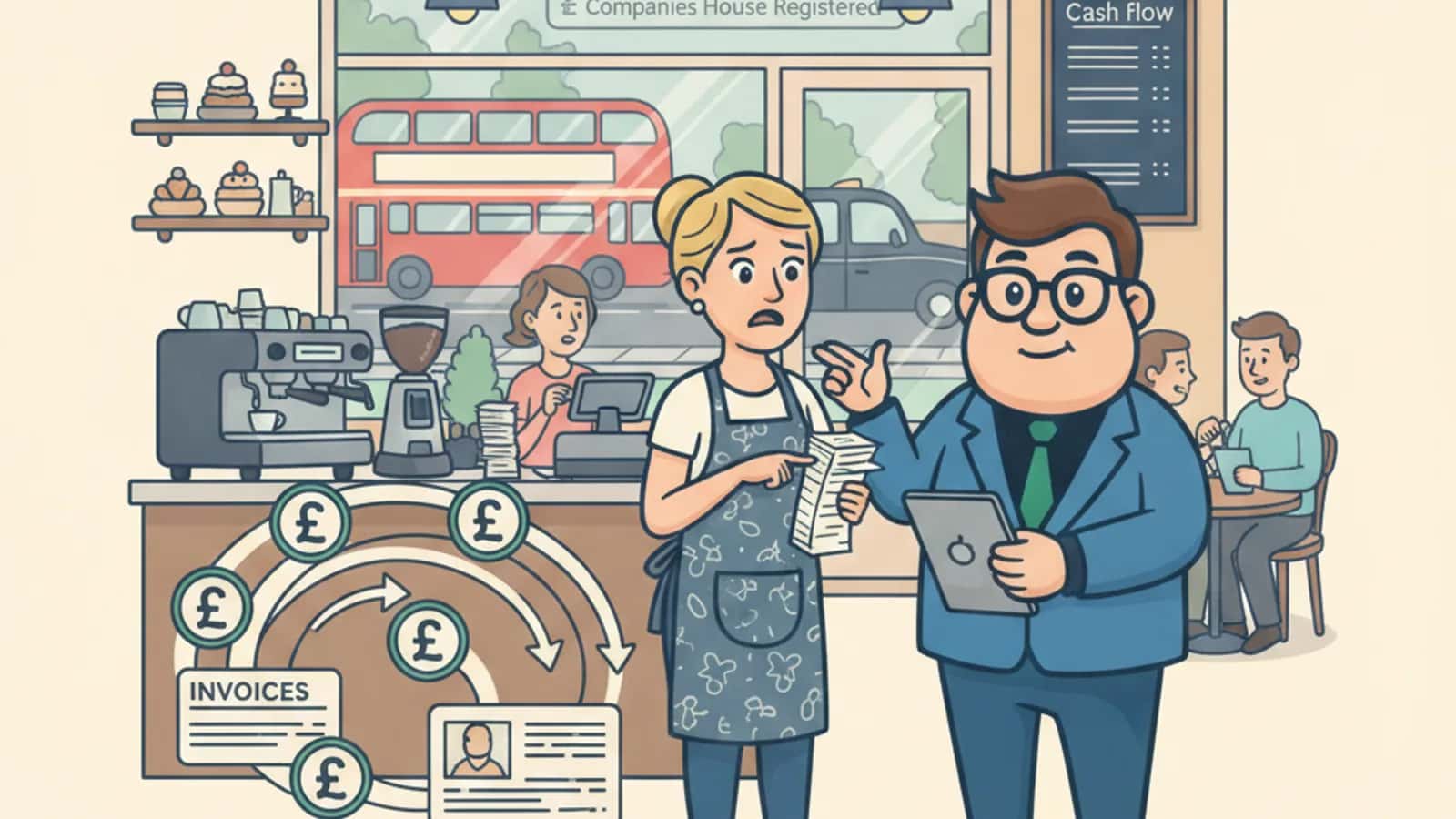
The mechanics are simple, and the speed is what makes it genuinely useful when customers drag their feet.
Step 1 — Complete the work and issue the invoice You deliver goods or services to a business customer and raise an invoice on your standard payment terms.
Step 2 — Submit the invoice to your provider You send the invoice details to your invoice finance provider. Many platforms now allow this digitally, with underwriting performed automatically based on invoice data and buyer risk.
Step 3 — Receive your advance The provider assesses your customer's creditworthiness (not just yours) and advances 70–95% of the invoice value — often within 24 hours of approval.
Step 4 — Your customer pays on their terms Your customer pays on their usual schedule — even if that's 60 or 90 days. With invoice discounting, they pay you directly. With factoring, they may pay the provider.
Step 5 — Receive the remaining balance Once payment clears, the provider releases the remaining 5–30%, minus their fees.
The key insight: The provider's cash is tied up for as long as your customer takes to pay. That's why debtor quality matters — providers look closely at your customer's payment history when setting advance rates and fees. Reliable but slow-paying customers (like large corporates) often attract the best terms.
For a deeper look at how this applies to specific sectors, see our guide on how invoice financing works for UK contractors and freelancers on 30–90 day terms.
Are There Different Types of Invoice Financing Like Factoring or Discounting
Yes — and the distinction matters, especially when your customers are slow to pay.
Invoice Factoring
The finance provider takes over management of your sales ledger and, in many cases, chases payment directly from your customers. Your customers are typically notified that a third party is involved. This can work well when buyers are habitually late, as the provider's collections team handles the follow-up. The trade-off is less control over the customer relationship.
Invoice Discounting
You retain full control of collections. Your customers continue to pay you as normal, and the arrangement remains confidential. Once payment arrives, you repay the advance plus fees. This suits businesses with strong internal credit control and customers they'd prefer not to involve a third party with.
Selective (Spot) Invoice Finance
Rather than financing your entire ledger, you choose individual invoices to fund — useful for bridging specific cash flow gaps without committing to a whole-ledger facility.
Collections managed by
- Invoice Factoring
- Provider
- Invoice Discounting
- You
- Selective Finance
- You
Customer notified
- Invoice Factoring
- Usually yes
- Invoice Discounting
- Usually no
- Selective Finance
- Usually no
Advance rate
- Invoice Factoring
- 70–90%
- Invoice Discounting
- 80–95%
- Selective Finance
- 70–90%
Best for
- Invoice Factoring
- Businesses wanting admin support
- Invoice Discounting
- Businesses with strong credit control
- Selective Finance
- Occasional cash flow gaps
Commitment
- Invoice Factoring
- Whole ledger typically
- Invoice Discounting
- Whole ledger typically
- Selective Finance
- Single invoices
For a detailed comparison of selective versus whole-ledger facilities, see our guide on selective invoice finance vs whole ledger funding.
How Much Does Invoice Financing Typically Cost Compared to a Bank Loan
Invoice financing typically costs 1.5–4% of annual turnover for traditional UK facilities. Fintech providers may price per invoice — for example, some charge up to 4.99% per invoice, with additional interest if the invoice remains outstanding beyond a set period.
Costs break down into two main components:
- Service/management fee
- covers administration, credit control (if factoring), and ledger management. Usually a percentage of turnover.
- Discount/interest charge
- calculated on the amount advanced, accruing daily until your customer pays. The longer your customer takes to pay, the more this costs.
Compared to a traditional bank loan
- A bank loan charges interest on the full amount borrowed from day one, regardless of when you need the cash
- Invoice financing charges only on what's advanced, only for as long as it's outstanding
- Bank loans require strong credit history, often personal guarantees, and can take weeks to arrange
- Invoice finance is typically faster to set up, scales with your turnover, and doesn't require giving up equity
For businesses with healthy revenue but slow-paying customers, invoice financing can be more cost-effective than carrying a standing overdraft or revolving credit facility. See our invoice finance vs business loans comparison for a fuller breakdown.
What Credit Score Do I Need to Get Approved for Invoice Financing
There's no fixed credit score threshold for invoice financing — and this is one of its most important advantages. Approval is based primarily on your customers' creditworthiness, not your own.
Providers want to know:
- Are your customers established businesses with a track record of paying (even if slowly)?
- Are your invoices for completed work, undisputed, and legally enforceable?
- Is there significant concentration risk (e.g., one customer making up 80%+ of your ledger)?
Your own business credit history matters, but it's secondary. A business with a modest credit profile but strong, creditworthy customers can often access invoice finance where a traditional lender would decline.
For businesses worried about credit checks, see our guide on invoice financing without a credit check in the UK. The 2-minute eligibility check on Funding Fred involves no hard credit search to start — no obligation, no impact on your credit file.
Can Startups With Less Than Two Years in Business Qualify for Invoice Financing
Startups can qualify for invoice financing, but the bar is slightly different from established businesses. Most providers want to see at least some trading history — typically a few months of verifiable B2B invoices — rather than a full two years of accounts.
What matters more than age
- You have real, verifiable invoices from creditworthy business customers
- Your invoices are for completed work (not proforma or advance billing)
- Your customers are established businesses, not individuals
What can make it harder
- Very new businesses with no track record at all
- Customers who are also startups or have poor payment histories
- Invoices that are disputed or conditional
If you're a newer business, selective invoice financing (spot factoring) is often the most accessible entry point. You can finance individual invoices without committing to a full facility, which suits businesses still building their ledger.
How Quickly Can I Get Cash After Submitting an Invoice
For most UK invoice finance facilities, the advance arrives within 24–48 hours of the invoice being approved. Some digital providers offer same-day funding once the facility is set up and the invoice passes automated underwriting.
The initial setup — completing eligibility checks, agreeing terms, and onboarding — typically takes a few days to a week. After that, submitting invoices and receiving advances becomes a fast, repeatable process.
Factors that affect speed
- Whether your customer is already known and credit-approved by the provider
- Whether the invoice is clean (undisputed, correctly formatted, for completed work)
- Whether you're using a digital platform with automated underwriting or a more manual process
For businesses that need cash urgently, see our guide on same-day business funding options.
What Happens If My Customer Never Pays Their Invoice
This is the question most business owners ask — and the answer depends on whether your facility is recourse or non-recourse.
Recourse invoice financing (most common in the UK): If your customer doesn't pay, the liability returns to you. You'll need to repay the advance the provider made. This is the standard arrangement for most facilities.
Non-recourse invoice financing: The provider absorbs the credit risk if your customer becomes insolvent. This costs more, but it protects you from bad debt. Not all providers offer this, and it typically only covers insolvency — not disputes or fraud.
What to watch for
- Disputed invoices are rarely covered — if your customer raises a dispute, the advance may need to be repaid regardless
- Fraudulent invoices (invoices for work not done) are a serious breach of the financing agreement
- Providers will often require credit insurance on your debtors, especially for larger facilities
For a full breakdown of what happens in non-payment scenarios, read our guide on bad debts and invoice financing.
Which Industries Use Invoice Financing Most Often
Invoice financing is used across any sector where businesses invoice other businesses on credit terms. In practice, the highest uptake is in:
- Recruitment and staffing
- weekly payroll must be covered long before clients settle their monthly invoices
- Construction
- long project cycles, retentions, and 60–90 day payment terms create persistent cash flow gaps
- Logistics and haulage
- fuel, drivers, and maintenance costs are immediate; customer payment often isn't
- Manufacturing and wholesale
- large order values tied up in 30–90 day receivables
- Business services and consultancies
- project-based billing with slow corporate clients
- Exporters
- overseas customers on extended terms, with currency and payment timing complexity
The UK government's removal of restrictions on invoice assignment has made it easier for businesses in these sectors to access facilities regardless of what their contracts say about payment assignment. For agencies and consultancies specifically, see our guide on invoice finance for agencies and consultancies.
Can I Choose Which Specific Invoices to Finance, or Do I Have to Finance All of Them
You can choose. Selective invoice financing (also called spot factoring) lets you finance individual invoices rather than your entire sales ledger. You pick the invoices where the cash flow timing matters most and leave the rest outside the facility.
Which is right for you?
Choose selective financing if
- You only occasionally need to bridge a cash flow gap
- You have one or two large, slow-paying customers causing the problem
- You want to test invoice financing before committing to a whole-ledger facility
Choose whole-ledger financing if
- Most of your customers pay slowly and you need consistent working capital
- You want the lowest possible fees (whole-ledger facilities typically offer better rates)
- You want the provider to manage collections as part of the service
There's no obligation to finance every invoice. The flexibility is one of the reasons invoice financing suits businesses that want to stay in control of their cash flow without signing up to a rigid funding structure.
How Invoice Financing Works When Your Customers Are Slow to Pay: The Biggest Risks to Understand
Invoice financing is practical and often lower-risk than traditional lending — but it's not without pitfalls.
1. Recourse risk
If your customer doesn't pay, you repay the advance. For businesses with unreliable customers, this can create a new cash flow problem rather than solving one.
2. Concentration risk
If one customer makes up a large share of your ledger, providers may cap how much they'll advance against that customer's invoices. Over-reliance on a single debtor is a red flag for most providers.
3. Cost creep on slow payers
The longer your customer takes to pay, the more the discount charge accrues. If a customer takes 120 days instead of 60, your effective cost doubles. Model this before committing.
4. Disputed invoices
A customer raising a dispute can freeze the advance and trigger a repayment obligation. Keep your invoicing clean, your contracts clear, and your delivery documentation solid.
5. Facility lock-in
Some whole-ledger facilities require a minimum term or notice period to exit. Read the contract carefully before signing.
What Mistakes Do Small Business Owners Make With Invoice Financing
The most common mistakes are avoidable with a little preparation.
- Financing disputed or high-risk invoices
- if there's any chance a customer will query the invoice, don't finance it. A dispute can trigger repayment of the advance at the worst possible time.
- Not modelling the true cost
- factor in both the service fee and the daily discount charge. If your customer pays in 90 days, calculate the cost over 90 days, not 30.
- Choosing the wrong facility type
- businesses that want to maintain confidential customer relationships sometimes sign up for disclosed factoring without realising their customers will be notified.
- Ignoring concentration limits
- if one customer dominates your ledger, check the provider's concentration limits before relying on that invoice for a large advance.
- Treating it as a last resort
- invoice financing works best as a planned working capital tool, not an emergency measure. Setting up a facility before you desperately need it means you can draw on it quickly when cash flow tightens.
FAQ: How Invoice Financing Works When Your Customers Are Slow to Pay
Does invoice financing affect my relationship with my customers?
With invoice discounting, customers are not notified and the arrangement stays confidential. With factoring, customers may be aware that a third party is managing collections. Check which type your facility uses before signing.
Is invoice financing the same as a business loan?
No. Invoice financing advances money against invoices you've already issued. You're not taking on new debt — you're accessing cash you've already earned. It doesn't appear on your balance sheet in the same way as a loan.
What's the minimum invoice size or turnover needed?
Facilities at Funding Fred start from £10,000. There's no fixed minimum invoice size, but very small invoices may not be cost-effective to finance individually. Whole-ledger facilities typically suit businesses with £100k+ annual turnover.
Will invoice financing show up on my credit file?
The initial eligibility check involves no hard credit search. If you proceed to a full application, a credit check may be carried out, but the facility itself does not typically appear as a loan on your credit record.
Can I use invoice financing alongside other funding?
Yes. Many businesses use invoice financing alongside an overdraft, asset finance, or a term loan. They serve different purposes and can complement each other.
How is the fee calculated?
Fees typically include a service charge (a percentage of turnover or invoice value) and a discount charge (interest on the advance, calculated daily). The total cost depends on the facility type, your sector, and how long your customers take to pay.
What documents do I need to apply?
Typically: recent management accounts or filed accounts, a sample of outstanding invoices, details of your main customers, and basic business information. The 2-minute eligibility check at Funding Fred requires far less to get started.
Can I use invoice financing if my customers are overseas?
Yes. Export invoice financing is available for UK businesses with overseas customers. See our guide on invoice financing for UK exporters for specifics on currency and international payment terms.
Next steps
Slow-paying customers are a cash flow problem, not a revenue problem. The work is done. The invoice is issued. The money is owed. Invoice financing bridges the gap between when you earn it and when you receive it — without taking on traditional debt, giving up equity, or waiting for a bank to decide. For more cash-flow comparisons and practical guidance, browse our invoice finance guides.
For UK businesses in recruitment, construction, logistics, manufacturing, and services, invoice financing is increasingly a standing working capital tool rather than a last resort. Facilities scale with turnover, approval is based on your customers' creditworthiness rather than just your own, and the advance arrives in 24–48 hours rather than weeks.
Actionable next steps:
- Check eligibility now — the 2-minute check at Funding Fred involves no hard credit search and no obligation
- Identify your slow-paying customers — which invoices are consistently sitting at 60–90 days? These are the ones to finance first
- Decide on facility type — if you want to retain control of collections, invoice discounting. If you want the admin handled, factoring. If you only need occasional funding, selective finance
- Model the cost — use the advance rate and daily discount charge to calculate the real cost against your margin. For most businesses, it's comfortably within budget
- Get matched with specialist partners — Funding Fred connects UK businesses with specialist invoice finance partners offering facilities from £10k to £5m+
Invoice Finance. Without the Fuss. Check Eligibility Now — no hard check to start, fast decision, no obligation.
Further reading
Written by
The Funding Fred Editorial Team creates plain-English guides to help business owners understand funding options, eligibility, and application readiness before they compare finance options.
Reviewed by
UK business finance content reviewer
Robert reads our UK business finance guides before they go live, checking each one is accurate, easy to follow, and reflects how lending actually works today — not how a brochure says it should. He's listed on the FCA Register, approved as an SMF3 (AR) Executive Director at Switcha Limited, and connected to Lucky Growth Partners Ltd through its appointed representative relationship, so the regulated detail gets a properly qualified second read.
Sources
- Late Payment Crisis 2026 - [2] The Rise And Evolution Of Invoice Finance - https://blog.currencycloud.com/the-rise-and-evolution-of-invoice-finance [3] Invoice Financing - https://www.netsuite.com/portal/resource/articles/accounting/invoice-financing.shtml [4] Restrictions Lifted On Invoice Finance To Help Small Firms Grow - https://www.gov.uk/government/news/restrictions-lifted-on-invoice-finance-to-help-small-firms-grow [5] Watch - https://www.youtube.com/watch?v=4om9AXqB9ko [6] Government Announces New Plans To Tackle Late Payments - https://www.bermans.co.uk/government-announces-new-plans-to-tackle-late-payments/ [7] Invoice Finance - https://www.billtrust.com/resources/blog/invoice-finance [8] Invoice Financing Software - https://www.bill.com/product/invoice-financing-software [9] Invoice Financing For Small Businesses - https://stripe.com/resources/more/invoice-financing-for-small-businesses [10] How Invoice Financing Transforming Vendor Payments - https://www.linkedin.com/pulse/how-invoice-financing-transforming-vendor-payments-metalbook-app-zjhzc
- British Business Bank finance options
- GOV.UK business finance support