
How to Apply for a Business Credit Card in the UK: Documents and Timeline
To apply for a business credit card in the UK, you'll need proof of business identity, director or owner details, Companies House registration (for limited companies), and recent financial information. Most providers give a decision within 24 to 72 hours online, though some specialist cards take longer.

Quick answer
To apply for a business credit card in the UK, you'll need proof of business identity, director or owner details, Companies House registration (for limited companies), and recent financial information. Most providers give a decision within 24 to 72 hours online, though some specialist cards take longer. The exact documents and timeline depend on the provider, your business structure, and your credit history.
Key takeaways
- Most UK business credit card applications ask for your Companies House number, business address, estimated annual turnover, and director details including date of birth and home address
- Sole traders apply in their own name and typically provide personal income details and a National Insurance number rather than company registration documents
- Online applications from major providers often return a decision within 24 to 72 hours; some fintech providers can approve and issue virtual cards the same day
- A hard credit search is usually run on the business and on the primary director or owner as part of the full application
- Funding Fred's eligibility check is a soft check only and sits before any provider application, it does not affect your credit file
- New businesses with less than 12 months of trading history can still apply, but the choice of providers narrows and limits may be lower
- Business credit cards are not covered by Section 75 of the Consumer Credit Act; chargeback rights through the card scheme may apply instead
- Card fees and interest are generally allowable business expenses, but the tax treatment of the underlying purchase depends on what was bought, speak to your accountant for advice specific to your situation
What Documents Do You Need to Apply for a Business Credit Card in the UK?
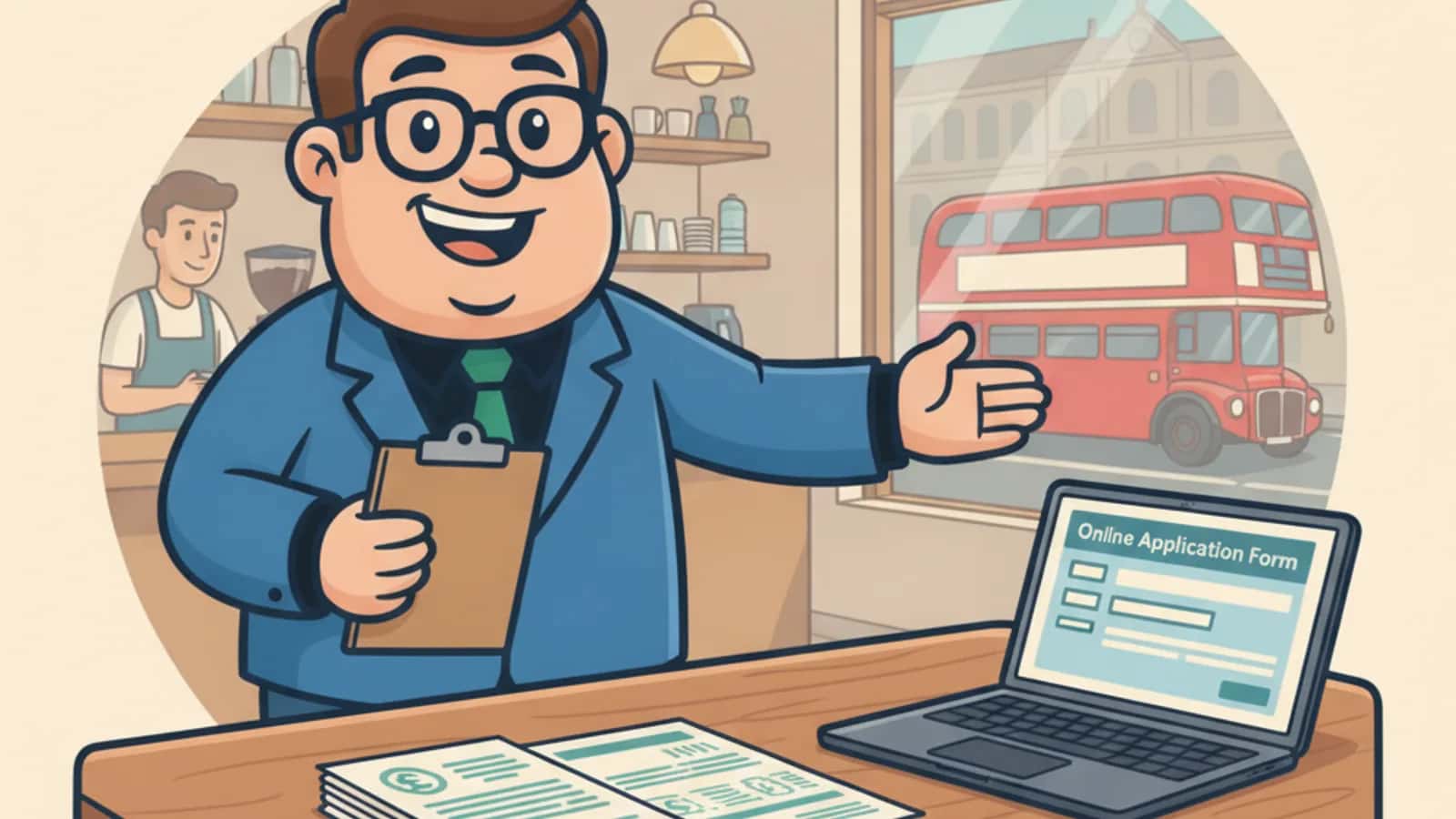
Most providers ask for the same core set of information, but the exact list varies by card type and business structure. Having everything ready before you start cuts the back-and-forth that slows most applications down.
For a limited company, expect to provide
- Companies House registration number
- Registered business name and address
- Date of incorporation
- Estimated annual turnover and monthly spend
- Full name, date of birth, and home address for each director or significant shareholder (usually anyone with 25% or more ownership)
- Personal credit history may be checked for the primary director
- Business bank account details (some providers require this; others do not)
- SIC code or description of your main business activity
For a sole trader or partnership
- Personal name and home address
- National Insurance number
- Estimated annual business income
- Description of business activity
- Some providers may ask for a personal bank statement or self-assessment summary
Additional documents some providers request in 2026
- Last 3 to 6 months of business bank statements
- Most recent filed accounts (for companies trading over 12 months)
- VAT registration number if applicable
- Intended monthly card spend and purpose (for example, ad spend, travel, supplier payments)
Providers use this information to assess affordability and risk. The more trading history you can show, the smoother the process tends to be. For a comparison of what lenders ask for across different finance products, the guide on what documents you need to apply for a business loan covers the overlap well.
How Long Does It Take to Get Approved for a Business Credit Card in the UK?
Most online applications return a decision within 24 to 72 hours. Some fintech and challenger card providers can approve and issue a virtual card on the same day. High street bank applications, especially for higher limits, can take 5 to 10 working days.. For more detail, see our guide to comparing business credit cards.
Here is a rough breakdown by provider type:
| Provider Type | Typical Decision Time | Card Delivery |
|---|---|---|
| Fintech / challenger (e.g. Soldo, Pleo) | Same day to 48 hours | Virtual card: immediate; physical: 3-5 days |
| Online-first card providers | 24 to 72 hours | 3 to 7 working days |
| High street banks | 3 to 10 working days | 5 to 10 working days |
| Corporate card programmes | 1 to 3 weeks | Varies |
Delays happen when documents are missing, when the credit check flags something that needs manual review, or when the application is for a higher limit that requires underwriting. Submitting a complete application in one go is the single biggest factor in getting a fast decision.
Can I Apply for a Business Credit Card as a Sole Trader?
Yes, sole traders can apply for a business credit card in the UK. The application process is simpler than for a limited company because there is no Companies House number or director structure involved. You apply as an individual running a business, and the credit assessment is based largely on your personal credit history and declared business income.
A few things to be aware of as a sole trader:
- The card will likely be in your personal name, which means your personal credit file is directly affected
- Some business cards are only available to limited companies, always check the eligibility criteria before applying
- Your personal liability for the card debt is direct, with no corporate separation
- Income evidence such as a recent self-assessment tax return or bank statements may be requested
Sole traders who want to separate business and personal spend, earn cashback on business purchases, or issue cards to staff can still benefit significantly from a dedicated business credit card.
What Is the Difference Between a Business Credit Card and a Personal Credit Card?
A business credit card is designed for company spending, not personal use. The key differences go beyond the name on the card.
- Credit limits
- tend to be higher on business cards, with some providers offering limits from £1,000 to £250,000 or more depending on turnover and trading history
- Employee cards
- can be issued under the main account, with individual spend controls per card
- Expense management
- tools, virtual cards, and accounting integrations are standard on many business products
- Reporting
- is structured around business spend categories rather than personal ones
- Consumer protections
- differ: Section 75 of the Consumer Credit Act does not apply to business credit cards. Chargeback rights through Visa or Mastercard may still be available depending on the card scheme and provider terms
- Interest-free periods
- of up to 56 days on purchases are common on business cards, which is useful for managing cash flow between invoice and payment cycles
Using a personal card for business spend creates a headache at month-end, mixing transactions, losing receipts, and manually splitting statements. A business card keeps everything in one place.
Do I Need a Business Bank Account to Apply for a Business Credit Card?
Not always, but many providers prefer or require one. Some card providers, particularly fintech platforms, will approve a business credit card without an existing business bank account. Others, especially high street banks, will only offer their business card to existing business account holders.
If you are a sole trader, some providers accept a personal bank account as the repayment account. For limited companies, having a business bank account demonstrates that the company is actively trading and makes the application more straightforward.
If you do not yet have a business bank account, that does not automatically rule out a business credit card, but it does narrow the field. Check eligibility criteria per provider before applying.
What Credit Score Do I Need for a UK Business Credit Card?
There is no single credit score threshold. Providers set their own criteria, and decisions are based on a combination of factors rather than one number.
What providers typically assess:
- The business credit profile (via agencies such as Experian, Equifax, or Creditsafe)
- The personal credit history of the primary director or owner
- Time in business and trading activity
- Annual turnover relative to the limit requested
- Any County Court Judgements (CCJs), defaults, or insolvency history
A stronger credit profile generally means access to higher limits and better rates. A weaker profile does not automatically mean rejection, some providers specialise in businesses with limited or imperfect credit history, though terms may be less favourable.
For a full breakdown of how your business credit profile is built and what affects it, the business credit score guide is worth reading before you apply.
Can I Get a Business Credit Card If My Business Is New?
Yes, but the options are more limited. Providers that require 12 or 24 months of trading history will not be available to a startup or newly registered company. However, a number of providers, particularly fintechs and challenger card platforms, do accept applications from businesses with less than 12 months of trading.
For new businesses, expect:
- Lower initial credit limits
- Greater reliance on the director's personal credit history
- Possible requirement for a personal guarantee
- Fewer rewards or cashback features on entry-level products
If your business is under 6 months old, some providers will treat the application similarly to a personal credit card application, assessing the director's own financial profile. Building a business credit file early, by registering with Companies House, opening a business bank account, and keeping filings up to date, helps future applications.
How Much Can I Borrow on a Business Credit Card in the UK?
Credit limits on UK business credit cards typically range from £1,000 to £250,000 or more, depending on the provider, your annual turnover, and your credit profile.
Entry-level cards for small businesses or sole traders often start at £1,000 to £5,000. Cards aimed at growing SMEs and agencies with higher turnover can offer £25,000 to £100,000+. Corporate card programmes for larger businesses can go higher still.
The limit you are offered at the point of approval is not fixed permanently. Most providers will review limits after 6 to 12 months of responsible use. If your bank hasn't moved your limit in years and your turnover has grown, that is a common reason businesses look at alternative providers.
For context on how a credit card compares to other forms of borrowing, the business overdraft vs line of credit vs loan comparison sets out the trade-offs clearly.
Business Credit Card vs Business Loan: Which Is Better?
It depends entirely on what the money is for. A business credit card suits recurring or variable spend, ad budgets, travel, supplier payments, stock top-ups, where you want flexibility and up to 56 days interest-free. A business loan suits a single, defined capital need where you want a fixed repayment schedule.
Use a business credit card if:
- Spend is ongoing and variable (marketing, supplies, subscriptions)
- You want to earn cashback or rewards on regular outgoings
- You need to issue cards to staff or contractors
- You want to spread supplier costs across a billing cycle without touching your overdraft
Use a business loan if:
- You need a lump sum for equipment, premises, or a one-off investment
- You want predictable monthly repayments over a fixed term
- The amount needed is above what a card limit would cover
Many businesses use both: a card for day-to-day spend control and a loan for capital investment. For more detail on how loans work alongside other products, see the guide on how business loans work. Compare this with the practical guide to business credit cards in the UK.
What Are Common Reasons for Business Credit Card Rejection, and What to Do Next?
The most common reasons for rejection are a thin or poor credit file, insufficient trading history, high existing debt levels, or incomplete application information.
Other frequent causes:
- CCJs or defaults on the business or director's personal credit file
- Turnover too low for the limit requested
- Business type flagged as higher risk by the provider's underwriting criteria
- Missing or inconsistent information on the application
What to do if you are rejected:
- Ask the provider for the reason, they are not always required to give one, but many will
- Check your business and personal credit files for errors (Experian, Equifax, Creditsafe)
- Do not immediately apply to multiple other providers, each hard search adds to your file
- Consider a lower limit or a card from a provider with broader acceptance criteria
- Build trading history and credit file activity before reapplying in 3 to 6 months
The guide on what to do when a business loan is declined covers the recovery steps in detail and much of the same logic applies to card rejections.
How to Speed Up Business Credit Card Approval
The fastest applications are complete applications. Providers flag missing information for manual review, which is where most delays come from.
Steps that cut approval time:
- Have your Companies House number, SIC code, and registered address ready before you start
- Know your estimated annual turnover and expected monthly card spend
- Have director details (full name, date of birth, home address) for all relevant individuals
- Use an email address that you monitor, providers often send document requests within hours
- Apply online rather than in branch where possible
- Check your credit file in advance and resolve any errors before applying
Funding Fred's 2-minute eligibility check uses a soft search only, no hard check to start, no obligation, and matches your business with providers based on your profile before you commit to a full application. That means you can see which providers are likely to say yes before a hard search hits your file. Check eligibility at fundingfred.com/business-credit-cards.
Next steps for how to apply for a business credit card in the uk documents and timeline
Applying for a business credit card in the UK is a straightforward process when you know what to prepare. Get your Companies House number, director details, turnover figures, and intended spend ready before you start. Expect a decision within 24 to 72 hours from most online providers, faster from some fintechs.
The documents required and the timeline for how to apply for a business credit card in the UK vary by provider and business structure, but the businesses that move quickest are the ones that apply with a complete set of information and a clear sense of which providers fit their profile.
If your current card limit hasn't moved, your bank keeps saying no, or your team is still putting company spend on personal cards, that's a fixable problem. Run a 2-minute eligibility check at Funding Fred, no hard check to start, no obligation, and see which leading card providers match your business for limits, speed, and spend controls. Business Credit Cards. Without the Fuss. For the wider context, read a closer look at business credit card eligibility in the UK.
Frequently asked questions
What Documents Do You Need to Apply for a Business Credit Card in the UK?
Most providers ask for the same core set of information, but the exact list varies by card type and business structure. Having everything ready before you start cuts the back-and-forth that slows most applications down.
How Long Does It Take to Get Approved for a Business Credit Card in the UK?
Most online applications return a decision within 24 to 72 hours. Some fintech and challenger card providers can approve and issue a virtual card on the same day. High street bank applications, especially for higher limits, can take 5 to 10 working days.. For more detail, see our guide to comparing business credit cards.
Can I Apply for a Business Credit Card as a Sole Trader?
Yes, sole traders can apply for a business credit card in the UK. The application process is simpler than for a limited company because there is no Companies House number or director structure involved. You apply as an individual running a business, and the credit assessment is based largely on your personal credit history and declared business income.
What Is the Difference Between a Business Credit Card and a Personal Credit Card?
A business credit card is designed for company spending, not personal use. The key differences go beyond the name on the card.
Do I Need a Business Bank Account to Apply for a Business Credit Card?
Not always, but many providers prefer or require one. Some card providers, particularly fintech platforms, will approve a business credit card without an existing business bank account. Others, especially high street banks, will only offer their business card to existing business account holders.
What Credit Score Do I Need for a UK Business Credit Card?
There is no single credit score threshold. Providers set their own criteria, and decisions are based on a combination of factors rather than one number.
Written by
The Funding Fred Editorial Team creates plain-English guides to help business owners understand funding options, eligibility, and application readiness before they compare finance options.
Reviewed by
UK business finance content reviewer
Robert reads our UK business finance guides before they go live, checking each one is accurate, easy to follow, and reflects how lending actually works today — not how a brochure says it should. He's listed on the FCA Register, approved as an SMF3 (AR) Executive Director at Switcha Limited, and connected to Lucky Growth Partners Ltd through its appointed representative relationship, so the regulated detail gets a properly qualified second read.