
Business Overdraft vs Line of Credit vs Loan: Which Funding Option Fits Your Business?
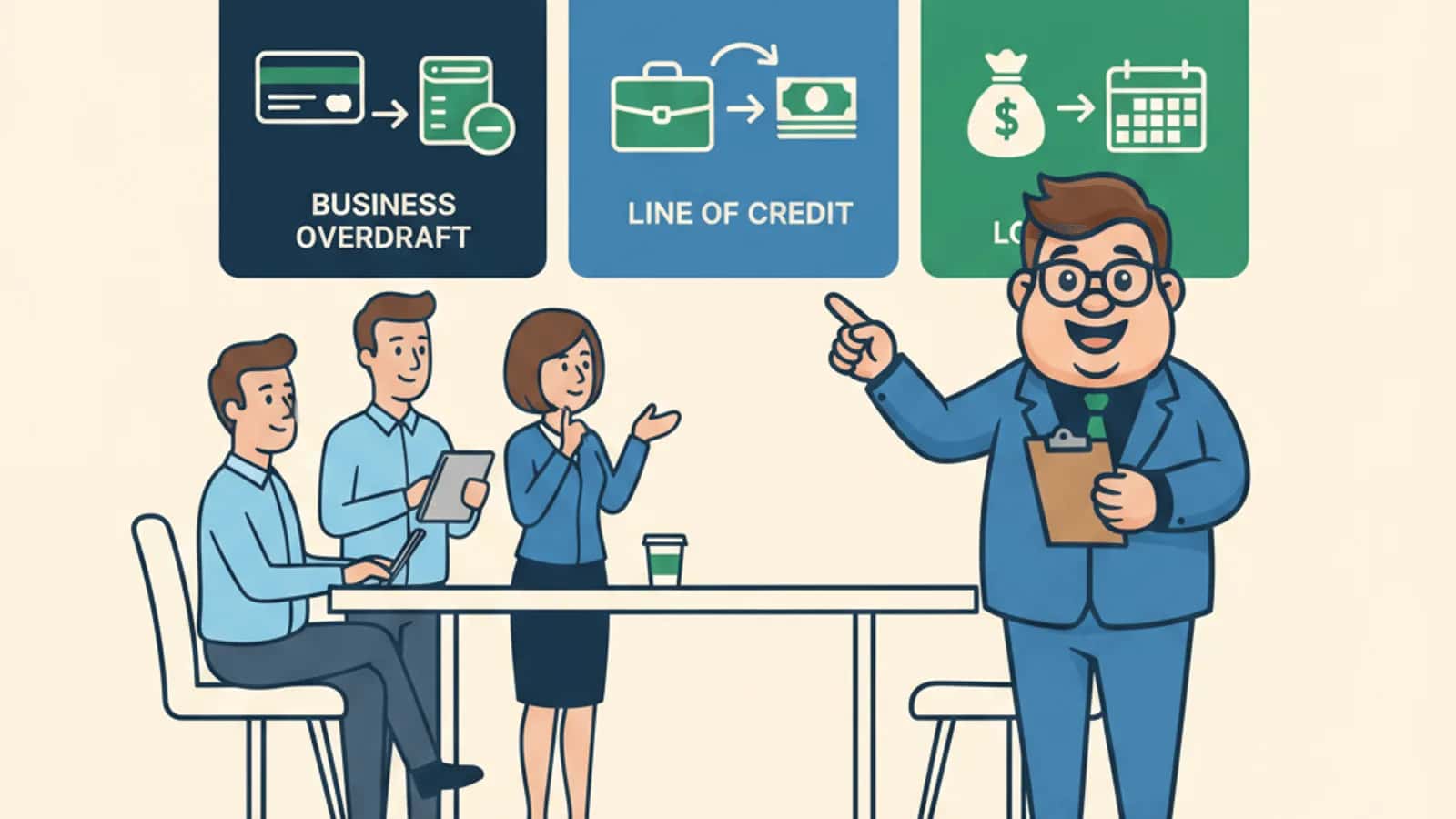
Business overdrafts provide immediate short-term cash when your account runs low, lines of credit offer flexible revolving funds up to a set limit, and traditional loans deliver lump sums for specific projects.
Quick answer
Business overdrafts provide immediate short-term cash when your account runs low, lines of credit offer flexible revolving funds up to a set limit, and traditional loans deliver lump sums for specific projects. Overdrafts cost the most but work instantly, lines of credit balance flexibility with moderate costs, and loans offer the lowest rates for planned investments.
Key takeaways
- Business overdrafts work like safety nets — instant access when your account hits zero, but expect higher fees and interest rates
- Lines of credit give you revolving access to funds up to an approved limit, paying interest only on what you draw
- Traditional business loans provide lump sums with fixed repayment terms and typically the lowest interest rates
- Overdrafts suit emergency cash flow gaps, lines of credit handle seasonal fluctuations, loans fund major purchases or expansion
- Credit requirements vary significantly — overdrafts often need existing banking relationships, lines of credit require good credit scores, loans depend on your business strength
- Speed differs dramatically — overdrafts activate instantly, lines of credit approve within days, loans can take weeks
- Most businesses benefit from combining options rather than relying on just one funding source
What Exactly Is a Business Overdraft and How Does It Work
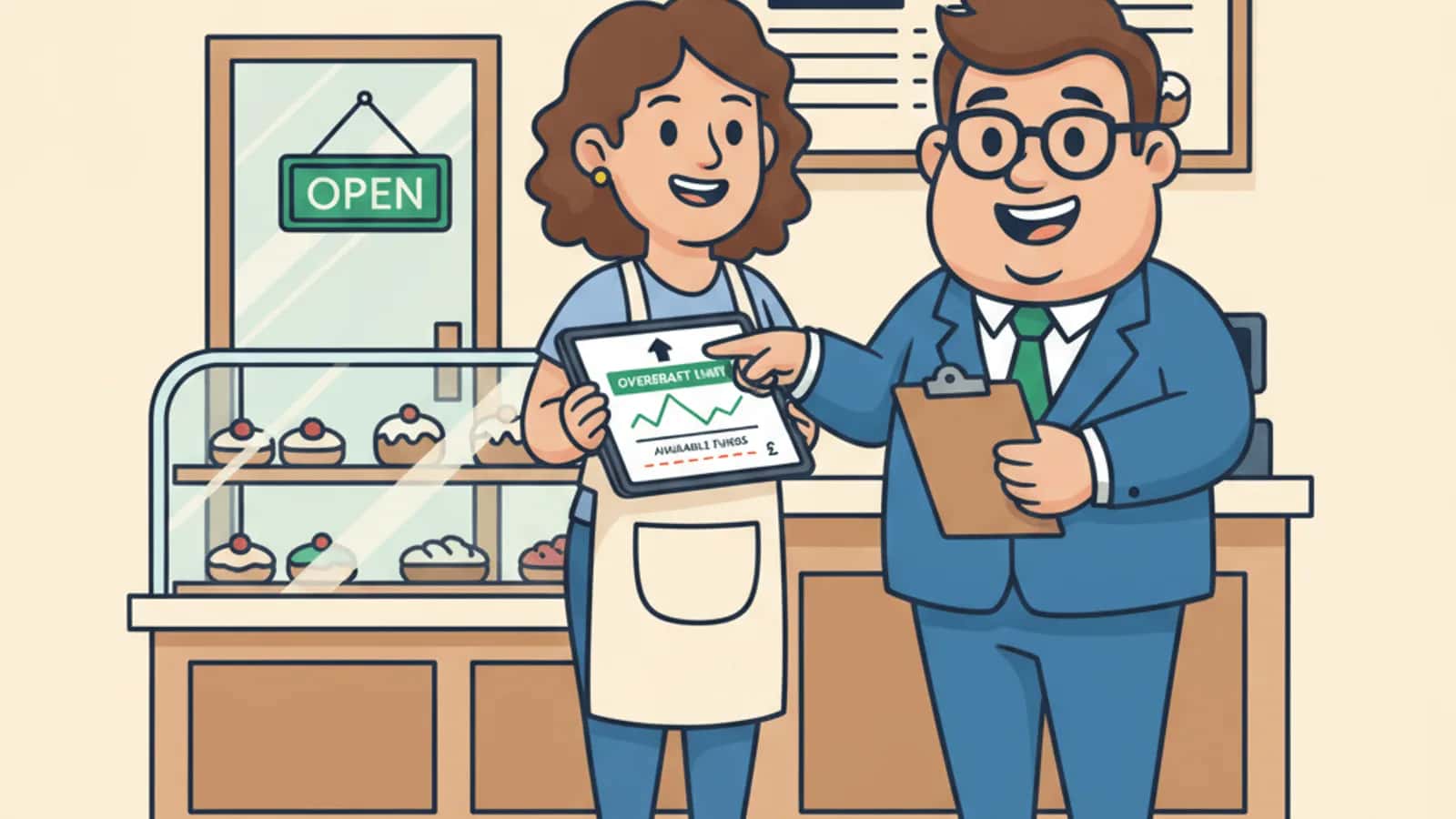
A business overdraft lets you withdraw more money than your account balance up to a pre-approved limit. Your bank essentially covers the shortfall and charges interest plus fees until you repay the negative balance.
Think of it as an automatic safety net attached to your current account. When a payment comes in but insufficient funds exist, the overdraft kicks in rather than bouncing the transaction. You pay interest only on the overdrawn amount and only for the days you use it.
Key features of business overdrafts
- Instant access when your balance drops below zero
- Interest calculated daily on the overdrawn amount
- Flexible repayment as money flows back into your account
- Usually requires an existing business banking relationship
- Often comes with arrangement fees and usage charges
Most UK banks offer overdrafts from £1,000 to £250,000, though smaller amounts are more common for newer businesses. The facility stays in place until the bank reviews or you close it.
Choose an overdraft if you need emergency cash flow support, have unpredictable payment timing, or want protection against bounced payments without applying for new credit each time.
How Business Lines of Credit Function
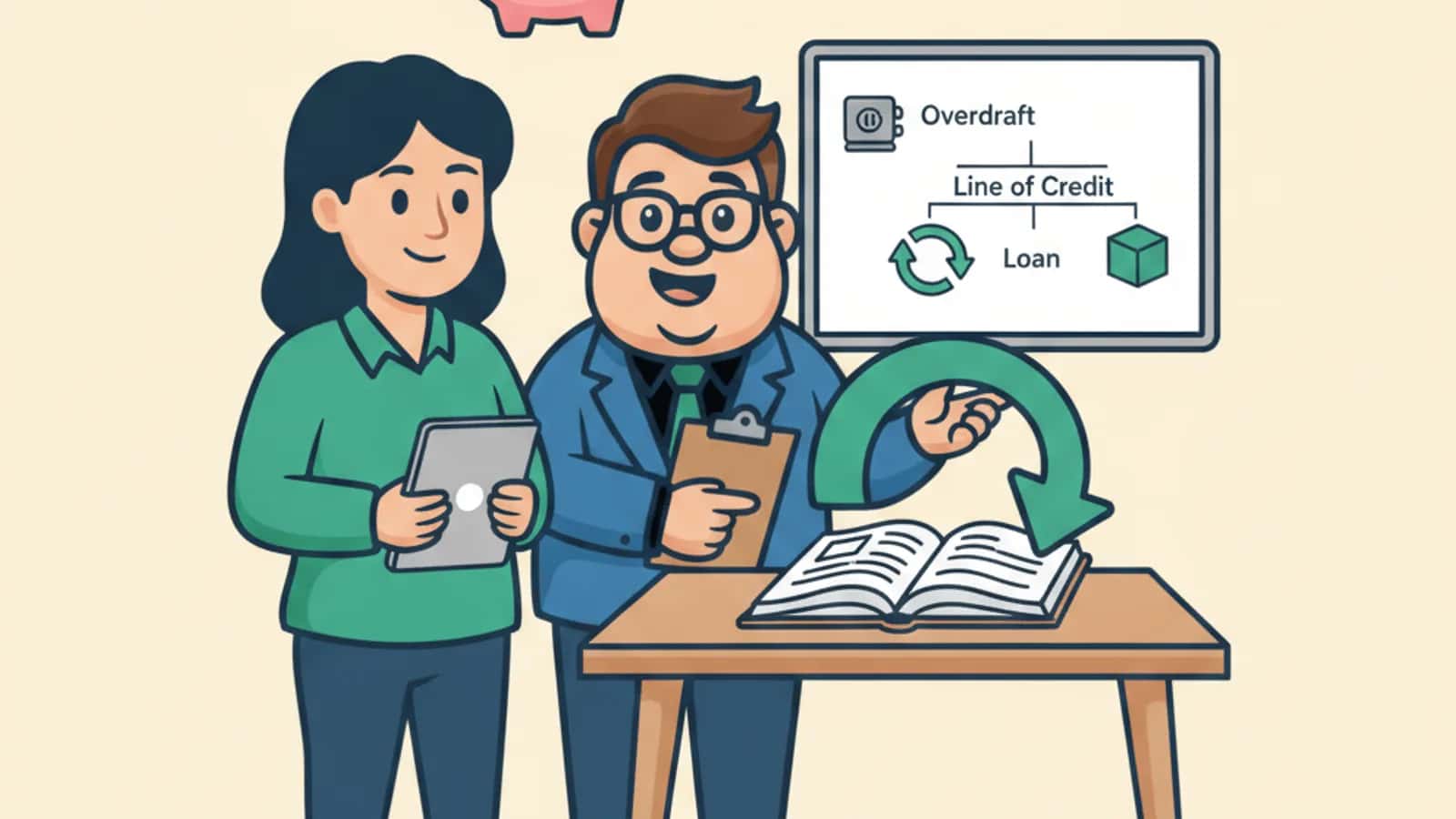
Business lines of credit provide revolving access to funds up to an approved credit limit, similar to a business credit card but typically with better rates and higher limits. You draw money when needed, repay it, then draw again without reapplying.
Unlike overdrafts tied to your current account, lines of credit operate as separate facilities. You actively request fund transfers rather than automatic coverage when your balance runs low.
How lines of credit work in practice
- Apply once for a credit limit based on your business strength
- Draw funds via online banking, phone, or written requests
- Pay interest only on outstanding balances, not the full limit
- Make minimum monthly payments or pay in full
- Reuse available credit as you repay without new applications
Lines of credit suit businesses with seasonal cash flow patterns, growth opportunities requiring flexible funding, or those wanting lower-cost alternatives to overdrafts for ongoing working capital needs.
Typical terms: Credit limits range from £10,000 to £500,000, with repayment periods from 6 months to several years. Interest rates usually fall between overdraft and loan rates.
For businesses needing flexible access to larger amounts than overdrafts typically provide, lines of credit offer more predictable costs and higher limits.
Understanding Traditional Business Loans
Traditional business loans provide lump sum financing repaid over fixed terms with regular monthly payments. Unlike overdrafts or lines of credit, you receive all the money upfront and cannot access additional funds without applying for a new loan.
Banks and alternative lenders offer business loans for specific purposes — equipment purchases, expansion projects, property acquisition, or working capital. The application process typically requires detailed business plans, financial statements, and clear explanations of fund usage.
Standard loan structure
- Fixed loan amount paid in full at completion
- Regular monthly payments covering principal and interest
- Repayment terms from 1 to 25 years depending on loan type
- Interest rates often lower than lines of credit or overdrafts
- May require personal guarantees or business assets as security
Secured vs unsecured options: Secured loans use business assets or property as collateral, offering lower rates but risking asset loss if you default. Unsecured business loans rely on business cash flow and credit strength, with higher rates but no collateral requirements.
Choose traditional loans for major one-time investments, debt consolidation, or when you need the discipline of fixed monthly payments. The predictable repayment schedule helps with budgeting and financial planning.
Which Is Cheaper: Line of Credit vs Traditional Business Loan
Traditional business loans typically cost less than lines of credit due to lower interest rates and longer repayment terms. However, total costs depend on how you use each product and your specific business situation.
Cost comparison factors
- Interest rates: Loans often run 2-5% lower than lines of credit
- Fees: Lines of credit may charge annual fees, while loans have origination fees
- Usage patterns: You pay interest on the full loan amount immediately, but only on drawn amounts from lines of credit
- Repayment terms: Longer loan terms reduce monthly payments but increase total interest paid
When loans cost less: For large, planned purchases with predictable repayment ability, loans usually win. A £100,000 equipment purchase at 8% over 5 years costs less than drawing £100,000 from a 12% line of credit for the same period.
When lines of credit cost less: For smaller, intermittent funding needs, lines of credit can be cheaper. Drawing £20,000 for 3 months then repaying it costs less than taking a full loan if you don't need the money long-term.
Real-world example: A restaurant needing £50,000 for kitchen equipment should choose a loan. The same restaurant needing flexible access to £50,000 for seasonal inventory fluctuations benefits more from a line of credit.
Consider your actual usage pattern, not just the headline rates, when comparing total costs between these financing options.
How Much Can You Qualify for With Each Financing Type
Qualification amounts vary significantly between overdrafts, lines of credit, and traditional loans based on your business strength, banking relationships, and the lender's risk assessment.
Business overdraft limits
- New businesses: £1,000 to £10,000
- Established businesses: £5,000 to £250,000
- Based on monthly turnover and banking history
- Typically 1-3 months of average monthly deposits
Line of credit limits
- Startup businesses: £10,000 to £50,000
- Growing businesses: £25,000 to £500,000
- Established businesses: £100,000 to £1 million+
- Based on annual revenue, credit scores, and cash flow strength
Traditional loan amounts
- Small business loans: £5,000 to £500,000
- Commercial loans: £100,000 to £5 million+
- Asset-based lending: Up to 80% of asset values
- Revenue-based: Typically 10-20% of annual revenue
Key qualification factors across all options
- Time in business (minimum 6-12 months for most products)
- Monthly revenue and cash flow consistency
- Personal and business credit scores
- Existing debt obligations and repayment history
- Industry type and associated risks
At Funding Fred, our 2 min check uses Open Banking to assess your actual trading performance rather than just credit files. This approach often reveals higher qualification amounts than traditional bank assessments, especially for businesses with strong cash flow but imperfect credit histories.
Typical Interest Rates: Overdrafts vs Lines of Credit vs Loans
Interest rates vary widely based on business strength, but overdrafts typically cost the most, followed by lines of credit, with traditional loans offering the lowest rates.
Current UK business financing rates (2026):
Rate determinants for each option
- Overdrafts: Higher rates reflect instant access and no fixed repayment schedule
- Lines of credit: Moderate rates balance flexibility with lender risk
- Loans: Lower rates compensate for longer commitment and predictable payments
Additional cost considerations
- Overdrafts often include daily fees plus interest charges
- Lines of credit may have annual maintenance fees
- Loans typically include origination fees but no ongoing charges
Industry impact on rates: High-risk sectors like restaurants or construction face higher rates across all products. Professional services, established retailers, and healthcare practices typically qualify for better rates.
For current market rates tailored to your specific business situation, our average business loan interest rates guide provides detailed comparisons across different lender types and business profiles.
When Should You Choose an Overdraft Instead of a Loan
Choose a business overdraft when you need immediate protection against cash flow gaps rather than planned funding for specific projects. Overdrafts work best for short-term, unpredictable funding needs where speed matters more than cost.
Ideal overdraft scenarios
- Customer payments arrive late but bills are due
- Seasonal businesses facing temporary cash crunches
- Emergency repairs or unexpected expenses under £25,000
- Bridging gaps between invoice payments and operational costs
- Protecting against bounced payment fees and damaged supplier relationships
When overdrafts beat loans
- Speed: Instant access vs weeks of loan processing
- Flexibility: Use only what you need, when you need it
- No fixed payments: Repay as cash flow allows
- Existing relationship: Often available through current business banking
Avoid overdrafts for
- Large equipment purchases or expansion projects
- Long-term working capital needs over 6 months
- Situations where you can plan funding requirements in advance
- Debt consolidation or refinancing existing obligations
Cost management tip: Treat overdrafts as emergency facilities, not regular funding sources. The high daily interest charges make them expensive for extended use.
Combining approaches: Many successful businesses use overdrafts for cash flow protection while securing traditional business loans for planned investments. This strategy provides both emergency coverage and cost-effective growth funding.
Credit Score Requirements for Business Lines of Credit
Business lines of credit typically require personal credit scores of 650+ and business credit scores of 75+ for competitive rates, though some lenders accept lower scores with higher pricing.
Credit score breakdown for lines of credit
- Excellent terms (prime rates): Personal 720+, Business 80+
- Good terms: Personal 680-719, Business 75-79
- Fair terms: Personal 650-679, Business 70-74
- Subprime options: Personal 600+, Business 65+, higher rates apply
Beyond credit scores, lenders evaluate
- Time in business (minimum 12-24 months preferred)
- Annual revenue (typically £100,000+ for unsecured lines)
- Monthly cash flow consistency and trends
- Existing debt service coverage ratios
- Industry risk factors and seasonal patterns
Improving your approval odds
- Pay down existing credit balances below 30% utilization
- Ensure business and personal credit reports are accurate
- Demonstrate consistent monthly deposits for 6+ months
- Prepare 2+ years of business financial statements
- Consider offering business assets as partial security
Alternative qualification approaches: Some lenders focus more on business performance than credit scores. Revenue-based qualification considers your monthly sales volume and cash flow strength rather than historical credit events.
Our business credit score guide explains how to check and improve both personal and business credit profiles before applying for financing.
What Happens If You Can't Repay Your Business Overdraft
Failing to repay a business overdraft triggers escalating consequences starting with additional fees and potentially ending with account closure and legal action. Banks typically work with businesses to find solutions before taking severe measures.
Immediate consequences of overdraft default
- Additional penalty fees and higher interest rates
- Reduced or suspended overdraft limits
- Holds on other business banking services
- Negative marks on business and personal credit reports
- Potential personal guarantee enforcement
Bank response timeline
- Days 1-30: Additional fees, phone calls, letters requesting payment
- Days 31-60: Formal demand notices, account restrictions
- Days 61-90: Overdraft facility suspension, account review
- 90+ days: Account closure proceedings, debt collection referral
Proactive steps when struggling
- Contact your bank immediately when problems arise
- Provide updated cash flow projections and recovery plans
- Request temporary payment arrangements or reduced limits
- Consider switching to a structured loan with fixed payments
- Explore alternative funding to clear the overdraft balance
Protection strategies
- Monitor daily balances to avoid exceeding limits
- Set up automated alerts for low balances and overdraft usage
- Maintain emergency cash reserves separate from overdraft facilities
- Diversify funding sources to reduce overdraft dependency
Recovery options: If your overdraft becomes unmanageable, alternative business funding strategies might provide better structured repayment terms while clearing the overdraft debt.
Lines of Credit: Better for Startups or Established Businesses
Lines of credit generally favor established businesses with proven cash flow over startups, though some lenders offer startup-friendly options with higher rates and lower limits.
Established business advantages
- Financial history: 2+ years of tax returns and bank statements
- Predictable cash flow: Demonstrated ability to service revolving debt
- Business credit: Established credit profiles separate from personal credit
- Higher limits: Access to £100,000+ based on revenue history
- Better rates: Lower risk profile commands competitive pricing
Startup challenges with lines of credit
- Limited operating history makes risk assessment difficult
- Personal credit becomes primary qualification factor
- Lower initial limits, typically £10,000-£50,000
- Higher interest rates to compensate for increased risk
- May require personal guarantees or collateral
Startup-friendly line of credit options
- Revenue-based lines using projected cash flow
- Secured lines backed by business assets or deposits
- SBA-backed lines of credit with government guarantees
- Industry-specific programs for franchises or professional services
Alternative startup funding: New businesses often benefit more from business loans for startups or merchant cash advances that evaluate future potential rather than historical performance.
Timing strategy: Consider applying for a line of credit after 18-24 months of operation when you have sufficient financial history to qualify for better terms. Early applications with weak profiles can result in rejections that hurt future applications.
Biggest Mistakes Business Owners Make With Overdraft Accounts
The most common overdraft mistake is treating them as permanent working capital rather than emergency cash flow protection, leading to chronic high-cost debt cycles.
Critical overdraft mistakes
- Using overdrafts for planned expenses: Regular inventory purchases or payroll funding creates expensive debt patterns
- Ignoring daily interest calculations: Small amounts compound quickly when left outstanding for weeks or months
- Exceeding agreed limits: Unauthorized overdrafts trigger penalty fees and potential account closure
- Not monitoring usage patterns: Failing to track when and why overdrafts activate prevents process improvements
- Mixing personal and business overdrafts: Complicates cash flow management and tax reporting
Cost management errors
- Assuming overdraft rates are competitive with other funding options
- Not calculating total monthly overdraft costs including fees
- Failing to negotiate better terms as business relationships mature
- Using overdrafts to fund long-term asset purchases
Operational mistakes
- Not setting up balance alerts to prevent unexpected overdraft usage
- Failing to coordinate payment timing with cash receipts
- Not maintaining cash flow forecasts to predict overdraft needs
- Relying on overdrafts instead of building cash reserves
Strategic corrections
- Use overdrafts only for genuine emergencies or timing mismatches
- Set internal limits below bank-approved amounts to control costs
- Review monthly statements to identify usage patterns and triggers
- Consider converting chronic overdraft usage to structured loan facilities
Better alternatives: Businesses using overdrafts regularly should explore cash flow business loans that provide predictable costs and structured repayment terms.
Using Lines of Credit for Equipment Purchases
Lines of credit can fund equipment purchases but traditional equipment loans or asset finance typically offer better rates and terms for substantial equipment investments.
When lines of credit work for equipment
- Small equipment purchases under £25,000
- Multiple smaller items bought over time
- Equipment with uncertain useful life or rapid obsolescence
- Seasonal equipment needs with irregular usage patterns
- Bridge financing while arranging long-term equipment loans
Equipment purchase considerations
- Depreciation: Equipment loses value while line of credit balances remain
- Usage flexibility: Lines of credit allow equipment upgrades without new applications
- Cash flow impact: Interest-only payments during slow periods help manage cash flow
- Tax implications: Equipment purchases may qualify for capital allowances regardless of funding source
When traditional equipment finance works better
- Large equipment purchases over £50,000
- Essential equipment with long useful lives (5+ years)
- Situations where equipment serves as loan collateral
- Businesses needing structured repayment matching equipment's productive life
Hybrid approaches
- Use lines of credit for down payments on equipment loans
- Finance core equipment with loans, accessories and upgrades with lines of credit
- Combine asset finance for major purchases with lines of credit for working capital
Decision framework: Calculate total costs over the equipment's expected life. Lines of credit flexibility may justify higher costs for some businesses, while others benefit from fixed loan payments and potential ownership benefits.
How Quickly Can You Access Funds With Each Option
Business overdrafts provide instant access, lines of credit typically approve within 2-7 days, and traditional loans often require 2-6 weeks depending on complexity and lender type.
Speed comparison by funding type:
Business Overdraft
- Application Time
- 30 minutes
- Approval Time
- Same day
- Fund Access
- Immediate
Line of Credit
- Application Time
- 1-2 hours
- Approval Time
- 2-7 days
- Fund Access
- 24-48 hours
Traditional Bank Loan
- Application Time
- 2-4 hours
- Approval Time
- 2-6 weeks
- Fund Access
- 3-5 days post-approval
Alternative Lender Loan
- Application Time
- 30 minutes
- Approval Time
- 24-48 hours
- Fund Access
- Same day
Factors affecting speed
- Documentation readiness: Complete financial statements and tax returns accelerate all processes
- Existing banking relationships: Current business account holders often get faster overdraft approvals
- Loan complexity: Simple working capital loans process faster than complex project financing
- Lender type: Alternative lenders typically move faster than traditional banks
Acceleration strategies
- Maintain updated financial records and business plans
- Establish business banking relationships before needing funding
- Use Open Banking connections to speed income verification
- Consider same day business funding options for urgent needs
Planning considerations: Even fast funding options require some preparation. Businesses should identify potential funding needs 30-60 days in advance when possible to avoid emergency borrowing at higher costs.
Funding Fred advantage: Our 2 min check process and wide partner panel often deliver funding decisions within 24 hours, with funds available the next business day for approved applications.
Hidden Fees in Business Overdraft Agreements
Business overdraft agreements often include arrangement fees, usage charges, and penalty fees that significantly increase the total cost beyond the headline interest rate.
Common hidden overdraft fees
- Arrangement fees: £100-£500 annually for maintaining the facility
- Usage fees: £5-£25 per day when overdraft is active
- Excess fees: £25-£50 when exceeding approved limits
- Item fees: £10-£20 per transaction when overdrawn
- Monthly maintenance: £10-£50 regardless of usage
Fee calculation examples: A £10,000 overdraft used for 15 days might cost:
- Interest: £164 (40% APR ÷ 365 × 15 days × £10,000)
- Daily usage fees: £225 (£15 × 15 days)
- Total cost: £389 for two weeks (equivalent to 142% APR)
Reading overdraft terms carefully
- Check if fees apply to authorized vs unauthorized overdrafts
- Understand whether usage fees are per day or per transaction
- Identify minimum monthly charges regardless of usage
- Review fee structures for different overdraft amounts
Negotiation opportunities
- Request fee waivers for established banking relationships
- Negotiate reduced rates based on average account balances
- Ask for usage fee caps during seasonal business cycles
- Consider package deals combining overdrafts with other banking services
Fee avoidance strategies
- Use overdrafts only when absolutely necessary
- Repay overdraft balances quickly to minimize daily charges
- Set up automated transfers from savings to reduce overdraft usage
- Monitor accounts daily to prevent unauthorized overdraft fees
Best Financing Option for Seasonal Businesses
Seasonal businesses typically benefit most from lines of credit that provide flexible access during peak seasons while minimizing costs during slow periods.
Why lines of credit suit seasonal businesses
- Flexible draws: Access funds only when inventory or staffing needs increase
- Interest-only periods: Pay minimal costs during off-seasons when balances are low
- Revolving access: Reuse credit capacity across multiple seasons without reapplying
- Cash flow matching: Repay during peak revenue periods, draw during preparation phases
Seasonal business examples
- Retail: Build inventory before holiday seasons, repay from holiday sales
- Tourism: Fund marketing and staffing for peak seasons
- Agriculture: Purchase seeds and equipment for planting seasons
- Construction: Manage cash flow gaps during weather-related slowdowns
Combining funding sources for seasonal needs
- Lines of credit for working capital fluctuations
- Equipment loans for seasonal machinery purchases
- Overdrafts for emergency cash flow protection during transitions
Timing strategies
- Apply for credit facilities during strong seasons when financials look best
- Establish higher credit limits than immediate needs to accommodate growth
- Negotiate seasonal payment terms that align with business cycles
- Build cash reserves during peak periods to reduce borrowing needs
Alternative seasonal funding: Some businesses benefit from merchant cash advances that repay based on daily sales, automatically adjusting to seasonal revenue patterns.
Planning approach: Seasonal businesses should model cash flow needs 12-18 months in advance, securing appropriate financing before seasonal demands begin rather than scrambling during cash-tight periods.
Next steps
Choosing between a business overdraft vs line of credit vs loan depends on your specific funding needs, timeline, and cost priorities. Overdrafts provide instant cash flow protection but at the highest cost. Lines of credit balance flexibility with moderate pricing for ongoing working capital needs. Traditional loans offer the lowest rates for planned investments and major purchases.
Most successful businesses don't choose just one option. Instead, they build layered funding strategies — overdrafts for emergency protection, lines of credit for seasonal fluctuations, and loans for growth investments. This approach provides comprehensive coverage while optimizing costs across different business scenarios.
The key is matching each funding type to its ideal use case rather than forcing one product to serve all purposes. Speed matters for cash flow emergencies. Flexibility helps with unpredictable needs. Cost efficiency drives major investment decisions.
Ready to explore your business funding options? Our 2 min eligibility check uses Open Banking to assess your actual trading performance across our wide partner panel. No hard credit check to start, and no obligation to proceed with any offers.
Check Eligibility Now — Business Funding. Without the Fuss.
Further reading
Frequently asked questions
What Exactly Is a Business Overdraft and How Does It Work?
A business overdraft lets you withdraw more money than your account balance up to a pre-approved limit. Your bank essentially covers the shortfall and charges interest plus fees until you repay the negative balance.
How Business Lines of Credit Function?
Business lines of credit provide revolving access to funds up to an approved credit limit, similar to a business credit card but typically with better rates and higher limits. You draw money when needed, repay it, then draw again without reapplying.
Which Is Cheaper: Line of Credit vs Traditional Business Loan?
Traditional business loans typically cost less than lines of credit due to lower interest rates and longer repayment terms. However, total costs depend on how you use each product and your specific business situation.
How Much Can You Qualify for With Each Financing Type?
Qualification amounts vary significantly between overdrafts, lines of credit, and traditional loans based on your business strength, banking relationships, and the lender's risk assessment.
When Should You Choose an Overdraft Instead of a Loan?
Choose a business overdraft when you need immediate protection against cash flow gaps rather than planned funding for specific projects. Overdrafts work best for short-term, unpredictable funding needs where speed matters more than cost.
What Happens If You Can't Repay Your Business Overdraft?
Failing to repay a business overdraft triggers escalating consequences starting with additional fees and potentially ending with account closure and legal action. Banks typically work with businesses to find solutions before taking severe measures.
Written by
The Funding Fred Editorial Team creates plain-English guides to help business owners understand funding options, eligibility, and application readiness before they compare finance options.
Reviewed by
UK business finance content reviewer
Robert reads our UK business finance guides before they go live, checking each one is accurate, easy to follow, and reflects how lending actually works today — not how a brochure says it should. He's listed on the FCA Register, approved as an SMF3 (AR) Executive Director at Switcha Limited, and connected to Lucky Growth Partners Ltd through its appointed representative relationship, so the regulated detail gets a properly qualified second read.
Sources
- Loan Vs Line Of Credit [2] Business Loan Vs Line Of Credit - https://www.forbes.com/advisor/business-loans/business-loan-vs-line-of-credit/ [3] Business Loan Vs Line Of Credit - https://www.bankrate.com/loans/small-business/business-loan-vs-line-of-credit/ [4] Loan Vs Line Of Credit - https://www.nationwide.com/business/solutions-center/finances/loan-vs-line-of-credit [5] Business Line Of Credit Vs Business Loans Business Credit - https://www.citi.com/banking/small-business-guide/lending/business-line-of-credit-vs-business-loans-business-credit [6] Bloc Vs Loan - https://www.chase.com/business/knowledge-center/grow/bloc-vs-loan
- British Business Bank business loans
- GOV.UK business finance support