How to Get a Business Loan in 2026: The Complete UK Guide
To get a business loan, you need to assess how much funding you need, check your credit profile, gather key documents (bank statements, tax returns, business accounts), and apply with a lender that matches your business type and financial situation.

Quick answer
To get a business loan, you need to assess how much funding you need, check your credit profile, gather key documents (bank statements, tax returns, business accounts), and apply with a lender that matches your business type and financial situation. UK business owners can access decisions in as little as 24 hours through alternative lenders, compared to weeks with traditional banks.
Key takeaways
- Most UK lenders look for at least 6-12 months of trading history and a minimum monthly turnover, though flexible criteria lenders will consider all credit types
- Credit scores matter, but they are not the only factor — revenue, cash flow, and business performance carry significant weight with modern lenders
- Unsecured loans mean you do not need to put up property or equipment as collateral, protecting your personal and business assets
- Interest rates for small business term loans currently range from around 7.23% (fixed) to over 40% for merchant cash advances, depending on the product and lender
- The fastest approvals come from online lenders and platforms using Open Banking and Smart Tech — decisions can land same day
- Common mistakes include applying for the wrong loan type, under-preparing documents, and making multiple hard credit applications at once
- Merchant Cash Advances are repaid as a percentage of card sales, making them a strong fit for businesses with variable income
- Freelancers and sole traders can qualify, but lenders will scrutinise personal income and trading history more closely
What Types of Business Loans Are Available?
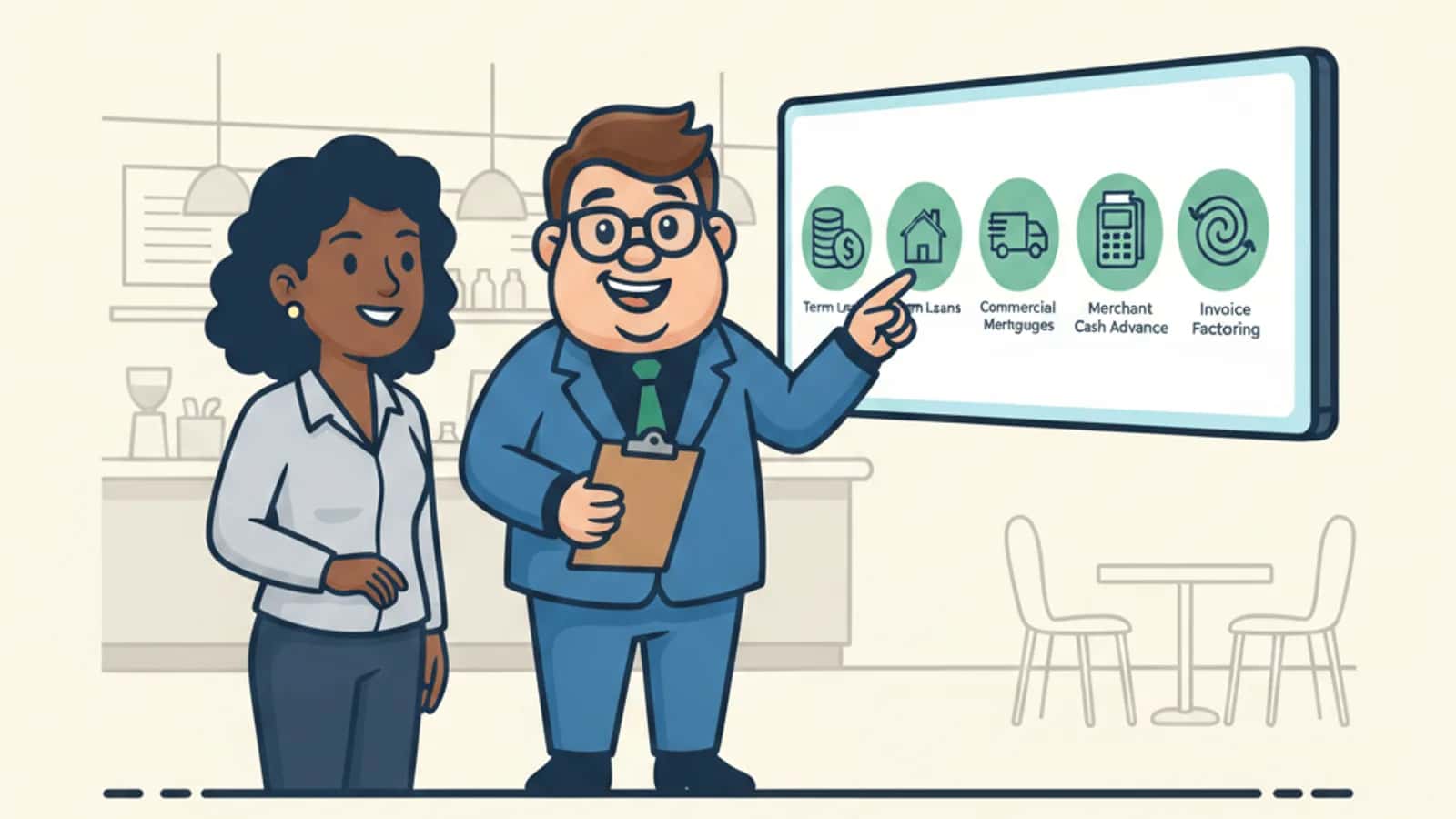
UK businesses have more funding options in 2026 than ever before. Knowing which product fits your situation is the first step to a successful application. You can also step back and review the wider range of UK business funding options before choosing a product.
Here are the main options:
Unsecured Business Loans
— Borrow without putting up assets as collateral. Ideal for businesses that need fast capital without risking property or equipment. Funding Fred specialises in these.
Merchant Cash Advance (MCA)
— Funding is advanced against your future card sales. Repayments flex with your revenue, so quiet months cost you less. A strong fit for restaurants, retail, and e-commerce stores.
Secured Business Loans
— Backed by an asset (property, machinery). Lower rates, but your asset is at risk if you default.
Asset Finance
— Used to buy or lease equipment. The asset itself acts as security. For more on this, see our asset finance guides.
Invoice Finance
— Unlock cash tied up in unpaid invoices. Good for B2B businesses with long payment terms.
SBA Loans (US-specific)
— Not directly available in the UK, but worth understanding if you operate across markets (covered below).
What Credit Score Do You Need for a Business Loan?
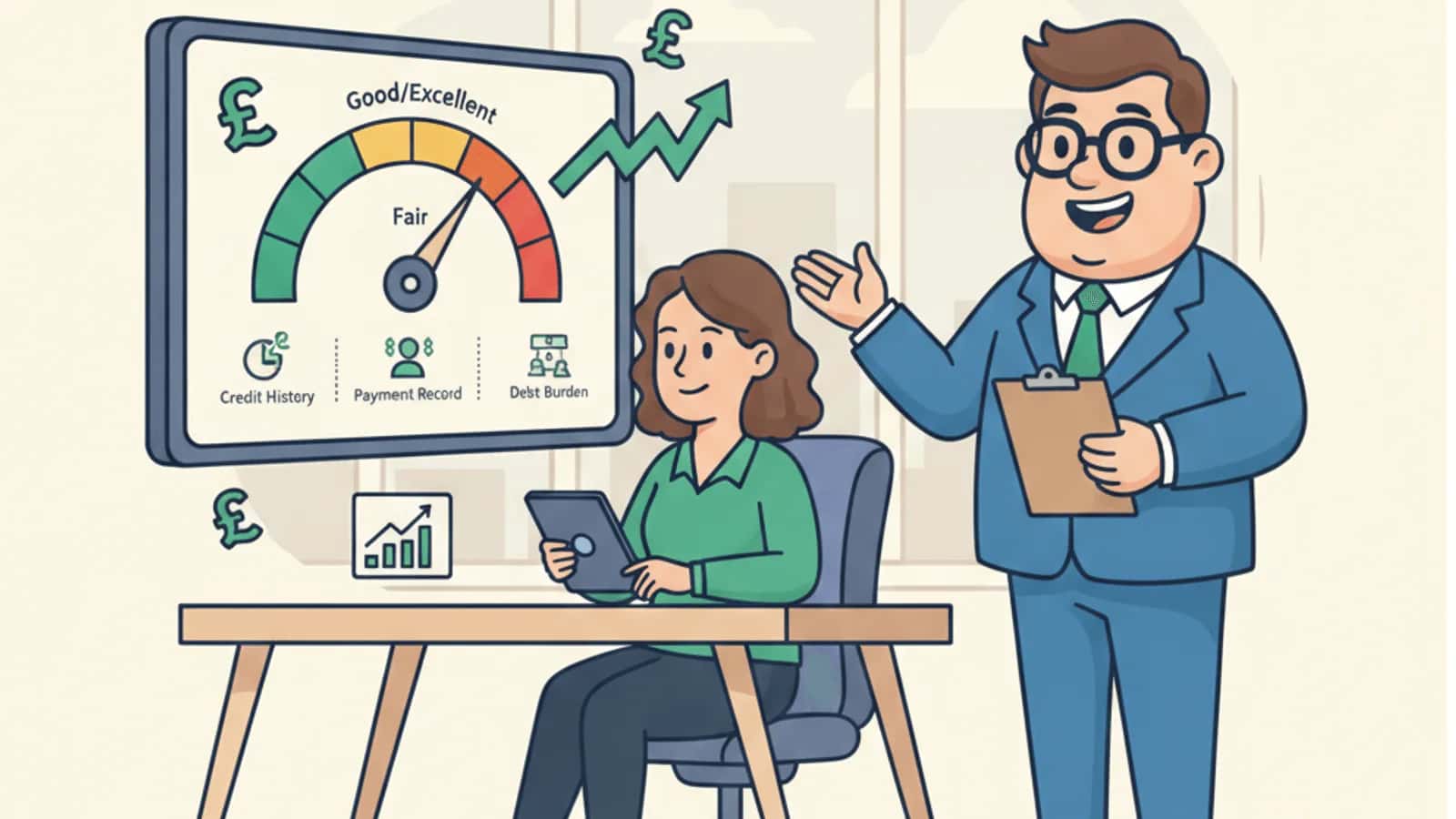
There is no single universal minimum, but most traditional bank lenders look for a personal credit score of 680 or above (on a 0-999 Experian scale). Online and alternative lenders accept lower scores, often down to 550 or below, because they assess the full picture of your business health.
What lenders actually look at alongside your score:
- Monthly revenue and consistency of cash flow
- Time in business (most want 6-12 months minimum)
- Outstanding debts and existing credit commitments
- Bank statement patterns via Open Banking
- Industry type and trading history
Decision rule: If your credit score is strong (680+), traditional banks and SBA-style products may offer you the best rates. If your score is lower or your history is patchy, flexible criteria lenders — including platforms like Funding Fred — are built for exactly that situation. All credit types are considered.
Can You Get a Business Loan with Bad Credit?
Yes, bad credit does not automatically disqualify you. Alternative lenders and specialist platforms use Smart Tech and Open Banking data to build a fuller picture of your business — not just a three-digit number.
What "bad credit" typically means in practice:
- A personal credit score below 580
- County Court Judgements (CCJs) on your record
- Previous missed payments or defaults
- A thin credit file (limited borrowing history)
Even with these factors, lenders will look at your monthly card turnover, bank statement trends, and how long you have been trading. A dental practice turning over £30,000 a month with one old CCJ is a very different risk profile from a startup with no revenue and the same CCJ.
For a broader look at your funding options, our business loans guides cover the full range of products available to UK businesses.
How Much Money Can a Small Business Typically Get Approved For?
The approved amount depends on your revenue, trading history, and the lender's criteria. As a general guide, most alternative lenders will advance between 1x and 2x your average monthly turnover for unsecured loans.
Typical ranges by lender type:
| Lender Type | Typical Loan Range | Speed |
|---|---|---|
| High Street Bank | £10,000 - £500,000+ | 2-8 weeks |
| Online / Alternative Lender | £5,000 - £250,000 | 24-72 hours |
| Merchant Cash Advance | £5,000 - £300,000 | 24-48 hours |
| Asset Finance | £1,000 - £1m+ | 3-10 days |
Funding Fred works with businesses seeking between £40,000 and £120,000, connecting them to a wide partner panel to find the best fit fast.
What Documents Do You Need to Apply for a Business Loan?
Most lenders need the same core set of documents. Getting these ready before you apply cuts days off the process.
Standard documents required
- Last 3-6 months of business bank statements
- Most recent 1-2 years of filed accounts or tax returns
- Proof of ID (passport or driving licence)
- Proof of business address
- Details of any existing loans or credit facilities
For larger amounts or traditional banks, also expect
- A full business plan with financial projections
- Profit and loss statements
- VAT returns
- Director/shareholder information
Open Banking shortcut: Many modern lenders, including those on the Funding Fred panel, use Open Banking to pull your bank data securely and instantly. This replaces the need to manually upload months of statements and speeds up the decision significantly.
How Long Does It Take to Get Approved for a Business Loan?
Approval times vary enormously depending on the lender and the loan type. Alternative lenders can give a Fast Decision in as little as 24 hours. Traditional banks typically take 2-8 weeks.
Realistic timelines:
- 1
Online alternative lender (unsecured)
24-72 hours decision, funds in 1-3 days
- 2
Merchant Cash Advance
24-48 hours, often same-day funding
- 3
High street bank term loan
2-6 weeks
- 4
SBA-style government-backed loan
4-12 weeks
- 5
Asset finance
3-10 business days
What slows things down
- Missing or incomplete documents
- Complex business structures (multiple directors, holding companies)
- Poor credit that requires manual underwriting
- Large loan amounts requiring additional due diligence
If speed matters — for example, you need stock funding before a peak trading period — an alternative lender with a 2 min check and same-day decision is the practical choice.
What Are the Interest Rates for Small Business Loans Right Now?
As of April 2026, median interest rates for new small business term loans sit at 7.23% for fixed-rate products and 7.79% for variable-rate products. However, the rate you actually pay depends heavily on the product type, your credit profile, and the lender.
Current rate ranges by product type:
| Product | Typical Rate Range |
|---|---|
| Bank Term Loan | 8% - 13% |
| Online Term Loan | 10% - 40% |
| SBA 7(a) Loan | 9.75% - 14.75% |
| SBA 504 Loan | 5% - 7.5% |
| Merchant Cash Advance | 40% - 350% APR equivalent |
Important context on MCAs: The APR figure for a Merchant Cash Advance looks alarming, but MCAs are not traditional loans. You repay a fixed percentage of daily card sales, so the effective cost depends on how quickly your business repays. For a business with strong card turnover, an MCA can be cheaper in real terms than a high-rate term loan.
Practical tip: Always compare the total cost of borrowing (the full amount repaid minus the amount borrowed), not just the headline rate. A lender advertising a low rate with high arrangement fees can cost more overall.
Are Online Lenders Better Than Traditional Banks?
Neither is universally better — the right choice depends on your situation. But for most UK SMEs needing fast capital between £40,000 and £120,000, online lenders offer a clear practical advantage.
Traditional Banks vs. Funding Fred — the honest comparison:
| Factor | Traditional Banks | Funding Fred / Online Lenders |
|---|---|---|
| Decision speed | 2-8 weeks | 24-72 hours |
| Credit criteria | Strict, often 680+ score | Flexible Criteria, All Credit Types |
| Paperwork | Heavy — full business plan, years of accounts | Streamlined — Open Banking, 3-6 months statements |
| Collateral | Often required | Unsecured Loans available |
| Loan range | Wide | £40,000 - £120,000 (Funding Fred) |
| Human contact | Branch or phone | Digital-first, fast responses |
Decision speed
- Traditional Banks
- 2-8 weeks
- Funding Fred / Online Lenders
- 24-72 hours
Credit criteria
- Traditional Banks
- Strict, often 680+ score
- Funding Fred / Online Lenders
- Flexible Criteria, All Credit Types
Paperwork
- Traditional Banks
- Heavy — full business plan, years of accounts
- Funding Fred / Online Lenders
- Streamlined — Open Banking, 3-6 months statements
Collateral
- Traditional Banks
- Often required
- Funding Fred / Online Lenders
- Unsecured Loans available
Loan range
- Traditional Banks
- Wide
- Funding Fred / Online Lenders
- £40,000 - £120,000 (Funding Fred)
Human contact
- Traditional Banks
- Branch or phone
- Funding Fred / Online Lenders
- Digital-first, fast responses
Which is right for you?
Choose a traditional bank if
You have strong credit, established accounts, need a large amount (£500,000+), and can wait several weeks for a decision.
Choose an online lender if
You need funds fast, have a mixed credit history, want to avoid collateral, or have been turned down by a bank.
Funding Fred's Wide partner panel means one application reaches multiple lenders, improving your chances without multiple hard searches on your file.
Which Type of Business Loan Is Best for Startups?
Startups face the toughest lending environment because they lack trading history. Most traditional lenders want 12-24 months of accounts before they will consider an application.
Best options for early-stage businesses
- Start Up Loans (Government-backed): The UK Government's Start Up Loans scheme offers personal loans of up to £25,000 at a fixed 6% interest rate. No trading history required, but you need a solid business plan.
- Merchant Cash Advance: If you have been trading for 3-6 months and processing card payments, an MCA is often accessible earlier than a term loan.
- Asset Finance: If you need equipment, the asset acts as security, reducing the lender's risk and making approval more likely for newer businesses.
- Friends, family, or angel investment: Not a loan product, but worth considering alongside formal finance.
What startups should avoid: Applying for large unsecured term loans before they have 6 months of bank statements. The rejection will sit on your file and make subsequent applications harder.
For more guidance on the full range of startup funding routes, browse our business finance guides.
Can Freelancers and Sole Traders Qualify for Business Loans?
Freelancers and sole traders can qualify, but the process requires more preparation. Lenders treat personal and business finances as closely linked for sole traders, so your personal credit score and personal tax returns carry more weight.
What lenders look for from freelancers
- SA302 tax calculations (last 1-2 years) from HMRC
- Bank statements showing consistent income
- Evidence of ongoing contracts or clients
- A personal credit score in reasonable shape
Practical challenge: Freelance income is often irregular. Lenders that use Open Banking can see the pattern of your income more clearly than a static document can show, which can work in your favour if your average monthly income is strong even if individual months vary.
Decision rule: If you are a sole trader with 12+ months of consistent income and a decent credit score, an unsecured business loan is achievable. If you are newer to freelancing or have variable income, a Merchant Cash Advance tied to card receipts (if applicable to your work) or an invoice finance product may be more accessible.
Common Mistakes People Make When Applying for Business Loans
Getting the application wrong is costly — not just in time, but in credit score damage. Here are the mistakes that trip up UK business owners most often.
1. Applying for the wrong product. A restaurant owner applying for a standard term loan when a Merchant Cash Advance would better match their cash flow is leaving a better deal on the table.
2. Making multiple hard credit applications at once. Each full application leaves a hard footprint. Multiple footprints in a short period signal desperation to lenders and lower your score. Use platforms that run a soft check first.
3. Under-preparing documents. Missing bank statements or out-of-date accounts cause delays or outright rejections. Have everything ready before you apply.
4. Borrowing more than the business can service. Calculate your monthly repayment against your average monthly profit — not revenue. A loan that looks affordable at the top line can squeeze cash flow badly once costs are factored in.
5. Ignoring the total cost of borrowing. Focusing only on the monthly repayment and missing arrangement fees, early repayment charges, or factor rates on MCAs leads to nasty surprises.
6. Not checking eligibility before applying. Many lenders publish basic eligibility criteria. Checking these first takes minutes and saves wasted applications. Check Eligibility Now before committing to any full application.
What Happens If You Cannot Repay Your Business Loan?
Missing repayments has serious consequences, but the outcome depends on whether the loan is secured or unsecured, and how quickly you act.
For unsecured loans
- Missed payments trigger late fees and interest charges
- The lender will contact you and may pass the debt to a collections agency
- Your credit file (personal and business) will be negatively affected
- In serious cases, the lender can pursue a County Court Judgement (CCJ)
- As a sole trader or personal guarantor, your personal assets could ultimately be at risk
For secured loans
- The lender can seize the asset used as collateral (property, equipment)
- This process is faster and more direct than with unsecured debt
For Merchant Cash Advances
- Repayments flex with your card sales, so a slow month automatically reduces what you pay — this is one of the key advantages of the product
What to do if you are struggling:
- Contact your lender immediately — before you miss a payment if possible
- Ask about a repayment holiday or restructured terms
- Seek free advice from organisations like the Business Debtline
- Do not ignore the problem — early communication almost always leads to better outcomes
Step-by-Step: How to Get a Business Loan Ready to Submit
Follow these steps to give your application the best possible chance.
Step 1 — Define your funding need.
Know exactly how much you need and why. Vague applications raise red flags. "£60,000 for stock purchase ahead of Q4" is far stronger than "working capital."
Step 2 — Check your credit position.
Pull your personal credit report (Experian, Equifax, or TransUnion) and your business credit report. Fix any errors before applying.
Step 3 — Gather your documents.
Bank statements (3-6 months), filed accounts, tax returns, ID, proof of address. Have them in one place before you start.
Step 4 — Research lenders and match the product to your need. Use our business loans guides to compare products. Match loan type to your repayment capacity and timeline.
Step 5 — Run a soft eligibility check. No hard check to start. See what you qualify for without affecting your credit score.
Step 6 — Submit a complete, accurate application. Double-check every figure. Inconsistencies between your bank statements and declared revenue are one of the top reasons for rejection.
Step 7 — Respond to lender queries fast. Delays in responding to requests for additional information are the most common reason approvals stall. Stay on top of your inbox.
Step 8 — Review the offer carefully before signing. Check the total repayable amount, the rate, any fees, and the repayment schedule. Only sign when you are satisfied the repayments fit your cash flow.
Next steps for how to get a business loan
Getting a business loan in 2026 does not have to mean weeks of waiting, mountains of paperwork, or a rejection letter from a high street bank. The UK lending market has shifted. Smart Tech, Open Banking, and a wide partner panel of flexible lenders mean that businesses with mixed credit histories, variable income, or urgent funding needs have real options.
The key steps are straightforward: know what you need and why, check your credit position, gather your documents, and match the right product to your cash flow. Unsecured loans protect your assets. Merchant Cash Advances flex with your revenue. And a soft eligibility check costs you nothing.
If you run a restaurant, an e-commerce store, a dental practice, or any other UK SME and need between £40,000 and £120,000 fast, the next step is simple. Check Eligibility Now — No hard check to start, a Fast Decision, and funding that fits how your business actually works.
For more practical guidance, explore the full range of resources from the Funding Fred Editorial Team and our business finance guides.
Further reading
Frequently asked questions
What Types of Business Loans Are Available?
UK businesses have more funding options in 2026 than ever before. Knowing which product fits your situation is the first step to a successful application. You can also step back and review the wider range of UK business funding options before choosing a product.
What Credit Score Do You Need for a Business Loan?
There is no single universal minimum, but most traditional bank lenders look for a personal credit score of 680 or above (on a 0-999 Experian scale). Online and alternative lenders accept lower scores, often down to 550 or below, because they assess the full picture of your business health.
Can You Get a Business Loan with Bad Credit?
Yes, bad credit does not automatically disqualify you. Alternative lenders and specialist platforms use Smart Tech and Open Banking data to build a fuller picture of your business — not just a three-digit number.
How Much Money Can a Small Business Typically Get Approved For?
The approved amount depends on your revenue, trading history, and the lender's criteria. As a general guide, most alternative lenders will advance between 1x and 2x your average monthly turnover for unsecured loans.
What Documents Do You Need to Apply for a Business Loan?
Most lenders need the same core set of documents. Getting these ready before you apply cuts days off the process.
How Long Does It Take to Get Approved for a Business Loan?
Approval times vary enormously depending on the lender and the loan type. Alternative lenders can give a Fast Decision in as little as 24 hours. Traditional banks typically take 2-8 weeks.
Written by
The Funding Fred Editorial Team creates plain-English guides to help business owners understand funding options, eligibility, and application readiness before they compare finance options.
Reviewed by
UK business finance content reviewer
Robert reads our UK business finance guides before they go live, checking each one is accurate, easy to follow, and reflects how lending actually works today — not how a brochure says it should. He's listed on the FCA Register, approved as an SMF3 (AR) Executive Director at Switcha Limited, and connected to Lucky Growth Partners Ltd through its appointed representative relationship, so the regulated detail gets a properly qualified second read.