How to Improve Your Chances of Business Credit Card Approval in 2026
To improve your chances of business credit card approval, sort your business credit file before applying, check your personal credit score, prepare accurate financial documents, and match your application to a card your business profile actually fits.
Quick answer
To improve your chances of business credit card approval, sort your business credit file before applying, check your personal credit score, prepare accurate financial documents, and match your application to a card your business profile actually fits. Applying through an eligibility-checking service that runs no hard search first means you can compare options without damaging your credit file.
Key takeaways
- Business credit card providers assess both your business credit profile and your personal credit score as director or sole trader
- A thin or non-existent business credit file is one of the most common reasons for rejection, it can be built in months, not years
- Sole traders can apply for a business credit card without a Companies House registration or an EIN equivalent, but will be assessed on personal credit
- Preparing three to six months of bank statements, up-to-date filed accounts, and accurate revenue figures before applying speeds up decisions
- Multiple applications in a short window leave hard searches on your file and reduce approval odds, use a no-hard-check eligibility service first
- Your business structure (limited company vs. sole trader) affects what providers look for and what limits they'll offer
- Limits from leading card providers range from £1k to £250k+, the card you apply for should match your business's current profile, not your ambitions
- A 2-minute eligibility check with no hard credit search lets you see which business credit cards you're likely to qualify for before committing
What Do Business Credit Card Companies Look For When Approving Applications
Card providers assess risk across several dimensions before issuing a business credit card. They want to see that the business generates enough revenue to service the credit, that the directors or owners have a reasonable personal credit history, and that the business itself has some trackable financial footprint.
The main factors providers weigh up:
- Business credit file
- , registered address, filed accounts, payment history with suppliers and lenders
- Personal credit score
- of the director(s) or sole trader
- Time in business
- , most mainstream providers prefer at least six to twelve months of trading
- Annual turnover or monthly revenue
- , used to size the limit and assess repayment capacity
- Business structure
- , limited company, partnership, or sole trader each carries different risk signals
- Existing debt obligations
- , outstanding loans, overdrafts, or other credit cards
- Industry type
- , some sectors are treated as higher risk regardless of financial performance
No single factor guarantees approval or rejection. A strong personal credit score can offset a thin business file. Solid revenue can offset a short trading history. Knowing which factors are weak for your business lets you either fix them or target providers whose criteria fit your profile.
How Important Is Personal Credit Score for Business Credit Card Approval
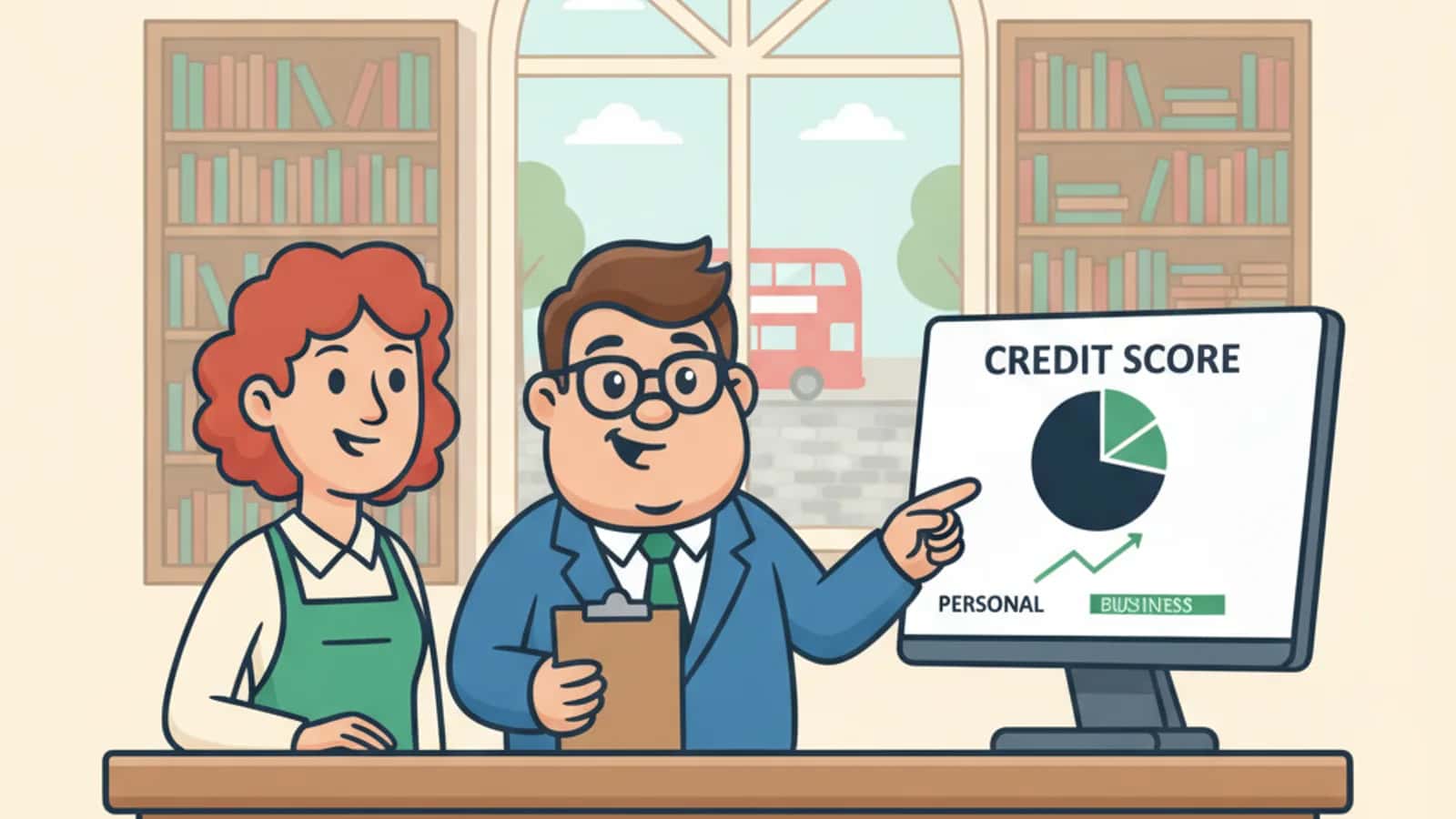
Personal credit score matters a lot, especially for sole traders and directors of small limited companies. Most UK business credit card providers will run a personal credit check on the business owner as part of their assessment, because the business alone often doesn't have enough credit history to make a decision.
For limited companies with several years of filed accounts and a strong business credit profile, the personal score carries less weight. For a company under two years old, or any sole trader, the personal score is often the primary factor.
What this means in practice
- Check your personal credit file with Experian, Equifax, or TransUnion before applying
- Dispute any errors, incorrect defaults or missed payments that aren't yours can be removed
- Avoid applying for personal credit in the weeks before a business card application
- If your personal score is poor, consider a secured or prepaid business card as a short-term alternative while you rebuild
A personal credit score below around 600 (on Experian's scale) will make approval for a mainstream business credit card difficult. That doesn't mean impossible, some specialist providers focus more on business revenue and trading history, but the options narrow and limits tend to be lower.
What's the Minimum Business Revenue Needed to Get Approved
There is no universal minimum revenue figure, it varies by provider and the limit you're applying for. Some providers will consider businesses turning over as little as £10,000 to £20,000 a year for entry-level limits. Others set a floor of £50,000 or more for their standard products.
What providers are really assessing is whether your revenue is consistent enough to cover the credit you're asking for. A business with £30,000 annual turnover applying for a £500 limit is a very different risk profile from the same business applying for a £25,000 limit.
Practical guidance
- Be honest about revenue on your application, providers verify against bank statements and filed accounts
- If turnover is seasonal, show bank statements across a full twelve-month period rather than just peak months
- Businesses with irregular income (agencies, project-based work, e-commerce with seasonal spikes) should apply for a limit that reflects average monthly spend, not peak spend
For businesses exploring other ways to manage cashflow alongside a credit card, the business overdraft vs line of credit vs loan comparison is worth reading.
How Long Does It Take to Build Business Credit Before Applying
Building a usable business credit profile takes roughly six to twelve months of consistent, recorded financial activity. The key is generating data that credit reference agencies can see: filed accounts, registered address, supplier credit accounts paid on time, and ideally a small amount of credit that's been repaid cleanly.
Steps that build business credit relatively quickly:
- Register with Companies House if you haven't already (limited companies)
- Open a dedicated business bank account and keep it active
- Register with HMRC and file returns on time
- Set up trade credit accounts with suppliers, even small ones, and pay on time
- Take out a small business credit facility and repay it without issues
For a deeper look at what goes into your business credit profile and how it's scored, see the business credit score guide.
Sole traders don't have a Companies House registration, so their business credit file is thinner by default. Personal credit history carries more weight as a result.
Can You Get a Business Credit Card With No Business History
Yes, but the options are more limited and the terms are usually less favourable. Some providers offer business credit cards to startups or businesses under twelve months old, typically with lower limits and sometimes requiring a personal guarantee.
Prepaid business cards and charge cards (where the balance must be cleared monthly) are often more accessible for brand-new businesses because the provider takes on less credit risk. They still give you the spend controls, virtual cards, and employee card functionality that make business cards useful.
If you're a new business and a mainstream credit card isn't available yet, it's worth running a no-obligation eligibility check to see what's actually on the table. A 2-minute check with no hard search shows you where you stand without affecting your credit file.
What Documents Do You Need to Prepare for a Business Credit Card Application
Having the right documents ready before you apply reduces delays and avoids the frustration of a pending decision sitting in someone's inbox. Most UK business credit card providers will ask for some combination of the following:
- Proof of business identity
- , Companies House registration number, or sole trader HMRC registration
- Proof of trading address
- , utility bill, bank statement, or lease agreement
- Bank statements
- , typically three to six months of business bank statements
- Filed accounts or management accounts
- , last one to two years if available
- Director or owner ID
- , passport or driving licence, proof of personal address
- Estimated annual turnover
- , some providers accept self-declared figures for lower limits; others verify
For limited companies, having your Companies House number and SIC code to hand speeds things up. For sole traders, HMRC correspondence showing your UTR (Unique Taxpayer Reference) can substitute for company registration.
If you're used to pulling together documents for other funding applications, the business loan document checklist covers similar ground and is worth bookmarking.
Does Your Business Structure Affect Credit Card Approval Chances
Yes. Limited companies, partnerships, and sole traders are assessed differently, and the structure affects both approval likelihood and the limits on offer.
| Business Structure | How Providers Assess It | Typical Impact on Limits |
|---|---|---|
| Limited company (2+ years) | Business credit file, filed accounts, director credit | Highest limits available |
| Limited company (under 2 years) | Director personal credit, bank statements | Moderate limits, personal guarantee likely |
| Sole trader | Personal credit score, HMRC registration, bank statements | Lower limits, personal liability by default |
| Partnership | Each partner's personal credit, partnership accounts | Varies; often treated similarly to sole trader |
Limited companies have the advantage of a separate legal entity with its own credit file. That file takes time to build, but once it's established, it lets the business access credit on its own merits rather than purely on the director's personal score. Read business credit cards and personal credit scores: the key points for the key considerations.
How Many Business Credit Cards Should You Apply for at Once
Apply for one at a time. Each full application triggers a hard credit search, and multiple hard searches in a short period signal financial stress to lenders, even if you're simply comparing options.
The right approach is to use an eligibility checker that runs a soft search first. This shows you which cards you're likely to be approved for without leaving a mark on your credit file. Once you've identified the best fit, you apply for that one.
If you're declined, wait at least 30 to 60 days before applying elsewhere. Use that time to understand why you were declined and fix the underlying issue.
What Are Common Reasons Business Credit Card Applications Get Denied
Getting declined is frustrating, but the reason is usually one of a small number of fixable issues. Providers aren't always required to tell you the exact reason, but common causes include:
- Poor personal credit score
- , missed payments, defaults, or CCJs on the director's personal file
- Thin business credit file
- , not enough financial history for the provider to assess risk
- Too short a trading history
- , under six months is a common cutoff for mainstream cards
- Revenue too low for the limit requested
- , applying for a £20,000 limit on £15,000 annual turnover
- Errors on the application
- , mismatched addresses, incorrect Companies House details
- Too many recent credit applications
- , multiple hard searches in a short window
- High existing debt
- , outstanding loans or overdrafts that reduce available credit capacity
If your application was declined and you're not sure what to do next, the business loan declined guide covers the immediate steps, many of which apply equally to credit card rejections.
How to Check Your Business Credit Score Before Applying
Check your business credit file with one or more of the main UK business credit reference agencies before submitting any application. The main ones are Experian Business, Equifax Business, and Creditsafe. Some offer free basic reports; full reports typically cost a small monthly fee.
What to look for:
- Registered address matches
- , your business address on the credit file should match your Companies House registration and bank account
- Filed accounts
- , missing or late filings show up and reduce your score
- Payment history
- , any late payments to suppliers or lenders recorded against your business
- County Court Judgements (CCJs)
- , these are serious and need to be addressed before applying
- Credit utilisation
- , if you already have business credit, how much of it you're using affects the score
Checking your own file is a soft search and does not affect your credit score. Do it before every significant credit application.
What's the Difference Between a Business Credit Card and a Personal Card for Business Use
A business credit card is issued to the business entity, carries the business name, and reports to business credit reference agencies. A personal card used for business expenses is issued to you as an individual and reports to personal credit agencies.
Key practical differences
- Credit limit sizing, business cards can carry much higher limits (up to £250k+ with leading providers) than most personal cards
- Spend controls, business cards let you set limits per employee card, restrict categories, and get real-time visibility over team spend
- Employee cards, business cards issue multiple cards under one account; personal cards don't
- Expense management, business cards integrate with accounting software and produce itemised statements by cardholder
- Credit file impact, business card usage builds your business credit profile; personal card usage doesn't
- Section 75 protection, this applies to regulated consumer credit agreements and does not apply to business credit cards. Check your provider's specific purchase protection and chargeback terms instead
Using a personal card for business spend is a common workaround that creates problems: mixed personal and business transactions, no visibility over staff spend, and no contribution to building a business credit history.
Can a Sole Trader Get a Business Credit Card Without a Companies House Number
Yes. Sole traders in the UK don't register with Companies House, and most business credit card providers accept sole trader applications without a company registration number. Instead, providers will typically ask for your HMRC self-assessment registration, your UTR, proof of trading address, and personal ID.
Because sole traders have no separate legal entity, the credit assessment is almost entirely based on personal credit history and personal income. The card limit will reflect your personal financial profile rather than a separate business credit file.
Some sole traders find it worth forming a limited company specifically to access better business credit terms over time, but that's a longer-term structural decision, not a quick fix for an immediate application.
Practical Steps to Improve Your Chances of Business Credit Card Approval
This is the section most people need. Knowing what providers look for is one thing, actually fixing the gaps before you apply is another.
Six months before applying
- Open a dedicated business bank account if you don't have one
- Register with Companies House (if applicable) and keep your registered address current
- Set up at least one trade credit account with a supplier and pay it on time every month
- Check your personal credit file and dispute any errors
One to two months before applying
- Pull your business credit report and check for CCJs, late payment records, or address mismatches
- Avoid applying for any other credit, personal or business
- Gather your last three to six months of business bank statements
- Make sure your most recent accounts are filed with Companies House if you're a limited company
At the point of application
- Run a soft-search eligibility check first, no hard search, no obligation, 2 minutes
- Apply for a card whose limit matches your actual revenue profile, not your ideal limit
- Be accurate on the application, inconsistencies between what you declare and what bank statements show are a common trigger for rejection
Business Credit Cards. Without the Fuss., run a 2-minute eligibility check with no hard search and see which leading card providers match your business profile today.
For businesses that need working capital beyond what a credit card covers, it's worth understanding alternative business funding options alongside your card search.
Next steps for how to improve your chances of business credit card approval
Getting approved for a business credit card isn't complicated, but it does require some preparation. The businesses that get declined are usually the ones that applied without checking their credit file first, applied for a limit that didn't match their revenue, or submitted multiple applications in a short window. For more detail, see our guide to declined business credit card applications.
Fix the basics: check your personal and business credit files, get your documents in order, and use a soft-search eligibility check before committing to a full application. If your business is new or your credit file is thin, start with a lower limit or a charge card, build the history, and apply for a higher limit in six to twelve months. For the wider context, read a closer look at business credit card eligibility in the UK.
The right business credit card gives you spending headroom, employee cards you can control, up to 56 days interest-free on purchases, and cashback on everyday spend. It also stops staff putting company expenses on personal cards, and stops you chasing receipts at month end.
Next step: Run a no-obligation, no-hard-check eligibility check in 2 minutes at Funding Fred Business Credit Cards and see which leading card providers match your business today.
Frequently asked questions
What Do Business Credit Card Companies Look For When Approving Applications?
Card providers assess risk across several dimensions before issuing a business credit card. They want to see that the business generates enough revenue to service the credit, that the directors or owners have a reasonable personal credit history, and that the business itself has some trackable financial footprint.
How Important Is Personal Credit Score for Business Credit Card Approval?
Personal credit score matters a lot, especially for sole traders and directors of small limited companies. Most UK business credit card providers will run a personal credit check on the business owner as part of their assessment, because the business alone often doesn't have enough credit history to make a decision.
What's the Minimum Business Revenue Needed to Get Approved?
There is no universal minimum revenue figure, it varies by provider and the limit you're applying for. Some providers will consider businesses turning over as little as £10,000 to £20,000 a year for entry-level limits. Others set a floor of £50,000 or more for their standard products.
How Long Does It Take to Build Business Credit Before Applying?
Building a usable business credit profile takes roughly six to twelve months of consistent, recorded financial activity. The key is generating data that credit reference agencies can see: filed accounts, registered address, supplier credit accounts paid on time, and ideally a small amount of credit that's been repaid cleanly.
Can You Get a Business Credit Card With No Business History?
Yes, but the options are more limited and the terms are usually less favourable. Some providers offer business credit cards to startups or businesses under twelve months old, typically with lower limits and sometimes requiring a personal guarantee.
What Documents Do You Need to Prepare for a Business Credit Card Application?
Having the right documents ready before you apply reduces delays and avoids the frustration of a pending decision sitting in someone's inbox. Most UK business credit card providers will ask for some combination of the following:
Written by
The Funding Fred Editorial Team creates plain-English guides to help business owners understand funding options, eligibility, and application readiness before they compare finance options.
Reviewed by
UK business finance content reviewer
Robert reads our UK business finance guides before they go live, checking each one is accurate, easy to follow, and reflects how lending actually works today — not how a brochure says it should. He's listed on the FCA Register, approved as an SMF3 (AR) Executive Director at Switcha Limited, and connected to Lucky Growth Partners Ltd through its appointed representative relationship, so the regulated detail gets a properly qualified second read.