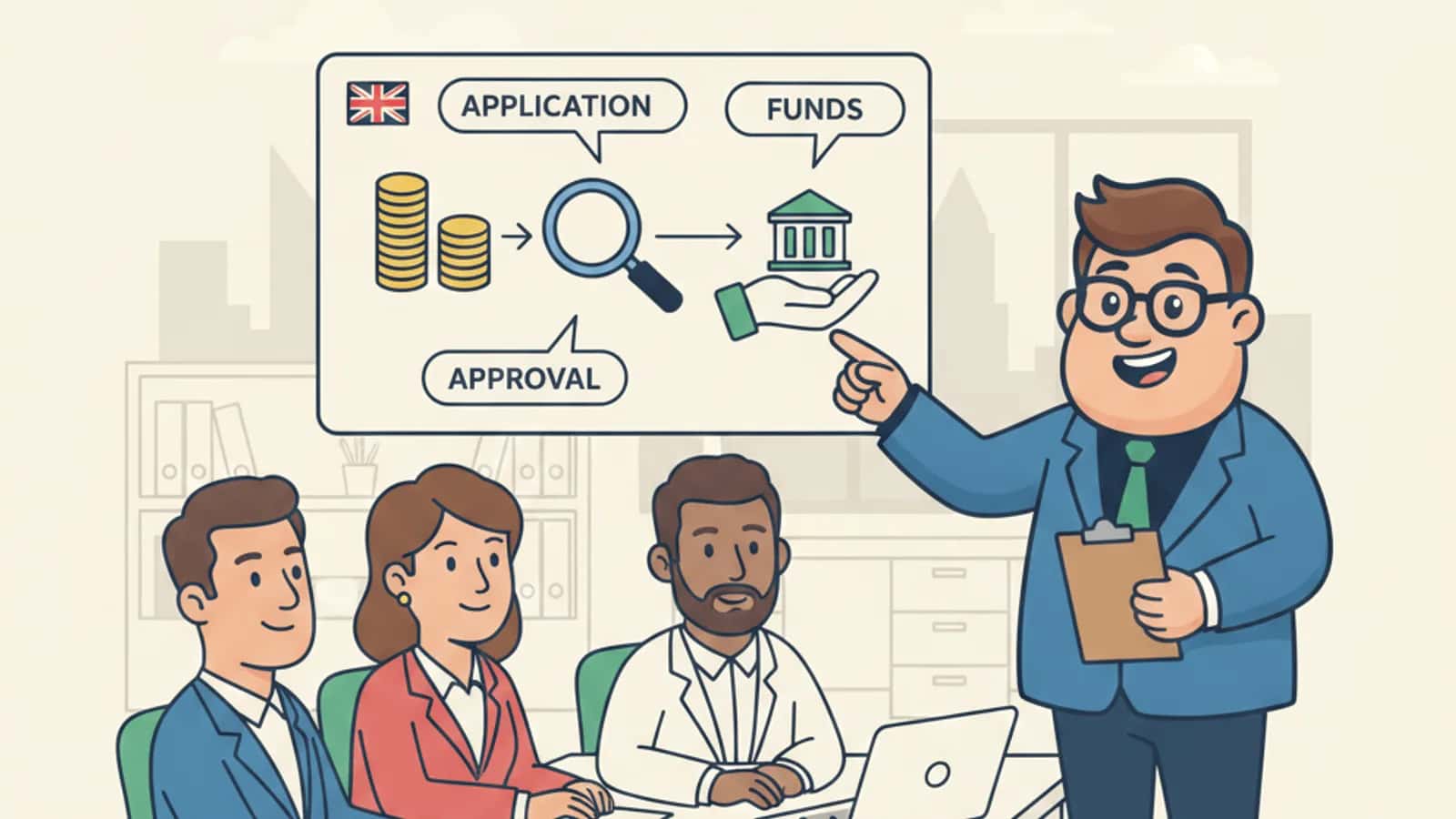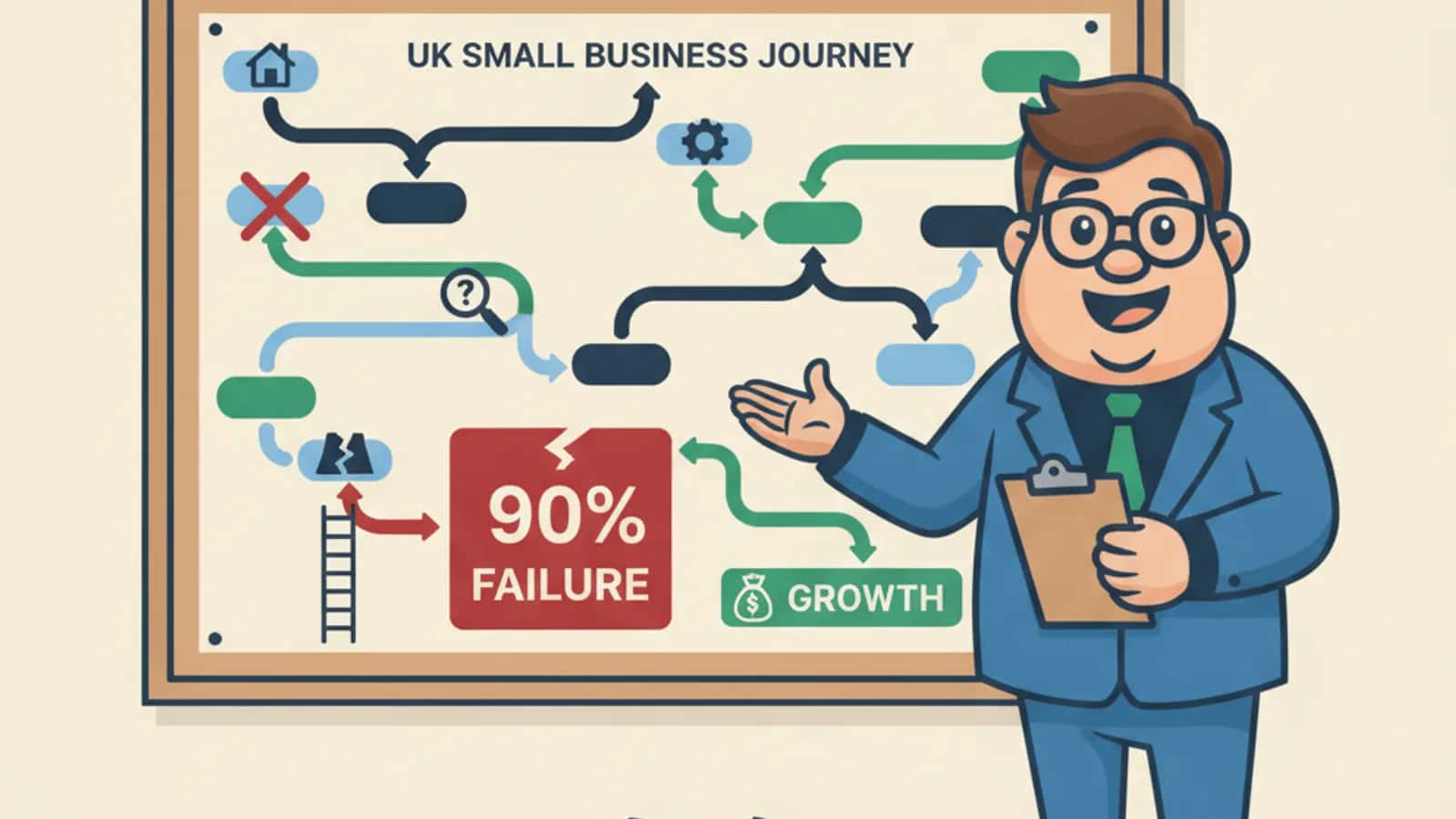
Business Loan Declined: What to Do Next
When your business loan gets declined, request the specific rejection reasons from the lender, review your credit reports for errors, and consider alternative funding sources like online lenders or merchant cash advances.
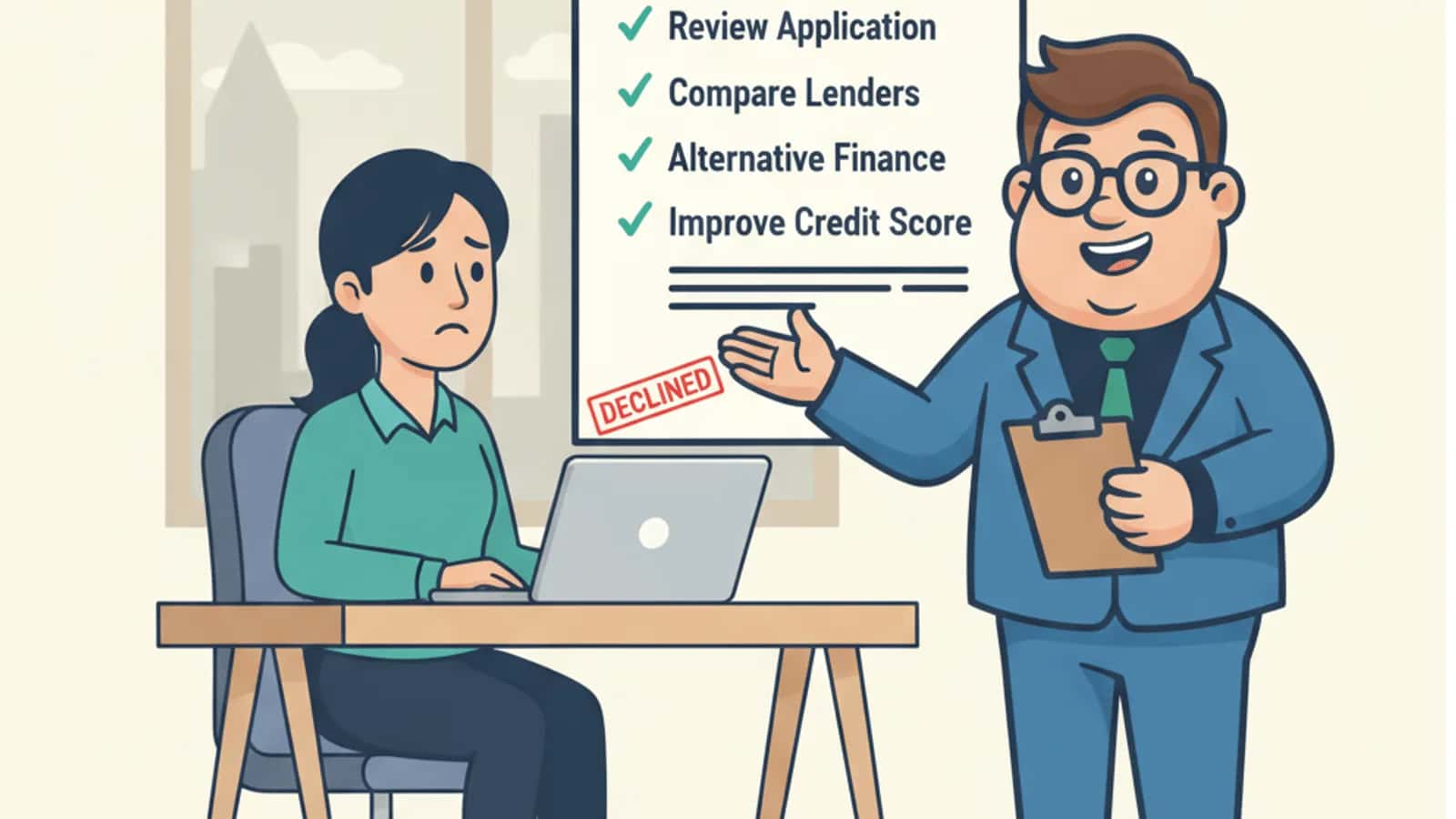
Quick answer
When your business loan gets declined, request the specific rejection reasons from the lender, review your credit reports for errors, and consider alternative funding sources like online lenders or merchant cash advances. Most rejections stem from credit issues, insufficient revenue, or incomplete documentation — all fixable problems that don't require waiting months to address.
Key takeaways
- Banks decline business loans primarily due to poor credit scores (below 680), insufficient revenue, high existing debt, or limited trading history
- Request detailed rejection reasons from your lender — this becomes your roadmap for improvement
- Alternative lenders often approve applications that banks reject, using different criteria focused on current trading performance
- You can reapply immediately with different lenders, though SBA loans require a 90-day waiting period
- Improving your business credit score and cash flow documentation significantly increases approval odds
- Online platforms can match you with multiple lenders in minutes, avoiding repeated rejections from similar institutions
- Merchant cash advances and revenue-based financing offer faster approval for businesses with consistent card transactions
Why Did My Business Loan Get Rejected

Banks reject business loan applications for predictable reasons that you can address. The most common factors include credit scores below 680, annual revenue under £100,000, high debt-to-income ratios, and businesses operating for less than two years.
Primary rejection reasons
- Poor credit history — Both personal and business credit scores matter
- Insufficient cash flow — Lenders want to see consistent monthly revenue
- High existing debt — Too much current borrowing relative to income
- Limited trading history — Most banks prefer 2+ years in business
- Incomplete documentation — Missing financial statements or tax returns
- Industry risk — Some sectors face automatic restrictions
Red flags that trigger instant rejections
- Recent bankruptcies or CCJs
- Negative bank account balances
- Inconsistent revenue reporting
- Missing business registration documents
The key insight: banks use rigid criteria that don't reflect your current trading performance. A restaurant with strong daily card sales might get rejected due to seasonal revenue dips from last year's accounts.
What Credit Score Do I Need for a Business Loan

Traditional banks typically require a personal credit score of 680 or higher for business loans, but alternative lenders often approve applications with scores as low as 500-550. Your business credit score (if established) carries equal weight in lending decisions.
Credit score requirements by lender type:
High Street Banks
- Minimum Personal Score
- 680+
- Business Score
- 80+
- Approval Speed
- 4-8 weeks
Online Lenders
- Minimum Personal Score
- 550+
- Business Score
- Not required
- Approval Speed
- 24-48 hours
Alternative Finance
- Minimum Personal Score
- 500+
- Business Score
- Preferred but flexible
- Approval Speed
- Same day
What matters beyond the score
- Payment history — Recent missed payments hurt more than old ones
- Credit utilisation — Keep below 30% of available limits
- Account age — Longer credit history helps
- Credit mix — Different types of credit show management skills
Quick improvement tactics
- Pay down existing credit card balances
- Set up direct debits for all regular payments
- Check credit reports for errors and dispute them
- Consider becoming an authorised user on established accounts
Remember: alternative lenders focus more on your current bank statements and trading performance than historical credit scores. A construction firm with recent payment delays might still qualify based on strong contract pipeline and daily banking activity.
Can I Appeal a Business Loan Denial
Most lenders don't offer formal appeals processes, but you can request reconsideration if you have new information or can address the specific rejection reasons. The success rate is low with traditional banks but higher with online lenders who use more flexible criteria.
When appeals might work
- Documentation errors — You can provide missing or corrected paperwork
- Credit report mistakes — Disputed items have been removed
- Revenue timing — New contracts or seasonal upturn changes your position
- Collateral addition — You can now offer security you couldn't before
Appeal process steps:
- Request detailed rejection reasons in writing
- Gather evidence that addresses each concern
- Submit a formal reconsideration request
- Provide updated financial statements if applicable
- Highlight any business improvements since application
Better alternatives to appeals:
Instead of appealing, consider applying with different lenders who use alternative criteria. Online platforms can check your eligibility across multiple partners without hard credit searches, avoiding repeated rejections.
SBA loan appeals: Government-backed loans have specific appeal rights, but the process takes 60-90 days. Most businesses need funding faster than appeals deliver results.
How to Improve My Business Credit Score
Business credit scores range from 0-100, with scores above 80 considered excellent for lending purposes. Unlike personal credit, you can build business credit relatively quickly with the right approach.
Immediate improvement actions
- Register with credit agencies — Experian, Equifax, and Creditsafe for business
- Establish trade credit — Open accounts with suppliers who report payments
- Pay everything early — Even utility bills affect business credit
- Keep business finances separate — Never mix personal and business accounts
30-day improvement plan:
- Week 1: Check your current business credit reports
- Week 2: Set up direct debits for all business payments
- Week 3: Open trade accounts with 2-3 suppliers
- Week 4: Pay all outstanding invoices and fees
Ongoing maintenance
- Monitor credit reports monthly
- Keep credit utilisation below 25%
- Maintain consistent payment patterns
- Build relationships with multiple suppliers
Common mistakes that hurt scores
- Late payment of business rates or HMRC
- High credit card balances relative to limits
- Frequent credit applications within short periods
- Using personal credit for business expenses
Timeline expectations: New businesses can build decent credit scores within 6-12 months with consistent payment behaviour. Established businesses can see improvements within 30-60 days of correcting payment patterns.
Alternative Funding Sources When Banks Say No
When traditional banks decline your application, multiple alternative funding sources can provide capital within days rather than weeks. These lenders use different criteria, often focusing on current trading performance rather than historical credit.
Merchant Cash Advances: Ideal for businesses with consistent card transactions. Approval based on daily sales volume rather than credit scores. Funding available within 24 hours.
Revenue-Based Financing: Repayments fluctuate with your monthly revenue. Perfect for seasonal businesses or those with variable income streams.
Online Business Loans: Digital lenders use Open Banking to assess your real-time financial position. Faster decisions with more flexible criteria than banks.
Asset Finance: Secure funding against business equipment, vehicles, or property. Lower risk for lenders means easier approval for borrowers.
Invoice Finance: Unlock cash tied up in unpaid invoices. Particularly useful for B2B businesses with 30-60 day payment terms.
Peer-to-Peer Lending: Individual investors fund your loan through online platforms. Often more flexible than institutional lenders.
Comparison: Traditional vs Alternative Funding
| Factor | Banks | Alternative Lenders |
|---|---|---|
| Application Time | 2-4 weeks | 2 minutes online |
| Documentation | Extensive paperwork | Bank statements + basic info |
| Credit Requirements | Strict (680+ score) | Flexible (500+ often acceptable) |
| Approval Speed | 4-8 weeks | 24-48 hours |
| Funding Amount | £25k-£1m+ | £10k-£500k typically |
| Interest Rates | 3-8% typically | 6-25% depending on risk |
Choosing the right alternative
- High card sales volume → Merchant cash advance
- Seasonal revenue → Revenue-based financing
- Equipment purchase → Asset finance
- Cash flow gaps → Invoice finance
- General expansion → Unsecured business loans
The key advantage: alternative lenders assess your current ability to repay based on trading performance, not just historical credit files.
Differences Between Bank Loans and Online Lenders
Online lenders and traditional banks operate with fundamentally different approaches to risk assessment and customer service. Understanding these differences helps you choose the right funding source for your situation.
Assessment Methods:
Banks rely heavily on historical data — credit scores, years in business, and audited accounts. Online lenders use real-time data through Open Banking connections, analysing your daily cash flow patterns and transaction history.
Speed and Convenience:
Traditional banks require branch visits, physical paperwork, and multiple meetings. Online lenders complete the entire process digitally, often providing decisions within hours of application.
Flexibility in Criteria:
Banks use rigid lending criteria with limited exceptions. Online lenders consider multiple factors and can approve businesses that banks automatically reject due to credit scores or industry type.
Key Operational Differences:
| Aspect | Traditional Banks | Online Lenders |
|---|---|---|
| Technology | Legacy systems | Smart tech, Open Banking |
| Decision Making | Committee-based | Algorithm + human review |
| Relationship | Branch-focused | Digital-first |
| Criteria | Fixed rules | Flexible assessment |
| Customer Support | Business hours only | Extended hours, chat support |
Which is right for you?
When to choose banks
- Seeking very large amounts (£500k+)
- Want the lowest possible interest rates
- Have perfect credit and extensive documentation
- Need complex structured finance
When to choose online lenders
- Need funding quickly (days not weeks)
- Have imperfect credit but strong trading
- Want a simple application process
- Require flexible repayment terms
Most UK small businesses find online lenders more accessible, especially when banks have already declined their applications or when speed is essential for business opportunities.
What Documents Do Lenders Look at When Evaluating a Loan
Lenders focus on three core document categories: financial performance, business legitimacy, and repayment ability. The specific requirements vary significantly between traditional banks and alternative lenders.
Essential documents for all lenders
- Bank statements — 3-6 months of business account activity
- Companies House registration — Proof of legitimate business operation
- Management accounts — Recent profit and loss statements
- VAT returns — If VAT registered, recent quarterly submissions
Additional requirements for banks
- Audited accounts for 2+ years
- Personal tax returns for directors
- Detailed business plan with projections
- Security documentation if secured lending
- Professional references from accountants
What lenders actually analyse:
Cash flow patterns — Consistent deposits indicate stable revenue Payment behaviour — Regular outgoings show business management Seasonality — Understanding revenue fluctuations Growth trends — Increasing deposits over time Banking relationships — Overdraft usage and account conduct
Red flags in documentation
- Frequent returned payments or bank charges
- Irregular large deposits without explanation
- High cash transactions (money laundering concerns)
- Recent account opening (limited trading history)
- Mismatched revenue between different documents
Preparation tips:
- Organise documents before applying
- Ensure consistency across all financial statements
- Prepare explanations for any unusual transactions
- Keep business and personal finances clearly separated
- Update management accounts to current month
Alternative lender advantages: Many online lenders can access your financial data directly through Open Banking, reducing paperwork requirements while providing more accurate real-time assessment of your business performance.
For detailed guidance on documentation requirements, see our complete guide to business loan documents.
How Long Should I Wait Before Applying for Another Loan
You can apply with different lenders immediately after a rejection, but applying with similar institutions or the same lender requires strategic timing to avoid damaging your credit profile further.
Immediate reapplication scenarios
- Different lender types — Move from banks to online lenders
- Soft credit check platforms — No impact on credit score
- Alternative criteria lenders — Different assessment methods
- Corrected documentation — Fixed errors in original application
Mandatory waiting periods
- SBA loans — 90 days before reapplication with any SBA lender
- Same bank — 3-6 months typically required
- Credit repair — 30-60 days to see score improvements
Strategic timing considerations:
Month-end applications: Apply early in the month when lenders have fresh lending targets rather than month-end pressure.
Seasonal factors: Avoid applying during traditionally slow periods for your industry when lenders view the sector as higher risk.
Credit inquiry spacing: Multiple applications within 14-45 days often count as single inquiry for scoring purposes, but this varies by lender.
Optimal reapplication strategy:
- Week 1: Analyse rejection reasons and gather missing documentation
- Week 2: Research alternative lenders with different criteria
- Week 3: Apply to 2-3 online lenders simultaneously
- Week 4: Follow up on applications and negotiate terms
When to wait longer
- Credit score below 500 (work on improvement first)
- Recent bankruptcy or serious financial events
- Major business changes pending (new contracts, relocations)
- Seasonal revenue low point for your industry
Fast-track alternatives: Use eligibility checking platforms that assess multiple lenders without hard credit searches, identifying your best options before formal applications.
Steps to Strengthen My Loan Application Next Time
Strengthening your loan application requires addressing the specific weaknesses that caused rejection while building overall financial credibility. Focus on measurable improvements rather than cosmetic changes.
Financial Performance Improvements:
Increase monthly revenue
— Add new revenue streams or improve existing ones before reapplying. Even 10-15% growth shows positive momentum.
Reduce existing debt
— Pay down credit cards and overdrafts to improve debt-to-income ratios. This has immediate impact on affordability calculations.
Build cash reserves
— Maintain 2-3 months of operating expenses in business accounts. Lenders view reserves as risk mitigation.
Improve profit margins
— Review pricing and costs to demonstrate better profitability in recent months compared to historical accounts.
Documentation and Presentation
- Professional business plan — Include realistic financial projections and market analysis
- Updated management accounts — Show recent performance improvements
- Cash flow forecasts — Demonstrate ability to service loan repayments
- Use of funds statement — Clearly explain how loan will generate returns
Credit Profile Enhancement:
- Pay all bills early for 60-90 days before reapplying
- Reduce credit utilisation below 25% on all accounts
- Establish trade credit with suppliers who report to credit agencies
- Monitor credit reports monthly and dispute any errors immediately
Business Credibility Factors
- Industry certifications — Relevant professional accreditations
- Customer testimonials — Evidence of strong client relationships
- Supplier references — Proof of reliable payment history
- Insurance coverage — Comprehensive business protection
Timing Your Reapplication:
Apply when you can demonstrate concrete improvements, not just promises. A restaurant showing three months of increased revenue has stronger positioning than one projecting future growth without evidence.
Common strengthening mistakes
- Applying too soon without addressing rejection reasons
- Focusing on cosmetic improvements rather than fundamental issues
- Over-borrowing to show larger cash balances temporarily
- Providing outdated financial information
Measuring readiness: You're ready to reapply when you can demonstrate measurable improvement in the specific areas that caused rejection, backed by at least 30-60 days of supporting evidence.
Is a Business Loan Right for My Company Size and Industry
Business loans work best for established companies with predictable revenue streams and clear growth opportunities that generate returns exceeding the borrowing costs. Company size and industry significantly affect both approval odds and loan suitability.
Optimal company profiles for business loans:
Revenue range: £100k-£5m annual turnover typically offers the best loan terms and approval rates. Below £100k limits options; above £5m may require specialist commercial finance.
Time in business: 2+ years of trading history provides sufficient data for lenders to assess risk accurately.
Industry considerations:
Low-risk sectors (higher approval rates):
- Professional services (accounting, legal, consulting)
- Healthcare (dental practices, veterinary clinics)
- Established retail with physical locations
- B2B services with contract-based revenue
Higher-risk sectors (more challenging approval):
- Restaurants and hospitality
- Construction and trades
- Startups in any sector
- Cash-intensive businesses
Company size suitability:
Micro businesses (1-9 employees): Best suited for smaller loans (£10k-£50k) from alternative lenders rather than banks. Consider merchant cash advances for quick access.
Small businesses (10-49 employees): Ideal candidates for traditional business loans £25k-£250k. Sufficient scale to justify loan processing costs.
Medium businesses (50+ employees): Can access full range of financing options including larger facilities and better rates.
When loans aren't suitable
- Startup funding — Consider startup-specific options instead
- Seasonal businesses — Revenue-based financing often works better
- High-growth tech — Equity investment may be more appropriate
- Struggling businesses — Focus on cash flow improvement first
Industry-specific alternatives
- Construction: Asset finance for equipment, invoice finance for project cash flow
- Retail: Inventory financing, merchant cash advances
- Professional services: Working capital facilities for smooth operations
- Manufacturing: Equipment finance, export finance
Decision framework:
Choose business loans when you have:
- Predictable monthly revenue
- Clear use for funds that generates returns
- Ability to service regular repayments
- Established business operations
Consider alternatives when you need:
- Flexible repayment terms
- Faster access to capital
- Industry-specific financing features
- Funding despite credit challenges
Next steps for business loan declined what to do next
Getting declined for a business loan isn't the end of your funding journey — it's often just the beginning of finding the right lender for your situation. Traditional banks use rigid criteria that don't reflect your current business performance, but alternative lenders focus on what matters: your ability to generate revenue and repay loans.
The key steps forward are simple: understand why you were rejected, address fixable issues like documentation gaps, and explore lenders who use different assessment criteria. Online platforms can match you with multiple finance partners in minutes, using Open Banking to assess your real-time financial position rather than outdated credit files.
Your next actions:
- Check eligibility now with alternative lenders using soft credit searches
- Gather recent bank statements and management accounts
- Apply with 2-3 different lender types simultaneously
- Consider merchant cash advances if you have strong card sales
- Build business credit for future applications
Don't let one rejection define your funding options. With the right approach and lender match, you can secure the capital your business needs — often within days rather than months.
Ready to explore your options? Check Eligibility Now with our wide partner panel. No hard check to start, and you'll see potential offers in under 2 minutes.
Further reading
Frequently asked questions
Why Did My Business Loan Get Rejected?
Banks reject business loan applications for predictable reasons that you can address. The most common factors include credit scores below 680, annual revenue under £100,000, high debt-to-income ratios, and businesses operating for less than two years.
What Credit Score Do I Need for a Business Loan?
Traditional banks typically require a personal credit score of 680 or higher for business loans, but alternative lenders often approve applications with scores as low as 500-550. Your business credit score (if established) carries equal weight in lending decisions.
Can I Appeal a Business Loan Denial?
Most lenders don't offer formal appeals processes, but you can request reconsideration if you have new information or can address the specific rejection reasons. The success rate is low with traditional banks but higher with online lenders who use more flexible criteria.
How to Improve My Business Credit Score?
Business credit scores range from 0-100, with scores above 80 considered excellent for lending purposes. Unlike personal credit, you can build business credit relatively quickly with the right approach.
What Documents Do Lenders Look at When Evaluating a Loan?
Lenders focus on three core document categories: financial performance, business legitimacy, and repayment ability. The specific requirements vary significantly between traditional banks and alternative lenders.
How Long Should I Wait Before Applying for Another Loan?
You can apply with different lenders immediately after a rejection, but applying with similar institutions or the same lender requires strategic timing to avoid damaging your credit profile further.
Written by
The Funding Fred Editorial Team creates plain-English guides to help business owners understand funding options, eligibility, and application readiness before they compare finance options.
Reviewed by
UK business finance content reviewer
Robert reads our UK business finance guides before they go live, checking each one is accurate, easy to follow, and reflects how lending actually works today — not how a brochure says it should. He's listed on the FCA Register, approved as an SMF3 (AR) Executive Director at Switcha Limited, and connected to Lucky Growth Partners Ltd through its appointed representative relationship, so the regulated detail gets a properly qualified second read.