Implements and Seasonal Repayments: Asset Finance for Agricultural Equipment in 2026
Implements and seasonal repayments combine agricultural equipment financing with payment schedules that match farming cash flow cycles. This structure allows farmers to make smaller payments during off-season months and larger payments when harvest income arrives, typically covering 50-85% of implement costs with terms up to 60 months.
Quick answer
Implements and seasonal repayments combine agricultural equipment financing with payment schedules that match farming cash flow cycles. This structure allows farmers to make smaller payments during off-season months and larger payments when harvest income arrives, typically covering 50-85% of implement costs with terms up to 60 months.
Key takeaways
- Seasonal repayment plans align equipment loan payments with agricultural revenue cycles, reducing cash flow pressure during off-season months
- Agricultural implement financing typically covers 50-85% of equipment value with terms ranging from 12-60 months
- Interest rates for implement loans start from around 5% APR for new equipment, with promotional 0% rates available from major manufacturers
- Credit requirements vary but most lenders require a minimum 600 credit score and 2+ years farming experience
- Seasonal payment structures include skip payments, split payments, and deferred start options
- Used equipment financing is available but typically requires higher deposits and shorter terms
- Missing seasonal payments can trigger immediate collection procedures and equipment repossession
- Alternative financing options include hire purchase, finance lease, and manufacturer financing programs
Implements and seasonal repayments combine agricultural equipment financing with payment schedules that match farming cash flow cycles. This structure allows farmers to make smaller payments during off-season months and larger payments when harvest income arrives, typically covering 50-85% of implement costs with terms up to 60 months.
What Are Implements and Seasonal Repayments in Agriculture

Agricultural implements are specialized farming equipment including tractors, harvesters, ploughs, seeders, and attachments used for crop production. Seasonal repayments are loan structures that align payment schedules with a farm's revenue cycles, allowing smaller payments during off-season months and larger payments when harvest income arrives.
This financing approach recognizes that farming income is highly seasonal. Most crop farmers receive the majority of their annual income during harvest periods, typically autumn for grain crops or specific harvest windows for specialty crops. Traditional monthly payment schedules can create cash flow problems during planting and growing seasons when expenses are high but revenue is minimal.
Key characteristics of implements and seasonal repayments
- Equipment coverage: Tractors, combines, balers, cultivators, planters, and specialized attachments
- Payment flexibility: Payments adjusted to match crop cycles and income patterns
- Loan amounts: Typically £5,000 to £500,000+ depending on equipment type and farm size
- Seasonal adjustment: 30-70% payment reduction during off-season months
For UK farmers, seasonal repayment structures are particularly valuable given the country's distinct growing seasons and the capital-intensive nature of modern agricultural equipment.
How Seasonal Repayments Work for Farm Equipment
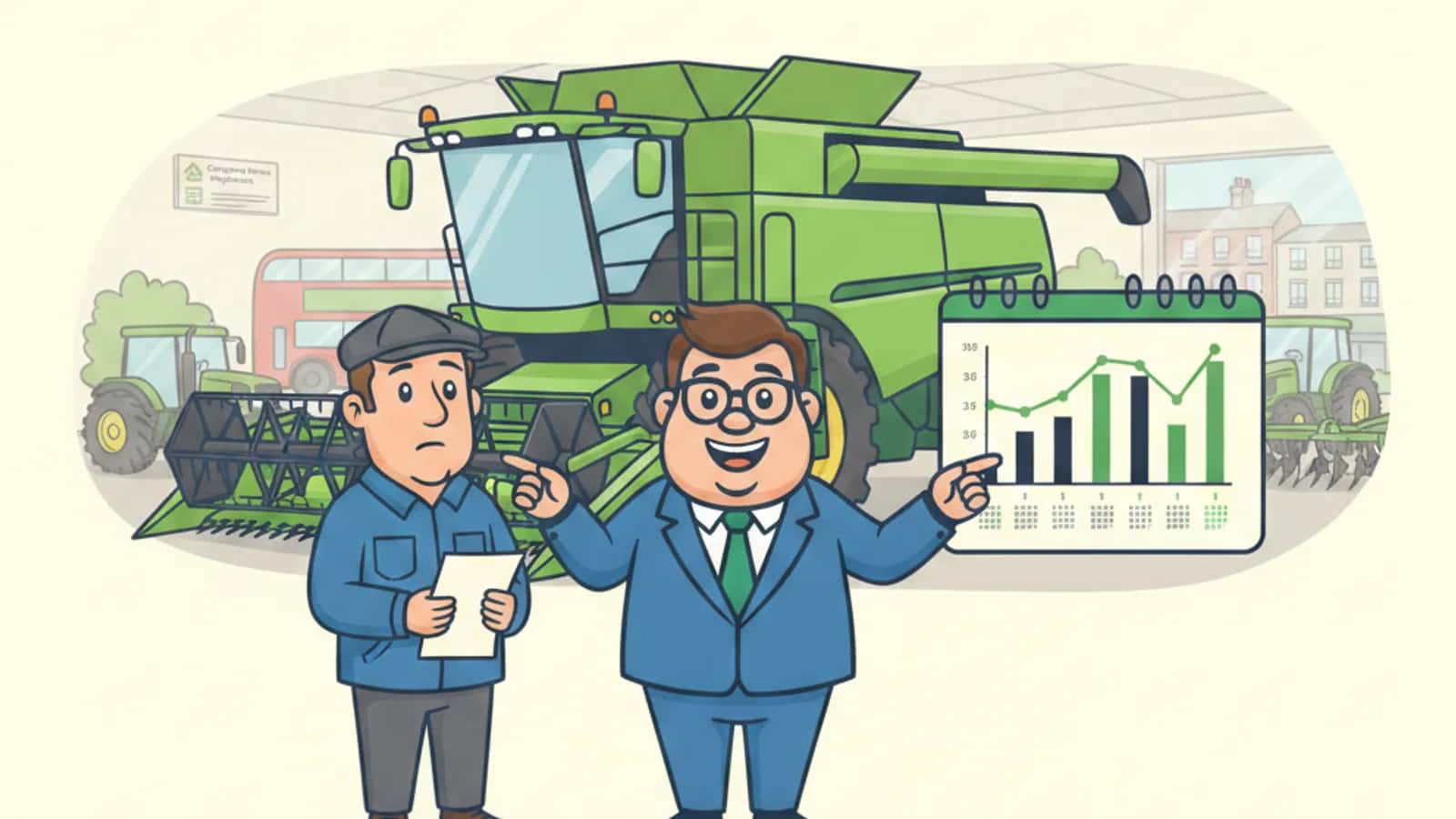
Seasonal repayments for farm equipment operate through structured payment schedules that match agricultural cash flow patterns. Lenders adjust monthly payment amounts based on when farmers typically receive income from crop sales or livestock operations.
Common seasonal payment structures include:
Seasonal Split Payments: Higher payments during peak income months (typically September-December for grain crops) and reduced payments during planting and growing seasons (January-August). For example, a £60,000 tractor loan might require £800 monthly payments during off-season and £1,200 during harvest months.
Skip Payment Options: Complete payment deferrals during specified months, usually 2-4 months during the lowest income period. Skipped payments are typically added to the loan term or distributed across peak months.
Step Payment Plans: Payments that start lower and increase annually, matching farm growth and inflation expectations. Year one might require 70% of standard payments, increasing to 110% by year three.
Deferred Start Programs: First payment delayed 3-6 months to align with the first harvest after equipment purchase.
Most seasonal programs require a deposit of 10-25% and include seasonal payment adjustments of 30-70% below standard monthly amounts during off-peak periods. The total loan amount remains the same, but payment timing matches cash flow reality.
For asset finance comparison, seasonal structures work particularly well with hire purchase agreements where ownership transfers at loan completion.
Short-Term vs Long-Term Equipment Financing Options
Short-term implement financing (12-36 months) suits smaller equipment purchases and farmers wanting to minimize interest costs, while long-term financing (48-84 months) reduces monthly payments for major equipment purchases but increases total interest paid.
Short-Term Financing (12-36 months)
- Best for: Attachments, smaller tractors under £30,000, used equipment
- Typical rates: 4-8% APR for new equipment
- Monthly payments: Higher but less total interest
- Seasonal adjustment: Limited flexibility due to shorter term
- Deposit requirements: 15-25% typically required
Long-Term Financing (48-84 months)
- Best for: Major equipment over £50,000, combines, large tractors
- Typical rates: 5-10% APR depending on term length
- Monthly payments: Lower but more total interest
- Seasonal flexibility: More room for payment adjustments
- Deposit requirements: 10-20% for qualified borrowers
Decision factors for term selection:
Choose short-term if your farm has strong cash flow, you want to minimize interest costs, or you're financing equipment that depreciates quickly. Choose long-term if you need lower monthly payments, want maximum seasonal flexibility, or you're financing equipment with long useful life.
Many farmers use a mixed approach: short-term financing for attachments and implements under £25,000, long-term for major equipment purchases. This strategy balances cash flow management with interest cost control.
For comprehensive equipment financing options, consider exploring different types of asset finance to find the best match for your specific implement needs.
Interest Rates and Costs for Agricultural Implement Loans
Agricultural implement loan rates typically range from 4.99% to 12% APR depending on equipment type, loan term, borrower creditworthiness, and lender type. Manufacturer financing programs often offer promotional rates starting at 0% APR for qualified buyers.
Rate ranges by financing source:
Manufacturer Financing: 0-6% APR
- John Deere, Kubota, and Case IH offer competitive rates
- Promotional 0% financing common for new equipment
- Example: Kubota 24-month terms at 0.00% APR = £41.67 per £1,000 financed
Agricultural Banks: 5-9% APR
- Specialized agricultural lenders understand farming cycles
- Often provide seasonal payment flexibility
- May require existing banking relationship
Asset Finance Companies: 6-12% APR
- Faster approval processes
- Less stringent agricultural experience requirements
- May accept lower credit scores
Additional costs to consider
- Arrangement fees: 1-3% of loan amount
- Documentation fees: £200-£500
- Early repayment charges: Typically 1-5% of outstanding balance
- Insurance requirements: Comprehensive coverage mandatory
Rate factors that improve pricing
- Credit scores above 700
- 20%+ deposit
- New equipment purchases
- Established farming operations (3+ years)
- Strong cash flow documentation
For current market rates and business loan interest rate comparisons, rates have remained relatively stable in 2026 despite broader economic pressures.
Financing Options for Used Farming Equipment
Used farming equipment financing is readily available but typically requires higher deposits (20-30%) and shorter terms (24-48 months) compared to new equipment financing. Lenders assess used equipment based on age, hours of operation, condition, and resale value.
Used equipment financing parameters
- Maximum age: Usually 10-15 years depending on equipment type
- Deposit requirements: 20-35% of purchase price
- Interest rates: Typically 1-3% higher than new equipment rates
- Loan-to-value: 65-80% maximum financing
- Terms: Generally limited to 48 months maximum
Equipment condition requirements
- Inspection reports: Professional equipment appraisal often required
- Maintenance records: Service history documentation preferred
- Operating hours: Combines typically financed up to 3,000 hours, tractors up to 5,000 hours
- Warranty coverage: Extended warranty may improve financing terms
Best used equipment financing sources:
Dealer financing: Often the most convenient option with established relationships and equipment knowledge. Dealers may offer certified pre-owned programs with warranty coverage.
Agricultural credit unions: Typically offer competitive rates for members with farming operations. May provide more flexible underwriting for local farmers.
Specialist asset finance providers: Focus on equipment value rather than just credit scores. Can provide faster decisions for time-sensitive purchases.
Private party purchases: Require independent appraisals and may limit financing options. Bank loans or asset finance solutions work better than dealer programs.
For used equipment purchases, consider the total cost including higher interest rates, shorter terms, and potential repair costs when comparing to new equipment with promotional financing.
Credit Score Requirements for Implement Financing
Most agricultural implement lenders require minimum credit scores of 600-650, though some specialist agricultural lenders accept scores as low as 550 with compensating factors like substantial deposits or strong farming experience.
Credit score tiers and typical outcomes:
Excellent (720+)
- Access to best rates and promotional financing
- Minimum deposit requirements (10-15%)
- Maximum term lengths available
- Pre-approval options common
Good (650-719)
- Standard rates with most lenders
- Moderate deposit requirements (15-20%)
- Full term options available
- Straightforward approval process
Fair (600-649)
- Higher rates but financing available
- Increased deposit requirements (20-25%)
- May require shorter terms
- Additional documentation needed
Poor (550-599)
- Limited lender options
- Specialist agricultural lenders only
- High deposits required (25-35%)
- Shorter terms and higher rates
Compensating factors for lower credit scores
- Farming experience: 5+ years of successful farming operations
- Cash flow strength: Strong revenue documentation from previous seasons
- Large deposits: 30%+ down payment can offset credit concerns
- Equipment value: High-value, well-maintained equipment reduces lender risk
- Co-signers: Family member or business partner with stronger credit
For farmers with credit challenges, establishing a relationship with an agricultural bank or credit union before needing equipment financing often provides better options than applying during urgent equipment needs.
Consider reviewing your business credit score before applying to understand your financing position and identify improvement opportunities.
Risks of Seasonal Repayment Plans
Seasonal repayment plans carry specific risks including cash flow miscalculations, crop failure impact, and potential payment acceleration clauses that can create financial pressure during already difficult periods.
Primary risks to consider:
Income timing mismatches: If harvest is delayed or crop sales are slower than expected, the higher seasonal payments may arrive before income does. This is particularly problematic for farmers selling through cooperatives with delayed payment schedules.
Crop yield or price volatility: Poor growing conditions or market price drops can reduce expected income just when higher payments are due. A 30% yield reduction can make previously manageable seasonal payments unaffordable.
Payment acceleration clauses: Many seasonal loan agreements include clauses allowing lenders to demand full payment or convert to standard monthly payments if certain conditions aren't met, such as missing insurance payments or failing to maintain equipment properly.
Refinancing difficulties: If financial problems arise, seasonal loans can be harder to refinance than standard loans because fewer lenders understand or offer seasonal structures.
Risk mitigation strategies
- Conservative payment planning: Base seasonal payment calculations on 80% of expected income rather than optimistic projections
- Diversification: Spread seasonal payments across multiple income sources (different crops, livestock, custom work)
- Reserve funds: Maintain 3-6 months of payments in reserve for unexpected timing issues
- Insurance coverage: Comprehensive crop insurance and equipment coverage to protect against major losses
Early warning signs of payment problems
- Delayed harvest due to weather
- Crop prices 20%+ below projections
- Equipment breakdowns requiring major repairs
- Market access problems or buyer payment delays
For farmers concerned about seasonal payment risks, alternative business funding strategies may provide more predictable cash flow management.
Best Agricultural Equipment Financing for Small Farmers
Small farmers (under 500 acres or £200,000 annual revenue) benefit most from manufacturer financing programs, agricultural credit unions, and government-backed lending schemes that offer flexible terms and competitive rates for smaller equipment purchases.
Top financing options for small operations:
Manufacturer financing programs: John Deere, Kubota, and New Holland offer specialized small farmer programs with reduced documentation requirements and seasonal payment options. These programs often finance 85-90% of equipment value with competitive rates.
Agricultural credit unions: Local agricultural credit unions typically offer the most flexible underwriting for small farmers, considering local knowledge and farming relationships rather than just financial metrics.
Government programs: Various regional development schemes provide equipment financing assistance, including loan guarantees and interest rate subsidies for qualifying small farms.
Equipment sharing cooperatives: Some regions offer cooperative purchasing programs where multiple small farmers share equipment costs and financing, reducing individual financial burden.
Optimal equipment financing strategies for small farms
- Start with attachments: Finance smaller implements (£5,000-£15,000) to establish credit history before pursuing major equipment loans
- Used equipment focus: Well-maintained used equipment often provides better value for smaller operations with limited cash flow
- Seasonal timing: Apply for financing during off-season when lenders have more capacity and farmers have time for thorough applications
- Bundle purchases: Combine multiple equipment needs into single financing package for better rates and terms
Documentation requirements for small farmers
- 2-3 years of farm tax returns
- Crop insurance records
- Equipment maintenance records
- Cash flow projections for next 2 seasons
Small farmers should also consider business loans for expansion when equipment purchases are part of broader farm growth plans.
Cash Flow Impact of Seasonal Repayments
Seasonal repayments can improve farm cash flow by reducing payment obligations during low-income months by 30-70%, but they require careful planning to ensure adequate reserves are available when higher payments resume during harvest periods.
Cash flow benefits:
Reduced off-season pressure: Standard monthly payments of £1,500 might reduce to £500-750 during planting and growing seasons, freeing up £750-1,000 monthly for operating expenses, seed, fertilizer, and fuel costs.
Improved working capital: Lower payments during high-expense periods preserve cash for essential farm operations. This is particularly valuable during spring when input costs are highest but no revenue is coming in.
Seasonal alignment: Payments increase when farm income peaks, typically during harvest months when grain sales, livestock sales, or crop insurance payments provide cash influx.
Cash flow planning considerations:
Payment timing coordination: Align higher payments with specific income events rather than calendar months. For example, schedule increased payments 30 days after expected grain delivery rather than fixed October dates.
Reserve requirements: Maintain reserves equal to 2-3 months of peak seasonal payments to handle timing mismatches between income and payment due dates.
Multiple revenue streams: Diversify income timing through different crops, livestock, custom work, or off-farm income to reduce dependence on single harvest periods.
Seasonal cash flow management tools
- Operating lines of credit: Bridge gaps between income and payment timing
- Grain marketing strategies: Spread sales across multiple months rather than single harvest sales
- Forward contracting: Lock in prices and delivery schedules to improve payment predictability
For comprehensive cash flow management, consider invoice financing for seasonal businesses if your farm includes contract work or direct sales components.
Common Mistakes in Agricultural Equipment Financing
The most frequent mistakes farmers make include overestimating seasonal income, choosing inappropriate loan terms, and failing to account for equipment depreciation when planning financing structures.
Critical financing mistakes to avoid:
Optimistic income projections: Basing seasonal payments on best-case scenarios rather than conservative estimates. Use 5-year average yields and prices, not peak year projections, when calculating affordable payment levels.
Ignoring total cost of ownership: Focusing only on monthly payments while overlooking maintenance, insurance, fuel, and repair costs. A £50,000 tractor may require £8,000-12,000 annually in operating costs beyond loan payments.
Mismatched loan terms: Choosing loan terms longer than equipment useful life or shorter than cash flow can support. A 7-year loan on equipment with 5-year useful life creates negative equity problems.
Inadequate deposit planning: Minimizing deposits to preserve cash without considering the impact on monthly payments and total interest costs. Sometimes a larger deposit significantly improves loan terms and total costs.
Poor timing decisions: Purchasing equipment during peak demand periods (spring) when prices are highest and financing options may be limited. Off-season purchases often provide better pricing and financing terms.
Documentation oversights
- Incomplete maintenance records reducing resale value
- Insufficient insurance coverage voiding loan protection
- Missing crop insurance documentation affecting seasonal payment approval
- Failure to update lender on significant farm changes
Refinancing mistakes: Waiting until financial stress to explore refinancing options. Refinancing asset finance works best when done proactively rather than reactively.
Equipment selection errors: Financing equipment that's oversized for actual needs or undersized for planned growth. Right-sizing equipment to actual farm requirements improves both productivity and financing success.
Alternatives to Traditional Implement Financing
Equipment leasing, rent-to-own programs, and cooperative ownership arrangements provide alternatives to traditional implement financing, often with more flexible terms and lower upfront costs for farmers with specific operational needs.
Finance lease options: Equipment leasing allows farmers to use implements without ownership, typically requiring lower deposits and providing tax advantages. Monthly lease payments are often 20-30% lower than loan payments, though no equity is built.
Operating lease programs: Short-term leases (1-3 years) work well for farmers testing new equipment types or managing temporary capacity needs. Seasonal lease rates may adjust for equipment utilization patterns.
Rent-to-own arrangements: Combines rental flexibility with eventual ownership, allowing farmers to apply rental payments toward purchase. Useful for farmers uncertain about long-term equipment needs or testing equipment suitability.
Equipment sharing cooperatives: Multiple farmers jointly purchase and share expensive equipment like combines or specialized harvesters. Reduces individual financing needs while providing access to high-capacity equipment.
Custom operator arrangements: Hiring custom operators for specific tasks eliminates equipment ownership costs entirely. Works well for specialized operations like harvesting or land preparation that occur seasonally.
Manufacturer programs
- Seasonal rental: Equipment available during peak use periods only
- Guaranteed buyback: Purchase with guaranteed resale value after specified period
- Upgrade programs: Trade-in credits toward newer equipment after 2-3 years
Alternative financing sources
- Equipment dealers: In-house financing with flexible terms
- Agricultural supply companies: Financing tied to input purchases
- Regional development funds: Government-backed programs for qualifying operations
For businesses exploring various funding approaches, different types of business loans may provide additional options beyond traditional equipment financing.
Who Qualifies for Agricultural Equipment Loans
Agricultural equipment loan qualification typically requires 2+ years of farming experience, minimum annual revenue of £25,000-50,000, credit scores above 600, and ability to demonstrate seasonal cash flow patterns that support repayment schedules.
Primary qualification criteria:
Farming experience requirements: Most lenders require 2-5 years of documented farming operations. New farmers may qualify with agricultural education, family farming background, or partnerships with experienced operators.
Revenue thresholds: Minimum annual farm revenue typically ranges from £25,000 for small equipment to £100,000+ for major implement purchases. Lenders assess revenue stability over 3-5 year periods rather than single-year performance.
Credit requirements: Minimum credit scores of 600-650 for most programs, though agricultural lenders may accept lower scores with compensating factors like substantial deposits or strong farming references.
Cash flow documentation: Ability to demonstrate seasonal income patterns and sufficient cash flow to support both seasonal and standard payment structures during various market conditions.
Specific qualification factors:
Land ownership or lease agreements: Proof of farming operation through owned land, long-term lease agreements, or documented farming partnerships. Lenders prefer operations with 5+ year land security.
Equipment experience: Demonstrated ability to operate and maintain similar equipment types. First-time equipment buyers may require training documentation or operator certification.
Insurance requirements: Comprehensive equipment insurance and crop insurance coverage. Some lenders require specific coverage levels or named lender as additional insured.
Financial documentation needed
- 3 years of farm tax returns (Schedule F)
- Current year profit/loss statements
- Cash flow projections for loan term
- Equipment quotes and specifications
- Proof of deposit funds
Special programs for new farmers: Beginning farmer programs through USDA, state agricultural departments, and agricultural lenders may offer reduced requirements, including lower credit scores, smaller deposits, and extended terms.
For broader business qualification guidance, review business loan eligibility criteria to understand general lending requirements.
What Happens If You Miss a Seasonal Payment
Missing a seasonal payment typically triggers a 10-30 day grace period, followed by late fees, potential conversion to standard monthly payments, and possible equipment repossession if payments remain delinquent beyond 60-90 days.
Immediate consequences of missed payments:
Grace period activation: Most agricultural lenders provide 10-30 day grace periods recognizing that harvest timing can vary. However, interest and late fees typically accrue from the original due date.
Late fee assessment: Standard late fees range from £25-100 or 3-5% of the missed payment amount. Some seasonal loan agreements include higher late fees due to the irregular payment structure.
Credit reporting impact: Payments more than 30 days late are typically reported to credit bureaus, potentially affecting future financing options and credit scores.
Lender communication requirements: Most loan agreements require immediate notification of payment difficulties. Early communication often leads to better resolution options.
Escalation procedures:
60 days delinquent: Lenders may demand immediate payment of all missed amounts or conversion to standard monthly payment schedules, eliminating seasonal payment benefits.
90 days delinquent: Formal collection procedures typically begin, including demand letters, collection agency involvement, and preparation for equipment repossession.
Repossession process: Agricultural equipment repossession follows specific legal procedures, typically requiring 30-60 day notice periods and opportunities to cure defaults before equipment seizure.
Options when facing payment difficulties
- Loan modification: Restructuring payment schedules or extending terms
- Payment deferrals: Temporary payment delays with specific restart dates
- Refinancing: Moving to different lender with more suitable terms
- Partial payments: Some lenders accept partial payments to avoid default status
Prevention strategies: Maintain open communication with lenders, establish emergency reserves equal to 2-3 seasonal payments, and consider business debt consolidation loans if multiple payment obligations become unmanageable.
Next steps for implements and seasonal repayments
Implements and seasonal repayments provide agricultural operations with financing structures that match equipment payments to farming income cycles, reducing cash flow pressure during low-revenue months while ensuring affordable access to essential equipment. Success with seasonal repayment programs requires conservative income projections, adequate reserve funds, and careful coordination between payment timing and expected revenue streams.
For farmers considering implement financing, start by accurately documenting your seasonal cash flow patterns over the past 3-5 years, including both peak and challenging seasons. This data helps determine appropriate seasonal payment adjustments and identifies potential timing mismatches before they become problems.
Next steps for implement financing:
- 1
Assess your financing needs
Calculate total equipment costs including deposits, insurance, and operating expenses
- 2
Document your farm's financial position
Gather 3 years of tax returns, cash flow statements, and crop insurance records
- 3
Compare financing options
Evaluate manufacturer programs, agricultural banks, and specialist lenders for best terms
- 4
Plan payment timing
Align seasonal payment schedules with your specific crop cycles and income patterns
- 5
Maintain financial flexibility
Establish reserves and backup financing options before equipment needs become urgent
For comprehensive equipment financing solutions that match your operational timeline, check eligibility now with specialist partners who understand agricultural cash flow requirements. A 2-minute check compares hire purchase, finance lease, and seasonal payment options across multiple lenders without affecting your credit score.
Further reading
Frequently asked questions
What Are Implements and Seasonal Repayments in Agriculture?
Agricultural implements are specialized farming equipment including tractors, harvesters, ploughs, seeders, and attachments used for crop production. Seasonal repayments are loan structures that align payment schedules with a farm's revenue cycles, allowing smaller payments during off-season months and larger payments when harvest income arrives.
How Seasonal Repayments Work for Farm Equipment?
Seasonal repayments for farm equipment operate through structured payment schedules that match agricultural cash flow patterns. Lenders adjust monthly payment amounts based on when farmers typically receive income from crop sales or livestock operations.
Who Qualifies for Agricultural Equipment Loans?
Agricultural equipment loan qualification typically requires 2+ years of farming experience, minimum annual revenue of £25,000-50,000, credit scores above 600, and ability to demonstrate seasonal cash flow patterns that support repayment schedules.
What Happens If You Miss a Seasonal Payment?
Missing a seasonal payment typically triggers a 10-30 day grace period, followed by late fees, potential conversion to standard monthly payments, and possible equipment repossession if payments remain delinquent beyond 60-90 days.
Written by
The Funding Fred Editorial Team creates plain-English guides to help business owners understand funding options, eligibility, and application readiness before they compare finance options.
Reviewed by
UK business finance content reviewer
Robert reads our UK business finance guides before they go live, checking each one is accurate, easy to follow, and reflects how lending actually works today — not how a brochure says it should. He's listed on the FCA Register, approved as an SMF3 (AR) Executive Director at Switcha Limited, and connected to Lucky Growth Partners Ltd through its appointed representative relationship, so the regulated detail gets a properly qualified second read.
Sources
- Seasonal Payment [2] Implement Stand Alone Financing - https://www.flintnewhollandinc.com/specials/kubota-specials/general/implement-stand-alone-financing/ [3] Implement Financing - https://www.deere.co.in/en/finance/financing/implement-financing/ [4] Seasonal Payment Structures For Equipment Leasing Canada - https://www.mehmigroup.com/blogs/seasonal-payment-structures-for-equipment-leasing-canada [5] law.cornell.edu - https://www.law.cornell.edu/cfr/text/7/1436.13 [6] Seasonal Loan Repayment Strategies How To Manage Cash Flow Throughout The Year - https://www.crestmontcapital.com/blog/seasonal-loan-repayment-strategies-how-to-manage-cash-flow-throughout-the-year [7] Farming - https://www.yourfinanceguide.com.au/equipment-finance/farming [8] Agriculture - https://equifund.com.au/faqs/agriculture
- British Business Bank finance options
- GOV.UK business finance support