Business Debt Consolidation Loans: Fast Solutions for UK SMEs
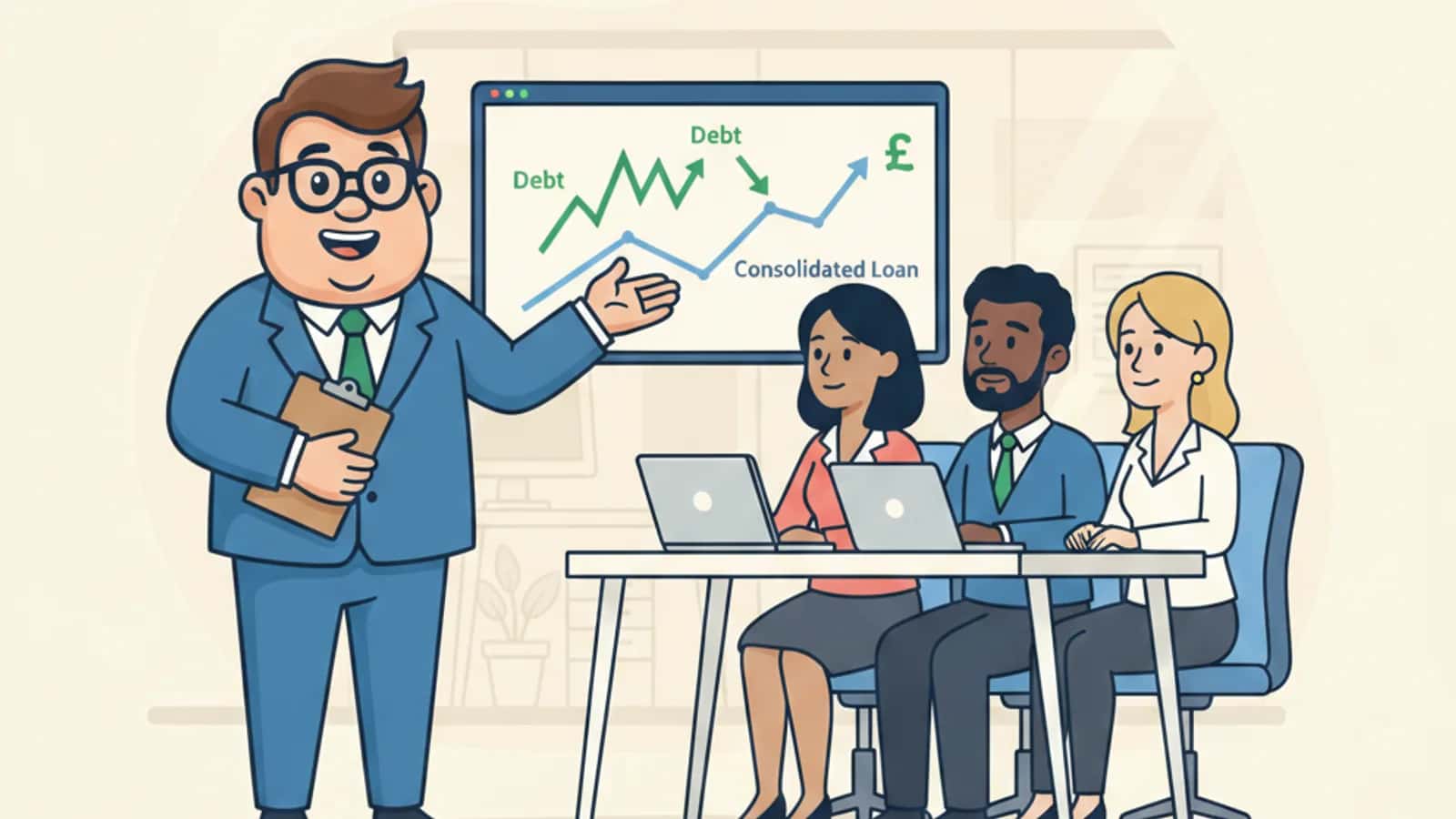
Business debt consolidation loans combine multiple business debts into a single monthly payment, typically at a lower interest rate than your existing obligations. UK SMEs can access £10k to £1m through specialist lenders who focus on current trading performance rather than perfect credit history, with decisions often available within 48 hours.
Quick answer
Business debt consolidation loans combine multiple business debts into a single monthly payment, typically at a lower interest rate than your existing obligations. UK SMEs can access £10k to £1m through specialist lenders who focus on current trading performance rather than perfect credit history, with decisions often available within 48 hours.
Key takeaways
- Business debt consolidation loans merge multiple debts into one payment, simplifying cash flow management
- Interest rates range from 7.80% to 35.26% depending on your business profile and trading history
- Minimum requirements typically include 6-12 months trading history and £100k+ annual revenue
- SBA-style loans offer the lowest rates but take 60-90 days to complete
- Alternative lenders provide faster decisions but at higher rates for businesses with imperfect credit
- Debt service coverage ratio of 1.25x is the standard benchmark lenders use
- Startups under 12 months old face limited options but merchant cash advance refinancing is possible
- Common mistakes include extending loan terms too far and not addressing underlying cash flow issues
What Exactly Is a Business Debt Consolidation Loan

A business debt consolidation loan replaces multiple existing debts with a single new loan, creating one monthly payment instead of juggling several creditors. The new loan pays off your merchant cash advances, credit cards, equipment finance agreements, and other business debts completely.
The primary benefit is simplification. Instead of tracking five different payment dates with varying interest rates, you manage one loan with a fixed monthly amount. Many businesses also secure a lower blended interest rate, particularly when consolidating high-cost merchant cash advances that can carry APRs between 60% and 150%.
Key features of business debt consolidation loans
- Loan amounts from £10k to £5 million depending on your business size
- Fixed monthly payments over 1-25 year terms
- Interest rates based on your business credit profile and trading history
- Funds typically sent directly to existing creditors to close those accounts
- No restrictions on how you use any remaining funds for business purposes
Choose debt consolidation when you have multiple high-interest debts and qualify for a lower rate on the new loan. Avoid it if your new loan rate exceeds your current blended rate or if you haven't addressed the cash flow issues that created the debt problem.
How Business Debt Consolidation Loans Differ from Personal Loans
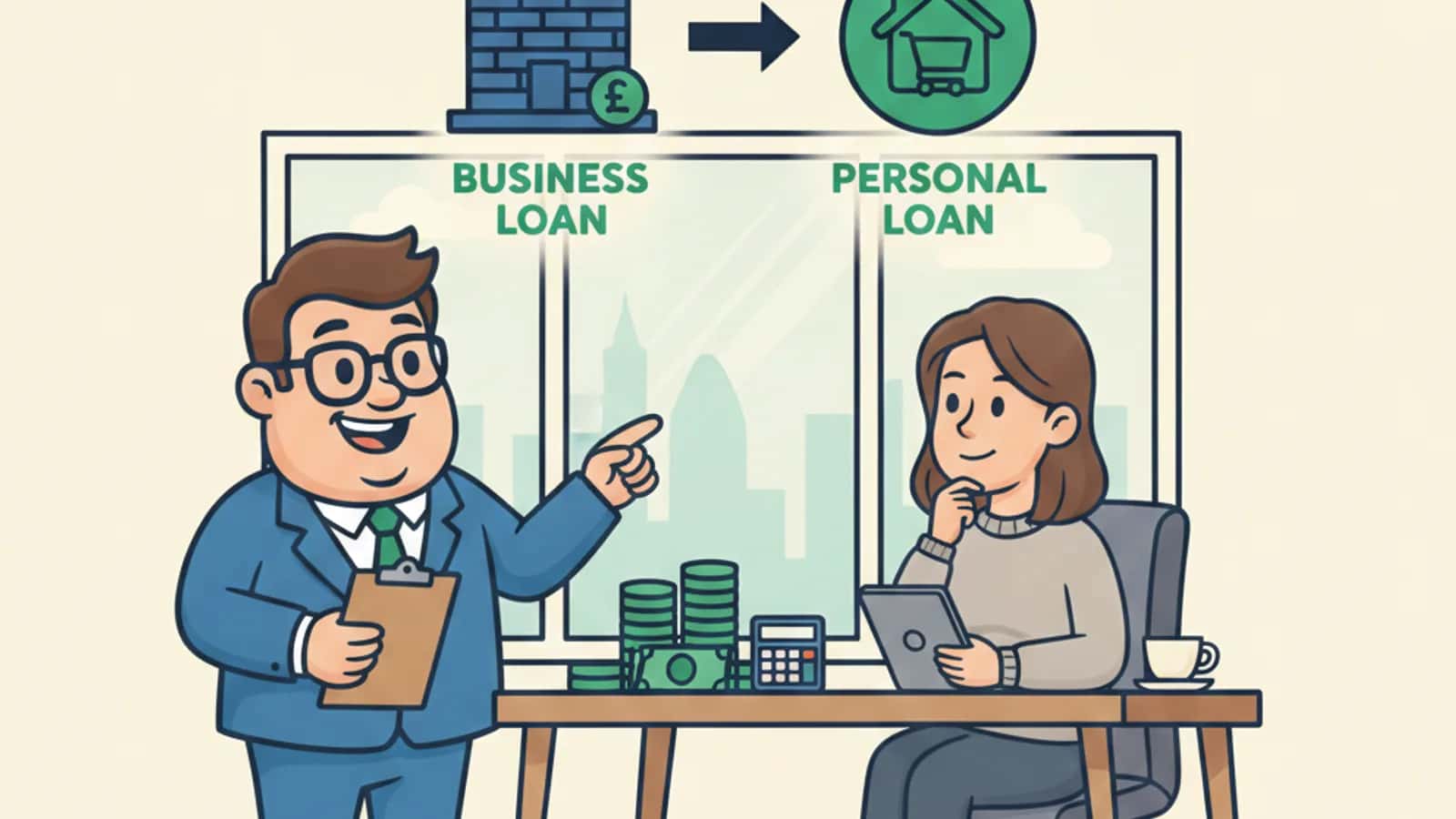
Business debt consolidation loans are underwritten based on your company's revenue, cash flow, and trading history rather than your personal income and credit score alone. Lenders examine your business bank statements, profit and loss accounts, and debt service coverage ratio to assess repayment ability.
Personal debt consolidation focuses entirely on your individual credit profile, debt-to-income ratio, and employment stability. The application process requires personal financial statements, payslips, and individual credit checks.
Business vs Personal Consolidation Comparison:
| Business Loans | Personal Loans |
|---|---|
| Based on business cash flow | Based on personal income |
| Higher loan amounts (£10k-£1m+) | Lower amounts (typically £1k-£50k) |
| Longer repayment terms available | Shorter terms (2-7 years typical) |
| Business credit history matters most | Personal credit score is primary factor |
| Can include business-only debts | Limited to personal debts only |
Business loans also offer tax advantages since interest payments are typically deductible as a business expense. Personal loan interest cannot be deducted unless used for specific qualifying purposes.
The application process for business loans requires company formation documents, trading accounts, and business bank statements rather than personal financial records.
How Much Can You Qualify for with Your Credit Score
Your business credit score affects loan amounts, but annual revenue and cash flow carry more weight with specialist business lenders. Most lenders require minimum credit scores between 570-700, but they focus heavily on your business's ability to service the new debt payment.
Credit Score Ranges and Typical Loan Amounts
- 570-600 credit score: £10k-£100k available through alternative lenders
- 600-650 credit score: £25k-£250k with moderate interest rates
- 650-700 credit score: £50k-£500k with competitive pricing
- 700+ credit score: £100k-£1m+ with best available rates
Revenue requirements matter more than credit scores for most business lenders. Expect minimum annual revenue thresholds of £100k-£250k, with some specialist lenders accepting £75k for established businesses.
Lenders calculate your debt service coverage ratio by dividing net operating income by total debt payments. A ratio of 1.25x means your business generates £1.25 for every £1 of debt service required. Most lenders require at least 1.25x coverage for approval.
Factors that increase your qualification amount
- Strong monthly cash flow with consistent deposits
- Low existing debt-to-revenue ratio
- Profitable trading history over 12+ months
- Industry experience and business stability
- Collateral or personal guarantees offered
Poor credit doesn't disqualify you entirely. Lenders like Fora Financial work with credit scores as low as 570, focusing on current business performance rather than past credit issues.
Typical Interest Rates for Business Consolidation Loans
Interest rates for business debt consolidation loans range from 7.80% to 35.26% APR, with your rate determined by credit profile, business performance, and loan structure. Traditional bank loans offer the lowest rates but require excellent credit and lengthy approval processes.
Rate Ranges by Lender Type
- Traditional banks: 7.80%-15% APR for qualified borrowers
- SBA 7(a) loans: 9%-15% APR with government backing
- Alternative lenders: 15%-35% APR with faster approval
- Online platforms: 12%-30% APR based on automated underwriting
Your business's debt service coverage ratio directly impacts pricing. Strong coverage ratios above 1.5x typically qualify for lower rates, while ratios near the 1.25x minimum result in higher pricing to offset lender risk.
Factors that improve your interest rate
- Annual revenue above £500k
- Profitable operations for 2+ years
- Low existing debt levels
- Strong business and personal credit scores
- Collateral or asset backing
Merchant cash advance refinancing often provides the biggest rate improvements. Businesses paying 60%-150% APR on cash advances can reduce costs significantly by refinancing into traditional term loans at 15%-25% APR.
For current market rates across different loan types, check our average business loan interest rates guide updated monthly with real lender pricing.
Which Lenders Offer the Best Options for Small Businesses
Specialist business lenders provide the most flexible options for debt consolidation, focusing on trading performance rather than perfect credit files. Traditional banks often decline applications that alternative lenders approve based on cash flow analysis.
Top Lender Categories for Business Debt Consolidation:
Alternative Business Lenders
- Bluevine: Flexible credit lines for ongoing consolidation needs
- Fora Financial: Accepts credit scores from 570 with revenue-based underwriting
- OnDeck: Fast decisions with competitive rates for established businesses
Traditional Options
- Live Oak Bank: SBA 7(a) loans up to £5 million for substantial consolidations
- Regional banks: Relationship-based lending for local businesses
- Credit unions: Member-focused rates for qualifying businesses
Specialist Platforms
- Funding Fred connects you with multiple lenders through a single application
- Uses Open Banking to assess your real cash flow in minutes
- No hard credit checks to start the eligibility process
The best lender depends on your specific situation. Choose traditional banks if you have excellent credit and can wait 60-90 days for approval. Select alternative lenders when you need fast decisions or have credit challenges.
Lender Selection Criteria
- Speed needed: Alternative lenders for 24-48 hour decisions
- Lowest rates: SBA 7(a) loans for patient borrowers
- Credit challenges: Revenue-based lenders who focus on cash flow
- Large amounts: Traditional banks for £500k+ consolidations
Funding Fred's platform lets you compare multiple lenders simultaneously without multiple credit checks. The 2-minute eligibility check uses Open Banking to assess your qualification across our entire lender panel.
Can Startups Get Debt Consolidation Loans
Startups under 12 months old face limited debt consolidation options since most business lenders require 6-24 months of trading history. However, businesses with existing debt can explore merchant cash advance refinancing and revenue-based financing as alternatives.
New businesses typically accumulate debt through business credit cards, equipment finance, or initial merchant cash advances before establishing enough history for traditional consolidation loans. The challenge is proving repayment ability without extensive trading records.
Startup Consolidation Options
- 6-12 months trading: Some alternative lenders consider applications with strong revenue growth
- Revenue-based financing: Available for businesses with consistent monthly sales
- Merchant cash advance refinancing: Possible after 3-6 months of processing history
- Personal guarantees: May unlock options for business owners with strong personal credit
Startups should focus on building business credit and maintaining strong cash flow records before pursuing consolidation. Document all revenue streams and maintain clean business banking to support future applications.
Requirements for startup consideration
- Minimum £10k monthly revenue consistently
- Business bank account with regular deposits
- No missed payments on existing business obligations
- Strong personal credit score (650+) for guarantee backing
- Clear business plan and growth trajectory
For detailed startup funding options, review our guide on business loans for startups which covers alternative approaches for newer businesses.
Common Mistakes Business Owners Make When Consolidating Debt
The biggest mistake is extending loan terms too far to reduce monthly payments, which increases total interest paid over the loan life. Many businesses focus solely on payment reduction without calculating the long-term cost impact.
Critical consolidation mistakes to avoid:
Extending terms unnecessarily: A 5-year loan at 15% costs less total interest than a 10-year loan at 12% for the same amount. Calculate total repayment, not just monthly payments.
Ignoring underlying cash flow issues: Consolidation treats symptoms, not causes. If poor cash flow management created the debt problem, consolidation alone won't prevent future issues.
Not shopping multiple lenders: Rate differences of 5-10% are common between lenders for the same borrower. One application through Funding Fred lets you compare multiple offers simultaneously.
Consolidating low-rate debt: Don't include 0% promotional credit cards or low-rate equipment loans in your consolidation. Only consolidate debts with higher rates than your new loan.
Forgetting about fees: Origination fees, early repayment penalties on existing loans, and closing costs can add thousands to your consolidation cost. Factor all fees into your break-even analysis.
Choosing the wrong loan structure: Fixed-rate loans provide payment certainty, while variable rates might start lower but can increase. Match the structure to your cash flow predictability.
Success requires addressing the business practices that created multiple debts while securing better terms on the consolidated loan.
Will a Debt Consolidation Loan Hurt Your Business Credit
A debt consolidation loan initially creates a temporary credit score dip from the hard inquiry and increased total debt, but typically improves your credit profile within 3-6 months through better payment management and lower credit utilization.
The consolidation process involves closing multiple existing accounts, which can temporarily reduce your average account age and available credit. However, making consistent payments on the new loan while eliminating multiple payment obligations usually strengthens your credit profile.
Short-term credit impacts
- Hard inquiry reduces score by 2-5 points temporarily
- New debt increases total obligations initially
- Closed accounts may reduce available credit ratios
Long-term credit benefits
- Single payment reduces missed payment risk
- Lower overall interest rates improve cash flow
- Simplified debt management supports consistent payments
- Reduced credit utilization as balances decrease
Choose lenders who report positive payment history to business credit bureaus. Consistent payments on your consolidation loan build stronger credit over time compared to managing multiple accounts with varying payment dates.
Monitor your business credit score regularly after consolidation to track improvement and identify any reporting errors that need correction.
Alternatives to Business Debt Consolidation Loans
Business credit cards with 0% balance transfer offers provide temporary consolidation for smaller debt amounts, while asset-based lending uses equipment or inventory as collateral for larger consolidations at competitive rates.
Primary alternatives to traditional consolidation loans:
Business credit cards: Transfer existing debt to cards with promotional 0% APR periods. Effective for debts under £50k that you can repay within 12-18 months.
Asset finance refinancing: Use existing equipment, vehicles, or property as collateral for lower-rate loans. Particularly effective for businesses with valuable assets but credit challenges.
Revenue-based financing: Repayments fluctuate with monthly sales, providing flexibility during seasonal or cyclical business patterns. Higher cost but more manageable during slow periods.
Merchant cash advance consolidation: Specialist lenders refinance existing cash advances into term loans with fixed payments and lower effective rates.
Lines of credit: Flexible access to funds for ongoing debt management and working capital needs. Pay interest only on amounts used.
For businesses with equipment assets, asset finance options can provide lower rates than unsecured consolidation loans while using existing equipment as collateral.
Alternative selection criteria
- Debt amount under £25k: Consider business credit cards with promotional rates
- Valuable assets available: Asset-based lending for better rates
- Seasonal revenue patterns: Revenue-based financing for payment flexibility
- Existing merchant cash advances: Specialist MCA refinancing programs
Review our alternative business funding strategies for comprehensive options beyond traditional loans.
How Long Does Approval Take
Alternative lenders provide decisions within 24-48 hours for most business debt consolidation applications, while traditional banks and SBA loans require 60-90 days for complete approval and funding.
Typical approval timelines by lender type:
- 1
Online alternative lenders
1-3 business days from application to funding
- 2
Traditional banks
2-6 weeks for underwriting and approval
- 3
SBA 7(a) loans
60-90 days including government processing
- 4
Asset-based lenders
1-2 weeks including asset valuation
Funding Fred's platform accelerates the process by pre-qualifying you across multiple lenders simultaneously. The initial 2-minute eligibility check uses Open Banking to assess your cash flow without hard credit pulls.
Factors that speed up approval
- Complete financial documentation ready
- Strong business bank account history
- No recent credit issues or missed payments
- Existing relationship with the lender
- Straightforward business structure and ownership
Documentation that slows approval
- Incomplete tax returns or financial statements
- Complex business structures with multiple entities
- Recent ownership changes or business restructuring
- Disputed items on credit reports requiring resolution
For fastest approval, prepare all required documents before applying and choose lenders who specialize in your business type and loan amount range.
What Documents You Need to Apply
Most lenders require 12 months of business bank statements, recent tax returns, and profit and loss statements to assess your consolidation loan application. Alternative lenders often accept less documentation than traditional banks.
Standard documentation requirements:
Financial statements
- 12-24 months of business bank statements
- Profit and loss statements for the last 2 years
- Balance sheet showing current assets and liabilities
- Tax returns for the business (last 2 years)
Business documentation
- Certificate of incorporation or business registration
- Business license and any required industry permits
- Articles of incorporation and operating agreements
- Current business insurance certificates
Debt consolidation specifics
- List of all debts to be consolidated with balances and payment terms
- Recent statements from each creditor
- Payoff quotes for existing loans if available
Personal documentation (for guarantees)
- Personal tax returns for business owners
- Personal financial statements
- Photo identification for all guarantors
Funding Fred's Open Banking integration reduces documentation requirements by accessing your real-time cash flow data directly from your business bank account. This speeds approval and reduces paperwork compared to traditional applications.
For a complete documentation checklist, see our guide on what documents you need for business loan applications.
When Your Business Should NOT Consider Debt Consolidation
Avoid debt consolidation when your new loan rate exceeds your current blended rate, when you haven't addressed underlying cash flow problems, or when you're considering bankruptcy or business closure within 12 months.
Clear situations to avoid consolidation:
Higher total cost: If your blended current rate is lower than available consolidation rates, you'll pay more total interest. Calculate the weighted average of your existing debts before proceeding.
Unstable cash flow: Consolidation creates a fixed monthly payment. If your revenue fluctuates dramatically or you're facing business challenges, the fixed obligation might worsen your situation.
Short-term business viability: Don't consolidate if you're considering selling the business, changing business models, or facing potential closure within 18 months.
Adequate current management: If you're successfully managing multiple payments and have good relationships with existing lenders, consolidation may not provide meaningful benefits.
Recent credit issues: Wait 6-12 months after resolving credit problems to access better consolidation rates rather than accepting high-cost emergency financing.
Alternative solutions available: If customers owe you significant money, focus on improving cash flow through collections rather than adding debt.
Better options exist: Sometimes negotiating payment plans with existing creditors or securing new working capital provides better solutions than consolidation.
Consider consolidation when it genuinely improves your financial position through lower rates, simplified management, or improved cash flow. Avoid it as a quick fix for deeper business problems that require operational changes. For more comparisons and application guidance, browse our business loan guides.
Further reading
Frequently asked questions
What Exactly Is a Business Debt Consolidation Loan?
A business debt consolidation loan replaces multiple existing debts with a single new loan, creating one monthly payment instead of juggling several creditors. The new loan pays off your merchant cash advances, credit cards, equipment finance agreements, and other business debts completely.
How Business Debt Consolidation Loans Differ from Personal Loans?
Business debt consolidation loans are underwritten based on your company's revenue, cash flow, and trading history rather than your personal income and credit score alone. Lenders examine your business bank statements, profit and loss accounts, and debt service coverage ratio to assess repayment ability.
How Much Can You Qualify for with Your Credit Score?
Your business credit score affects loan amounts, but annual revenue and cash flow carry more weight with specialist business lenders. Most lenders require minimum credit scores between 570-700, but they focus heavily on your business's ability to service the new debt payment.
Which Lenders Offer the Best Options for Small Businesses?
Specialist business lenders provide the most flexible options for debt consolidation, focusing on trading performance rather than perfect credit files. Traditional banks often decline applications that alternative lenders approve based on cash flow analysis.
Can Startups Get Debt Consolidation Loans?
Startups under 12 months old face limited debt consolidation options since most business lenders require 6-24 months of trading history. However, businesses with existing debt can explore merchant cash advance refinancing and revenue-based financing as alternatives.
Will a Debt Consolidation Loan Hurt Your Business Credit?
A debt consolidation loan initially creates a temporary credit score dip from the hard inquiry and increased total debt, but typically improves your credit profile within 3-6 months through better payment management and lower credit utilization.
Written by
The Funding Fred Editorial Team creates plain-English guides to help business owners understand funding options, eligibility, and application readiness before they compare finance options.
Reviewed by
UK business finance content reviewer
Robert reads our UK business finance guides before they go live, checking each one is accurate, easy to follow, and reflects how lending actually works today — not how a brochure says it should. He's listed on the FCA Register, approved as an SMF3 (AR) Executive Director at Switcha Limited, and connected to Lucky Growth Partners Ltd through its appointed representative relationship, so the regulated detail gets a properly qualified second read.
Sources
- Consolidate Business Debt [2] Consolidate Business Debt - https://www.lendingtree.com/debt-consolidation/consolidate-business-debt/?msockid=226e53106a436a7f0b6445c06b1f6b7f& [3] Best Business Debt Consolidation Loans - https://www.forbes.com/advisor/business-loans/best-business-debt-consolidation-loans/ [4] Debt Consolidation Loan Statistics - https://www.forbes.com/advisor/personal-loans/debt-consolidation-loan-statistics/ [5] How To Refinance Business Debt - https://clearvaluelending.com/answers/how-to-refinance-business-debt [6] Business Debt Consolidation 2026 - https://clearvaluelending.com/blog/business-debt-consolidation-2026 [7] Debt Consolidation - https://www.nerdwallet.com/business/loans/learn/debt-consolidation
- British Business Bank business loans
- GOV.UK business finance support