
Operating Lease vs Finance Lease: Ownership, Accounting and Tax
An operating lease vs finance lease comparison comes down to three things: who owns the asset, who carries the risk if its value drops, and how the deal shows up in your accounts.
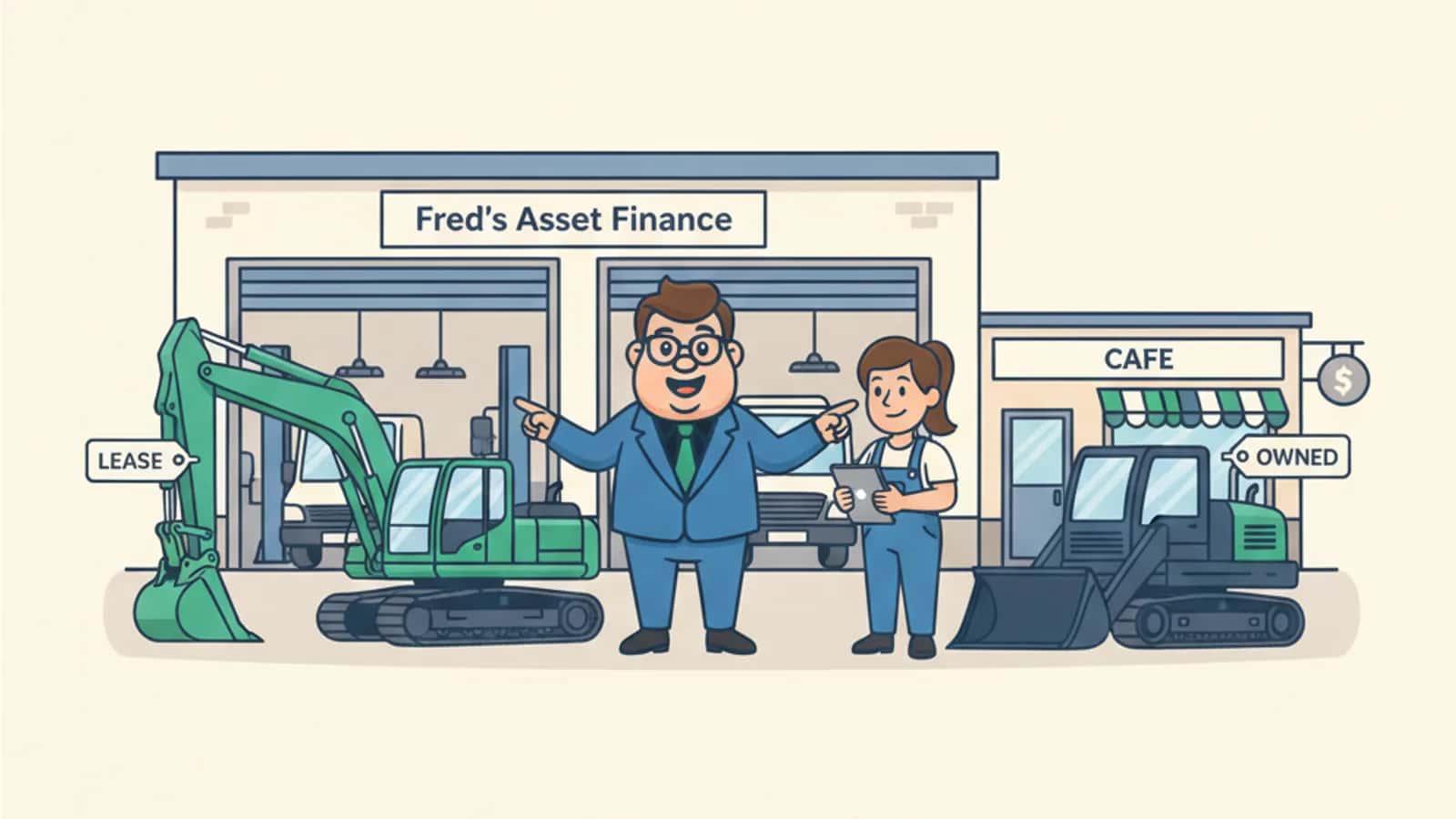
Quick answer
An operating lease vs finance lease comparison comes down to three things: who owns the asset, who carries the risk if its value drops, and how the deal shows up in your accounts. A finance lease transfers most of the risks and rewards of ownership to your business, even though the lessor keeps legal title, it behaves like a loan. An operating lease leaves ownership and most of the resale risk with the leasing company, and under new FRS 102 rules most operating leases will still land on your balance sheet from 2026 onward, just with a different accounting shape.
Key takeaways
- A finance lease transfers the risks and rewards of ownership to the lessee, even though legal title stays with the lessor.
- An operating lease leaves ownership, resale risk, and most residual-value exposure with the leasing company.
- From accounting periods starting on or after 1 January 2026, FRS 102 brings most operating leases onto the UK balance sheet as a right-of-use asset and lease liability, narrowing, but not eliminating, the gap with finance leases.
- Under IFRS 16, lessees no longer classify leases as operating or finance at all; almost everything over 12 months goes on the balance sheet.
- VAT and corporation tax treatment still depends on the lease type and should be confirmed with HMRC guidance and your accountant before you sign anything.
- Finance leases suit assets you plan to use for most of their working life. Operating leases suit kit you expect to replace, upgrade, or hand back.
- Specialist partners can match hire purchase, finance lease, and contract hire options to your asset and timeline, a 2 min check shows what's realistically available.
What's the Difference Between an Operating Lease and a Finance Lease?

The core difference is risk and reward, not just paperwork. A finance lease passes substantially all the risks and rewards of ownership to your business, you take the depreciation hit, the maintenance burden, and usually a purchase option at the end. An operating lease keeps those risks with the lessor, so the asset is really a rental.
In practice this shows up as:
- Term length
- , finance leases usually run close to the asset's full useful economic life; operating leases are shorter.
- Who bears resale risk
- , the lessor keeps resale and obsolescence risk under an operating lease, while the lessee carries it under a finance lease.
- Monthly cost shape
- , operating leases can have lower monthly payments because you're only paying for the portion of value you actually use, plus finance charges, not the full cost of the asset.
A worked example: a logistics firm taking an HGV on a five-year finance lease will usually end up owning or buying the truck outright. The same firm taking a 24-month operating lease on a replacement van hands the vehicle back and walks into a newer one, with the leasing company absorbing the depreciation curve.
Who Owns the Asset and Who Takes the Residual-Value Risk?
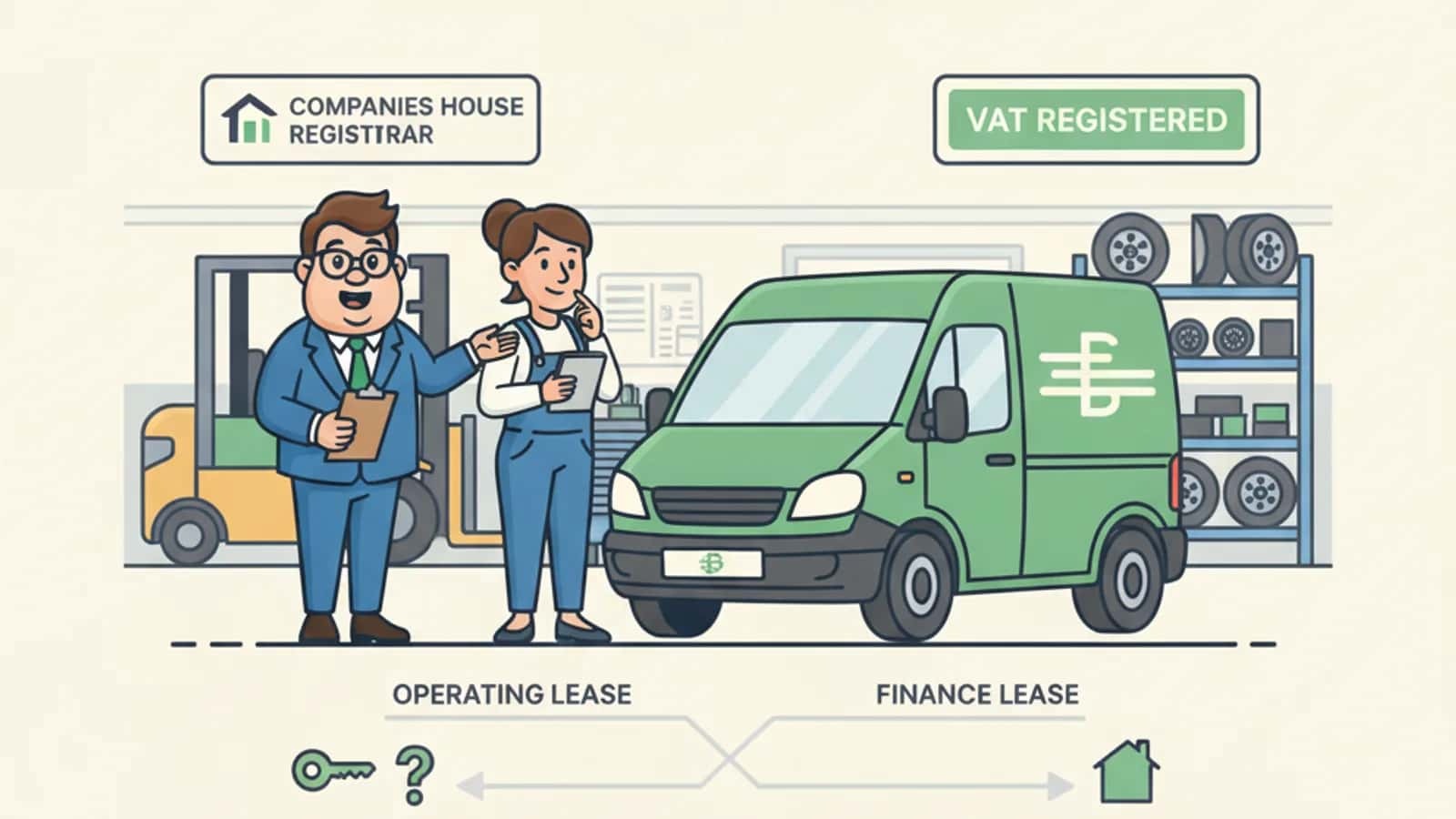
Legal ownership almost always stays with the lessor in both structures, the practical question is who carries the economic risk if the asset is worth less (or more) than expected at the end of the term. Under a finance lease, that residual-value risk sits with your business even though you're not the registered owner. Under an operating lease, the lessor absorbs that risk because they're the one re-selling or re-leasing the asset afterwards.
This matters for three groups of UK SME buyers:
- Construction firms
- financing an excavator they'll run into the ground: a finance lease fits, because resale risk doesn't matter much if you're keeping the kit for its full life.
- Haulage operators
- cycling HGVs every two to three years: an operating lease (or contract hire) shifts the risk of a soft used-truck market onto the lessor.
- Manufacturers
- running CNC machines for a decade or more: finance lease terms track the asset's working life more closely.
For a side-by-side look at how this plays out against hire purchase too, see our comparison of hire purchase vs finance lease structures.
What Counts as a Finance Lease vs Operating Lease?
A lease counts as a finance lease when the agreement effectively transfers the risks and rewards of ownership to the lessee, regardless of what the contract is called. UK accounting standards look at substance over form: a short lease labelled "finance lease" that transfers little risk may still be treated differently from its name.
Indicators that point to a finance lease include:
- The lease term covers most of the asset's useful economic life.
- The lessee has an option to buy the asset at a price well below its likely market value at that point.
- Ownership transfers automatically or is reasonably certain to transfer at the end of term.
Indicators that point to an operating lease include:
- A term that is short relative to the asset's working life.
- The lessor retains meaningful resale or re-letting risk.
- No bargain purchase option built into the agreement.
Operating Lease vs Finance Lease Accounting Treatment: FRS 102 and IFRS 16
The accounting picture has shifted, and UK SMEs preparing accounts under FRS 102 need to know the direction of travel. Historically, finance leases went on the balance sheet (as an asset and a matching liability) while operating lease payments were simply expensed as they were incurred, off balance sheet. From accounting periods beginning on or after 1 January 2026, updated FRS 102 brings most operating leases onto the balance sheet too, as a right-of-use asset with a matching lease liability, closing much of the historic gap.
Under IFRS 16, the change has already happened for lessees. The old operating-versus-finance lease split for lessees was removed entirely: almost every lease longer than 12 months is recognised as a right-of-use asset and a lease liability, unless the underlying asset is low value. This was a deliberate move to stop leases sitting invisibly off balance sheet and to make leasing and borrowing-to-buy more comparable.
Lessors, however, still classify leases as operating or finance under IFRS 16, and the accounting outcomes differ:
- Operating lease (lessor side):
- the lessor keeps the asset on its own balance sheet and recognises lease income on a straight-line basis over the term.
- Finance lease (lessor side):
- the lessor derecognises the asset and instead records a net investment in the lease, recognising income to produce a constant periodic rate of return.
A quick example of how this plays through a UK SME's numbers: a manufacturer taking a finance lease on a CNC machine will typically see a right-of-use asset depreciated over the lease term, plus an interest charge on the lease liability, two separate expense lines. Under the updated FRS 102 treatment, an operating lease on the same machine would also create a right-of-use asset and liability, but the expense is usually recognised on a straight-line basis rather than split into depreciation and interest.
Accountants should confirm treatment before anything is booked. FRS 102's 2026 lease amendments and HMRC's own guidance should both be checked against the specific agreement, classification affects reported gearing, EBITDA, and covenant headroom, not just a line in the notes. For a broader walk-through of how leasing interacts with your accounts, see equipment leasing tax and accounting basics for UK SMEs.
How Does VAT and Corporation Tax Relief Differ?
VAT and tax treatment follow the economic substance of the deal, and the detail depends on your specific lease agreement, so this is an area where your accountant should sign off the final position rather than relying on general guidance. Broadly, finance leases are treated more like an asset purchase for tax purposes, while operating lease payments are typically deducted as a rental-style expense as they're incurred.
What Are the Tax Benefits of a Finance Lease?
A finance lease is generally treated similarly to buying the asset for tax purposes in many cases, which can allow tax relief tied to the asset itself alongside interest deductions on the finance element, but the exact mechanics depend on current HMRC rules and the structure of the agreement. Because this area moves with HMRC guidance, confirm the current position with your accountant before assuming a specific tax outcome.
Can You Deduct Operating Lease Payments on Taxes?
Operating lease payments are typically deductible as a business expense as they're incurred, reflecting the rental nature of the arrangement. This is one reason operating leases appeal to businesses focused on predictable monthly costs rather than capital allowances strategy, but again, the precise corporation tax treatment should be checked against current HMRC guidance for your specific agreement.
VAT also varies by asset type and lease structure, vehicles, for instance, carry their own VAT recovery rules. If VAT recovery is a live concern for your purchase, it's worth reading VAT and asset finance before you commit to a structure.
Who Should Use an Operating Lease vs a Finance Lease?
Choose a finance lease if you plan to run the asset for most of its working life and want the tax and accounting treatment of something close to ownership. Choose an operating lease if you expect to replace, upgrade, or hand back the equipment before it's worn out, or if you want the lessor to carry resale risk.
Decision rule: if the asset's technology moves fast, or your contract pipeline means you'll want a different spec machine in two to three years, lean operating lease. If you're buying a workhorse, a dumper, a forklift, a core production line, that you'll run for six, eight, or ten years, a finance lease usually fits better.
This is also the clearest answer to "which suits equipment you replace often": operating leases are built for assets with a short useful cycle in your business, even if the asset itself could physically last longer. Fast-moving IT kit, vans on short cycles, and equipment tied to a single contract are classic operating lease candidates. Core plant that underpins daily output, a CNC machine, an excavator, a press, tends to suit finance lease or hire purchase instead.
Is an Operating Lease Cheaper Than Buying?
Monthly payments on an operating lease can be lower than a purchase loan or finance lease because you're only paying for the portion of the asset's value you use, not its full cost. Whether it's genuinely "cheaper" overall depends on how long you keep the asset, its actual resale value, and the specific rate and terms offered, pricing varies by lender and applicant, so there's no fixed answer that applies to every deal.
A rough way to think about it: if you'll hand the asset back well before the end of its useful life, an operating lease avoids paying for depreciation you'll never benefit from. If you'll run it to the end of its life anyway, a finance lease or outright purchase usually works out more cost-effective, because you're not paying a margin for someone else to carry resale risk you were never going to need covered.
Can You Buy Equipment After an Operating Lease Ends?
Usually not automatically, an operating lease is structured as a rental, so there's typically no bargain purchase option built in, and the asset normally goes back to the lessor at the end of term. Some operating lease or contract hire agreements may offer a market-value purchase option, but this isn't the default and depends entirely on the specific lender's terms.
If owning the asset outright at the end is the goal, a finance lease or hire purchase agreement is the more natural structure, since both are built around eventual ownership or a clear path to it. Our comparison of hire purchase vs finance lease breaks down exactly how those ownership paths differ.
How Does Residual Value Work in a Finance Lease?
In a finance lease, the lessee carries the residual-value risk, meaning your business is exposed if the asset is worth less than expected when the lease ends or is sold on. This is one of the clearest dividing lines against an operating lease, where that same risk sits with the lessor.
Practically, this affects monthly payments: a lease structured around a confident residual value estimate can lower payments during the term, with a final balance or sale proceeds settling the difference. Get the residual value assumption wrong, a used-equipment market that softens, for example, and the lessee absorbs that shortfall. For a fuller breakdown of how residual assumptions are built into pricing, see our guide on residual values in UK asset finance.
What Happens If You Exceed Mileage or Usage Limits on an Operating Lease?
Operating lease agreements for vehicles and some equipment often include usage or mileage limits, and exceeding them can trigger excess charges at the end of the term. Exact limits, charge rates, and how they're calculated are set by the individual lessor in the agreement, so this must be checked in your specific contract before signing, don't assume terms carry across providers.
Operating Lease Early Termination Fees and Penalties
Ending an operating lease early usually carries a termination charge, because the lessor priced the deal assuming a full term and a known residual outcome. The size of any penalty depends on the specific agreement, how much of the term remains, and the lessor's own terms, there's no standard formula across the market, so this needs checking in the contract itself before you sign.
Before committing to an operating lease, ask the lender directly:
- What is the early termination formula, and does it change part-way through the term?
- Are there any break clauses if the contract that justified the asset ends early?
- How is the settlement figure calculated if the asset needs to go back sooner than planned?
Which Lease Type Is Better for Your Company?
Neither structure is universally "better", the right choice depends on how long you'll use the asset, how exposed you want to be to its resale value, and how you want the deal to appear in your accounts. The table below summarises the core trade-offs.
| Factor | Operating Lease | Finance Lease |
|---|---|---|
| Ownership | Stays with lessor throughout | Legal title stays with lessor, but risks and rewards transfer to lessee |
| Residual-value risk | Carried by the lessor | Carried by the lessee |
| Typical term | Shorter than the asset's useful life | Close to the asset's useful economic life |
| Balance sheet (FRS 102, from 2026) | Right-of-use asset and liability, usually straight-line expense | Right-of-use asset and liability, split into depreciation and interest |
| End of term | Asset usually returned; no automatic purchase option | Path toward ownership is typical |
| Best fit | Assets you'll replace or upgrade often | Assets you'll run for most of their working life |
Check Eligibility Now if you're still weighing which structure fits, a 2 min check compares Hire Purchase, Finance Lease, and contract hire across specialist partners, with no hard check to start.
Application-Readiness Checklist
Lenders assessing either lease type will want to see broadly similar paperwork, though exact requirements vary by provider and deal size.
- Last two to three years of filed accounts (or management accounts if trading under three years).
- Bank statements covering the last three to six months.
- A clear description of the asset, including age, specification, and supplier quotation.
- Details of how the asset will be used and for how long you expect to keep it.
- Current finance agreements and any existing balance sheet lease liabilities.
- Director details and, where asked, awareness that a personal guarantee may be requested, see our guide on personal guarantees on asset finance if this applies to your deal.
- A view on deposit: many specialist partners offer flexible deposits, including low or 0% deposit options on some deals, so know your preferred starting point before you apply.
For the fuller version of this list, see the asset finance application checklist.
Next steps for operating lease vs finance lease
The operating lease vs finance lease decision isn't really about which sounds more "official", it's about who should carry resale risk, how long you'll genuinely need the asset, and how the deal needs to look in your accounts from 2026 onward under updated FRS 102 rules. Get that judgement right before you sign, because switching structures mid-term is harder than choosing correctly at the start.
If you're staring at a broken machine, a contract that needs a bigger fleet, or a replacement cycle coming up fast, the structure matters less than the clock. Compare Hire Purchase, Finance Lease, and contract hire across a specialist partner panel with a 2 min check, no hard check to start, no obligation, and no long forms. Asset Finance. Without the Fuss. Check Eligibility Now, and get a Fast Decision that matches your project timeline, whether you need Construction Equipment, Commercial Vehicles, or Plant & Machinery. For more comparisons across structures, visit the asset finance guides hub.
Frequently asked questions
What's the Difference Between an Operating Lease and a Finance Lease?
The core difference is risk and reward, not just paperwork. A finance lease passes substantially all the risks and rewards of ownership to your business, you take the depreciation hit, the maintenance burden, and usually a purchase option at the end. An operating lease keeps those risks with the lessor, so the asset is really a rental.
Who Owns the Asset and Who Takes the Residual-Value Risk?
Legal ownership almost always stays with the lessor in both structures, the practical question is who carries the economic risk if the asset is worth less (or more) than expected at the end of the term. Under a finance lease, that residual-value risk sits with your business even though you're not the registered owner. Under an operating lease, the lessor absorbs that risk because they're the one re-selling or re-leasing the asset afterwards.
What Counts as a Finance Lease vs Operating Lease?
A lease counts as a finance lease when the agreement effectively transfers the risks and rewards of ownership to the lessee, regardless of what the contract is called. UK accounting standards look at substance over form: a short lease labelled "finance lease" that transfers little risk may still be treated differently from its name.
How Does VAT and Corporation Tax Relief Differ?
VAT and tax treatment follow the economic substance of the deal, and the detail depends on your specific lease agreement, so this is an area where your accountant should sign off the final position rather than relying on general guidance. Broadly, finance leases are treated more like an asset purchase for tax purposes, while operating lease payments are typically deducted as a rental-style expense as they're incurred.
Who Should Use an Operating Lease vs a Finance Lease?
Choose a finance lease if you plan to run the asset for most of its working life and want the tax and accounting treatment of something close to ownership. Choose an operating lease if you expect to replace, upgrade, or hand back the equipment before it's worn out, or if you want the lessor to carry resale risk.
Is an Operating Lease Cheaper Than Buying?
Monthly payments on an operating lease can be lower than a purchase loan or finance lease because you're only paying for the portion of the asset's value you use, not its full cost. Whether it's genuinely "cheaper" overall depends on how long you keep the asset, its actual resale value, and the specific rate and terms offered, pricing varies by lender and applicant, so there's no fixed answer that applies to every deal.
Written by
The Funding Fred Editorial Team creates plain-English guides to help business owners understand funding options, eligibility, and application readiness before they compare finance options.
Reviewed by
UK business finance content reviewer
Robert reads our UK business finance guides before they go live, checking each one is accurate, easy to follow, and reflects how lending actually works today — not how a brochure says it should. He's listed on the FCA Register, approved as an SMF3 (AR) Executive Director at Switcha Limited, and connected to Lucky Growth Partners Ltd through its appointed representative relationship, so the regulated detail gets a properly qualified second read.