
Personal Guarantees on Asset Finance: When Directors Are Asked to Sign
Directors are commonly asked to sign personal guarantees on asset finance deals to reduce lender risk, especially for newer companies or those with limited credit history. This makes directors personally liable for company debts if the business defaults, potentially putting personal assets including homes at risk.

Quick answer
Directors are commonly asked to sign personal guarantees on asset finance deals to reduce lender risk, especially for newer companies or those with limited credit history. This makes directors personally liable for company debts if the business defaults, potentially putting personal assets including homes at risk. The decision requires careful consideration of business needs versus personal exposure.
Key takeaways
- Personal guarantees make directors personally liable for company asset finance debts if the business defaults
- Lenders typically request guarantees for new companies, limited trading history, or weak credit profiles
- Directors can negotiate limited guarantees with caps on amounts, time periods, or specific conditions
- Refusing to sign may result in higher rates, larger deposits, or loan rejection entirely
- Personal assets including family homes can be seized if guarantee terms are triggered
- Insurance products exist to protect directors against personal guarantee claims
- Joint and several guarantees make each director liable for the full debt amount
- Getting released from guarantees requires formal negotiation and often improved company performance
What Is a Personal Guarantee on Asset Finance

A personal guarantee on asset finance is a legally binding commitment where company directors agree to personally repay the debt if their business cannot meet the finance agreement terms. This creates direct personal liability that extends beyond the limited liability protection normally afforded to company directors.
Personal guarantees in asset finance work differently from standard business loans because the financed asset itself serves as primary security. However, lenders often require additional director guarantees to cover any shortfall if asset values fall below outstanding debt amounts.
Three main types of personal guarantees exist
- Secured guarantees - Backed by specific personal assets like property charges
- Unsecured guarantees - Based solely on personal creditworthiness and general assets
- Joint and several guarantees - Multiple directors each liable for the full debt amount
The guarantee typically covers the full finance amount plus interest, fees, and collection costs. For asset finance deals from £1k to £5m, this can represent significant personal exposure for construction firms, haulage operators, and manufacturing businesses seeking equipment funding.
Why Do Lenders Ask Directors to Sign Personal Guarantees
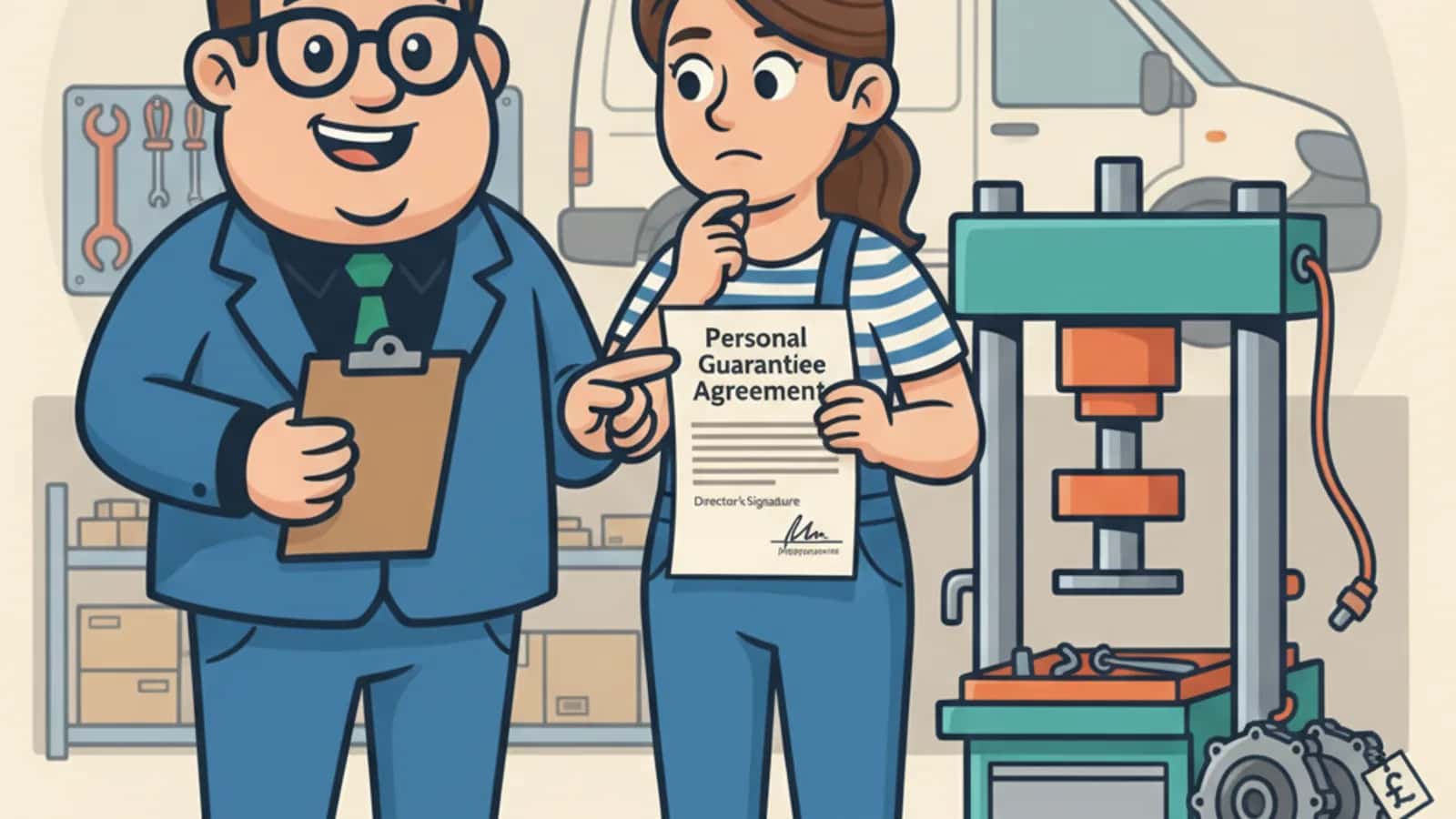
Lenders request personal guarantees on asset finance to mitigate risk when company-only security feels insufficient. This is particularly common for newer businesses, those with limited trading history, or companies with previous credit issues seeking plant, machinery, or commercial vehicle funding.
Primary reasons lenders require director guarantees
- Limited company trading history - Businesses under 2-3 years old lack proven cash flow patterns
- Weak company credit profile - Poor credit scores or previous defaults increase perceived risk
- High loan-to-value ratios - When finance amounts exceed 80-90% of asset values
- Volatile asset values - Equipment that depreciates rapidly or has limited resale markets
- Industry risk factors - Sectors prone to cyclical downturns or regulatory changes
Asset depreciation creates particular concern for lenders. A £100k excavator might lose 20-30% value within 12 months, while outstanding finance remains higher. Personal guarantees bridge this gap and provide recourse beyond asset recovery.
Decision rule: Choose specialist asset finance lenders familiar with your sector. They often require smaller deposits and fewer guarantees because they understand asset values and industry cycles better than generalist banks.
For businesses needing urgent equipment replacement, asset finance specialists can often provide faster decisions with more flexible guarantee requirements than traditional lenders.
Can You Refuse to Sign a Personal Guarantee
Directors can refuse to sign personal guarantees, but this typically results in alternative requirements or loan rejection. Lenders may accept refusal if they can mitigate risk through other means, though this usually comes at a cost.
Alternatives when refusing personal guarantees
- Higher deposit requirements - Often 30-50% instead of 10-20%
- Increased interest rates - Additional 1-3% annual percentage rate
- Shorter repayment terms - Reducing lender exposure duration
- Additional security - Charges over business premises or other assets
- Stronger covenant requirements - Regular financial reporting and performance metrics
Some lenders offer no personal guarantee business loans but these typically require established trading history, strong cash flow, and higher costs.
When refusal works best
- Established businesses with 3+ years trading history
- Strong company credit scores above 70-80
- Conservative loan-to-value ratios under 70%
- Stable, predictable cash flows
- Assets with strong resale values
Common outcome: Most directors find signing limited guarantees with negotiated caps preferable to the higher costs of guarantee-free finance, especially for time-sensitive equipment needs.
Personal Guarantee vs Corporate Guarantee: Key Differences
Personal guarantees create individual director liability while corporate guarantees involve other companies within a business group providing security. Understanding these differences helps directors assess their actual risk exposure.
<div style="overflow-x: auto; margin: 20px 0;"> <table style="width: 100%; border-collapse: collapse; border: 1px solid #ddd;"> <thead> <tr style="background-color: #f5f5f5;"> <th style="padding: 12px; border: 1px solid #ddd; text-align: left;">Aspect</th> <th style="padding: 12px; border: 1px solid #ddd; text-align: left;">Personal Guarantee</th> <th style="padding: 12px; border: 1px solid #ddd; text-align: left;">Corporate Guarantee</th> </tr> </thead> <tbody> <tr> <td style="padding: 12px; border: 1px solid #ddd;"><strong>Liability Source</strong></td> <td style="padding: 12px; border: 1px solid #ddd;">Director's personal assets</td> <td style="padding: 12px; border: 1px solid #ddd;">Guarantor company assets</td> </tr> <tr style="background-color: #f9f9f9;"> <td style="padding: 12px; border: 1px solid #ddd;"><strong>Asset Risk</strong></td> <td style="padding: 12px; border: 1px solid #ddd;">Family home, personal savings</td> <td style="padding: 12px; border: 1px solid #ddd;">Business premises, equipment</td> </tr> <tr> <td style="padding: 12px; border: 1px solid #ddd;"><strong>Limited Liability</strong></td> <td style="padding: 12px; border: 1px solid #ddd;">Bypassed completely</td> <td style="padding: 12px; border: 1px solid #ddd;">Maintained for individuals</td> </tr> <tr style="background-color: #f9f9f9;"> <td style="padding: 12px; border: 1px solid #ddd;"><strong>Typical Use</strong></td> <td style="padding: 12px; border: 1px solid #ddd;">Single company structures</td> <td style="padding: 12px; border: 1px solid #ddd;">Group companies, subsidiaries</td> </tr> </tbody> </table> </div>
Corporate guarantees work well for business groups where a profitable parent company can guarantee subsidiary financing. This keeps personal assets protected while still providing lender security.
Key consideration: Corporate guarantees require the guarantor company to have sufficient assets and cash flow to cover potential claims. Lenders will assess both companies' financial strength before accepting corporate guarantees instead of personal ones.
For construction firms with multiple trading entities, corporate guarantees can protect directors while enabling equipment finance across the group structure.
What Happens If the Company Defaults and You Signed a Personal Guarantee
When companies default on asset finance agreements with personal guarantees in place, lenders can pursue directors' personal assets to recover outstanding amounts. This process typically follows a structured approach but can move quickly once triggered.
Immediate consequences of default:
- 1
Demand notice
Formal request for immediate payment of outstanding amounts
- 2
Asset recovery
Lender repossesses and sells the financed equipment
- 3
Shortfall calculation
Difference between sale proceeds and total debt
- 4
Personal asset claims
Legal action against guarantor's personal property
The timeline from default to personal asset seizure can be 3-6 months depending on guarantee terms and lender policies. Directors often underestimate how quickly this process moves once initiated.
Assets at risk include
- Family home (if not protected by specific exemptions)
- Personal bank accounts and investments
- Other property holdings
- Valuable personal possessions
- Future income through charging orders
Protection strategies
- Keep detailed records of all payments and correspondence
- Seek immediate professional advice when difficulties arise
- Negotiate with lenders before formal default occurs
- Consider voluntary asset surrender to minimize costs
Understanding personal guarantees on business loans helps directors recognize similar patterns across different finance types.
How to Get Released From a Personal Guarantee
Getting released from personal guarantees requires demonstrating reduced risk to lenders through improved company performance or alternative security arrangements. Most guarantees don't automatically expire and require active negotiation for release.
Successful release strategies
- Demonstrate improved trading - Show 12-24 months of strong cash flow and profitability
- Reduce loan-to-value ratio - Pay down debt to under 50-60% of original amount
- Provide alternative security - Offer property charges or other business assets
- Strengthen company position - Build cash reserves and improve credit ratings
Timing considerations:
Most lenders won't consider guarantee releases until at least 12-18 months into the finance agreement. They need evidence of sustained performance rather than temporary improvements.
Negotiation process:
- 1
Prepare financial evidence
Recent accounts, management reports, cash flow forecasts
- 2
Formal written request
Detail reasons for release and supporting evidence
- 3
Lender assessment
They'll review current risk profile and asset values
- 4
Terms negotiation
May require partial release or modified terms
- 5
Legal documentation
Formal deed of release if agreed
Success factors
- Original loan amount reduced by 40-50% or more
- Company credit score improved significantly
- Strong trading history established
- Alternative security provided
Are Personal Guarantees Worth the Risk for Directors
Personal guarantees often provide the only viable route to essential equipment finance for growing businesses, but directors must weigh potential rewards against significant personal risk exposure. The decision depends on business circumstances, alternative options, and personal financial situations.
When guarantees typically make sense
- Critical equipment needs - Machinery breakdown threatening business continuity
- Growth opportunities - New contracts requiring immediate equipment investment
- Limited alternatives - No access to guarantee-free finance at reasonable terms
- Strong business confidence - High certainty about future cash flows and success
Risk assessment factors
- Personal asset exposure - Value of assets at risk versus potential business benefits
- Business stability - Predictability of cash flows and market conditions
- Industry outlook - Sector growth prospects and competitive pressures
- Management experience - Track record of successfully managing similar challenges
Financial modeling approach:
Calculate the break-even point where business benefits justify guarantee risks. For a £200k excavator enabling £500k additional annual revenue, the risk-reward ratio may be acceptable. For marginal improvements, it may not be.
Decision rule: Sign guarantees when the financed asset directly enables revenue generation that exceeds finance costs by at least 3:1 margin, and when business cash flows can comfortably service debt payments.
Many construction and manufacturing businesses find guarantees essential for accessing the equipment needed to compete effectively and grow their operations.
What to Negotiate Before Signing a Personal Guarantee
Directors should negotiate specific terms and limitations before signing personal guarantees rather than accepting standard lender templates. Most guarantee terms are negotiable, especially for larger deals or established businesses.
Key negotiation points:
Financial limitations
- Maximum liability cap - Limit exposure to specific amounts rather than unlimited liability
- Proportional liability - For multiple directors, limit each to their shareholding percentage
- Time limitations - Automatic release after specific periods or milestones
Trigger conditions
- Material adverse change clauses - Define what constitutes default beyond simple payment failure
- Cross-default provisions - Prevent other business debts triggering guarantee claims
- Notice periods - Require formal notice before enforcement action
Asset protections
- Primary residence exemptions - Protect family homes up to specific values
- Essential asset exclusions - Protect tools of trade or basic living requirements
- Spouse/partner protections - Limit claims against jointly owned assets
Release mechanisms
- Performance triggers - Automatic release when loan-to-value reaches specific ratios
- Time-based releases - Partial or full release after successful payment periods
- Alternative security - Right to substitute other assets for personal guarantees
Negotiation strategy:
Start discussions before formal application submission when lenders are most flexible. Present alternative risk mitigation measures alongside guarantee limitations to demonstrate commercial awareness.
Common wins: Most lenders will accept liability caps at 100-150% of original loan amounts and time limitations of 3-5 years for established businesses with good proposals.
Limited vs Unlimited Personal Guarantees
Limited personal guarantees cap director liability at specific amounts or conditions while unlimited guarantees create open-ended exposure to all related costs and claims. Understanding these differences helps directors assess actual risk levels.
Limited guarantee structures
- Amount caps - Liability limited to specific monetary amounts (e.g., £100k maximum)
- Time limits - Guarantees expire after specific periods regardless of outstanding debt
- Proportional limits - Liability capped at shareholding percentages for multiple directors
- Asset-specific limits - Only certain personal assets can be claimed against
Unlimited guarantee risks
- Full debt exposure - Liable for entire outstanding amount plus costs
- Interest and fees - Ongoing liability for accumulating charges
- Legal costs - Responsibility for lender's collection and enforcement expenses
- No automatic expiry - Continues until debt fully repaid or formally released
Practical impact example:
For £300k plant finance with unlimited guarantees, directors face potential exposure of £400k+ including accumulated interest, default charges, and legal costs. Limited guarantees might cap this at £350k total.
Lender preferences:
Most asset finance lenders will accept limited guarantees with caps at 120-150% of original loan amounts. They primarily want assurance of director commitment rather than unlimited recovery rights.
Negotiation approach: Request limited guarantees as standard practice. Present caps as reasonable risk sharing rather than risk avoidance to maintain positive lender relationships.
For businesses exploring types of asset finance, understanding guarantee structures helps compare true costs across different providers and products.
Common Mistakes Directors Make With Personal Guarantees
Directors frequently make critical errors when dealing with personal guarantees that increase their risk exposure or limit future options. Understanding these mistakes helps avoid costly consequences.
Major mistakes to avoid:
Documentation errors
- Not reading full terms - Signing without understanding all conditions and triggers
- Ignoring small print - Missing critical clauses about cross-defaults or additional charges
- Assuming standard terms - Each guarantee has unique provisions requiring careful review
Financial miscalculations
- Underestimating total exposure - Focusing only on principal amount, ignoring interest and costs
- Overestimating asset values - Assuming equipment will retain value to cover debt shortfalls
- Poor cash flow planning - Not stress-testing ability to service debt in difficult periods
Legal oversights
- Joint and several confusion - Not understanding each director's liability for full amounts
- Spousal implications - Ignoring impact on jointly owned assets and family finances
- Cross-guarantee risks - Signing guarantees that trigger claims from other agreements
Timing mistakes
- Rushed decisions - Signing under pressure without proper consideration or advice
- No exit planning - Failing to negotiate release mechanisms before signing
- Delayed professional advice - Not involving lawyers or accountants until problems arise
Communication failures
- Not informing family - Failing to discuss risks with spouses or partners affected by guarantees
- Poor lender relationships - Not maintaining regular contact when difficulties develop
- Inadequate record keeping - Not documenting all payments and correspondence properly
Prevention strategy: Always involve qualified professionals before signing guarantees, allow adequate time for review, and ensure all affected family members understand the implications.
When Directors Should Not Sign Personal Guarantees
Certain business and personal circumstances make personal guarantees inappropriate risks that directors should avoid regardless of financing needs. Recognizing these situations helps prevent potentially devastating financial consequences.
High-risk scenarios to avoid:
Personal financial situations
- Limited personal assets - When guarantee exposure exceeds personal wealth significantly
- Family financial dependence - Primary breadwinner with dependents relying on protected assets
- Retirement proximity - Directors within 5-10 years of retirement needing asset protection
- Existing guarantee exposure - Already committed to other significant personal guarantees
Business risk factors
- Unproven business models - New ventures without demonstrated market demand
- Volatile market conditions - Industries facing significant disruption or decline
- Weak cash flow projections - Uncertain ability to service debt payments consistently
- High customer concentration - Businesses dependent on few major clients
Asset-specific risks
- Rapidly depreciating equipment - Technology or machinery with short useful lives
- Specialized assets - Equipment with limited resale markets or buyer pools
- Experimental applications - Unproven equipment for new business processes
Alternative strategies when refusing guarantees
- Higher deposit financing - Pay 40-50% deposits to reduce lender risk
- Lease arrangements - Operating leases with lower commitment levels
- Rental agreements - Short-term equipment rental while building company strength
- Phased acquisition - Buy smaller amounts initially, building track record for larger purchases
Decision framework: Refuse guarantees when potential losses would materially impact family financial security or when alternative financing routes exist at acceptable cost premiums.
Understanding how asset finance works helps identify guarantee-free alternatives for specific equipment needs.
How Personal Guarantees Affect Your Personal Credit
Personal guarantees can impact individual credit profiles through both initial credit checks and potential default consequences, though the extent varies by lender practices and guarantee structures. Understanding these effects helps directors manage their personal credit health.
Initial credit impact
- Credit searches - Some lenders perform hard credit checks on guarantors during application
- Credit file records - Guarantees may appear on personal credit reports as contingent liabilities
- Debt-to-income calculations - Future personal lending may consider guarantee exposure
Ongoing monitoring:
Most personal guarantees don't appear as active debts on credit files unless claims are made. However, some lenders register charges or notices that affect credit scoring algorithms.
Default consequences
- County Court Judgments (CCJs) - Unpaid guarantee claims result in court judgments affecting credit scores
- Default markers - Failed guarantee payments create default records lasting 6 years
- Credit score reduction - Significant drops in credit ratings affecting future borrowing ability
- Mortgage implications - Guarantee claims can impact personal mortgage applications and renewals
Protection strategies
- Monitor credit reports - Regular checks for unexpected guarantee-related entries
- Maintain payment records - Document all company payments to demonstrate performance
- Early intervention - Address payment difficulties before formal default procedures
Recovery timeframe:
Credit damage from guarantee claims typically takes 3-6 years to fully recover, depending on the severity and resolution method.
Best practice: Inform personal financial advisors and mortgage brokers about guarantee commitments when planning future personal borrowing or major purchases.
Using Insurance to Protect Against Personal Guarantee Claims
Specialized insurance products can protect directors against personal guarantee claims, though coverage limitations and costs require careful evaluation. These policies provide an additional safety net for directors concerned about guarantee exposure.
Types of guarantee insurance:
Director and Officer (D&O) insurance
- Coverage scope - May include personal guarantee claims in specific circumstances
- Policy limitations - Often excludes guarantees signed after policy inception
- Cost factors - Premiums based on company size, industry, and guarantee amounts
Specific guarantee insurance
- Dedicated coverage - Policies designed specifically for personal guarantee protection
- Claim triggers - Activated when companies cannot meet guarantee obligations
- Coverage limits - Usually capped at specific amounts or percentages of total exposure
Key policy considerations
- Exclusions - What circumstances void coverage (fraud, deliberate default, etc.)
- Deductibles - Amounts directors must pay before insurance coverage begins
- Claim procedures - Required notification and documentation processes
- Premium costs - Annual costs typically 1-3% of coverage amounts
Cost-benefit analysis:
For £500k guarantee exposure, annual insurance premiums might cost £5k-15k. Directors must weigh this against probability and impact of claims.
Alternative protections
- Asset restructuring - Moving personal assets to protected structures before signing guarantees
- Spousal transfers - Transferring jointly owned assets to non-guarantor spouses (with legal advice)
- Trust arrangements - Using family trusts to hold valuable assets outside guarantee reach
Important limitation: Insurance won't cover all guarantee scenarios, and policies often exclude claims arising from business fraud or deliberate misconduct.
Decision rule: Consider guarantee insurance for exposures exceeding £250k or when personal assets significantly exceed guarantee amounts, making premium costs proportionally small.
Next steps
Personal guarantees on asset finance create significant decision points for directors balancing business growth needs against personal financial risk. While these commitments can unlock essential equipment funding for construction, manufacturing, and logistics businesses, they fundamentally change the risk profile by exposing personal assets to company debt obligations. For more equipment funding comparisons and practical guidance, browse our asset finance guides.
The key to managing guarantee decisions lies in understanding the specific terms, negotiating appropriate limitations, and maintaining clear exit strategies. Directors should focus on securing limited rather than unlimited guarantees, establishing liability caps, and building in release mechanisms tied to business performance or time periods.
For businesses needing urgent equipment finance, the decision often comes down to accepting reasonable guarantee exposure versus losing competitive opportunities or facing operational disruptions. The most successful approach involves treating guarantees as temporary business tools rather than permanent commitments, with active plans for eventual release as company strength develops.
Next steps for directors considering asset finance
- Assess alternatives - Explore guarantee-free options including higher deposits or alternative lenders
- Get professional advice - Involve lawyers and accountants before signing any guarantee documentation
- Negotiate terms - Request limited guarantees with caps, time limits, and release mechanisms
- Plan for release - Build guarantee exit strategies into business planning from day one
- Protect personal assets - Consider insurance or asset restructuring where appropriate
For businesses ready to explore asset finance options with transparent guarantee requirements, check eligibility now through specialist lenders who understand sector-specific equipment needs and can provide fast decisions with flexible deposit arrangements.
Further reading
Frequently asked questions
What Is a Personal Guarantee on Asset Finance?
A personal guarantee on asset finance is a legally binding commitment where company directors agree to personally repay the debt if their business cannot meet the finance agreement terms. This creates direct personal liability that extends beyond the limited liability protection normally afforded to company directors.
Why Do Lenders Ask Directors to Sign Personal Guarantees?
Lenders request personal guarantees on asset finance to mitigate risk when company-only security feels insufficient. This is particularly common for newer businesses, those with limited trading history, or companies with previous credit issues seeking plant, machinery, or commercial vehicle funding.
Can You Refuse to Sign a Personal Guarantee?
Directors can refuse to sign personal guarantees, but this typically results in alternative requirements or loan rejection. Lenders may accept refusal if they can mitigate risk through other means, though this usually comes at a cost.
What Happens If the Company Defaults and You Signed a Personal Guarantee?
When companies default on asset finance agreements with personal guarantees in place, lenders can pursue directors' personal assets to recover outstanding amounts. This process typically follows a structured approach but can move quickly once triggered.
How to Get Released From a Personal Guarantee?
Getting released from personal guarantees requires demonstrating reduced risk to lenders through improved company performance or alternative security arrangements. Most guarantees don't automatically expire and require active negotiation for release.
Are Personal Guarantees Worth the Risk for Directors?
Personal guarantees often provide the only viable route to essential equipment finance for growing businesses, but directors must weigh potential rewards against significant personal risk exposure. The decision depends on business circumstances, alternative options, and personal financial situations.
Written by
The Funding Fred Editorial Team creates plain-English guides to help business owners understand funding options, eligibility, and application readiness before they compare finance options.
Reviewed by
UK business finance content reviewer
Robert reads our UK business finance guides before they go live, checking each one is accurate, easy to follow, and reflects how lending actually works today — not how a brochure says it should. He's listed on the FCA Register, approved as an SMF3 (AR) Executive Director at Switcha Limited, and connected to Lucky Growth Partners Ltd through its appointed representative relationship, so the regulated detail gets a properly qualified second read.
Sources
- Personal Guarantees [2] What Is A Personal Guarantee - https://www.begbies-traynorgroup.com/articles/director-advice/what-is-a-personal-guarantee [3] Personal Guarantees Director Liability Business Debts - https://www.jonathanlea.net/blog/personal-guarantees-director-liability-business-debts/ [4] Director Guarantees - https://www.andorraprivate.com.au/guides/director-guarantees [5] Directors Personal Guarantees - https://www.mw-w.com/services/directors-personal-guarantees/ [6] What Are The Risks Of A Directors Guarantee - https://legalclarity.org/what-are-the-risks-of-a-directors-guarantee/ [7] Personal Guarantees In Insolvency - https://www.wilsonfield.co.uk/company-debt/personal-guarantees-in-insolvency/
- British Business Bank finance options
- Bank of England Bank Rate