Plant and Machinery Finance for UK Construction Businesses: Fast Funding Options for 2026
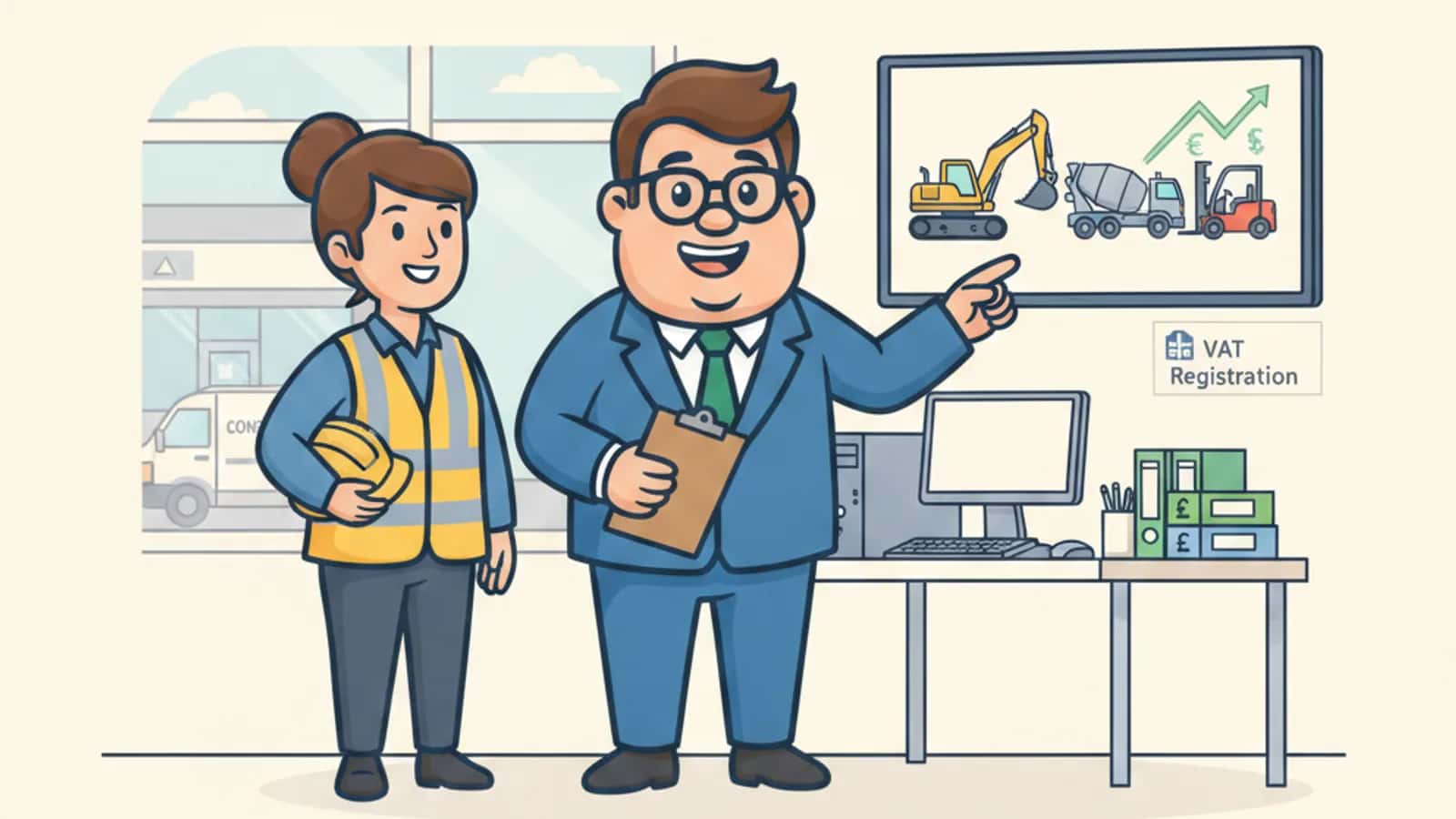
Plant and machinery finance for UK construction businesses provides funding from £1k to £5m for excavators, cranes, concrete mixers, and other essential equipment through hire purchase, finance lease, or contract hire arrangements.
Quick answer
Plant and machinery finance for UK construction businesses provides funding from £1k to £5m for excavators, cranes, concrete mixers, and other essential equipment through hire purchase, finance lease, or contract hire arrangements. Most construction firms can secure approval within 24-48 hours with deposits from 0% upward, making it faster and more flexible than traditional bank loans for urgent equipment needs.
Key takeaways
- Construction equipment finance covers excavators, cranes, dumpers, concrete mixers, scaffolding, and specialist machinery from £1k to £5m
- Three main options: hire purchase (own the asset), finance lease (tax-efficient for profitable firms), and contract hire (includes maintenance)
- Approval decisions typically take 24-48 hours with specialist lenders, compared to weeks for high street banks
- Deposits range from 0% to 30% depending on the asset type, business profile, and chosen finance structure
- New 40% first-year allowance from January 2026 alongside permanent full expensing creates tax planning opportunities
- Credit scores from 550+ often acceptable with specialist construction finance providers
- Monthly payments typically range from 1.5% to 4% of the asset value depending on term length and deposit
- Equipment breakdowns, contract wins, and fleet expansion are the most common triggers for urgent finance applications
- Alternative lenders often approve deals that high street banks decline due to sector expertise
- Early settlement options available but may include charges depending on the finance type chosen
What Exactly Is Plant and Machinery Finance
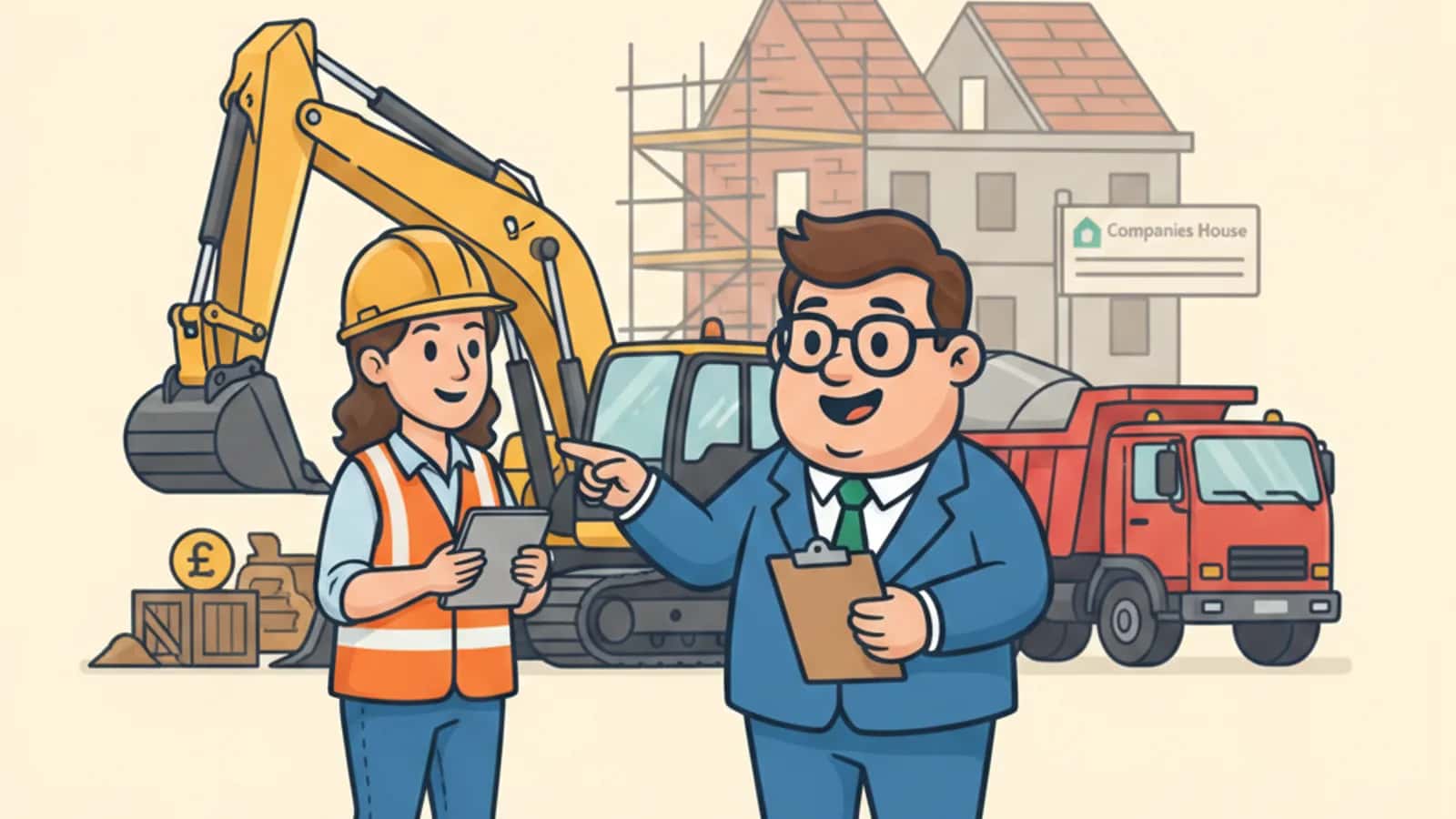
Plant and machinery finance is asset-backed funding that allows construction businesses to acquire essential equipment without paying the full purchase price upfront. The equipment itself serves as security for the loan, making approval faster and deposits more flexible than unsecured business borrowing.
Three main finance structures dominate the construction sector:
Hire Purchase
- You pay monthly instalments and own the equipment at the end. The asset appears on your balance sheet from day one, qualifying for capital allowances. Most construction firms choose this route for core equipment like excavators and cranes.
Finance Lease
- The lender owns the equipment throughout the term. You get full tax relief on monthly payments, making this attractive for profitable businesses. At term end, you can often purchase for a nominal fee or return the asset.
Contract Hire
- Similar to finance lease but typically includes maintenance, insurance, and breakdown cover. Popular for commercial vehicles and standardised equipment where predictable monthly costs matter more than ownership.
The key advantage over traditional business loans is speed and security. Because the equipment acts as collateral, lenders can approve deals quickly without extensive business plan reviews or personal guarantees in many cases.
Choose hire purchase if you want to own high-value, long-life equipment like excavators or cranes. Choose finance lease if you're a profitable company seeking maximum tax efficiency. Choose contract hire if you prefer predictable costs with maintenance included.
What Equipment Can Construction Businesses Finance
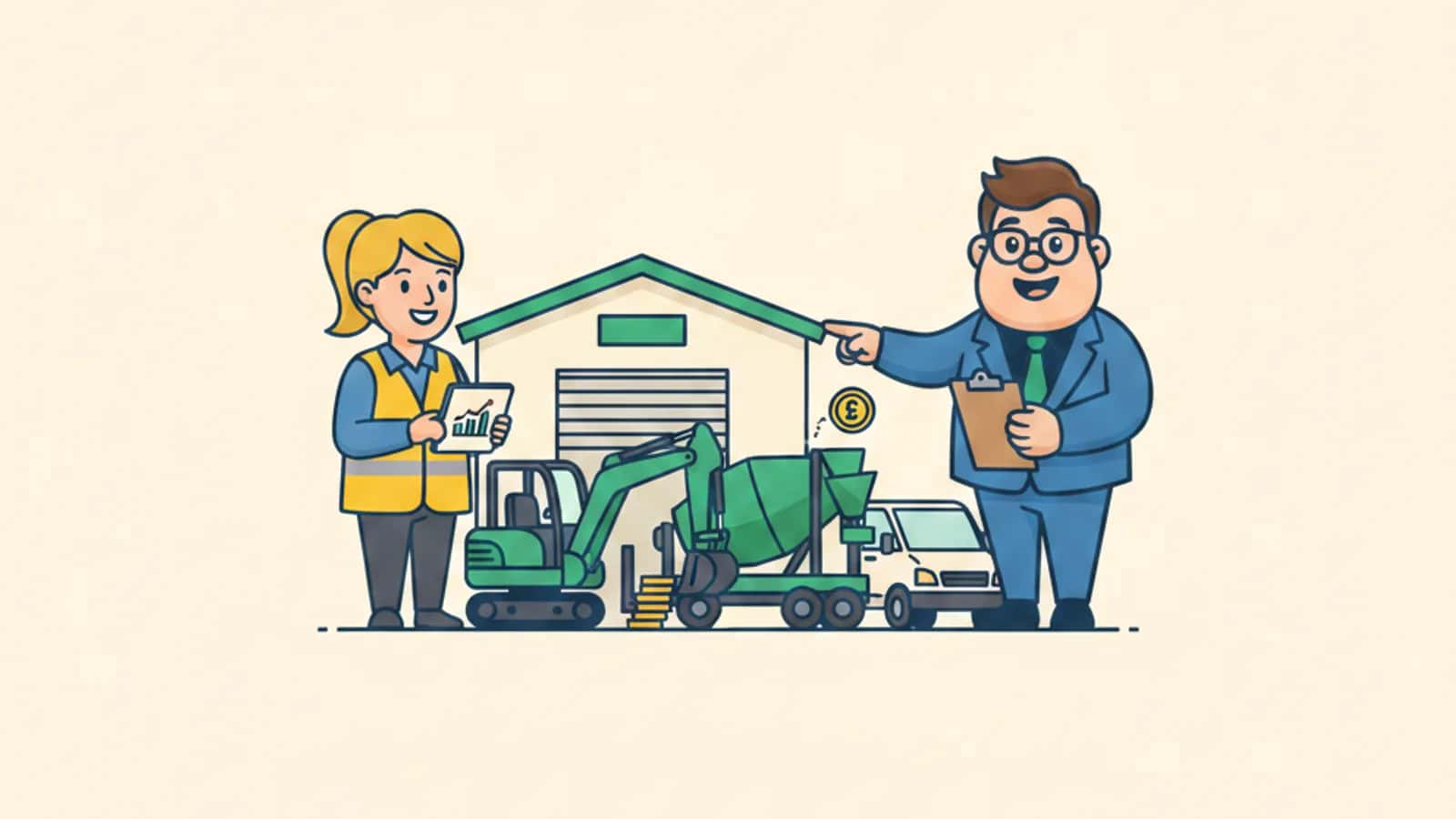
Construction equipment finance covers virtually any machinery or plant used for building, civil engineering, or infrastructure projects. Specialist lenders understand construction assets and can structure deals around seasonal cash flow patterns.
Core Construction Plant
- Excavators (mini to 40-tonne plus)
- Dumpers and dump trucks
- Telehandlers and forklifts
- Cranes (mobile, tower, crawler)
- Concrete mixers and pumps
- Compactors and rollers
- Generators and compressors
Specialist Equipment
- Piling rigs and drilling equipment
- Crushing and screening plants
- Concrete batching plants
- Scaffolding systems
- Site accommodation and welfare units
- Tool stores and security containers
Commercial Vehicles
- Tipper trucks and grab lorries
- Flatbed and curtain-sided vehicles
- Transit vans and pickup trucks
- Low loaders and plant trailers
- Welfare and mess room vehicles
Technology and Tools
- Surveying equipment and laser levels
- Power tools and workshop equipment
- Site security and CCTV systems
- Welfare facilities and portable buildings
Most lenders finance both new and used equipment, typically up to 7-10 years old depending on the asset type. Construction-specific assets often have better finance terms than general commercial equipment because lenders understand residual values and remarketing channels.
How Much Does Equipment Financing Cost for Construction Companies
Equipment finance costs for construction businesses typically range from 4% to 12% APR, with monthly payments representing 1.5% to 4% of the asset value depending on term length and deposit. Specialist construction lenders often offer better rates than high street banks because they understand asset values and sector risks.
Typical Cost Breakdown (2026 rates):
Factors affecting your rate
- Business trading history - Established firms (3+ years) get better rates than startups
- Credit profile - Directors' credit scores and business payment history
- Asset type - Standard plant like excavators get lower rates than specialist equipment
- Deposit amount - Higher deposits reduce monthly costs and total interest
- Term length - Longer terms reduce monthly payments but increase total cost
Additional costs to budget for
- Arrangement fees: typically 1-3% of advance
- Documentation fees: £200-500 for legal paperwork
- Valuation fees: £150-400 for high-value assets
- Early settlement charges: usually 1-3 months' interest if paying off early
Most construction lenders offer fixed rates, protecting you from interest rate rises during the term. This predictability helps with project costing and cash flow planning.
Money-saving tip: Compare total cost, not just monthly payments. A slightly higher monthly payment over a shorter term often costs less overall than extended repayment periods.
Lease vs Buy Construction Equipment: Which Is Better
For construction businesses, buying through hire purchase typically makes more sense than leasing for core equipment like excavators and cranes, while leasing works better for vehicles and standardised machinery where maintenance packages add value.
Hire Purchase (Buy) Advantages
- Own the asset from day one
- Qualify for capital allowances and full expensing relief
- No mileage or usage restrictions
- Can modify equipment for specific jobs
- Build asset value on balance sheet
- Stronger position for refinancing or trade-ins
Finance Lease Advantages
- 100% tax relief on monthly payments
- Lower monthly costs (no deposit balloon)
- Equipment stays off balance sheet
- Easier to upgrade at term end
- Less exposure to residual value risk
- Often includes maintenance packages
The construction-specific decision factors:
Which is right for you?
Choose hire purchase for
- Excavators, cranes, and core plant machinery
- Equipment you'll use for 5+ years
- Assets you want to modify or customise
- High-residual-value branded equipment
- When you want to build business asset value
Choose finance lease for
- Commercial vehicles with high maintenance costs
- Technology that becomes obsolete quickly
- Equipment you'll replace within 3-4 years
- When monthly cash flow is more important than ownership
- Standardised equipment where maintenance packages add value
Real example: A groundworks contractor financing a £45,000 excavator will typically choose hire purchase because excavators hold value well, need customisation for different jobs, and qualify for attractive capital allowances. The same contractor might lease delivery vehicles because maintenance packages and regular upgrades matter more than ownership.
Tax Benefits of Plant Finance for Construction Businesses
Construction businesses can claim significant tax relief on financed equipment through the new 40% first-year allowance from January 2026, alongside the permanent full expensing rules for qualifying expenditure. The tax treatment differs between hire purchase and leasing, creating planning opportunities for profitable firms.
Hire Purchase Tax Relief
- Full expensing: 100% tax relief in year one for most new plant and machinery
- 40% first-year allowance: For assets not qualifying for full expensing (some used equipment)
- Annual Investment Allowance: £1m per year for smaller purchases
- Claim relief on the full asset value regardless of deposit paid
Finance Lease Tax Relief
- 100% tax relief on monthly lease payments
- Spread tax benefit over the lease term
- No capital allowances (you don't own the asset)
- Simpler accounting for rental payments
Strategic tax planning examples:
Profitable construction company buying £80,000 excavator
- Hire purchase: £80,000 × 25% corporation tax = £20,000 tax saving in year one
- Finance lease: Monthly payments of £1,400 × 25% = £350 monthly tax relief
Construction firm with variable profits
- Finance lease provides steady tax relief matching monthly payments
- Hire purchase gives large upfront relief that might be wasted in low-profit years
Key planning points
- Full expensing applies to new equipment regardless of how it's financed
- Used equipment may qualify for 40% first-year allowance instead
- Leased assets don't qualify for capital allowances but lease payments are fully deductible
- Consider profit forecasts when choosing between immediate relief (purchase) vs. spread relief (lease)
Work with your accountant to model both options against your profit projections. The tax savings can significantly reduce the effective cost of equipment finance.
How Hard Is It to Qualify for Construction Equipment Finance
Construction equipment finance is generally easier to obtain than unsecured business loans because the equipment serves as security, but lenders still assess business stability and payment capacity. Specialist construction lenders understand sector challenges like seasonal cash flow and project-based income patterns.
Standard eligibility criteria
- Trading history: Most lenders want 2+ years, though some accept 12 months for established directors
- Annual turnover: Typically £100k+ for substantial plant finance
- Credit score: Directors' personal scores from 550+ often acceptable
- Business credit: No recent CCJs, defaults, or late payment patterns
- Deposit: Usually 10-30% though 0% deposit deals exist for strong applicants
Construction-specific considerations
- Seasonal trading - Lenders expect winter dips in groundworks and civils
- Project lumpy income - Payment schedules tied to project milestones are understood
- Subcontractor relationships - Long-term contracts with main contractors strengthen applications
- Equipment experience - Operating similar plant previously reduces perceived risk
Documentation typically required
- 2 years' business accounts and tax returns
- Recent management accounts (within 6 months)
- Bank statements (3-6 months business and personal)
- Equipment quotation or invoice
- Directors' ID and address proof
Approval rates are higher than unsecured lending because the equipment provides security. Even businesses declined for traditional bank loans often succeed with specialist asset finance providers who understand construction sector dynamics.
What Credit Score Do You Need for Machinery Financing
Most construction equipment finance providers accept directors with credit scores from 550 upward, significantly lower than the 650+ typically required for unsecured business loans. The equipment security reduces lender risk, allowing more flexible credit criteria for construction businesses.
Credit score bands for equipment finance:
700+ (Excellent)
- Access to best rates (4-6% APR)
- 0% deposit options available
- Longer repayment terms
- Higher advance amounts (up to 100% of asset value)
650-699 (Good)
- Competitive rates (5-8% APR)
- 10-15% deposit typically required
- Standard terms up to 5-7 years
- Most equipment types accepted
550-649 (Fair)
- Higher rates (7-12% APR)
- 20-30% deposit usually required
- Shorter terms or higher payments
- May need additional security
Below 550 (Poor)
- Specialist bad credit lenders available
- Rates 12%+ with substantial deposits
- Guarantor or additional security often required
- Limited to newer, high-residual-value equipment
Factors beyond credit scores
- Recent adverse credit - CCJs or defaults in last 12 months create difficulties
- Business payment history - Trade creditor relationships matter more than personal credit
- Deposit available - Higher deposits compensate for weaker credit profiles
- Equipment type - Standard plant easier to finance than specialist machinery
Credit improvement strategies
- Pay existing credit commitments on time for 3-6 months before applying
- Register on electoral roll and update credit file addresses
- Consider asset finance for businesses with no trading history if you're a startup
- Use business credit building products before major equipment purchases
Alternatives to Bank Loans for Construction Equipment
Specialist asset finance providers offer faster, more flexible alternatives to traditional bank loans for construction equipment, with approval processes designed around equipment security rather than lengthy business plan assessments. These alternatives often succeed where high street banks decline applications.
Independent Asset Finance Companies
- Focus exclusively on equipment and vehicle finance
- Understand construction asset values and remarketing
- Faster decisions (24-48 hours vs. weeks for banks)
- More flexible on credit history and trading periods
- Competitive rates due to specialisation
Manufacturer Finance (Captive Lenders)
- JCB Finance, Volvo Financial Services, CAT Financial
- Often offer promotional rates on new equipment
- Streamlined approval for dealer purchases
- May include maintenance and warranty packages
- Sometimes accept lower deposits for brand loyalty
Challenger Banks and Fintech Lenders
- Modern application processes and faster decisions
- Technology-driven underwriting
- Competitive pricing through lower overheads
- Often more flexible on documentation requirements
Equipment Rental Purchase
- Rent equipment with option to purchase
- Lower initial commitment than traditional finance
- Useful for testing equipment before committing
- Can convert rental payments toward purchase price
Invoice Finance to Fund Purchases
- Use outstanding invoices as security for working capital
- Fund equipment deposits from improved cash flow
- Particularly useful for businesses with strong order books
- Combine with invoice finance solutions for complete funding packages
Peer-to-Peer and Alternative Lenders
- Online platforms connecting businesses with investors
- Often accept higher-risk profiles than traditional lenders
- Variable rates and terms based on risk assessment
- Growing sector with increasing construction expertise
Choose specialist asset finance over bank loans when you need fast approval, have imperfect credit, or want lenders who understand construction equipment values. Banks work better for very large deals or when you need integrated banking relationships.
How Quickly Can Construction Equipment Be Financed
Construction equipment can typically be financed within 24-48 hours through specialist lenders, compared to 2-4 weeks for traditional bank loans. The speed depends on documentation readiness, equipment type, and chosen finance provider.
Fastest approval routes
- Same-day decisions: Possible for deals under £50k with complete documentation
- 24-hour approvals: Standard for established businesses with good credit
- 48-hour completion: Including documentation and funds transfer
- Emergency funding: Some lenders offer weekend and evening processing for breakdowns
Timeline breakdown for typical £30k excavator finance:
Day 1: Application submitted with quotation and basic documents Day 1-2: Credit checks, business verification, and initial approval Day 2-3: Final documentation, asset verification, and funds release Day 3-4: Payment to supplier and equipment delivery
Speed factors you control
- Documentation ready: Recent accounts, bank statements, equipment quotes
- Decision makers available: Directors accessible for calls and document signing
- Clear requirements: Specific equipment identified with supplier quotes
- Realistic expectations: Standard equipment faster than specialist machinery
What slows the process
- Missing documents: Incomplete applications add 1-3 days
- Credit issues: Adverse history requires manual underwriting
- Complex equipment: Specialist plant needs detailed valuations
- Multiple quotes: Comparing suppliers during application process
For urgent equipment needs
- Use eligibility checkers to identify suitable lenders before applying
- Prepare standard documentation package in advance
- Establish relationships with equipment finance brokers
- Consider emergency business funding options for critical breakdowns
Which Construction Businesses Should Use Plant Finance
Construction businesses that win contracts requiring specific equipment, face unexpected breakdowns, or want to expand capacity without depleting working capital should consider plant finance over cash purchases. The decision depends on cash flow patterns, growth plans, and tax position.
Ideal candidates for equipment finance:
Contract-Driven Businesses
- Groundworks contractors winning drainage or earthworks projects
- Demolition firms needing specific plant for large contracts
- Civil engineering companies expanding into new work types
- Plant hire businesses adding popular rental equipment
Growth-Phase Companies
- Established firms expanding into new geographical areas
- Businesses adding service lines (excavation, crushing, piling)
- Companies scaling up for larger contract opportunities
- Firms building equipment fleets for multiple sites
Cash Flow Conscious Operations
- Seasonal businesses preserving working capital for winter months
- Project-based firms with lumpy payment schedules
- Companies preferring predictable monthly costs over large capital outlays
- Businesses wanting to maintain credit facilities for other opportunities
Tax-Efficient Scenarios
- Profitable companies maximising capital allowances through hire purchase
- Growing businesses spreading tax relief through finance leases
- Firms using full expensing rules strategically across financial years
When to avoid equipment finance
- Strong cash position with no better investment opportunities
- Uncertain workload where equipment utilisation is questionable
- Short-term needs better served by rental or contract hire
- Older businesses planning succession or exit within 2-3 years
Sector-specific considerations
- Groundworks: High equipment utilisation justifies finance over rental
- Building contractors: Mixed approach - finance core plant, rent specialist equipment
- Infrastructure: Long project timescales suit longer finance terms
- Plant hire: Equipment finance essential for fleet building and replacement
Decision framework: Choose equipment finance when monthly payments are less than equivalent rental costs, you'll use equipment for 60%+ of available time, and preserving cash flow matters more than minimising total cost.
Pros and Cons of Hire Purchase for Construction Machinery
Hire purchase offers construction businesses immediate ownership and tax benefits for plant and machinery, but requires higher monthly payments and full responsibility for maintenance compared to leasing alternatives. It's the most popular choice for core construction equipment like excavators and cranes.
Hire Purchase Advantages:
Immediate Ownership
- Own equipment from first payment
- No usage restrictions or mileage limits
- Freedom to modify for specific jobs
- Can sell or trade equipment anytime
- Build asset value on company balance sheet
Tax Benefits
- Claim full capital allowances including 100% full expensing
- Benefit from 40% first-year allowances on qualifying assets
- Depreciation allowances reduce corporation tax
- Interest payments are tax-deductible business expenses
Financial Flexibility
- Fixed monthly payments aid cash flow planning
- No balloon payments or residual value risk
- Can refinance or use as security for other borrowing
- Early settlement options available
Hire Purchase Disadvantages:
Higher Costs
- Higher monthly payments than leasing equivalents
- Full responsibility for maintenance and repairs
- Insurance and breakdown cover at your expense
- Depreciation risk if equipment values fall
Balance Sheet Impact
- Asset and liability appear on accounts
- May affect borrowing capacity ratios
- Requires depreciation accounting
- Can impact business valuation calculations
Commitment Level
- Harder to upgrade or change equipment
- Stuck with obsolete technology
- Full term commitment even if business needs change
- Disposal responsibility at end of useful life
Best suited for
- Core plant used daily (excavators, dumpers, cranes)
- Equipment with strong residual values
- Businesses wanting to build asset portfolios
- Companies with profitable tax positions
Avoid hire purchase when
- Equipment needs change frequently
- Maintenance costs are unpredictable
- Technology updates rapidly
- Cash flow is more important than ownership
Common Mistakes Construction Firms Make When Financing Equipment
Construction businesses often focus solely on monthly payments rather than total cost, choose inappropriate finance structures for their tax position, and fail to plan for maintenance and insurance costs when financing equipment. These mistakes can add thousands to equipment costs and create cash flow problems.
Mistake 1: Choosing Based on Monthly Payment Alone Many contractors compare only monthly costs, ignoring deposits, terms, and total interest. A £400 monthly payment over 7 years costs more than £500 over 5 years.
Solution: Calculate total cost including all fees, interest, and opportunity cost of deposits. Use APR figures for accurate comparisons.
Mistake 2: Wrong Finance Structure for Tax Position Profitable companies choosing finance lease over hire purchase miss capital allowance opportunities. Loss-making businesses choosing hire purchase can't use immediate tax relief.
Solution: Model both options with your accountant. Consider profit forecasts and timing of tax benefits.
Mistake 3: Inadequate Deposit Planning Putting down minimal deposits to preserve cash, then struggling with higher monthly payments during quiet periods.
Solution: Balance deposit amount against monthly affordability. Higher deposits reduce ongoing commitments but preserve less working capital.
Mistake 4: Ignoring Hidden Costs Focusing on equipment cost while overlooking insurance, maintenance, transport, and training expenses that can add 20-30% to total ownership cost.
Solution: Budget for full lifecycle costs including insurance, servicing, operator training, and eventual disposal.
Mistake 5: Poor Timing of Applications Applying for finance after finding equipment or winning contracts, creating time pressure and reducing negotiation power.
Solution: Establish pre-approved facilities during quiet periods. Have funding ready when opportunities arise.
Mistake 6: Single Lender Applications Approaching only their bank or first lender found, missing better rates and terms from specialist providers.
Solution: Use comparison platforms to access multiple specialist lenders simultaneously.
Mistake 7: Inadequate Documentation Submitting incomplete applications that delay approval and may result in declined applications or worse terms.
Solution: Prepare standard documentation packs including recent accounts, bank statements, and equipment specifications before applying.
Prevention strategy: Work with experienced equipment finance brokers who understand construction sector needs and can guide structure and lender selection.
What Happens If You Can't Make Equipment Loan Payments
If construction businesses can't make equipment finance payments, lenders typically offer restructuring options before repossession, but early communication is essential to avoid asset seizure and credit damage. The specific process depends on finance type and how much equity exists in the equipment.
Immediate steps when payments become difficult:
- 1
Contact lender immediately
Don't wait for missed payments
- 2
Explain circumstances
Temporary cash flow vs. fundamental business problems
- 3
Propose solutions
Payment holidays, reduced payments, or term extensions
- 4
Provide updated financials
Show current position and recovery plans
Lender options for struggling borrowers:
Payment Restructuring
- Temporary payment holidays (1-3 months typical)
- Reduced payments for agreed periods
- Term extensions to lower monthly amounts
- Interest-only periods for seasonal businesses
Refinancing Solutions
- Switch to longer terms with lower payments
- Convert to lease structure if appropriate
- Add other equipment to spread costs
- Combine with working capital facilities
Asset-Based Solutions
- Voluntary surrender with settlement negotiation
- Trade down to lower-value equipment
- Partial settlement if asset value exceeds debt
- Sale and leaseback arrangements
Worst-case scenarios:
Repossession Process
- Formal demand after 2-3 missed payments
- Court proceedings for substantial arrears
- Bailiff collection of equipment
- Sale at auction with shortfall pursuit
Credit Consequences
- Missed payments recorded on credit files
- Default notices after 3-6 months
- CCJs for unpaid judgments
- Difficulty obtaining future finance
Protection strategies
- Maintain comprehensive insurance to cover payments during breakdowns
- Build cash reserves during busy periods
- Consider business loan alternatives for temporary cash flow support
- Keep detailed records of equipment condition and value
Industry-specific considerations: Construction lenders understand seasonal patterns and project-based cash flow. They're often more willing to restructure than general lenders, particularly if you can demonstrate contract pipeline and recovery plans. For more equipment funding comparisons and practical guidance, browse our asset finance guides.
Further reading
Frequently asked questions
What Exactly Is Plant and Machinery Finance?
Plant and machinery finance is asset-backed funding that allows construction businesses to acquire essential equipment without paying the full purchase price upfront. The equipment itself serves as security for the loan, making approval faster and deposits more flexible than unsecured business borrowing.
What Equipment Can Construction Businesses Finance?
Construction equipment finance covers virtually any machinery or plant used for building, civil engineering, or infrastructure projects. Specialist lenders understand construction assets and can structure deals around seasonal cash flow patterns.
How Much Does Equipment Financing Cost for Construction Companies?
Equipment finance costs for construction businesses typically range from 4% to 12% APR, with monthly payments representing 1.5% to 4% of the asset value depending on term length and deposit. Specialist construction lenders often offer better rates than high street banks because they understand asset values and sector risks.
How Hard Is It to Qualify for Construction Equipment Finance?
Construction equipment finance is generally easier to obtain than unsecured business loans because the equipment serves as security, but lenders still assess business stability and payment capacity. Specialist construction lenders understand sector challenges like seasonal cash flow and project-based income patterns.
What Credit Score Do You Need for Machinery Financing?
Most construction equipment finance providers accept directors with credit scores from 550 upward, significantly lower than the 650+ typically required for unsecured business loans. The equipment security reduces lender risk, allowing more flexible credit criteria for construction businesses.
How Quickly Can Construction Equipment Be Financed?
Construction equipment can typically be financed within 24-48 hours through specialist lenders, compared to 2-4 weeks for traditional bank loans. The speed depends on documentation readiness, equipment type, and chosen finance provider.
Written by
The Funding Fred Editorial Team creates plain-English guides to help business owners understand funding options, eligibility, and application readiness before they compare finance options.
Reviewed by
UK business finance content reviewer
Robert reads our UK business finance guides before they go live, checking each one is accurate, easy to follow, and reflects how lending actually works today — not how a brochure says it should. He's listed on the FCA Register, approved as an SMF3 (AR) Executive Director at Switcha Limited, and connected to Lucky Growth Partners Ltd through its appointed representative relationship, so the regulated detail gets a properly qualified second read.
Sources
- Capital Allowances Permanent Full Expensing For Companies Investing In Plant And Machinery
- Construction Equipment Finance For Uk Businesses In 2026
- Business Investment Boosted With New Tax Relief Taking Effect Today
- 900k Machinery Finance Lenders Uk
- Manufacturing Finance
- Construction Finance
- Asset Finance
- News
- Equipment Finance
- Asset Finance For Construction Plant And Machinery Businesses