Unsecured Business Loans in the US: Costs, Guarantees and Eligibility
Unsecured business loans in the US typically cost 8-35% APR depending on creditworthiness and lender type, with banks offering the lowest rates (8-15%) and alternative lenders charging 15-35% or more. Most require personal guarantees despite being "unsecured," meaning no business assets are pledged as collateral.
Quick answer
Unsecured business loans in the US typically cost 8-35% APR depending on creditworthiness and lender type, with banks offering the lowest rates (8-15%) and alternative lenders charging 15-35% or more. Most require personal guarantees despite being "unsecured," meaning no business assets are pledged as collateral. Eligibility generally requires 650+ credit scores, $100,000+ annual revenue, and 2+ years in business, though online lenders offer more flexible criteria.
Key takeaways
- Unsecured business loans don't require collateral but almost always include personal guarantees
- Interest rates range from 8% (banks) to 35%+ (alternative lenders) based on credit and business strength
- Banks typically require 700+ credit scores while online lenders may accept 600+ scores
- Loan amounts range from $10,000 to $500,000, with some lenders offering up to $5 million
- Approval times vary from same-day (online lenders) to 30-60 days (traditional banks)
- Origination fees of 1-6% are common, plus potential prepayment penalties
- Startups face limited options, with most lenders requiring 2+ years of business history
- Default consequences include personal asset seizure and credit damage despite no collateral requirement
What Is an Unsecured Business Loan and How Does It Work

An unsecured business loan provides funding without requiring business assets as collateral, but nearly all include personal guarantees from business owners. This means while your business equipment or inventory isn't directly pledged, you remain personally liable for repayment.
The loan works through a straightforward process: you receive a lump sum upfront and repay it over a fixed term (typically 1-7 years) with regular monthly payments. Lenders evaluate your business revenue, credit history, and cash flow rather than specific assets to secure the loan.
Key characteristics include
- No collateral requirement (business assets remain unencumbered)
- Personal guarantees are standard practice
- Fixed monthly payments over predetermined terms
- Higher interest rates than secured loans due to increased lender risk
- Faster approval process since no asset appraisals are needed
The "unsecured" designation can be misleading. While business assets aren't pledged, personal guarantees mean your personal assets (home, savings, investments) can be pursued if you default. This structure gives lenders recourse while allowing businesses to maintain operational flexibility with their assets.
Typical Interest Rates for Unsecured Business Loans
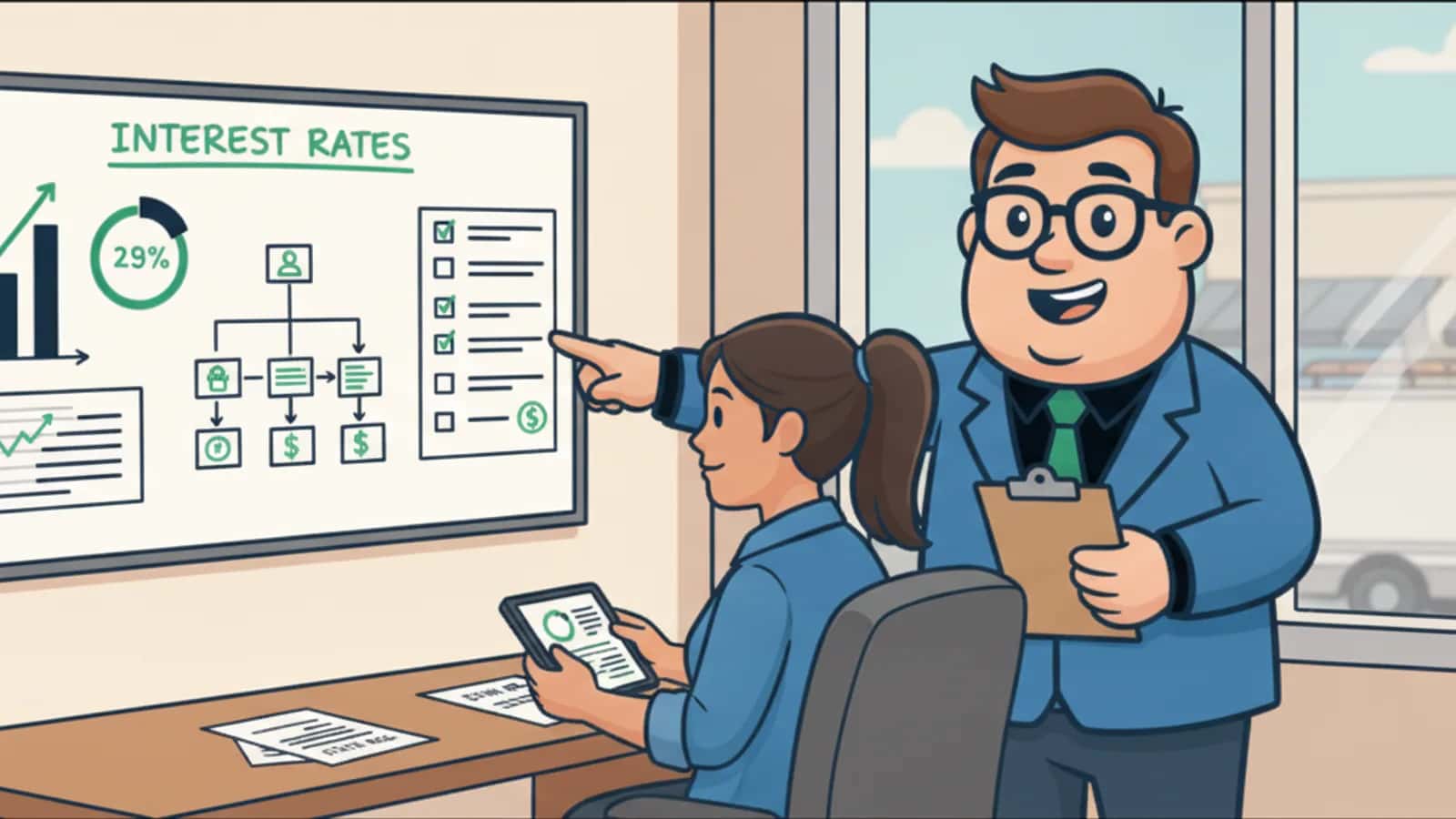
Unsecured business loan rates in 2026 range from 8% to over 35% APR, with significant variation based on lender type and borrower qualifications. Traditional banks offer the most competitive rates for qualified borrowers, while alternative lenders charge premium rates for faster access and flexible criteria.
Rate ranges by lender type
- Traditional banks: 8-15% APR for prime borrowers
- Credit unions: 9-16% APR with member benefits
- Online lenders: 12-25% APR with streamlined processes
- Alternative lenders: 18-35%+ APR for higher-risk borrowers
Unsecured business-loan pricing changes with benchmark rates, lender policy, credit quality, cash flow, and repayment structure. Compare the disclosed APR or estimated annual cost, fees, payment frequency, and total repayment rather than relying on a temporary advertised rate.
Your actual rate depends on multiple factors: personal credit score (weighted heavily), business credit profile, annual revenue, time in business, debt-to-income ratio, and industry risk level. Businesses with 750+ credit scores and strong financials can access bank rates, while those with 650-700 scores typically pay 15-25% through online lenders.
Common rate influencers
- Credit scores below 650 often push rates above 25%
- Newer businesses (under 2 years) face 5-10% rate premiums
- High-risk industries may see additional 3-8% markups
- Loan amounts under $50,000 sometimes carry higher rates due to processing costs
Fees and Total Costs Beyond Interest Rates
The true cost of unsecured business loans extends well beyond the advertised interest rate. Origination fees, processing charges, and prepayment penalties can add thousands to your total borrowing cost.
Standard fee structure
- Origination fees: 1-6% of loan amount (paid upfront or rolled into loan)
- Processing fees: $100-500 flat fee for underwriting and documentation
- Late payment fees: $25-50 or 5% of missed payment amount
- Prepayment penalties: 2-5% of remaining balance if paid early
- NSF fees: $25-35 for returned payments
Factor rates complicate cost calculations with some alternative lenders. Instead of traditional APR, they charge a factor (like 1.2-1.5) multiplied by your loan amount. A $100,000 loan with a 1.3 factor costs $130,000 total, regardless of how quickly you repay.
Always calculate the total cost of capital, not just monthly payments. A lower-rate loan with high fees might cost more than a higher-rate loan with minimal fees. Request a full fee schedule before signing any agreement.
Credit Score Requirements for Unsecured Business Loans
Most unsecured business loan lenders require personal credit scores of 650 or higher, with banks typically setting minimums at 700+ for their best rates and terms. Your personal credit carries more weight than business credit since you're providing a personal guarantee.
Credit score tiers and typical outcomes
- 750+ (Excellent): Access to bank loans at 8-15% APR with favorable terms
- 700-749 (Good): Bank and online lender options at 12-20% APR
- 650-699 (Fair): Online lenders primarily, 18-25% APR range
- 600-649 (Poor): Limited alternative lender options, 25-35%+ APR
- Below 600: Very few options, often requiring collateral or co-signers
Banks evaluate both personal and business credit, but personal scores dominate the decision. A business owner with a 780 personal score but limited business credit history will qualify more easily than someone with a 650 personal score and strong business credit.
Improving approval odds with fair credit
- Add a co-signer with stronger credit
- Provide additional financial documentation (tax returns, bank statements)
- Consider smaller loan amounts to reduce lender risk
- Build business credit for 6-12 months before applying
- Pay down existing debt to improve debt-to-income ratios
Some online lenders specialize in fair credit lending, but expect higher rates and shorter terms. Revenue-based lenders may approve borrowers with 600+ scores if monthly revenue exceeds $20,000-30,000 consistently.
Can You Get an Unsecured Business Loan with Bad Credit
Yes, but options are limited and expensive. Borrowers with credit scores below 600 can access unsecured funding through alternative lenders, though rates often exceed 30% APR and terms are restrictive.
Bad credit lending options
- Revenue-based lenders: Focus on monthly sales volume over credit scores
- Merchant cash advance providers: Advance against future credit card sales
- Peer-to-peer platforms: Individual investors may accept higher risk
- Industry-specific lenders: Some sectors have specialized bad credit programs
Alternative lenders typically require higher revenue thresholds for bad credit borrowers. Where good credit borrowers might qualify with $100,000 annual revenue, bad credit applicants often need $200,000+ in consistent monthly sales.
Common bad credit loan features
- Higher interest rates (25-50% APR or factor rates)
- Shorter repayment terms (6-24 months typical)
- Smaller loan amounts ($10,000-75,000 range)
- Daily or weekly payment schedules
- UCC liens on business assets despite being "unsecured"
Consider improving credit before borrowing if possible. Six months of on-time payments and debt reduction can move you from the bad credit tier to fair credit, potentially saving thousands in interest costs.
For more guidance on building business credit, see our complete guide to business credit scores.
Secured vs Unsecured Business Loans: Key Differences
The primary difference lies in collateral requirements and risk allocation, which directly impacts pricing, approval criteria, and consequences of default.
| Feature | Secured Loans | Unsecured Loans |
|---|---|---|
| Collateral Required | Business or personal assets pledged | No collateral, but personal guarantees common |
| Interest Rates | 5-12% APR typical | 8-35% APR typical |
| Loan Amounts | Up to 80% of collateral value | Based on cash flow and creditworthiness |
| Approval Time | 2-8 weeks (appraisal required) | 1 day to 4 weeks |
| Credit Requirements | More flexible due to collateral | Stricter credit and revenue requirements |
| Default Consequences | Collateral seizure + personal liability | Personal asset pursuit via guarantee |
Which is right for you?
Choose secured loans when
- You need larger amounts (over $250,000)
- You want the lowest possible rates
- Your credit is fair but you have valuable assets
- You're comfortable pledging specific collateral
Choose unsecured loans when
- You need funding quickly (under 2 weeks)
- You want to keep business assets unencumbered
- Loan amounts are under $200,000
- You have strong credit and cash flow
The "unsecured" label doesn't eliminate personal risk. Personal guarantees mean lenders can still pursue your personal assets, but they must go through legal collection processes rather than immediately seizing pledged collateral.
Approval Timeline and Process
Unsecured business loan approval times range from same-day decisions (online lenders) to 30-60 days (traditional banks), with most falling in the 3-14 day range for complete applications.
Typical timeline by lender type:
- 1
Online lenders
1-7 days from application to funding
- 2
Banks
15-45 days including underwriting and committee approval
- 3
Credit unions
10-30 days with member relationship benefits
- 4
SBA lenders
30-90 days for SBA 7(a) unsecured loans
Standard approval process:
- Pre-qualification (1-24 hours): Soft credit check and basic eligibility screening
- Formal application (1-3 days): Document submission and hard credit pull
- Underwriting review (3-14 days): Financial analysis and risk assessment
- Approval decision (1-2 days): Final credit committee or automated decision
- Documentation and funding (1-5 days): Loan agreement signing and fund transfer
Factors affecting approval speed
- Complete documentation submitted upfront accelerates review
- Automated underwriting (common with online lenders) provides faster decisions
- Bank committee meetings may occur weekly, creating delays
- Complex business structures or unusual revenue sources slow review
- High loan amounts trigger additional verification steps
For fastest approval, work with online lenders offering automated underwriting. For lowest rates, traditional banks are worth the longer timeline if you meet their stricter criteria.
Learn more about streamlining your application in our business loan approval checklist.
Required Documentation for Applications
Unsecured business loan applications require extensive financial documentation to compensate for the lack of collateral. Lenders need to verify cash flow, business stability, and repayment capacity through paper trails.
Standard documentation requirements
- Business tax returns: Previous 2-3 years (personal returns often required too)
- Bank statements: 3-12 months of business checking account activity
- Financial statements: Profit & loss, balance sheet (CPA-prepared preferred)
- Business licenses: Current state and local operating permits
- Articles of incorporation: Legal business formation documents
Additional documents by lender type:
Banks typically require
- Personal financial statements for all owners with 20%+ equity
- Business debt schedule listing all current obligations
- Accounts receivable aging reports
- Cash flow projections for loan term period
- Insurance certificates (general liability, key person)
Online lenders may accept
- Bank account read-only access via secure connection
- Credit card processing statements (for revenue verification)
- Accounting software integration (QuickBooks, Xero)
- Simplified financial summaries instead of full CPA statements
Documentation tips for faster approval
- Organize documents before applying to avoid delays
- Ensure tax returns are filed and current (extensions create complications)
- Reconcile any discrepancies between bank statements and tax returns
- Provide explanations for unusual transactions or seasonal variations
- Keep digital copies readily accessible for quick submission
Missing or incomplete documentation is the leading cause of approval delays. Spend time organizing financial records before starting applications to streamline the process.
Unsecured Business Loans for Startups
Startups face significant challenges accessing unsecured business loans, with most lenders requiring 2+ years of business history and established revenue patterns. However, some options exist for newer businesses with strong personal credit and industry experience.
Startup-friendly lender options
- SBA Microloans: Up to $50,000 for businesses under 2 years old
- Online lenders: Some accept 6-12 months of business history
- Revenue-based lenders: Focus on current sales trends over business age
- Industry specialists: Certain sectors have startup-focused programs
Typical startup requirements
- Personal credit scores of 700+ (higher threshold than established businesses)
- 6-12 months of consistent business revenue
- Industry experience or relevant professional background
- Personal financial strength to support loan payments
- Detailed business plan with realistic financial projections
Loan characteristics for startups
- Smaller amounts ($10,000-75,000 typical range)
- Higher interest rates (20-35% APR common)
- Shorter terms (1-3 years standard)
- More restrictive covenants and reporting requirements
- Personal guarantees are universal
Alternative funding for startups:
If unsecured loans aren't available, consider business loans for startups including equipment financing, accounts receivable factoring, or revenue-based financing that don't require extensive operating history.
Building loan eligibility as a startup
- Establish business credit accounts early
- Maintain consistent revenue growth month-over-month
- Keep detailed financial records from day one
- Build relationships with local banks and credit unions
- Consider smaller initial loan amounts to establish payment history
What Happens If You Can't Repay
Despite being "unsecured," defaulting on business loans triggers serious consequences including personal asset seizure, credit damage, and potential legal action. Personal guarantees mean lenders have multiple collection avenues available.
Immediate consequences of default
- Credit damage: 60+ day late payments appear on personal and business credit reports
- Acceleration: Full loan balance becomes immediately due
- Collection calls: Lender contact increases with formal demand letters
- Account freeze: Business bank accounts may be frozen if with the same institution
- UCC lien enforcement: If filed, lenders can seize business assets
Personal guarantee enforcement:
Lenders can pursue personal assets including:
- Primary residence (varies by state homestead exemptions)
- Investment accounts and savings
- Personal vehicles and valuables
- Wage garnishment (where legally permitted)
- Tax refund interception
Legal collection process:
- Default notice: Formal notification of missed payments
- Demand letter: Legal notice requiring full payment
- Lawsuit filing: Court action to obtain judgment
- Asset discovery: Legal process to identify recoverable assets
- Asset seizure: Sheriff sales, account levies, wage garnishment
Protecting yourself before default
- Communicate early with lenders if payments become difficult
- Request payment modifications or temporary forbearance
- Consider debt consolidation or refinancing options
- Consult bankruptcy attorneys if business closure is inevitable
- Understand state-specific exemptions for personal assets
For more information on personal guarantees and their implications, see our guide to UCC liens and personal guarantees.
Unsecured Loans vs Other Funding Options
Unsecured business loans occupy a middle ground between low-cost secured financing and high-cost alternative funding, making them suitable for specific situations but not always the optimal choice.
Cost comparison (typical ranges)
- SBA 7(a) loans: 11-14% APR (partially guaranteed, slower approval)
- Bank term loans (secured): 6-12% APR (collateral required)
- Unsecured business loans: 8-35% APR (no collateral, moderate speed)
- Business lines of credit: 8-25% APR (flexible access, variable rates)
- Equipment financing: 6-15% APR (equipment as collateral)
- Merchant cash advances: 20-100%+ APR equivalent (daily repayment)
When unsecured loans make sense
- Need funding within 1-2 weeks
- Loan amounts between $25,000-200,000
- Want to preserve business assets for operations
- Have strong credit but limited collateral
- Seasonal businesses needing working capital flexibility
When other options are better
- Choose SBA loans for amounts over $150,000 with time for 30-60 day approval
- Choose equipment financing when purchasing specific equipment or vehicles
- Choose lines of credit for ongoing working capital needs with variable usage
- Choose secured loans when you need the lowest possible rates and have collateral
Decision framework:
- Speed needs: Urgent (unsecured online) vs. patient (SBA/bank secured)
- Amount required: Under $100k (unsecured viable) vs. over $250k (secured likely needed)
- Collateral availability: Assets to pledge (secured) vs. asset preservation (unsecured)
- Credit strength: Excellent (many options) vs. fair (limited to unsecured alternatives)
For a comprehensive comparison of funding types, see our guide on term loans vs lines of credit vs merchant cash advances.
Common Reasons for Application Denials
Understanding why unsecured business loan applications get denied helps you address weaknesses before applying and choose appropriate lenders for your situation.
Top denial reasons (in order of frequency):
- Insufficient credit score: Personal scores below lender minimums (typically 650+)
- Inadequate cash flow: Debt service coverage ratios under 1.25x
- Limited business history: Less than 2 years of consistent operations
- High debt-to-income ratios: Existing obligations exceed 40-50% of income
- Industry restrictions: High-risk sectors (gambling, adult entertainment, cryptocurrency)
Financial red flags that trigger denials
- Negative cash flow: Recent months showing losses or declining revenue
- Tax liens or judgments: Unresolved government or legal obligations
- Recent bankruptcies: Personal or business filings within 2-4 years
- Overdrafts and NSF fees: Pattern of account management issues
- Inconsistent revenue: Wide month-to-month variations without explanation
Documentation issues causing denials
- Incomplete tax returns or missing schedules
- Bank statements showing different revenue than reported
- Expired business licenses or permits
- Unsigned or incorrectly completed application forms
- Missing personal financial statements for guarantors
Improving approval odds after denial
- Wait and rebuild: Address specific denial reasons before reapplying
- Try different lender types: Online lenders vs. banks have different criteria
- Consider smaller amounts: Lower loan requests reduce lender risk perception
- Add co-signers: Strong credit co-signers can overcome individual weaknesses
- Provide additional documentation: More context can overcome automated denials
Reapplication timing: Wait at least 3-6 months before reapplying to the same lender. Hard credit inquiries remain visible for 24 months, so multiple applications in short periods signal desperation to underwriters.
Borrowing Limits and Loan Amounts
Unsecured business loan amounts typically range from $10,000 to $500,000, though some lenders offer up to $5 million for exceptionally qualified borrowers. Your maximum borrowing capacity depends on annual revenue, credit strength, and debt service ability.
Typical loan size ranges by lender
- Traditional banks: $50,000-$5,000,000 (relationship-dependent)
- Online lenders: $10,000-$500,000 (algorithm-driven limits)
- Credit unions: $25,000-$250,000 (member-focused sizing)
- Alternative lenders: $5,000-$300,000 (revenue-based limits)
Factors determining your borrowing limit
- Annual revenue: Most lenders limit loans to 10-30% of yearly sales
- Monthly cash flow: Debt payments typically can't exceed 25-35% of monthly income
- Credit score: Higher scores unlock larger loan amounts
- Time in business: Established businesses qualify for higher limits
- Industry type: Some sectors have built-in lending limits due to risk
Revenue-based lending limits (common formulas)
- Conservative lenders: 10-15% of annual revenue
- Moderate lenders: 15-25% of annual revenue
- Aggressive lenders: 25-40% of annual revenue
Maximizing borrowing capacity
- Demonstrate consistent revenue growth over 12-24 months
- Maintain strong debt service coverage ratios (1.5x or higher)
- Keep personal and business credit scores above 700
- Provide detailed cash flow projections showing repayment ability
- Consider multiple smaller loans instead of one large loan
For larger funding needs exceeding unsecured loan limits, explore SBA 7(a) loans which offer up to $5 million with government backing.
Unsecured Loans vs Lines of Credit
Both unsecured loans and lines of credit provide funding without collateral, but they serve different business needs through distinct repayment structures and access patterns.
Key structural differences:
Unsecured Term Loans
- Lump sum funding upfront
- Fixed monthly payments over set term
- Interest charged on full amount from day one
- Predictable payment schedule for budgeting
- Typically 1-7 year repayment periods
Unsecured Lines of Credit
- Revolving access up to credit limit
- Pay interest only on amounts used
- Minimum payments vary with outstanding balance
- Flexibility to draw and repay as needed
- Usually 1-2 year draw periods with renewal options
Cost comparison:
Lines of credit often carry higher interest rates (12-30% APR) than term loans (8-25% APR) but offer cost advantages when you don't need the full amount immediately. You only pay interest on funds actually drawn.
Best use cases:
Which is right for you?
Choose term loans for
- Equipment purchases or specific investments
- Debt consolidation with known payoff amounts
- Predictable monthly budgeting requirements
- Lower overall cost when you need the full amount
Choose lines of credit for
- Seasonal working capital needs
- Inventory purchases with variable timing
- Cash flow smoothing during slow periods
- Emergency funding availability
Qualification differences:
Lines of credit typically require stronger credit profiles (700+ scores) and more established businesses (3+ years) due to the ongoing risk and flexibility involved. Term loans may be available to newer businesses with specific funding purposes.
Repayment flexibility:
Term loans lock you into fixed payments regardless of cash flow variations. Lines of credit allow you to pay down balances during strong months and access funds during slower periods, making them ideal for businesses with seasonal revenue patterns.
Next steps for unsecured business loans
Unsecured business loans in the US offer a middle path between low-cost secured financing and expensive alternative funding, with costs ranging from 8-35% APR depending on your creditworthiness and lender choice. While these loans don't require business collateral, personal guarantees mean you're still at risk if repayment becomes impossible.
The key to success lies in matching your needs with the right lender type. Banks offer the lowest rates but require excellent credit and longer approval times. Online lenders provide faster access with more flexible criteria but charge premium rates. Alternative lenders serve higher-risk borrowers but at costs that can strain cash flow.
Before applying, ensure you meet basic eligibility requirements: 650+ credit score, $100,000+ annual revenue, and 2+ years in business for most options. Organize financial documentation early and calculate total costs including fees, not just monthly payments.
Ready to explore your options? Check your eligibility across multiple US funding partners with no hard credit check to start. Our revenue-led matching connects you with lenders suited to your business profile and funding needs, with no obligation to proceed.
Frequently asked questions
What Is an Unsecured Business Loan and How Does It Work?
An unsecured business loan provides funding without requiring business assets as collateral, but nearly all include personal guarantees from business owners. This means while your business equipment or inventory isn't directly pledged, you remain personally liable for repayment.
Can You Get an Unsecured Business Loan with Bad Credit?
Yes, but options are limited and expensive. Borrowers with credit scores below 600 can access unsecured funding through alternative lenders, though rates often exceed 30% APR and terms are restrictive.
What Happens If You Can't Repay?
Despite being "unsecured," defaulting on business loans triggers serious consequences including personal asset seizure, credit damage, and potential legal action. Personal guarantees mean lenders have multiple collection avenues available.
Written by
The Funding Fred Editorial Team creates plain-English guides to help business owners understand funding options, eligibility, and application readiness before they compare finance options.
Reviewed by
Business finance content reviewer
Robert reads our business finance guides before they go live, checking each one is accurate, easy to follow, and reflects how lending actually works today — not how a brochure says it should. He's listed on the UK's FCA Register, approved as an SMF3 (AR) Executive Director at Switcha Limited, and connected to Lucky Growth Partners Ltd through its appointed representative relationship, so each guide gets a properly qualified second read.