Business Credit Card vs Business Loan: Which Fits the Expense?
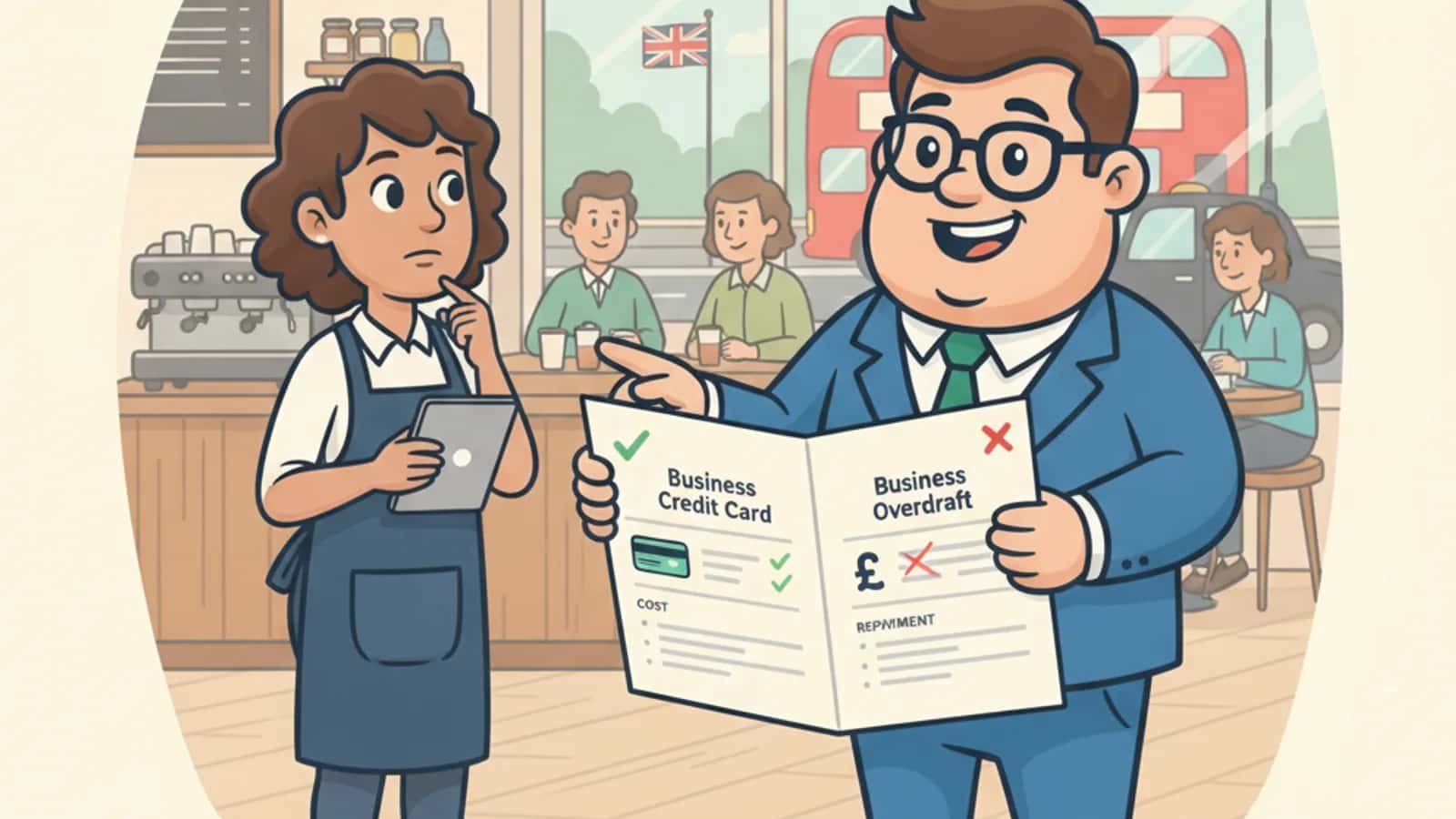
A business credit card suits recurring, smaller, or short-term expenses where speed and spend control matter, think ad spend, supplier invoices, travel, or staff costs. A business loan suits larger, one-off capital needs where you want a fixed repayment schedule and a lump sum upfront.

Quick answer
A business credit card suits recurring, smaller, or short-term expenses where speed and spend control matter, think ad spend, supplier invoices, travel, or staff costs. A business loan suits larger, one-off capital needs where you want a fixed repayment schedule and a lump sum upfront. The right answer depends on the size of the spend, how quickly you need funds, and whether you want revolving access or a structured payoff.
Key takeaways
- Business credit cards give you revolving credit, up to 56 days interest-free, and real-time spend controls, loans give you a fixed lump sum with set repayments
- Cards are typically faster to access: a 2 min check with no hard credit search to start, versus weeks of underwriting for a loan
- Loan limits can reach into the millions; business credit card limits in the UK typically run from £1,000 to £250,000+
- Interest rates on business credit cards are usually higher than secured loans, but if you clear the balance monthly, you pay no interest at all
- Loans often require more documentation, and sometimes a personal guarantee, cards may too, but many providers offer options without one
- Cashback, rewards, and employee cards are card-specific benefits that loans simply don't offer
- For equipment, property, or large capital purchases, a loan (or asset finance) is usually the better structural fit
- If your bank won't raise your card limit, the answer isn't to wait, it's to compare what leading card providers will actually offer
What's the Difference Between a Business Credit Card and a Business Loan?

A business credit card is a revolving credit facility. You spend up to your limit, repay some or all of it, and the credit becomes available again. A business loan is a fixed lump sum, paid into your account, repaid over an agreed term with interest.
The core difference is structure. A card is flexible and ongoing. A loan is finite and scheduled.
Key structural differences at a glance:
| Feature | Business Credit Card | Business Loan |
|---|---|---|
| Credit type | Revolving | Fixed lump sum |
| Typical UK limit/amount | £1,000, £250,000+ | £1,000, £500,000+ (unsecured); higher secured |
| Repayment | Flexible monthly minimum or full balance | Fixed monthly instalments |
| Interest-free period | Up to 56 days (if balance cleared) | None, interest accrues from drawdown |
| Approval speed | Days (sometimes same day) | Days to weeks depending on lender and size |
| Employee cards | Yes, with spend controls | No |
| Cashback/rewards | Yes, on many cards | No |
| Personal guarantee | Sometimes required | Often required for unsecured loans |
For the wider context, read a closer look at comparing business credit cards.
When Should You Use a Business Credit Card Instead of a Loan?

Use a business credit card when the expense is recurring, short-term, or operational, and when speed or spend visibility matters. Use a loan when you need a large, fixed amount for a capital project and want predictable monthly repayments.
Which is right for you?
Choose a business credit card if
- You're covering ad spend, stock top-ups, or supplier invoices that cycle monthly
- You need staff or contractors to spend on behalf of the business without using personal cards
- You can clear the balance within the interest-free window (up to 56 days)
- You want cashback on regular business spend
- You need a card in days, not weeks
- Your bank hasn't raised your limit in years and you need more headroom now
Choose a business loan if
- You need a specific lump sum for a defined project, a fit-out, a vehicle fleet, a product launch
- The repayment needs to be spread over 12-60 months with a fixed schedule
- The amount is larger than a card limit can cover
- You want to separate capital expenditure from day-to-day operational spend
Business Credit Card vs Loan for Cash Flow Needs
For short-term cash flow gaps, a business credit card is often the faster and more flexible fix. For a structural cash flow problem, where you need a significant injection to cover a gap between invoices and outgoings, a cash flow business loan may be more appropriate. For more detail, see our guide to using business credit cards for cash flow.
Cards work well for cash flow when the gap is predictable and short. An agency waiting 30 days for a client to pay can put supplier costs on a card, clear the balance when payment arrives, and pay zero interest. That's the interest-free window doing exactly what it's designed for.
Where cards fall short on cash flow: you can't usually transfer your credit card balance directly into your business current account as cash without paying a cash advance fee and losing the interest-free period. If you need cash in the account, not just purchasing power, a loan or overdraft is a cleaner solution. See our comparison of business overdraft vs line of credit vs loan for a fuller breakdown.
How Much Can You Borrow: Credit Card Limits vs Loan Amounts?
Business credit card limits in the UK typically run from £1,000 to £250,000+, depending on the provider, your business turnover, and credit profile. Business loans can range from a few thousand pounds to several million for secured facilities.
The gap matters for large purchases. If you need £400,000 for a warehouse fit-out, no card will cover it. If you need £15,000 to cover a busy quarter's stock and ad spend, a card with the right limit is a cleaner tool than a loan.
One thing many businesses don't realise: the limit your high street bank offers isn't the only option available. Leading card providers on platforms like Funding Fred can offer limits that smaller or newer businesses simply wouldn't get from their existing bank. A 2 min check with no obligation shows what's actually available, without a hard credit search to start.
Business Credit Card Interest Rates Compared to Business Loans
Business credit cards in the UK typically carry representative APRs in the range of 20-35% (variable, provider-dependent, and subject to your credit assessment). Business loans, particularly secured or asset-backed facilities, can carry rates significantly lower than that. Unsecured business loan rates vary widely; see our average business loan interest rates guide for current benchmarks.
The critical difference: if you clear your card balance in full each month, you pay 0% interest. The APR only applies to balances you carry over. For businesses that use cards for operational spend and clear monthly, the effective interest cost is zero, and they earn cashback on top.
Carry a balance for six months on a high-APR card, and the cost climbs fast. That's when a loan at a lower fixed rate becomes the cheaper option.
Rule of thumb: if you're confident you'll clear the balance within the interest-free window, a card is cheaper. If you know you'll be carrying the balance for months, compare the total cost of a loan against the card's APR before committing.
What Expenses Should Go on a Business Credit Card?
Business credit cards work best for operational, recurring, and controllable spend. The categories where cards consistently add value:
- Digital advertising
- , Google, Meta, LinkedIn ad spend can run into thousands per month. Cashback on that spend adds up fast.
- Software subscriptions
- , SaaS tools, licences, and cloud services billed monthly
- Travel and accommodation
- , flights, hotels, rail, and taxis for staff
- Supplier invoices
- , where the supplier accepts card payment
- Stock and inventory
- , smaller, regular top-ups rather than a one-off bulk order
- Contractor payments
- , where the contractor accepts card
- Office supplies and equipment
- , lower-value items that don't justify a loan
What doesn't belong on a card: large capital items (machinery, vehicles, property deposits) where the repayment period needs to be longer than the interest-free window. For those, look at asset finance vs business loan as an alternative.
On tax: card fees and interest charges may be allowable business expenses, but the tax treatment depends on the nature of the underlying purchase, not the payment method. HMRC guidance applies, take advice from your accountant rather than relying on general rules. For more detail, see our guide to business credit cards vs charge cards.
Note on purchase protection: Section 75 of the Consumer Credit Act does not apply to business credit cards. Some providers offer their own purchase protection or chargeback rights, check your card's terms directly.
Business Credit Card Rewards and Cashback Benefits
Cashback and rewards are exclusive to cards, no business loan pays you back a percentage of what you spend. For businesses with high monthly card spend, this is a genuine financial benefit, not a marketing add-on.
How it works in practice: an e-commerce brand spending £20,000 per month on ad spend and stock on a 1% cashback card earns £200 per month, £2,400 per year, for spending money they'd spend anyway. That's without touching the interest-free period benefit.
Beyond cashback, business credit cards from leading card providers can include:
- Employee cards
- with individual spend limits and category controls
- Virtual cards
- for online purchases and subscription management
- Real-time spend dashboards
- that cut month-end expense admin
- Rewards points
- redeemable against travel, statement credit, or partner offers
The spend controls piece is underrated. Businesses that issue staff cards without controls end up chasing receipts and reconciling surprises at month end. Cards with built-in controls let you set limits per employee, per category, or per time period, before the spend happens, not after.
Business Loan vs Credit Card for Equipment Purchase
For equipment, a loan (or asset finance) is almost always the better structural fit. Equipment is a capital purchase with a long useful life, it makes sense to spread the cost over a repayment term that matches that life, rather than putting it on a card and either clearing a large balance fast or paying card-rate interest.
A £30,000 CNC machine financed over 36 months at a fixed rate gives you predictable monthly costs and keeps your card limit free for operational spend. Putting the same purchase on a card and carrying the balance at 25% APR would cost significantly more over the same period.
For smaller equipment, a laptop, a camera, a piece of office furniture, a card is fine, especially if you'll clear the balance within the interest-free window.
Decision rule
- Equipment under £2,000, cleared within 56 days: card is fine
- Equipment over £5,000 with a multi-year useful life: loan or asset finance
- Equipment between £2,000,£5,000: depends on your cash position and whether you'll carry the balance
See our guide to asset finance vs business loan for large capital purchases for a deeper comparison.
Approval Time: Business Loan vs Credit Card
Business credit cards are faster. Many providers can give a decision within 24-48 hours of a full application, with cards issued in days. A 2 min eligibility check with no hard credit search to start means you know where you stand before committing to a full application.
Business loans take longer. A straightforward unsecured loan from an online lender might complete in 2-5 business days. A larger secured loan from a high street bank can take 2-6 weeks, with extensive documentation required. For what lenders typically ask for, see our guide on what documents you need to apply for a business loan.
If you need funding this week, to cover a supplier invoice, kit out a new team member, or bridge a gap before a client payment lands, a card is the more realistic option. If you've been turned down by your bank and aren't sure what else is available, our business loan declined guide covers next steps.
Can You Get a Business Credit Card With Bad Credit?
It's harder, but not impossible. Some business credit card providers focus more on business performance, turnover, trading history, sector, than on a perfect credit score. A business with strong revenue but a patchy credit history may still qualify for a card, though the limit offered and the APR applied will reflect the risk.
For businesses with a genuinely poor credit profile, it's worth understanding what's on your business credit score before applying, since errors or outdated information can drag a score down unnecessarily.
Funding Fred's initial eligibility check is not a full credit application, it's a soft check that shows what may be available without leaving a mark on your credit file. The card provider's full application and credit assessment is a separate step. No obligation, no hard check to start.
How Does a Business Loan Affect Your Personal Credit?
A business loan can affect your personal credit if you've signed a personal guarantee. Most unsecured business loans for SMEs in the UK require one. If the business defaults and the guarantee is called, it appears on your personal credit file and can affect your ability to borrow personally.
Business credit cards may also require a personal guarantee, but many providers, particularly those on platforms like Funding Fred, offer options without one, or with more limited personal liability. Always read the guarantee terms before signing.
For a full breakdown of the risks involved, see our guide on personal guarantees on business loans.
What Happens If You Can't Pay Back a Business Credit Card?
If you miss a minimum payment on a business credit card, the provider will typically charge a late payment fee and may increase your interest rate. Continued missed payments can lead to the account being suspended, the balance being passed to a collections team, and, if you signed a personal guarantee, potential personal liability.
Unlike a consumer credit card, business credit cards don't carry the same FCA consumer credit protections in all cases. The Financial Ombudsman Service may handle some disputes depending on how the card was issued and to whom, but this isn't guaranteed for all business accounts.
If you're struggling
- Contact the provider before you miss a payment, many have hardship processes
- Check whether your card agreement includes a personal guarantee and what it covers
- Get independent financial or legal advice early
The earlier you act, the more options you have.
Next steps
The business credit card vs business loan question doesn't have a single answer, it has a context. For operational spend, short-term cash flow, staff expenses, and recurring costs, a business credit card with the right limit, spend controls, and cashback is the cleaner tool. For large capital purchases, long repayment terms, or a fixed lump sum, a loan fits the structure better.
What most growing UK businesses find is that they need both, a card for day-to-day spend control and headroom, and a loan for specific capital projects. The mistake is using the wrong one for the job: putting a £50,000 equipment purchase on a high-APR card, or taking out a loan to cover monthly ad spend that a card could handle interest-free.
If your current card limit hasn't moved in years, or your bank keeps saying no, that's not a fixed state, it's a gap worth checking. Check Eligibility Now with Funding Fred. No hard check to start. No obligation. Business Credit Cards. Without the Fuss.
Frequently asked questions
What's the Difference Between a Business Credit Card and a Business Loan?
A business credit card is a revolving credit facility. You spend up to your limit, repay some or all of it, and the credit becomes available again. A business loan is a fixed lump sum, paid into your account, repaid over an agreed term with interest.
When Should You Use a Business Credit Card Instead of a Loan?
Use a business credit card when the expense is recurring, short-term, or operational, and when speed or spend visibility matters. Use a loan when you need a large, fixed amount for a capital project and want predictable monthly repayments.
How Much Can You Borrow: Credit Card Limits vs Loan Amounts?
Business credit card limits in the UK typically run from £1,000 to £250,000+, depending on the provider, your business turnover, and credit profile. Business loans can range from a few thousand pounds to several million for secured facilities.
What Expenses Should Go on a Business Credit Card?
Business credit cards work best for operational, recurring, and controllable spend. The categories where cards consistently add value:
Can You Get a Business Credit Card With Bad Credit?
It's harder, but not impossible. Some business credit card providers focus more on business performance, turnover, trading history, sector, than on a perfect credit score. A business with strong revenue but a patchy credit history may still qualify for a card, though the limit offered and the APR applied will reflect the risk.
How Does a Business Loan Affect Your Personal Credit?
A business loan can affect your personal credit if you've signed a personal guarantee. Most unsecured business loans for SMEs in the UK require one. If the business defaults and the guarantee is called, it appears on your personal credit file and can affect your ability to borrow personally.
Written by
The Funding Fred Editorial Team creates plain-English guides to help business owners understand funding options, eligibility, and application readiness before they compare finance options.
Reviewed by
UK business finance content reviewer
Robert reads our UK business finance guides before they go live, checking each one is accurate, easy to follow, and reflects how lending actually works today — not how a brochure says it should. He's listed on the FCA Register, approved as an SMF3 (AR) Executive Director at Switcha Limited, and connected to Lucky Growth Partners Ltd through its appointed representative relationship, so the regulated detail gets a properly qualified second read.