How to Use a Business Credit Card for Cash Flow Without Building Persistent Debt
A business credit card covers short-term timing gaps between money going out and money coming in. Used with a clear repayment plan and spend controls, it costs nothing in interest and keeps your working capital intact.
Quick answer
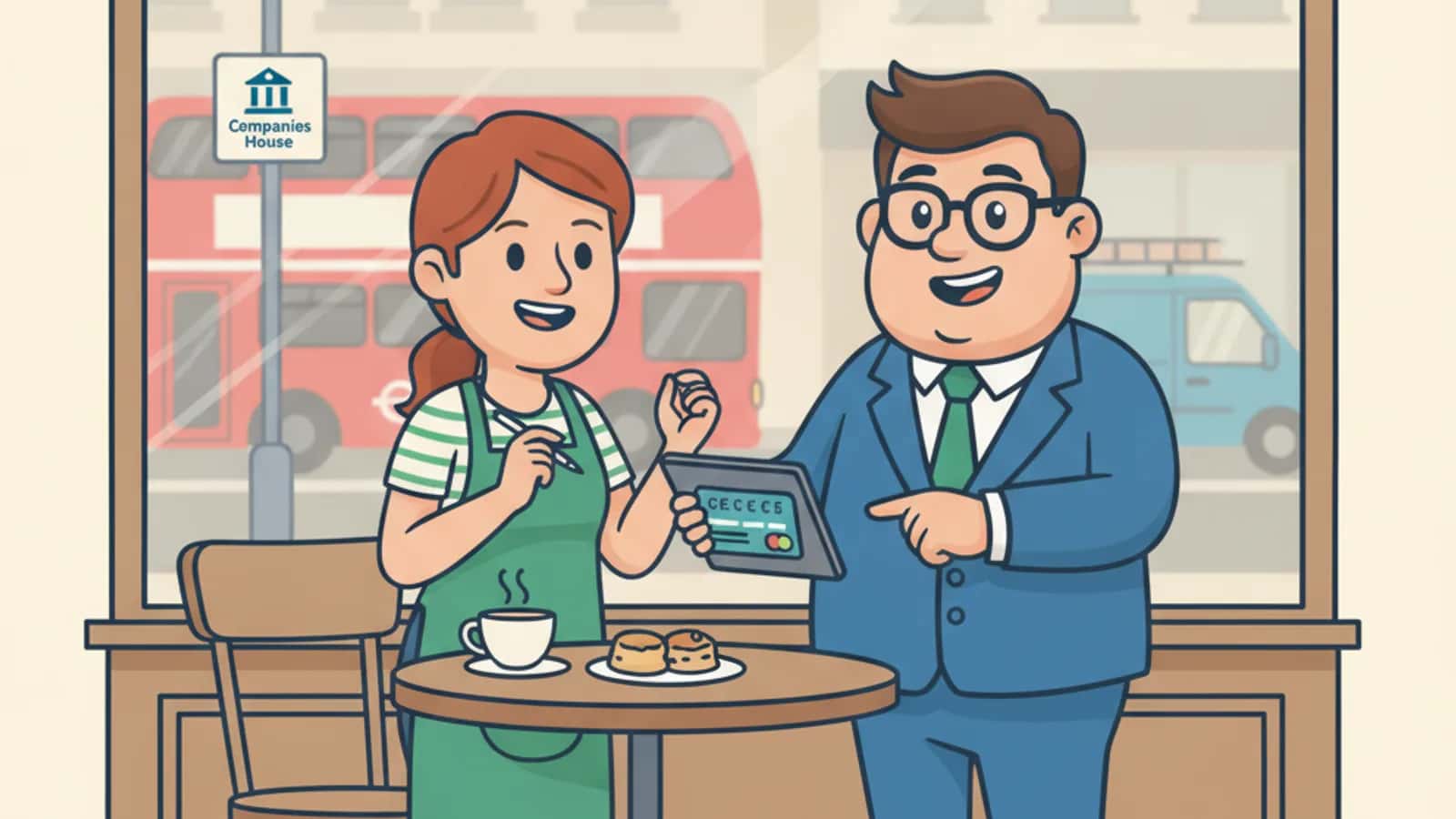
A business credit card covers short-term timing gaps between money going out and money coming in. Used with a clear repayment plan and spend controls, it costs nothing in interest and keeps your working capital intact. The risk of persistent debt comes from treating the card as a substitute for revenue rather than a bridge to it.
Key takeaways
- Business credit cards offer up to 56 days interest-free, making them a zero-cost cash flow tool when cleared in full each cycle
- The card works for timing gaps, not structural shortfalls, if the money to repay it isn't coming, the card isn't the right tool
- Spend controls, virtual cards, and employee card limits prevent the creep that turns a useful tool into a debt problem
- Paying the minimum is the single fastest route to persistent debt, always pay the full statement balance where possible
- A 2-minute eligibility check with no hard credit search lets you compare limits and providers before committing
- Card limits from £1k to £250k+ mean the right card scales with your business rather than staying stuck at a figure your bank set five years ago
- Using a business credit card responsibly can build your business credit profile over time
- If the gap is structural rather than timing-based, a cash flow business loan or line of credit may be a better fit
What Is a Business Credit Card Actually For?

A business credit card is a short-term revolving credit facility. It covers purchases and expenses now, with repayment due at the end of the billing cycle. The interest-free window, up to 56 days with many providers, is the core feature that makes it useful for cash flow rather than expensive.
Most UK SMEs accept more friction than they should. A bank limit that hasn't moved in five years. Staff putting company spend on personal cards and chasing reimbursement for weeks. No real-time view of where the money went. A business credit card from a leading provider fixes all three, often in days rather than the weeks a high street bank takes to decide.
Business Credit Cards. Without the Fuss., that's the point. A 2-minute eligibility check, no hard credit search to start, and access to card providers offering limits from £1k to £250k+.
Business Credit Card vs Business Loan for Cash Flow: What's the Difference?
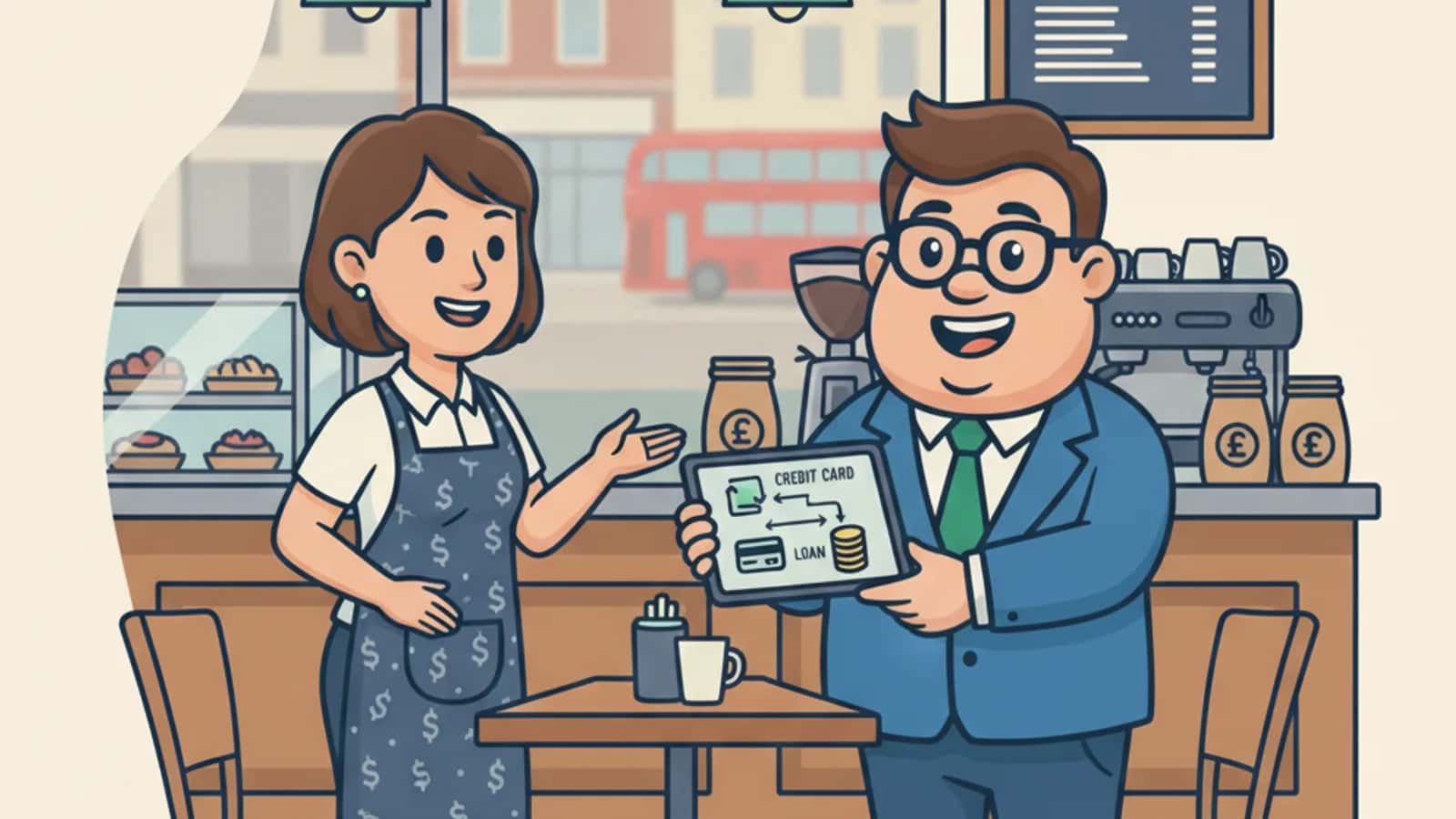
A business credit card handles recurring, short-cycle cash flow gaps. A business loan handles larger, longer-term funding needs where repayment is spread over months or years.
Here's the practical split:
| Factor | Business Credit Card | Business Loan |
|---|---|---|
| Best for | Short timing gaps, recurring spend | Large one-off purchases, structural gaps |
| Interest-free period | Up to 56 days | None, interest starts from day one |
| Repayment | Full balance each cycle (ideal) | Fixed monthly instalments |
| Speed of access | Days, sometimes same day | Days to weeks depending on lender |
| Spend controls | Virtual cards, per-employee limits | Not applicable |
| Cashback/rewards | Yes, on eligible spend | No |
| Typical limit | £1k to £250k+ | Varies widely |
If you're covering a supplier invoice while waiting for a client to pay, a card is the right tool. If you're funding a six-month stock build or a major equipment purchase, a cash flow business loan or asset finance is more appropriate.
For a detailed breakdown of revolving credit options, see business overdraft vs line of credit vs loan.
How to Use a Business Credit Card for Cash Flow Without Building Persistent Debt: The Core Method
The method is straightforward: only put spend on the card that you know will be covered by incoming revenue before the statement due date. Treat the card as a bridge, not a buffer.
Step-by-step:
- Map your cash flow cycle. Know when money comes in and when it goes out. If a client pays on 30-day terms and your supplier wants payment upfront, the card covers the gap.
- Set a repayment calendar. Direct debit the full statement balance every month. Not the minimum, the full balance.
- Assign cards to specific spend categories. Ad spend, travel, stock orders, keep the card's purpose defined so it doesn't absorb general operating costs.
- Use spend controls. Set per-card limits for employees. Virtual cards for specific suppliers or campaigns work well here.
- Review the balance weekly. Don't wait for the statement. A weekly check catches drift before it becomes a problem.
- Never use the card to cover payroll or rent unless you have a confirmed receipt arriving before the due date. These are structural costs, not timing gaps.
How Long Can You Float Purchases Interest-Free?
Most business credit cards from leading providers offer up to 56 days interest-free on purchases. This applies when you make a purchase at the start of a billing cycle and pay the full balance by the due date.
The 56 days works like this: a 30-day billing cycle, plus up to 26 days before the payment due date. A purchase made on day one of the cycle gets the full window. A purchase made on day 29 gets far less.
Practical rule: for maximum float, time larger purchases to the start of your billing cycle. For smaller recurring spend, the exact timing matters less.
This interest-free window is what makes a business credit card a zero-cost cash flow tool, but only if the balance is cleared in full. The moment you carry a balance, interest accrues on the entire outstanding amount from the statement date, not just the unpaid portion (check your provider's specific terms, as this varies).
How Do You Pay Off a Business Credit Card Before Interest Charges Kick In?
Set up a direct debit for the full statement balance on the due date. This is the single most reliable way to avoid interest charges.
Most providers offer three direct debit options: minimum payment, fixed amount, or full statement balance. Choose full statement balance. The minimum payment option is designed to keep you in debt, it covers interest and a small slice of principal, meaning a £10,000 balance at a typical business card APR could take years to clear if you only pay the minimum.
If you can't clear the full balance one month
- Pay as much as possible above the minimum
- Identify what caused the shortfall, was it a timing issue or a revenue problem?
- If it's a revenue problem, the card isn't the right tool and you may need to look at alternative funding options
- Avoid adding new spend to the card until the balance is cleared
Can You Use a Business Credit Card Just for Timing Cash Flow Gaps?
Yes, and this is exactly the right way to use it. A business credit card is well-suited to covering the gap between money going out (supplier payments, ad spend, stock orders) and money coming in (client payments, revenue).
A common example: an agency running paid media campaigns for clients. Ad spend goes out on the card in week one. The client invoice is paid 30 days later. The card balance is cleared in full before interest applies. The agency earns cashback on the ad spend and never touches its overdraft.
This works because the underlying revenue is confirmed. The card is covering a timing mismatch, not a shortfall.
Where it breaks down: using the card to cover costs when revenue isn't confirmed or is delayed beyond the interest-free window. At that point, the card starts accruing interest and the debt becomes persistent.
What Happens If You Can't Pay Off Your Business Credit Card in Full?
Interest starts accruing, and the balance compounds if you only pay the minimum. This is how short-term cash flow tools become long-term debt problems.
Business credit card APRs vary by provider and your business profile. They are typically higher than secured business loan rates. Carrying a balance for several months can make the original purchase significantly more expensive than it appeared. For the supporting detail, see the essentials of business credit card APR.
If you're already carrying a balance
- Stop adding discretionary spend to the card
- Pay as much above the minimum as cash flow allows
- Consider whether business debt consolidation makes sense if you have multiple balances
- Check whether a 0% balance transfer option is available from another provider (terms vary; check eligibility without a hard search first)
The card provider will report persistent missed payments to credit reference agencies, which affects your business credit score and future borrowing ability.
Is It Bad for Your Business Credit to Use a Card for Cash Flow?
No, used correctly, it's actively good for your business credit profile. Card providers report payment behaviour to credit reference agencies. Consistent on-time full payments build a positive credit history for your business.
What damages your business credit score:
- Missed or late payments. For the wider context, read a closer look at business credit card minimum payments.
- Consistently using more than 80-90% of your credit limit
- Defaulting on the account
- County Court Judgements (CCJs) arising from unpaid card debt
What helps it:
- Paying in full and on time, every cycle
- Keeping utilisation below 30-50% of your limit
- Maintaining the account in good standing over time
For a fuller picture of how credit behaviour affects borrowing capacity, see the business credit score guide.
Should You Use a Business Credit Card or a Business Line of Credit for Cash Flow?
A business credit card is better for frequent, smaller purchases where you want spend controls, rewards, and a clear monthly repayment cycle. A business line of credit is better for larger, less predictable drawdowns where you need flexible access to a pool of funds over time.
Which is right for you?
Choose a business credit card if
- You're managing recurring operational spend (ad spend, stock, travel, subscriptions)
- You want per-employee spend controls and virtual cards
- You want cashback or rewards on spend
- You need a decision in days, not weeks
Choose a line of credit if
- You need to draw down variable amounts at short notice
- The amounts involved exceed typical card limits
- You want to avoid putting large purchases on a revolving card balance
For a detailed comparison, see business overdraft vs line of credit vs loan.
What Credit Limit Should You Get on a Business Credit Card for Cash Flow?
The right limit covers your largest single cash flow gap with enough headroom that you're not consistently near the ceiling. Running at 90%+ of your limit every month creates credit score drag and leaves no room for unexpected spend.
A rough guide:
- Small agencies or service businesses:
- £5k,£25k covers most operational timing gaps
- E-commerce brands funding stock:
- £25k,£100k+ depending on order volumes
- Businesses running significant ad spend:
- match the limit to your monthly ad budget plus 20% buffer
- Teams with multiple cardholders:
- factor in the aggregate spend across all employee cards
The problem most UK businesses have is that their bank set a limit years ago and hasn't reviewed it. Leading card providers on platforms like Funding Fred offer limits from £1k to £250k+, with faster reviews and higher starting limits for businesses that qualify.
A 2-minute eligibility check with no hard credit search shows you what's available before you commit to a full application. No obligation.
How to Track Business Credit Card Spending So It Doesn't Spiral
Real-time visibility is what separates a well-managed card from one that creates problems. Most modern business credit cards connect directly to accounting software (Xero, QuickBooks, FreeAgent), which means transactions appear in your books without manual entry.
Practical tracking steps
- Set up accounting software integration on day one
- Assign each card (including employee cards) to a cost centre or budget line
- Review card transactions weekly, not just at month end
- Set spend alerts at 50% and 80% of the limit so you see drift early
- Require receipts to be uploaded at point of purchase, virtual cards can be set up per supplier to make this automatic
- Reconcile the statement balance against your cash flow forecast before the due date, not after
The businesses that end up with persistent card debt are almost always the ones reviewing spend monthly rather than weekly. By the time the statement arrives, the damage is done.
Common Mistakes Businesses Make With Credit Cards That Lead to Debt
Most business credit card debt isn't the result of one big decision. It builds gradually through small habits.
The most common mistakes
- Paying the minimum. The minimum payment is not a repayment strategy. It's a way to keep the balance alive while interest compounds.
- Using the card for structural costs. Rent, payroll, and fixed overheads aren't timing gaps. If the card is covering these regularly, the business has a cash flow problem that a card won't solve.
- No spend controls on employee cards. Without per-card limits, one employee can inadvertently push the balance past the point where full repayment is realistic.
- Mixing personal and business spend. This creates reconciliation problems and can complicate tax records. Keep the card strictly for business expenditure.
- Treating the limit as available cash. The limit is a ceiling, not a target. Regularly maxing out the card signals a structural issue and damages credit utilisation ratios.
- Ignoring the interest-free window. Timing large purchases badly, at the end of a billing cycle rather than the start, cuts the interest-free period significantly.
For businesses that have already accumulated card debt alongside other borrowing, business debt consolidation may be worth reviewing.
Next steps
A business credit card is one of the most cost-effective cash flow tools available to UK SMEs, but only when it's used as a bridge, not a crutch. The interest-free window, spend controls, virtual cards, and cashback rewards all work in your favour when the balance is cleared in full each cycle. They work against you the moment you start carrying a balance without a clear plan to clear it. For a more detailed explanation, see business credit cards in the UK in more detail.
The businesses that get this right treat the card like a short-term float: money goes out on the card, confirmed revenue comes in, the balance is cleared before interest applies. They set up a direct debit for the full statement balance, review spend weekly, and use per-employee limits to keep things clean.
If your current card limit hasn't moved in years, your bank keeps declining a limit increase, or your team is still putting company spend on personal cards, that's the friction worth fixing first.
Next steps
- Run a 2-minute eligibility check at Funding Fred Business Credit Cards, no hard credit search, no obligation
- Compare limits, approval speed, cashback, and spend controls from leading card providers
- If the gap you're trying to cover is structural rather than a timing issue, review whether a cash flow business loan or line of credit is a better fit
Business Credit Cards. Without the Fuss.
Frequently asked questions
What Is a Business Credit Card Actually For?
A business credit card is a short-term revolving credit facility. It covers purchases and expenses now, with repayment due at the end of the billing cycle. The interest-free window, up to 56 days with many providers, is the core feature that makes it useful for cash flow rather than expensive.
Business Credit Card vs Business Loan for Cash Flow: What's the Difference?
A business credit card handles recurring, short-cycle cash flow gaps. A business loan handles larger, longer-term funding needs where repayment is spread over months or years.
How to Use a Business Credit Card for Cash Flow Without Building Persistent Debt: The Core Method?
The method is straightforward: only put spend on the card that you know will be covered by incoming revenue before the statement due date. Treat the card as a bridge, not a buffer.
How Long Can You Float Purchases Interest-Free?
Most business credit cards from leading providers offer up to 56 days interest-free on purchases. This applies when you make a purchase at the start of a billing cycle and pay the full balance by the due date.
How Do You Pay Off a Business Credit Card Before Interest Charges Kick In?
Set up a direct debit for the full statement balance on the due date. This is the single most reliable way to avoid interest charges.
Can You Use a Business Credit Card Just for Timing Cash Flow Gaps?
Yes, and this is exactly the right way to use it. A business credit card is well-suited to covering the gap between money going out (supplier payments, ad spend, stock orders) and money coming in (client payments, revenue).
Written by
The Funding Fred Editorial Team creates plain-English guides to help business owners understand funding options, eligibility, and application readiness before they compare finance options.
Reviewed by
UK business finance content reviewer
Robert reads our UK business finance guides before they go live, checking each one is accurate, easy to follow, and reflects how lending actually works today — not how a brochure says it should. He's listed on the FCA Register, approved as an SMF3 (AR) Executive Director at Switcha Limited, and connected to Lucky Growth Partners Ltd through its appointed representative relationship, so the regulated detail gets a properly qualified second read.