
Second Charge Bridging Loans: Raising Funds Without Replacing Your Main Mortgage
Second charge bridging loans sit behind your existing mortgage as additional security against your property, letting you access funds quickly without disrupting your current mortgage arrangements. They're faster than remortgaging and ideal for time-sensitive opportunities like property purchases, refurbishments, or business funding needs.

Quick answer
Second charge bridging loans sit behind your existing mortgage as additional security against your property, letting you access funds quickly without disrupting your current mortgage arrangements. They're faster than remortgaging and ideal for time-sensitive opportunities like property purchases, refurbishments, or business funding needs.
Key takeaways
- Second charge bridging loans preserve your existing mortgage while adding a second layer of property security
- Borrow £25k to £25m+ typically at 60-80% combined loan-to-value across both charges
- Interest rates range from 0.5% to 2% monthly, with terms from 1-24 months
- No need to notify your primary mortgage lender in most cases
- Approval and completion possible within 7-14 days for urgent opportunities
- Exit strategies include refinancing, property sale, or business cash flow
- Bad credit borrowers can qualify based on property equity and exit strategy
- Costs include arrangement fees (1-2%), legal fees, and valuation charges
What Is a Second Charge Bridging Loan and How Does It Work

A second charge bridging loan is short-term finance secured against your property that ranks behind your existing first charge mortgage. The lender registers a legal charge at the Land Registry, creating a secondary claim on your property if you default.
Unlike remortgaging, second charge bridging loans don't replace your current mortgage. Your existing mortgage stays in place with its current rate and terms. The bridging lender simply adds their charge as additional security.
How the charging order works
- First charge: Your existing mortgage lender has priority
- Second charge: The bridging lender ranks second for repayment
- If you sell the property, the first mortgage gets paid first, then the second charge
This structure means second charge lenders face higher risk, so they typically charge higher rates than first charge bridging loans. However, you avoid early repayment charges on your existing mortgage and keep any favorable rates you've locked in.
Common uses include
- Property purchases at auction or with tight completion deadlines
- Refurbishment projects before refinancing
- Business funding using property equity
- Breaking property chains when buying before selling
For auction finance, second charge bridging loans offer particular advantages. You can secure funding without disrupting existing mortgage arrangements while meeting the tight 28-day completion deadlines that auction purchases demand.
Second Charge Bridging Loan vs Remortgage: Which Is Better
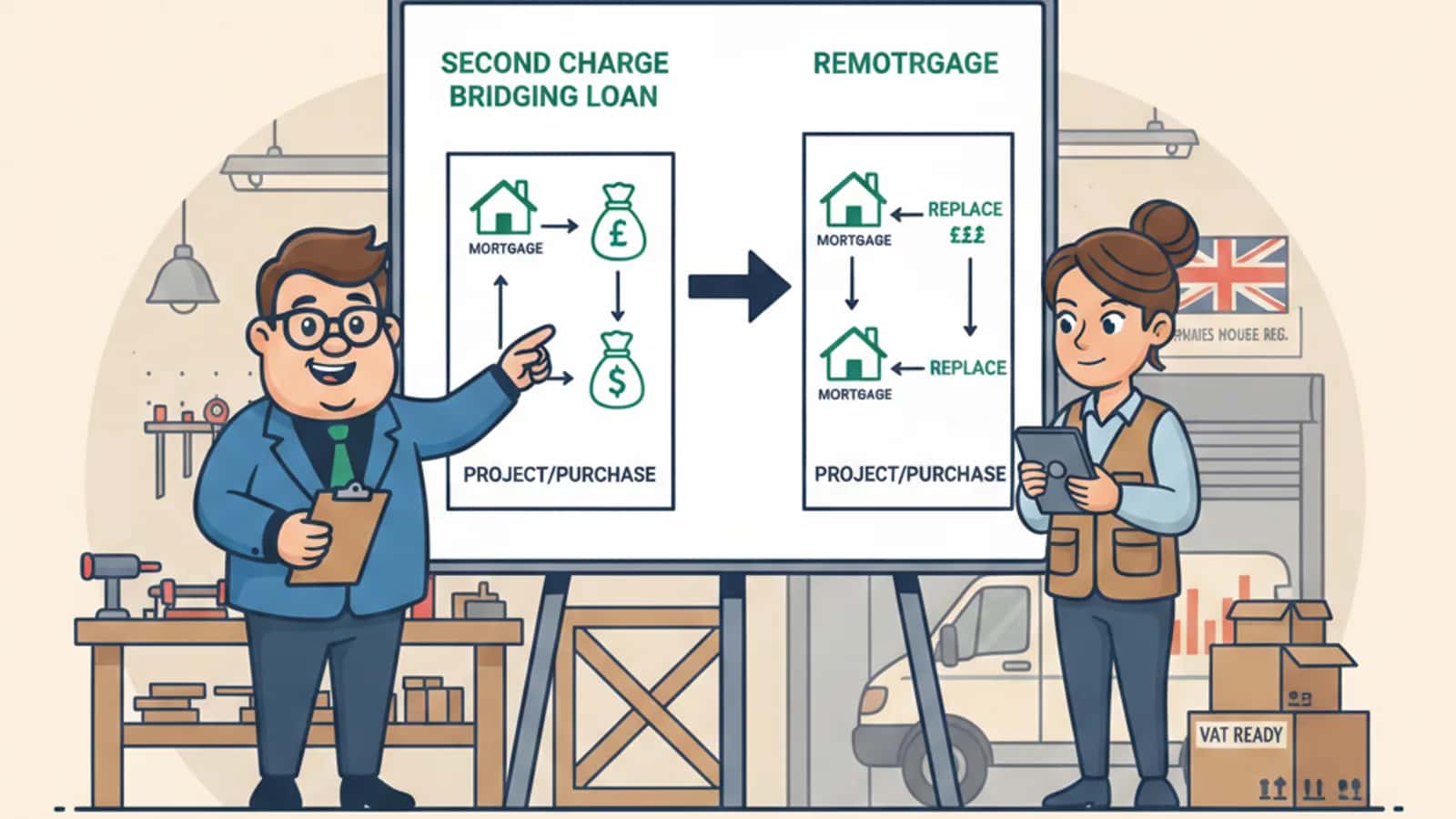
Second charge bridging loans beat remortgaging when speed matters more than cost. Remortgaging typically takes 4-8 weeks and involves credit checks, affordability assessments, and property valuations that can delay time-sensitive opportunities.
Which is right for you?
Choose second charge bridging when
- You need funds within 7-14 days
- Your current mortgage has favorable rates you want to keep
- Early repayment charges make remortgaging expensive
- Your credit situation has changed since your original mortgage
- The funding need is temporary (under 24 months)
Choose remortgaging when
- You have 6+ weeks available for the process
- You want the lowest possible long-term borrowing costs
- You're comfortable with affordability assessments and credit checks
- You need funding for more than 2 years
<div style="border: 1px solid #ddd; border-radius: 8px; padding: 20px; margin: 20px 0; background-color: #f9f9f9;"> <h3 style="margin-top: 0; color: #333;">Speed vs Cost Comparison</h3> <table style="width: 100%; border-collapse: collapse;"> <tr style="background-color: #f5f5f5;"> <th style="padding: 12px; text-align: left; border: 1px solid #ddd;">Factor</th> <th style="padding: 12px; text-align: left; border: 1px solid #ddd;">Second Charge Bridging</th> <th style="padding: 12px; text-align: left; border: 1px solid #ddd;">Remortgage</th> </tr> <tr> <td style="padding: 12px; border: 1px solid #ddd;">Timeline</td> <td style="padding: 12px; border: 1px solid #ddd;">7-14 days</td> <td style="padding: 12px; border: 1px solid #ddd;">4-8 weeks</td> </tr> <tr> <td style="padding: 12px; border: 1px solid #ddd;">Monthly rates</td> <td style="padding: 12px; border: 1px solid #ddd;">0.5% - 2.0%</td> <td style="padding: 12px; border: 1px solid #ddd;">0.3% - 0.8%</td> </tr> <tr> <td style="padding: 12px; border: 1px solid #ddd;">Credit checks</td> <td style="padding: 12px; border: 1px solid #ddd;">Flexible criteria</td> <td style="padding: 12px; border: 1px solid #ddd;">Full affordability</td> </tr> <tr> <td style="padding: 12px; border: 1px solid #ddd;">Early repayment charges</td> <td style="padding: 12px; border: 1px solid #ddd;">Avoided</td> <td style="padding: 12px; border: 1px solid #ddd;">May apply</td> </tr> </table> </div>
The decision often comes down to opportunity cost. Missing a property deal or auction purchase because of slow funding can cost more than paying higher bridging rates for 6-12 months.
Property investors particularly benefit from second charge bridging loans when they've built portfolios with competitive mortgage rates. Remortgaging the entire portfolio to access equity would reset all mortgages to current market rates, potentially increasing overall borrowing costs significantly.
How Much Can I Borrow With a Second Charge Bridging Loan
Second charge bridging loans typically allow combined borrowing of 60-80% loan-to-value across both your existing mortgage and the new bridging facility. The exact amount depends on your property value, existing mortgage balance, and the lender's risk appetite.
Most lenders offer facilities from £25,000 to £25 million, making second charge bridging suitable for both residential property owners and commercial developers. The key constraint is usually the combined loan-to-value ratio rather than absolute borrowing limits.
Factors affecting borrowing capacity
- Property type and location (residential properties typically achieve higher LTVs)
- Existing mortgage terms and payment history
- Your exit strategy strength
- Property condition and marketability
- Lender's current risk appetite
Some specialist lenders will consider higher LTVs up to 85% for strong borrowers with clear exit strategies. However, rates increase significantly above 75% combined LTV as lenders price in additional risk.
For business loans secured against property, second charge bridging can unlock substantial working capital without disturbing existing mortgage arrangements. This proves particularly valuable for established businesses with favorable commercial mortgage terms they want to preserve.
Second Charge Bridging Loan Interest Rates and Fees
Second charge bridging loan rates in 2026 typically range from 0.5% to 2.0% per month, with most borrowers paying 0.7% to 1.5% monthly depending on their risk profile and loan-to-value ratio. These rates reflect the higher risk second charge lenders accept by ranking behind the primary mortgage.
Rate factors
- Combined loan-to-value (lower LTV = lower rates)
- Property type and location
- Borrower experience and credit profile
- Exit strategy strength and timeline
- Loan size (larger loans often secure better rates)
Additional fees typically include
- Arrangement fee: 1-2% of loan amount
- Legal fees: £1,500-£3,500
- Valuation fee: £500-£2,000
- Exit fee: 0.5-1% (some lenders)
- Monthly administration fee: £50-£150
While these rates appear high compared to traditional mortgages, they reflect the speed and flexibility second charge bridging provides. The cost becomes justifiable when weighed against missed opportunities or the expense of alternative funding routes.
Some lenders offer retained interest products where monthly payments are added to the loan balance, improving cash flow for borrowers expecting lump sum exits through property sales or refinancing.
Can I Get a Second Charge Bridging Loan With Bad Credit
Second charge bridging lenders focus primarily on property equity and exit strategy rather than credit scores, making approval possible even with defaults, CCJs, or bankruptcy history. The property security provides the primary risk mitigation, not your credit profile.
Bad credit scenarios that may still qualify
- County Court Judgments (CCJs) over 12 months old
- Defaults on credit cards or personal loans
- Previous bankruptcy (discharged over 2 years)
- Mortgage arrears (if now resolved)
- Self-employed with limited income documentation
However, recent serious credit events will affect rates and terms. Lenders typically add 0.2-0.5% monthly to standard rates for borrowers with adverse credit, and may require lower loan-to-value ratios for additional security.
Factors that strengthen bad credit applications
- Substantial property equity (sub-60% combined LTV)
- Clear, achievable exit strategy within 12 months
- Recent credit improvement or issue resolution
- Strong property location and marketability
- Professional advice from experienced brokers
The key is demonstrating how you'll repay the loan regardless of past credit issues. Property sales, business cash flow, or refinancing plans must be realistic and well-documented.
For borrowers with poor credit business funding needs, second charge bridging often proves more accessible than unsecured business loans that rely heavily on credit scoring.
Second Charge Bridging Loan: How Long Do I Have to Repay
Second charge bridging loans typically offer terms from 1 to 24 months, with most borrowers choosing 6-18 month periods to align with their exit strategy timeline. Unlike traditional mortgages, these loans expect full capital repayment at term end, not ongoing monthly payments.
Common repayment scenarios:
- 1
Property sale
6-12 months for marketing and completion
- 2
Refinancing
3-6 months to arrange long-term finance
- 3
Business cash flow
12-24 months for project completion
- 4
Development projects
18-24 months including planning and build
Most lenders allow early repayment without penalties after an initial period (typically 3-6 months). This flexibility helps borrowers exit quickly when opportunities arise, reducing overall interest costs.
Extension options: If your original timeline proves optimistic, most lenders offer 6-12 month extensions subject to updated valuations and continued interest payments. However, extension fees (typically 0.5-1% of loan amount) and potentially higher rates apply.
The short-term nature means second charge bridging works best when you have a clear, time-bound exit strategy. Borrowers without definite repayment plans should consider longer-term alternatives like secured business loans that offer extended repayment periods.
Exit strategy planning checklist
- Realistic timeline with contingency buffer
- Market conditions assessment for property sales
- Alternative refinancing options identified
- Professional advisors (solicitors, estate agents) appointed
- Regular progress monitoring and lender updates
Second Charge Bridging Loan vs Personal Loan: What's the Difference
Second charge bridging loans use property security to offer much larger amounts and lower rates than personal loans, but require property ownership and carry repossession risk if you default. Personal loans rely on income and credit scoring without property security.
Key differences:
<div style="border: 1px solid #ddd; border-radius: 8px; padding: 20px; margin: 20px 0; background-color: #f9f9f9;"> <table style="width: 100%; border-collapse: collapse;"> <tr style="background-color: #f5f5f5;"> <th style="padding: 12px; text-align: left; border: 1px solid #ddd;">Factor</th> <th style="padding: 12px; text-align: left; border: 1px solid #ddd;">Second Charge Bridging</th> <th style="padding: 12px; text-align: left; border: 1px solid #ddd;">Personal Loan</th> </tr> <tr> <td style="padding: 12px; border: 1px solid #ddd;">Loan amounts</td> <td style="padding: 12px; border: 1px solid #ddd;">£25k - £25m+</td> <td style="padding: 12px; border: 1px solid #ddd;">£1k - £50k</td> </tr> <tr> <td style="padding: 12px; border: 1px solid #ddd;">Security required</td> <td style="padding: 12px; border: 1px solid #ddd;">Property charge</td> <td style="padding: 12px; border: 1px solid #ddd;">None (unsecured)</td> </tr> <tr> <td style="padding: 12px; border: 1px solid #ddd;">Approval speed</td> <td style="padding: 12px; border: 1px solid #ddd;">7-14 days</td> <td style="padding: 12px; border: 1px solid #ddd;">Same day - 7 days</td> </tr> <tr> <td style="padding: 12px; border: 1px solid #ddd;">Annual rates</td> <td style="padding: 12px; border: 1px solid #ddd;">6-24% equivalent</td> <td style="padding: 12px; border: 1px solid #ddd;">3-35% APR</td> </tr> <tr> <td style="padding: 12px; border: 1px solid #ddd;">Repayment</td> <td style="padding: 12px; border: 1px solid #ddd;">Lump sum at term</td> <td style="padding: 12px; border: 1px solid #ddd;">Monthly instalments</td> </tr> </table> </div>
Which is right for you?
Choose second charge bridging for
- Large funding requirements (£100k+)
- Property-related investments or purchases
- Short-term needs with lump sum exit strategy
- When you have substantial property equity
Choose personal loans for
- Smaller amounts under £50k
- No property to secure against
- Preference for monthly repayments
- Longer-term funding needs (3-7 years)
The property security in second charge bridging enables much larger borrowing amounts but creates repossession risk. Personal loans limit your liability to the loan amount but restrict borrowing capacity based on income multiples.
For property investors and business owners with substantial property equity, second charge bridging typically offers better value for significant funding needs despite higher monthly rates.
Do I Need to Tell My Main Mortgage Lender About a Second Charge
Most residential mortgage terms don't require notification about second charges, but you should check your specific mortgage conditions as some lenders include clauses requiring consent for additional borrowing secured against the property.
Typical mortgage clause variations
- No restriction: Many modern mortgages allow second charges without notification
- Notification required: Some lenders want to be informed but don't require consent
- Consent required: Older or specialist mortgages may need formal approval
The second charge lender's solicitor will review your mortgage terms during the legal process and advise if notification or consent is required. They'll also conduct Land Registry searches to confirm the existing mortgage details and ensure proper charge registration.
Practical considerations
- Most lenders discover second charges through routine portfolio reviews
- Notification rarely leads to problems if mortgage payments remain current
- Some lenders may contact you to understand the additional borrowing
- Consent refusal is uncommon unless you're in mortgage arrears
When problems might arise
- Existing mortgage payments become irregular
- Combined borrowing exceeds the lender's comfort level
- The second charge purpose conflicts with mortgage terms
- You're already in dispute with your primary lender
If your mortgage requires consent, the second charge lender can usually coordinate this as part of their legal process. Most primary mortgage lenders approve second charges when the borrower demonstrates ability to service both facilities.
For bridging loans for property chains, this notification issue rarely causes delays as the temporary nature of bridging finance poses minimal long-term risk to primary lenders.
Who Qualifies for a Second Charge Bridging Loan
Second charge bridging loan qualification focuses on three key areas: property equity, exit strategy, and ability to service interest payments during the loan term. Credit history matters less than these fundamental factors.
Essential qualification criteria
- Property ownership with sufficient equity (typically 25-40% minimum after both charges)
- Clear exit strategy within 24 months
- Ability to cover monthly interest payments
- Property in England, Wales, or Scotland (most lenders)
- Borrower age typically 21-80 years
Property requirements
- Residential, commercial, or mixed-use properties accepted
- Minimum property values usually £100k+
- Standard construction and good repair condition
- Clear legal title without major restrictions
- Adequate insurance coverage maintained
Exit strategy assessment: Lenders scrutinize how you'll repay the loan. Strong exit strategies include:
- Property sale with estate agent valuation and marketing plan
- Refinancing with mortgage broker confirmation of likely approval
- Business cash flow with financial projections and accountant verification
- Development completion with planning permissions and build contracts
Income and affordability: While less stringent than mortgage affordability tests, lenders verify you can cover:
- Monthly interest payments on the bridging loan
- Existing mortgage payments
- Basic living expenses or business operating costs
Self-employed borrowers often find second charge bridging more accessible than traditional mortgages as lenders focus on property security rather than complex income verification.
Common applicant profiles
- Property investors expanding portfolios
- Business owners accessing property equity for working capital
- Homeowners funding major renovations before refinancing
- Developers requiring short-term project finance
Second Charge Bridging Loan for Home Improvements: Is It Worth It
Second charge bridging loans for home improvements make financial sense when the renovation adds more value than the borrowing costs, or when you need to complete works before refinancing to access better long-term rates.
When it's worth considering
- Major renovations adding 20%+ property value
- Essential repairs required for remortgage approval
- Time-sensitive projects (planning permission expiry, seasonal work)
- Accessing equity for buy-to-let conversions or extensions
Alternative funding comparison: Before choosing bridging finance, consider:
- Personal loans: Lower rates but limited amounts
- Remortgaging: Cheapest long-term but slower and may require completed works
- Credit cards/overdrafts: Fast but expensive for large amounts
- Savings: No interest cost but depletes reserves
Project types that work well
- Loft conversions and extensions
- Kitchen and bathroom renovations
- Converting single homes to HMOs
- Essential structural repairs
- Energy efficiency improvements
The key is ensuring your contractor can complete works within the bridging loan term. Delays that require loan extensions can significantly increase costs and erode project profitability.
For substantial home improvements, second charge bridging often provides the speed and flexibility that traditional home improvement loans cannot match, particularly when refinancing forms part of the exit strategy.
How Long Does It Take to Get Approved for a Second Charge Bridging Loan
Second charge bridging loan approval typically takes 7-14 days from application to funds release, with experienced brokers and straightforward cases completing within a week. The process runs parallel legal and valuation tracks to minimize delays.
Typical timeline breakdown
- Day 1-2: Application submission and initial underwriting
- Day 3-5: Property valuation arranged and completed
- Day 4-7: Legal searches and documentation review
- Day 7-10: Final approval and loan documentation
- Day 10-14: Legal completion and funds release
Factors that speed up approval
- Complete documentation submitted upfront
- Experienced broker managing the process
- Standard residential property in good condition
- Clear exit strategy with supporting evidence
- Responsive solicitors on both sides
Common delay causes
- Incomplete financial information
- Complex property titles or lease issues
- Valuation access problems or surveyor availability
- Legal complications in mortgage deed reviews
- Missing documentation for exit strategy verification
Fast-track options: Some specialist lenders offer 3-5 day completion for:
- Repeat borrowers with established relationships
- Simple cases under 60% combined LTV
- Properties in prime locations with recent valuations
- Cash-out refinancing with clear exit strategies
Documents to prepare in advance
- Property deeds and mortgage statements
- Bank statements (3-6 months)
- Exit strategy evidence (sale agreements, refinance confirmations)
- Property insurance certificates
- Identity and address verification
For auction purchases requiring 28-day completion, second charge bridging loans provide sufficient time margin when arranged promptly after successful bidding.
Second Charge Bridging Loan Common Mistakes to Avoid
The most common mistake with second charge bridging loans is underestimating exit timeline requirements, leading to expensive extensions or forced property sales at below-market prices. Plan conservatively and build contingency time into your strategy.
Critical mistakes to avoid:
- 1
Unrealistic exit planning
- Assuming property sales complete within 3-6 months without market analysis
- Relying on single refinancing options without backup plans
- Ignoring seasonal market variations or economic uncertainty
- Failing to account for legal and administrative delays
- 2
Inadequate cost budgeting
- Focusing only on monthly rates while ignoring arrangement fees
- Underestimating legal and valuation costs
- Not budgeting for potential extension fees
- Forgetting ongoing property maintenance and insurance costs
- 3
Poor property selection
- Choosing properties in illiquid markets for short-term holds
- Ignoring property condition issues that affect refinancing
- Selecting properties with complex legal titles or lease problems
- Overlooking local market factors affecting sale prospects
- 4
Documentation failures
- Submitting incomplete financial information causing delays
- Failing to verify exit strategy claims with supporting evidence
- Not reviewing existing mortgage terms for second charge restrictions
- Inadequate insurance coverage for the increased borrowing
- 5
Lender selection errors
- Choosing lenders based solely on headline rates without considering service quality
- Not using experienced brokers familiar with second charge products
- Failing to verify lender track record for similar transactions
- Ignoring lender-specific criteria that may affect approval
Risk mitigation strategies
- Always plan for 6-month longer exit timelines than initially expected
- Maintain cash reserves for interest payments and unexpected costs
- Use experienced professionals (brokers, solicitors, valuers) throughout
- Regular progress monitoring and early communication with lenders about any issues
The short-term nature of bridging finance amplifies small mistakes into significant costs. Professional advice and conservative planning typically prove worthwhile investments.
Next steps
Second charge bridging loans offer property owners a powerful tool for raising funds without replacing their main mortgage, combining speed with substantial borrowing capacity for time-sensitive opportunities. While costs exceed traditional mortgages, the ability to preserve existing mortgage arrangements and access equity quickly often justifies the premium. For more short-term property funding guidance, browse our bridging loan guides.
Success depends on realistic exit planning, adequate cost budgeting, and choosing experienced lenders who understand the urgency that drives bridging finance decisions. The property security provides access to significant funding even for borrowers with credit challenges, making second charge bridging particularly valuable for property investors and business owners.
Ready to explore second charge bridging options? Check Eligibility Now with our 2 min check - no hard credit search required. Our specialist partners understand that timing matters in property and business opportunities, offering Fast Decision processes designed for borrowers who need certainty without delay.
Whether you're securing auction finance, funding refurbishment projects, or accessing working capital, second charge bridging loans provide the speed and flexibility that traditional lenders cannot match. The key is working with advisors who understand both the opportunities and risks involved in short-term property finance.
Further reading
Frequently asked questions
What Is a Second Charge Bridging Loan and How Does It Work?
A second charge bridging loan is short-term finance secured against your property that ranks behind your existing first charge mortgage. The lender registers a legal charge at the Land Registry, creating a secondary claim on your property if you default.
How Much Can I Borrow With a Second Charge Bridging Loan?
Second charge bridging loans typically allow combined borrowing of 60-80% loan-to-value across both your existing mortgage and the new bridging facility. The exact amount depends on your property value, existing mortgage balance, and the lender's risk appetite.
Can I Get a Second Charge Bridging Loan With Bad Credit?
Second charge bridging lenders focus primarily on property equity and exit strategy rather than credit scores, making approval possible even with defaults, CCJs, or bankruptcy history. The property security provides the primary risk mitigation, not your credit profile.
Do I Need to Tell My Main Mortgage Lender About a Second Charge?
Most residential mortgage terms don't require notification about second charges, but you should check your specific mortgage conditions as some lenders include clauses requiring consent for additional borrowing secured against the property.
Who Qualifies for a Second Charge Bridging Loan?
Second charge bridging loan qualification focuses on three key areas: property equity, exit strategy, and ability to service interest payments during the loan term. Credit history matters less than these fundamental factors.
How Long Does It Take to Get Approved for a Second Charge Bridging Loan?
Second charge bridging loan approval typically takes 7-14 days from application to funds release, with experienced brokers and straightforward cases completing within a week. The process runs parallel legal and valuation tracks to minimize delays.
Written by
The Funding Fred Editorial Team creates plain-English guides to help business owners understand funding options, eligibility, and application readiness before they compare finance options.
Reviewed by
UK business finance content reviewer
Robert reads our UK business finance guides before they go live, checking each one is accurate, easy to follow, and reflects how lending actually works today — not how a brochure says it should. He's listed on the FCA Register, approved as an SMF3 (AR) Executive Director at Switcha Limited, and connected to Lucky Growth Partners Ltd through its appointed representative relationship, so the regulated detail gets a properly qualified second read.
Sources
- Second Charge Bridging Loans - [2] Second Charge Bridging Loans - https://www.auracapital.co.uk/bridging-products/second-charge-bridging-loans [3] Is Second Charge Now Bigger Than Bridging - https://theintermediary.co.uk/2026/01/is-second-charge-now-bigger-than-bridging/ [4] Second Charge Bridging Loans - https://www.moneyhelpdesk.com/loans/bridging-loans/second-charge-bridging-loans/ [5] What Is A Second Charge Bridging Loan - https://www.bridgingloan.org.uk/blog/what-is-a-second-charge-bridging-loan [6] What Are Second Charge Bridging Loans - https://www.thecreditpeople.com/loans/what-are-second-charge-bridging-loans [7] 2nd 3rd Charge Bridging Loans - https://www.globalbridgingfinance.com/bridging-finance/2nd-3rd-charge-bridging-loans [8] What Is Bridge Loan - https://corporatefinanceinstitute.com/resources/commercial-lending/what-is-bridge-loan/ [9] What Are Second Charge Bridging Loans - https://www.commercialtrust.co.uk/news/what-are-second-charge-bridging-loans/ [10] Second Charge Bridging Loan - https://www.financenation.com/blog/second-charge-bridging-loan
- British Business Bank finance options
- GOV.UK business finance support