Catering Equipment Finance UK: Ovens, Refrigeration, Coffee Machines and Fit-Outs
Catering equipment finance UK covers ovens, refrigeration, coffee machines and fit-outs through hire purchase, finance lease, and operating lease options from £1,000 to £5 million. Most lenders provide decisions within 24-48 hours, with deposits from 0% available and repayment terms from 2-7 years depending on equipment type and business needs.
Quick answer
Catering equipment finance UK covers ovens, refrigeration, coffee machines and fit-outs through hire purchase, finance lease, and operating lease options from £1,000 to £5 million. Most lenders provide decisions within 24-48 hours, with deposits from 0% available and repayment terms from 2-7 years depending on equipment type and business needs.
Key takeaways
- Finance options include hire purchase (own the equipment), finance lease (flexible end-of-term options), and operating lease (short-term use)
- Approval decisions typically within 24-48 hours, with same-day approvals common for amounts under £25,000
- Deposits range from 0% to 20% depending on equipment type and business profile
- Coverage includes individual items (ovens, fridges, coffee machines) and complete kitchen fit-outs
- New businesses can access finance with a solid business plan, premises evidence, and relevant experience
- Tax benefits available through finance leases, with potential 100% deduction of lease payments
- Seasonal payment structures available to match cash flow patterns
- High approval rates reported, with some lenders achieving 95% acceptance
What Is Catering Equipment Finance and How Does It Work

Catering equipment finance spreads the cost of commercial kitchen equipment over monthly payments instead of requiring full upfront payment. You can finance ovens, refrigeration units, coffee machines, and complete fit-outs from £1,000 to £5 million through specialist lenders.
The process works through three main structures:
Hire Purchase (HP): You own the equipment after the final payment. Monthly payments include interest and capital repayment. Choose this if you want ownership and plan to keep equipment long-term.
Finance Lease: Lower monthly payments with flexible options at term end - upgrade, return, or purchase for a nominal fee. The lender technically owns the equipment during the lease period.
Operating Lease: Short-term rental arrangement, typically 2-3 years. Return the equipment at term end with no ownership option. Best for businesses wanting latest technology without long-term commitment.
Most applications require basic business information, three months' bank statements, and supplier quotes. Decisions typically come within 24-48 hours, with same-day approvals common for amounts under £25,000.
The equipment itself serves as security, reducing lender risk and improving approval chances. This makes catering equipment finance more accessible than unsecured business loans.
Catering Equipment Finance vs Buying Outright: Which Is Better
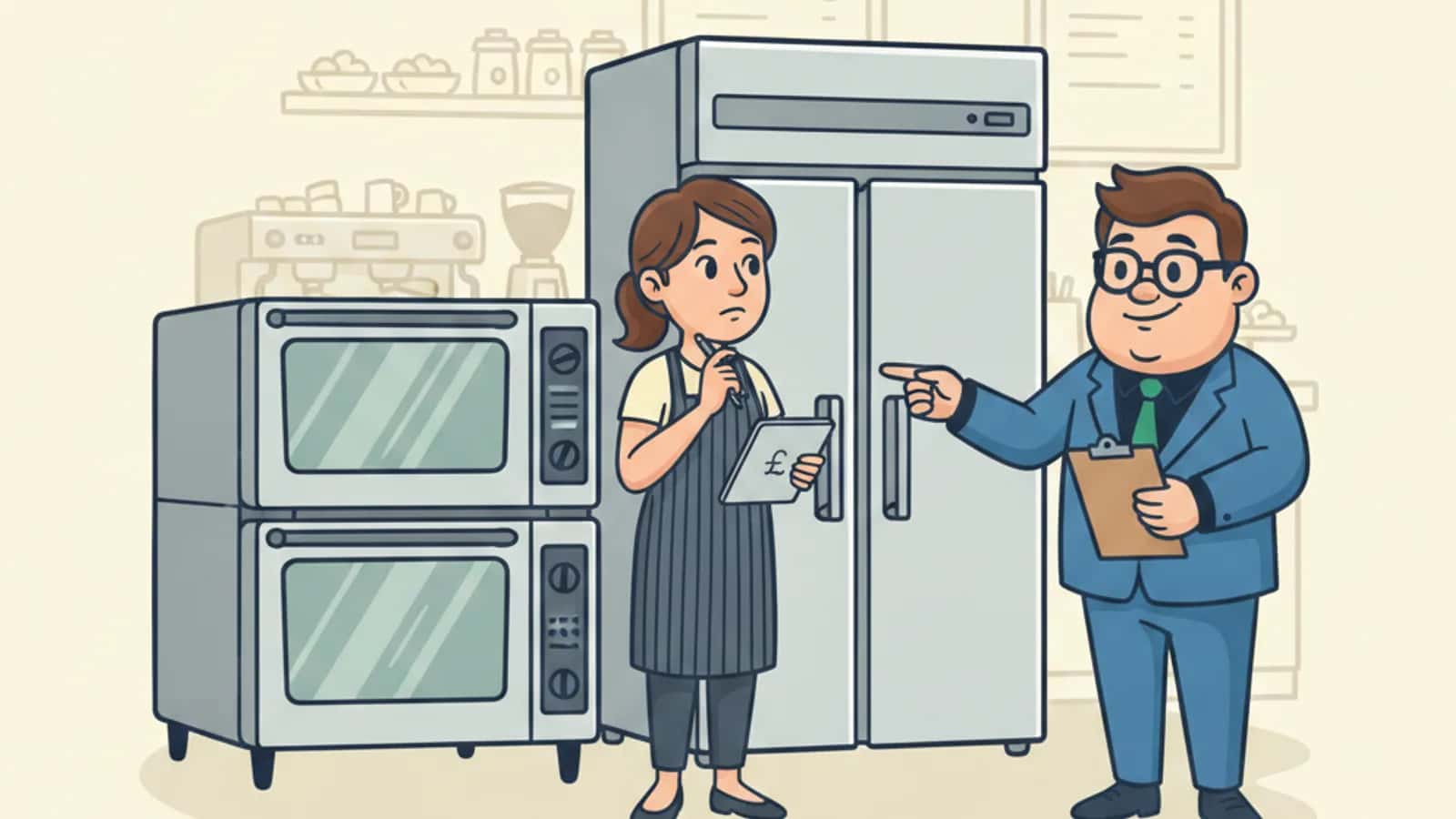
Finance preserves working capital while buying outright offers immediate ownership and no interest costs. The better choice depends on your cash flow, tax position, and equipment upgrade plans.
Which is right for you?
Choose Finance If
- Working capital is needed for stock, wages, or marketing
- You want to upgrade equipment regularly (every 3-5 years)
- Tax efficiency matters - lease payments are fully deductible
- Cash flow is seasonal or unpredictable
- You're expanding rapidly and need multiple equipment pieces
Choose Outright Purchase If
- You have surplus cash not needed elsewhere
- You plan to keep equipment for 7+ years
- Interest costs outweigh tax benefits
- You prefer simple ownership without monthly commitments
Real Example: A £30,000 commercial oven costs £30,000 upfront or around £550-650 monthly over 5 years through finance. The finance route preserves £30,000 for other business needs but costs £3,000-9,000 more in total depending on rates and structure.
Most successful catering businesses use a mix - financing major items like ovens and refrigeration while buying smaller equipment outright. This balances cash flow with ownership costs.
How Much Does It Cost to Finance Commercial Kitchen Ovens in the UK
Commercial oven finance typically costs 6-15% APR depending on oven type, business profile, and finance structure. A £20,000 combi oven financed over 5 years costs approximately £380-480 monthly.
Typical Monthly Costs
- £10,000 pizza oven: £190-240 monthly (5 years)
- £20,000 combi oven: £380-480 monthly (5 years)
- £35,000 range cooker: £665-840 monthly (5 years)
- £50,000 specialist oven: £950-1,200 monthly (5 years)
Factors Affecting Cost
- Business age: Established businesses get better rates than startups
- Credit profile: Strong credit reduces rates by 2-4%
- Deposit amount: Higher deposits lower monthly costs
- Oven age: New ovens get preferential rates vs used equipment
- Finance type: Operating leases cost less monthly but offer no ownership
Energy-efficient ovens may qualify for preferential rates as they reduce operational costs and demonstrate forward planning.
Get multiple quotes as rates vary significantly between lenders. Specialist catering finance providers often beat high street banks on both rates and approval speed.
Can I Get Finance for Used Catering Equipment
Yes, but used equipment finance has stricter criteria and higher rates than new equipment deals. Most lenders finance equipment up to 5-7 years old, provided it's from reputable manufacturers and in good condition.
Used Equipment Requirements
- Equipment age typically under 5-7 years
- Service history and maintenance records
- Independent valuation for items over £25,000
- Warranty or service contract preferred
- Photos showing current condition
Rate Differences
- New equipment: 6-12% APR
- Used equipment (2-3 years): 8-15% APR
- Used equipment (4-7 years): 12-20% APR
Best Candidates for Used Finance
- Branded equipment (Rational, Lincat, Blue Seal)
- Recently serviced with documentation
- Standard commercial models (not bespoke)
- Equipment with remaining manufacturer support
Choose used equipment finance if you need specific items urgently and new equivalents have long lead times. Many restaurants successfully finance quality used equipment to reduce startup costs while maintaining operational capability.
Avoid financing very old or unusual equipment as resale values are poor, making lenders reluctant to approve deals.
Best Catering Equipment Finance Providers UK
Specialist asset finance providers typically offer better rates and faster decisions than high street banks for catering equipment. Look for lenders with specific hospitality experience and flexible approval criteria.
Key Provider Types:
Specialist Asset Finance Companies: Focus exclusively on equipment finance. Often provide same-day decisions and understand catering business cycles. Higher approval rates for newer businesses.
Bank Asset Finance Divisions: Competitive rates for established businesses with strong credit. Slower decisions but potentially lower costs for large deals.
Manufacturer Finance: Equipment manufacturers often offer finance deals. Convenient but compare rates as they're not always competitive.
Broker Networks: Access multiple lenders through one application. Good for comparing options but add broker fees.
What Makes a Good Provider
- Decision speed under 48 hours
- Flexible deposit requirements (0-20%)
- Seasonal payment options
- Experience with your business type
- Transparent fee structure
- Strong post-approval support
Some lenders report approval rates up to 95% for catering equipment finance. This high acceptance reflects the equipment's security value and the essential nature of catering equipment to business operations.
For urgent equipment needs, consider using a specialist asset finance platform that compares multiple lenders through one application.
What's Included in a Commercial Kitchen Fit-Out
Commercial kitchen fit-outs encompass all equipment, installation, training, and compliance work needed for a fully operational kitchen. Finance packages can cover the complete project from design to handover.
Typical Fit-Out Components:
Cooking Equipment: Ovens, hobs, grills, fryers, salamanders Refrigeration: Walk-in coolers, prep fridges, freezers, display units Preparation: Work surfaces, sinks, prep tables, food processors Dishwashing: Commercial dishwashers, glasswashers, pot wash stations Ventilation: Extraction systems, canopies, air handling Installation: Gas, electric, water connections, commissioning Compliance: Health and safety certification, warranty coverage
Fit-Out Finance Benefits
- Single monthly payment covers everything
- Coordinated delivery and installation
- Warranty coverage across all equipment
- Training included in many packages
- Compliance certification handled by supplier
Typical Costs:
£15,000-35,000
Small cafe fit-out
£40,000-80,000
Restaurant kitchen
£100,000-300,000+
Large commercial kitchen
Choose fit-out finance if you're opening a new venue or completely refurbishing. The coordinated approach reduces project risk and provides single-point accountability for the entire installation.
Ensure your fit-out provider has relevant certifications and insurance. Poor installation can void equipment warranties and create compliance issues.
How Long Do Catering Equipment Finance Deals Last
Catering equipment finance terms typically range from 2-7 years depending on equipment type, cost, and business needs. Heavy-duty equipment like ovens and refrigeration commonly finance over 5-7 years, while smaller items may have 2-4 year terms.
Typical Term Lengths:
2-3 Years: Coffee machines, small prep equipment, POS systems 3-5 Years: Dishwashers, prep fridges, standard ovens 5-7 Years: Large ovens, walk-in fridges, complete fit-outs 7+ Years: Major installations, bespoke equipment systems
Factors Affecting Term Length
- Equipment expected lifespan
- Business cash flow capacity
- Depreciation rates
- Technology refresh cycles
- Lender risk assessment
Shorter Terms: Higher monthly payments but lower total cost and faster ownership Longer Terms: Lower monthly payments but higher total interest cost
Most restaurants choose 5-year terms as they balance monthly affordability with reasonable total costs. This matches typical equipment refresh cycles in busy commercial kitchens.
Consider equipment upgrade plans when choosing terms. If you'll want newer technology in 3-4 years, shorter terms or operating leases make more sense than 7-year hire purchase deals.
Do I Need a Deposit for Catering Equipment Finance
Deposits range from 0% to 20% depending on equipment type, business profile, and lender requirements. Many specialist providers offer 0% deposit options for established businesses with good credit.
Typical Deposit Requirements:
0% Deposit: Available for established businesses, new equipment, strong credit 10% Deposit: Standard requirement for most deals 15-20% Deposit: Startups, used equipment, weaker credit profiles 25%+ Deposit: Very high-risk applications or specialist equipment
Benefits of Higher Deposits
- Lower monthly payments
- Better interest rates
- Improved approval chances
- Reduced total finance cost
0% Deposit Advantages
- Preserves working capital
- Faster equipment acquisition
- No upfront cash requirement
- Easier cash flow management
When Deposits Are Required
- Startup businesses under 2 years trading
- Previous credit issues or defaults
- Used or specialist equipment
- High-value single items over £100,000
Choose deposit levels based on cash flow needs rather than just minimizing monthly costs. Preserving working capital often provides better business returns than reducing finance charges.
Some lenders offer flexible deposit timing - allowing payment over 2-3 months rather than upfront. This helps with cash flow while still securing better rates.
Catering Equipment Finance for Startups with No Credit History
Startups can access catering equipment finance by demonstrating business viability through detailed planning, relevant experience, and secured premises. Lenders focus more on business potential than credit history for asset-backed finance.
Startup Requirements
- Comprehensive business plan with financial projections
- Evidence of secured premises (lease agreement)
- Relevant industry experience or qualifications
- Detailed equipment quotes from suppliers
- Personal credit check (directors/owners)
- Usually 10-20% deposit required
Strengthening Your Application
- Show existing customer contracts or bookings
- Demonstrate industry experience through CVs
- Provide market research supporting demand
- Include cash flow forecasts showing repayment capacity
- Consider personal guarantees to reduce lender risk
Common Approval Factors
- Realistic financial projections
- Appropriate equipment for business type
- Secured trading location
- Relevant management experience
- Adequate working capital provision
Typical Startup Terms
- Higher interest rates (10-18% APR)
- Shorter initial terms (3-5 years)
- Required deposits (10-25%)
- Personal guarantees often needed
Many successful restaurants started with financed equipment. The key is demonstrating that equipment will generate sufficient revenue to cover payments while building business credit for future needs.
Consider starting with essential items only, then adding equipment as the business establishes trading history and improves credit profile.
What Happens If Catering Equipment Breaks Down During Finance
Equipment breakdown during finance periods is handled through warranty coverage, maintenance contracts, or insurance depending on the cause and finance agreement terms. The finance payments continue regardless of equipment condition.
Warranty Coverage
- New equipment typically includes 12-24 months manufacturer warranty
- Covers manufacturing defects and component failures
- Repair or replacement at no cost during warranty period
- Finance payments continue during repair/replacement
Extended Warranties
- Available for 3-7 years beyond manufacturer warranty
- Cover parts, labor, and sometimes temporary replacement
- Can be included in finance agreement
- Reduce business risk from major breakdowns
Maintenance Contracts
- Preventive maintenance and breakdown cover
- Priority response times (often 4-24 hours)
- Regular servicing to prevent failures
- Can be financed alongside equipment
Insurance Options
- Equipment insurance covers accidental damage
- Business interruption insurance covers lost revenue
- Some policies include temporary replacement equipment
Your Responsibilities
- Continue making finance payments
- Arrange repairs through appropriate channels
- Maintain equipment according to manufacturer guidelines
- Keep service records for warranty claims
Common Mistake: Assuming finance payments stop if equipment breaks. They don't - the finance agreement is separate from equipment performance.
Choose equipment with strong warranty coverage and consider maintenance contracts for critical items like ovens and refrigeration where breakdown severely impacts operations.
Equipment Finance or Lease: Which Is Better for Restaurants
Finance (hire purchase) suits restaurants planning long equipment ownership, while leasing works better for businesses wanting flexibility and regular upgrades. The choice depends on ownership goals, cash flow, and technology refresh needs.
Which is right for you?
Choose Equipment Finance (Hire Purchase) If
- You want to own equipment after payments
- Planning to keep equipment 5+ years
- Prefer building business assets
- Want freedom to modify or relocate equipment
- Don't need regular technology updates
Choose Leasing If
- You want lower monthly payments
- Technology changes rapidly in your equipment type
- You prefer operational expense treatment for accounting
- Want flexibility to upgrade or return equipment
- Tax efficiency from 100% deductible payments matters
Cost Comparison Example (£30,000 Combi Oven):
Hire Purchase (5 years): £580/month, own after 60 payments Finance Lease (5 years): £520/month, flexible end options Operating Lease (3 years): £450/month, return equipment
Restaurant-Specific Considerations
- High-use equipment benefits from ownership (control over maintenance)
- Technology items (POS, coffee machines) suit leasing for regular updates
- Core equipment (ovens, fridges) often better financed for ownership
- Seasonal businesses benefit from lease payment flexibility
Most successful restaurants use both - financing core equipment for ownership while leasing technology and specialty items for flexibility.
The tax implications vary by business structure, so consult your accountant about the most tax-efficient approach for your situation.
Catering Equipment Finance Bad Credit Options
Bad credit doesn't prevent catering equipment finance, but it increases costs and requires stronger applications. Specialist lenders focus on current business performance rather than past credit issues.
Bad Credit Lender Requirements
- Detailed explanation of previous credit issues
- Evidence issues are resolved
- Strong current trading performance
- Higher deposits (15-25% typical)
- Personal guarantees often required
- Current bank statements showing stability
Rate Impact
- Good credit: 6-12% APR
- Fair credit: 10-16% APR
- Poor credit: 15-25% APR
- Very poor credit: 20-35% APR
Improving Approval Chances
- Choose newer, branded equipment with strong resale values
- Provide comprehensive business accounts
- Show consistent revenue and profit trends
- Offer higher deposits to reduce lender risk
- Consider shorter terms to reduce total exposure
Alternative Options
- Guarantor finance (third party guarantees payments)
- Asset refinance (if you own other equipment)
- Rent-to-buy agreements (higher costs but easier approval)
- Supplier finance schemes (often more flexible)
Common Credit Issues Accepted
- Satisfied defaults over 12 months old
- County Court Judgments (CCJs) under £5,000
- Previous late payments if now resolved
- Debt management plans that are current
For businesses with bad credit asset finance needs, specialist lenders often provide solutions when banks decline applications.
Focus on demonstrating current business strength rather than explaining past problems. Lenders want confidence in repayment ability, not perfect credit history.
How to Get Approved for Commercial Refrigeration Finance Quickly
Fast approval for commercial refrigeration finance requires complete documentation, realistic applications, and choosing lenders with streamlined processes. Same-day decisions are possible for amounts under £25,000 with the right approach.
Fast-Track Application Requirements
- Complete supplier quotes with specifications
- Three months' business bank statements
- Latest business accounts (if trading over 12 months)
- Directors' identification and address proof
- Business registration documents
Speed-Up Strategies
- Apply online rather than paper applications
- Use specialist catering equipment lenders
- Ensure all documents are clear and complete
- Respond quickly to any lender queries
- Have backup options ready if declined
Same-Day Approval Factors
- Application under £25,000
- Established business (2+ years trading)
- Standard equipment from known manufacturers
- Clean credit history
- Complete documentation provided
Typical Decision Timeframes
- Under £10,000: Same day possible
- £10,000-£25,000: 24-48 hours typical
- £25,000-£50,000: 2-5 working days
- Over £50,000: 3-10 working days
Common Delays
- Missing or unclear documentation
- Non-standard equipment requiring valuations
- Credit issues requiring manual review
- Complex business structures
- Incomplete supplier information
Refrigeration-Specific Considerations
- Energy efficiency ratings can improve terms
- Installation requirements may need coordination
- Warranty and service support important for approval
- Temperature monitoring systems may be required
Choose suppliers who regularly work with finance companies as they understand lender requirements and can provide appropriate documentation quickly.
What Credit Score Do I Need for Catering Equipment Finance
Most catering equipment finance approvals focus on business performance rather than personal credit scores, but directors typically need scores above 550 for standard rates. Scores below 400 may require specialist bad credit lenders.
Credit Score Bands
- 750+ (Excellent): Best rates, 0% deposits available, fast approval
- 650-749 (Good): Standard rates, low deposits, straightforward approval
- 550-649 (Fair): Slightly higher rates, 10-15% deposits typical
- 400-549 (Poor): Specialist lenders, 15-25% deposits, higher rates
- Under 400 (Very Poor): Limited options, guarantors may be required
Business Credit Factors (Often More Important)
- Trading history and profitability
- Bank account conduct
- Existing credit commitments
- Industry experience
- Business plan quality
Improving Credit for Better Terms
- Pay all bills on time for 6+ months before applying
- Reduce credit card balances below 30% of limits
- Register on electoral roll at business address
- Check credit reports for errors and dispute them
- Avoid multiple credit applications in short periods
Credit Checks in Applications
- Initial soft search (no credit file impact)
- Full search only after preliminary approval
- Business credit checks for limited companies
- Personal guarantor checks if required
No Credit History Solutions
- Provide detailed business plans and projections
- Offer higher deposits to reduce lender risk
- Use personal assets as additional security
- Consider guarantor arrangements
- Start with smaller amounts to build credit
Many successful catering equipment finance deals approve with fair credit scores when supported by strong business fundamentals and appropriate deposits.
Next steps
Catering equipment finance UK provides flexible funding for ovens, refrigeration, coffee machines and fit-outs without depleting working capital. With approval rates up to 95% and decisions within 24-48 hours, businesses can acquire essential equipment quickly through hire purchase, finance lease, or operating lease structures. For more equipment funding comparisons and practical guidance, browse our asset finance guides.
The key to successful applications lies in choosing appropriate finance types for your needs - hire purchase for ownership, finance leases for flexibility, and operating leases for short-term requirements. Deposits from 0% are available for established businesses, while startups typically need 10-20% deposits plus solid business plans.
Most importantly, preserve working capital for operational needs while building business assets through structured payments. Whether you need a single oven or complete kitchen fit-out, specialist lenders understand catering business cycles and offer terms that match your cash flow patterns.
Ready to explore your options? Check eligibility now through our specialist partner panel - no hard credit check to start, with decisions that match your timeline and deposit flexibility that works for your business.
Further reading
- how equipment leasing tax and accounting basics for uk smes works
- costs and eligibility for cnc and production upgrades
- guide to plant and machinery finance for uk construction businesses
- gym and fitness equipment finance uk leasing machines rigs and studio options
- how asset finance for franchises funding fit outs vehicles and required works
Frequently asked questions
What Is Catering Equipment Finance and How Does It Work?
Catering equipment finance spreads the cost of commercial kitchen equipment over monthly payments instead of requiring full upfront payment. You can finance ovens, refrigeration units, coffee machines, and complete fit-outs from £1,000 to £5 million through specialist lenders.
How Much Does It Cost to Finance Commercial Kitchen Ovens in the UK?
Commercial oven finance typically costs 6-15% APR depending on oven type, business profile, and finance structure. A £20,000 combi oven financed over 5 years costs approximately £380-480 monthly.
Can I Get Finance for Used Catering Equipment?
Yes, but used equipment finance has stricter criteria and higher rates than new equipment deals. Most lenders finance equipment up to 5-7 years old, provided it's from reputable manufacturers and in good condition.
What's Included in a Commercial Kitchen Fit-Out?
Commercial kitchen fit-outs encompass all equipment, installation, training, and compliance work needed for a fully operational kitchen. Finance packages can cover the complete project from design to handover.
How Long Do Catering Equipment Finance Deals Last?
Catering equipment finance terms typically range from 2-7 years depending on equipment type, cost, and business needs. Heavy-duty equipment like ovens and refrigeration commonly finance over 5-7 years, while smaller items may have 2-4 year terms.
Do I Need a Deposit for Catering Equipment Finance?
Deposits range from 0% to 20% depending on equipment type, business profile, and lender requirements. Many specialist providers offer 0% deposit options for established businesses with good credit.
Written by
The Funding Fred Editorial Team creates plain-English guides to help business owners understand funding options, eligibility, and application readiness before they compare finance options.
Reviewed by
UK business finance content reviewer
Robert reads our UK business finance guides before they go live, checking each one is accurate, easy to follow, and reflects how lending actually works today — not how a brochure says it should. He's listed on the FCA Register, approved as an SMF3 (AR) Executive Director at Switcha Limited, and connected to Lucky Growth Partners Ltd through its appointed representative relationship, so the regulated detail gets a properly qualified second read.
Sources
- Catering Equipment Finance [2] Catering Equipment Finance - https://www.assetfi.co.uk/catering-equipment-finance [3] Hospitality - https://www.assetfi.co.uk/sectors/hospitality [4] Catering Finance - https://westwon.co.uk/catering-finance/ [5] Catering - https://www.gableassetfinance.co.uk/business-sectors/catering/
- British Business Bank finance options
- GOV.UK business finance support