Gym and Fitness Equipment Finance UK: Leasing Machines, Rigs and Studio Fit-Outs
Gym and fitness equipment finance in the UK allows fitness businesses to acquire treadmills, weight machines, rigs, and complete studio fit-outs through hire purchase or finance lease arrangements from £1,000 to £5 million.
Quick answer
Gym and fitness equipment finance in the UK allows fitness businesses to acquire treadmills, weight machines, rigs, and complete studio fit-outs through hire purchase or finance lease arrangements from £1,000 to £5 million. Most specialist lenders offer 36-60 month terms with deposit options from 0% and approval decisions within hours, making equipment acquisition faster than traditional bank loans.
Key takeaways
- Finance lease and hire purchase options available for all gym equipment types from £1k to £5m
- Approval rates reach 96% with decisions processed in as little as 2 hours for urgent equipment needs
- Lease terms typically range from 36-60 months with flexible deposit options including 0% down
- 100% tax allowable payments help preserve working capital for marketing and operations
- Equipment covered includes cardio machines, weight equipment, functional training rigs, and full studio fit-outs
- Specialist partners understand fitness industry cash flow patterns and seasonal variations
- Upgrade options often included at lease end to maintain competitive equipment standards
- Both startups and established gyms can access financing with tailored approval criteria
Commercial Gym Equipment Finance: Lease, Hire Purchase or Loan?
Commercial gym equipment finance is not one product. A finance lease prioritises use and predictable payments, hire purchase leads to ownership after the final payment, and a business loan gives the widest freedom over what you buy. Compare the total payable, deposit, end-of-term position and early-settlement terms rather than choosing on the monthly figure alone.
Finance lease
- Usually fits
- Studios that expect to refresh equipment
- Ownership
- The funder owns the equipment during the lease
- Cash-flow consideration
- Often preserves upfront cash, but check end-of-term options
Hire purchase
- Usually fits
- Established gyms keeping machines for their working life
- Ownership
- Ownership transfers after the agreement and any option fee
- Cash-flow consideration
- A deposit may reduce borrowing, while payments build towards ownership
Business loan
- Usually fits
- Mixed fit-outs including equipment and other costs
- Ownership
- The business buys the assets directly
- Cash-flow consideration
- Flexible use of funds, but equipment may not be the lender's main security
What is Gym Equipment Leasing and How Does it Work in the UK
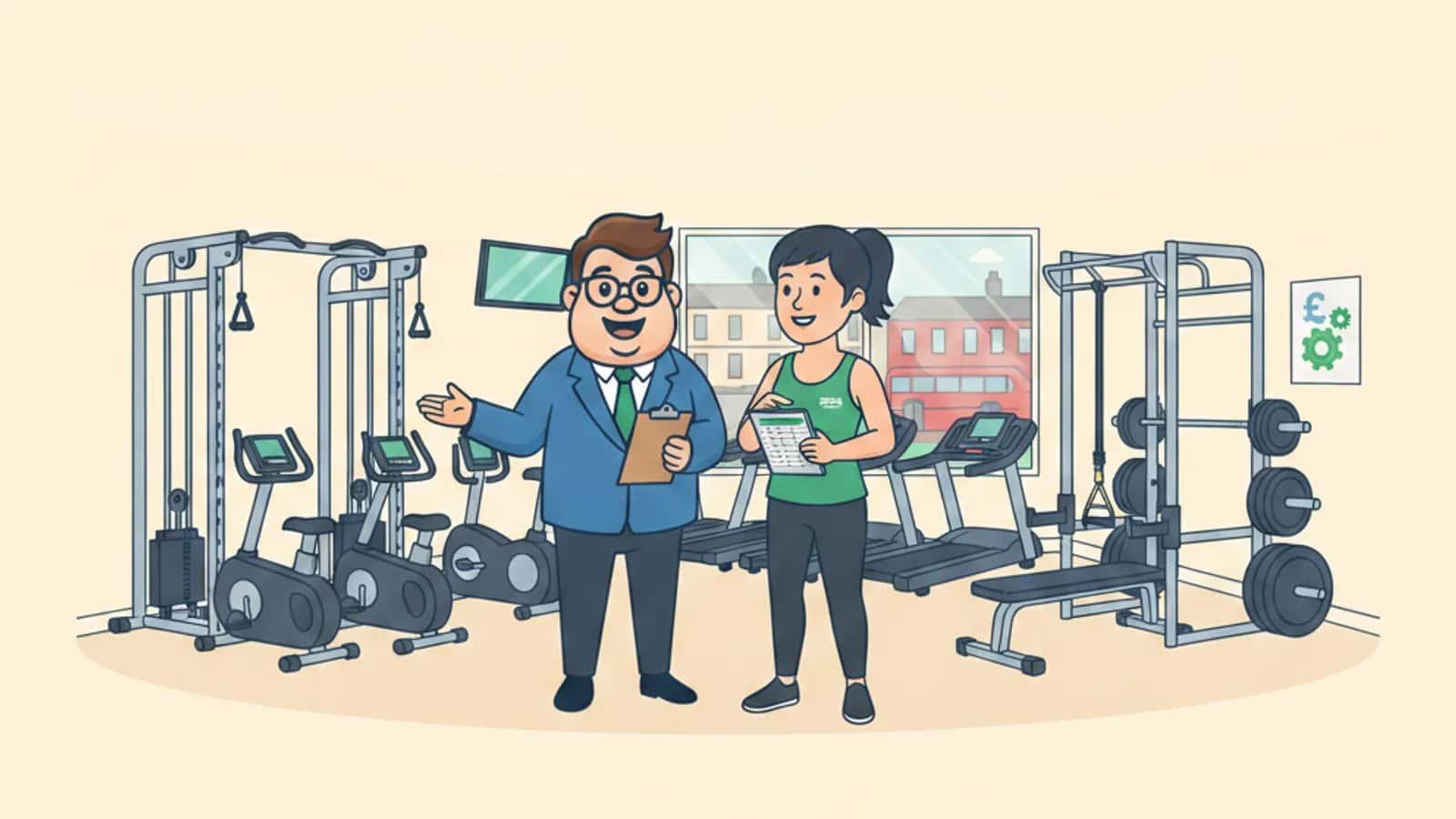
Gym equipment leasing allows fitness businesses to acquire machines, rigs, and studio equipment through monthly payments instead of upfront purchase. The lender buys the equipment and rents it to the gym over an agreed term, typically 36-60 months.
Two main structures dominate the UK market:
Finance Lease: The gym uses the equipment but doesn't own it. At lease end, options include returning equipment, extending the lease for a nominal fee, or purchasing at fair market value. Payments are 100% tax deductible.
Hire Purchase: The gym gains ownership after making all payments plus a final balloon payment (usually £1). Higher monthly costs but ownership transfers automatically at term end.
The process works like this: gym selects equipment, chooses a finance partner, completes a 2-minute eligibility check with no hard credit search, receives approval (often within hours), and equipment gets delivered with payments starting immediately.
Choose finance lease if cash flow is tight and you want lower monthly payments. Choose hire purchase if you want guaranteed ownership and can handle slightly higher monthly costs.
Most lenders require basic trading history (6-12 months) but some specialist partners work with startups using personal guarantees and business plans.
How Much Does it Cost to Lease a Treadmill or Weight Machine
Monthly lease costs depend on equipment value, lease term, deposit, and finance structure. A £5,000 commercial treadmill typically costs £120-180 per month over 36 months with a 20% deposit.
Typical monthly costs by equipment type
- Commercial treadmill (£4,000-8,000): £95-200/month
- Multi-station weight machine (£3,000-6,000): £70-150/month
- Functional training rig (£8,000-15,000): £190-380/month
- Complete cardio suite (£25,000-50,000): £600-1,250/month
Cost factors that change payments
- Deposit amount: 0% deposits increase monthly costs by 15-25%
- Lease term: 60-month terms reduce payments by 20-30% vs 36 months
- Equipment age: New equipment gets better rates than used
- Credit profile: Strong trading history reduces rates by 1-3%
Finance lease typically costs 10-15% less monthly than hire purchase because you don't gain automatic ownership. However, hire purchase builds an asset on your balance sheet.
Common mistake: Focusing only on monthly cost. Factor in total cost over the lease term, tax benefits, and cash flow impact on other business areas.
For urgent equipment replacement after breakdowns, some specialist lenders offer same-day approvals with equipment delivered within 48 hours, though rates may be 2-4% higher for express service.
Gym Equipment Lease vs Buy: Which is Better Financially
Leasing typically makes more financial sense for most UK gyms because it preserves working capital, provides tax benefits, and matches payments to equipment usage. Buying outright only works better when you have excess cash and plan to use equipment for 7+ years.
Leasing advantages
- Preserves £10,000s in working capital for marketing and operations
- 100% tax allowable payments reduce taxable profits
- Fixed monthly costs aid cash flow planning
- Upgrade options keep equipment current
- No obsolescence risk on technology-heavy cardio equipment
Buying advantages
- Lower total cost if equipment lasts 7+ years
- Full ownership and asset value on balance sheet
- No monthly payment obligations
- Freedom to modify or sell equipment
Which is right for you?
Choose leasing if
Cash flow is important, you want latest equipment, or you're expanding rapidly. Most successful gym chains lease 70-80% of equipment to maintain flexibility.
Choose buying if
You have excess cash, equipment is simple (free weights), or you plan to use machines for 8+ years without upgrades.
The fitness industry's rapid technology changes make leasing particularly attractive for cardio equipment with touchscreens, connectivity features, and software updates that become obsolete within 5-7 years.
Can You Lease a Full Home Gym Setup or Rig
Yes, you can lease complete home gym setups including functional training rigs, though minimum finance amounts typically start at £1,000-3,000 depending on the lender. Home gym leasing works best for high-value installations (£5,000+) where monthly payments make premium equipment affordable.
Typical home gym lease packages
- Basic home setup (£3,000-5,000): Multi-gym, treadmill, weights
- Premium home gym (£8,000-15,000): Commercial-grade cardio, full rig, flooring
- Professional home studio (£15,000-30,000): Complete fit-out with mirrors, sound system, specialized equipment
Home gym leasing considerations
- Personal guarantees usually required (no business trading history)
- Equipment must be new or nearly new (most lenders won't finance used home equipment)
- Installation and delivery often included in finance package
- Insurance requirements may be higher for home installations
Functional training rigs specifically work well for leasing because they're modular systems costing £5,000-25,000. Rigs qualify for business asset finance if you're a personal trainer operating from home or running small group sessions.
Choose home gym leasing if: You want commercial-quality equipment but lack £10,000+ upfront cash, you're a fitness professional using equipment for business, or you prefer predictable monthly costs.
Most specialist fitness finance companies handle home installations, though approval criteria focus more heavily on personal credit scores and income verification than business asset finance.
Best Gym Equipment Leasing Companies UK
The UK's leading gym equipment finance specialists include Grenke, Drax Fitness Finance, Admiral Leasing, and Coates Finance, each offering different strengths for equipment types and business sizes. Choose based on your specific equipment needs and approval speed requirements.
Top specialist lenders by strength:
Grenke: Best for established gyms needing £10,000+ equipment packages. Offers 36-60 month terms with competitive rates for businesses with 2+ years trading history.
Drax Fitness Finance: Highest approval rates (96%) with 2-hour decision times. Specializes in urgent equipment replacement and startup gym finance.
Admiral Leasing: Strongest for complete fit-out projects including working capital. Handles complex multi-element packages combining equipment, installation, and cash flow support.
Coates Finance: Best for diverse equipment types beyond fitness. Offers hire purchase, finance lease, and asset refinance options with flexible structures.
MAF Finance Group: Focuses on hospitality and leisure sector with understanding of seasonal cash flows typical in fitness businesses.
Comparison factors when choosing
- Approval speed: 2 hours (Drax) vs 2-5 days (traditional lenders)
- Minimum amounts: £1,000 (most specialists) vs £10,000+ (banks)
- Deposit flexibility: 0% available vs 10-30% required
- Equipment scope: Fitness-only vs all asset types
For urgent equipment needs (machine breakdowns, contract wins), prioritize Drax or other specialists offering same-day decisions. For planned expansions, Grenke and Admiral often provide better rates with longer approval timescales.
Most gym equipment suppliers have preferred finance partners, but comparing multiple options through an asset finance platform typically yields better terms than going direct to a single lender.
What Happens if Gym Equipment Breaks During Lease
Equipment breakdowns during lease periods are handled differently depending on whether it's mechanical failure, accidental damage, or normal wear and tear. The lease agreement continues regardless of equipment condition, but insurance and warranty provisions determine repair responsibilities.
Mechanical failure scenarios
- Manufacturer warranty period: Supplier handles repairs at no cost, lease payments continue
- Post-warranty mechanical issues: Lessee (gym) responsible for repair costs unless comprehensive insurance covers it
- Total equipment failure: Insurance claim may settle outstanding lease balance
Insurance typically covers
- Accidental damage from misuse
- Theft or vandalism
- Fire, flood, and other insured perils
- Some policies include mechanical breakdown after warranty expires
What doesn't stop lease payments
- Equipment becoming obsolete
- Gym closing or relocating
- Mechanical problems (unless total loss insurance claim)
- Changes in business needs
Protective measures
- Comprehensive equipment insurance (usually required by lender)
- Extended warranty options through equipment supplier
- Maintenance contracts for complex cardio equipment
- Understanding total loss vs repair thresholds in insurance policy
If equipment becomes unrepairable: Insurance settlement typically pays outstanding lease balance. Any surplus goes to the gym (hire purchase) or stays with finance company (finance lease).
Common mistake: Assuming lease payments stop when equipment breaks. Budget for insurance premiums (typically 2-4% of equipment value annually) and maintenance contracts on high-use cardio machines.
Some specialist fitness lenders offer replacement equipment programs where they provide temporary machines while repairs are completed, though this service typically costs extra.
How Long are Typical Gym Equipment Lease Terms
Gym equipment lease terms in the UK typically range from 36 to 60 months, with 48 months being the most common choice for balancing affordable monthly payments with reasonable total costs. Shorter terms mean higher monthly payments but lower total cost and faster ownership.
Standard term options:
- 1
36 months
Highest monthly payments, lowest total cost, fastest path to ownership/upgrade
- 2
48 months
Most popular balance of payment size and total cost
- 3
60 months
Lowest monthly payments, highest total cost, longer commitment
Term selection factors
- Equipment type: Cardio machines (shorter terms due to technology changes) vs weights (longer terms acceptable)
- Cash flow needs: Tight monthly budgets favor longer terms
- Technology risk: Equipment with software/connectivity needs shorter terms
- Business maturity: Established gyms can handle shorter terms, startups often need longer
Monthly payment impact by term: £10,000 equipment package:
- 36 months: ~£320/month
- 48 months: ~£250/month
- 60 months: ~£210/month
Which is right for you?
Choose shorter terms if
You want to upgrade equipment regularly, have strong cash flow, or are financing technology-heavy cardio equipment that becomes obsolete quickly.
Choose longer terms if
Monthly cash flow is tight, you're a startup gym, or you're financing basic equipment like free weights and racks that don't become obsolete.
Some lenders offer flexible terms between standard options (e.g., 42 or 54 months) to hit specific monthly payment targets, particularly for larger equipment packages where small term adjustments significantly impact monthly costs.
Edge case: Equipment expected to last 10+ years (basic strength equipment) may justify longer terms, while cardio equipment with touchscreens typically works best on 36-48 month terms due to rapid technology advancement.
Can You Lease Commercial Gym Studio Fit-Outs
Yes, commercial gym studio fit-outs including flooring, mirrors, sound systems, lighting, and complete facility infrastructure can be financed through specialist asset finance lenders. Fit-out finance typically covers £15,000 to £500,000+ projects with terms matching equipment leasing.
Fit-out components typically financed
- Specialized flooring (rubber, sprung, turf areas)
- Mirror installations and wall systems
- Professional sound and lighting systems
- Reception desks and retail fixtures
- Changing room equipment and lockers
- HVAC and ventilation systems specific to gym use
Fit-out finance structures
- Asset finance: For removable equipment and fixtures
- Improvement loans: For permanent installations like flooring
- Combined packages: Equipment + fit-out in single agreement
- Working capital element: Cash for labor and soft costs
Project finance approach: Many specialist lenders treat gym fit-outs as complete project finance, funding equipment purchase, installation costs, and providing working capital for the setup period before revenue starts.
Approval considerations
- Detailed project costings required
- Equipment suppliers often need pre-approval
- Installation timeline affects fund release schedule
- Business plan showing post-fit-out revenue projections
Choose fit-out finance if: You're opening a new gym, relocating, or doing major renovations where upfront costs exceed available cash. Most successful gym openings preserve cash for marketing and initial operating losses rather than spending all capital on fit-out.
Timeline: Fit-out finance approval typically takes 3-7 days vs 2-24 hours for simple equipment finance due to project complexity and higher amounts involved.
Specialist fitness finance companies understand gym fit-out requirements better than general commercial lenders, often providing guidance on cost-effective equipment selection and layout optimization.
Is Leasing Gym Equipment Tax Deductible for Small Gyms
Gym equipment leasing is 100% tax allowable for UK businesses, meaning lease payments can be fully deducted against taxable profits in the year they're paid. This provides significant cash flow advantages compared to purchasing equipment outright.
Tax treatment by finance type
- Finance lease: 100% of payments deductible as operating expenses
- Hire purchase: Depreciation and interest portions deductible, but spread over equipment's useful life
- Outright purchase: Capital allowances available but claimed over multiple years
Tax efficiency example: £24,000 annual lease payments at 25% corporation tax rate = £6,000 annual tax saving, effectively reducing lease cost to £18,000 per year.
Additional tax benefits
- Immediate expense recognition improves cash flow
- Reduces taxable profit in equipment acquisition year
- No capital allowance calculations required
- Payments count as allowable business expenses for VAT registered businesses
Tax planning considerations
- Lease payments must be for genuine business use
- Equipment must be used primarily for business purposes (80%+ recommended)
- Personal use portions aren't deductible
- Timing of payments affects which tax year gets the deduction
For small gyms specifically: The immediate tax deduction often provides better cash flow than capital allowances on purchased equipment, particularly in profitable years where reducing taxable income has immediate benefit.
Professional advice recommended: While lease payments are generally 100% deductible, complex arrangements or mixed personal/business use should be reviewed with an accountant to ensure compliance and optimization.
This tax efficiency, combined with cash flow preservation, makes leasing particularly attractive for profitable small gyms that would otherwise face large tax bills on equipment purchases.
What Equipment is Hardest to Find on Lease
Specialized rehabilitation equipment, custom-built installations, and very low-value items (under £1,000) are typically hardest to finance through standard gym equipment leasing. Most mainstream fitness equipment is readily available for lease.
Difficult to lease categories
- Medical/rehabilitation equipment: Requires specialized lenders familiar with healthcare regulations
- Custom-built installations: One-off rigs or installations without resale value
- Very low amounts: Sub-£1,000 items don't meet minimum finance thresholds
- Used equipment over 5 years old: Limited residual value concerns lenders
- Niche sports equipment: Specialized items for specific sports with limited market appeal
Easily financed equipment
- Standard cardio machines (treadmills, bikes, ellipticals)
- Commercial weight machines and free weights
- Functional training equipment and rigs
- Group exercise equipment (spin bikes, rowing machines)
- Complete gym packages from recognized manufacturers
Workarounds for difficult equipment
- Bundle approach: Combine hard-to-finance items with mainstream equipment in larger packages
- Specialist lenders: Some focus on medical or rehabilitation equipment specifically
- Higher deposits: Offering 30-50% deposits can make unusual equipment financeable
- Shorter terms: 24-36 month terms reduce lender risk on specialized items
Equipment age considerations: Most lenders prefer equipment under 2 years old for finance lease, though hire purchase may accept older equipment with higher deposits.
Regional variations: Equipment popular in specific areas (e.g., outdoor fitness equipment in certain climates) may be harder to finance due to limited resale markets.
Solution approach: Work with equipment suppliers who have established relationships with specialist finance partners familiar with your specific equipment type rather than approaching general asset finance lenders directly.
Do You Need Insurance When Leasing Fitness Machines
Yes, comprehensive insurance is typically mandatory when leasing gym equipment, covering theft, damage, fire, and public liability. The lender retains ownership during lease periods and requires protection of their asset through adequate insurance coverage.
Required insurance types
- Asset protection: Covers theft, fire, flood, vandalism of leased equipment
- Public liability: £2-5 million coverage for injuries involving equipment
- Employer liability: If staff use equipment (required by law)
- Business interruption: Optional but recommended for equipment-dependent revenue
Insurance cost factors
- Equipment value and type (cardio machines cost more to insure than weights)
- Location risk (urban vs rural, crime rates)
- Security measures (alarms, CCTV, secure premises)
- Claims history and business type
Typical insurance costs
- Asset protection: 2-4% of equipment value annually
- Public liability: £300-800 annually for small gyms
- Combined policies: Often cheaper than separate coverage
Insurance requirements in lease agreements
- Lender named as additional insured party
- Coverage must equal outstanding lease balance minimum
- Proof of insurance required before equipment delivery
- Continuous coverage mandatory throughout lease term
What happens without insurance: Lease agreements typically include clauses making the lessee liable for full replacement cost if equipment is damaged or stolen without adequate insurance coverage.
Money-saving tips
- Bundle equipment insurance with existing business insurance
- Higher excess levels reduce premiums
- Security improvements (alarms, cameras) often reduce rates
- Annual payment vs monthly can save 5-10%
Claims process: Report incidents immediately to both insurer and finance company. Equipment replacement or repair authorization usually requires finance company approval since they own the asset.
Some specialist gym insurance providers offer policies specifically designed for leased equipment, often providing better coverage and rates than general commercial insurance.
Can You Upgrade or Swap Equipment Mid-Lease
Most gym equipment lease agreements include upgrade options, but the process and costs vary significantly between lenders. Upgrade flexibility is often a key differentiator when choosing between finance providers.
Common upgrade scenarios
- Technology updates: Newer cardio machines with updated software/screens
- Capacity increases: Adding more machines due to membership growth
- Equipment changes: Swapping cardio for strength equipment based on member preferences
- Facility expansion: Scaling equipment package for larger premises
Upgrade mechanisms
- Lease modification: Extend term or increase payments to add equipment
- Early termination: Pay settlement figure and start new lease
- Trade-in programs: Some lenders offer equipment trade-in credits
- Refinancing: Consolidate existing lease with new equipment in fresh agreement
Cost implications
- Early termination fees (typically 10-25% of remaining payments)
- New application and documentation fees
- Potential rate changes based on current market conditions
- Settlement calculations may include residual value adjustments
Best upgrade timing
- Mid-lease: Often most expensive due to early termination penalties
- Near lease end: Most cost-effective, especially with planned upgrade clauses
- At lease expiry: Full flexibility with no penalties
Negotiating upgrade flexibility: When initially signing leases, negotiate specific upgrade terms including:
- Maximum early termination fees
- Trade-in value calculations
- Upgrade timing restrictions
- New equipment addition processes
Lender variations: Some specialist fitness lenders build upgrade programs into standard agreements, while others treat each request as a new application. Drax Fitness and similar specialists typically offer more flexible upgrade terms than general asset finance companies.
Planning approach: Budget for potential upgrade costs (5-10% of annual lease payments) and choose lenders with established upgrade programs if equipment flexibility is important to your business model.
What's Included in a Gym Equipment Lease Agreement
Gym equipment lease agreements typically include equipment specifications, payment terms, insurance requirements, maintenance responsibilities, and end-of-lease options. Understanding each component prevents surprises and ensures the agreement matches business needs.
Core agreement components:
Equipment details
- Specific make, model, and serial numbers
- New vs used condition specifications
- Delivery and installation arrangements
- Acceptance procedures and timelines
Financial terms
- Monthly payment amounts and due dates
- Total lease cost and APR
- Deposit requirements and timing
- Late payment fees and procedures
Insurance and maintenance
- Minimum insurance coverage requirements
- Maintenance responsibility allocation
- Warranty coverage and claim procedures
- Equipment replacement protocols
End-of-lease options
- Purchase price calculations (often £1 for hire purchase)
- Return condition requirements
- Lease extension possibilities
- Upgrade or replacement options
Legal provisions
- Personal guarantee requirements
- Default and repossession procedures
- Equipment relocation restrictions
- Early termination terms and penalties
What's typically NOT included
- Installation costs (unless specifically negotiated)
- Training on equipment use
- Ongoing maintenance after warranty expires
- Insurance premiums (separate arrangement)
- Utility connections or facility modifications
Key clauses to negotiate
- Fair wear and tear definitions
- Equipment relocation permissions
- Maintenance responsibility boundaries
- Early termination fee calculations
Documentation process: Most agreements require business registration documents, bank statements, and personal guarantees. The application to documentation process typically takes 24-48 hours for standard equipment packages.
Professional review recommended: While most gym equipment leases use standard terms, having agreements reviewed by a solicitor familiar with asset finance can identify unusual clauses or unfavorable terms, particularly for large or complex packages.
How Do Lease Payments Compare to Monthly Gym Memberships
Gym equipment lease payments often cost less per month than multiple gym memberships while providing 24/7 access and potential business income opportunities. A £15,000 home gym setup typically leases for £300-400 monthly vs £200-600 for family gym memberships.
Cost comparison examples:
Family of 4 gym memberships:
£120-200
Budget chains
£200-400
Mid-market gyms
£400-800
Premium facilities
Equivalent home gym lease
- Basic setup (£8,000): £180-250/month
- Premium setup (£15,000): £350-450/month
- Commercial-grade (£25,000): £550-750/month
Break-even analysis factors
- Number of family members using equipment
- Frequency of gym visits vs home workouts
- Travel time and costs to commercial gyms
- Potential income from personal training or small group sessions
Additional lease advantages
- No monthly membership increases
- 24/7 availability without travel
- Equipment ownership potential (hire purchase)
- Tax deductions if used for business
- No contract cancellation fees for relocating
Membership advantages
- Professional maintenance included
- Social environment and classes
- Variety of equipment without large investment
- No insurance or repair responsibilities
Business opportunity: Personal trainers and fitness professionals often find equipment leasing enables client sessions at home, generating £30-60/hour income that easily covers lease payments.
Decision factors: Choose leasing if you use gym equipment 4+ times weekly, have space for home installation, or want to generate fitness-related income. Choose memberships if you prefer variety, social aspects, or use gyms less than 3 times weekly.
Hybrid approach: Some fitness enthusiasts lease basic home equipment (cardio machine, weights) while maintaining gym membership for specialized equipment and classes, often costing less than premium gym memberships alone.
Next steps
Gym and fitness equipment finance UK provides essential flexibility for fitness businesses needing to acquire machines, rigs, and studio fit-outs without depleting working capital. With specialist lenders offering 96% approval rates, decisions within hours, and terms from 36-60 months, equipment acquisition matches the urgent, practical needs of growing fitness businesses. For more equipment funding comparisons and practical guidance, browse our asset finance guides.
The choice between finance lease and hire purchase depends on your priorities: finance lease offers lower monthly payments and 100% tax deductibility, while hire purchase provides guaranteed ownership. Both preserve cash for marketing and operations while spreading equipment costs over manageable monthly payments.
For urgent equipment needs or planned expansions, specialist fitness lenders understand industry cash flows better than traditional banks. They offer flexible deposits from 0%, cover everything from single treadmills to complete gym fit-outs, and include upgrade options that keep facilities competitive.
Ready to acquire gym equipment without the cash flow impact? Complete a 2-minute eligibility check to compare hire purchase and finance lease options from specialist partners. No hard credit search, no obligation, just fast access to the equipment your fitness business needs.
Further reading
- beauty salon and clinic equipment finance uk lasers chairs and treatment guide
- cnc and production upgrades options
- how plant and machinery finance for uk construction businesses works
- catering equipment finance uk ovens refrigeration coffee machines guide
- compare asset finance for franchises funding fit outs vehicles and required
Frequently asked questions
Commercial Gym Equipment Finance: Lease, Hire Purchase or Loan?
Commercial gym equipment finance is not one product. A finance lease prioritises use and predictable payments, hire purchase leads to ownership after the final payment, and a business loan gives the widest freedom over what you buy. Compare the total payable, deposit, end-of-term position and early-settlement terms rather than choosing on the monthly figure alone.
What is Gym Equipment Leasing and How Does it Work in the UK?
Gym equipment leasing allows fitness businesses to acquire machines, rigs, and studio equipment through monthly payments instead of upfront purchase. The lender buys the equipment and rents it to the gym over an agreed term, typically 36-60 months.
How Much Does it Cost to Lease a Treadmill or Weight Machine?
Monthly lease costs depend on equipment value, lease term, deposit, and finance structure. A £5,000 commercial treadmill typically costs £120-180 per month over 36 months with a 20% deposit.
Can You Lease a Full Home Gym Setup or Rig?
Yes, you can lease complete home gym setups including functional training rigs, though minimum finance amounts typically start at £1,000-3,000 depending on the lender. Home gym leasing works best for high-value installations (£5,000+) where monthly payments make premium equipment affordable.
What Happens if Gym Equipment Breaks During Lease?
Equipment breakdowns during lease periods are handled differently depending on whether it's mechanical failure, accidental damage, or normal wear and tear. The lease agreement continues regardless of equipment condition, but insurance and warranty provisions determine repair responsibilities.
How Long are Typical Gym Equipment Lease Terms?
Gym equipment lease terms in the UK typically range from 36 to 60 months, with 48 months being the most common choice for balancing affordable monthly payments with reasonable total costs. Shorter terms mean higher monthly payments but lower total cost and faster ownership.
Written by
The Funding Fred Editorial Team creates plain-English guides to help business owners understand funding options, eligibility, and application readiness before they compare finance options.
Reviewed by
UK business finance content reviewer
Robert reads our UK business finance guides before they go live, checking each one is accurate, easy to follow, and reflects how lending actually works today — not how a brochure says it should. He's listed on the FCA Register, approved as an SMF3 (AR) Executive Director at Switcha Limited, and connected to Lucky Growth Partners Ltd through its appointed representative relationship, so the regulated detail gets a properly qualified second read.
Sources
- Exercise Machines [2] Financing - https://www.realleader.co.uk/pages/financing [3] Finance And Leasing - https://www.draxfit.co.uk/finance-and-leasing [4] Finance And Leasing - https://www.hoistfitness.co.uk/finance-and-leasing [5] financegymequipment.co.uk - https://financegymequipment.co.uk/ [6] coatesfinance - https://www.coatesfinance.com/equipment-finance/gym/ [7] How To Offer Finance For Gym Equipment - https://www.kandoo.co.uk/guides/how-to-offer-finance-for-gym-equipment [8] Fitness Leisure - https://admiral-leasing.co.uk/sectors/fitness-leisure/ [9] Leasing - https://www.ukfitnessequipment.co.uk/pages/leasing [10] Gym Equipment Finance - https://maffinancegroup.co.uk/sectors/hospitality-finance/gym-equipment-finance
- British Business Bank finance options
- GOV.UK business finance support