
Confidential Invoice Discounting UK: Keeping Customer Relationships Private
Confidential invoice discounting allows UK businesses to access up to 90% of invoice values immediately while keeping the arrangement completely hidden from customers. Unlike factoring, customers continue paying you directly, preserving relationships and maintaining control over collections.

Quick answer
Confidential invoice discounting allows UK businesses to access up to 90% of invoice values immediately while keeping the arrangement completely hidden from customers. Unlike factoring, customers continue paying you directly, preserving relationships and maintaining control over collections.
Key takeaways
- Confidential invoice discounting keeps funding arrangements invisible to customers, protecting business relationships
- Businesses receive 70-90% of invoice values within 24-48 hours while maintaining full control over customer interactions
- Customers pay invoices directly to your business account, not a third-party finance provider
- Typical costs range from 0.3-2.5% per month on outstanding balances, plus arrangement fees
- Suitable for established businesses with annual turnover typically above £250,000 and reliable customers
- No notification appears on invoices, credit control remains in-house, and customer relationships stay intact
- Faster access to working capital compared to traditional business loans without the visibility of factoring
How Does Confidential Invoice Discounting Work Without Customers Knowing

Confidential invoice discounting operates through a trust account mechanism that keeps the finance provider completely invisible to your customers. When you raise an invoice, the discounting company advances 70-90% of the value to your business account within 24-48 hours, while customers continue paying directly to you.
The key to maintaining confidentiality lies in the payment structure. Your customers receive invoices that look identical to your standard format — no third-party logos, contact details, or payment instructions appear anywhere on the document. When customers pay, the money goes straight into your designated business account, not to the finance provider.
The Trust Account Process
- You raise invoices to customers as normal with no changes to format or payment details
- Submit invoice copies to the discounting provider for verification
- Receive 70-90% advance within 1-2 business days
- Customer pays the full invoice amount to your business account
- You forward the payment to the finance provider, minus fees and the original advance
- Keep the remaining balance (usually 10-30% less fees)
This arrangement differs fundamentally from factoring, where customers are notified and often required to pay a third party directly. The confidential structure means your credit control team handles all customer communications, preserving existing relationships and maintaining your professional reputation.
Choose confidential discounting if you have established customer relationships worth protecting and prefer to handle collections in-house. Avoid it if you lack the administrative capacity to manage customer payments and reconciliation accurately.
Pros and Cons of Invoice Discounting Compared to Traditional Business Loans
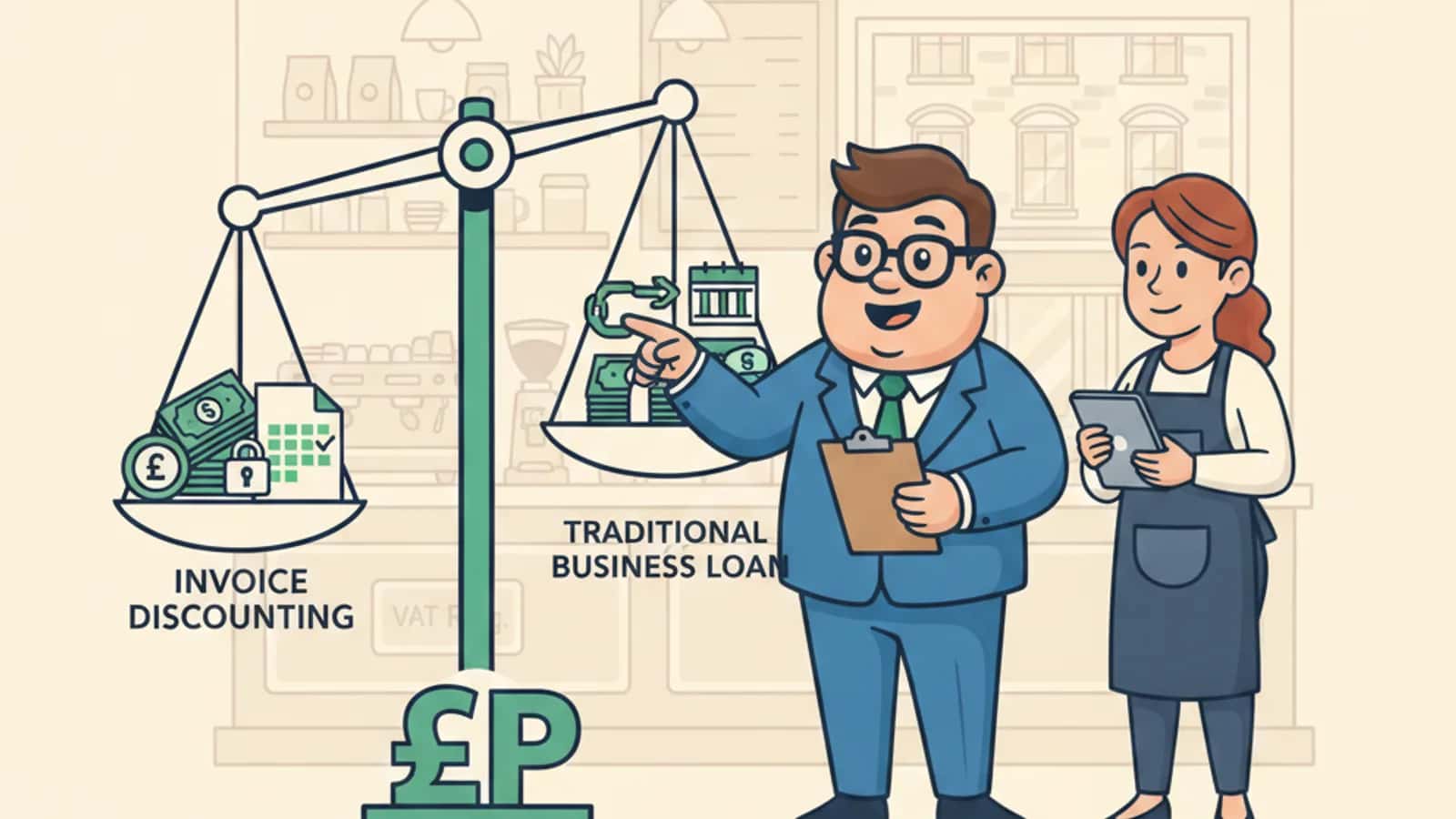
Invoice discounting offers faster access to working capital without the lengthy approval processes typical of traditional business loans, but comes with ongoing costs tied to your sales ledger performance.
Advantages Over Business Loans:
Speed and Flexibility
- Funding available within 24-48 hours versus 2-8 weeks for business loans
- Credit line grows automatically with your invoice values
- No fixed repayment schedule — costs only apply to funds actually used
- Access to larger amounts (up to £5m+) based on turnover rather than just creditworthiness
Reduced Risk Profile
- Secured against your invoices rather than personal or business assets
- Lower personal guarantee requirements compared to unsecured business loans
- Bad debt protection often available through recourse arrangements
Disadvantages Compared to Business Loans:
Cost Structure
- Monthly charges on outstanding balances can exceed fixed loan rates over time
- Additional fees for credit management, administration, and due diligence
- Costs fluctuate with usage rather than predictable monthly payments
Operational Requirements
- Ongoing administrative burden to submit invoices and manage collections
- Regular reporting and reconciliation requirements
- Dependence on customer payment behaviour affecting available funds
When to Choose Each Option: Select invoice discounting for immediate cash flow relief when you have strong invoiced sales but slow-paying customers. Choose traditional business loans for predictable, long-term capital needs with fixed repayment schedules and lower ongoing costs.
What Are the Typical Fees for Confidential Invoice Discounting in the UK
UK confidential invoice discounting typically costs 0.3-2.5% per month on outstanding advances, plus arrangement fees ranging from £500-£5,000 depending on facility size and provider.
Standard Fee Structure:
Discount Rate (Monthly)
- High-grade customers (large corporates): 0.3-0.8% per month
- Standard commercial customers: 0.8-1.5% per month
- Higher-risk sectors or customers: 1.5-2.5% per month
Additional Charges
- Arrangement fee: £500-£5,000 (often waived for larger facilities)
- Due diligence fee: £1,000-£3,000 for credit checks and legal work
- Administration fee: £50-£200 per month for account management
- Unused facility fee: 0.25-0.5% per annum on undrawn amounts
Factors Affecting Pricing
- Your customers' credit ratings and payment history
- Industry sector and associated risk levels
- Facility size and expected usage volumes
- Length of commitment and exclusivity arrangements
Compare these costs against the opportunity cost of delayed payments and the working capital benefits. Many businesses find the improved cash flow justifies the expense, particularly when managing seasonal fluctuations or growth phases.
For detailed cost comparisons across different funding options, review our comprehensive guide to invoice financing costs.
Can Invoice Discounting Damage My Relationship with Customers
Confidential invoice discounting specifically protects customer relationships by keeping the funding arrangement completely invisible, but poor implementation or accidental disclosure can create complications.
How Confidentiality Protects Relationships:
The confidential structure ensures customers never know about your funding arrangement. They receive identical invoices, deal with your staff for queries, and pay your business account as usual. No changes occur in their experience of working with you.
Potential Relationship Risks:
Accidental Disclosure
- Administrative errors revealing finance provider details on correspondence
- Staff accidentally mentioning the arrangement during customer calls
- Changes to payment processes that raise customer questions
Operational Changes
- Pressure to accelerate collection efforts to improve cash flow
- Reduced flexibility in payment terms or dispute resolution
- More formal credit control procedures that customers might notice
If Customers Discover the Arrangement: Most customers understand that businesses use various funding methods to maintain healthy cash flow. Position it as a growth enablement tool rather than a financial necessity: "We use invoice discounting to take on larger projects and maintain competitive payment terms."
Best Practices for Relationship Protection
- Train all staff on confidentiality requirements and procedures
- Maintain consistent customer service standards and response times
- Keep existing payment terms and dispute resolution processes unchanged
- Use the improved cash flow to enhance service delivery rather than aggressive collections
Choose confidential discounting if maintaining customer perception is critical to your business model. Consider disclosed factoring if relationships are less sensitive and you want the provider to handle collections directly.
Which UK Financial Providers Offer the Best Confidential Invoice Discounting
Major UK banks, specialist finance companies, and alternative lenders all offer confidential invoice discounting, with the best choice depending on your business size, sector, and specific requirements.
Bank-Based Providers
- Danske Bank, HSBC, Lloyds: Competitive rates for established businesses with strong credit profiles
- Advantages: Lower costs, integrated banking services, regulatory stability
- Limitations: Stricter eligibility criteria, slower decision-making, limited sector expertise
Specialist Finance Companies
- Skipton Business Finance, Close Brothers, Bibby Financial Services: Industry-focused expertise and flexible structures
- Advantages: Sector knowledge, faster decisions, tailored solutions
- Limitations: Higher costs, smaller facility sizes, varying service quality
Alternative and Fintech Lenders
- MarketInvoice, Funding Circle: Technology-driven processes and competitive pricing
- Advantages: Quick approvals, transparent pricing, modern interfaces
- Limitations: Limited personal service, newer track records, potential technology issues
Selection Criteria:
Financial Factors
- Advance rates offered (70-90% typical range)
- Monthly discount rates and fee structures
- Facility size limits and growth accommodation
- Bad debt protection and recourse terms
Operational Factors
- Speed of initial setup and ongoing funding
- Quality of online platforms and reporting
- Credit control support and expertise
- Sector-specific experience and references
Service Quality
- Dedicated relationship management
- Flexibility during difficult periods
- Transparency in communications and billing
- Exit terms and notice periods
Use a specialist broker or platform like Funding Fred's invoice finance service to compare multiple providers simultaneously. A 2 min check can match you with specialist partners offering competitive terms without affecting your credit rating.
Is Invoice Discounting Suitable for Small Businesses or Only Large Companies
Invoice discounting works for businesses of various sizes, but practical requirements typically favour established companies with annual turnover above £250,000 and robust administrative systems.
Minimum Viability Thresholds:
Financial Requirements
- Annual turnover typically £250,000+ (some providers accept £100,000+)
- Monthly invoice volumes of £20,000+ to justify setup costs
- Established trading history of 12-24 months minimum
- Profitable operations with positive cash flow trends
Operational Capabilities
- Dedicated credit control function or staff member
- Reliable invoicing and accounting systems
- Ability to manage customer relationships and collections
- Administrative capacity for regular reporting and reconciliation
Why Larger Businesses Often Benefit More:
Economics of Scale
- Fixed setup and monthly costs spread across larger invoice volumes
- Better negotiating power for rates and terms
- Access to higher advance percentages and facility limits
Administrative Efficiency
- Existing finance teams can absorb additional workload
- Established customer credit management procedures
- Sophisticated accounting systems for tracking and reporting
Small Business Alternatives:
If your business falls below typical thresholds, consider:
- Selective Invoice Financing
- Fund individual invoices rather than whole ledgers
- Factoring
- Let the provider handle collections to reduce your administrative burden
- Alternative Funding
- Asset finance or business loans might offer simpler structures
Making It Work for Smaller Businesses
- Focus on high-value, creditworthy customers to maximise advance rates
- Invest in accounting software to streamline administration
- Consider part-time credit control support to manage the additional workload
- Start with a smaller facility and grow as volumes increase
For guidance on whether your business meets typical eligibility criteria, use our invoice finance eligibility check for a fast decision with no hard check to start.
Common Mistakes Businesses Make with Confidential Invoice Discounting
The most frequent errors involve poor administration, inadequate staff training, and unrealistic expectations about costs and cash flow improvements.
Administrative Mistakes:
Incomplete Invoice Submission
- Failing to submit all invoices promptly, reducing available funding
- Missing supporting documentation causing delays in advances
- Inconsistent invoice formats confusing approval processes
Poor Reconciliation Practices
- Inaccurate tracking of customer payments and outstanding balances
- Delayed notification of customer payments to the finance provider
- Mixing personal and business transactions in designated accounts
Confidentiality Breaches:
Staff Training Failures
- Customer service staff accidentally mentioning the finance arrangement
- Including finance provider details in customer correspondence
- Discussing funding arrangements in public or unsecured communications
Process Inconsistencies
- Changing payment instructions or invoice formats without coordination
- Implementing new credit control procedures that raise customer questions
- Allowing finance provider contact details to appear on any customer-facing documents
Financial Planning Errors:
Cost Underestimation
- Focusing only on headline rates while ignoring additional fees
- Failing to account for the compound effect of monthly charges
- Not budgeting for arrangement and due diligence costs
Cash Flow Overoptimism
- Expecting 100% invoice funding when typical advances are 70-90%
- Assuming immediate payment when approval processes take 24-48 hours
- Not planning for the retained percentage held until customer payment
Relationship Management Issues:
Over-aggressive Collections
- Pressuring customers for faster payment in ways that damage relationships
- Changing established payment terms without proper consultation
- Reducing flexibility in dispute resolution to accelerate cash flow
Prevention Strategies
- Implement comprehensive staff training on confidentiality requirements
- Establish clear procedures for invoice submission and payment handling
- Regular reconciliation schedules and audit trails
- Maintain existing customer service standards despite funding pressures
For businesses considering their first invoice finance facility, our complete guide to invoice financing covers implementation best practices and common pitfalls to avoid.
How to Explain Invoice Discounting to Customers If They Find Out
Position invoice discounting as a strategic business tool for growth and improved service delivery rather than a sign of financial difficulty, emphasising the benefits to customer relationships.
Positive Positioning Strategies:
Growth and Investment Focus
"We use invoice discounting to take on larger projects and invest in better service delivery. It allows us to maintain competitive payment terms while ensuring we have the working capital to deliver exceptional results."
Industry Standard Practice
"Many successful businesses in our sector use invoice financing to manage cash flow efficiently. It's a common business tool that helps us maintain stability and growth."
Customer Benefit Emphasis
"This arrangement means we can continue offering 30-day payment terms and maintain our flexible approach to project variations, rather than requiring upfront payments or shorter terms."
What Not to Say:
Avoid Financial Distress Language
- Don't mention cash flow problems or late-paying customers
- Avoid discussing bank lending difficulties or credit issues
- Never frame it as a last resort or emergency measure
Don't Overcomplicate the Explanation
- Skip detailed explanations of advance rates and fee structures
- Avoid mentioning specific provider names or contact details
- Don't discuss the confidential nature of the arrangement
Practical Response Scripts:
For Direct Questions: "We work with a finance partner to optimise our working capital, which helps us take on more projects and maintain competitive terms for customers like yourself."
For Concerned Customers: "It's a standard business practice that allows us to invest in growth while maintaining the flexible, responsive service you're used to. Nothing changes in how we work together."
For Detailed Inquiries: "We're happy to provide references from other customers or discuss our financial stability if that would be helpful for your procurement process."
Proactive Communication: Consider mentioning your professional approach to financial management during initial customer meetings, positioning invoice discounting alongside other business tools like insurance, legal support, or technology investments.
Documentation Support: Prepare a brief FAQ document for procurement teams that positions invoice financing as part of your professional business infrastructure, similar to banking relationships or insurance coverage.
What Happens If a Customer Defaults on an Invoice During Discounting
Customer defaults are handled through recourse agreements where you typically remain liable for repaying the advance, though some providers offer bad debt protection for additional fees.
Standard Recourse Arrangements:
Under typical confidential invoice discounting agreements, you remain responsible for repaying advances even if customers default. The finance provider has recourse to you, not directly to your customers, maintaining the confidential structure.
Your Obligations on Default
- Repay the full advance amount regardless of customer payment
- Continue paying monthly charges until the advance is cleared
- Provide detailed information about collection efforts and customer status
- Follow agreed procedures for debt recovery and legal action
Bad Debt Protection Options:
Non-Recourse Facilities Some providers offer protection against customer defaults for additional fees (typically 0.1-0.5% extra per month). Under these arrangements:
- Provider absorbs losses from approved customer defaults
- Coverage usually limited to insolvency events, not simple non-payment
- Strict eligibility criteria for protected customers
- Higher advance rates may be reduced to compensate for additional risk
Credit Insurance Integration
- Separate credit insurance policies can protect against major customer defaults
- Premiums typically 0.2-1% of turnover depending on customer risk profile
- Coverage can be assigned to the finance provider to protect advances
- More comprehensive protection but additional cost and administration
Managing Default Risk:
Prevention Strategies
- Regular credit checks on major customers
- Diversified customer base to reduce concentration risk
- Clear credit terms and collection procedures
- Early warning systems for payment delays or customer difficulties
When Defaults Occur
- Notify the finance provider immediately about payment issues
- Maintain detailed records of collection efforts and customer communications
- Consider professional debt recovery services for larger amounts
- Evaluate whether to continue trading with the defaulting customer
Impact on Facility Terms: Significant defaults may trigger facility reviews, reduced advance rates, or additional security requirements. Providers monitor your bad debt ratios and may adjust terms if losses exceed acceptable levels.
For detailed guidance on managing customer payment risks, see our article on bad debts and invoice financing.
Alternatives to Confidential Invoice Discounting for Cash Flow Management
Several funding options can address cash flow needs without the ongoing administrative requirements of invoice discounting, each suited to different business situations and preferences.
Asset-Based Alternatives:
Disclosed Invoice Factoring
- Provider handles all credit control and collections directly
- Customers pay the factoring company, not your business
- Lower administrative burden but visible to customers
- Often cheaper than confidential discounting due to reduced risk
Asset Finance for Equipment
- Use existing or new equipment as security for funding
- Fixed monthly payments with predictable costs
- No impact on customer relationships or invoice processes
- Suitable for businesses with significant equipment assets
Traditional Lending Options:
Business Loans and Overdrafts
- Fixed amounts with predictable repayment schedules
- Lower ongoing costs than invoice financing
- No administrative burden or customer involvement
- Requires strong credit profile and often personal guarantees
Revenue-Based Finance
- Repayments linked to monthly turnover rather than fixed amounts
- Flexible structure adapting to seasonal variations
- No customer involvement or invoice administration
- Higher costs but more flexible than traditional loans
Alternative Cash Flow Solutions:
Supply Chain Finance
- Work with suppliers to extend payment terms
- Reduce outgoing cash flow pressure rather than increasing income
- No additional financing costs or administrative burden
- Requires cooperative supplier relationships
Customer Payment Terms Optimisation
- Implement early payment discounts to accelerate receipts
- Use payment technology to reduce collection times
- Require deposits or milestone payments for larger projects
- Address root causes rather than symptoms of cash flow issues
Choosing the Right Alternative:
Select asset finance if you have equipment financing needs alongside cash flow requirements. Choose business loans if you need predictable costs and have strong creditworthiness. Consider factoring if you want to outsource credit control entirely.
Use invoice discounting if you have strong customer relationships worth protecting and prefer maintaining control over collections while accessing immediate cash flow.
For comprehensive comparisons of funding options, explore our guides to invoice finance vs business loans and alternative business funding strategies.
Legal Requirements for Confidential Invoice Discounting in the UK
UK confidential invoice discounting operates under commercial lending regulations with specific requirements for consumer credit exemptions, assignment notifications, and insolvency procedures.
Regulatory Framework:
FCA Regulation Confidential invoice discounting typically falls outside Consumer Credit Act regulations as it involves business-to-business lending secured against commercial invoices. However, providers must comply with:
- Treating Customers Fairly principles
- Clear disclosure of terms and charges
- Appropriate credit assessments and affordability checks
- Complaints handling procedures
Assignment and Security Requirements:
Legal Assignment of Receivables
- Formal assignment of invoice debts to the finance provider
- Registration of security interests where required
- Compliance with Late Payment of Commercial Debts regulations
- Proper documentation of assignment terms and conditions
Notification Restrictions Confidential arrangements specifically prohibit notification to customers about the assignment, but legal assignment still occurs behind the scenes to protect the provider's interests.
Insolvency Considerations:
Director Responsibilities
- Wrongful trading provisions apply if you continue using facilities while insolvent
- Preference payment rules may affect recent transactions with finance providers
- Directors must consider creditor interests when business becomes insolvent
Asset Recovery Rights Finance providers typically have priority claims over assigned invoices in insolvency situations, but this depends on proper legal documentation and registration of security interests.
Contract Terms and Consumer Protection:
Unfair Contract Terms Business customers have limited protection compared to consumers, but terms must still be:
- Clear and transparent in their meaning
- Commercially reasonable in their application
- Properly explained during the sales process
Cooling-Off Periods Unlike consumer credit, business invoice discounting typically has no statutory cooling-off period, though some providers offer voluntary cancellation windows.
Compliance Obligations:
Your Responsibilities
- Accurate representation of invoice validity and customer creditworthiness
- Prompt notification of customer payments and disputes
- Maintenance of adequate accounting records and audit trails
- Compliance with anti-money laundering requirements
Provider Obligations
- Clear explanation of charges and terms before agreement
- Regular statements and account reconciliation
- Proper handling of customer payments and trust account management
- Appropriate credit control procedures and debt recovery practices
Most legal requirements operate in the background without affecting day-to-day operations, but ensure your provider explains all obligations clearly during the application process.
How Quickly Can I Get Funding Through Invoice Discounting
Initial setup typically takes 1-3 weeks for due diligence and legal documentation, but ongoing funding arrives within 24-48 hours once the facility is operational.
Initial Setup Timeline:
- 1
Week 1: Application and Initial Assessment
- Complete application forms and provide basic financial information
- Initial credit checks on your business and key customers
- Preliminary facility terms and advance rate discussions
- No hard check to start with most providers' initial assessments
- 2
Week 2-3: Due Diligence and Documentation
- Detailed review of customer credit files and payment histories
- Legal documentation preparation and security registration
- Final facility terms negotiation and approval
- Account setup and staff training on procedures
Ongoing Funding Speed:
Same-Day Funding (24-48 hours) Once operational, submit invoices by morning cut-off times (typically 2-4 PM) for next-day funding. Electronic submission systems and automated approval processes enable rapid access to advances.
Factors Affecting Speed:
Faster Processing
- Electronic invoice submission and approval systems
- Pre-approved customer lists with established credit limits
- Consistent invoice formats and complete supporting documentation
- Regular submission patterns and reliable reconciliation
Potential Delays
- New customer credit checks and approval processes
- Incomplete or inconsistent invoice documentation
- Disputes or queries about invoice validity or customer creditworthiness
- Manual processing requirements for complex or unusual invoices
Optimising for Speed:
Preparation Phase
- Gather customer credit information and payment histories in advance
- Prepare clean financial statements and management accounts
- Identify key customers and typical invoice values
- Ensure accounting systems can generate required reports
Operational Efficiency
- Submit invoices immediately after raising them to customers
- Maintain consistent documentation standards and formats
- Establish regular submission and reconciliation routines
- Monitor customer payment patterns and notify providers of changes
Emergency Funding Needs: For urgent cash flow requirements, consider same-day business funding options while setting up longer-term invoice discounting facilities.
Use Funding Fred's 2 min check to get fast decisions from specialist partners and begin the setup process immediately. Check eligibility now with no impact on your credit rating.
Signs That Invoice Discounting Might Not Be Right for Your Business
Invoice discounting suits established businesses with reliable customers and strong administrative capabilities, but several warning signs suggest alternative funding might work better.
Financial Red Flags:
Insufficient Invoice Volumes
- Monthly invoicing below £20,000-£30,000 makes costs uneconomical
- Irregular or seasonal invoicing patterns creating facility underutilisation
- Average invoice values too small to justify administrative overhead
Poor Customer Credit Quality
- High proportion of customers with poor payment histories or credit ratings
- Concentration risk with few large customers representing most of turnover
- Customers in declining industries or with known financial difficulties
Operational Limitations:
Administrative Capacity Issues
- Lack of dedicated credit control or finance staff
- Inadequate accounting systems for tracking and reconciliation
- Inability to manage additional reporting and compliance requirements
Cash Flow Misalignment
- Need for long-term capital investment rather than working capital
- Requirement for unsecured funding without invoice security
- Seasonal businesses with extended periods of low activity
Strategic Mismatches:
Customer Relationship Sensitivity
- Customers who specifically prohibit assignment of invoices in their terms
- Industries where funding arrangements might damage competitive position
- New business development requiring maximum flexibility in payment terms
Growth Stage Inappropriateness
- Start-up businesses without established customer bases
- Rapid growth requiring equity investment rather than debt funding
- Businesses planning significant strategic changes or restructuring
Better Alternatives Exist:
When to Choose Business Loans Instead
- Predictable funding needs with capacity for fixed repayments
- Lower cost tolerance and strong creditworthiness
- Preference for simple, transparent fee structures
When Factoring Works Better
- Limited credit control capabilities or resources
- Willingness to transfer customer relationships to provider
- Need for comprehensive bad debt protection
When Asset Finance Suits Better
- Significant equipment or vehicle financing requirements
- Preference for secured lending against tangible assets
- Need for longer-term funding with fixed payment schedules
Self-Assessment Questions
- Do you have consistent monthly invoicing above £25,000?
- Can you dedicate staff time to additional administration?
- Are your customers creditworthy with good payment histories?
- Do you need working capital rather than long-term investment?
- Can you maintain confidentiality and customer relationship management?
If you answer "no" to multiple questions, explore alternative business funding strategies that might better match your business needs and capabilities.
Next steps
Confidential invoice discounting offers UK businesses immediate access to working capital while preserving crucial customer relationships and maintaining control over collections. With advances of 70-90% available within 24-48 hours and complete invisibility to customers, it addresses the fundamental challenge of waiting 30-90 days for payment on work already completed.
The key to success lies in understanding both the opportunities and obligations. While costs typically range from 0.3-2.5% monthly on outstanding balances, the improved cash flow enables businesses to cover payroll, pay suppliers promptly, and take on growth opportunities without the relationship risks associated with disclosed factoring.
Critical success factors include
- Sufficient invoice volumes (£20,000+ monthly) to justify costs
- Strong administrative capabilities for ongoing management
- Creditworthy customers with reliable payment histories
- Proper staff training to maintain confidentiality
- Clear understanding of total costs and obligations
For established businesses with healthy customer relationships and consistent invoicing patterns, confidential invoice discounting provides flexible funding that grows with sales while keeping financing arrangements private. The ability to get paid faster without changing customer interactions makes it particularly valuable for service businesses, contractors, and suppliers dealing with extended payment terms.
Ready to explore your options? Use Funding Fred's **2 min check** to connect with specialist partners offering competitive confidential invoice discounting facilities. Check eligibility now with no hard check to start and discover how invoice finance can improve cash flow without compromising customer relationships.
The right confidential invoice discounting facility transforms the frustration of waiting for earned money into predictable access to working capital, enabling business growth while maintaining the professional relationships that drive long-term success.
Further reading
Frequently asked questions
How Does Confidential Invoice Discounting Work Without Customers Knowing?
Confidential invoice discounting operates through a trust account mechanism that keeps the finance provider completely invisible to your customers. When you raise an invoice, the discounting company advances 70-90% of the value to your business account within 24-48 hours, while customers continue paying directly to you.
What Are the Typical Fees for Confidential Invoice Discounting in the UK?
UK confidential invoice discounting typically costs 0.3-2.5% per month on outstanding advances, plus arrangement fees ranging from £500-£5,000 depending on facility size and provider.
Can Invoice Discounting Damage My Relationship with Customers?
Confidential invoice discounting specifically protects customer relationships by keeping the funding arrangement completely invisible, but poor implementation or accidental disclosure can create complications.
Which UK Financial Providers Offer the Best Confidential Invoice Discounting?
Major UK banks, specialist finance companies, and alternative lenders all offer confidential invoice discounting, with the best choice depending on your business size, sector, and specific requirements.
Is Invoice Discounting Suitable for Small Businesses or Only Large Companies?
Invoice discounting works for businesses of various sizes, but practical requirements typically favour established companies with annual turnover above £250,000 and robust administrative systems.
How to Explain Invoice Discounting to Customers If They Find Out?
Position invoice discounting as a strategic business tool for growth and improved service delivery rather than a sign of financial difficulty, emphasising the benefits to customer relationships.
Written by
The Funding Fred Editorial Team creates plain-English guides to help business owners understand funding options, eligibility, and application readiness before they compare finance options.
Reviewed by
UK business finance content reviewer
Robert reads our UK business finance guides before they go live, checking each one is accurate, easy to follow, and reflects how lending actually works today — not how a brochure says it should. He's listed on the FCA Register, approved as an SMF3 (AR) Executive Director at Switcha Limited, and connected to Lucky Growth Partners Ltd through its appointed representative relationship, so the regulated detail gets a properly qualified second read.
Sources
- Confidential Invoice Discounting - [2] Confidential Invoice Discounting - https://www.companeo.co.uk/factoring/guide/confidential-invoice-discounting [3] Confidential Invoice Finance - https://invoicewise.co.uk/blog/confidential-invoice-finance/ [4] 12062024153242 Confidential Invoice Finance - https://www.cliftonpf.co.uk/blog/12062024153242-confidential-invoice-finance/ [5] A Brief Guide To Invoice Discounting - https://www.pegasusfunding.co.uk/a-brief-guide-to-invoice-discounting/ [6] Will My Customers Know If I Use Invoice Factoring - https://www.promisemoney.co.uk/will-my-customers-know-if-i-use-invoice-factoring/ [7] Confidential Invoice Discounting - https://danskebank.co.uk/business/products-and-services/specialist-business/invoice-finance/confidential-invoice-discounting [8] Invoice Discounting How It Works And Key Legal Considerations - https://sprintlaw.co.uk/articles/invoice-discounting-how-it-works-and-key-legal-considerations/ [9] A Guide To Invoice Discounting - https://www.fundingguru.com/blog/a-guide-to-invoice-discounting [10] Confidential Invoice Discounting - https://invoice-funding.co.uk/confidential-invoice-discounting/
- British Business Bank finance options
- GOV.UK business finance support