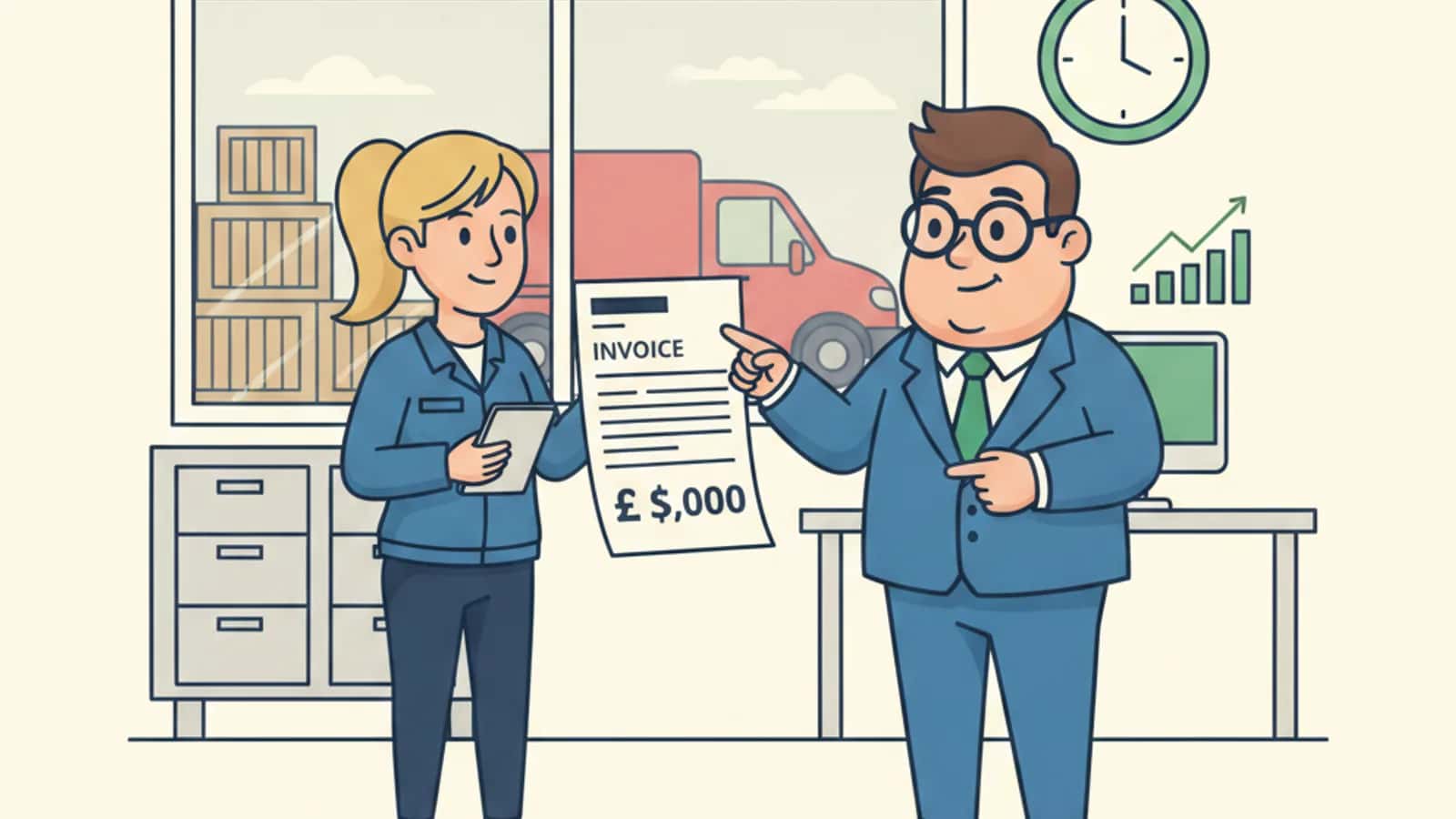
Invoice Discounting vs Factoring in the UK: How to Choose the Right Facility for Your SME
Invoice discounting lets your business borrow against unpaid invoices while keeping full control of collections — it's confidential and typically cheaper, but requires stronger turnover and internal credit management.

Quick answer
Invoice discounting lets your business borrow against unpaid invoices while keeping full control of collections — it's confidential and typically cheaper, but requires stronger turnover and internal credit management. Invoice factoring hands the collections process to a specialist provider, making it more accessible for smaller businesses or those without a dedicated credit control function. The right choice depends on your turnover, how you manage customer relationships, and how much back-office support you need.
Key takeaways
- Invoice discounting advances up to 95% of invoice value; your customers never know the arrangement exists
- Invoice factoring advances up to 90% and the provider manages collections on your behalf
- Discounting service charges typically start from 0.3–0.5% of invoice value; factoring runs 0.5–3%
- Factoring suits businesses with turnover from £50,000; discounting generally requires £500,000+
- The UK invoice finance market advanced £22.7 billion across more than 40,000 businesses in 2025
- Recruitment leads UK invoice finance usage at 36.1%, followed by manufacturing (22.5%), transport (16.7%), and construction (14.1%)
- Both facilities can release cash within 24–48 hours of invoice submission
- Neither option requires taking on a traditional business loan — you're accessing money you've already earned
- Bad credit doesn't automatically disqualify you from factoring; providers assess your customers' creditworthiness too
- A 2-minute eligibility check with no hard credit search is enough to find out which facility suits your business
What Exactly Is Invoice Discounting and How Is It Different from Factoring

Invoice discounting is a confidential borrowing facility secured against your sales ledger. Invoice factoring is a disclosed arrangement where the finance provider takes over your credit control and collects payment directly from your customers.
Both facilities solve the same timing problem: you've done the work, issued the invoice, and now you're waiting 30, 60, or 90 days for the money to arrive. Both let you unlock that cash immediately. The difference is in who manages the collections process — and whether your customers know about the arrangement at all.
Here's how the two work in practice:
| Factor | Invoice Discounting | Invoice Factoring |
|---|---|---|
| Advance rate | Up to 95% of invoice value | Up to 90% of invoice value |
| Collections managed by | Your business | The finance provider |
| Visible to customers? | No — fully confidential | Yes — provider contacts customers |
| Typical service charge | 0.3–0.5% of invoice value | 0.5–3% of invoice value |
| Minimum turnover | ~£500,000 | ~£50,000 |
| Credit control required | Yes — you run it | No — provider handles it |
| Best for | Established SMEs with strong admin | Smaller or growing businesses |
For a deeper look at how invoice finance compares to traditional borrowing, see our guide on invoice finance vs business loans.
Which Option Is Cheaper for Small Businesses in the UK
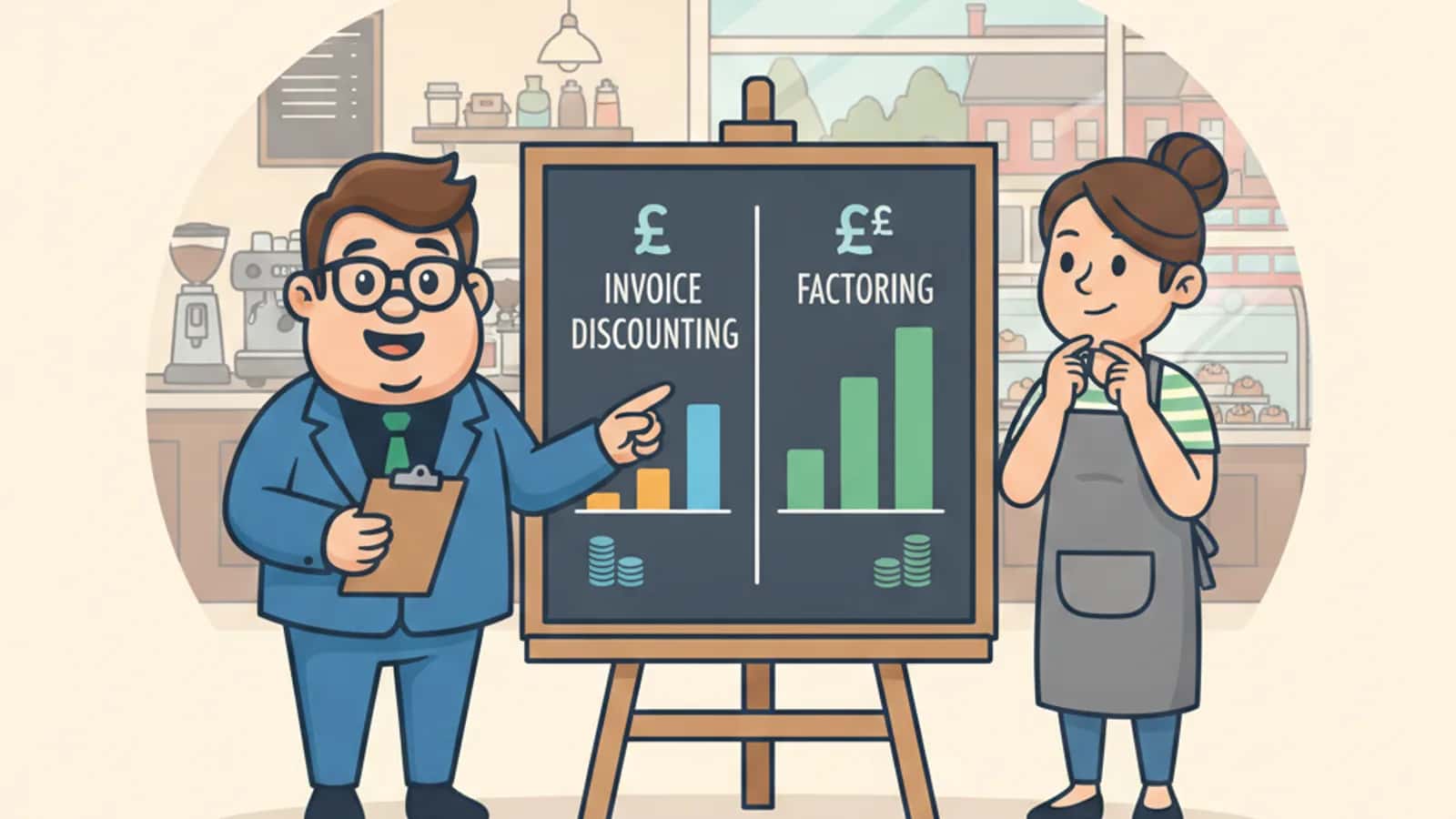
Invoice discounting is generally cheaper, with service charges starting from 0.3–0.5% of invoice value compared to 0.5–3% for factoring. However, factoring includes credit control and collections as part of the fee — so the true cost comparison depends on what your business currently spends on those functions.
Factoring costs more because you're paying for a managed service. If your business doesn't have a dedicated credit controller, factoring can actually save money overall. If you already run a tight collections process, discounting keeps costs lower.
Cost breakdown to consider
- Discounting: Lower service charge + your own staff time for collections
- Factoring: Higher service charge + no internal collections overhead
- Both facilities also charge a discount fee (similar to interest) on the cash advanced — typically 1.5–3% above base rate, charged daily
According to market data, 63% of UK invoice finance providers charge under 2% total service charge. Always compare the full cost: service charge plus discount fee plus any minimum volume commitments.
Choose discounting if your business has strong internal credit control and turnover above £500,000. Choose factoring if you're smaller, growing fast, or want to outsource collections entirely.
Can I Get Invoice Discounting with Bad Credit
Invoice discounting with bad credit is harder to access because providers assess your business's financial stability and credit control capability. However, factoring is more accessible for businesses with imperfect credit because the provider focuses heavily on your customers' creditworthiness rather than just yours.
Both facilities are asset-backed — the security is your invoices, not your balance sheet. That makes them fundamentally different from a business loan. But discounting providers still want to see that your business is financially stable and capable of managing its own ledger.
If your business credit score has taken a hit, factoring is the more realistic starting point. Some specialist providers will consider businesses with CCJs or recent financial difficulties if the underlying sales ledger is strong and customers are creditworthy.
What lenders look at instead of just your credit score
- Quality and creditworthiness of your debtors (customers)
- Consistency of invoicing — are they clean, undisputed, and B2B?
- Sector and typical payment terms
- Your business's trading history (even 3–6 months can be enough)
For businesses that have been declined elsewhere, our guide on what to do if your business loan is declined covers alternative routes worth exploring.
How Much Does Invoice Factoring Typically Cost for a Startup
A startup using invoice factoring can expect to pay a service charge of 1–3% of invoice value plus a daily discount fee on funds advanced. Total annualised cost often falls between 15–30% APR equivalent, though this varies significantly by sector, invoice volume, and customer quality.
Startups face higher rates because providers have less trading history to assess. But factoring remains one of the most accessible forms of finance for new businesses that invoice other businesses — especially compared to business loans for startups which often require 2+ years of accounts.
That cost needs to be weighed against the value of having cash in the business — covering wages, paying suppliers on time, or taking on the next contract.
What Are the Risks of Invoice Discounting for My Business
The main risks of invoice discounting are concentration risk (over-reliance on a few large customers), the administrative burden of managing your own collections, and the risk of recourse if customers don't pay.
Most UK invoice discounting facilities are recourse arrangements — meaning if your customer doesn't pay, you're liable to repay the advance. Non-recourse facilities (where the provider absorbs bad debt) are available but cost more.
Key risks to understand
- Recourse liability: If a customer disputes or defaults, you repay the advance
- Concentration limits: Most providers cap exposure to any single debtor at 25–30% of your ledger
- Audit requirements: Providers conduct periodic audits of your sales ledger — sloppy admin creates problems
- Minimum volume commitments: Some contracts require a minimum monthly invoice volume; falling short incurs fees
- Confidentiality breach risk: If a customer discovers the arrangement (e.g., via a bank statement reference), it can damage trust
Managing these risks starts with clean, accurate invoicing and a reliable credit control process. If that's not in place, factoring is the safer option.
Is Invoice Factoring Good for Service-Based Businesses or Just Product Companies
Invoice factoring works well for service-based businesses, not just product companies. Any UK business that invoices other businesses (B2B) on credit terms can use factoring — including recruitment agencies, consultancies, IT contractors, logistics firms, and facilities management companies.
The key requirement is that invoices must be for completed work or delivered goods — not future services or milestone payments that haven't been earned yet. Disputed invoices or retentions (common in construction) can complicate eligibility.
Sectors using invoice finance in the UK
- Recruitment: £8.2 billion — 36.1% of the market
- Manufacturing: £5.1 billion — 22.5%
- Transport/Logistics: £3.8 billion — 16.7%
- Construction: £3.2 billion — 14.1%
Service businesses in recruitment and staffing are the single largest users of invoice finance in the UK. Weekly payroll obligations with 30–60 day payment terms from clients make factoring a natural fit.
Which Industries Benefit Most from Invoice Discounting in the UK
Industries with high invoice volumes, creditworthy B2B customers, and strong internal finance functions benefit most from invoice discounting — particularly manufacturing, wholesale distribution, and established logistics businesses.
Invoice discounting suits businesses that already have the infrastructure to manage their own collections but want faster access to cash without involving a third party in customer relationships.
Sector-by-sector recommendation matrix:
| Sector | Recommended Facility | Why |
|---|---|---|
| Recruitment / Staffing | Factoring | Weekly payroll pressure; high volume, smaller invoices |
| Manufacturing | Discounting | Large invoices, established customers, strong admin |
| Construction | Factoring (with care) | Retentions complicate discounting; collections support helps |
| Logistics / Transport | Either | Depends on scale and internal credit control |
| Wholesale / Distribution | Discounting | High turnover, repeat customers, clean ledgers |
| IT / Professional Services | Factoring | Variable invoice sizes; collections support useful |
| Business Services | Either | Depends on turnover threshold and client base |
For more on how invoice finance fits into broader funding strategy, explore the Invoice Finance Guides on Funding Fred.
How Quickly Can I Get Cash Using Invoice Factoring
With invoice factoring, most UK businesses receive an initial advance within 24–48 hours of the facility going live. Ongoing invoices submitted to the factor are typically funded the same day or next working day.
The setup process (credit checks, facility agreement, onboarding) usually takes 5–10 working days for a new facility. After that, the process is fast: submit an invoice, receive funds almost immediately.
Typical cash flow timeline:
- Day 1: Invoice raised and submitted to factor
- Day 1–2: Factor verifies invoice and releases advance (up to 90%)
- Day 30–90: Customer pays the factor directly
- After customer payment: Remaining balance (minus fees) released to your business
This is fundamentally different from a bank loan application, which can take weeks and requires extensive documentation. Invoice factoring is designed for speed — you've already earned the money, you just need it now.
For businesses that need capital even faster, see our guide on same-day business funding options.
Do I Lose Control of My Customer Relationships with Invoice Factoring
With invoice factoring, the finance provider contacts your customers directly to collect payment — so yes, there is some reduction in direct control over that relationship. However, reputable specialist providers handle collections professionally and in your business's name where possible.
This is the most common concern SME owners raise about factoring. The reality depends heavily on the provider. Good factors act as an extension of your business, not a debt collector. They use your company name in correspondence and follow agreed collection procedures.
What to check before signing a factoring agreement
- Does the provider collect in your name or their own?
- What's their collections process — calls, letters, escalation timeline?
- Can you set parameters for how aggressively they chase?
- What happens if a customer complains about contact?
If confidentiality is non-negotiable — for example, if you're working with large corporate clients who might react badly — invoice discounting is the cleaner option. It keeps the arrangement entirely between you and the finance provider.
What Happens If My Customers Don't Pay Their Invoices
If a customer doesn't pay, what happens next depends on whether your facility is recourse or non-recourse. Under recourse factoring or discounting (the most common type), you're required to repay the advance. Under non-recourse arrangements, the provider absorbs the bad debt — but charges a higher fee.
HMRC recognises that factoring services can include protection against bad debts as a component of the overall service. Non-recourse factoring effectively bundles bad debt insurance into the facility.
Your options when a customer doesn't pay
- Recourse facility: You repay the advance from other funds or substitute another invoice
- Non-recourse facility: Provider absorbs the loss (subject to policy limits)
- Separate bad debt protection: Some providers offer this as an add-on to a recourse facility
- Dispute resolution: If the invoice is genuinely disputed, the advance is typically recalled regardless of facility type
Always read the recourse clause carefully. Some facilities have a "recourse period" — if the invoice isn't paid within 90 or 120 days, it reverts to you even on nominally non-recourse terms.
Common Mistakes SMEs Make When Choosing Between Invoice Discounting and Factoring
The most common mistake is choosing invoice discounting because it sounds more professional or cheaper — without having the internal systems to manage collections properly. The second most common mistake is dismissing factoring because of concerns about customer perception, without checking how the specific provider actually operates.
Other mistakes worth avoiding:
- Ignoring the minimum turnover threshold:
- Applying for discounting with £200k turnover wastes time; factoring is the right starting point
- Not comparing total cost:
- Looking only at the service charge and ignoring the discount fee gives a misleading picture
- Signing long-term contracts without exit clauses:
- Some facilities lock you in for 12–24 months with significant break fees
- Not disclosing all debtors upfront:
- Omitting problem customers or concentrated debtors can void the facility later
- Treating it as a last resort:
- Businesses that use invoice finance proactively — not in crisis — get better terms and more flexibility
Understanding your working capital ratio before approaching providers helps you present your business more clearly and negotiate better terms.
Are There Alternative Financing Options If Invoice Discounting Doesn't Work for Me
If invoice discounting or factoring doesn't fit your situation, alternatives include business overdrafts, revolving credit facilities, asset finance, and merchant cash advances — depending on your business model and assets.
Invoice finance is the most direct solution for businesses with outstanding invoices, but it's not the only option. Here's a quick comparison:
| Alternative | Best for | Key drawback |
|---|---|---|
| Business overdraft | Short-term cash gaps | Low limits; being phased out by many banks |
| Revolving credit facility | Ongoing working capital | Requires strong credit history |
| Asset finance | Funding equipment or vehicles | Asset must exist to finance |
| Merchant cash advance | Card-taking businesses | High effective cost |
| Business loan | Lump-sum capital needs | Fixed repayments regardless of revenue |
For businesses that invoice B2B clients, invoice finance almost always offers better terms than unsecured borrowing because the invoices themselves are the security. But if your business is pre-revenue, sells direct to consumers, or doesn't operate on credit terms, alternative business funding strategies may be more relevant.
Conclusion: How to Choose the Right Facility for Your SME
The decision between invoice discounting and factoring in the UK comes down to three things: your turnover, your internal credit control capability, and how much your customer relationships depend on confidentiality.
Which is right for you?
Choose invoice discounting if
- Turnover exceeds £500,000
- You have a reliable credit control process in place
- Confidentiality matters to your customer relationships
- You want the lowest possible cost
Choose invoice factoring if
- Turnover is between £50,000 and £500,000
- You don't have dedicated credit control staff
- You want collections handled for you
- You're a startup or growing business that needs support, not just cash
Both facilities can release funds within 24–48 hours. Both are built on the same principle: you've already done the work and issued the invoice — you shouldn't have to wait 60 or 90 days to access money you've already earned.
The UK invoice finance market supported more than 40,000 businesses with £22.7 billion in advances in 2025. With 85 active providers ranging from high street banks to specialist fintechs, there's a facility for almost every B2B business — the key is matching the right structure to your situation.
Ready to find out which facility fits your business? A 2-minute eligibility check with no hard credit search matches your business with specialist invoice finance partners offering facilities from £10k to £5m+. No obligation. Fast decision. Invoice Finance. Without the Fuss.
Further reading
Frequently asked questions
What Exactly Is Invoice Discounting and How Is It Different from Factoring?
Invoice discounting is a confidential borrowing facility secured against your sales ledger. Invoice factoring is a disclosed arrangement where the finance provider takes over your credit control and collects payment directly from your customers.
Which Option Is Cheaper for Small Businesses in the UK?
Invoice discounting is generally cheaper, with service charges starting from 0.3–0.5% of invoice value compared to 0.5–3% for factoring. However, factoring includes credit control and collections as part of the fee — so the true cost comparison depends on what your business currently spends on those functions.
Can I Get Invoice Discounting with Bad Credit?
Invoice discounting with bad credit is harder to access because providers assess your business's financial stability and credit control capability. However, factoring is more accessible for businesses with imperfect credit because the provider focuses heavily on your customers' creditworthiness rather than just yours.
How Much Does Invoice Factoring Typically Cost for a Startup?
A startup using invoice factoring can expect to pay a service charge of 1–3% of invoice value plus a daily discount fee on funds advanced. Total annualised cost often falls between 15–30% APR equivalent, though this varies significantly by sector, invoice volume, and customer quality.
What Are the Risks of Invoice Discounting for My Business?
The main risks of invoice discounting are concentration risk (over-reliance on a few large customers), the administrative burden of managing your own collections, and the risk of recourse if customers don't pay.
Is Invoice Factoring Good for Service-Based Businesses or Just Product Companies?
Invoice factoring works well for service-based businesses, not just product companies. Any UK business that invoices other businesses (B2B) on credit terms can use factoring — including recruitment agencies, consultancies, IT contractors, logistics firms, and facilities management companies.
Written by
The Funding Fred Editorial Team creates plain-English guides to help business owners understand funding options, eligibility, and application readiness before they compare finance options.
Reviewed by
UK business finance content reviewer
Robert reads our UK business finance guides before they go live, checking each one is accurate, easy to follow, and reflects how lending actually works today — not how a brochure says it should. He's listed on the FCA Register, approved as an SMF3 (AR) Executive Director at Switcha Limited, and connected to Lucky Growth Partners Ltd through its appointed representative relationship, so the regulated detail gets a properly qualified second read.
Sources
- Invoice Finance Market Overview 2026 [2] Factoring Vs Discounting (Swoop Funding) - https://swoopfunding.com/uk/business-loans/invoice-factoring/factoring-vs-discounting/ [3] What Is Invoice Discounting - https://www.money.co.uk/business/business-loans/what-is-invoice-discounting [4] Factoring Vs Discounting (MarketInvoice) - https://marketinvoice.co.uk/guides/factoring-vs-discounting/ [5] VATFIN3220 - HMRC VAT Finance Manual - https://www.gov.uk/hmrc-internal-manuals/vat-finance-manual/vatfin3220 [6] MarketInvoice Stats - https://marketinvoice.co.uk/stats/
- British Business Bank finance options
- GOV.UK business finance support