Start Up Loans UK: How the Government-Backed Scheme Works and Who Qualifies
Start Up Loans are unsecured personal loans backed by the UK government, delivered through the British Business Bank, for people starting or growing a business that has traded for less than five years.
Quick answer
Start Up Loans are unsecured personal loans backed by the UK government, delivered through the British Business Bank, for people starting or growing a business that has traded for less than five years. You can borrow between £500 and £25,000 per applicant, up to £100,000 per business with multiple owners, at a fixed interest rate, repaid over one to five years. Approval depends on your personal credit history, a workable business plan and proof you can afford the repayments, not on business trading history, because most applicants don't have much yet.
Key takeaways
- Start up loans are personal loans for business use, backed by the UK government through the British Business Bank, not business loans in the legal sense.
- You can borrow £500 to £25,000 per individual, with a cap of £100,000 per business when several founders each apply.
- The current fixed interest rate is set by the scheme and applies for the full term, with no application fee and no early repayment charge.
- From April 2026, the eligible trading window widened from businesses trading up to 36 months to those trading up to 60 months (five years).
- Approval is based on a personal credit check, a business plan, a cash-flow forecast and affordability, not business assets.
- Because the loan is personal and unsecured, your home is not used as security, but missed repayments still damage your personal credit file.
- If you're declined or need more than £25,000 per person, unsecured business loans and other funding routes are worth comparing before you give up on borrowing altogether.
What Is a Start Up Loan? The Government-Backed Scheme Explained
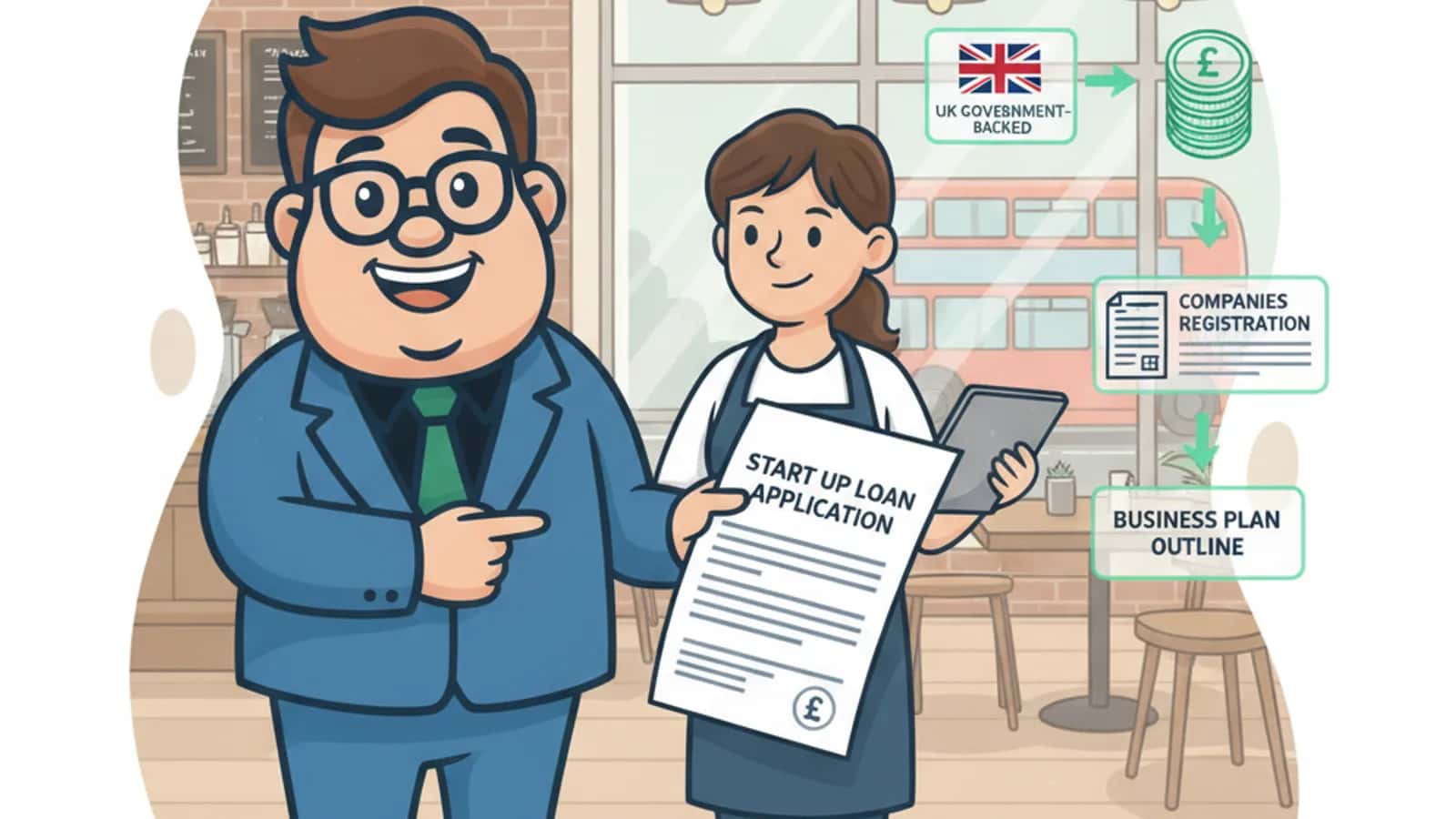
A start up loan is an unsecured personal loan, funded through the government-backed Start Up Loans scheme and delivered by the British Business Bank, designed for individuals building a new UK business. It's not a loan to your limited company, it's a loan to you as a person, which you then use to fund your business.
The scheme exists because early-stage businesses rarely have the trading history, assets or turnover that banks want to see. Government start up loans fill that gap by lending against your personal credit profile and your plan, rather than your company's balance sheet. Alongside the loan, successful applicants get access to mentoring and business support, which is part of what separates this scheme from a standard personal loan taken out for the same purpose.
If you've been turned down by your bank because your business is "too new," this is the programme built specifically for that situation.
How Much Can You Borrow With a Start Up Loan?

Under the current British Business Bank Start Up Loans rules, individuals can borrow between £500 and £25,000 each, with a maximum of £100,000 per business where more than one director or partner applies. That per-business cap matters most for partnerships: three co-founders could each apply individually and combine their loans, but the total for the business cannot exceed the scheme limit.
Practical points to weigh up before choosing an amount:
- Borrow what the cash-flow forecast supports.
- Lenders assess affordability against your forecast, so an unrealistic ask slows things down.
- Multiple applicants need separate assessments.
- Each co-founder goes through their own personal credit check and affordability review.
- £25,000 may not cover everything.
- If your start-up costs run higher, fit-out, stock, equipment, you may need to combine this with other funding, which is covered later in this guide.
Choose a start up loan if your funding need sits comfortably under £25,000 per founder and £100,000 across the business. If you need more, read how much you can borrow to start a business before applying, so you're not under-funding the launch.
What Is the Start Up Loans Interest Rate and Repayment Term?
The Start Up Loans scheme charges a fixed interest rate for the life of the loan, with no application fee and no charge for repaying early. The rate rose from 6% to 7.5% per year for new applications from 6 April 2026, and that 7.5% fixed rate is reflected in current guidance from official and partner channels.
Key terms to check before you sign:
- Fixed rate, fixed term.
- Your rate doesn't move with the Bank of England base rate, so repayments are predictable.
- Repayment period: one to five years.
- Choose the term based on what your monthly cash flow can realistically absorb, not the shortest option available.
- No early repayment penalty.
- You can clear the loan faster than planned without a fee, which helps if trading picks up quickly.
Because the rate is fixed and published by the scheme rather than negotiated case-by-case, it's one of the few finance products where you know the real cost of borrowing before you apply. Compare that cost against other options using a guide to comparing business loans in the UK so you're judging value, not just headline numbers.
Who Is Eligible for a Start Up Loan?
To be eligible for a start up loan, you need to be 18 or over, live in the UK with the right to work here, and be starting or running a UK-based business that has been fully trading for less than five years. This trading-age limit changed significantly in 2026.
From 6 April 2026, the eligible trading window was extended from businesses trading up to 36 months to those trading up to 60 months, a full five years. That's a meaningful shift: founders who'd already passed the old three-year cutoff and assumed they'd missed their chance may now qualify.
Further start up loans eligibility conditions include:
- Passing a personal credit check, this is a personal loan, so your own credit history is assessed, not just the business's.
- Showing you can afford the repayments alongside your other personal and business commitments.
- Having a viable business plan and cash-flow forecast (more on this below).
- Generally being unable to secure the finance from other mainstream sources, which reflects the scheme's purpose of filling a market gap rather than competing with high-street lenders.
Start up loans are not reserved only for first-time entrepreneurs. Someone running a second or third business can apply, provided that specific business has been trading for under five years and meets the other criteria. What matters is the age of the business being funded, not whether you've started one before.
Choose this route if you're within the five-year trading window and your personal credit file is in reasonable shape. If your business is older than five years, this scheme won't apply, look instead at mainstream unsecured lending.
Can You Get a Start Up Loan With Bad Credit?
A poor credit history can affect your start up loan application because the scheme runs a personal credit check as part of its assessment, but it doesn't automatically rule you out. There's no published minimum credit score, and outcomes depend on the overall application, not one factor in isolation.
What tends to matter in practice:
- Recent, serious issues weigh more heavily
- than older, resolved ones.
- Unmanaged existing debt
- raises affordability concerns, since the lender checks whether you can take on new repayments.
- A strong business plan and realistic forecast
- can offset some credit concerns, because the scheme is partly assessing your judgement, not only your history.
If your credit file carries defaults, missed payments or a CCJ, be upfront in your application rather than hoping it won't surface, it will, through the credit check. If a start up loan isn't available to you because of credit history, lenders who assess current trading performance rather than a clean file, such as those offering unsecured business loans through a wider panel, may be a better fit once your business has some trading history behind it.
Start Up Loan vs Bank Loan: Which Is Better?
A start up loan suits very early-stage, low-amount borrowing with a fixed government-backed rate, while a traditional bank loan suits businesses with trading history, assets and higher funding needs, and a panel-based route like Funding Fred's suits those who've been declined by both and need a faster decision. Each serves a different stage and need.
| Feature | Start Up Loan Scheme | Traditional Bank Loan | Funding Fred Partner Loans |
|---|---|---|---|
| Who assesses you | Personal credit check plus business plan | Strict credit scoring, often needs trading history | Current trading performance, all credit types considered |
| Amount available | £500 to £25,000 per person, £100,000 per business | Varies, often needs security for larger sums | £10k to £1m, unsecured or merchant cash advance |
| Rate structure | Fixed, set by the scheme | Varies by bank and risk profile | Varies by partner and trading data |
| Decision speed | Weeks, includes mentoring step | Often slow, paperwork-heavy | Fast decision, 2 min check to start |
| Initial credit impact | Hard check as part of application | Hard check, often multiple | No hard check to start |
Who assesses you
- Start Up Loan Scheme
- Personal credit check plus business plan
- Traditional Bank Loan
- Strict credit scoring, often needs trading history
- Funding Fred Partner Loans
- Current trading performance, all credit types considered
Amount available
- Start Up Loan Scheme
- £500 to £25,000 per person, £100,000 per business
- Traditional Bank Loan
- Varies, often needs security for larger sums
- Funding Fred Partner Loans
- £10k to £1m, unsecured or merchant cash advance
Rate structure
- Start Up Loan Scheme
- Fixed, set by the scheme
- Traditional Bank Loan
- Varies by bank and risk profile
- Funding Fred Partner Loans
- Varies by partner and trading data
Decision speed
- Start Up Loan Scheme
- Weeks, includes mentoring step
- Traditional Bank Loan
- Often slow, paperwork-heavy
- Funding Fred Partner Loans
- Fast decision, 2 min check to start
Initial credit impact
- Start Up Loan Scheme
- Hard check as part of application
- Traditional Bank Loan
- Hard check, often multiple
- Funding Fred Partner Loans
- No hard check to start
Choose the government scheme if you're pre-trading or newly trading and need a modest, fixed-rate personal loan with mentoring attached. Choose a wider panel of unsecured business loan partners if you've already been trading, need a larger amount, or want a decision without a lengthy application process.
How Do You Apply for a Start Up Loan?
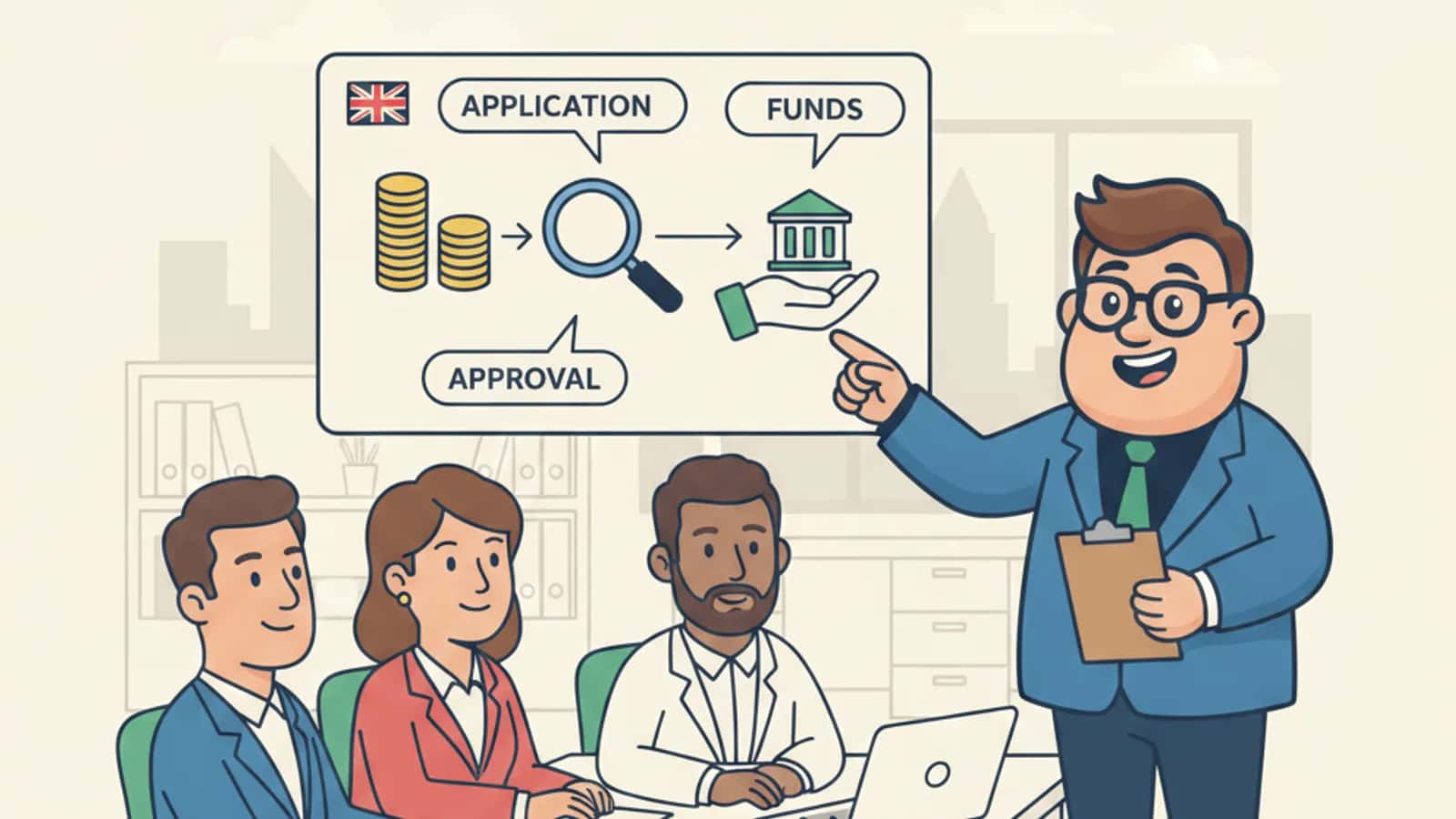
You apply for a start up loan online through a delivery partner working with the British Business Bank, submitting your business plan, cash-flow forecast and personal details for a credit and affordability check. The process has several distinct stages, and skipping preparation at any point slows everything down.
Step-by-step application checklist:
- Confirm eligibility. Check your age, residency, right to work and that the business has traded for under five years.
- Build a business plan. Cover what you sell, who buys it, how you'll reach them and your cost base.
- Prepare a 12-month cash-flow forecast. Show how the loan amount gets repaid month by month.
- Gather personal documents. ID, proof of address, bank statements and details of existing credit commitments.
- Submit your application through the chosen delivery partner's online form.
- Complete the credit and affordability check. This is a personal check, run against you, not the business.
- Speak to a mentor or advisor, where offered, as part of the assessment process.
- Receive a decision and, if approved, sign the loan agreement before funds are released.
A common mistake is submitting a business plan with no numbers behind it, a page of ambition with no forecast rarely gets past the first review.
Do You Need a Business Plan and Cash-Flow Forecast?
Yes. A business plan and cash-flow forecast are required parts of a start up loan application, because the lender uses them to judge both the viability of the business and whether you can afford the repayments. There's no shortcut around this step.
Your plan should answer, in plain terms:
- What the business does and who it sells to.
- How much it costs to run, including the loan repayment, each month.
- What happens to cash flow in slower months.
- How the loan itself will be spent and what it's expected to generate.
If numbers in the forecast don't add up to affordable repayments, the application is likely to be declined regardless of how strong the idea sounds. Treat the forecast as the part that gets checked hardest, not a formality to finish last.
What Can You Use a Start Up Loan For?
A start up loan can be used for most legitimate business purposes tied to starting or growing a new UK business, such as equipment, stock, marketing, website build, initial staff costs or working capital. It's a flexible personal loan, so there's no narrow list of approved spending categories the way there might be with a grant.
Common uses include:
- Buying initial stock or equipment.
- Covering rent, fit-out or deposit costs for premises.
- Funding marketing and brand launch costs.
- Smoothing cash flow in the first months of trading.
What it generally should not be used for is refinancing personal, non-business debt, the scheme exists to fund business activity, and your forecast needs to reflect that.
How Long Does Approval Take?
Timelines for start up loan approval vary by applicant and delivery partner, and depend on how complete your business plan and documents are when you submit. There's no officially published guarantee on approval time, so it's worth preparing documents in advance rather than assuming a fixed turnaround.
What speeds things up:
- A complete, numbers-backed cash-flow forecast submitted first time.
- All personal ID and bank documents ready before you start the form.
- Prompt replies if the delivery partner or mentor asks follow-up questions.
What slows things down:
- Incomplete financial forecasts that need revision.
- Credit check queries that require further explanation.
- Missing proof of identity or address documents.
Is a Start Up Loan a Personal Loan? What Happens if the Business Fails?
Yes, a start up loan is legally a personal loan, made to you as an individual, even though the money is intended for business use. That distinction matters enormously if the business doesn't work out.
Because the debt sits with you personally rather than the company:
- You remain responsible for repayment even if the business closes.
- Limited company status doesn't shield you from this debt, because the loan was never made to the company.
- Missed payments affect your personal credit file
- , not just a business credit record, which can make future personal and business borrowing harder.
- There's no asset security
- , since the loan is unsecured, but that doesn't remove the obligation to repay, it just means the lender can't seize a specific asset to recover the debt directly.
If repayment becomes difficult, contact the delivery partner early. Falling silent after missed payments is the mistake that causes the most lasting credit damage, lenders generally have more flexibility when a borrower engages early than when they don't.
Common Reasons Start Up Loan Applications Get Rejected
Start up loan applications are most commonly rejected due to a weak or unrealistic cash-flow forecast, poor personal credit history, insufficient affordability, or a business plan that doesn't clearly show how the loan will be repaid. Most rejections trace back to preparation gaps rather than the business idea itself.
Typical rejection triggers:
- Forecast doesn't support repayments.
- The numbers show the loan can't realistically be serviced.
- Recent, unresolved credit problems.
- Defaults or missed payments close to the application date carry more weight.
- Existing debt load too high.
- New repayments on top of current commitments breach affordability.
- Vague business plan.
- No clear target customer, pricing, or path to revenue.
- Business outside the eligible trading window.
- Trading for more than five years rules out this specific scheme.
If you've been rejected, ask the delivery partner for the specific reason before reapplying elsewhere, fixing the actual issue beats guessing.
Alternatives If You're Declined or Need More Than the Scheme Limit
If a start up loan isn't available to you, or £25,000 per person and £100,000 per business isn't enough, several other routes are worth comparing before giving up on borrowing. The right alternative depends on how long you've been trading and how much you need.
- Unsecured business loans
- through a wider panel of lenders, which assess current trading performance and bank data rather than relying solely on a personal credit score.
- Merchant cash advances
- , repaid as a percentage of card sales, useful for businesses with steady card turnover but uneven monthly cash flow.
- Grants
- , which don't need repaying at all, see this breakdown of UK small business grants to check what you might qualify for alongside, or instead of, a loan.
- Generic start-up business lending
- aimed at newer companies rather than the government personal-loan scheme, covered in this guide to business loans for startups.
Funding Fred works differently from a bank. There's no pile of paperwork and no multi-week wait for a verdict. A sub-two-minute eligibility check, built on Open Banking and smart tech, matches you against a wide partner panel, with no hard check to start, and no obligation to proceed. Explore the full range of unsecured business loan and funding options, browse the broader library of UK business loan guides, or check eligibility now to compare selected finance partners without committing to anything.
Next steps for start up loans
Start up loans give very early-stage UK businesses a fixed-rate, government-backed way to borrow a modest amount without putting personal assets up as security. The scheme works well if you're within the five-year trading window, your credit file is reasonably clean, and your funding need sits under the per-person and per-business caps. It works less well if you need more than the scheme offers, your business has traded for longer than five years, or you need a decision faster than the application process allows.
Before applying, build a forecast that genuinely supports the repayments, gather your documents, and be honest about your credit history from the start. If you're declined, or the numbers don't fit, don't assume borrowing is off the table, a wider panel of lenders looking at current trading performance, rather than a clean credit file alone, may still have a route that works. Start with a quick eligibility check to see what's realistically available before you spend more time on applications that won't move forward.
Frequently asked questions
What Is a Start Up Loan? The Government-Backed Scheme Explained?
A start up loan is an unsecured personal loan, funded through the government-backed Start Up Loans scheme and delivered by the British Business Bank, designed for individuals building a new UK business. It's not a loan to your limited company, it's a loan to you as a person, which you then use to fund your business.
How Much Can You Borrow With a Start Up Loan?
Under the current British Business Bank Start Up Loans rules, individuals can borrow between £500 and £25,000 each, with a maximum of £100,000 per business where more than one director or partner applies. That per-business cap matters most for partnerships: three co-founders could each apply individually and combine their loans, but the total for the business cannot exceed the scheme limit.
What Is the Start Up Loans Interest Rate and Repayment Term?
The Start Up Loans scheme charges a fixed interest rate for the life of the loan, with no application fee and no charge for repaying early. The rate rose from 6% to 7.5% per year for new applications from 6 April 2026, and that 7.5% fixed rate is reflected in current guidance from official and partner channels.
Who Is Eligible for a Start Up Loan?
To be eligible for a start up loan, you need to be 18 or over, live in the UK with the right to work here, and be starting or running a UK-based business that has been fully trading for less than five years. This trading-age limit changed significantly in 2026.
Can You Get a Start Up Loan With Bad Credit?
A poor credit history can affect your start up loan application because the scheme runs a personal credit check as part of its assessment, but it doesn't automatically rule you out. There's no published minimum credit score, and outcomes depend on the overall application, not one factor in isolation.
Start Up Loan vs Bank Loan: Which Is Better?
A start up loan suits very early-stage, low-amount borrowing with a fixed government-backed rate, while a traditional bank loan suits businesses with trading history, assets and higher funding needs, and a panel-based route like Funding Fred's suits those who've been declined by both and need a faster decision. Each serves a different stage and need.
Written by
The Funding Fred Editorial Team creates plain-English guides to help business owners understand funding options, eligibility, and application readiness before they compare finance options.
Reviewed by
UK business finance content reviewer
Robert reads our UK business finance guides before they go live, checking each one is accurate, easy to follow, and reflects how lending actually works today — not how a brochure says it should. He's listed on the FCA Register, approved as an SMF3 (AR) Executive Director at Switcha Limited, and connected to Lucky Growth Partners Ltd through its appointed representative relationship, so the regulated detail gets a properly qualified second read.