Business Loan With a CCJ: What UK Lenders Check and How to Improve Your Chances
Yes, you can get a business loan with a CCJ in the UK, but mainstream banks usually decline once a County Court Judgment shows up on a credit check. Specialist and alternative lenders look past the judgment itself and weigh its age, size, and whether it's satisfied or unsatisfied, alongside your current trading performance.

Quick answer
Yes, you can get a business loan with a CCJ in the UK, but mainstream banks usually decline once a County Court Judgment shows up on a credit check. Specialist and alternative lenders look past the judgment itself and weigh its age, size, and whether it's satisfied or unsatisfied, alongside your current trading performance. The further the CCJ is from today, and the smaller and more "satisfied" it is, the more lenders you'll have open to you.
Key takeaways
- A CCJ does not automatically disqualify you from business funding, but it does narrow your options away from high-street banks.
- Satisfied CCJs (paid in full) are treated far more favourably than unsatisfied ones, especially above £5,000.
- Director CCJs and company CCJs are assessed differently; a personal judgment against a director doesn't always sink a company application, but lenders will ask about it.
- A CCJ stays on the public register for six years from the judgment date, regardless of whether it's later paid.
- Paying a CCJ in full within one month of the judgment can get it removed from the register entirely, this is the key window to act in.
- You can check for CCJs against your business or yourself using the Register of Judgments, Orders and Fines (TrustOnline), run by Registry Trust.
- Roughly 24 of 55 unsecured lenders assessed in one industry dataset will still consider applicants with older, satisfied CCJs.
- Alternative products, merchant cash advances, revenue-based finance, invoice finance, tend to be more CCJ-tolerant than standard term loans.
-
Can you get a business loan with a CCJ in the UK?

Yes. A business loan with a CCJ on file is possible, but you'll likely be ruled out by high-street banks and pushed toward specialist or alternative lenders instead. The judgment itself is rarely a hard stop, what matters is its age, size, and status.
Lenders run credit checks on both the business (via Companies House-linked data) and, usually, the director giving a personal guarantee. A single small, old, satisfied CCJ is a very different risk signal from a recent, unsatisfied judgment over £5,000. High-street banks tend to apply blanket policies that decline any CCJ. Specialist unsecured lenders, merchant cash advance providers, and revenue-based funders typically look at the full picture, current cash flow, bank statements, and trading trend, rather than treating the CCJ as an automatic veto.
Decision rule: if your CCJ is satisfied, more than 12 months old, and under £5,000, you're in reasonable shape for several alternative lenders. If it's unsatisfied, recent, and large, expect a much shorter list of options and tighter terms.
Does a CCJ against the director affect a company loan?
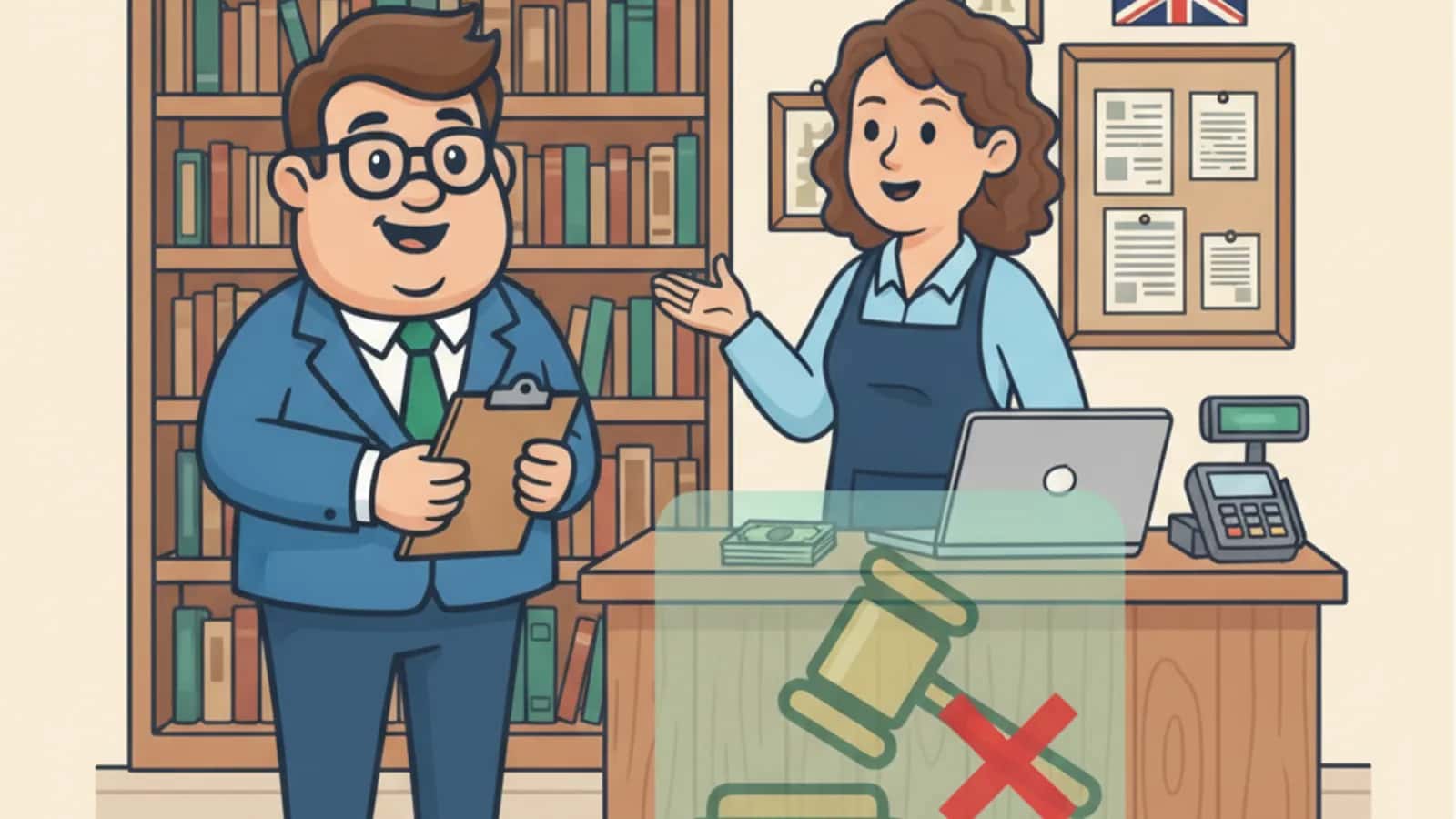
A CCJ registered against a director personally can affect a company's loan application, mainly because most unsecured business loans require a personal guarantee from directors. Lenders check the individual behind the guarantee, not just the company.
This creates two separate but linked risk profiles:
- Company CCJ
- , registered against the business itself at Companies House. This shows directly on the company's credit file and is the first thing most lenders see.
- Director CCJ
- , registered against the individual personally, often for unrelated personal debt. This surfaces when a personal guarantee is required, which is standard for most unsecured facilities.
A lender can, in principle, decline a loan because of a director's personal CCJ even if the company itself has a clean record, because the guarantee ties the director's personal risk to the loan. Before signing anything, it's worth understanding exactly what you're committing to, our guide to personal guarantees explains how these work and what happens if the business can't repay.
Satisfied vs unsatisfied CCJ: what's the difference for lenders?
A satisfied CCJ means the debt has been paid in full and the court record has been updated to reflect that. An unsatisfied CCJ means it's still outstanding. Lenders treat these very differently, a satisfied CCJ signals the issue is resolved, while an unsatisfied one signals ongoing financial strain.
Why it matters for underwriting:
- Satisfied CCJs are generally viewed as historic, closed issues. Many specialist lenders will still lend, particularly if the judgment is older and the amount was modest.
- Unsatisfied CCJs, especially those over £5,000, are flagged as a live risk. Lenders see an unresolved debt as evidence of current cash-flow pressure, which is exactly what they're trying to avoid lending into.
- Multiple CCJs, or a mix of recent unsatisfied judgments alongside other adverse markers (defaults, late filings, HMRC arrears), concentrate your options into a small pool of niche, higher-cost lenders.
Quick example: A business with one satisfied CCJ for £1,200 from three years ago has meaningfully more lender choice than a business with an unsatisfied £8,000 CCJ registered last month, even if both are, technically, "a CCJ on the file."
If you're unsure how either scenario is actually weighing on your file right now, it's worth reviewing your business credit score before you apply, so you're not guessing what a lender will see.
How long does a CCJ stay on your credit file?
A CCJ stays on the public register, and therefore visible to credit reference agencies and lenders, for six years from the date it was issued, whether or not it's later paid. This six-year visibility is the standard rule for how long a judgment appears on file.
Two important nuances:
- Paying the CCJ does not remove it from your file early unless you pay within the specific window described below. It simply changes its status from unsatisfied to satisfied.
- After six years, the judgment should drop off automatically. You don't need to apply to have it removed at that point, it expires from the register on its own.
How to check for CCJs and get one removed within 30 days
You can check for CCJs registered against your business or yourself using the Register of Judgments, Orders and Fines, searchable via TrustOnline, which is run by Registry Trust. This is the same register most credit reference agencies pull from, so it's the most reliable way to see what a lender will see.
To get a CCJ removed from the register entirely (not just marked satisfied), you generally need to pay it in full within one month of the judgment date. This is the key window:
- Check the register via TrustOnline to confirm the judgment exists, the amount, and the date it was issued.
- Pay in full within 30 days of the judgment date if you want it removed from the register completely, rather than just marked satisfied.
- Get confirmation of payment and, if applicable, apply to the court for a certificate of cancellation.
- Allow processing time for the register to update, it won't disappear instantly, so build this into any funding timeline.
- Re-check your file before applying for finance, since lenders may be pulling data that hasn't yet caught up with a recent payment.
Decision rule: if you've just been served a CCJ and have the cash available, paying within 30 days is almost always worth it if you plan to apply for finance soon, removal from the register is a stronger position than a satisfied-but-visible judgment.
If you don't catch the 30-day window, paying later still moves the judgment from unsatisfied to satisfied, which is still a meaningful improvement in how lenders view the file.
What do lenders check beyond the CCJ itself?
A CCJ is one data point among several. Lenders assessing a business loan with a CCJ application also look closely at trading history, cash flow, and recent bank statements to judge current, not just historic, risk.
Typical underwriting checks include:
- Time trading
- , many alternative lenders want at least several months to a few years of trading history before considering an application.
- Bank statements
- (often three to twelve months), used to assess cash flow consistency, overdraft usage, and whether revenue supports repayments.
- Current CCJ status
- , age, amount, and satisfied/unsatisfied flag, as covered above.
- Director credit profile
- , particularly where a personal guarantee is required.
- Other adverse markers
- , defaults, missed payments, HMRC arrears, or insolvency history, which compound the effect of a CCJ.
Atom Bank's published commercial lending criteria, for example, sets out specific rules around how CCJs are treated for commercial mortgage applications, including thresholds on amount and recency. This illustrates a broader pattern: lenders increasingly publish explicit CCJ policies rather than applying a blanket "no", but those policies vary significantly by lender and product, so there's no single universal threshold across the market.
Business loans for bad credit UK: where CCJ cases fit
Business loans for bad credit in the UK cover a range of credit issues, missed payments, defaults, and CCJs among them, and CCJ cases specifically sit toward the more serious end of that spectrum, particularly when unsatisfied or large. A CCJ is treated as a more serious red flag than a single missed payment, but less serious than an active insolvency process.
The broader bad credit lending market has expanded over the past few years, with more specialist brokers and platforms built specifically around adverse-credit cases. Within that market, applicants typically fall into tiers:
| Credit profile | Typical lender response |
|---|---|
| Clean file, no CCJs | Widest lender pool, including mainstream banks |
| Satisfied CCJ, older, under £5,000 | Many specialist/alternative lenders still consider |
| Unsatisfied CCJ, under £5,000 | Narrower pool, mostly specialist lenders |
| Unsatisfied CCJ, over £5,000, recent | Smallest pool, niche adverse-credit lenders only |
| Multiple CCJs plus other adverse markers | Very limited options, often higher cost |
If your situation is less about a CCJ specifically and more about a wider bad credit picture, our broader guide to bad credit business loans covers the full range of adverse-credit scenarios in more depth.
How to improve your chances of getting a business loan with a CCJ
You improve your chances of a business loan with a CCJS mainly by resolving what you can (paying or settling the CCJ), being upfront with lenders, and proving current trading strength outweighs the historic issue.
Practical steps that genuinely move the needle:
- Check the register first.
- Know exactly what's on file, date, amount, satisfied status, before a lender tells you.
- Pay or settle where possible.
- A satisfied CCJ is treated far better than an unsatisfied one of the same size.
- Gather clean bank statements.
- Three to twelve months of consistent trading income does a lot to offset a historic judgment.
- Be upfront in the application.
- Lenders who discover an undisclosed CCJ mid-process are far more likely to decline than one who sees it declared with context.
- Apply through a wider panel rather than one bank.
- A single rejection from your high-street bank doesn't reflect your odds across the whole market.
- Consider the product, not just the lender.
- Some products (merchant cash advances, revenue-based finance) are structurally more tolerant of past credit issues than standard term loans.
Realistic application checklist
- [ ] Searched TrustOnline / the Register of Judgments for any CCJs against the business and directors
- [ ] Confirmed whether each CCJ is satisfied or unsatisfied
- [ ] Paid or arranged payment of any outstanding judgment where affordable
- [ ] Gathered 3-12 months of business bank statements
- [ ] Prepared management accounts or recent filed accounts
- [ ] Noted director details for any personal guarantee requirement
- [ ] Reviewed current business credit score for a realistic picture
- [ ] Identified how much funding is needed and over what repayment term
CCJ removed from your file but still affecting loan approval?
If a CCJ has come off your credit file but you're still being declined, the judgment is probably not the real issue, lenders may be reacting to other factors like recent trading dips, existing debt levels, or director credit history. It's a common and frustrating pattern worth untangling before reapplying.
Reasons this happens:
- Data lag.
- Credit reference agencies and lender systems don't always update instantly when a register entry expires or is cancelled.
- Underlying trading issues.
- A business that struggled enough to get a CCJ may still show thin cash flow or inconsistent revenue, which lenders assess independently of the judgment itself.
- Related adverse markers.
- Defaults or missed payments from the same period often remain even after the CCJ itself has gone.
- Lender-specific policy.
- Some lenders ask about any CCJ in the last 12-24 months on the application form itself, regardless of what the credit file currently shows.
If you've been turned down and aren't sure why, read our guide on what to do after a declined business loan, it walks through how to get clarity on a decline and what to fix before trying again.
Business loan alternatives if you have a CCJ
If a standard term loan isn't landing, several alternative funding types are often more accessible with a CCJ on file, because they're underwritten around current revenue rather than a clean credit history.
- Merchant cash advances
- , repayments flex with card sales, which appeals to lenders focused on current trading rather than historic credit events.
- Invoice finance
- , funding is secured against unpaid invoices, so the credit risk sits more with your customers than your own credit file.
- Revenue-based finance
- , repayment structured as a percentage of turnover, again weighted toward current performance.
- Asset finance
- , where the asset itself provides security, reducing reliance on credit history alone.
These products sit alongside unsecured loans as part of a wider panel of options, Unsecured Loans and Merchant Cash Advance products are both commonly used by businesses navigating a CCJ, because eligibility leans on Open Banking data and current trading rather than a spotless file.
Cost, timing and paperwork: what changes when you have a CCJ
A CCJ typically increases the cost of borrowing because lenders price in the added risk, and it can also narrow your choice of lender and slow decisions slightly while extra checks are carried out. Exact rates, fees, and timeframes vary by lender, product, and the specifics of your CCJ, so there's no single figure that applies across the market.
What to expect, directionally:
- Cost:
- Specialist and bad-credit-focused lenders generally charge more than mainstream banks would for a clean-file applicant, reflecting the added risk of a CCJ on record. Ask for a full cost breakdown before accepting any offer.
- Timing:
- An unsatisfied or very recent CCJ may add extra underwriting steps (further document requests, deeper bank statement review), which can extend decision time versus a clean application.
- Expiring CCJs:
- If a CCJ is close to its six-year expiry, some lenders may still factor it in during the application, but your position generally improves the further it recedes into the past.
- Documents:
- Expect to provide standard business loan paperwork, bank statements, proof of ID, company details, plus likely an explanation of the CCJ itself (what it was, when, and current status). Our guide on what documents do I need to apply for a business loan covers the standard list in full.
- Paying it off:
- Settling a CCJ, particularly within the 30-day window described earlier, generally speeds up and widens access to funding, because it removes the "unsatisfied" flag that concerns lenders most.
Which types of lenders consider a business loan with a CCJ?
Specialist and alternative lenders, rather than mainstream high-street banks, are the realistic route for most business loan with CCJ applications. Industry data suggests a meaningful share of the unsecured lending market, roughly 24 of 55 lenders in one assessment, will still consider applicants with older, satisfied CCJs.
Rather than naming or ranking specific providers, it's more useful to understand the categories:
- High-street banks
- , typically the strictest, often declining outright once any CCJ, satisfied or not, appears on file.
- Specialist unsecured lenders
- , weigh the CCJ's age, size, and status against current trading, frequently approving cases that banks won't.
- Alternative/fintech lenders
- , use Open Banking data and automated checks to assess current cash flow quickly, often more flexible on historic credit events.
- Adverse-credit brokers and platforms
- , have grown specifically to serve CCJ and bad-credit cases, matching applicants to the lenders most likely to say yes.
This is where working with a wide partner panel rather than one bank changes the outcome. Funding Fred's two-minute eligibility check uses Open Banking and Smart Tech to match applicants against a wide partner panel of finance providers, with no hard check to start, so a CCJ doesn't mean the conversation ends at the first door you knock on. Explore the full range of business loan options for UK companies to see what's realistically available based on current trading, not just credit history.
| | Traditional Banks | Funding Fred | | --- | --- | --- | | CCJ policy | Often an automatic decline | Flexible Criteria, weighed against trading | | Credit check | Hard check from the outset | No hard check to start | | Decision speed | Weeks of paperwork | 2 min check, Fast Decision | | Lender choice | One bank, one answer | Compare selected finance partners across a Wide partner panel | | Credit types considered | Narrow, strict | All Credit Types considered |
If a CCJ is just one part of a messier credit picture, it's worth browsing the full category hub for business loans for related guides on bad credit, declined applications, and alternative funding routes.
Next steps for business loan with ccj
A CCJ complicates a business loan application, but it rarely ends it. What decides the outcome is the detail: how old the judgment is, how large it is, whether it's satisfied, and whether your current trading numbers tell a stronger story than the credit file does. Mainstream banks tend to apply a blanket decline. Specialist and alternative lenders look harder, and that's where most business loan with CCJ approvals actually happen.
The practical next steps are straightforward. Check the Register of Judgments to know exactly what's on file. Pay or settle what you can, ideally within that crucial 30-day window if the CCJ is fresh. Pull together recent bank statements and be upfront about the judgment rather than hoping it goes unnoticed. Then apply through a route built for this exact situation, one with Flexible Criteria, a Wide partner panel, and no hard check to start.
Check Eligibility Now with a two-minute Open Banking check. There's no obligation to proceed, and Funding Fred does not charge you for using the service.
Frequently asked questions
Can you get a business loan with a CCJ in the UK?
Yes. A business loan with a CCJ on file is possible, but you'll likely be ruled out by high-street banks and pushed toward specialist or alternative lenders instead. The judgment itself is rarely a hard stop, what matters is its age, size, and status.
Does a CCJ against the director affect a company loan?
A CCJ registered against a director personally can affect a company's loan application, mainly because most unsecured business loans require a personal guarantee from directors. Lenders check the individual behind the guarantee, not just the company.
Satisfied vs unsatisfied CCJ: what's the difference for lenders?
A satisfied CCJ means the debt has been paid in full and the court record has been updated to reflect that. An unsatisfied CCJ means it's still outstanding. Lenders treat these very differently, a satisfied CCJ signals the issue is resolved, while an unsatisfied one signals ongoing financial strain.
How long does a CCJ stay on your credit file?
A CCJ stays on the public register, and therefore visible to credit reference agencies and lenders, for six years from the date it was issued, whether or not it's later paid. This six-year visibility is the standard rule for how long a judgment appears on file.
How to check for CCJs and get one removed within 30 days?
You can check for CCJs registered against your business or yourself using the Register of Judgments, Orders and Fines, searchable via TrustOnline, which is run by Registry Trust. This is the same register most credit reference agencies pull from, so it's the most reliable way to see what a lender will see.
What do lenders check beyond the CCJ itself?
A CCJ is one data point among several. Lenders assessing a business loan with a CCJ application also look closely at trading history, cash flow, and recent bank statements to judge current, not just historic, risk.
Written by
The Funding Fred Editorial Team creates plain-English guides to help business owners understand funding options, eligibility, and application readiness before they compare finance options.
Reviewed by
UK business finance content reviewer
Robert reads our UK business finance guides before they go live, checking each one is accurate, easy to follow, and reflects how lending actually works today — not how a brochure says it should. He's listed on the FCA Register, approved as an SMF3 (AR) Executive Director at Switcha Limited, and connected to Lucky Growth Partners Ltd through its appointed representative relationship, so the regulated detail gets a properly qualified second read.