
Paying Suppliers by Business Credit Card: Benefits, Fees and Limits
Paying suppliers by business credit card gives UK businesses up to 56 days interest-free before a payment is due, earns rewards on spend, and keeps cash in the business longer. The main costs to watch are supplier surcharges (where still permitted), foreign transaction fees, and the card's APR if balances carry over.

Quick answer
Paying suppliers by business credit card gives UK businesses up to 56 days interest-free before a payment is due, earns rewards on spend, and keeps cash in the business longer. The main costs to watch are supplier surcharges (where still permitted), foreign transaction fees, and the card's APR if balances carry over. Credit limits vary widely by provider and business profile, typically ranging from £1,000 to £250,000 or more.
Key takeaways
- Business credit cards can extend your effective payment terms by up to 56 days interest-free, which directly improves cash flow
- Some suppliers charge a processing fee (typically 1-3%) when you pay by card, always check before paying
- Business credit card limits are set by the card provider based on your business financials, not by a fixed rule
- Section 75 consumer protection does NOT apply to business credit cards, chargeback rights and provider purchase protection are the relevant options
- Rewards, cashback, and points can offset card costs when paying large supplier invoices regularly
- Not all suppliers accept card payments, some use bank transfer only, especially for large B2B invoices
- Tax treatment follows the underlying purchase, not the payment method, card fees and interest are generally a business expense
- A 2-minute eligibility check with Funding Fred carries no hard credit search and matches you with leading card providers
What Are the Main Benefits of Paying Suppliers with a Business Credit Card?

Paying suppliers by business credit card: benefits, fees and limits is a topic that matters most to businesses managing tight payment cycles. The headline benefit is time: a card with up to 56 days interest-free means a supplier invoice paid on day one of your billing cycle doesn't cost you a penny in interest if cleared by the statement due date.
The main benefits, in plain terms
- Cash flow headroom. You pay the supplier now, but your cash stays in the account for weeks. That gap can cover payroll, stock, or VAT without touching an overdraft. For a deeper look at how this compares to other facilities, see this guide on business overdraft vs line of credit vs loan.
- Spend visibility. Every transaction is logged. No chasing receipts, no month-end guesswork. Cards with spend controls let you cap what each employee or department can spend.
- Rewards and cashback. Regular supplier payments, ad spend, stock purchases, software subscriptions, can generate meaningful cashback or points over a year.
- Chargeback protection. If a supplier fails to deliver, you can raise a chargeback through your card provider. This is separate from Section 75, which does not apply to business credit cards.
- Separation of business and personal spend. Issuing business credit cards to staff stops the problem of employees putting company costs on personal cards and claiming expenses later.
What Fees Do Business Credit Cards Charge for Supplier Payments?
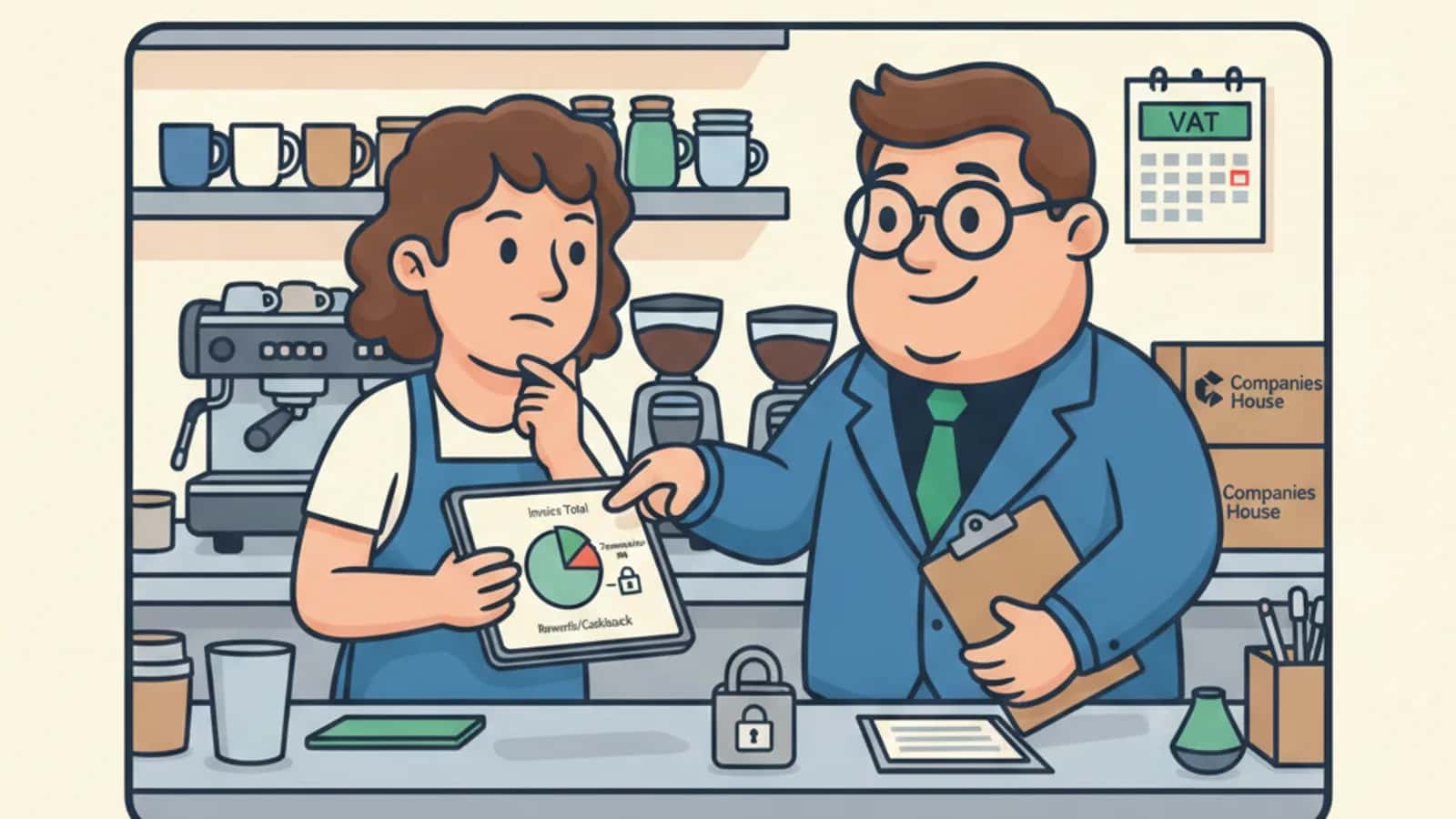
Most business credit cards do not charge a fee specifically for paying suppliers, the transaction is treated like any other purchase. The fees that do apply depend on how and where you're paying.
Fees to be aware of
- Annual or monthly card fee. Many business cards charge a fixed fee, from around £25 to £200+ per year depending on the tier and benefits included.
- Foreign transaction fee. Paying an overseas supplier in a foreign currency typically attracts a fee of 2-3% of the transaction value. Some cards waive this.
- Cash advance fee. If a payment is processed as a cash advance rather than a purchase (this can happen with certain payment platforms), a fee of 2-3% plus immediate interest usually applies.
- Late payment fee. Missing the statement due date triggers a fee and interest charges at the card's standard APR, which for business cards typically runs from around 20% to 35% representative APR, though rates vary significantly by provider and your business profile. For more detail, see our guide to business credit card APR.
- Balance transfer fee. Not directly relevant to supplier payments, but worth knowing if you're moving debt between cards.
There is no universal fee for paying a UK supplier by card. The cost depends entirely on your card's terms and the supplier's payment setup.
Do Suppliers Charge Extra Fees When You Pay by Business Credit Card?
Yes, some suppliers do charge a processing fee when you pay by card. Under UK law, consumer surcharges on personal credit and debit cards were banned in 2018, but B2B transactions between businesses are not covered by the same rules. A supplier can legally pass on their card processing costs to a business customer.
What this looks like in practice
- Surcharges typically range from 1% to 3% of the invoice value
- Some suppliers apply a flat fee per transaction (for example, £2.50 per card payment)
- Larger suppliers with high card volumes often absorb the cost; smaller suppliers are more likely to pass it on
- The surcharge should be disclosed before you confirm payment, if it isn't, query it
Decision rule: If a supplier charges 2% and your card earns 1% cashback, you're net 1% worse off paying by card. Run the numbers before defaulting to card for every invoice.
Are There Daily or Monthly Limits on Business Credit Card Payments to Suppliers?
Business credit cards have a credit limit, not a daily or monthly cap in the traditional sense. Once you've used your available credit, you can't spend more until you've made a payment. Some providers also apply transaction-level controls or flag unusually large single payments for security checks.
How limits work in practice
- Your available credit reduces with each purchase and restores as you repay
- A card with a £20,000 limit and £15,000 already used has £5,000 available, regardless of the day or month
- Some providers let you set per-card or per-employee sub-limits, which is useful for controlling what staff can spend with individual suppliers
- Virtual cards can be set with single-use or capped limits, useful for one-off large supplier payments
If you regularly hit your limit before the statement date, that's a sign the limit needs reviewing, not that the card is the wrong tool.
Can You Pay Any Supplier with a Business Credit Card, or Are There Restrictions?
Not every supplier accepts card payments, and some that do won't accept all card types. Most UK retail and trade suppliers accept Visa and Mastercard business cards. American Express acceptance is lower, particularly among smaller suppliers and some trade accounts.
Common restrictions
- Many B2B suppliers invoice by bank transfer (BACS or CHAPS) and don't offer a card payment option at all
- HMRC does not accept personal credit card payments for tax bills, though some business tax payments can be made by corporate card, check current HMRC guidance before attempting this
- Utility providers, landlords, and some professional services firms may only accept direct debit or bank transfer
- International suppliers may only accept wire transfer or specific payment platforms
Workaround: Some payment platforms (such as Payhawk, Soldo, or Equals Money) allow businesses to fund a payment via card and send a bank transfer to the supplier. These platforms often charge a fee and may process the transaction as a cash advance, check the terms carefully before using this route.
Is Paying Suppliers by Credit Card Good for Cash Flow and Why?
Paying suppliers by credit card is one of the most direct ways to extend your effective cash flow without taking on a loan. You pay the supplier on their terms, but you don't actually part with your cash until the card statement is due, up to 56 days later with many business cards. For more detail, see our guide to using business credit cards for cash flow.
Why this matters
- A business with 30-day supplier payment terms and a 56-day interest-free card effectively has an 86-day window before cash leaves the account
- That gap can be used to collect customer payments, cover operating costs, or simply keep a buffer in the account
- It reduces reliance on an overdraft, which typically charges interest from day one
For businesses managing seasonal cash flow or funding stock ahead of a busy period, this can be the difference between a comfortable month and a stressful one. If you're comparing this to other working capital options, the guide on cash flow business loans covers the alternatives in detail.
"Covered a big supplier invoice without touching the overdraft" is one of the most common reasons businesses switch to a dedicated business credit card.
How Do Business Credit Card Rewards Work When Paying Suppliers?
Most business credit cards earn rewards on every purchase, including supplier payments. The rate and structure vary by card.
Common reward structures
- Cashback: A percentage of spend returned as cash, typically 0.5%,2% depending on the card and spend category
- Points: Accumulated points redeemable against travel, vouchers, or statement credit
- Category bonuses: Some cards offer higher earn rates on specific categories such as advertising, fuel, or office supplies
The key condition: rewards only make financial sense if the balance is cleared each month. Carrying a balance at 25-30% APR wipes out any cashback benefit within weeks.
What's the Difference Between Paying Suppliers by Credit Card vs Debit Card?
The core difference is timing and risk. A debit card pulls money from your account immediately. A credit card defers the payment and gives you a billing cycle to repay.
| Feature | Business Credit Card | Business Debit Card |
|---|---|---|
| Cash leaves account | Up to 56 days later | Immediately |
| Rewards / cashback | Yes, on most cards | Rarely |
| Chargeback rights | Yes (via card scheme) | Yes (via card scheme, shorter window) |
| Spend limit | Credit limit set by provider | Account balance |
| Risk if balance unpaid | Interest charges apply | No interest risk |
| Employee cards | Yes, with sub-limits | Yes, but draws live funds |
What Are the Downsides of Using Business Credit Cards to Pay Suppliers?
Paying suppliers by business credit card: benefits, fees and limits isn't a one-sided conversation. There are real downsides that businesses overlook.
- Carrying a balance is expensive.
- Business card APRs are high. If you can't clear the balance monthly, the interest cost quickly outweighs any cash flow benefit.
- Supplier surcharges.
- A 2-3% surcharge on a £50,000 invoice is £1,000,£1,500 extra cost.
- Credit limit constraints.
- A card with a £10,000 limit won't cover a £40,000 stock order. Limits that haven't moved in years are a common frustration.
- No Section 75 protection.
- Unlike personal credit cards, business cards don't carry Section 75 rights under the Consumer Credit Act. Chargeback is available but has a shorter dispute window and different rules.
- Impact on credit utilisation.
- High utilisation relative to your limit can affect your business credit score, which matters when applying for other finance.
- Complexity with multiple cards.
- Without spend controls and clear policies, issuing cards to staff can create reconciliation headaches rather than solve them.
What Tax Implications Should You Know About Paying Suppliers by Credit Card?
The tax treatment of a supplier payment follows the nature of the purchase, not the payment method. Paying by card instead of bank transfer doesn't change whether the cost is allowable for corporation tax or whether VAT can be reclaimed.
Key points for UK businesses
- VAT reclaim: You can still reclaim input VAT on a supplier purchase paid by card, provided you hold a valid VAT invoice. The payment method is irrelevant to HMRC's VAT rules.
- Corporation tax: Allowable business expenses remain allowable whether paid by card, BACS, or cheque.
- Card fees and interest: Annual card fees and interest charges on business credit cards are generally deductible as a business expense. Keep these separate from the underlying purchase costs in your accounts.
- Supplier surcharges: A card surcharge paid to a supplier is part of the cost of that purchase and is treated accordingly for tax purposes.
- Personal cards used for business: If a director or employee pays a supplier on a personal card and reclaims it, the tax treatment is the same, but the admin burden is higher and the business loses the spend visibility benefit.
Always confirm specific tax positions with a qualified accountant. HMRC's guidance on business expenses is the primary reference for allowable deductions.
Can You Increase Your Business Credit Card Limit for Large Supplier Payments?
Yes, most providers allow limit increase requests, but approval depends on your business financials and credit history at the time of the request. There is no automatic entitlement to a higher limit.
How to approach a limit increase:
- Check whether your current provider offers a self-service increase request (many do via online banking)
- Have recent business accounts, bank statements, or management accounts ready, providers often ask for these
- Timing matters: a request made after a strong trading period is more likely to succeed than one made during a quiet month
- If your current provider won't move, switching to a new card with a higher starting limit is a practical alternative
Funding Fred's eligibility check matches businesses with leading card providers offering limits from £1,000 to £250,000 or more. The initial check is a soft search, No hard check to start, and takes around 2 minutes. This is separate from the card provider's full application and credit assessment, which will involve its own checks.
If a single large supplier payment exceeds what any card can cover, it's worth reviewing whether invoice financing or a short-term business loan might be a better fit for that specific payment.
What Happens If a Supplier Doesn't Accept Credit Card Payments?
If a supplier only accepts bank transfer, you have a few options. The simplest is to pay by BACS or CHAPS directly. If cash flow is the concern, look at whether your payment terms can be extended, or whether a short-term facility covers the gap.
Some businesses use card-funded payment platforms that send a bank transfer to the supplier while the business pays the platform by card. This can work, but check whether the platform charges a fee and whether your card treats it as a purchase or a cash advance, the latter triggers immediate interest and a cash advance fee.
For recurring large payments to suppliers who don't accept cards, a business overdraft or line of credit may be a more cost-effective working capital tool than workarounds.
Should Small Businesses Pay Suppliers with Credit Cards, or Is It a Mistake?
Paying suppliers by business credit card: benefits, fees and limits is a good fit for small businesses that clear their balance monthly, have regular supplier spend, and want better cash flow visibility. It's a poor fit for businesses that carry balances, have suppliers who charge high surcharges, or need limits well above what a card can offer.
Which is right for you?
Use a business credit card for supplier payments if
- You can reliably clear the balance each month
- Your supplier accepts card without a surcharge, or the surcharge is less than your cashback rate
- You want up to 56 days to pay without interest
- You want to earn rewards on spend you're making anyway
- You need employee cards with spend controls
Consider an alternative if
- You regularly carry a balance (the APR will cost more than the benefit)
- Supplier surcharges make card payments more expensive than bank transfer
- Your invoice sizes exceed your card limit
- Your supplier only accepts bank transfer
For businesses that need working capital beyond what a card provides, see the guide on same day business funding for faster alternatives.
Next steps
Paying suppliers by business credit card is a practical tool for UK businesses that want more breathing room between spending and paying. Up to 56 days interest-free, cashback on regular supplier spend, and real-time visibility over who spent what, these are genuine advantages for businesses that use cards as part of a deliberate cash flow strategy. For more detail, see our guide to business credit card cash withdrawals.
The risks are equally real: high APR if balances carry over, supplier surcharges that erode any reward benefit, and limits that don't keep pace with your business. The businesses that get the most from a card are those that clear the balance monthly, check surcharge terms before paying large invoices, and choose a card with a limit that actually matches their supplier spend.
If your current card limit hasn't moved in years, or you're still waiting weeks for a bank to decide, a 2-minute eligibility check through Funding Fred connects you with leading card providers, No hard check to start, no obligation, and limits from £1,000 to £250,000+. Business Credit Cards. Without the Fuss.
Check Eligibility Now, Fast Decision, no hard search, no long forms.
Frequently asked questions
What Are the Main Benefits of Paying Suppliers with a Business Credit Card?
Paying suppliers by business credit card: benefits, fees and limits is a topic that matters most to businesses managing tight payment cycles. The headline benefit is time: a card with up to 56 days interest-free means a supplier invoice paid on day one of your billing cycle doesn't cost you a penny in interest if cleared by the statement due date.
What Fees Do Business Credit Cards Charge for Supplier Payments?
Most business credit cards do not charge a fee specifically for paying suppliers, the transaction is treated like any other purchase. The fees that do apply depend on how and where you're paying.
Do Suppliers Charge Extra Fees When You Pay by Business Credit Card?
Yes, some suppliers do charge a processing fee when you pay by card. Under UK law, consumer surcharges on personal credit and debit cards were banned in 2018, but B2B transactions between businesses are not covered by the same rules. A supplier can legally pass on their card processing costs to a business customer.
Are There Daily or Monthly Limits on Business Credit Card Payments to Suppliers?
Business credit cards have a credit limit, not a daily or monthly cap in the traditional sense. Once you've used your available credit, you can't spend more until you've made a payment. Some providers also apply transaction-level controls or flag unusually large single payments for security checks.
Can You Pay Any Supplier with a Business Credit Card, or Are There Restrictions?
Not every supplier accepts card payments, and some that do won't accept all card types. Most UK retail and trade suppliers accept Visa and Mastercard business cards. American Express acceptance is lower, particularly among smaller suppliers and some trade accounts.
Is Paying Suppliers by Credit Card Good for Cash Flow and Why?
Paying suppliers by credit card is one of the most direct ways to extend your effective cash flow without taking on a loan. You pay the supplier on their terms, but you don't actually part with your cash until the card statement is due, up to 56 days later with many business cards. For more detail, see our guide to using business credit cards for cash flow.
Written by
The Funding Fred Editorial Team creates plain-English guides to help business owners understand funding options, eligibility, and application readiness before they compare finance options.
Reviewed by
UK business finance content reviewer
Robert reads our UK business finance guides before they go live, checking each one is accurate, easy to follow, and reflects how lending actually works today — not how a brochure says it should. He's listed on the FCA Register, approved as an SMF3 (AR) Executive Director at Switcha Limited, and connected to Lucky Growth Partners Ltd through its appointed representative relationship, so the regulated detail gets a properly qualified second read.