
Invoice Finance for UK SMEs: Using Your Sales Ledger as a Dynamic Funding Pool
Invoice finance for UK SMEs turns unpaid invoices into immediate working capital by advancing up to 90% of an invoice's face value within 24–48 hours of raising it. Rather than waiting 30, 60, or 90 days for customers to pay, businesses access funds tied up in their sales ledger as a revolving, scalable facility.

Quick answer
Invoice finance for UK SMEs turns unpaid invoices into immediate working capital by advancing up to 90% of an invoice's face value within 24–48 hours of raising it. Rather than waiting 30, 60, or 90 days for customers to pay, businesses access funds tied up in their sales ledger as a revolving, scalable facility. The funding pool grows automatically as the business issues more invoices — making it fundamentally different from a fixed-term loan.
Key takeaways
- Invoice finance treats your sales ledger as a live asset, not a passive record — the more you invoice, the more funding you can access.
- Advance rates typically range from 70% to 90% of invoice value, with the remainder (minus fees) released when the customer pays.
- Two main products exist: invoice factoring (the lender collects payment) and invoice discounting (you retain credit control).
- Costs generally run between 0.5% and 5% of invoice value depending on turnover, sector, and debtor quality.
- Credit decisions are primarily based on your customers' creditworthiness, not just your own — which helps businesses with imperfect credit histories.
- Most facilities can be set up within 24–72 hours once documents are submitted; some same-day options exist for selective invoice finance.
- You can use invoice finance for all invoices (whole-ledger) or selectively for specific customers or contracts.
- Seasonal businesses benefit significantly because the facility scales up and down with trading volume automatically.
- The UK government removed contractual restrictions on invoice finance in 2015, making it accessible across far more sectors.
- A 2-minute eligibility check with no hard credit search is all it takes to start exploring your options.
What Is Invoice Finance and How Does It Work for Small Businesses

Invoice finance is a form of asset-based lending where a business sells or assigns its outstanding invoices to a finance provider in exchange for an immediate cash advance. For UK SMEs, it solves a specific and frustrating problem: you've done the work, raised the invoice, but you're waiting weeks or months for the money to actually arrive.
Here's the basic mechanic:
- You raise an invoice to a business customer for goods or services delivered.
- You submit the invoice to your invoice finance provider.
- The provider advances typically 70%–90% of the invoice value, usually within 24 hours.
- Your customer pays on their normal terms (30, 60, or 90 days).
- The remaining balance is released to you, minus the provider's fees.
What makes this a *dynamic funding pool* rather than a one-off loan is the revolving nature. As new invoices are raised, new funds become available. As old invoices are settled, the cycle continues. The facility scales with your revenue — so a business growing from £500k to £2m in annual turnover sees its available funding grow proportionally without renegotiating terms.
This is why Invoice Finance for UK SMEs: Using Your Sales Ledger as a Dynamic Funding Pool is such a precise description of the product. Your ledger isn't just a record of what you're owed — it's collateral that's actively working for your cash flow.
What's the Difference Between Invoice Factoring and Invoice Discounting
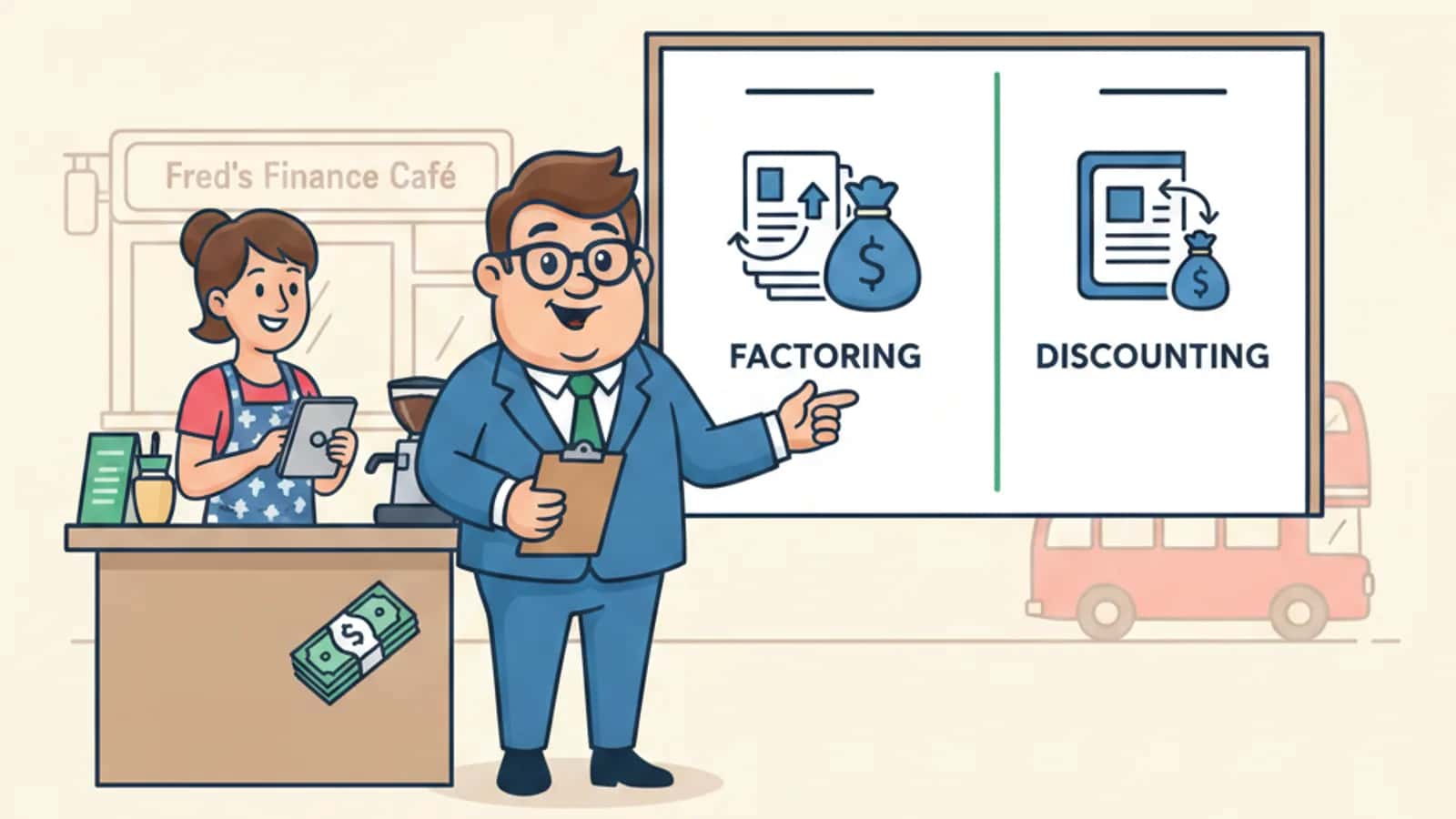
These are the two core products within invoice finance, and the right choice depends largely on how you want to manage customer relationships.
Invoice factoring means the finance provider takes over your credit control function. They chase payment from your customers directly. This suits smaller businesses or those without a dedicated credit control team. The trade-off is that customers know a third party is involved.
Invoice discounting keeps credit control in-house. You continue chasing payment as normal; the finance facility runs confidentially in the background. Customers never know you're using it. This suits more established businesses with robust internal processes.
| Feature | Invoice Factoring | Invoice Discounting |
|---|---|---|
| Credit control | Handled by provider | Retained by you |
| Customer awareness | Yes | Usually confidential |
| Best for | Smaller SMEs, new to finance | Established businesses |
| Typical advance rate | 70%–85% | 80%–90% |
| Admin involvement | Lower | Higher |
For businesses that want confidentiality, confidential invoice discounting is worth exploring in detail. For a full side-by-side breakdown, see this invoice discounting vs factoring comparison.
Invoice Finance vs Traditional Bank Loan: Which Is Better for Working Capital
For working capital specifically, invoice finance outperforms a traditional bank loan in three critical ways: speed, scalability, and alignment with cash flow.
A bank loan gives you a fixed lump sum that you repay over time regardless of trading conditions. Invoice finance gives you a facility that expands and contracts with your actual revenue. If you land a big contract and invoice £200k in a month, your available funding rises accordingly. If trading slows, you're not servicing a large fixed debt.
| Factor | Invoice Finance | Traditional Bank Loan |
|---|---|---|
| Speed to funds | 24–48 hours | Weeks to months |
| Facility size | Scales with invoices | Fixed at outset |
| Repayment | Self-liquidating (customer pays) | Fixed monthly repayments |
| Collateral required | Invoices (receivables) | Often property or assets |
| Credit dependency | Primarily debtor quality | Your business credit profile |
| Suitable for | Ongoing working capital | One-off capital expenditure |
Choose invoice finance if your cash flow problem is a timing gap between invoicing and payment. Choose a business loan if you need capital for a specific purchase or investment that isn't tied to your receivables.
For a deeper comparison, the invoice finance vs business loans guide covers the full picture including costs and scenarios.
Who Qualifies for Invoice Finance in the UK
Most UK SMEs that invoice other businesses (B2B) on credit terms qualify. The core eligibility criteria are straightforward.
You're likely to qualify if
- You invoice UK-registered businesses (not consumers)
- Your invoices are for completed work or delivered goods
- Your customers are creditworthy businesses
- You have a minimum turnover (typically £50k–£100k annually, though some providers go lower)
- You trade in an eligible sector
Sectors commonly funded include: recruitment, construction, logistics, manufacturing, wholesale, business services, staffing, and professional services.
You may face restrictions if
- You invoice consumers (B2C) rather than businesses
- Your invoices are disputed or subject to retention clauses
- You operate in certain regulated sectors without specialist lenders
The UK government removed assignment restrictions in 2015, meaning most standard commercial contracts can no longer block invoice finance. This significantly widened access for SMEs that were previously locked out.
For the full eligibility picture, the complete UK invoice financing guide is a useful reference.
Can I Use Invoice Financing If I Have Bad Credit
Yes — invoice finance is one of the most accessible funding options for businesses with poor or limited credit history. This is because the primary credit assessment focuses on your *customers'* ability to pay, not just your own credit profile.
If you invoice a large, creditworthy business — a national retailer, a local authority, an NHS trust — the finance provider takes comfort from that debtor's strength. Your own credit history matters, but it's not the deciding factor in the way it would be for an unsecured loan.
That said, significant issues such as active CCJs, insolvency proceedings, or a history of fraud will affect eligibility. Specialist providers exist for businesses with more complex credit histories.
Practical point: A business with a patchy credit file but a strong ledger of invoices owed by blue-chip customers will often secure invoice finance when a bank loan would be declined outright.
For more on this, see invoice financing options for businesses with poor credit history.
How Much Does Invoice Finance Cost in the UK
Invoice finance costs vary but are generally made up of two components: a service fee (or management fee) and a discount charge (interest on the funds advanced).
Typical cost ranges:
- Service/management fee:
- 0.5%–3% of gross turnover
- Discount charge:
- 1%–3% over base rate (applied to funds drawn)
- Total effective cost:
- Often 1%–5% of invoice value, depending on facility size and debtor quality
For a business advancing £100,000 against invoices, an all-in cost of 2% means £2,000 in fees — compared to waiting 60 days and potentially losing a contract or missing payroll.
Fees and hidden costs to watch out for
- Minimum monthly fees (charged even in low-volume months)
- Concentration limits (extra charges if one debtor makes up more than 25%–30% of your ledger)
- Bad debt protection (optional credit insurance, adds cost but protects against non-payment)
- Early termination fees on whole-ledger facilities
- CHAPS transfer fees for same-day payments
For a full breakdown of what you'll actually pay, the invoice financing costs UK guide covers every fee type in detail.
How Quickly Can I Get Money With Invoice Financing
Once a facility is set up, funds are typically available within 24 hours of submitting an invoice. Initial setup — from application to first drawdown — usually takes 24–72 hours for selective invoice finance and 3–7 days for a whole-ledger facility.
Speed breakdown
- Eligibility check: 2 minutes, no hard credit search
- Full application to approval: 24–72 hours (selective) or 3–7 days (whole-ledger)
- First drawdown after approval: Same day to 24 hours
- Ongoing drawdowns: Usually within hours of submitting an invoice
This speed is why invoice finance is the preferred solution when a business needs to cover payroll, take on a new contract, or bridge a cash flow gap caused by slow-paying customers. It doesn't require weeks of underwriting or asset valuations.
What Happens If My Customer Doesn't Pay the Invoice
This is one of the most important questions to ask before signing any invoice finance agreement, and the answer depends on whether you have recourse or non-recourse factoring.
With recourse factoring (most common): If your customer doesn't pay, the advance must be repaid to the provider. The risk of non-payment stays with you.
With non-recourse factoring (includes bad debt protection): The provider absorbs the loss if a customer becomes insolvent and can't pay. This costs more but protects your cash flow.
What typically happens in practice
- The provider will chase the debtor through their credit control process
- If payment is significantly overdue, they may place the invoice in a "disputed" or "aged" category
- You may be asked to repurchase the invoice (recourse) or a claim is made on the bad debt protection policy (non-recourse)
For a detailed walkthrough of the process when things go wrong, see how invoice financing works when customers are slow to pay.
Can I Use Invoice Financing for All My Invoices or Just Some
Both options exist. The choice depends on your business needs and how much flexibility you want.
Whole-ledger facilities cover all your invoices across all eligible customers. These are typically lower cost per invoice and suit businesses with consistent, high-volume invoicing. Most traditional factoring and discounting arrangements work this way.
Selective invoice finance (also called spot factoring) lets you choose specific invoices or customers to fund. There's no long-term commitment. You use it when you need it. Cost per invoice is usually higher, but there are no minimum fees or tie-in periods.
Choose whole-ledger if: You invoice regularly, want the lowest cost, and need a reliable ongoing facility. Choose selective if: You have occasional large invoices, want flexibility, or are testing invoice finance before committing.
Is Invoice Finance Worth It for Seasonal Businesses
Seasonal businesses are actually among the best-suited users of invoice finance. Because the facility scales with invoice volume, it naturally provides more funding during peak periods and costs less during quiet ones — unlike a fixed overdraft or loan that charges regardless.
A recruitment agency that places 80% of its contractors in Q4, or a construction firm that invoices heavily in summer, benefits from a funding pool that matches their revenue cycle rather than fighting against it.
For a full exploration of this use case, see invoice financing for seasonal UK businesses.
What Documents Do I Need to Apply for Invoice Finance
The application process is lighter than most business owners expect. No hard credit search is needed to start.
Typical documents required
- Last 3–6 months' bank statements
- Recent management accounts or last filed accounts
- Aged debtors list (your current outstanding invoices)
- Sample invoices and proof of delivery/completion
- Details of your top customers (name, payment terms, credit limit)
- ID and proof of address for directors
Some providers will also request:
- A copy of your standard terms and conditions
- Details of any existing finance facilities (overdraft, loans)
- VAT returns for turnover verification
The 2-minute eligibility check at Funding Fred requires none of these upfront — it's a no-obligation starting point to see which specialist partners are the best match before any paperwork is involved.
How Does Invoice Finance Affect My Business Credit Score
Using invoice finance does not directly harm your business credit score. The initial eligibility check involves no hard credit search, so there's no footprint on your credit file from exploring the option.
Once a facility is active, it typically appears as a trade finance or asset-based lending facility. Lenders and credit agencies generally view invoice finance positively — it signals that the business has a functioning sales ledger and is actively managing cash flow.
Positive effects
- Improved cash flow means fewer missed payments to suppliers or HMRC
- Reduced reliance on overdrafts can improve your credit utilisation picture
- Consistent use of a regulated facility demonstrates financial management
Potential concerns
- If invoices are frequently disputed or returned, this may raise flags with the provider
- Whole-ledger facilities are disclosed on credit files; selective invoice finance may be less visible
Invoice Finance Alternatives for UK Small Businesses
Invoice finance is the strongest option for B2B businesses with outstanding invoices, but it's not the only route to working capital.
Common alternatives:
| Option | Best for | Key limitation |
|---|---|---|
| Business overdraft | Short-term cash gaps | Low limits, can be withdrawn |
| Unsecured business loan | One-off capital needs | Fixed repayments, credit-dependent |
| Merchant cash advance | Card-payment businesses | High effective cost |
| Asset finance | Equipment purchase | Tied to specific assets |
| Business credit card | Small, frequent expenses | Low limits, high interest if not cleared |
| Trade credit insurance | Protecting against bad debt | Doesn't advance cash |
If your cash flow problem isn't tied to unpaid invoices — for example, you need capital to buy equipment — asset finance or a business loan may be more appropriate.
Using Your Sales Ledger as a Dynamic Funding Pool: The Advance Rate Mechanic Explained
The concept of Invoice Finance for UK SMEs: Using Your Sales Ledger as a Dynamic Funding Pool becomes most powerful when you understand advance rate mechanics. This is how the funding pool actually scales.
Advance rate is the percentage of an invoice's face value the provider will advance immediately. Typical rates are 70%–90%.
As the business grows and invoices £250,000 in a strong month, the available pool grows to £212,500 at the same advance rate — with no renegotiation required. Compare that to an overdraft capped at £50,000 regardless of trading performance, or a term loan where the amount is fixed at inception.
This scalability is the defining advantage of invoice finance for growing SMEs. It's working capital that grows with the business, not against it.
Next steps
Your sales ledger isn't just a list of what you're owed — it's a funding asset. Invoice Finance for UK SMEs: Using Your Sales Ledger as a Dynamic Funding Pool is the most accurate way to describe a facility that grows with your business, advances cash within hours of raising an invoice, and removes the timing mismatch between doing the work and getting paid. For more cash-flow comparisons and practical guidance, browse our invoice finance guides.
For UK SMEs in recruitment, construction, logistics, manufacturing, and services, it solves the most common cash flow problem without adding fixed debt to the balance sheet. The funding scales as revenue grows. The cost is tied to what you actually use. And unlike a bank loan, it doesn't require months of underwriting or a personal guarantee against your home.
Actionable next steps:
- 1
Run a 2-minute eligibility check
no hard credit search, no obligation, no long forms.
- 2
Review your aged debtors list
identify which invoices are outstanding and for how long.
- 3
Calculate your potential funding pool
multiply your outstanding invoices by 85% to estimate what you could access today.
- 4
Decide between factoring and discounting
based on whether you want to retain credit control.
- 5
Compare specialist partners
Funding Fred matches you with providers who specialise in your sector and invoice volume.
Invoice Finance. Without the Fuss. Check Eligibility Now — it takes two minutes and there's no obligation.
Further reading
Frequently asked questions
What Is Invoice Finance and How Does It Work for Small Businesses?
Invoice finance is a form of asset-based lending where a business sells or assigns its outstanding invoices to a finance provider in exchange for an immediate cash advance. For UK SMEs, it solves a specific and frustrating problem: you've done the work, raised the invoice, but you're waiting weeks or months for the money to actually arrive.
What's the Difference Between Invoice Factoring and Invoice Discounting?
These are the two core products within invoice finance, and the right choice depends largely on how you want to manage customer relationships.
Who Qualifies for Invoice Finance in the UK?
Most UK SMEs that invoice other businesses (B2B) on credit terms qualify. The core eligibility criteria are straightforward.
Can I Use Invoice Financing If I Have Bad Credit?
Yes — invoice finance is one of the most accessible funding options for businesses with poor or limited credit history. This is because the primary credit assessment focuses on your *customers'* ability to pay, not just your own credit profile.
How Much Does Invoice Finance Cost in the UK?
Invoice finance costs vary but are generally made up of two components: a service fee (or management fee) and a discount charge (interest on the funds advanced).
How Quickly Can I Get Money With Invoice Financing?
Once a facility is set up, funds are typically available within 24 hours of submitting an invoice. Initial setup — from application to first drawdown — usually takes 24–72 hours for selective invoice finance and 3–7 days for a whole-ledger facility.
Written by
The Funding Fred Editorial Team creates plain-English guides to help business owners understand funding options, eligibility, and application readiness before they compare finance options.
Reviewed by
UK business finance content reviewer
Robert reads our UK business finance guides before they go live, checking each one is accurate, easy to follow, and reflects how lending actually works today — not how a brochure says it should. He's listed on the FCA Register, approved as an SMF3 (AR) Executive Director at Switcha Limited, and connected to Lucky Growth Partners Ltd through its appointed representative relationship, so the regulated detail gets a properly qualified second read.
Sources
- Restrictions Lifted On Invoice Finance To Help Small Firms Grow - [2] Research - https://marketinvoice.co.uk/research/ [3] SME Awareness Of Asset And Invoice Finance Rises By 30 - https://www.credit-connect.co.uk/news/sme-awareness-of-asset-and-invoice-finance-rises-by-30/ [4] Invoice Finance Late Payment Regulations 2026 UK SMEs - https://marketinvoice.co.uk/blog/invoice-finance-late-payment-regulations-2026-uk-smes/ [6] How UK SMEs Are Using Invoice Finance To Combat Late Payments - https://fundingfred.com/blog/how-uk-smes-are-using-invoice-finance-in-to-combat-late-payments [7] Invoice Finance Statistics UK - https://www.fundingagent.co.uk/post/invoice-finance-statistics-uk [8] 7 Top Invoice Finance Providers - https://capitalise.com/gb/insights/payments/7-top-invoice-finance-providers [9] Complete Guide Invoice Finance UK 2026 - https://www.sparkfinance.co.uk/blog/complete-guide-invoice-finance-uk-2026 [10] Invoice Finance For Small Business UK - https://marketinvoice.co.uk/invoice-finance-for-small-business-uk/
- British Business Bank finance options
- Bank of England Bank Rate