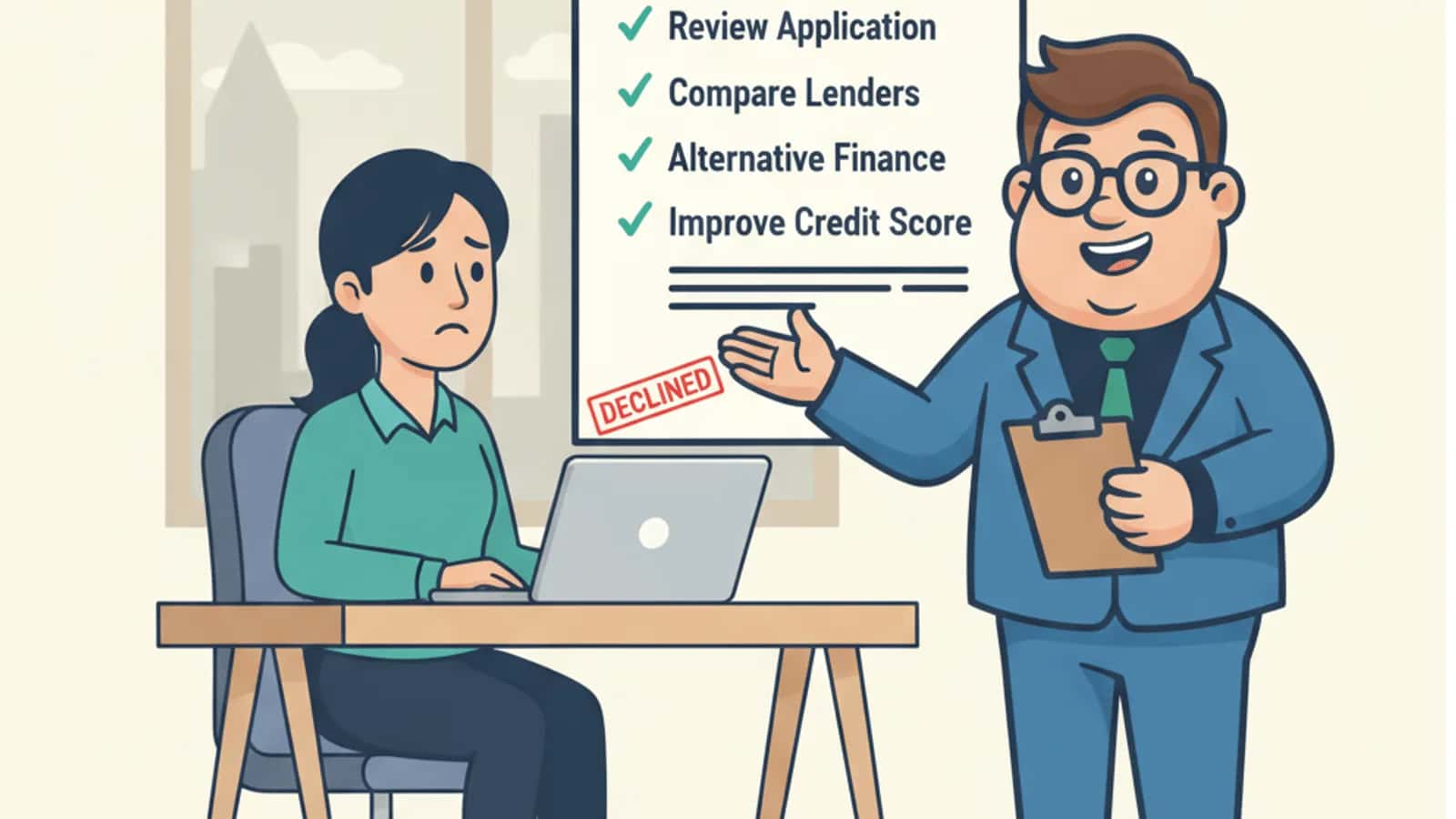
Are "No Paperwork" £250k Business Loan Schemes Real, and What Do Lenders Actually Require Today?
"No paperwork" £250k business loan schemes are not real in the way the marketing suggests. Every legitimate lender, whether a high-street bank or a fast fintech, still verifies your income, trading history, and identity before approving a loan of this size.
Quick answer
"No paperwork" £250k business loan schemes are not real in the way the marketing suggests. Every legitimate lender, whether a high-street bank or a fast fintech, still verifies your income, trading history, and identity before approving a loan of this size. What has genuinely changed is how that verification happens: Open Banking technology now lets lenders pull your financial data directly from your bank account, replacing PDF uploads with a secure API connection. The phrase "no paperwork" means fewer forms to fill in, not fewer checks to pass.
Key takeaways
- No legitimate lender approves a £250k business loan without verifying income, identity, and trading history.
- "No paperwork" is a marketing term. It typically means Open Banking data sharing replaces manual document uploads, not that checks are waived.
- Most UK alternative lenders require at least 6 months of trading history and recent bank statements, even for fast online applications.
- Personal guarantees are common on unsecured loans at this ticket size, even when no physical collateral is required.
- Typical APRs on unsecured business loans range from around 6% to 15% for businesses with solid credit, rising sharply for weaker profiles.
- Startups and businesses under 6 months old will struggle to access £250k without security or a strong guarantor.
- Red flags include upfront fees, guaranteed approval promises, and lenders not registered with the FCA.
- Fast lenders like those on Funding Fred's panel can make decisions in hours using Smart Tech and Open Banking, but they still assess risk.
- All Credit Types can be considered by alternative lenders, though higher risk means higher cost.
- A 2-minute eligibility check with No hard check to start is the right first step before committing to any application.
What Does "No Paperwork" Actually Mean in Business Lending?

"No paperwork" does not mean no checks. It means the process of gathering financial information has moved from paper and email to digital data feeds. This is an important distinction every business owner should understand before applying.
Traditional bank lending required you to print bank statements, post certified accounts, and wait weeks for a decision. Modern alternative lenders use Open Banking, which is an FCA-regulated framework that lets lenders securely read your business bank account data in real time, with your permission. Instead of uploading a PDF, you log in to your bank through the lender's platform and grant temporary read-only access. The data arrives instantly. The decision follows faster.
So when a lender advertises "no paperwork," what they usually mean is:
- No printed documents to post or scan
- No manual bank statement uploads
- Faster identity verification through digital ID checks
- Automated credit assessment using live transaction data
What they do *not* mean:
- No income verification
- No credit assessment
- No identity check
- No trading history review
Open Banking has been a genuine shift in UK SME lending. The Open Banking Implementation Entity's 2025 impact report noted over 10 million active users of open banking-enabled services in the UK, with business finance among the fastest-growing use cases. That is real progress. But it is progress in *how* data is collected, not in whether data is collected at all.
For a deeper look at how the application process actually works, see this complete guide to how business loans work before you start comparing lenders.
What Documents Do You Really Need to Get a £250k Business Loan?

Even with Open Banking in the mix, lenders assessing a £250k loan will still expect a core set of information. The exact list varies by lender and product, but the baseline is consistent across the market.
Core requirements for most lenders at £250k
- 6 months of business bank statements (provided via Open Banking or uploaded directly)
- Latest filed accounts or management accounts (for businesses over 12 months old)
- Proof of business registration (Companies House number or sole trader UTR)
- Director ID and proof of address (passport, driving licence, utility bill)
- VAT returns if VAT-registered (often the last 4 quarters)
- Cash flow forecast for larger or longer-term facilities
- Personal guarantee from one or more directors (common at this loan size)
Experian's guidance for UK business loan applicants recommends preparing a business plan and financial forecast for formal applications, noting that lenders will review business bank statements, director information, and full financial accounts. That applies whether you are applying to a bank or an online lender.
For a full breakdown of what to prepare, the complete UK guide to business loan documents covers every document type by loan size and lender category.
One key difference with fast lenders: they often accept management accounts or real-time Open Banking data in place of formally filed accounts, which speeds things up considerably for growing businesses whose filed accounts are already 12 months out of date.
Are Online Business Loans With Minimal Documentation Legit?
Yes, many are. But "minimal documentation" and "no documentation" are not the same thing, and the difference matters when you are borrowing £250k.
Legitimate fast lenders, including many on Funding Fred's Wide partner panel, use technology to reduce friction in the application process. They are FCA-authorised, transparent about costs, and clear about what they need from you. The application might take 15 to 30 minutes online and a decision can follow within hours. That is a genuine improvement on the weeks a traditional bank might take.
The legitimacy test is simple:
- Is the lender registered on the FCA's Financial Services Register?
- Do they clearly state their rates, terms, and fees upfront?
- Are they asking for your financial data (not just your name and email)?
- Do they use a credit check at full application stage?
If a lender claims to approve £250k with no financial checks at all, that is not minimal documentation. That is a red flag. A March 2026 TrustFinance analysis highlighted that some "too good to be true" finance offers, including those promising easy or guaranteed approvals, may come from unauthorised entities. Always check the FCA Warning List before engaging with any lender you have not heard of before.
Unsecured loans from legitimate lenders are real and widely available. See the guide to unsecured business loans for a clear comparison of how they work and what they cost.
How Do Business Loan Lenders Verify Income Without Traditional Paperwork?
Lenders have three main methods for verifying income without requiring you to post or email documents. Most fast lenders use a combination of all three.
1. Open Banking data feeds
With your permission, the lender connects directly to your business bank account via an FCA-regulated API. They can see 6 to 12 months of real transactions, including revenue patterns, regular outgoings, and cash flow trends. This replaces bank statement PDFs entirely.
2. Credit bureau data
Lenders pull data from Experian, Equifax, or TransUnion for both the business and the director. This gives them a picture of credit history, existing debt obligations, and payment behaviour without you submitting anything.
3. Companies House and HMRC data
Filed accounts, confirmation statements, and VAT registration details are publicly available or verifiable electronically. Many lenders pull this data automatically, so you do not need to upload it manually.
What this means in practice: A Merchant Savvy June 2026 comparison of UK unsecured loan lenders noted that sole traders can access funding "with no paperwork required via Open Banking," meaning the data collection is automated, not absent. The underwriting still happens. It just happens faster.
For businesses that want to understand how their credit profile affects eligibility, the business credit score guide is a practical starting point.
What Credit Score Do You Need for a No-Documentation Business Loan?
There is no single minimum credit score that unlocks a £250k business loan. Different lenders use different scoring models, and alternative lenders typically apply Flexible Criteria rather than a hard cutoff.
That said, here is a realistic picture of how credit score affects your options:
| Credit Profile | Likely Outcome at £250k | Typical APR Range |
|---|---|---|
| Strong (no defaults, 2+ years trading) | Good approval chances, competitive rates | 6% to 12% |
| Fair (some late payments, 1-2 years trading) | Approval possible, higher rate or personal guarantee required | 12% to 25% |
| Weak (CCJs, defaults, under 12 months trading) | Difficult at £250k; smaller amounts or secured options more realistic | 25%+ or declined |
Alternative lenders consider All Credit Types, but weaker credit at a high loan amount means higher cost or additional security requirements. Swoop's February 2026 guidance on no-collateral business loans notes that lenders typically want at least two years of trading history for larger unsecured amounts, though some accept six months for smaller facilities.
The phrase "no credit check" in some marketing usually refers to the initial eligibility check, which uses a soft search and leaves no mark on your credit file. A full application will always involve a hard credit check.
If credit is a concern, the guide to business loans with no credit check explains what soft searches mean and which lenders are most flexible.
Which UK Lenders Offer the Fastest Business Loans With Least Paperwork?
Traditional high-street banks (Barclays, NatWest, HSBC, Lloyds) are not built for speed at this loan size. Expect weeks, not days, and a full documentation pack regardless of how long you have banked with them.
Fast Decision lenders in the alternative finance space are a different story. These include:
- Iwoca
- Known for fast decisions on unsecured loans, uses Open Banking extensively
- Funding Circle
- Established platform with streamlined digital applications
- Capify
- Merchant cash advance and loan products with quick turnaround
- 365 Finance
- Revenue-based finance with minimal manual documentation
- Liberis
- Merchant cash advance specialist, decision often same day
Funding Fred's Wide partner panel connects UK businesses with multiple lenders through a single application. Smart Tech matches your profile to the most likely approvals, saving time and avoiding unnecessary hard searches.
The key difference between these lenders and traditional banks:
| Factor | Traditional Banks | Fast Alternative Lenders |
|---|---|---|
| Decision time | 2 to 8 weeks | Same day to 5 days |
| Documentation method | Manual uploads, in-branch | Open Banking, digital ID |
| Credit flexibility | Strict scoring | Flexible Criteria |
| Personal guarantee | Often required | Often required |
| Loan size at speed | Limited | Up to £500k+ |
For same-day options specifically, the guide to same-day business funding covers which products move fastest and what you need ready.
How Long Does a Typical Business Loan Application Take?
Application timelines vary significantly by lender type and loan size. Here is a realistic breakdown for a £250k application in 2026:
Alternative / online lenders
- Initial eligibility check: 2 minutes (No hard check to start)
- Full application: 15 to 30 minutes online
- Decision: Same day to 48 hours
- Funds in account: 24 to 72 hours after approval
Traditional banks
- Application: 1 to 3 hours (in-branch or online)
- Document review: 1 to 3 weeks
- Credit committee decision: Additional 1 to 2 weeks
- Funds: 3 to 6 weeks from application
The gap is significant. For a restaurant needing stock funding before a busy period, or an e-commerce business scaling ahead of peak season, a 6-week bank timeline is not a real option.
One important note: faster decisions at higher loan amounts often come with a request for additional information mid-process. Having your bank statements, management accounts, and director ID ready before you start will prevent delays even with the fastest lenders.
What Types of Businesses Actually Get Approved for Quick £250k Loans?
Not every business will qualify for £250k quickly, even from a flexible lender. Lenders use a risk-based approach, and certain business profiles consistently get faster approvals at this size.
Strong candidates for quick £250k approval
- Businesses with 2+ years of trading history
- Consistent monthly revenue of at least £30k to £50k (as a rough benchmark for this loan size)
- No CCJs or defaults in the last 24 months
- Clean director credit history
- VAT-registered businesses with filed accounts
- Sectors with predictable cash flow: retail, hospitality, healthcare (including dental practices), professional services
More challenging profiles
- Businesses under 12 months old
- Seasonal businesses with highly variable revenue
- Directors with recent personal insolvency
- Businesses in high-risk sectors (construction, recruitment, some hospitality)
- Sole traders without a clear trading track record
A Spark Finance 2026 guide notes that unsecured business loans "require no collateral but usually require a personal guarantee from company directors," and that lenders still expect six months of bank statements, filed accounts, proof of registration, and director ID even for fast products.
If your business is newer, the guide to business loans for startups covers what is realistically available and how to strengthen your application.
Can Startups or New Businesses Get £250k Loans Without Extensive Proof?
This is one of the most common questions, and the honest answer is: not easily, and not without some form of security or guarantee.
A startup with under 6 months of trading history has no financial track record for a lender to assess. At £250k, that is a significant risk for any lender to absorb without collateral. The options that do exist for newer businesses at this size typically involve:
- A personal guarantee from a director with strong personal credit
- Security against a personal or business asset
- Government-backed schemes (such as the British Business Bank's Growth Guarantee Scheme, which supports lenders in approving loans to businesses that might not otherwise qualify)
- Revenue-based finance or Merchant Cash Advance, where repayment is tied to card takings rather than a fixed monthly amount
A Merchant Cash Advance can be a practical route for businesses with strong card payment volumes, even if they are relatively new. Repayment flexes with revenue, which suits businesses with variable income. For more on how this product works, see the full guide to different types of business loans.
The guide to whether a new company can get a business loan covers the specific options and realistic loan sizes for businesses at different stages.
Average Interest Rates for No-Documentation Business Loans
"No-documentation" loans, meaning those using Open Banking rather than manual paperwork, do not have a separate rate category. They are priced like any other unsecured business loan, based on risk.
Typical APR ranges for unsecured business loans in the UK in 2026:
- Strong credit, 2+ years trading:
- 6% to 15% APR
- Fair credit, 1 to 2 years trading:
- 15% to 30% APR
- Weaker credit or short trading history:
- 30% to 60%+ APR, or declined at £250k
A 2026 guide to unsecured lenders notes that typical APRs for unsecured short-term loans range from about 6% to 15% for businesses with good credit, rising for weaker profiles, reflecting the additional risk of lending without collateral.
Merchant Cash Advances are typically priced using a factor rate rather than an APR. A factor rate of 1.2 means you repay £1.20 for every £1 borrowed. This can look cheaper than an APR but may be more expensive depending on how quickly you repay.
For a current breakdown of what different lenders are charging, the average business loan interest rates guide is updated regularly and covers both secured and unsecured products.
Common Mistakes People Make Applying for Quick Business Financing
Speed is appealing, but rushing an application is one of the most common reasons for rejection or unfavourable terms. Here are the mistakes that cost business owners time and money.
1. Applying without checking eligibility first A hard credit search that results in a decline leaves a mark on your credit file. Always use a soft-search eligibility check first. Funding Fred's Check Eligibility Now tool uses No hard check to start.
2. Assuming "no paperwork" means no preparation Even with Open Banking, you need to know your Companies House number, have director ID ready, and understand your recent revenue figures. Lenders will ask.
3. Applying to multiple lenders simultaneously Multiple hard searches in a short period can damage your credit score. Use a broker or platform that searches multiple lenders with a single application.
4. Ignoring the personal guarantee Many business owners are surprised to find that an unsecured loan still requires a personal guarantee. This means your personal assets could be at risk if the business defaults. Understand what you are signing.
5. Borrowing more than cash flow supports A £250k loan with a 12-month term means significant monthly repayments. Model your cash flow before you apply. The working capital ratio guide helps you assess whether your business can comfortably service the debt.
6. Not checking the lender's FCA registration Any lender or broker arranging business finance in the UK should be registered with the FCA. Check the Financial Services Register before sharing any financial data.
Risks of No-Paperwork Business Loan Schemes
The genuine risk is not with legitimate fast lenders. It is with schemes that use "no paperwork" as a selling point to obscure what is actually being offered.
Specific risks to watch for
- Upfront fee scams: A lender asks for a fee before releasing funds. Legitimate lenders do not charge upfront fees for loan approval.
- Unauthorised lenders: Operating without FCA authorisation, meaning you have no recourse if something goes wrong.
- Hidden charges: Factor rates, arrangement fees, and early repayment penalties buried in terms.
- Guaranteed approval claims: No responsible lender guarantees approval before assessing your finances. Guaranteed approval at £250k is a near-certain scam signal.
- Data harvesting: Some fake "loan application" sites collect your business and personal data without any intention of lending.
The FCA's rules on financial promotions require that all advertising is "fair, clear and not misleading." Claims like "instant approval" or "no paperwork" without qualification may breach these rules. If an offer sounds too good, check the FCA Warning List at fca.org.uk before proceeding.
Red Flags to Watch Out for in Online Business Loan Offers
Some warning signs are subtle. Others are obvious once you know what to look for.
Clear red flags
- No FCA registration number displayed
- Guaranteed approval regardless of credit history
- Upfront fees required before funds are released
- No mention of APR, total cost of credit, or repayment terms
- Pressure tactics ("offer expires in 24 hours")
- Contact only via WhatsApp or personal email addresses
- No physical UK business address
Subtler warning signs
- Rates that seem far below market (e.g., 1% APR for unsecured lending)
- No credit check at any stage of the process
- Loan amounts that seem disproportionate to what you told them about your revenue
- Vague or evasive answers when you ask about the lender's name or registration
If you are unsure about any lender, the FCA's Financial Services Register (register.fca.org.uk) lets you search by company name or registration number in seconds. This one check can save you from significant financial and legal harm.
Alternative Funding Options If You Cannot Qualify for Traditional Loans
A £250k unsecured loan is not the only route to significant business capital. If your profile does not fit, there are genuine alternatives worth considering.
Merchant Cash Advance (MCA)
Suited to businesses with card payment revenue. Repayment is a percentage of daily card sales, so it flexes with your income. No fixed monthly repayment, which helps cash flow management. Available to businesses with shorter trading histories than traditional loans require.
Invoice Finance
If your business raises invoices, you can unlock up to 90% of their value immediately rather than waiting 30 to 90 days for payment. No loan, no interest in the traditional sense, just faster access to money already owed to you.
Asset Finance
If you need capital to buy equipment or vehicles, asset finance uses the asset itself as security. This often means lower rates and easier approval than an unsecured loan of the same size.
Revenue-Based Finance
Similar to an MCA but not limited to card-taking businesses. Repayment is a percentage of monthly revenue, making it flexible for seasonal businesses.
Government-Backed Schemes
The British Business Bank's Growth Guarantee Scheme supports lenders in approving loans to businesses that might not qualify on standard criteria. Worth checking if you have been declined elsewhere.
Each of these products has different costs, terms, and eligibility criteria. The guide to different types of business loans covers all of these in detail.
Conclusion: What to Do Next
The "no paperwork" £250k business loan is not a myth, but it is not what the marketing makes it sound like either. Legitimate fast lenders have genuinely simplified the process using Open Banking, Smart Tech, and digital ID verification. What used to take weeks of form-filling now takes minutes. That is real, and it matters.
What has not changed is the underlying requirement for lenders to understand your business before lending significant sums. Income verification, credit assessment, and identity checks still happen. They just happen faster and with less friction than they did five years ago.
Here is what to do right now:
- Check your eligibility first using a soft search that leaves no mark on your credit file. Funding Fred's Check Eligibility Now tool takes 2 minutes and covers a Wide partner panel of lenders.
- Prepare your basics before you apply: Companies House number, 6 months of bank data (Open Banking makes this easy), director ID, and a rough sense of your monthly revenue.
- Understand the personal guarantee before you sign anything. Know what you are committing to.
- Verify any lender on the FCA Financial Services Register before sharing financial data.
- Compare products across Unsecured Loans, Merchant Cash Advance, and revenue-based finance to find the best fit for your cash flow and repayment capacity.
Fast, flexible funding for UK SMEs is genuinely more accessible in 2026 than it has ever been. The key is knowing what lenders actually need, so you can give it to them quickly and get a Fast Decision in your favour.
Further reading
Frequently asked questions
What Does "No Paperwork" Actually Mean in Business Lending?
"No paperwork" does not mean no checks. It means the process of gathering financial information has moved from paper and email to digital data feeds. This is an important distinction every business owner should understand before applying.
What Documents Do You Really Need to Get a £250k Business Loan?
Even with Open Banking in the mix, lenders assessing a £250k loan will still expect a core set of information. The exact list varies by lender and product, but the baseline is consistent across the market.
Are Online Business Loans With Minimal Documentation Legit?
Yes, many are. But "minimal documentation" and "no documentation" are not the same thing, and the difference matters when you are borrowing £250k.
How Do Business Loan Lenders Verify Income Without Traditional Paperwork?
Lenders have three main methods for verifying income without requiring you to post or email documents. Most fast lenders use a combination of all three.
What Credit Score Do You Need for a No-Documentation Business Loan?
There is no single minimum credit score that unlocks a £250k business loan. Different lenders use different scoring models, and alternative lenders typically apply Flexible Criteria rather than a hard cutoff.
Which UK Lenders Offer the Fastest Business Loans With Least Paperwork?
Traditional high-street banks (Barclays, NatWest, HSBC, Lloyds) are not built for speed at this loan size. Expect weeks, not days, and a full documentation pack regardless of how long you have banked with them.
Written by
The Funding Fred Editorial Team creates plain-English guides to help business owners understand funding options, eligibility, and application readiness before they compare finance options.
Reviewed by
UK business finance content reviewer
Robert reads our UK business finance guides before they go live, checking each one is accurate, easy to follow, and reflects how lending actually works today — not how a brochure says it should. He's listed on the FCA Register, approved as an SMF3 (AR) Executive Director at Switcha Limited, and connected to Lucky Growth Partners Ltd through its appointed representative relationship, so the regulated detail gets a properly qualified second read.