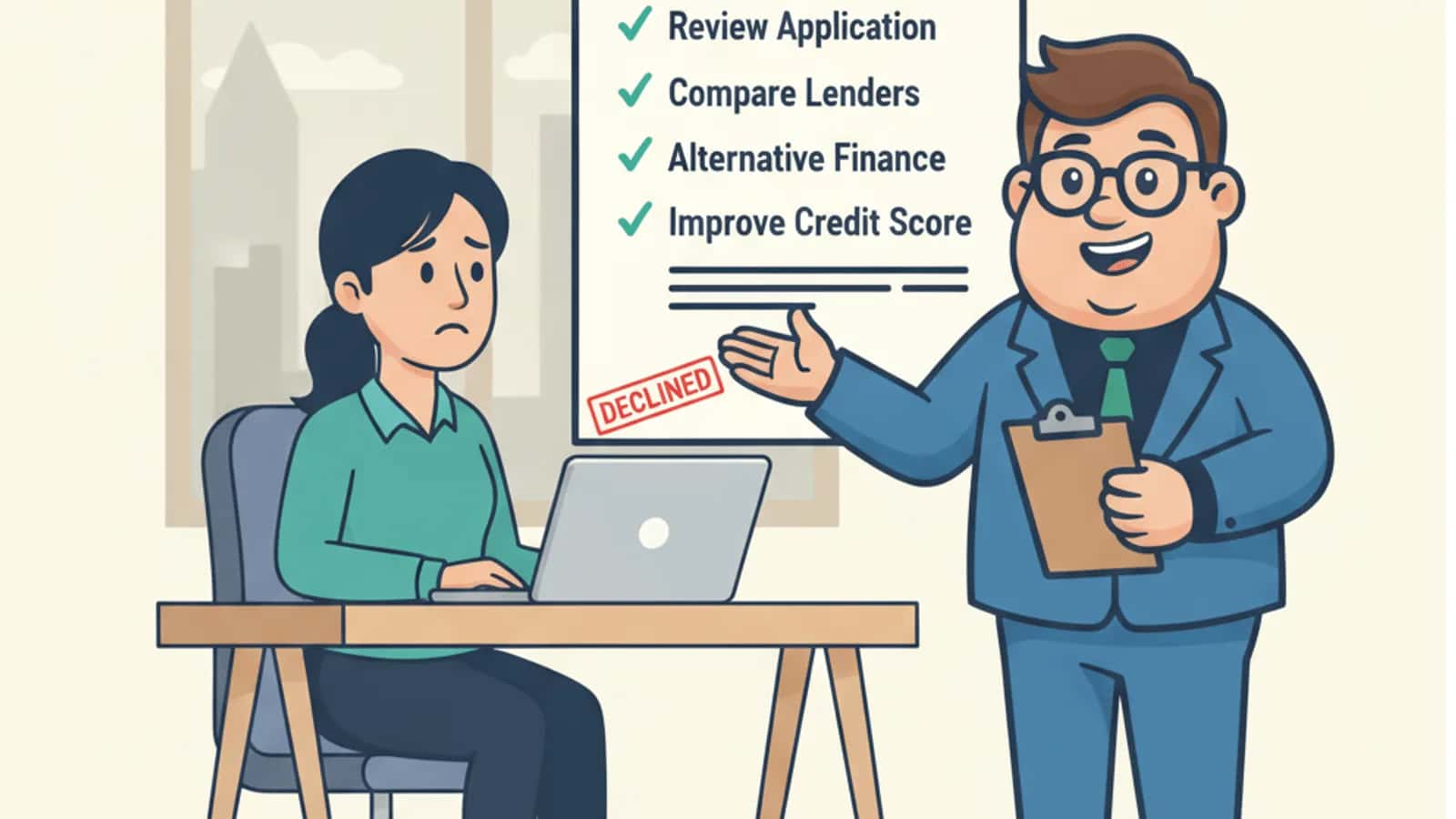
How Do Merchant Cash Advances Work: The Complete UK Guide for 2026
A merchant cash advance (MCA) gives your business a lump sum of capital upfront, which you repay through a fixed percentage of your daily or weekly card sales — not through fixed monthly instalments. There's no interest rate in the traditional sense; instead, a "factor rate" determines the total repayment amount from the start.

Quick answer
A merchant cash advance (MCA) gives your business a lump sum of capital upfront, which you repay through a fixed percentage of your daily or weekly card sales — not through fixed monthly instalments. There's no interest rate in the traditional sense; instead, a "factor rate" determines the total repayment amount from the start. It's fast, flexible, and based on how your business actually trades, not on how clean your credit file looks.
Key takeaways
- A merchant cash advance is a purchase of your future receivables, not a loan — repayments move with your revenue
- Repayment is taken as a percentage of card sales (or via ACH/direct debit), so slower months mean smaller payments
- Factor rates typically range from 1.1 to 1.5, meaning a £20,000 advance could cost between £22,000 and £30,000 to repay in total
- Funding can arrive in as little as 24 to 48 hours — significantly faster than a traditional bank loan
- Credit score matters less than trading performance; consistent card revenue is the primary underwriting factor
- The global MCA market was estimated at $20.67 billion in 2025 and is projected to reach $41.81 billion by 2035, driven by SME demand and digital payments growth
- Regulatory scrutiny is increasing — courts in some jurisdictions are examining whether MCAs function more like loans than receivables purchases
- MCAs suit businesses with strong, regular card sales: restaurants, retailers, salons, e-commerce stores, and similar trading businesses
What Exactly Is a Merchant Cash Advance

A merchant cash advance is an advance of capital secured against your future card sales. The provider gives you a lump sum today; in return, you agree to repay a larger total amount over time, drawn directly from your incoming revenue. It is not a loan in the traditional sense — it is structured as a purchase of future receivables.
Here's the core mechanic:
- A funder reviews your recent card processing history (typically 3 to 6 months of statements)
- They offer you an advance based on your average monthly card turnover
- You agree to a factor rate (say, 1.3) and a repayment percentage (say, 10% of daily card sales)
- The funder collects that percentage automatically until the total repayment amount is reached
Because repayments flex with revenue, there's no fixed end date. Repay faster when business is strong; repay slower when it's quiet. That flexibility is the defining feature of how merchant cash advances work — and it's why they suit seasonal or variable-revenue businesses particularly well.
Legally, the "purchase of receivables" structure has historically kept MCAs outside traditional lending regulations. However, courts are increasingly examining whether contracts with fixed payment schedules and minimal risk to the funder should instead be treated as disguised loans. This is worth understanding before you sign any agreement.
How Do Merchant Cash Advances Work: The Repayment Mechanics

Repayments on a merchant cash advance are not fixed monthly instalments. They are a percentage of your card sales, collected automatically — usually daily or weekly.
There are two main collection methods used in the UK and globally:
Split withholding (card processor split) Your card processor automatically diverts a set percentage of each transaction to the MCA provider before the remainder reaches your account. You never "see" the repayment — it happens at source.
ACH / direct debit The provider estimates your daily or weekly revenue and debits a fixed amount from your bank account. Better-structured deals include a reconciliation process: if your sales were lower than expected, you can request an adjustment so you're not overpaying relative to actual revenue.
The split withholding method is the more genuinely revenue-linked approach. Fixed ACH debits without reconciliation can behave more like loan repayments — which is one reason regulators and courts are paying closer attention to how deals are structured.
What is a factor rate?
Instead of an annual percentage rate (APR), MCAs use a factor rate — a simple multiplier applied to the advance amount:
| Advance Amount | Factor Rate | Total Repayment |
|---|---|---|
| £10,000 | 1.15 | £11,500 |
| £10,000 | 1.30 | £13,000 |
| £10,000 | 1.50 | £15,000 |
| £25,000 | 1.25 | £31,250 |
| £50,000 | 1.35 | £67,500 |
The factor rate is fixed at the start. It does not compound over time. Whether you repay in 4 months or 14 months, the total repayment figure stays the same. That said, repaying faster effectively increases your annualised cost of capital — a point worth understanding when comparing MCAs to other funding options.
For a broader look at how business loans work and how interest rates compare to factor rates, that guide covers the mechanics side by side.
How Much Do Merchant Cash Advances Cost
The total cost of a merchant cash advance is determined by the factor rate, the advance amount, and any additional fees. Factor rates typically sit between 1.1 and 1.5, though the range can be wider depending on risk profile.
What drives your factor rate?
- Monthly card processing volume and consistency
- Length of trading history
- Industry type (some sectors carry higher risk profiles)
- Credit history (less decisive than with bank loans, but still a factor)
- Whether you've had previous MCAs and how they were managed
The APR comparison problem
Factor rates don't translate cleanly into APRs, which makes direct cost comparisons with bank loans difficult. A 1.3 factor rate on a 6-month repayment timeline works out to a very different annualised cost than the same factor rate repaid over 14 months. As a rough guide: the faster you repay, the higher the effective APR — even though the total cash cost stays the same.
This is not a trick. It's just how the maths works. If cost comparison matters to you, ask the provider to express the total repayment amount in pounds, and compare that figure directly against the cost of alternative financing.
Watch for additional fees
Some providers charge origination fees, administration fees, or early settlement fees on top of the factor rate. Always ask for the total cost in writing before proceeding. Reputable providers will give you this clearly.
To understand how MCA costs compare to standard lending, see our guide on average business loan interest rates.
How Do Merchant Cash Advances Differ from Bank Loans
The differences are significant — and for many UK SMEs, they're the reason an MCA is the only practical option available.
| Factor | Traditional Bank Loan | Merchant Cash Advance |
|---|---|---|
| Approval time | Weeks to months | 24 to 72 hours |
| Repayment structure | Fixed monthly instalments | % of card sales (variable) |
| Credit score requirement | Strong credit file typically required | Trading performance weighted more heavily |
| Collateral | Often required | Usually unsecured |
| Paperwork | Extensive | Minimal — Open Banking data often sufficient |
| Early repayment benefit | Reduces interest paid | No reduction in total cost |
| Regulated as | Credit agreement | Purchase of receivables |
| Best for | Stable, established businesses | High-card-volume, variable-revenue businesses |
The bank model is built for businesses that look good on paper. The MCA model is built for businesses that trade well in practice. That's a meaningful distinction for a restaurant owner with three years of strong card sales but a patchy credit history, or a retail store that needs stock funding in two days, not two months.
For a direct comparison of funding types, the different types of business loans available in the UK guide covers the full landscape.
What Credit Score Do I Need for a Merchant Cash Advance
There is no fixed minimum credit score for a merchant cash advance. Providers focus primarily on your card processing history and current trading performance, not on your credit file alone.
This matters enormously for UK small business owners who have been declined by their bank due to a thin credit file, a historic CCJ, or simply not fitting the bank's risk model. MCAs were designed for exactly this situation.
What underwriters actually look at
- 3 to 6 months of card processing statements (volume, consistency, trends)
- Bank statements showing regular trading activity
- Time in business (most providers want at least 6 months of trading)
- Monthly card revenue (most providers want a minimum — often £5,000 to £10,000 per month)
What matters less
- Personal credit score (though a very poor score may affect the factor rate offered)
- Business credit score (though CCJs or insolvency history will be flagged)
- Whether you own property or have assets to offer as security
If your credit history is imperfect but your business trades consistently, an MCA provider will often work with you where a bank won't. For more on this, see our guide on business loans with no credit check and what lenders actually consider.
How Quickly Can I Get Funding with a Merchant Cash Advance
Most UK MCA providers can make a decision within hours and fund within 24 to 72 hours of approval. This is one of the clearest practical advantages over traditional bank lending, where the process routinely takes weeks.
Typical timeline:
- Submit application and connect bank/card processing data (often via Open Banking — takes minutes)
- Underwriter reviews trading history (same day in most cases)
- Offer issued with factor rate and repayment percentage
- You review, sign, and return the agreement
- Funds transferred — often the same business day or next morning
The speed is possible because MCA underwriting is data-led. Open Banking connections give providers a real-time view of your trading without requiring you to print and post three years of accounts. Smart tech replaces the paper stack.
For businesses that need capital fast — covering a payroll gap, buying stock before a busy period, or bridging a delayed invoice — this timeline is the deciding factor. See our same-day business funding guide for more on how fast decisions actually work in practice.
Which Businesses Are Best Suited for Merchant Cash Advances
Merchant cash advances work best for businesses with regular, high-volume card sales. The repayment model is built around card revenue — so if your business doesn't take many card payments, the product doesn't fit as cleanly.
Strong candidates
- Restaurants, cafes, and takeaways
- Retail shops and boutiques
- Hair salons, barbers, and beauty clinics
- E-commerce businesses with consistent order volumes
- Dental and healthcare practices
- Gyms and fitness studios
- Hotels and hospitality businesses
Less suited to MCAs
- B2B businesses that invoice clients (low card volume)
- Construction firms that are paid by bank transfer on project completion
- Very new businesses with less than 6 months of trading history
- Businesses with highly seasonal card volumes and long off-seasons
Decision rule: If your business takes more than £5,000 per month through card payments and has been trading for at least 6 months, an MCA is worth exploring. If most of your revenue comes through invoices or bank transfers, an unsecured business loan or a cash flow business loan may be a better fit.
Can Restaurants and Retail Stores Get Merchant Cash Advances
Yes — restaurants and retail stores are among the most natural users of merchant cash advances, and they represent a significant share of MCA volume in the UK.
Both sectors share the key characteristics that make MCAs work: high card payment volumes, daily revenue, and income that fluctuates with footfall, seasons, and trading conditions. A restaurant taking £40,000 a month through card payments has exactly the kind of data trail an MCA provider wants to see.
Common use cases in hospitality and retail
- Buying stock ahead of Christmas, summer, or a local event
- Refitting a kitchen or shopfront without waiting months for a bank decision
- Covering a cash flow gap between a slow January and a busy February half-term
- Hiring seasonal staff when the business needs to scale quickly
The flexible repayment structure is particularly valuable here. A restaurant that takes 30% less in January than in December will automatically repay 30% less that month — without needing to call a lender, request a payment holiday, or explain the seasonal dip. The product adjusts itself.
NPR's 2026 investigation into the MCA sector noted that restaurants and music venues were among the businesses most heavily targeted by MCA providers during and after the pandemic — including some with extremely high effective rates. This underlines the importance of comparing offers carefully and understanding the total repayment cost before committing.
What Are the Risks of Taking a Merchant Cash Advance
Merchant cash advances carry real risks, and it's worth being clear-eyed about them before applying.
High effective cost
Factor rates of 1.3 to 1.5 can translate into very high annualised costs, particularly if the advance is repaid quickly. The California DFPI has issued advisories warning small businesses about MCA costs and encouraging them to compare total repayment amounts carefully. While UK regulation differs, the principle holds.
Regulatory grey area
MCAs are structured as purchases of receivables, not loans — which historically placed them outside many lending regulations. Courts are increasingly scrutinising this distinction. The CFPB in the US has taken the position that MCAs constitute "credit" under the Equal Credit Opportunity Act, meaning providers must comply with anti-discrimination rules. UK regulation is evolving, and the legal landscape for MCAs is less settled than for traditional loans.
Cash flow pressure
If your card sales drop sharply and repayments are structured as fixed ACH debits rather than true revenue splits, you could face cash flow pressure at exactly the wrong time.
Stacking risk
Some businesses take multiple MCAs simultaneously or in quick succession — known as "stacking." This can create a debt spiral where repayments from multiple advances consume most of daily card revenue. Reputable providers will check for existing MCAs before offering new ones.
Lack of early repayment benefit
Unlike a loan, repaying an MCA early doesn't reduce the total cost. The factor rate is fixed. This removes one of the usual incentives to pay down debt quickly.
What Happens If I Can't Repay a Merchant Cash Advance
Because repayments are tied to card sales, a genuine slowdown in trading naturally reduces your repayment pace — the advance takes longer to repay, but you're not technically "in default" in the way you would be with a missed loan payment.
However, this only applies if your agreement is structured as a true revenue split. Fixed ACH debit arrangements can create default risk if your account doesn't hold enough funds.
If you're struggling
- Contact your provider immediately — most will work with you on a restructure before taking enforcement action
- Check whether your agreement includes a reconciliation clause (the right to request payment adjustments based on actual revenue)
- Seek independent financial advice; the Money and Pensions Service offers free guidance for UK business owners
Enforcement options available to MCA providers (where applicable)
- Personal guarantee enforcement (if you signed one)
- Legal action to recover the outstanding balance
- In some cases, a Confessions of Judgment clause (more common in US contracts — less standard in UK agreements, but worth checking)
The NPR investigation highlighted cases where MCA providers pursued aggressive collection tactics against struggling small businesses. This is not universal, but it reinforces the importance of reading the full contract — particularly any personal guarantee or default clauses — before signing.
What Are the Most Common Mistakes When Applying for a Merchant Cash Advance
Most mistakes happen before the agreement is signed, not after. Getting this right upfront saves significant cost and stress.
- 1
Focusing on the advance amount, not the total repayment
The number that matters is what you pay back in total — not what you receive. Always calculate: advance amount multiplied by factor rate, plus any fees.
- 2
Not comparing multiple offers
Factor rates and repayment percentages vary between providers. A wide partner panel gives you genuine choice. Applying through a platform that compares selected finance partners means you see competitive offers side by side rather than accepting the first number put in front of you.
- 3
Ignoring the repayment percentage
A lower factor rate with a higher daily repayment percentage can drain your cash flow faster than a slightly higher factor rate with a lower percentage. Model both scenarios with your actual card volumes.
- 4
Not reading the default and guarantee clauses
The factor rate headline is easy to understand. The personal guarantee and default provisions are where the real risk sits. Read them, or have someone read them for you.
- 5
Stacking advances
Taking a second or third MCA while the first is still running multiplies your daily repayment obligations. This is one of the fastest routes to cash flow collapse.
- 6
Using an MCA for the wrong purpose
MCAs are short-term capital. Using them to fund long-term assets or cover structural losses (rather than a temporary cash flow gap) is expensive and rarely solves the underlying problem.
For guidance on what lenders look at and how to prepare, the what documents do I need to apply for a business loan guide is a useful starting point.
Are There Alternative Financing Options to Merchant Cash Advances
Yes — and for some businesses, an alternative will be cheaper, more appropriate, or both. The right choice depends on your revenue model, how quickly you need funds, and what you're using the capital for.
Main alternatives
- Unsecured business loans: Fixed monthly repayments, interest-based pricing, typically lower total cost than an MCA for businesses with decent credit. See our unsecured business loans guide for detail.
- Cash flow loans: Designed specifically for businesses managing revenue timing gaps. Often more appropriate than an MCA for invoice-heavy businesses. More on this in our cash flow business loans guide.
- Business line of credit: Draw down what you need, repay, and draw again. Lower cost than an MCA for businesses that need flexible access rather than a single lump sum. See our line of credit guide.
- Asset finance: If you need to buy equipment or vehicles, asset finance uses the asset itself as security — often at lower rates than an MCA. See the asset finance guide.
- Invoice finance: If your business invoices clients and waits 30 to 90 days for payment, invoice finance unlocks that cash immediately.
Which is right for you?
Choose an MCA if
Your business takes significant card payments, you need funds quickly, and you want repayments to flex with your revenue.
Choose an alternative if
Your revenue is invoice-based, you want lower total cost, or you need longer-term capital.
The alternative business funding strategies guide covers the full range of options for UK SMEs.
Are Merchant Cash Advances Better Than Traditional Business Loans
Neither product is universally better — they serve different needs. But for a specific type of business in a specific situation, an MCA will be the clearly superior choice.
An MCA is better when
- You need capital in 24 to 72 hours, not 4 to 8 weeks
- Your credit file is imperfect but your trading is strong
- Your revenue is seasonal or variable and fixed repayments would create cash flow risk
- You take most of your revenue through card payments
A traditional business loan is better when
- You have time to go through a full application process
- Your credit profile is strong and you qualify for competitive rates
- You want a lower total cost of capital
- You're funding a long-term asset or project
The MCA market was estimated at $20.67 billion globally in 2025 and is projected to roughly double by 2035. That growth reflects genuine demand — not because MCAs are always the cheapest option, but because they solve a real problem that banks consistently fail to address: fast, flexible capital for businesses that trade well but don't fit the bank's template.
The MCA market's expansion is also being driven by digital payment infrastructure and the spread of Open Banking, which makes underwriting faster and more accurate. Fintech platforms are increasingly bundling MCAs with payment processing and business software, creating tighter integrations between how a business trades and how it accesses capital.
Conclusion: Is a Merchant Cash Advance Right for Your Business
Understanding how merchant cash advances work is the first step. The second step is deciding whether one fits your situation. For more comparisons and application guidance, browse our business loan guides.
If your business takes regular card payments, needs capital faster than a bank can move, and wants repayments that adjust to how trading actually goes — an MCA is worth a serious look. It's not the cheapest form of business finance. But for the right business, it's the most practical.
The key principles to carry forward:
- Know your total repayment amount before you sign — advance multiplied by factor rate, plus fees
- Compare at least two or three offers before committing
- Understand whether your repayments are a true revenue split or fixed debits
- Read the personal guarantee and default clauses carefully
- Use the capital for a specific, short-term purpose with a clear return
The MCA market is growing, regulation is tightening, and providers are getting more sophisticated in how they price and structure deals. That's broadly good news for borrowers — but it also means the market is more complex than it was five years ago. Use a platform that gives you genuine choice across a wide partner panel, runs a 2-minute eligibility check with no hard search on your credit file, and lets you compare selected finance partners before making any commitment.
Business Funding. Without the Fuss. Check Eligibility Now — no obligation to proceed, no hard check to start.
Further reading
Frequently asked questions
What Exactly Is a Merchant Cash Advance?
A merchant cash advance is an advance of capital secured against your future card sales. The provider gives you a lump sum today; in return, you agree to repay a larger total amount over time, drawn directly from your incoming revenue. It is not a loan in the traditional sense — it is structured as a purchase of future receivables.
How Do Merchant Cash Advances Work: The Repayment Mechanics?
Repayments on a merchant cash advance are not fixed monthly instalments. They are a percentage of your card sales, collected automatically — usually daily or weekly.
How Much Do Merchant Cash Advances Cost?
The total cost of a merchant cash advance is determined by the factor rate, the advance amount, and any additional fees. Factor rates typically sit between 1.1 and 1.5, though the range can be wider depending on risk profile.
How Do Merchant Cash Advances Differ from Bank Loans?
The differences are significant — and for many UK SMEs, they're the reason an MCA is the only practical option available.
What Credit Score Do I Need for a Merchant Cash Advance?
There is no fixed minimum credit score for a merchant cash advance. Providers focus primarily on your card processing history and current trading performance, not on your credit file alone.
How Quickly Can I Get Funding with a Merchant Cash Advance?
Most UK MCA providers can make a decision within hours and fund within 24 to 72 hours of approval. This is one of the clearest practical advantages over traditional bank lending, where the process routinely takes weeks.
Written by
The Funding Fred Editorial Team creates plain-English guides to help business owners understand funding options, eligibility, and application readiness before they compare finance options.
Reviewed by
UK business finance content reviewer
Robert reads our UK business finance guides before they go live, checking each one is accurate, easy to follow, and reflects how lending actually works today — not how a brochure says it should. He's listed on the FCA Register, approved as an SMF3 (AR) Executive Director at Switcha Limited, and connected to Lucky Growth Partners Ltd through its appointed representative relationship, so the regulated detail gets a properly qualified second read.