Business Loan Broker UK: What They Do and How They're Paid
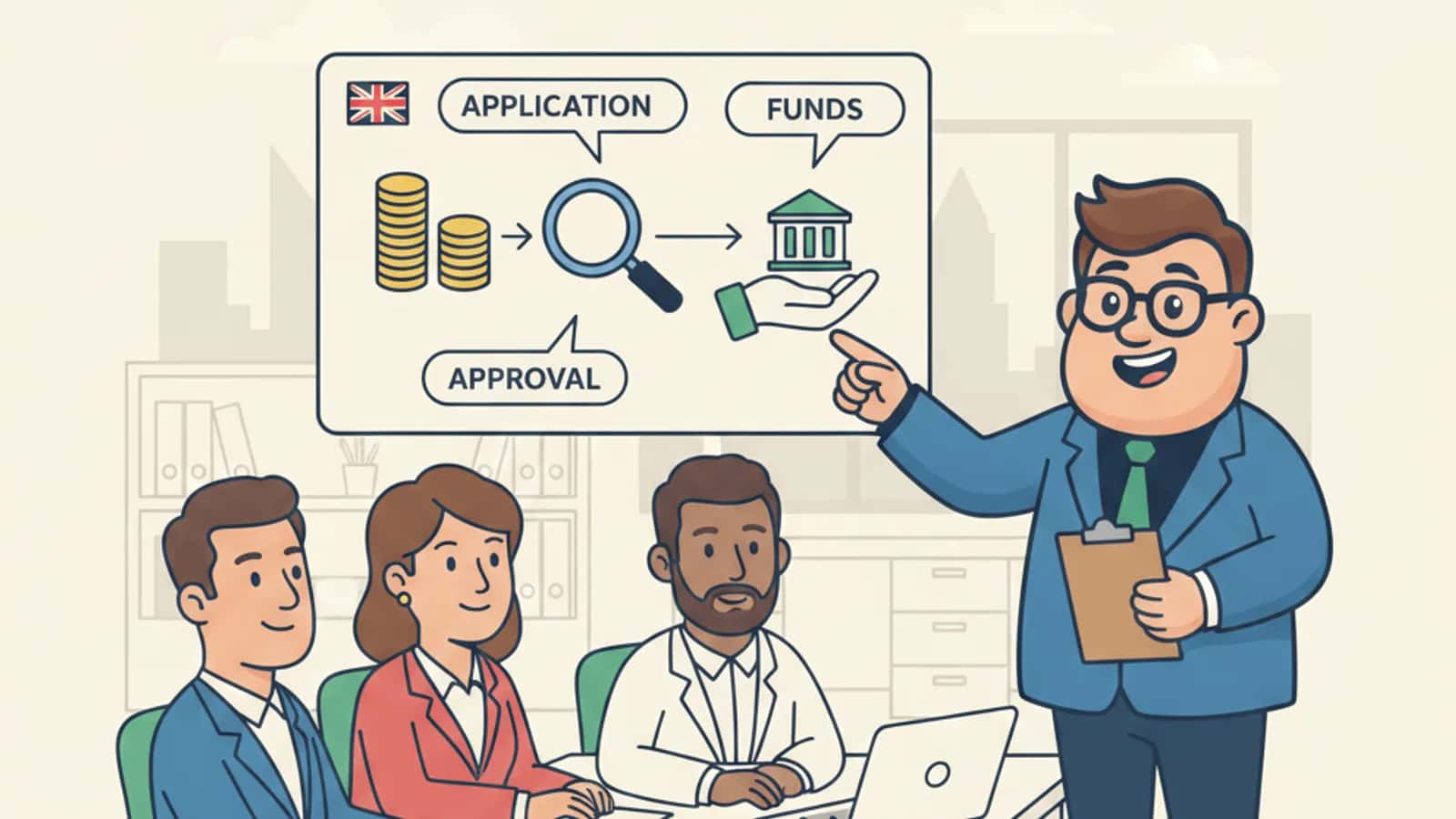
A business loan broker UK is an intermediary who matches your company with lenders from a panel, rather than lending money itself. Brokers are usually paid through lender commission, a borrower fee, or both, and a reputable one will disclose this before you sign anything.

Quick answer
A business loan broker UK is an intermediary who matches your company with lenders from a panel, rather than lending money itself. Brokers are usually paid through lender commission, a borrower fee, or both, and a reputable one will disclose this before you sign anything. Using a commercial finance broker makes sense when you've been declined by your bank, need to compare several offers fast, or have a trading history too complex for a single lender's tick-box criteria.
Key takeaways
- A business loan broker UK doesn't lend money directly. It introduces your business to lenders on its panel.
- Brokers are typically paid commission by the lender, a fee by the borrower, or a combination of both. Ask for this in writing before you proceed.
- Business lending to limited companies generally sits outside FCA consumer credit rules, though sole traders and partnerships can be covered differently. Always check the FCA Register if you're unsure.
- Broker-led SME lending hit around £33 billion in 2025, and lenders increasingly rely on brokers to reach small businesses, with commercial lenders sourcing roughly two-thirds of their finance through broker introductions.
- A broker can widen your options after a decline, but it cannot guarantee approval a bank has already refused.
- Check a broker's registration on Companies House and, where relevant, the FCA Register, before sharing sensitive financial information.
- Platforms such as Funding Fred also work as introducers, matching applicants with lenders and brokers across a wide partner panel rather than acting as the lender itself.
What Does a Business Loan Broker Do

A business loan broker UK gathers your business's financial details, checks them against multiple lenders' criteria, and submits applications on your behalf, instead of you contacting ten lenders one by one. The broker's job is matching, not lending.
In practice, a business finance broker typically:
- Reviews your turnover, trading history, and existing debts
- Runs an eligibility screen against its lender panel
- Shortlists the lenders most likely to approve your application
- Negotiates rate, term, and security requirements where possible
- Manages paperwork and chases documents on your behalf
- Explains offers in plain terms before you decide
Choose a broker if you don't have the time or market knowledge to compare multiple lenders yourself. Go direct if you already have a strong relationship with one lender and a straightforward, low-complexity request.
Funding Fred works this way too: it is not a lender. It's a smart intermediary that uses Open Banking and a 2 min check to introduce applicants to lenders and brokers across a wide partner panel. If you'd rather see options for yourself first, you can compare unsecured loans and merchant cash advances from £10k to £1m.
Business Loan Broker vs Direct Lender vs Marketplace
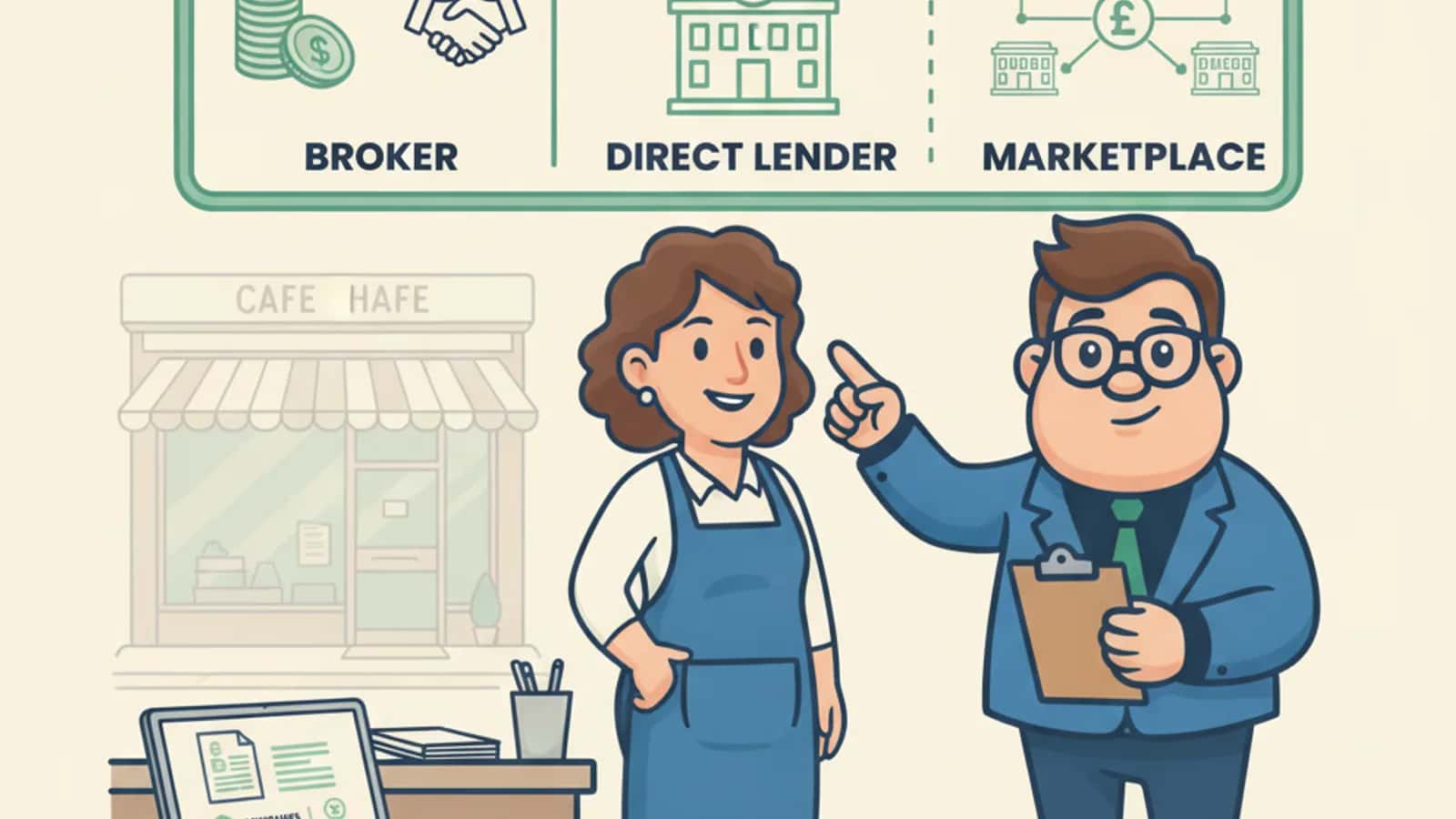
These three routes differ mainly in who assesses your application and how many lenders you reach in one go. A broker hand-matches you to lenders and often negotiates; a direct lender deals with you one-to-one with no middle step; a marketplace lets you submit once and get introduced to several options through technology rather than a human adviser.
Direct lender
- How it works
- You apply to one bank or lender yourself
- Who you deal with
- The lender only
- Best for
- Simple needs, existing relationship, strong credit file
Traditional broker
- How it works
- A person manually matches and negotiates with lenders on your panel
- Who you deal with
- A named broker, then the lender
- Best for
- Complex cases, multiple funding types, hands-on guidance
Smart marketplace/introducer
- How it works
- Open Banking and tech screen your eligibility, then introduce selected partners
- Who you deal with
- A platform, then the lender or broker it introduces you to
- Best for
- Speed, comparing several offers quickly, less paperwork
A reputable commercial finance broker should tell you upfront which category it falls into and how many lenders are genuinely on its panel.
How Are Business Loan Brokers Paid in the UK
Business loan brokers UK are usually paid in one of three ways: a commission from the lender once the loan completes, a fee charged directly to the borrower (often a percentage of the facility, such as an arrangement fee), or a mix of both. Neither model is automatically wrong, but you need to know which one applies to your deal.
- Lender-paid commission
- the lender pays the broker a percentage of the loan amount or a flat fee. You don't see this cost as a separate line item, but it can be built into the rate you're quoted.
- Borrower-paid fee
- you pay the broker directly, usually a percentage of the amount raised, sometimes with a smaller fee payable upfront.
- Blended model
- some brokers take a smaller commission from the lender plus a modest success fee from you.
Industry bodies such as the NACFB have flagged growing scrutiny of broker incentives, as broker-led volumes climb and lenders lean more heavily on introducers for distribution. That makes fee transparency more important, not less. Before you proceed, ask the broker to confirm, in writing, exactly how it's paid on your specific deal.
What Should a Business Loan Broker Disclose
A business loan broker should tell you, before you commit to anything, who pays them, roughly how much, and whether they're recommending a lender because it's genuinely the best fit or because it pays the best commission. This should be in writing, not just spoken reassurance.
Business lending to limited companies generally sits outside the FCA's consumer credit regime, so there isn't one single statutory script every broker must read aloud, as there is for consumer loans or insurance. However:
- Firms that are members of trade bodies like the NACFB commit to a code of conduct that includes disclosing fees and acting in the client's interest.
- If your business is a sole trader or partnership rather than a limited company, parts of the deal may fall under consumer credit rules, in which case the broker may need FCA authorisation and clearer remuneration disclosure.
- Good practice, regardless of legal status, is to ask for a written terms-of-business letter covering fees, commission, and what happens if you don't proceed.
Common mistake: assuming "the broker didn't charge me anything" means the deal is free. If a lender paid the broker a commission, that cost is usually reflected somewhere in your rate or fees.
Qualifications, Authorisation, and Finding a Reputable Business Loan Broker UK
There's no single licence that makes someone "qualified" to be a business loan broker, but reputable firms are registered on Companies House, often hold NACFB or similar trade body membership, and hold FCA authorisation if their activity requires it.
To check a broker before sharing financial information:
- Search Companies House for the firm's registration, directors, and filing history.
- Check the FCA Register if the broker also handles regulated consumer credit, asset finance with consumer elements, or any FCA-regulated activity.
- Look for NACFB or similar trade body membership, which now covers over 1,400 UK firms and signals adherence to a conduct code.
- Ask how many lenders are genuinely on their panel, not just how many they mention in marketing.
- Request references or case studies from businesses similar to yours.
A broker that hesitates to answer any of these is a signal to keep looking.
Business Loan Broker Scams: What to Watch Out For
The clearest warning sign of a business loan broker scam is being asked to pay a fee before any lender has made an offer. Legitimate brokers are typically paid on completion of a deal, not for simply "processing" your application.
Watch for:
- Upfront fees requested before any written offer exists
- Guarantees of approval, "no credit checks," or instant funding promises
- Pressure to sign exclusivity agreements on the spot
- No verifiable Companies House record or physical business address
- Requests for your full online banking login rather than secure Open Banking consent
- Vagueness about which lender is actually behind the offer
Edge case: some legitimate secured lending involves a valuation or legal fee paid early, but this should go to a named third party (a surveyor or solicitor), not the broker's own account, and should be clearly itemised.
How Long Does It Take to Get a Loan Through a Broker
Timing through a business loan broker depends on the lender, the loan size, your documentation readiness, and whether the facility is secured or unsecured. There's no single industry-wide figure, so treat any broker who quotes a guaranteed turnaround with caution.
What tends to speed things up:
- Having 6-12 months of business bank statements ready
- Up-to-date management accounts or filed annual accounts
- A clear, specific reason for the funding
- Responding quickly to document requests
What slows things down: incomplete paperwork, multiple outstanding loans needing explanation, or a trading history under 12 months for certain loan types. For a sense of what lenders typically ask for, see what documents you'll need to apply for a business loan.
Is It Better to Get a Business Loan Through a Broker, or Go Direct to a Bank
A business loan broker tends to help most when you've been declined, need to compare several lenders quickly, or have a complex or imperfect credit history. Going direct to a bank can work fine when your business is straightforward, your credit file is clean, and you already bank with a lender likely to approve you.
Most SME lending volume outside London is now broker-led, reflecting how many regional businesses rely on intermediaries to reach lenders that don't have a local branch presence. Current UK lending conditions show overall SME volumes at a multi-year high, yet the smallest loan sizes remain the hardest to secure through traditional channels. That gap is exactly where brokers and smart introducer platforms tend to add the most value.
| Factor | Traditional bank, direct | Business loan broker or smart platform |
|---|---|---|
| Speed | Branch appointments, manual review | Faster decisioning, Open Banking checks |
| Paperwork | Often heavy, paper-based | Streamlined, digital upload |
| Flexibility | Strict, standardised criteria | Flexible criteria, considers current trading |
| Credit history | Usually needs a clean file | Can work with imperfect or thin credit history |
| Choice | One lender's decision only | Access to a wider partner panel |
Funding Fred's own model reflects this: a 2 min check, no hard check to start, and no obligation to proceed, so you can see where you stand before committing to anything.
Can a Business Loan Broker Get You Approved When Banks Say No
A broker can widen the pool of lenders considering your business, including those willing to look at current trading performance rather than a clean credit score alone, but no broker can guarantee approval that a bank has already refused. What changes is the range of criteria being applied, not a certainty of a "yes."
This matters because different lenders weigh things differently: some prioritise time trading, others look at monthly card turnover or invoice volume, and some focus mainly on director credit history. A broker or smart matching platform spreads your application across several of these filters at once instead of relying on just one. If you've recently been turned down, read what to do after a declined application before reapplying anywhere, since repeated applications in a short window can affect how lenders view your file.
What Types of Business Loans Can Brokers Arrange
Business loan brokers UK typically arrange a range of products beyond the standard term loan, matched to how your business earns and spends money. The right type depends on your cash flow pattern and what the funding is for.
Common products include:
- Unsecured business loans
- , no asset security required, based on trading performance (unsecured business loans explains how these work)
- Secured loans
- , backed by property or other business assets, usually for larger amounts
- Merchant cash advances
- , repaid as a percentage of card sales, suited to retail, hospitality, and e-commerce
- Invoice finance
- , releases cash tied up in unpaid invoices (see invoice finance brokers for how that broker market works)
- Asset finance
- , funds equipment or vehicles against the asset itself
Example: a restaurant with seasonal card takings but a thin credit file might suit a merchant cash advance more than a fixed-term loan, because repayments flex with sales rather than staying fixed every month.
Business Loan Broker vs Accountant for Funding Advice
An accountant understands your numbers, tax position, and what you can realistically afford to repay. A business loan broker understands the lending market and which lenders on its panel are likely to say yes. The two roles overlap but aren't interchangeable.
In practice, many businesses use both:
- The accountant prepares or reviews management accounts and cash flow forecasts
- The broker uses those figures to match you against lender criteria and negotiate terms
Decision rule: if you're unsure whether you can afford a loan at all, start with your accountant. If you know you need funding and want to find the right lender fast, a broker or smart matching platform is the better starting point. For a sense of ongoing cost, see the guide to comparing business loan offers before you commit to any single route.
Can a Business Loan Broker Help With Bad Credit
Yes. Some business loan brokers and introducer platforms specifically work with lender panels that cover all credit types and weigh current trading performance more heavily than a historical credit score. This doesn't remove risk-based pricing, but it does open options that a single high street bank's scorecard would likely reject outright.
What usually changes with weaker credit:
- Rates and fees tend to be higher to reflect lender risk
- Shorter repayment terms are more common
- Lenders may ask for more recent bank statements to evidence current trading strength
- A personal guarantee is more likely to be requested; see personal guarantees on business loans to understand what that commitment actually means
Before accepting any offer, check that the repayment schedule genuinely fits your cash flow, not just that it was the only approval you received. Full eligibility detail varies by lender and applicant, so review the business loan eligibility criteria relevant to your situation rather than assuming one rule applies everywhere.
Do You Need a Broker, or Can You Apply Directly
You can apply directly if your business has straightforward finances, a strong trading history, and an existing relationship with a lender likely to approve you. A broker or smart introducer adds more value when you've been declined, need speed, or want to compare several offers without approaching each lender separately.
Go direct if: you have one clear lender in mind, simple documentation, and time to manage the process yourself.
Use a broker or platform if: you've already had one "no," you're short on time, your trading history is complex (seasonal, newer company, multiple revenue streams), or you want to see several offers side by side before choosing.
For more background on how the category hub covers this topic across loan sizes and purposes, see the guide to UK business loan costs and eligibility.
Questions to Ask a Business Loan Broker
Before sharing financial information with any business loan broker, ask these directly:
- Are you registered on Companies House, and do you hold FCA authorisation if it's required for this deal?
- How many lenders are genuinely on your panel for a business like mine?
- How are you paid on this deal, by me, by the lender, or both?
- What is the total cost, including any arrangement or broker fee, expressed in pounds?
- Will you show me more than one offer, or just the first lender that says yes?
- What happens if I decide not to proceed with any offer?
- Is there a personal guarantee attached, and what does that mean if the business can't repay?
A broker who answers all seven clearly and in writing is one worth continuing with.
Application-Readiness Checklist
Being prepared shortens the time a broker or lender needs to make a decision. A realistic checklist before you apply:
- 6-12 months of business bank statements
- Latest filed accounts or management accounts
- Companies House registration details and director information
- A clear statement of what the funding is for and how much you need
- Evidence of current trading performance (card sales, invoices, contracts)
- Details of any existing business debt or finance agreements
- Photo ID and proof of address for directors or owners
If you're missing several of these, it's worth sorting them before approaching any broker, since incomplete files are one of the most common reasons decisions stall.
Business Funding. Without the Fuss. Funding Fred uses Open Banking and a 2 min check to match your business with lenders and brokers across a wide partner panel, for unsecured loans and merchant cash advances from £10k to £1m. No hard check to start. No obligation to proceed. Compare selected finance partners before deciding. Check Eligibility Now
Next steps for business loan broker
A business loan broker UK exists to widen your options, not to replace your own judgement. The broker's value is matching your business against a panel of lenders quickly, but you still need to check who's paying them, confirm their registration, and compare the actual cost of any offer before signing.
Start by getting your paperwork in order, ask every broker the seven questions above, and treat any guarantee of approval as a red flag rather than reassurance. If your bank has already said no, that's not the end of the search, it's the point where a wider panel of lenders starts to matter. Funding Fred introduces applicants to a wide partner panel of lenders and brokers using a fast, Open Banking-led check, so you can see where your business stands with no hard check to start and no obligation to proceed.
Frequently asked questions
What Does a Business Loan Broker Do?
A business loan broker UK gathers your business's financial details, checks them against multiple lenders' criteria, and submits applications on your behalf, instead of you contacting ten lenders one by one. The broker's job is matching, not lending.
How Are Business Loan Brokers Paid in the UK?
Business loan brokers UK are usually paid in one of three ways: a commission from the lender once the loan completes, a fee charged directly to the borrower (often a percentage of the facility, such as an arrangement fee), or a mix of both. Neither model is automatically wrong, but you need to know which one applies to your deal.
What Should a Business Loan Broker Disclose?
A business loan broker should tell you, before you commit to anything, who pays them, roughly how much, and whether they're recommending a lender because it's genuinely the best fit or because it pays the best commission. This should be in writing, not just spoken reassurance.
How Long Does It Take to Get a Loan Through a Broker?
Timing through a business loan broker depends on the lender, the loan size, your documentation readiness, and whether the facility is secured or unsecured. There's no single industry-wide figure, so treat any broker who quotes a guaranteed turnaround with caution.
Is It Better to Get a Business Loan Through a Broker, or Go Direct to a Bank?
A business loan broker tends to help most when you've been declined, need to compare several lenders quickly, or have a complex or imperfect credit history. Going direct to a bank can work fine when your business is straightforward, your credit file is clean, and you already bank with a lender likely to approve you.
Can a Business Loan Broker Get You Approved When Banks Say No?
A broker can widen the pool of lenders considering your business, including those willing to look at current trading performance rather than a clean credit score alone, but no broker can guarantee approval that a bank has already refused. What changes is the range of criteria being applied, not a certainty of a "yes."
Written by
The Funding Fred Editorial Team creates plain-English guides to help business owners understand funding options, eligibility, and application readiness before they compare finance options.
Reviewed by
UK business finance content reviewer
Robert reads our UK business finance guides before they go live, checking each one is accurate, easy to follow, and reflects how lending actually works today — not how a brochure says it should. He's listed on the FCA Register, approved as an SMF3 (AR) Executive Director at Switcha Limited, and connected to Lucky Growth Partners Ltd through its appointed representative relationship, so the regulated detail gets a properly qualified second read.