Short-Term vs Long-Term Business Loans: Which Funding Option Fits Your Business
Short-term business loans offer faster funding (often within 24 hours) with repayment periods up to 18-24 months, while long-term loans provide larger amounts over 5-25 years but take weeks to approve.
Quick answer
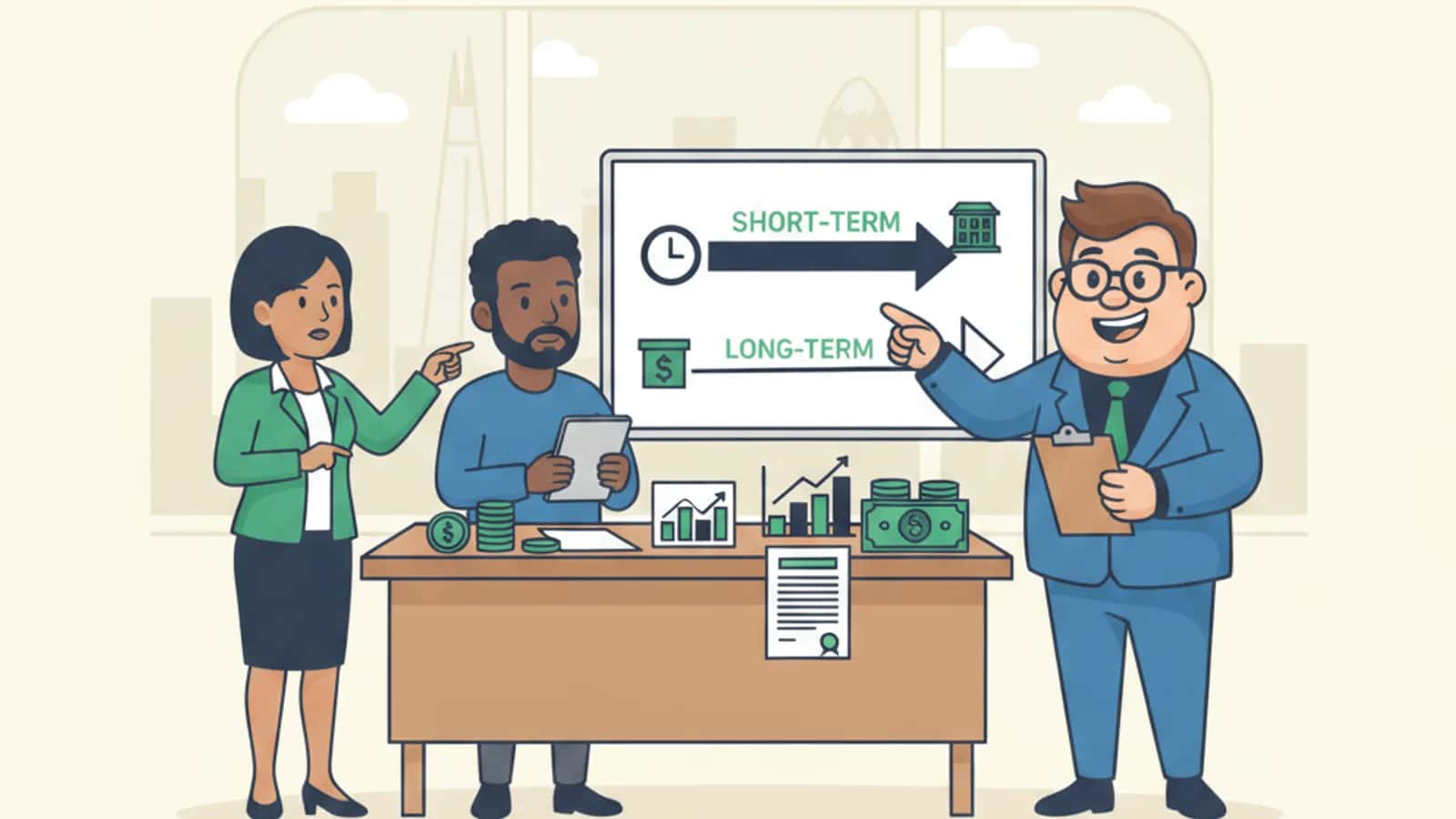
Short-term business loans offer faster funding (often within 24 hours) with repayment periods up to 18-24 months, while long-term loans provide larger amounts over 5-25 years but take weeks to approve. Short-term loans cost more but require less paperwork and accept lower credit scores, making them ideal for urgent cash flow needs or businesses banks have declined.
Key takeaways
- Short-term loans fund faster but cost significantly more than long-term options
- Long-term loans offer lower rates and monthly payments but require stronger credit and collateral
- New businesses and those with imperfect credit often qualify easier for short-term funding
- Short-term loans work best for cash flow gaps, not major equipment purchases or expansion
- Daily or weekly repayments on short-term loans can strain cash flow if not planned properly
- Alternative lenders approve short-term loans based on trading performance, not just credit history
- Most short-term business loans range from £10,000 to £750,000 in the UK
- Long-term loan approval can take 4-8 weeks versus 24-48 hours for short-term options
What Exactly Is a Short-Term Business Loan and How Is It Different From Long-Term
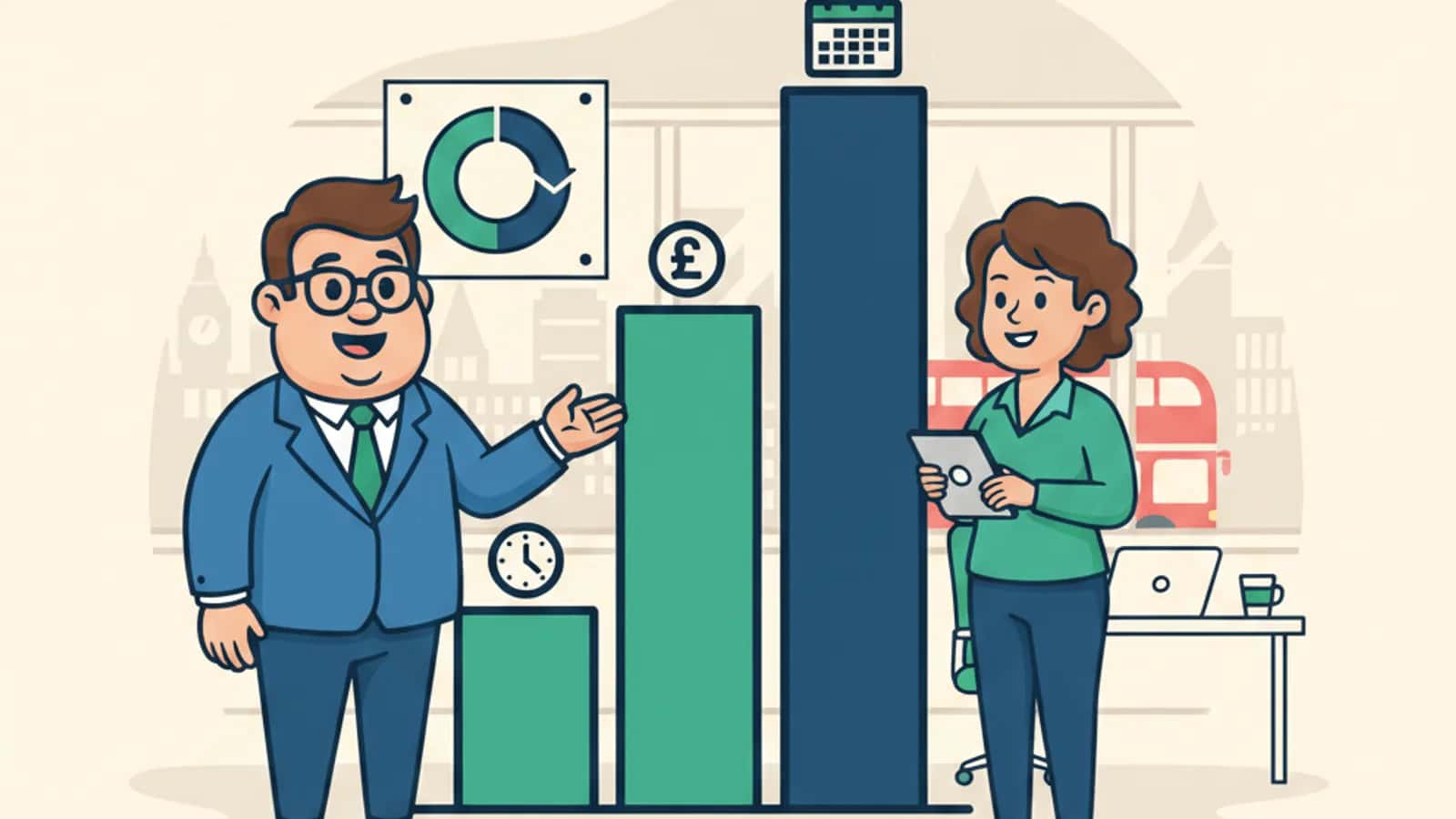
Short-term business loans are financing products with repayment periods typically ranging from 3 to 24 months, while long-term loans extend from 5 to 25 years. The fundamental difference lies in speed, cost, and qualification requirements rather than just the repayment timeline.
Short-term loan characteristics
- Loan amounts: £5,000 to £750,000
- Repayment terms: 3-24 months
- Approval time: 24-48 hours
- Interest rates: 8% to 150% APR
- Repayment frequency: Daily, weekly, or monthly
Long-term loan characteristics
- Loan amounts: £5,000 to £5 million
- Repayment terms: 5-25 years
- Approval time: 4-8 weeks
- Interest rates: 6% to 30% APR
- Repayment frequency: Monthly
The key distinction isn't just time — it's accessibility. Short-term lenders focus on current trading performance and cash flow, while long-term lenders scrutinise credit history, collateral, and detailed financial projections. Use those differences to narrow the field before you compare UK business loan options.
Which Type of Loan Is Better for a Small Startup
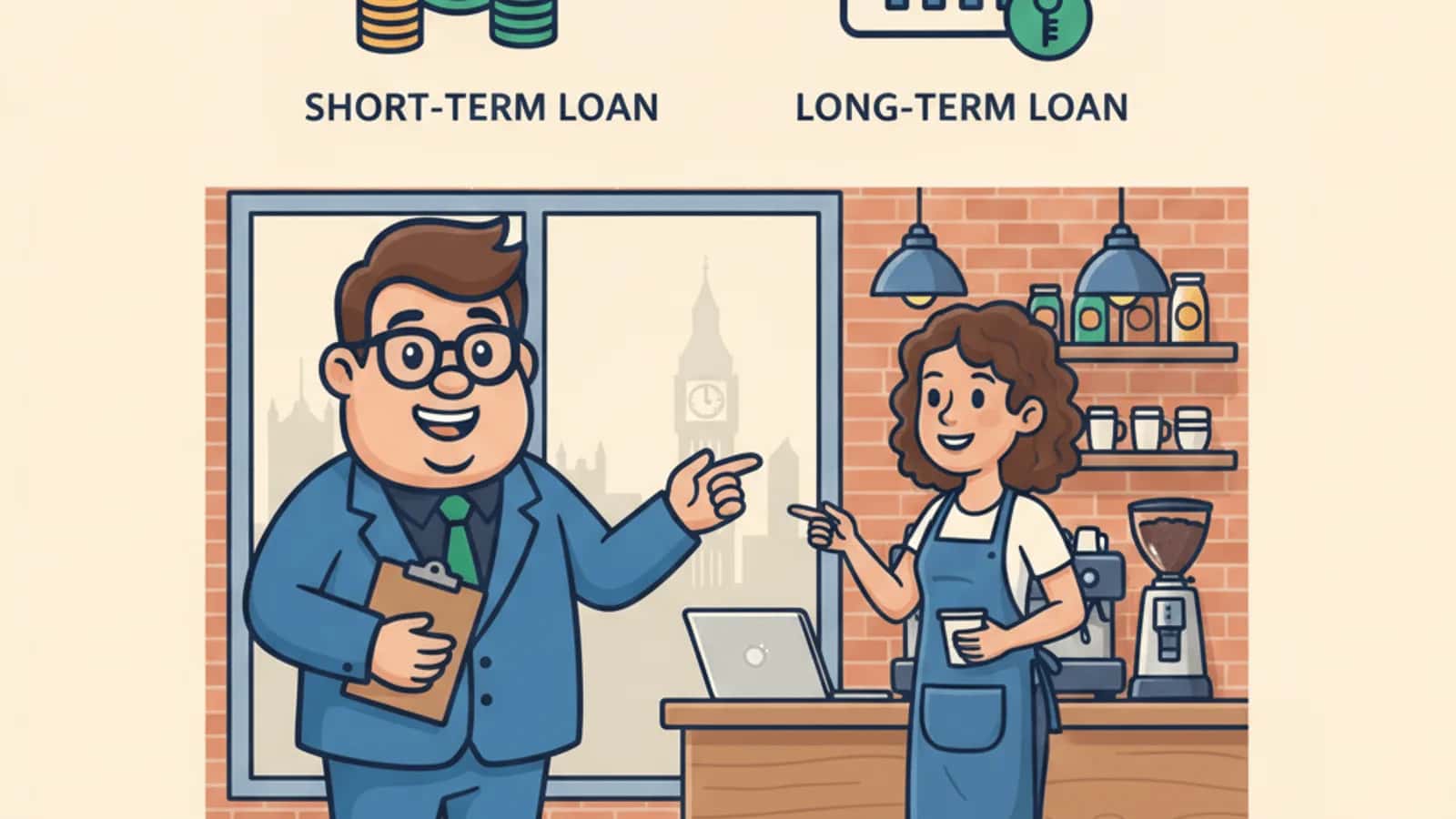
Short-term loans are generally better for small startups because they have more flexible eligibility criteria and don't require extensive trading history. Most long-term lenders want to see 2-3 years of audited accounts, which new businesses simply don't have.
Which is right for you?
Choose short-term funding if your startup
- Has been trading for less than 2 years
- Generates consistent monthly revenue (typically £10,000+ per month)
- Needs funding for immediate opportunities or cash flow gaps
- Can't provide substantial collateral or personal guarantees
Choose long-term funding if your startup
- Has strong credit scores and substantial assets
- Needs funding for major equipment or property purchases
- Can demonstrate stable revenue over multiple years
- Has access to collateral worth more than the loan amount
For most UK startups, business loans for new companies through alternative lenders prove more accessible than traditional bank products. These lenders use Open Banking data to assess real-time cash flow rather than relying solely on credit scores.
How Much Interest Do Short-Term Loans Typically Charge Compared to Long-Term Loans
Short-term business loans typically charge 8% to 150% APR, while long-term loans range from 6% to 30% APR. However, comparing APR alone can be misleading because short-term loans often use factor rates or daily/weekly payment structures.
Typical UK short-term loan costs
- Factor rates: 1.1 to 1.5 (meaning you repay £110-£150 for every £100 borrowed)
- APR equivalent: 15% to 80% for most mainstream lenders
- Daily repayments: 1-3% of the loan amount per day
Typical UK long-term loan costs
- Bank loans: 6% to 15% APR (with strong credit and collateral)
- Alternative lenders: 12% to 30% APR
- Secured loans: Generally 2-5% lower than unsecured options
The total cost difference is substantial. A £50,000 short-term loan at 40% APR over 12 months costs roughly £11,000 in interest. The same amount as a long-term loan at 12% APR over 5 years costs about £16,000 total interest but spreads payments over 60 months instead of 12.
Decision rule: If you can repay within 12-18 months without straining cash flow, short-term costs are manageable. If you need longer to repay, the higher monthly payments on short-term loans often become unsustainable.
For current market rates, check our average business loan interest rates guide.
Can I Get a Short-Term Loan With Bad Credit
Yes, you can get a short-term loan with bad credit because most alternative lenders focus on current trading performance rather than credit history alone. Many short-term lenders accept credit scores as low as 400-500, provided your business generates consistent monthly revenue.
What short-term lenders actually check
- Monthly bank turnover (typically £10,000+ required)
- Time in business (usually 6+ months minimum)
- Current account conduct (no recent bounced payments)
- Sector risk (some high-risk industries excluded)
Credit factors that matter less
- Personal credit score below 600
- Previous CCJs or defaults over 12 months old
- Lack of substantial credit history
- Previous business failures (if current business performs well)
Most short-term lenders use Open Banking to assess real-time cash flow data. If your business consistently deposits £15,000 monthly but you have a 450 credit score, many lenders will still approve funding based on trading strength.
For businesses with credit challenges, explore our guide to business loans with no credit check.
What Are the Pros and Cons of Each Loan Type
Short-Term Business Loan
Pros
- Fast approval and funding (24-48 hours typical)
- Flexible eligibility criteria
- No collateral required for most products
- Based on current trading performance
- Suitable for businesses banks have declined
- Quick debt clearance (12-24 months maximum)
Cons
- Higher interest rates and total cost
- Frequent repayment schedules strain cash flow
- Smaller maximum loan amounts
- Can create debt cycle if misused
- Limited time to generate ROI from funded projects
Long-Term Business Loan
Pros
- Lower interest rates and monthly payments
- Larger loan amounts available
- Predictable monthly payment schedule
- Better for major investments and expansion
- Builds business credit history
- More time to generate returns on investment
Cons
- Slow approval process (4-8 weeks typical)
- Strict eligibility requirements
- Often requires collateral or personal guarantees
- Extensive documentation and financial projections needed
- Risk of asset seizure if secured
- Longer commitment period
| Factor | Short-Term Loans | Long-Term Loans |
|---|---|---|
| Speed | 24-48 hours | 4-8 weeks |
| Credit Requirements | Flexible | Strict |
| Interest Rates | 15-80% APR | 6-30% APR |
| Collateral | Usually none | Often required |
| Monthly Payments | Higher | Lower |
| Documentation | Minimal | Extensive |
Which is right for you?
Choose short-term if
You need funding urgently, have been declined by banks, or need to bridge a temporary cash flow gap.
Choose long-term if
You have strong credit, need substantial funding for expansion, and can wait weeks for approval.
How Quickly Can I Get Approved for a Short-Term Business Loan
Most short-term business loans can be approved and funded within 24-48 hours, with some lenders offering same-day funding for straightforward applications. The speed depends on your documentation readiness and the lender's processes.
Typical short-term loan timeline:
- 1
Application
10-15 minutes online
- 2
Initial decision
2-4 hours
- 3
Documentation review
4-12 hours
- 4
Final approval
12-24 hours
- 5
Funding
Same day to 48 hours
What speeds up approval
- Complete bank statements (last 6-12 months)
- Up-to-date business registration documents
- Recent management accounts
- Clear business bank account conduct
- Consistent monthly revenue patterns
What slows down approval
- Missing or incomplete documentation
- Complex business structures (multiple entities)
- Recent changes in business ownership
- Unusual transaction patterns requiring explanation
- Applications submitted on weekends or holidays
Fast-track tip: Use Open Banking connections where available. This allows lenders to verify your financial data instantly rather than waiting for uploaded bank statements to be manually reviewed.
For urgent funding needs, check our guide on same-day business funding.
What Businesses Should Avoid Short-Term Loans
Businesses with inconsistent cash flow, seasonal revenue patterns, or those needing funding for long-term investments should generally avoid short-term loans. The high repayment frequency can create dangerous cash flow pressure for the wrong business types.
Avoid short-term loans if your business
- Has irregular monthly revenue (varies by more than 40%)
- Operates seasonally with 3+ months of low income
- Needs funding for equipment with 3+ year payback periods
- Already struggles with current debt payments
- Plans to use funds for business acquisition or property purchase
High-risk sectors for short-term loans
- Construction companies with project-based income
- Retail businesses with seasonal peaks (unless borrowing before peak season)
- New restaurants without established customer base
- Professional services with large, infrequent client payments
Warning signs you're not ready
- Current debt payments exceed 15% of monthly revenue
- Bank account shows frequent overdraft usage
- Revenue has declined 3+ consecutive months
- You're borrowing to pay existing debt obligations
Better alternatives for these businesses
- Asset finance for equipment purchases
- Invoice factoring for cash flow timing issues
- Seasonal credit facilities that align with revenue patterns
- Long-term loans for major capital investments
What Happens If I Can't Repay a Short-Term Loan on Time
If you can't repay a short-term loan on time, most lenders will initially offer payment holidays or restructuring options, but continued default can lead to debt collection, damaged credit scores, and potential legal action. The consequences escalate quickly due to the short repayment periods.
Immediate consequences (1-7 days late)
- Late payment fees (typically £25-£100)
- Increased interest charges
- Lender contact via phone and email
- Temporary halt on future funding applications
Short-term consequences (1-4 weeks late)
- Default notices and formal demand letters
- Credit file markers affecting future borrowing
- Potential freezing of business bank accounts (if continuous payment authority exists)
- Escalation to collections department
Long-term consequences (1+ months late)
- Referral to debt collection agencies
- County Court Judgments (CCJs)
- Potential bankruptcy proceedings for severe cases
- Damage to personal credit if personal guarantees were signed
What to do if you're struggling:
- Contact your lender immediately — before missing payments
- Provide updated cash flow forecasts showing recovery plans
- Request payment holidays or reduced payment schedules
- Consider refinancing with a longer-term product
- Seek professional debt advice if the situation is severe
Lender flexibility varies significantly. Alternative lenders often show more flexibility than traditional banks, particularly if you communicate proactively and demonstrate a realistic repayment plan.
Prevention strategy: Never borrow more than 10-15% of your monthly revenue as short-term debt, and always maintain 2-3 months of operating expenses in reserve.
Are Online Lenders or Traditional Banks Better for Short-Term Business Financing
Online lenders are significantly better for short-term business financing because they specialise in fast decisions, flexible criteria, and technology-driven underwriting that banks simply can't match. Traditional banks rarely offer genuine short-term products and typically require extensive documentation that defeats the purpose of quick funding.
Why online lenders excel for short-term funding
- Automated underwriting using Open Banking data
- Decisions within hours, not weeks
- Accept lower credit scores and newer businesses
- Minimal paperwork requirements
- Competitive rates for short-term products
- Flexible repayment structures
Why banks struggle with short-term loans
- Risk-averse lending policies designed for long-term products
- Manual underwriting processes taking weeks
- Strict eligibility criteria excluding most SMEs
- Limited appetite for unsecured lending
- Inflexible repayment terms
| Factor | Online Lenders | Traditional Banks |
|---|---|---|
| Approval Speed | 24-48 hours | 4-8 weeks |
| Credit Score Requirements | 400+ accepted | 650+ typically required |
| Documentation | Bank statements + basic info | Extensive financial records |
| Collateral Requirements | Usually none | Often required |
| Technology Integration | Open Banking, real-time data | Limited digital capabilities |
Best online lender features to look for
- Transparent fee structures with no hidden costs
- Soft credit checks for initial eligibility
- Multiple repayment options (daily, weekly, monthly)
- No early repayment penalties
- Clear terms and conditions
When banks might be better: If you have an established relationship, perfect credit, and can wait 6-8 weeks, some banks offer competitive long-term rates. But for short-term needs, online lenders consistently outperform.
For comprehensive guidance, see our how to get a business loan guide covering all lender types.
How Do I Know If My Business Needs a Short-Term or Long-Term Loan
Your business needs a short-term loan if you're facing immediate cash flow gaps or time-sensitive opportunities, while long-term loans suit major investments with extended payback periods. The decision hinges on urgency, repayment capacity, and the intended use of funds.
Which is right for you?
Choose short-term loans for
- Bridging cash flow gaps between customer payments
- Seasonal inventory purchases with quick turnover
- Emergency equipment repairs or replacements
- Taking advantage of supplier discounts or bulk purchase opportunities
- Covering temporary staff costs during busy periods
Choose long-term loans for
- Business expansion or opening new locations
- Major equipment purchases with 3+ year useful life
- Property acquisition or significant renovations
- Acquiring another business or substantial assets
- Building long-term working capital reserves
Key decision factors:
Cash Flow Analysis
- Can you comfortably repay 8-15% of monthly revenue for 12-18 months? (Short-term suitable)
- Do you need lower monthly payments spread over several years? (Long-term better)
Return on Investment Timeline
- Will the funded project generate returns within 12-24 months? (Short-term works)
- Does the investment need 2+ years to show meaningful returns? (Long-term required)
Qualification Reality Check
- Have banks declined your applications or requested excessive collateral? (Short-term more accessible)
- Do you have strong credit, established financials, and available security? (Long-term viable)
Simple decision matrix
- Urgent need + can repay quickly = Short-term
- Major investment + need time to repay = Long-term
- Poor credit + immediate need = Short-term
- Strong credit + substantial funding required = Long-term
For detailed funding strategies, explore our different types of business loans guide.
What Are the Most Common Mistakes Entrepreneurs Make When Choosing Business Loans
The most common mistake entrepreneurs make is choosing loan products based on advertised rates rather than total cost and repayment fit for their cash flow. Many business owners also underestimate the impact of frequent repayment schedules on their working capital.
Top 5 critical mistakes:
- 1
Focusing only on interest rates, not total cost
- Comparing APR between 12-month and 60-month loans without considering cash flow impact
- Ignoring arrangement fees, early repayment charges, and ongoing costs
- Not calculating total amount repayable across the full term
- 2
Borrowing more than necessary
- Taking maximum approved amounts rather than actual requirements
- Using "available credit" as an opportunity rather than addressing specific needs
- Failing to account for the cost of unused funds
- 3
Mismatching loan terms to cash flow patterns
- Choosing daily repayments when monthly revenue is irregular
- Selecting short-term loans for long-term investments
- Not aligning repayment schedules with seasonal business patterns
- 4
Inadequate documentation preparation
- Applying without gathering required financial records
- Submitting incomplete applications that delay decisions
- Not understanding what documents lenders actually need
- 5
Not exploring alternative options
- Accepting the first approval without comparing alternatives
- Not considering unsecured business loans versus secured options
- Ignoring specialist lenders for their specific sector or situation
How to avoid these mistakes
- Calculate total repayment amounts, not just monthly costs
- Borrow only what you need with clear repayment plans
- Match loan terms to your actual cash flow patterns
- Prepare documentation before applying
- Compare multiple lenders and products
- Consider alternative funding like cash flow loans or lines of credit
Red flag warning: Any lender promising "guaranteed approval" or requesting upfront fees before funding should be avoided entirely.
Can Seasonal Businesses Benefit More From Short-Term or Long-Term Loans
Seasonal businesses typically benefit more from short-term loans timed strategically before peak seasons, but the optimal choice depends on whether you're funding inventory buildup or long-term growth. The key is matching borrowing timing to revenue patterns rather than just loan duration.
Short-term loans work best for seasonal businesses when
- Borrowing 2-3 months before peak season to fund inventory
- Revenue during peak season can comfortably repay within 6-12 months
- You need working capital for seasonal staff or marketing campaigns
- Cash flow is predictable and concentrated in specific months
Long-term loans suit seasonal businesses for
- Equipment purchases that benefit multiple seasons
- Expanding into new locations or markets
- Building year-round revenue streams to reduce seasonality
- Major renovations or improvements during off-season
Seasonal business loan strategy:
Retail (Christmas/Holiday focused)
- Borrow in August-September for inventory buildup
- Choose 6-12 month terms to repay during/after peak season
- Avoid borrowing in January-March when cash flow is typically lowest
Tourism/Hospitality (Summer peaks)
- Secure funding in March-April for season preparation
- Consider equipment finance for improvements during winter months
- Use short-term loans for marketing and seasonal staff costs
Construction/Landscaping
- Borrow in early spring for equipment and materials
- Avoid winter borrowing when revenue drops significantly
- Consider longer terms for vehicles and major equipment
Critical timing rule: Never take short-term loans during your off-season unless you have alternative revenue sources. The repayment schedule won't align with your cash generation.
Alternative for seasonal businesses: Revolving credit facilities that you can draw down before peak season and repay during high-revenue months, avoiding interest on unused funds.
What Alternative Financing Options Exist If I Don't Qualify for Traditional Loans
If you don't qualify for traditional loans, several alternative financing options exist including merchant cash advances, invoice factoring, asset-based lending, and peer-to-peer platforms. These alternatives often have more flexible criteria but different cost structures and repayment terms.
Top alternative financing options:
Merchant Cash Advances (MCAs)
- Based on card transaction volumes, not credit scores
- Repayments automatically deducted from daily card sales
- Approval within 24-48 hours for most businesses
- Factor rates typically 1.2-1.4 (equivalent to 20-60% APR)
Invoice Factoring/Discounting
- Sell outstanding invoices for immediate cash (80-90% of value)
- No traditional credit checks — based on customer creditworthiness
- Particularly suitable for B2B businesses with 30-90 day payment terms
- Costs typically 1-3% per month of invoice value
Asset-Based Lending
- Secured against business assets (equipment, vehicles, property)
- Higher approval rates for businesses with valuable assets
- Lower rates than unsecured alternatives
- Suitable for established businesses with substantial physical assets
Revenue-Based Financing
- Repayments based on percentage of monthly revenue
- Flexible payments that adjust with business performance
- Growing option for SaaS and subscription businesses
- Typically 2-10% of monthly revenue until agreed multiple is repaid
Peer-to-Peer Business Lending
- Individual investors fund business loans through online platforms
- Often more flexible than traditional banks
- Competitive rates for businesses with good stories but imperfect credit
- Application processes similar to online lenders
Government-Backed Schemes
- Start Up Loans (up to £25,000 for new businesses)
- Recovery Loan Scheme (government-guaranteed funding)
- Sector-specific grants and funding programs
When to consider alternatives
- Traditional lenders have declined your applications
- You need funding faster than banks can provide
- Your business model doesn't fit standard lending criteria
- You prefer flexible repayment structures tied to performance
For comprehensive alternative options, see our alternative business funding strategies guide.
Important note: Alternative financing often costs more than traditional loans, but provides access when conventional options aren't available. Always compare total costs and ensure repayment terms align with your cash flow patterns.
Next steps for short term vs long term business loans
The choice between short-term vs long-term business loans comes down to three critical factors: urgency, repayment capacity, and intended use. Short-term loans excel when you need funding within 48 hours, have been declined by banks, or face temporary cash flow gaps. Long-term loans work better for major investments, expansion plans, or when you need lower monthly payments spread over several years.
For most UK SMEs facing immediate funding needs, short-term loans from alternative lenders offer the fastest path to capital. The higher costs are often justified by speed, accessibility, and flexible criteria that traditional banks simply can't match.
Ready to explore your options? Check your eligibility for business funding in under 2 minutes with no hard credit check. Our smart technology compares offers from a wide panel of finance partners, helping you find the right funding solution without the traditional bank hassle.
Next steps:
- Calculate exactly how much funding you need and when
- Review your monthly cash flow to determine comfortable repayment amounts
- Gather your basic financial documents (6 months of bank statements minimum)
- Compare multiple lenders to find the best terms for your situation
- Apply with confidence knowing you understand the true costs and commitments
Whether you choose short-term speed or long-term stability, the key is matching the loan structure to your business reality — not just taking what's available.
Further reading
Frequently asked questions
What Exactly Is a Short-Term Business Loan and How Is It Different From Long-Term?
Short-term business loans are financing products with repayment periods typically ranging from 3 to 24 months, while long-term loans extend from 5 to 25 years. The fundamental difference lies in speed, cost, and qualification requirements rather than just the repayment timeline.
Which Type of Loan Is Better for a Small Startup?
Short-term loans are generally better for small startups because they have more flexible eligibility criteria and don't require extensive trading history. Most long-term lenders want to see 2-3 years of audited accounts, which new businesses simply don't have.
How Much Interest Do Short-Term Loans Typically Charge Compared to Long-Term Loans?
Short-term business loans typically charge 8% to 150% APR, while long-term loans range from 6% to 30% APR. However, comparing APR alone can be misleading because short-term loans often use factor rates or daily/weekly payment structures.
Can I Get a Short-Term Loan With Bad Credit?
Yes, you can get a short-term loan with bad credit because most alternative lenders focus on current trading performance rather than credit history alone. Many short-term lenders accept credit scores as low as 400-500, provided your business generates consistent monthly revenue.
How Quickly Can I Get Approved for a Short-Term Business Loan?
Most short-term business loans can be approved and funded within 24-48 hours, with some lenders offering same-day funding for straightforward applications. The speed depends on your documentation readiness and the lender's processes.
What Businesses Should Avoid Short-Term Loans?
Businesses with inconsistent cash flow, seasonal revenue patterns, or those needing funding for long-term investments should generally avoid short-term loans. The high repayment frequency can create dangerous cash flow pressure for the wrong business types.
Written by
The Funding Fred Editorial Team creates plain-English guides to help business owners understand funding options, eligibility, and application readiness before they compare finance options.
Reviewed by
UK business finance content reviewer
Robert reads our UK business finance guides before they go live, checking each one is accurate, easy to follow, and reflects how lending actually works today — not how a brochure says it should. He's listed on the FCA Register, approved as an SMF3 (AR) Executive Director at Switcha Limited, and connected to Lucky Growth Partners Ltd through its appointed representative relationship, so the regulated detail gets a properly qualified second read.